
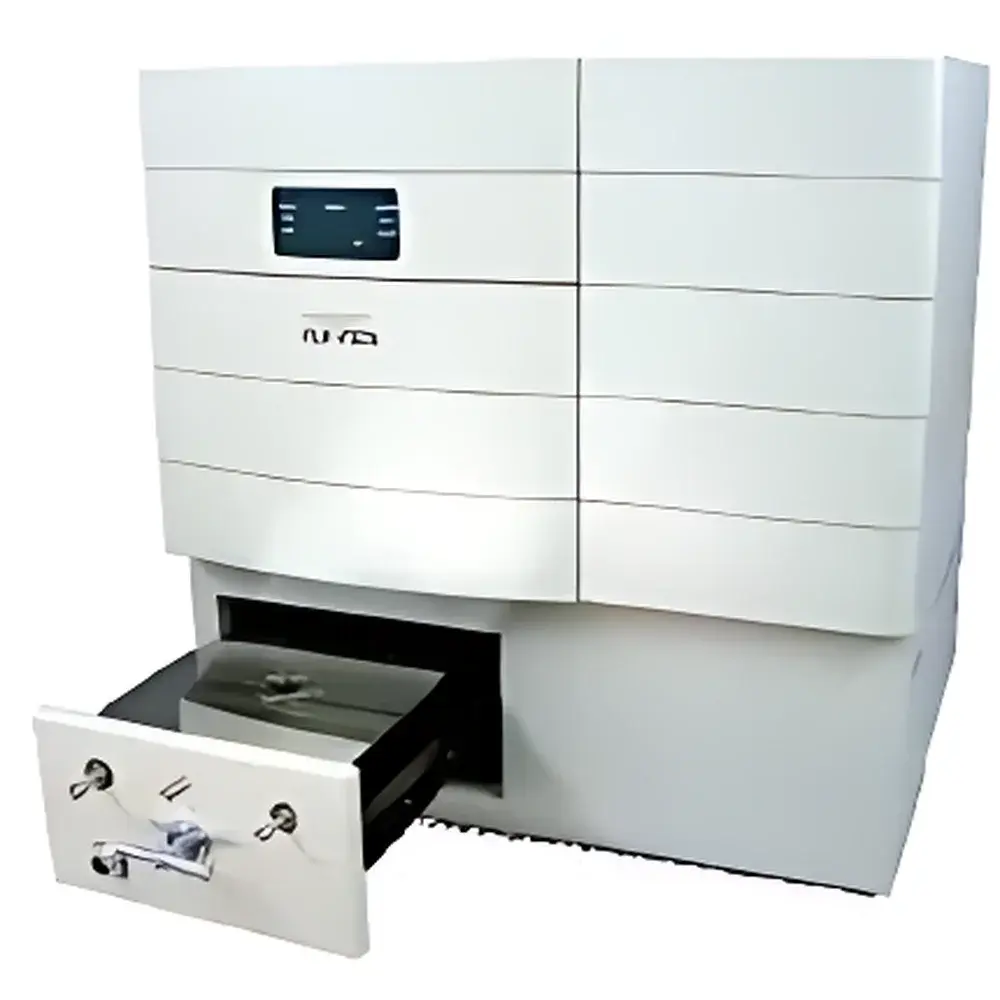
Tohoku Electronic Industrial CLA-FS3L Chemiluminescence-based Oil Oxidation Stability Analyzer
| Origin | Japan |
|---|---|
| Manufacturer Type | Authorized Distributor |
| Origin Category | Imported |
| Model | CLA-FS3L |
| Price Range | USD 14,000 – 28,000 |
Overview
The Tohoku Electronic Industrial CLA-FS3L is a high-sensitivity chemiluminescence analyzer engineered for quantitative assessment of oxidative stability in organic matrices. It operates on the principle of chemiluminescent detection of reactive oxygen species—primarily lipid hydroperoxides and peroxyl radicals—generated during autoxidation under controlled thermal and gaseous (O₂ or air) conditions. Unlike conventional methods such as peroxide value (PV), anisidine value (AV), or Rancimat (AOCS Cd 12b-92), the CLA-FS3L detects oxidation in real time at its earliest molecular stage, enabling construction of kinetic oxidation profiles with sub-nanomolar sensitivity. This makes it particularly suitable for research-grade evaluation of antioxidant efficacy, induction period determination, and comparative stability screening across complex biological and synthetic systems.
Key Features
- Ultra-low detection limit: capable of resolving chemiluminescent signals from <10−12 mol of hydroperoxides per second, enabling early-stage oxidation monitoring before secondary degradation products accumulate
- Programmable temperature control (30–200 °C, ±0.1 °C stability) with dual-zone heating for precise sample and reaction chamber thermal management
- Mass-flow controlled gas delivery system (O₂, air, N₂) with adjustable flow rates (10–1000 mL/min) to simulate diverse oxidative environments
- Integrated photomultiplier tube (PMT) detector with quartz light guide and thermoelectric cooling (−20 °C) for low-noise signal acquisition
- Modular sample holder accommodating solid, semi-solid, and liquid specimens—including viscous oils, tissue homogenates, polymer films, and powdered botanical extracts—without solvent dilution
- Robust architecture compliant with IEC 61000-4 electromagnetic immunity standards and CE marking for laboratory use
Sample Compatibility & Compliance
The CLA-FS3L supports direct analysis of undiluted, native-state samples across food science, polymer engineering, and biomedical research domains. In food applications, it quantifies oxidative onset in edible oils (e.g., soybean, olive, fish oil), fermented beverages (wine, green tea), and muscle tissues without derivatization. For polymers, it evaluates oxidative induction time (OIT) in polyolefins (PP, PE), elastomers, coatings, and packaging resins per ASTM D3895 and ISO 11357-6. In life sciences, it monitors oxidative stress in fresh or cryopreserved biological specimens—including plasma, liver homogenates, skin biopsies, and seed extracts—under GLP-aligned workflows. Data output meets traceability requirements for FDA 21 CFR Part 11 when paired with validated software configurations and audit-trail-enabled user access controls.
Software & Data Management
The CLA-FS3L is operated via dedicated Windows-based CLA Control Suite v4.2, which provides real-time luminescence intensity plotting, automatic induction point calculation (tind), slope-based kinetic parameter extraction (dI/dt), and multi-curve overlay for comparative analysis. Raw data are stored in .csv and proprietary .cla formats with embedded metadata (operator ID, timestamp, method file hash, calibration log). The software supports IQ/OQ documentation templates aligned with ISO/IEC 17025 and includes built-in validation reports for PMT gain stability, temperature ramp fidelity, and gas flow linearity. Export options include PDF summary reports with customizable headers, Excel-compatible datasets, and direct integration into LIMS via ODBC drivers.
Applications
- Food Quality Assurance: Determination of shelf-life predictors in refined and unrefined oils; screening of natural antioxidants (e.g., tocopherols, rosemary extract, polyphenols) in functional foods
- Materials Science: Accelerated aging studies of automotive plastics, medical device polymers, and food-contact packaging under elevated O₂ partial pressure
- Pharmaceutical Research: Quantification of oxidative damage in excipient blends, lipid-based drug delivery systems (LBDs), and biologics formulation stability programs
- Agricultural Science: Assessment of seed viability and oxidative deterioration during storage; evaluation of post-harvest treatment efficacy on fruits and nuts
- Academic Research: Mechanistic studies of radical chain propagation kinetics; validation of computational oxidation models against empirical chemiluminescence trajectories
FAQ
What distinguishes CLA-FS3L from Rancimat or OSI instruments?
The CLA-FS3L detects primary oxidation intermediates (hydroperoxides) via chemiluminescence, whereas Rancimat measures volatile acids (e.g., formic acid) formed in late-stage decomposition—resulting in significantly earlier detection and higher mechanistic resolution.
Can the instrument analyze opaque or highly pigmented samples like dark chocolate or roasted coffee oil?
Yes—the optical path uses near-UV excitation and PMT detection optimized for weak emission signals; sample coloration does not interfere with baseline sensitivity due to spectral filtering and background subtraction algorithms.
Is method validation support available for regulatory submissions?
Tohoku Electronic provides application notes aligned with AOCS Cd 12c-17 and ASTM D7524, plus IQ/OQ protocols and reference material certificates (traceable to NIST SRM 2377) upon request.
What maintenance is required for long-term PMT performance?
Annual recalibration of PMT quantum efficiency and dark current drift is recommended; the system logs operational hours and triggers service alerts at 2,000-hour intervals.
Does the CLA-FS3L comply with Good Laboratory Practice (GLP) requirements?
When deployed with full audit trail enabled, electronic signatures, and version-controlled method files, the CLA-FS3L satisfies core GLP data integrity criteria per OECD Principles of GLP and EU Annex 11.





