
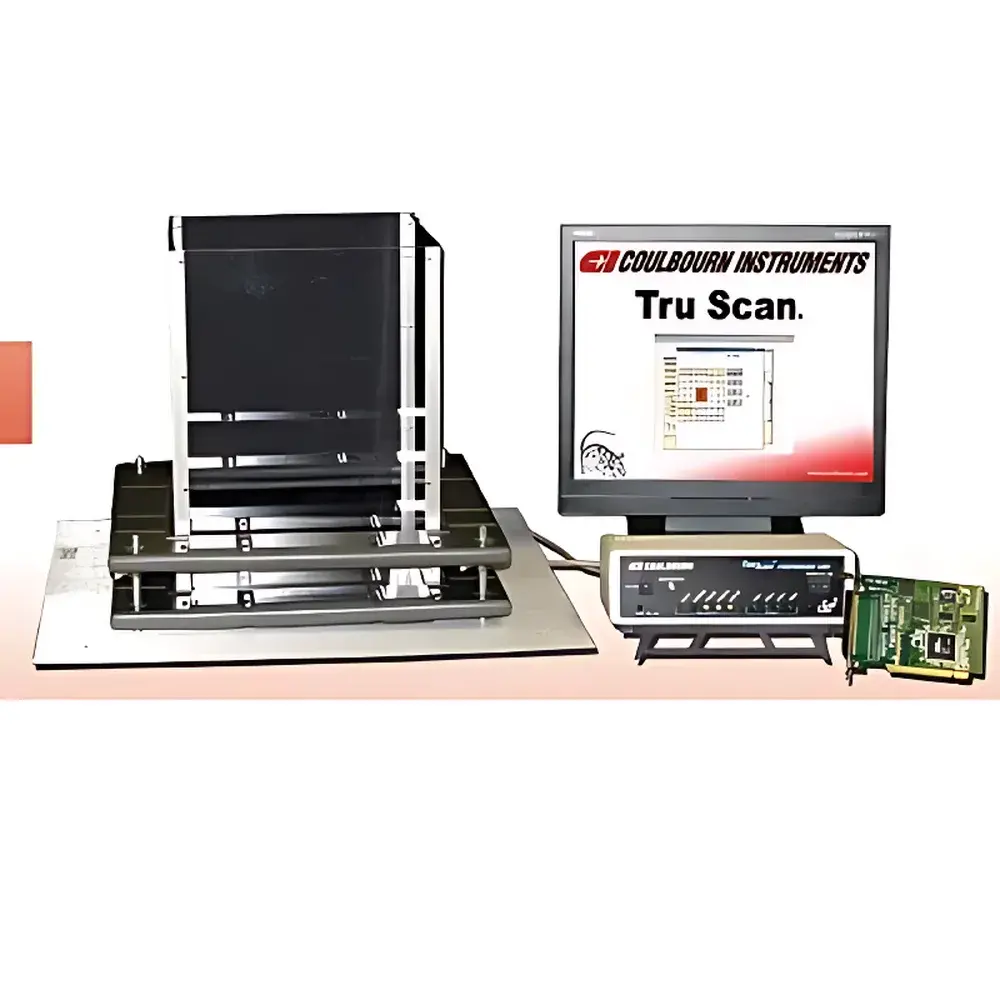
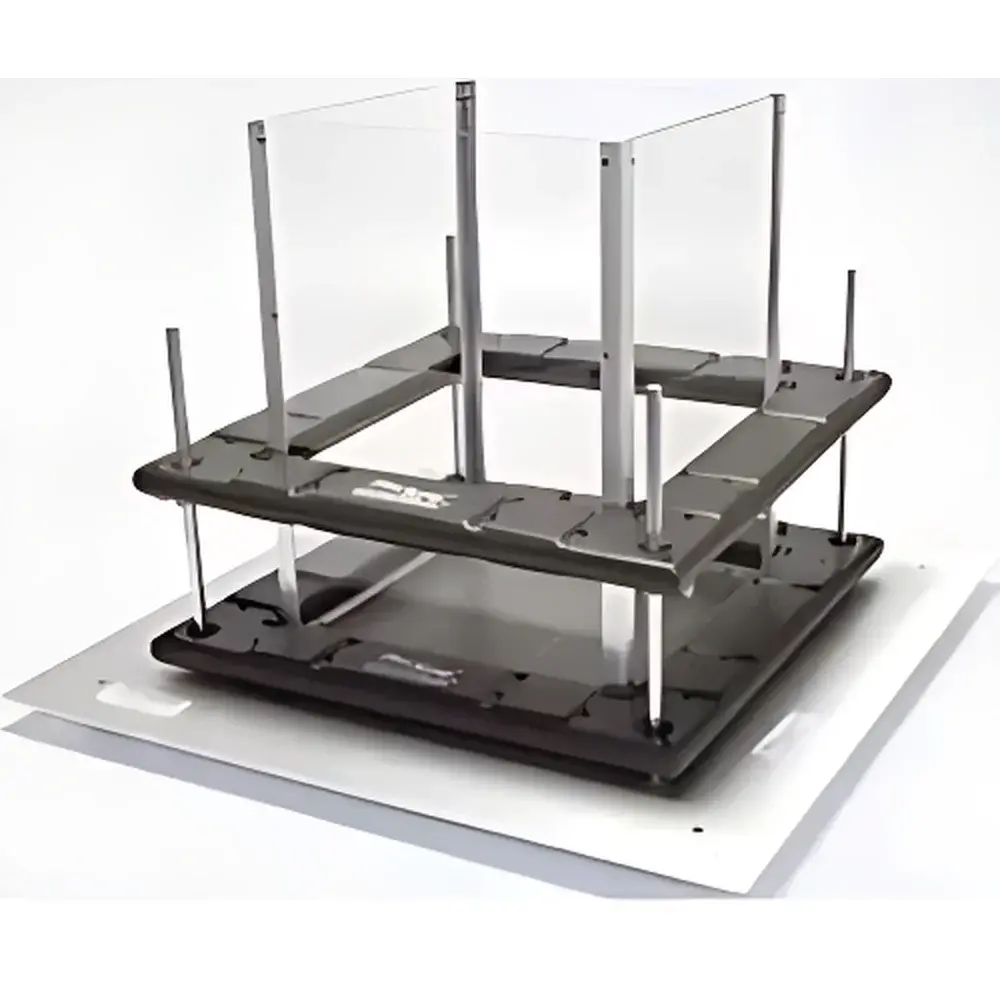
Tru Scan Activity Monitoring System
| Brand | COULBOURN |
|---|---|
| Origin | USA |
| Model | Tru Scan |
| Configuration | Modular workstation-based system |
| Sensor Type | Planar capacitive sensor array |
| Stimulus Integration | Audio, visual, and electrical stimulation modules supported |
| Maximum Workstations | 10 |
| Software Platform | Tru Scan v5.x (Windows-based) |
| Data Compliance | Audit-trail enabled, exportable to CSV/Excel, compatible with GLP/GMP-aligned lab workflows |
| Regulatory Context | Designed for preclinical behavioral phenotyping in accordance with NIH, AAALAC, and OECD guidelines |
Overview
The Tru Scan Activity Monitoring System is a modular, planar-sensor-based behavioral phenotyping platform engineered for high-fidelity, non-invasive quantification of rodent locomotor activity and ethologically relevant behaviors in open-field and operant test environments. Unlike optical or beam-break systems, Tru Scan employs a proprietary capacitive planar sensor grid embedded beneath the test arena floor, enabling simultaneous, sub-centimeter resolution detection of nose-poke events, body center displacement, rearing, freezing, and object interaction—without requiring tethering, implanted transponders, or overhead cameras. This architecture eliminates occlusion artifacts, reduces inter-animal variability from lighting or shadow effects, and supports longitudinal studies across heterogeneous cohorts. The system is validated for C57BL/6, BALB/c, CD-1, and other common mouse strains, with calibration protocols traceable to NIST standards.
Key Features
- Capacitive planar sensing technology: Detects both spatial position and fine-grained behavioral micro-movements—including snout contact, lateral displacement, and immobility—with <10 mm positional resolution and temporal sampling at 30 Hz.
- Multi-stimulus integration: Native support for synchronized audio cues (broadband white noise, tone bursts), visual stimuli (LED arrays with programmable intensity/wavelength), and calibrated electrical foot shocks (0.05–0.8 mA, pulse width 10–500 ms) via integrated I/O expansion ports.
- Modular scalability: Base configuration supports one test chamber; up to ten independent workstations can be networked and centrally controlled via Ethernet, enabling parallel cohort testing with synchronized timing and unified data aggregation.
- Stimulus-contingent protocol engine: Enables complex paradigms such as conditioned place preference (CPP), passive avoidance, light-dark transition, and novel object recognition—all programmable via drag-and-drop workflow builder without scripting.
- Hardware-locked audit trail: All parameter changes, stimulus deliveries, and manual annotations are timestamped, user-ID stamped, and cryptographically logged—meeting FDA 21 CFR Part 11 requirements for electronic records in regulated preclinical studies.
Sample Compatibility & Compliance
Tru Scan is optimized for adult mice (18–35 g) housed under standard SPF conditions. Arena dimensions (standard: 40 × 40 cm) accommodate standard caging-derived acclimation protocols. The system complies with AAALAC International accreditation standards for behavioral instrumentation, supports IACUC-approved endpoints (e.g., immobility duration ≥2 s for freezing quantification), and integrates with third-party environmental monitoring systems (temperature, humidity, ambient light) via Modbus TCP. All firmware and software updates undergo version-controlled validation per ISO/IEC 17025:2017 Annex A.2 guidelines for measurement equipment.
Software & Data Management
Tru Scan v5.x is a Windows 10/11-native application built on a relational SQLite database architecture. Raw sensor data (X/Y coordinates, Z-axis capacitance delta, stimulus onset/offset timestamps) are stored losslessly in binary format with metadata headers. Analysis modules include automated freezing detection (using velocity-threshold + angular variance algorithms), zone-based occupancy mapping, path complexity metrics (fractal dimension, meander ratio), and latency-to-first-event histograms. Users may replay raw sessions frame-by-frame with synchronized stimulus overlays, reprocess data using updated algorithms, or export time-series matrices for MATLAB, Python (Pandas/NumPy), or R integration. Export formats include CSV (tabular), HDF5 (time-series), and SVG (publication-ready plots).
Applications
- Neuropharmacology: Dose-response profiling of anxiolytics, psychostimulants, and antipsychotics using open-field, elevated plus maze (via arena partitioning), and prepulse inhibition paradigms.
- Genetic phenotyping: High-throughput screening of transgenic and knockout lines for baseline hyperactivity, circadian rhythm disruption, or habituation deficits.
- Neurodegenerative disease modeling: Quantitative tracking of motor decline in APP/PS1, α-synuclein, or tauopathy models over 4–12 week intervals.
- Behavioral neuroscience: Validation of optogenetic or chemogenetic manipulations via real-time closed-loop stimulus triggering based on detected movement states.
- Regulatory toxicology: OECD TG 425-compliant acute oral toxicity assessment using locomotor suppression as a secondary endpoint.
FAQ
Is Tru Scan compatible with rats?
Yes—optional arena kits (60 × 60 cm) and recalibrated sensor thresholds support Sprague-Dawley and Wistar rats (200–500 g); however, strain-specific validation reports must be requested prior to deployment.
Can raw data be exported for custom analysis in Python or R?
Yes—HDF5 exports preserve full temporal resolution (30 Hz) with metadata headers; Python SDK (truscanio) is available upon request for programmatic access.
Does the system meet FDA 21 CFR Part 11 requirements for electronic records?
Yes—audit trail logging, electronic signatures, and role-based access control (RBAC) are enabled by default and documented in the system validation package (SVP).
What is the warranty and service coverage for international installations?
COULBOURN provides a 24-month parts-and-labor warranty; extended service plans include remote diagnostics, annual calibration verification, and on-site engineer dispatch within 72 business hours in EMEA/APAC regions.
How does Tru Scan handle data synchronization across multiple workstations?
All workstations operate on a Precision Time Protocol (PTPv2)-synchronized network; master clock drift is maintained below ±100 µs, ensuring cross-chamber event alignment for multi-animal social interaction or cohort-level statistical inference.
Related Products




