
Vascularized 3D Organ-on-a-Chip Platform EPROI DynamicOrgan System Model 42
| Brand | EPROI |
|---|---|
| Origin | Germany |
| Manufacturer Type | Authorized Distributor |
| Import Status | Imported |
| Model | 42 |
| Instrument Type | Microfluidic Organ-on-a-Chip System |
| Substrate Material | PDMS |
| Pricing | USD 2,800 (FOB Hamburg) |
Overview
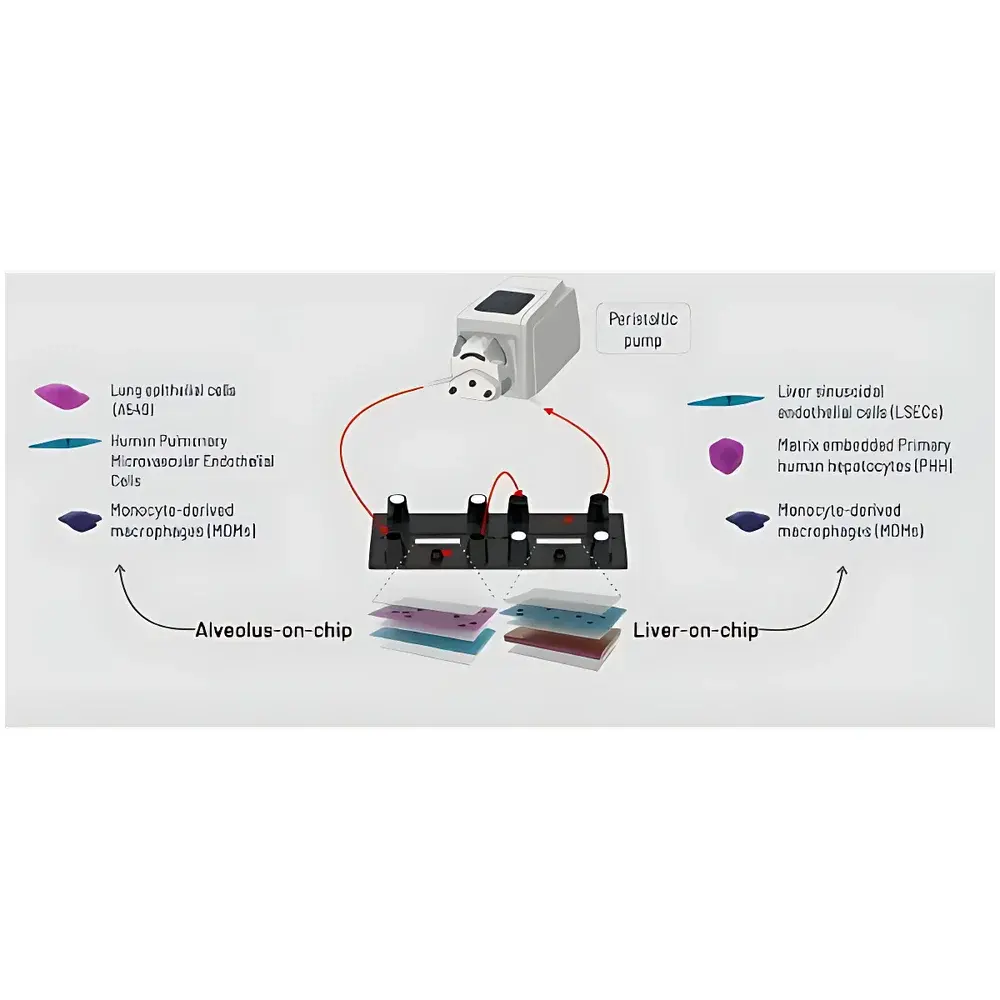
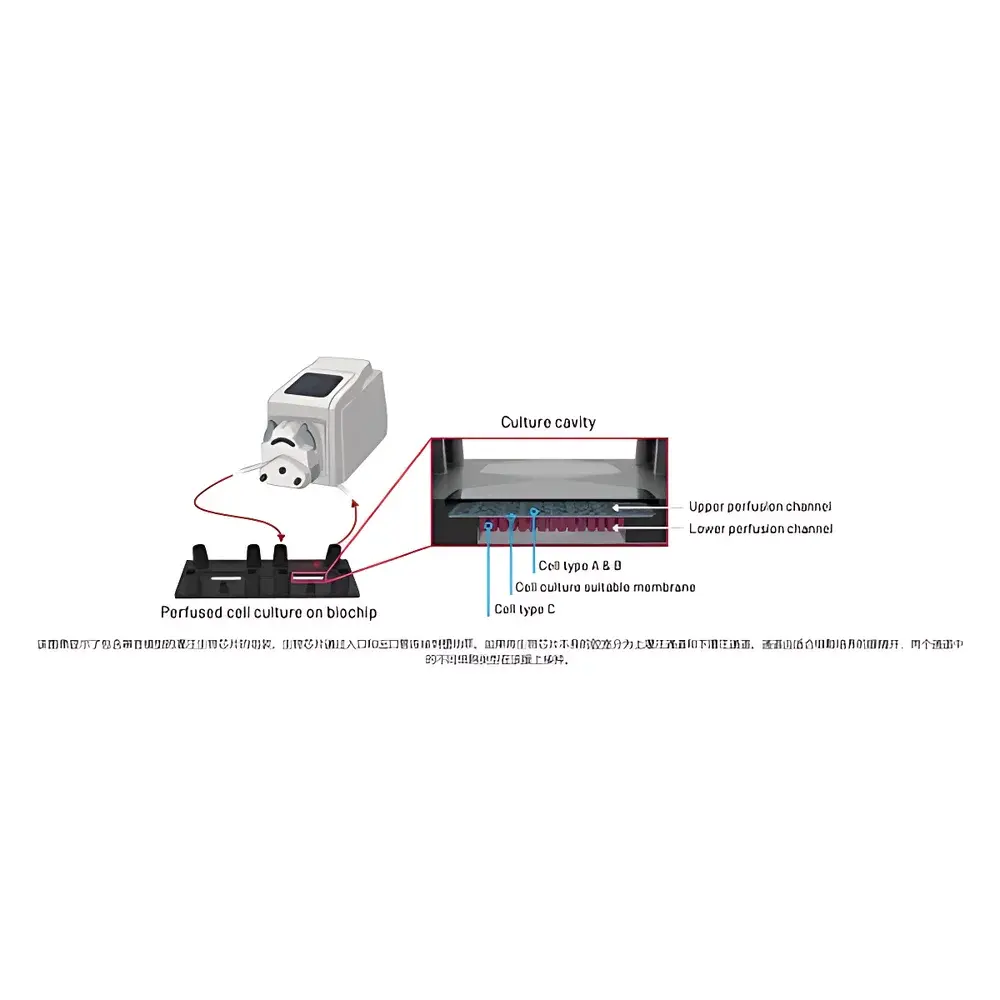
The EPROI DynamicOrgan System Model 42 is a modular, open-architecture microfluidic organ-on-a-chip platform engineered for the reconstruction of human vascularized 3D tissue models under physiologically relevant dynamic conditions. It operates on core principles of microscale fluid mechanics, biomimetic extracellular matrix (ECM) integration, and compartmentalized co-culture—enabling precise spatiotemporal control over cellular microenvironments. Unlike static 2D cultures or spheroid-based systems, this platform replicates key hemodynamic parameters—including pulsatile perfusion, laminar shear stress (0.5–15 dyn/cm²), and trans-endothelial pressure gradients—via integrated peristaltic and syringe-based microfluidic pumps. The system supports multi-tissue interface modeling (e.g., epithelium–endothelium, stroma–parenchyma) through dual-chamber biochips with porous, collagen-coated PDMS membranes (pore size: 3–10 µm), facilitating paracrine signaling, barrier function assessment (TEER monitoring compatible), and immune cell transmigration studies.
Key Features
- Modular PDMS-based biochips with standardized footprint (75 × 25 mm), compatible with inverted microscopy, high-content imaging, and automated liquid handling systems
- Interchangeable membrane inserts: 3 µm, 5 µm, and 10 µm pore sizes; surface-functionalized with human fibronectin or type IV collagen for enhanced endothelial/epithelial adhesion
- Integrated flow control architecture supporting both continuous laminar flow (0.1–100 µL/min) and programmable pulsatile profiles (0.5–2 Hz, amplitude ±15% CV)
- On-chip sensor readiness:预留 ports for optional integration of TEER electrodes, dissolved oxygen (DO) microsensors, and pH optodes (compatible with commercial third-party modules)
- Open hardware/software interface: Pump firmware supports TTL-triggered synchronization with external imaging systems (e.g., confocal, time-lapse); no vendor-locked protocols
- GLP-aligned documentation package: Includes chip lot traceability, sterilization validation reports (ethylene oxide, ISO 11135), and biocompatibility certification per ISO 10993-5 & -12
Sample Compatibility & Compliance
The Model 42 platform accommodates primary human cells (e.g., HUVECs, HBECs, hepatocytes), iPSC-derived lineages (intestinal organoids, alveolar type II cells), and immune effectors (PBMCs, monocyte-derived macrophages) across four validated chip configurations: Gut-Vessel, Lung-Alveolus, Liver-Sinusoid, and Blood-Brain Barrier. All chips are manufactured in ISO 13485-certified cleanrooms and supplied sterile (EO-sterilized). Device design conforms to ASTM F3286-22 (Standard Guide for Characterizing Microphysiological Systems) and supports regulatory-grade assay development aligned with FDA’s MPS Draft Guidance (2023) and EMA’s reflection paper on advanced therapy medicinal products (ATMPs). Full audit trails—including pump runtime logs, media exchange timestamps, and temperature history—are exportable in CSV/JSON for 21 CFR Part 11-compliant workflows when paired with validated LIMS software.
Software & Data Management
DynamicOrgan Control Suite (v3.2, Windows/macOS/Linux) provides deterministic flow scheduling, real-time pressure monitoring (±0.1 kPa resolution), and automated calibration routines for flow rate accuracy verification (NIST-traceable syringe pump validation). Data output includes synchronized timestamps, volumetric throughput, and user-defined event markers (e.g., “drug addition”, “immune challenge”). Export formats support FAIR data principles: HDF5 for imaging-integrated datasets, MIAME-compliant metadata templates for transcriptomic correlation, and direct API endpoints for integration with LabArchives ELN or Benchling. Audit logs record all parameter modifications with operator ID, timestamp, and IP address—meeting GLP/GMP electronic record requirements.
Applications
- Human-relevant disease modeling: Inflammatory bowel disease (IBD) pathogenesis via TNFα-induced barrier disruption in Gut-Vessel chips
- Drug permeability & toxicity screening: Hepatic metabolism-dependent neurotoxicity assessment using Liver-Brain coupled chips
- Vascular inflammation studies: Monocyte adhesion and transendothelial migration under pathological shear (4–8 dyn/cm²) in cytokine-activated vessels
- Infectious disease modeling: SARS-CoV-2 infection dynamics across alveolar-capillary interfaces with concurrent immune cell recruitment
- Personalized medicine: Co-culture of patient-derived tumor organoids with autologous T cells under tumor-mimetic flow conditions
FAQ
Is the PDMS substrate compatible with long-term (>14 days) culture of primary human hepatocytes?
Yes—surface oxidation followed by collagen I coating enables stable polarization and CYP450 activity maintenance for up to 21 days, as verified by albumin secretion ELISA and urea synthesis assays.
Can the system be integrated with commercial high-content imaging platforms?
All chips feature standard #1.5 borosilicate glass viewing windows (thickness: 170 ± 5 µm) and are compatible with Nikon BioStation CT, PerkinElmer Operetta CLS, and Molecular Devices ImageXpress Micro Confocal systems.
Does EPROI provide protocol SOPs for specific tissue models?
Yes—validated SOPs for intestinal barrier formation, alveolar-capillary barrier maturation, and liver sinusoid perfusion are included with each system shipment and updated quarterly via secure customer portal.
What sterility assurance level is provided for the chips?
Each batch undergoes EO sterilization validated per ISO 11135, with VDmax25 method and bioburden testing (≤1 CFU/chip); sterility certificates include residual EO limits (<2.0 µg/g) and material compatibility reports.
Are custom chip geometries available for academic collaborators?
EPROI offers non-exclusive co-development agreements for academic labs, including mask design support, pilot fabrication runs, and joint publication rights—subject to IRB/ethics approval and material transfer agreement (MTA) execution.



