
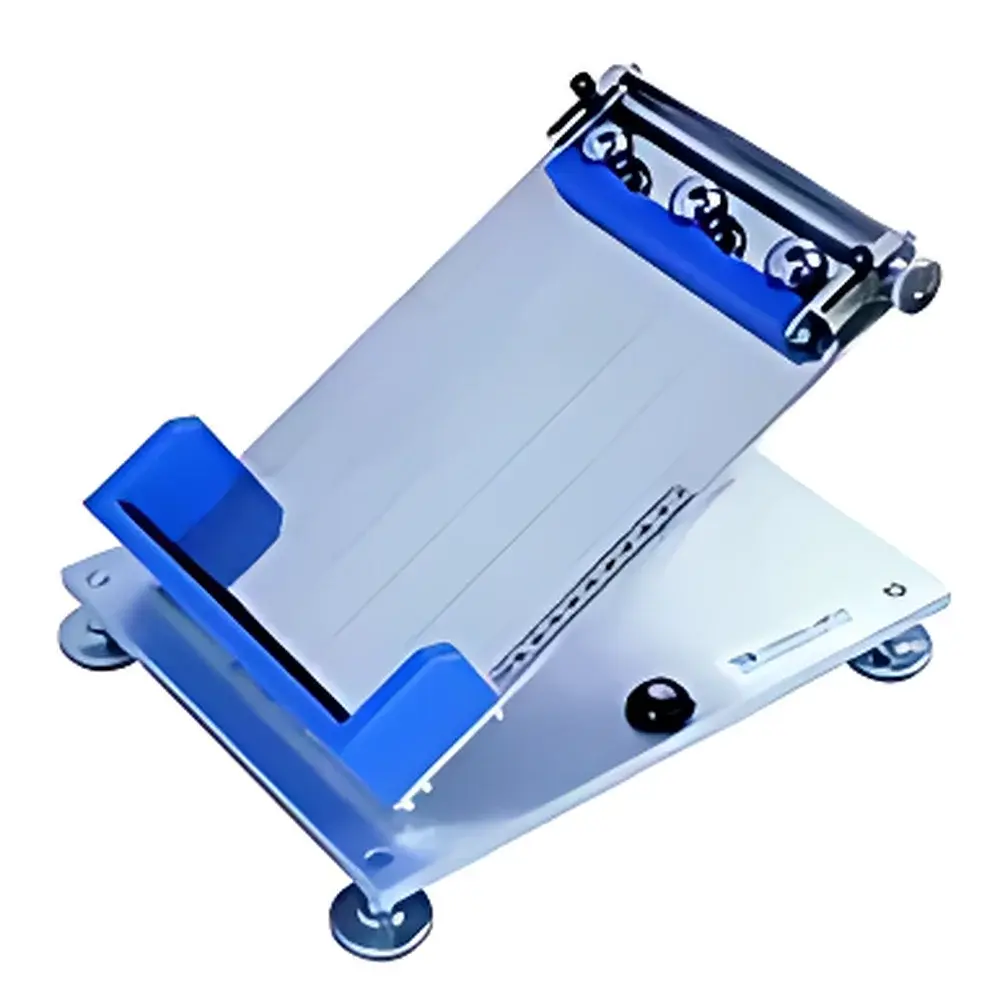
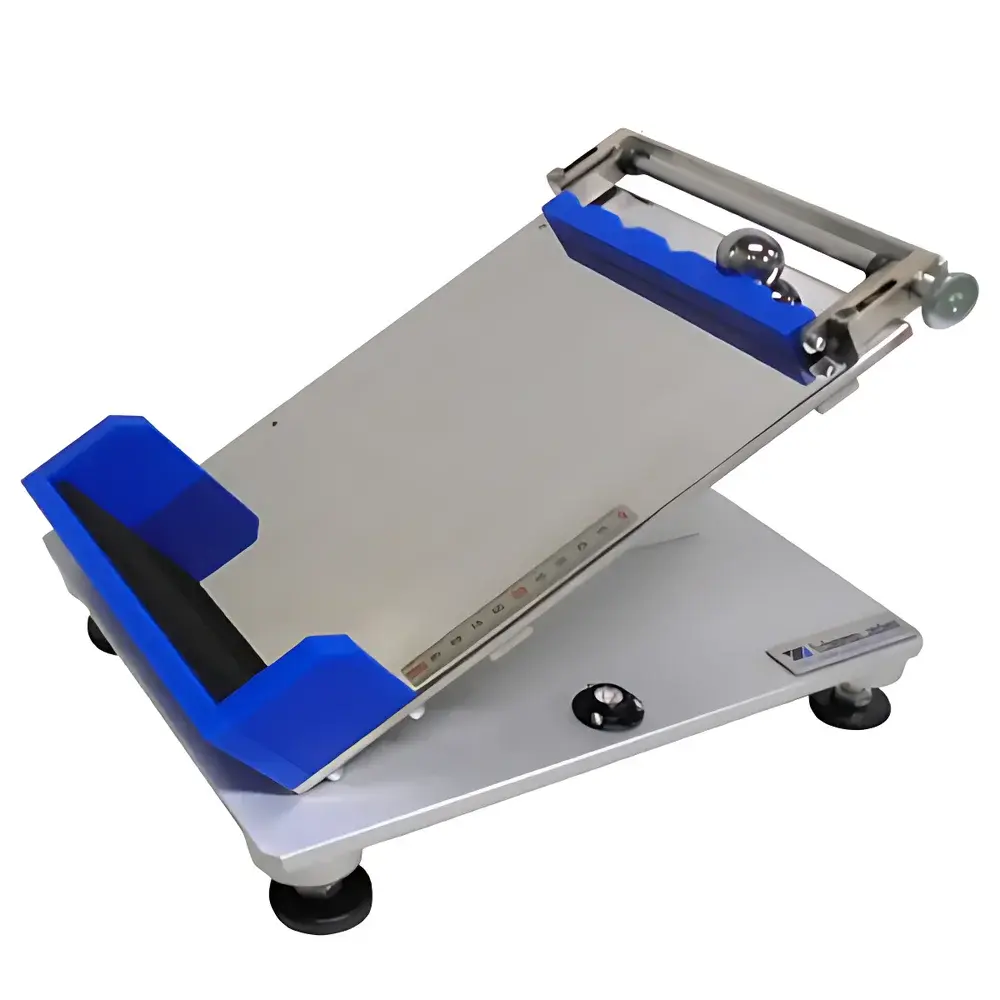
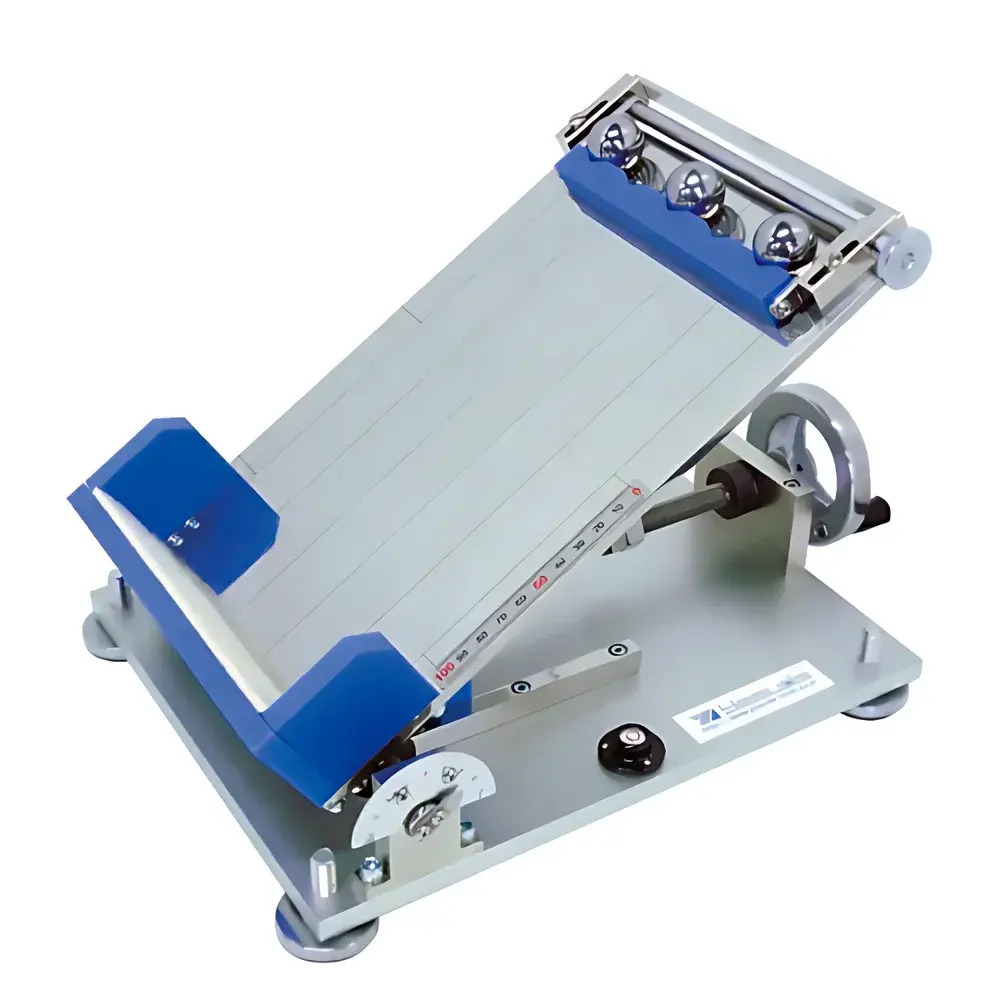
Yasuda No.183-BT Ball Tack Tester
| Brand | Yasuda |
|---|---|
| Origin | Japan |
| Model | No.183-BT |
| Compliance | JIS Z 0237 |
| Test Principle | Inclined-plane ball tack adhesion measurement |
| Configuration | Fixed-angle and variable-angle options available |
| Application | Pressure-sensitive adhesive (PSA) tapes, labels, and film coatings |
Overview
The Yasuda No.183-BT Ball Tack Tester is a precision-engineered instrument designed for quantitative evaluation of the initial tack—i.e., instantaneous adhesion—of pressure-sensitive adhesives (PSAs), including acrylic, rubber-based, and silicone formulations. It operates on the well-established inclined-plane ball tack principle defined in JIS Z 0237, which correlates the size of the largest steel ball that rolls down a standardized incline and comes to rest within a defined test zone with the adhesive’s surface energy, viscoelastic response, and micro-roughness interaction. Unlike peel or shear tests, ball tack measurement captures the dynamic contact mechanics occurring at the moment of first contact under minimal applied load—making it indispensable for R&D screening, QC release testing, and formulation benchmarking in tape, label, and functional film manufacturing.
Key Features
- Compliant with JIS Z 0237:2022—the Japanese Industrial Standard governing ball tack testing methodology, specimen preparation, environmental conditioning (23 °C ± 2 °C, 50 % RH ± 5 %), and pass/fail criteria.
- Dual configuration options: fixed-angle mode (standard 30° inclination) for rapid comparative assessment; variable-angle mode (adjustable from 15° to 45° in 5° increments) for detailed tack profiling across adhesive viscoelastic regimes.
- Calibrated stainless-steel test balls (diameters ranging from 0.5 mm to 10.0 mm in ASTM E29-compliant increments) supplied with NIST-traceable certification for dimensional accuracy.
- Robust aluminum alloy frame with anodized surface finish ensures long-term dimensional stability and resistance to laboratory chemical exposure.
- Integrated stop-block and optical alignment guide facilitate precise positioning of the test substrate (e.g., PET backing, release liner, or primed metal panel) relative to the rolling path.
- No motorization or electronic actuation—purely mechanical design eliminates calibration drift, reduces maintenance overhead, and supports GLP-aligned manual operation protocols.
Sample Compatibility & Compliance
The No.183-BT accommodates standard PSA-coated substrates up to 150 mm × 150 mm, including single- and double-coated tapes, transfer adhesives, medical-grade acrylics, and printable label facestocks. Substrate thickness is unrestricted within mechanical clamping limits (up to 3.0 mm). All test procedures align with internationally recognized frameworks: JIS Z 0237 serves as the primary reference, while method equivalence has been documented against ASTM D3121 (Standard Test Method for Ball Tack) and ISO 29862:2019 (Adhesives — Determination of tack by ball roll method). When integrated into a validated quality system, test records generated using this instrument support compliance with ISO 9001:2015 clause 8.5.2 (Identification and traceability) and FDA 21 CFR Part 11 requirements when paired with controlled documentation practices.
Software & Data Management
The No.183-BT is a stand-alone mechanical tester and does not incorporate embedded electronics or proprietary software. This design philosophy prioritizes operational transparency, audit readiness, and long-term method stability—critical attributes for regulated environments. Users record results manually in bound lab notebooks or LIMS-integrated spreadsheets, noting ball diameter (mm), angle setting (°), substrate lot number, conditioning duration, and ambient temperature/humidity. The absence of firmware eliminates cybersecurity concerns and ensures compatibility with legacy QA workflows. For laboratories requiring digital traceability, third-party data capture tools (e.g., tablet-based SOP checklists with timestamped photo documentation of ball arrest position) may be deployed without instrument modification.
Applications
- Formulation development: Correlating monomer ratios, crosslink density, and solvent residue with initial tack performance during PSA polymer synthesis.
- Batch release testing: Verifying consistency of tack across production lots of masking tape, protective film, or die-cut gasketing material.
- Substrate-adhesive pairing studies: Evaluating how surface treatment (e.g., corona, plasma, or primer application) influences interfacial tack on polyolefin films or low-surface-energy substrates.
- Accelerated aging analysis: Tracking tack degradation after thermal cycling (e.g., 70 °C/72 h per ASTM D1000) or UV exposure (ISO 4892-3).
- Supplier qualification: Benchmarking competitive PSA samples under identical environmental and procedural controls to support technical sourcing decisions.
FAQ
What standards does the No.183-BT comply with?
It is fully aligned with JIS Z 0237 and functionally equivalent to ASTM D3121 and ISO 29862.
Is operator training required to obtain reproducible results?
Yes—consistent specimen mounting, ball release technique, and environmental control are critical; Yasuda provides a certified SOP training module upon installation.
Can the instrument be used for non-tape PSA applications such as hot-melt adhesives or hydrogels?
Only if the material can be cast or laminated onto a rigid, flat backing and conditioned to meet JIS Z 0237 substrate specifications; direct application of uncured HMAs is not supported.
Does Yasuda offer calibration services or certified reference materials?
Yes—annual calibration of incline angle (±0.2° tolerance) and ball diameter verification (certified to ISO/IEC 17025) are available through authorized service centers in North America, Europe, and APAC.
How is measurement uncertainty estimated for ball tack results?
Per JIS Z 0237 Annex B, uncertainty arises primarily from ball diameter tolerance (±0.01 mm), angle deviation (±0.3°), and human judgment of “full stop” position—typical expanded uncertainty (k=2) is ±0.3 mm ball diameter equivalent.



