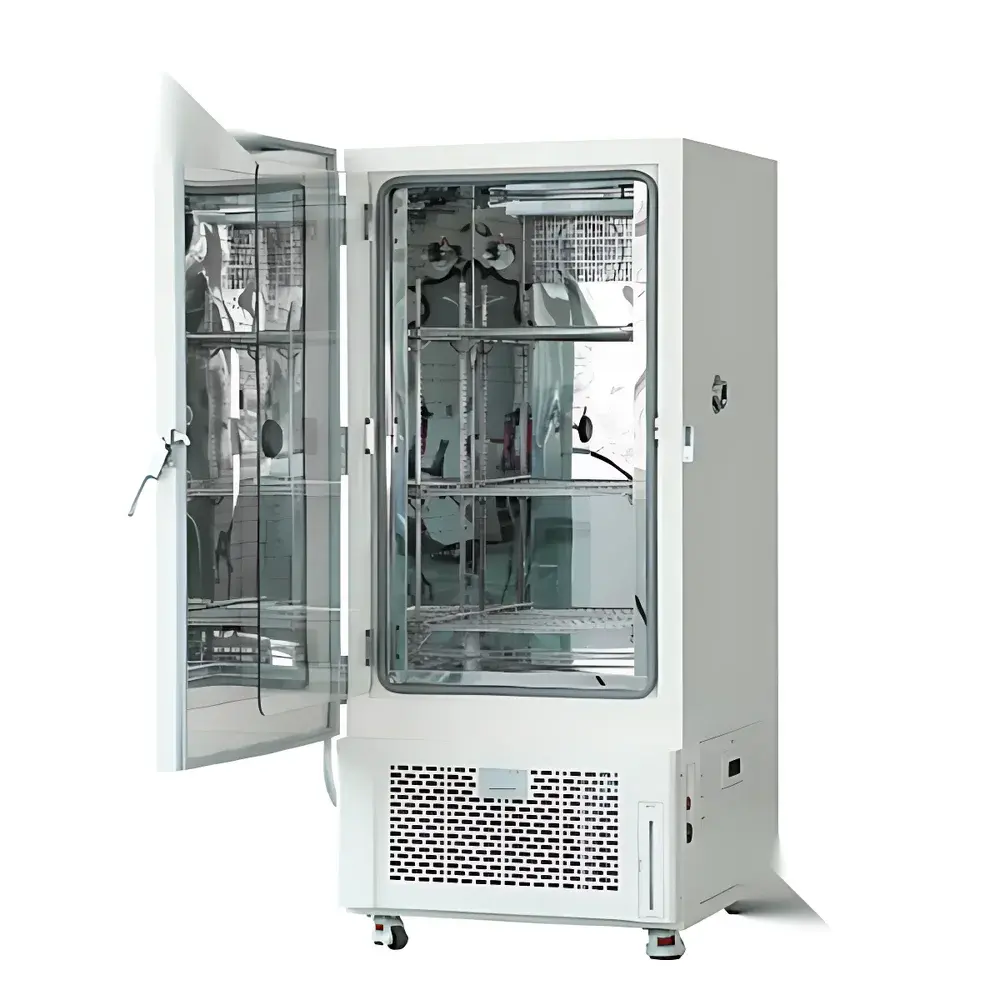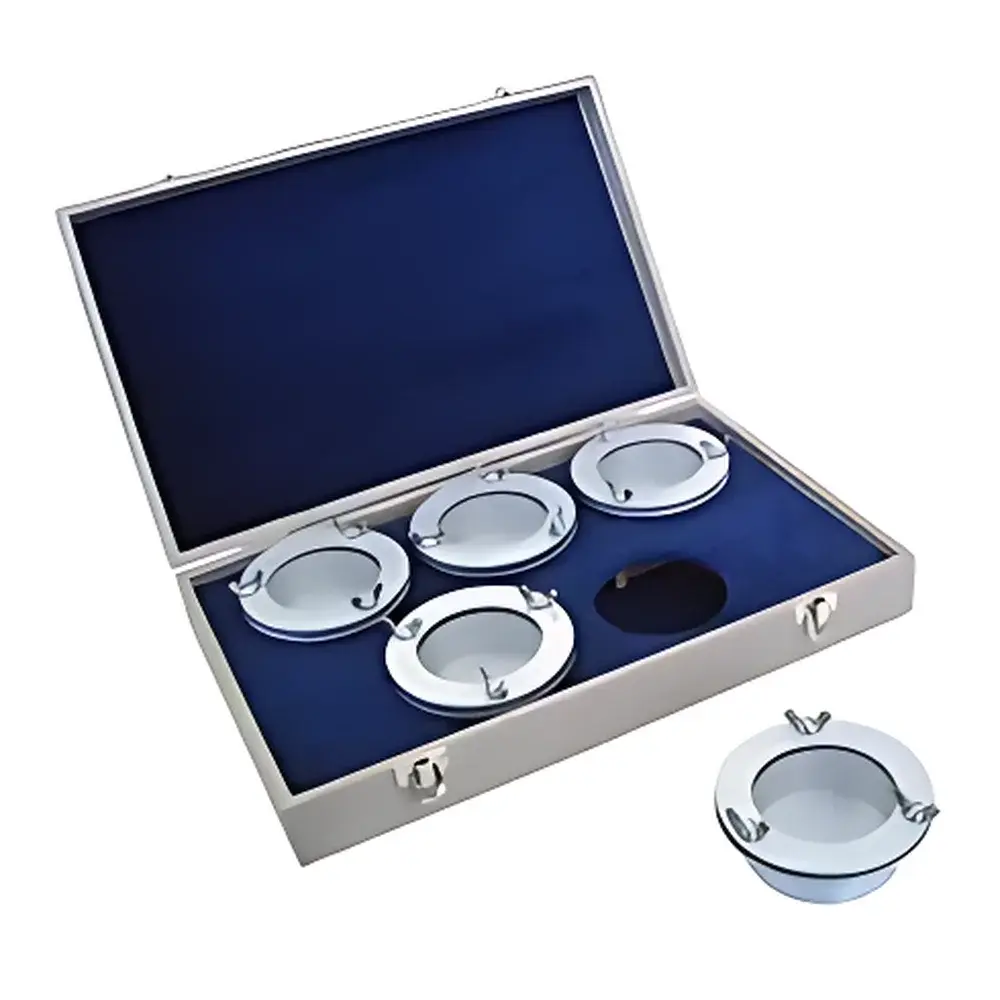
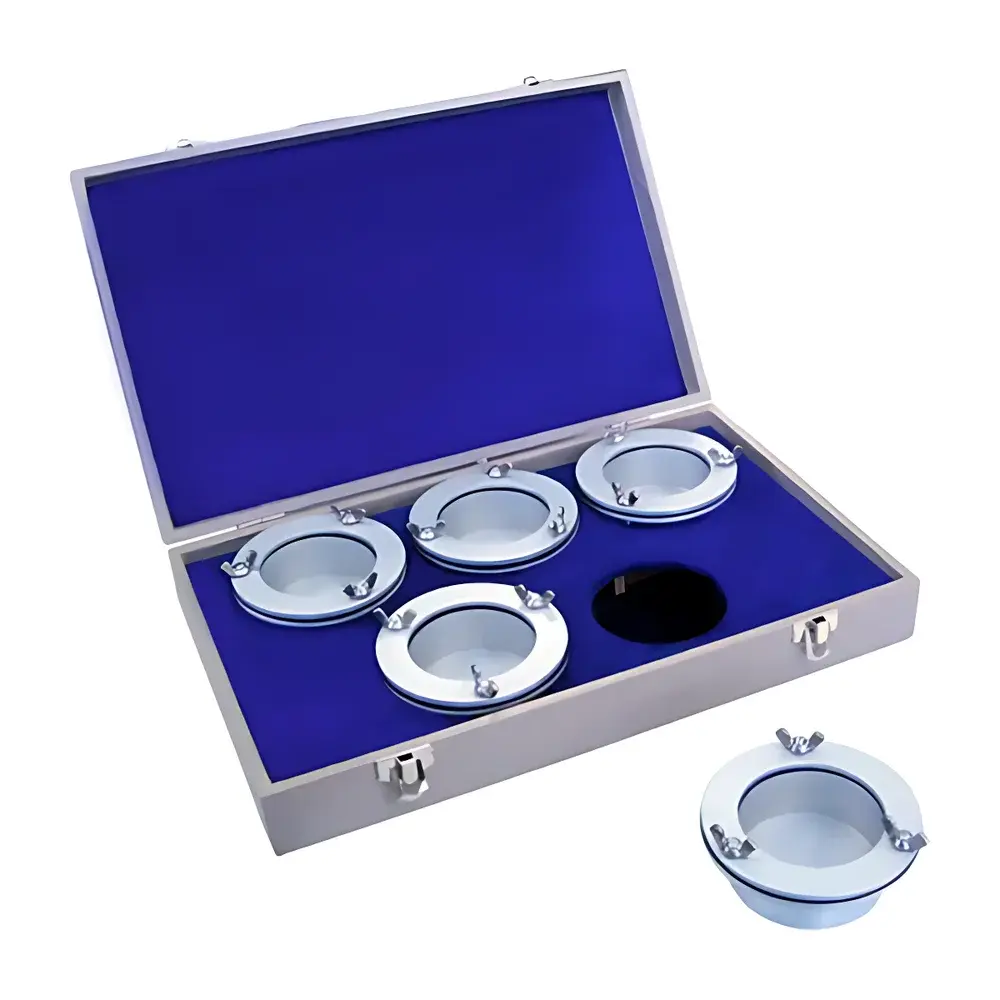
Yasuda No.401 Water Vapor Permeability Cup for Textiles
| Brand | Yasuda |
|---|---|
| Origin | Japan |
| Model | No.401 |
| Test Method | Calcium Chloride Desiccant Method (JIS L 1099 Type A-1) |
| Application | Textile Fabric Moisture Vapor Transmission Evaluation |
| Cup Type | Bolt-Tightened Sealed Permeation Cell |
| Compliance | JIS L 1099–2012 Annex A1 (Desiccant Method) |
| Dimensions | Standard 60 mm inner diameter test area |
| Material | High-Purity Stainless Steel (SUS316) body with fluoropolymer-sealed gasket |
Overview
The Yasuda No.401 Water Vapor Permeability Cup for Textiles is a precision-engineered, bolt-tightened permeation cell designed specifically for evaluating moisture vapor transmission behavior of woven, knitted, and nonwoven textile materials under controlled environmental conditions. It operates in accordance with the calcium chloride desiccant method specified in JIS L 1099–2012, Annex A1—commonly referred to as the “desiccant method” or “dry cup method.” In this gravimetric procedure, a conditioned textile specimen is sealed over the open mouth of the cup containing anhydrous calcium chloride (CaCl₂), which acts as a zero-relative-humidity sink. The assembly is then placed in a standardized climate chamber (typically 40 °C / 90% RH per JIS L 1099). Water vapor diffusing through the fabric is absorbed by the desiccant, resulting in measurable mass gain over time. The water vapor transmission rate (WVTR) is calculated as grams of water vapor transmitted per square meter per 24 hours (g·m⁻²·24h⁻¹), providing a reproducible, material-intrinsic metric critical for functional apparel, medical textiles, protective clothing, and technical fabrics.
Key Features
- Bolt-tightened mechanical sealing system ensures consistent clamping pressure and eliminates edge leakage—essential for low-permeability or high-stretch fabrics.
- High-purity SUS316 stainless steel construction resists corrosion from CaCl₂ hydration byproducts and supports long-term dimensional stability across repeated thermal cycling.
- Optimized internal geometry maintains uniform desiccant exposure surface and minimizes boundary-layer resistance at the fabric–air interface.
- Standardized 60 mm inner diameter test area (28.27 cm²) aligns with JIS L 1099 requirements, enabling direct comparability with certified reference data and interlaboratory studies.
- Integrated fluoropolymer (e.g., FKM or PTFE-coated EPDM) gasket provides chemical inertness, low compression set, and reliable sealing integrity after ≥500 cycles.
- No integrated electronics or sensors—designed exclusively as a passive, gravimetric test fixture compatible with analytical balances meeting ISO/IEC 17025 calibration requirements (e.g., readability ≤0.1 mg).
Sample Compatibility & Compliance
The No.401 cup accommodates flat textile specimens up to 2 mm thickness with minimal pre-conditioning distortion. It is validated for use with hydrophobic coatings, laminated membranes (e.g., PU, ePTFE), coated cotton, polyester blends, and melt-blown polypropylene—materials where edge diffusion artifacts must be minimized. Compliance is strictly limited to JIS L 1099–2012 Annex A1; it is not suitable for ASTM E96 (BW or BW-D methods), ISO 2528, or GB/T 12704 without procedural adaptation and uncertainty validation. Laboratories performing GLP or ISO/IEC 17025-accredited testing must document cup calibration history, desiccant lot traceability, balance verification records, and environmental chamber monitoring logs per clause 5.2 of JIS Z 8401.
Software & Data Management
As a passive gravimetric component, the No.401 cup does not incorporate embedded firmware, connectivity, or proprietary software. Data acquisition relies on external laboratory systems: analytical balances with RS232/USB output feeding into LIMS or Excel-based calculation templates compliant with JIS L 1099 section 6.3. For FDA-regulated applications (e.g., surgical gowns per ISO 13485), users may integrate cup usage logs and mass-change timestamps into 21 CFR Part 11–compliant electronic records via validated third-party data capture platforms. Audit trails must include operator ID, cup serial identifier (if engraved), desiccant batch number, and chamber environmental setpoints.
Applications
- Quality control of moisture-wicking sportswear and base-layer fabrics.
- Development screening of breathable barrier laminates for medical isolation gowns.
- Regulatory submission support for CE-marked personal protective equipment (PPE) under EU Regulation 2016/425.
- Comparative analysis of coating durability after laundering (per JIS L 1096 or AATCC 135).
- Validation of membrane integrity in waterproof-breathable outdoor gear.
- Academic research on hygroscopic transport mechanisms in biodegradable textile substrates.
FAQ
Is the No.401 cup compatible with ASTM E96 procedures?
No—it is dimensionally and functionally optimized for JIS L 1099 Annex A1 only. ASTM E96 requires different cup geometry, desiccant volume, and test dish depth; substitution invalidates compliance.
What desiccant is required, and how is it prepared?
Anhydrous calcium chloride (CaCl₂), 10–20 mesh, dried at 200 °C for 2 h and cooled in a desiccator. JIS L 1099 specifies 10 g ±0.1 g per cup.
Can the cup be used for liquid water penetration testing?
No. It is strictly for vapor-phase transport evaluation. Liquid hydrostatic head or spray impact tests require separate apparatus per JIS L 1092 or ISO 811.
How often should the cup be cleaned and passivated?
After each test cycle: rinse with deionized water, sonicate 10 min, dry at 60 °C, and inspect gasket for compression fatigue. Passivation with nitric acid is recommended quarterly for SUS316 components.
Does Yasuda provide calibration certificates?
No—the cup is a mechanical fixture, not a measuring instrument. Calibration applies to the balance and environmental chamber; cup conformity is verified against JIS dimensional tolerances (±0.05 mm bore diameter).