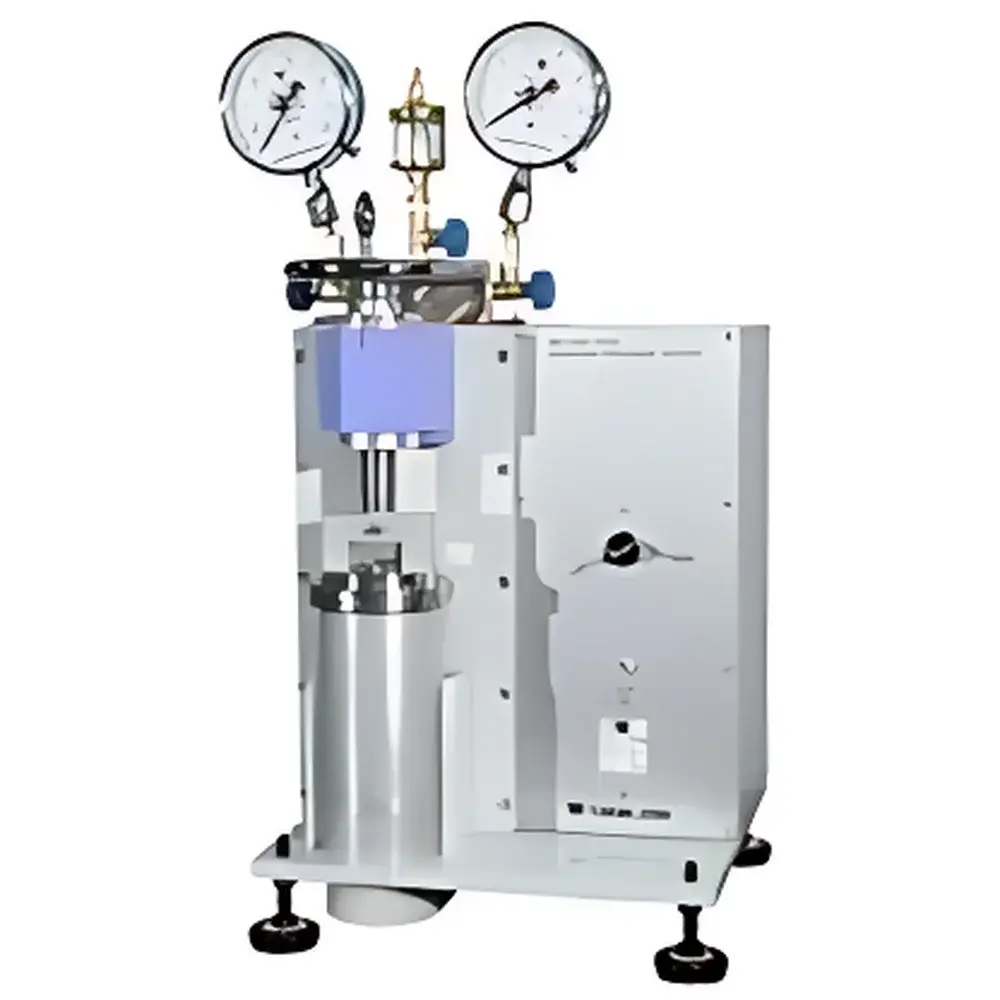
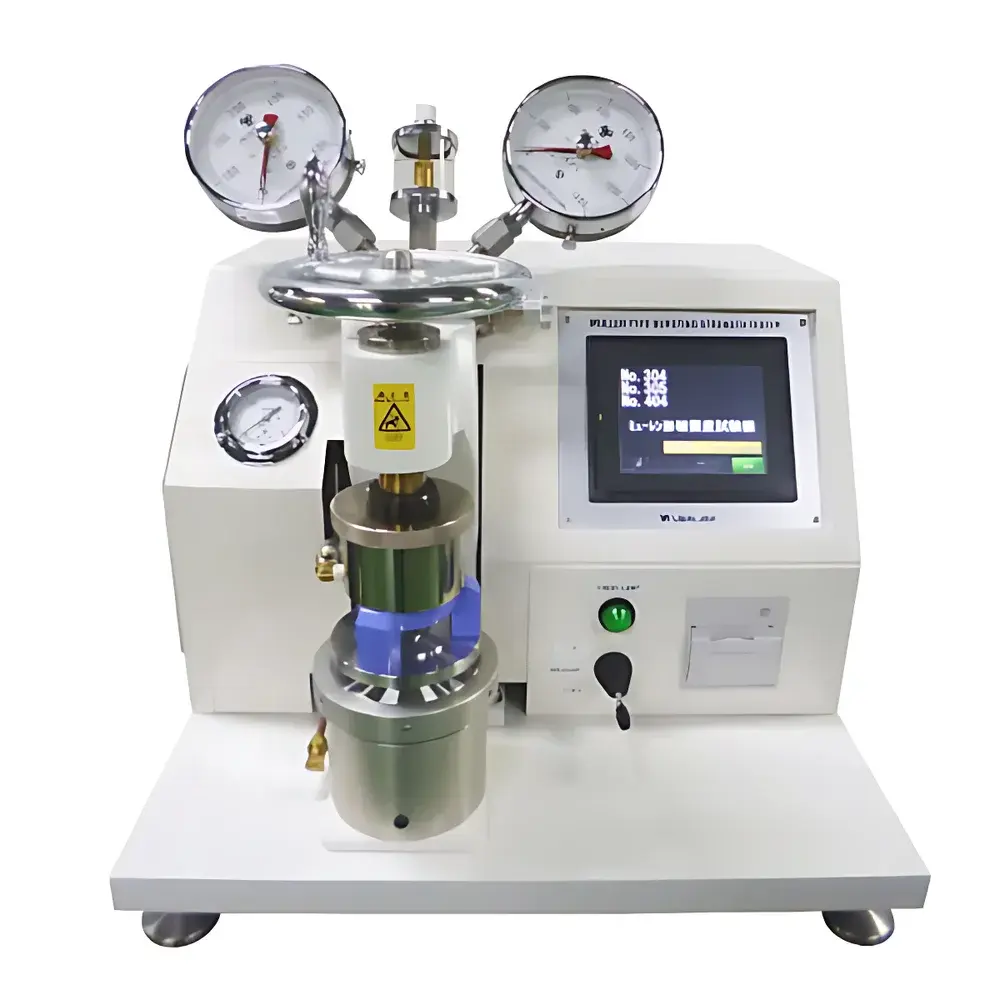
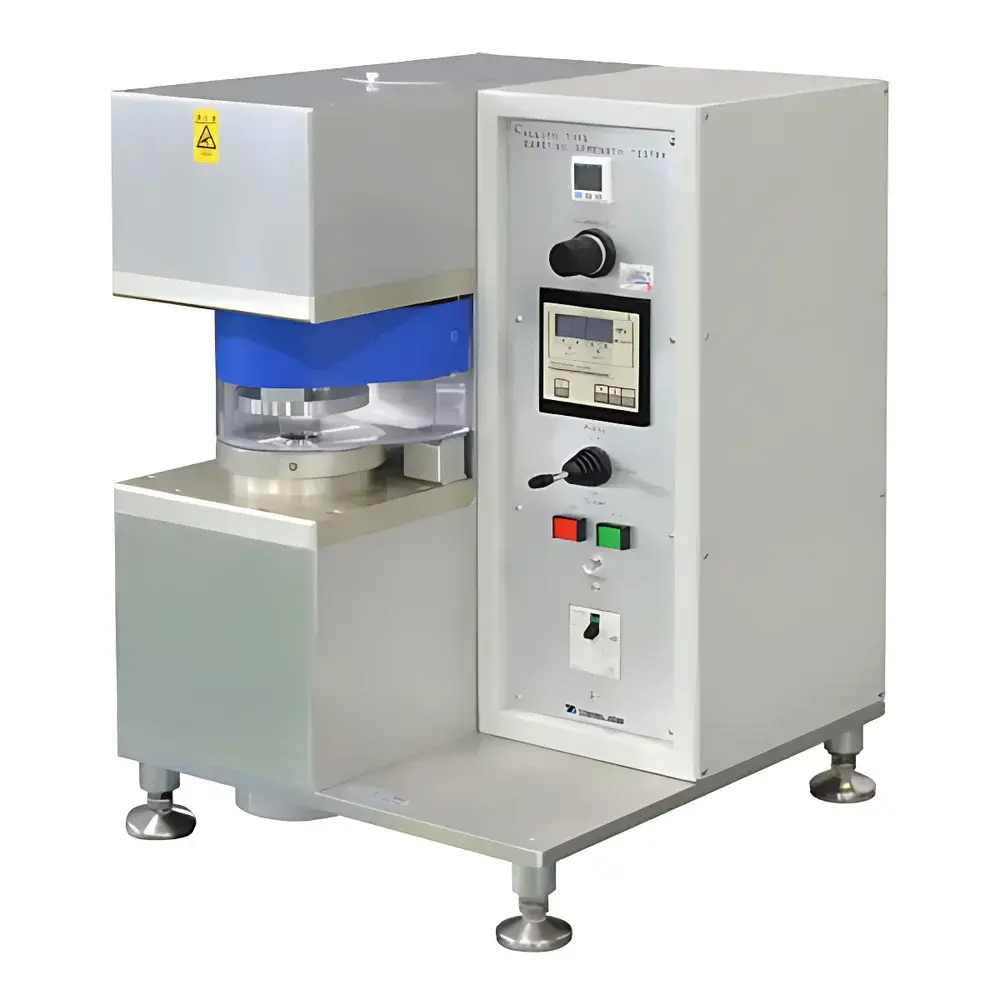
Yasuda No.404 Mullen-Type Fabric Bursting Strength Tester
| Brand | Yasuda |
|---|---|
| Origin | Japan |
| Model | No.404 |
| Compliance | JIS L1018, JIS L1085, JIS L1096, JASO Standards |
| Measurement Principle | Hydraulic Diaphragm Burst Test |
| Pressure Range | 0–600 kPa (typical for Mullen-type textile testers) |
| Diaphragm Material | Calibrated Elastomeric Rubber Membrane |
| Clamping Mechanism | Pneumatic or Mechanical Dual-Plate Clamp |
| Display | Analog Gauge or Digital Pressure Readout (configurable) |
| Sample Size | Standard 125 mm diameter circular specimen |
Overview
The Yasuda No.404 Mullen-Type Fabric Bursting Strength Tester is a precision-engineered instrument designed to determine the bursting strength of woven, knitted, nonwoven, and coated textile materials according to internationally recognized hydraulic diaphragm test principles. Based on the classical Mullen test method, the device applies uniformly distributed hydraulic pressure through a calibrated elastomeric rubber diaphragm to a centrally clamped fabric specimen until rupture occurs. The maximum pressure recorded at failure—corrected for the inherent burst resistance of the diaphragm itself—is reported as the fabric’s bursting strength in kilopascals (kPa). This principle ensures high reproducibility across laboratories and aligns with fundamental mechanics of planar stress distribution in flexible sheet materials. Unlike tensile or tear testing, bursting strength reflects multidirectional resistance to localized deformation and is especially critical for applications involving inflation, padding, filtration, or protective barrier performance.
Key Features
- Compliance with core Japanese Industrial Standards: JIS L1018 (general methods for textile testing), JIS L1085 (bursting strength of knitted fabrics), JIS L1096 (test methods for woven fabrics), and JASO (Japan Automobile Standards Organization) specifications for automotive interior textiles.
- Dual-plate clamping system with uniform sealing force to prevent specimen slippage or edge leakage during pressurization.
- Calibrated, low-hysteresis rubber diaphragm with documented baseline burst compensation values traceable to Yasuda’s factory calibration certificate.
- Robust hydraulic pressure generation and control architecture enabling stable ramp rates and minimal pressure overshoot.
- Modular design supporting optional digital pressure transducer integration for data logging compatibility with external acquisition systems.
- Compact footprint and mechanical simplicity optimized for QC laboratories requiring long-term operational stability without frequent recalibration.
Sample Compatibility & Compliance
The No.404 accommodates standard 125 mm diameter circular specimens—cut using a dedicated template cutter per JIS requirements. It is validated for use with natural fibers (cotton, wool), synthetic fibers (polyester, nylon), blends, laminates, geotextiles, and technical textiles used in medical gowns, airbags, and filtration membranes. All test procedures adhere to GLP-aligned documentation practices, and raw pressure data—including diaphragm correction factors—can be archived to support internal audit trails. While the instrument itself does not carry CE or FDA certification, its methodology is referenced in ISO 13938-1 (Textiles — Bursting strength of fabrics — Part 1: Hydraulic method) and forms part of broader quality control workflows compliant with ISO/IEC 17025-accredited textile testing laboratories.
Software & Data Management
The base No.404 configuration operates as a standalone analog or semi-digital instrument with direct pressure readout. For enhanced traceability, optional digital modules provide RS-232 or USB output of real-time pressure vs. time curves. Exported CSV files include timestamp, peak pressure, diaphragm offset value, operator ID, and sample ID fields—enabling integration into LIMS environments. Audit-ready reporting supports configurable pass/fail thresholds aligned with customer-defined specifications or contractual delivery requirements. Data integrity safeguards include write-protected storage and optional electronic signature functionality compatible with 21 CFR Part 11–aligned validation packages upon request.
Applications
- Quality assurance of apparel and home textile fabrics during incoming inspection and batch release.
- Validation of dimensional stability and structural integrity in technical textiles for automotive interiors (seat covers, headliners) per JASO M405 and M408 standards.
- Performance benchmarking of medical barrier fabrics against ASTM F1342 (Standard Test Method for Resistance of Protective Clothing Materials to Compression-Induced Liquid Penetration).
- R&D evaluation of coating adhesion, lamination bond strength, and hydrostatic head correlation in waterproof-breathable membranes.
- Regulatory submission support for PPE certifications where bursting resistance serves as a surrogate indicator of mechanical durability under dynamic loading conditions.
FAQ
What standards does the Yasuda No.404 comply with?
It is engineered and verified for JIS L1018, JIS L1085, JIS L1096, and JASO specifications. Its test methodology is technically equivalent to ISO 13938-1 and widely accepted in global textile supply chain audits.
How is diaphragm contribution corrected in the final result?
Each unit ships with a certified diaphragm calibration sheet listing its individual zero-pressure offset and nonlinear correction curve. Operators apply these values manually or via integrated software prior to reporting.
Can the No.404 be used for nonwovens and coated fabrics?
Yes—its uniform hydraulic loading mechanism is particularly suitable for heterogeneous structures where tensile clamping may induce edge artifacts or premature failure.
Is third-party calibration support available?
Yasuda-authorized service partners in North America, Europe, and APAC offer annual calibration services with NIST-traceable pressure standards and full compliance documentation.
What maintenance is required for long-term accuracy?
Routine verification includes diaphragm visual inspection for micro-cracks, clamp surface cleaning, and annual recalibration of the pressure sensing train. No consumables beyond replacement diaphragms are required.