
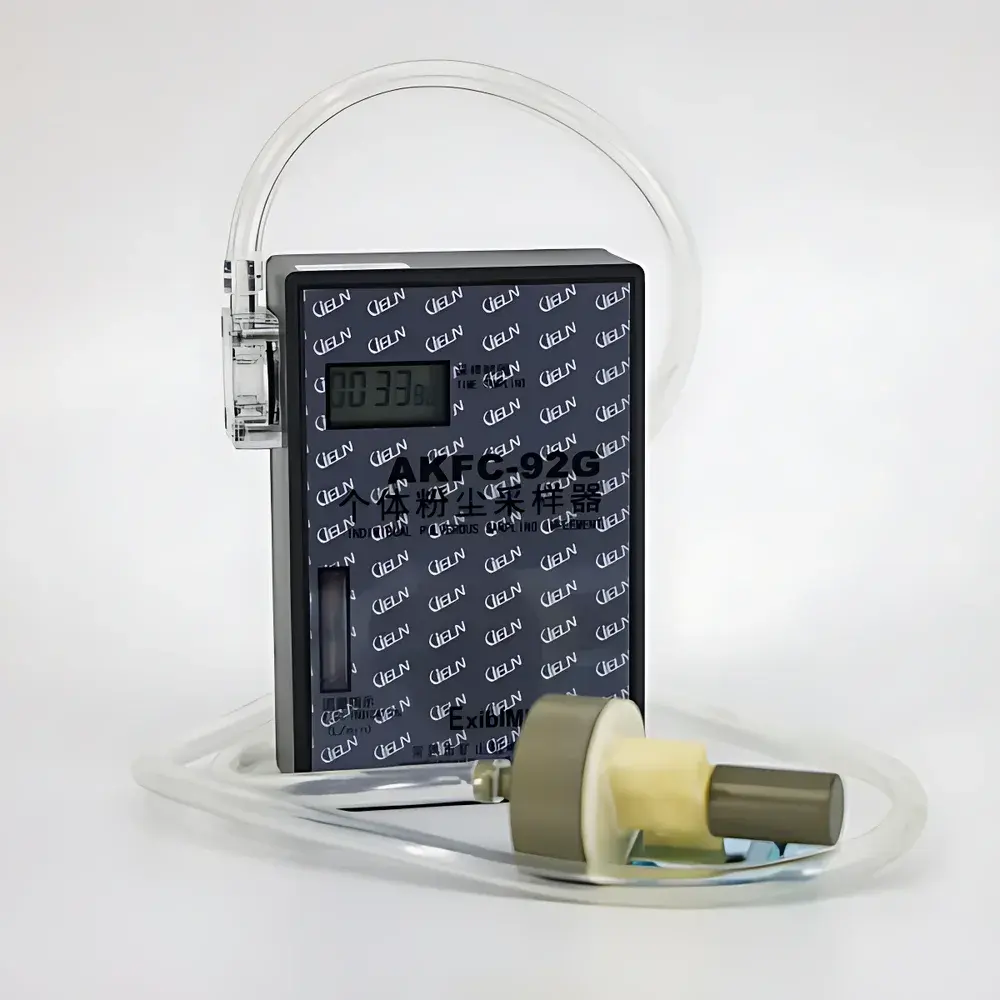
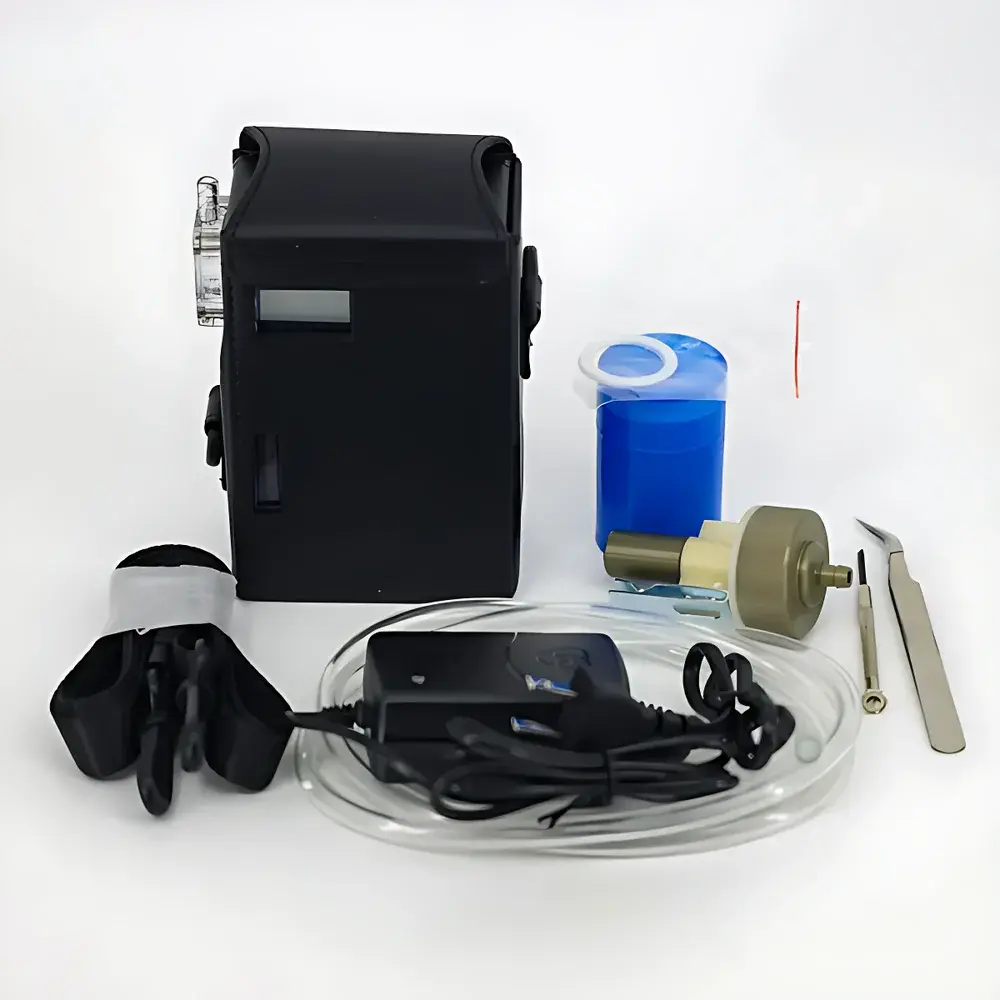
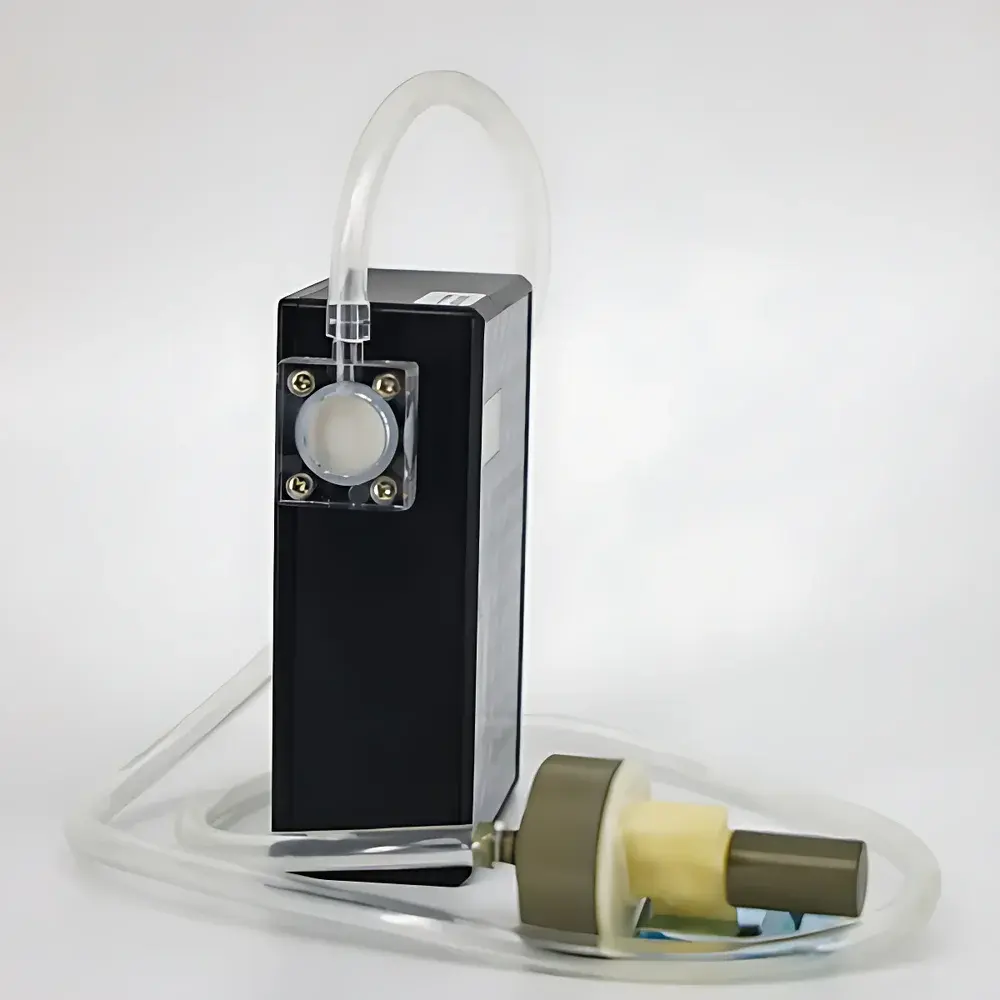
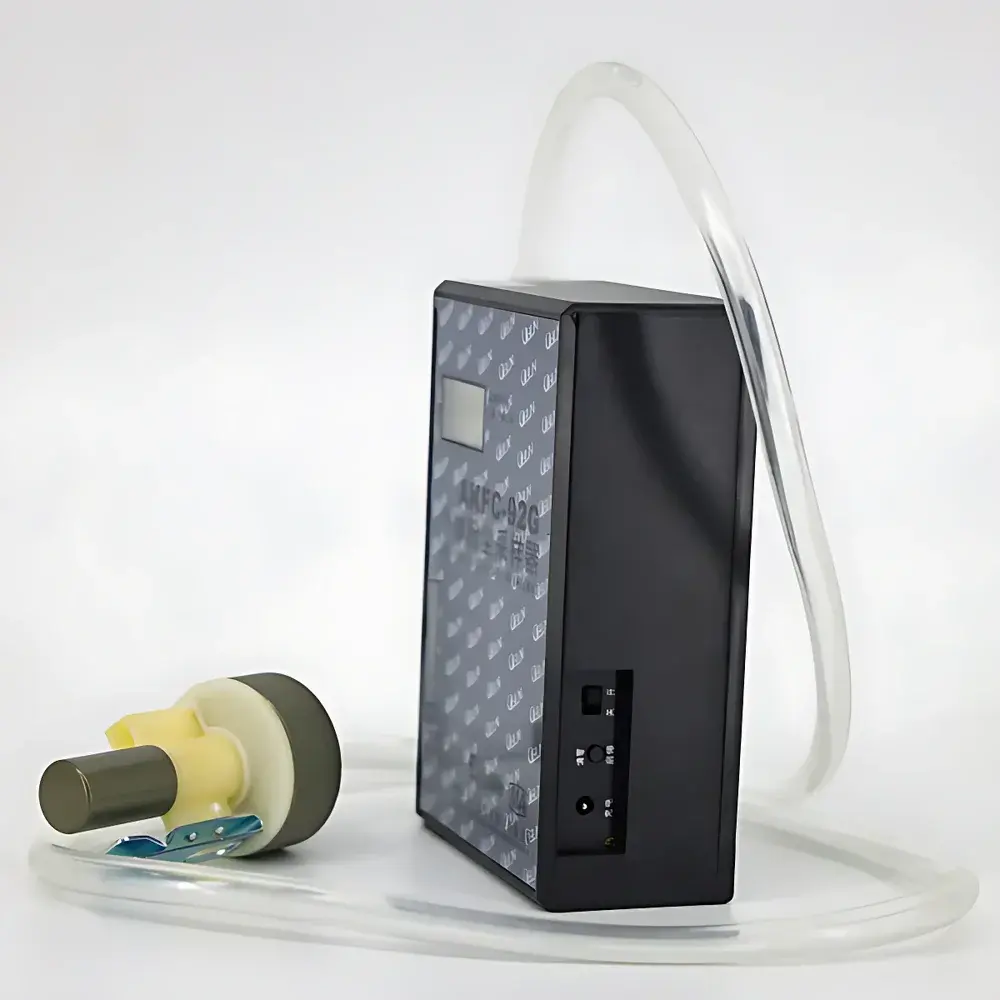
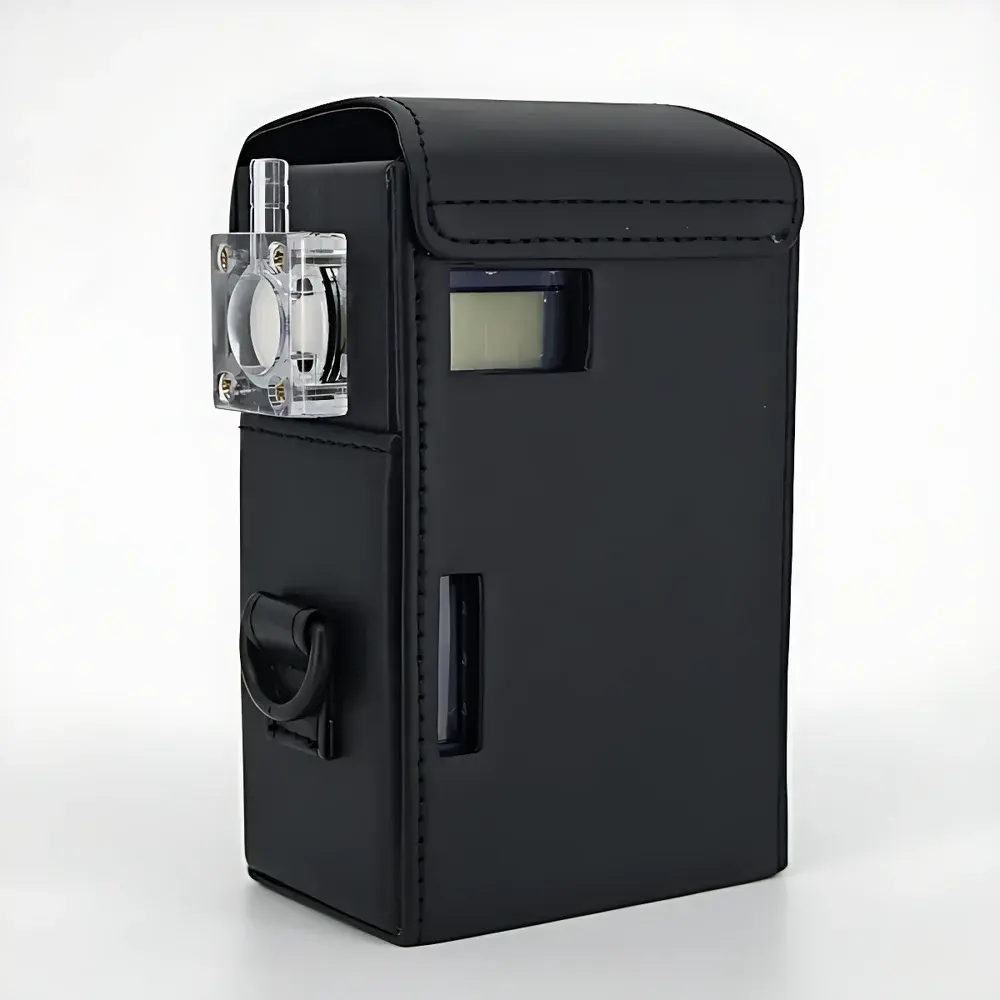
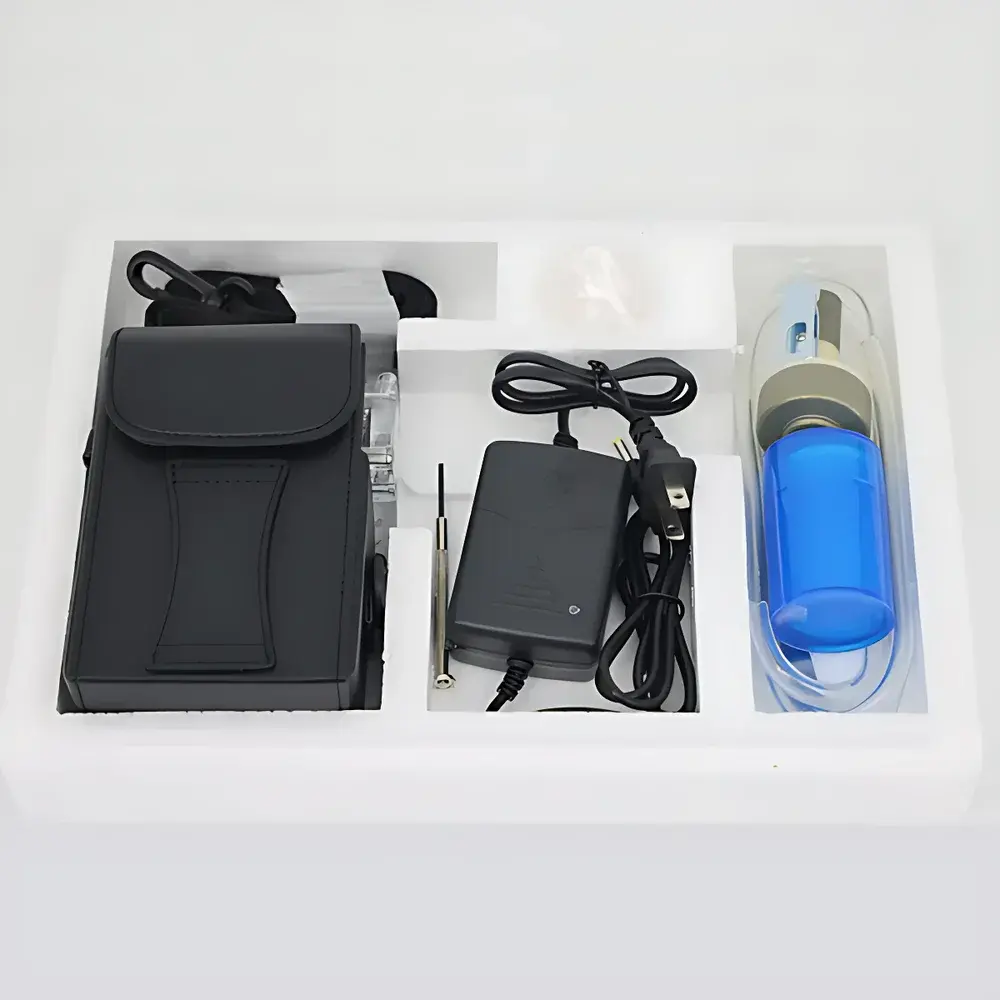
YINHEKEJI AKFC-92G Intrinsically Safe Personal Dust Sampler
| Brand | YINHEKEJI |
|---|---|
| Origin | Jiangsu, China |
| Model | AKFC-92G |
| Sampling Flow Rate | 2 L/min |
| Maximum Negative Pressure | >5000 Pa |
| Load Capacity | >2000 Pa |
| Dust Collection Range | Total Dust & Respirable Dust (BMRC-curve compliant) |
| Continuous Operation Time | >10 h |
| Explosion Protection Type | Mine-used Intrinsic Safety “iI” |
| Noise Level | <60 dB(A) |
| Operating Temperature | 0–35 °C |
| Relative Humidity | <95% RH |
| Dimensions | 120 × 80 × 42 mm |
| Weight | 450 g |
Overview
The YINHEKEJI AKFC-92G Intrinsically Safe Personal Dust Sampler is a compact, field-deployable instrument engineered for time-weighted average (TWA) concentration measurement of airborne particulate matter in occupational environments—particularly those with explosion hazards. It operates on the principle of constant-flow gravimetric sampling: ambient air is drawn through a pre-weighed filter membrane at a precisely regulated volumetric flow rate (2 L/min), capturing total and respirable dust fractions in accordance with the British Medical Research Council (BMRC) inhalability curve. The sampler integrates a brushless DC motor-driven vacuum pump, microprocessor-controlled flow stabilization circuitry, low-voltage protection logic, and an intrinsically safe power management system. Its fully sealed, flame-retardant ABS housing meets stringent requirements for moisture resistance, electrostatic dissipation, and mechanical robustness in underground mining, chemical processing, grain handling, and other Class I, Division 1 hazardous locations.
Key Features
- Intrinsically safe design certified to “iI” (Mine-used Intrinsic Safety) standard—suitable for use in methane- and coal-dust-laden atmospheres without risk of ignition.
- Dual-mode dust collection capability: compatible with both total dust (via standard filter cassette) and respirable dust (via cyclone pre-separator conforming to BMRC specifications).
- Stable 2.0 ± 0.1 L/min sampling flow maintained across variable filter loading conditions, verified per ISO 7708:1995 and EN 481:1993 protocols.
- Integrated digital timer with real-time display, automatic start/stop synchronization with pump activation, and non-volatile time retention upon power interruption.
- Self-contained rechargeable Ni-MH battery pack (6 × 1.2 Ah), delivering >10 hours of continuous operation at rated flow; open-circuit voltage ≥8.4 V when fully charged.
- Front-panel tactile membrane switches (start/stop, reset) eliminate mechanical wear and enhance ingress protection (IP54 equivalent).
- Onboard analog flow indicator enables immediate visual verification of operational flow without external calibration tools.
Sample Compatibility & Compliance
The AKFC-92G supports standard 37-mm and 40-mm diameter polycarbonate or mixed-cellulose ester (MCE) filter membranes (e.g., MCE filters meeting ASTM D1357 requirements). When used with a certified cyclonic pre-selector (e.g., GK2.69 or IOM-style), it achieves respirable fraction separation aligned with the BMRC convention (50% cut-point at 4.0 µm aerodynamic diameter). The device complies with GB/T 20964–2007 (Chinese national standard for personal dust samplers), AQ 1019–2006 (Coal Mine Safety Regulations), and relevant clauses of IEC 60079-0 and IEC 60079-11 governing intrinsic safety in explosive atmospheres. While not FDA 21 CFR Part 11–certified out-of-box, audit-ready usage logs—including timestamped start/stop events and manual recording of pre-/post-filter masses—support GLP-aligned data integrity practices in industrial hygiene programs.
Software & Data Management
The AKFC-92G is a standalone hardware instrument with no embedded firmware-based data logging or wireless connectivity. All quantitative analysis is performed offline using gravimetric methodology: mass difference (mg) between pre- and post-sampling filter weights is divided by total sampled volume (L), derived from recorded time (min) × 2.0 L/min. Users are advised to document timestamps, environmental conditions (temperature, humidity), and filter IDs in laboratory notebooks compliant with ISO/IEC 17025 documentation requirements. For enterprise-scale deployment, integration with LIMS platforms is achieved via manual entry or spreadsheet import of calculated TWA concentrations (mg/m³), ensuring traceability under OSHA 1910.1200 and EU Directive 2004/37/EC reporting frameworks.
Applications
- Personal exposure monitoring for coal miners, foundry workers, cement plant operators, and pharmaceutical manufacturing personnel handling dry powders.
- Area sampling in confined spaces where combustible dust clouds may form—e.g., silos, mixing hoppers, bagging stations.
- Baseline assessment and periodic re-evaluation in compliance with national permissible exposure limits (PELs) and ACGIH TLVs® for respirable crystalline silica (SiO₂), coal dust, and metal fumes.
- Validation of local exhaust ventilation (LEV) system performance through comparative sampling upstream/downstream of capture hoods.
- Supporting epidemiological studies requiring standardized, field-portable gravimetric dust metrics across multi-site occupational cohorts.
FAQ
What does “iI” intrinsic safety certification mean for field use?
It indicates that the device’s electrical circuits are designed to limit energy (voltage, current, power) below levels capable of igniting specified flammable gas–air or dust–air mixtures—even under fault conditions—per IEC 60079-11. This permits safe operation in underground coal mines and other Zone 0/10 hazardous areas.
Can the flow rate be recalibrated in the field?
Yes—via the dedicated flow adjustment port. Calibration should be verified using a NIST-traceable primary standard (e.g., dry calibrator or bubble meter) before each shift or after filter replacement, per ISO 8503-2 recommendations.
Is the timer traceable for regulatory audits?
The timer provides accurate elapsed time but lacks cryptographic timestamping or electronic audit trail. For compliance with ISO 17025 or OSHA recordkeeping rules, users must manually log start/stop times alongside analyst initials and calibration verification records.
How often should the battery be replaced?
Battery service life is typically 2–3 years under normal cycling. Replacement is required when fully charged voltage falls below 6.0 V or runtime drops below 4 hours at nominal load—indicating irreversible capacity loss.
Does the unit include a cyclone pre-separator?
No—the AKFC-92G is supplied as a base sampler. Cyclonic or impactor-based pre-selectors (e.g., GK2.69, IOM, or Higgins-Dewell) must be procured separately and mounted upstream of the inlet to achieve respirable dust fractionation.







