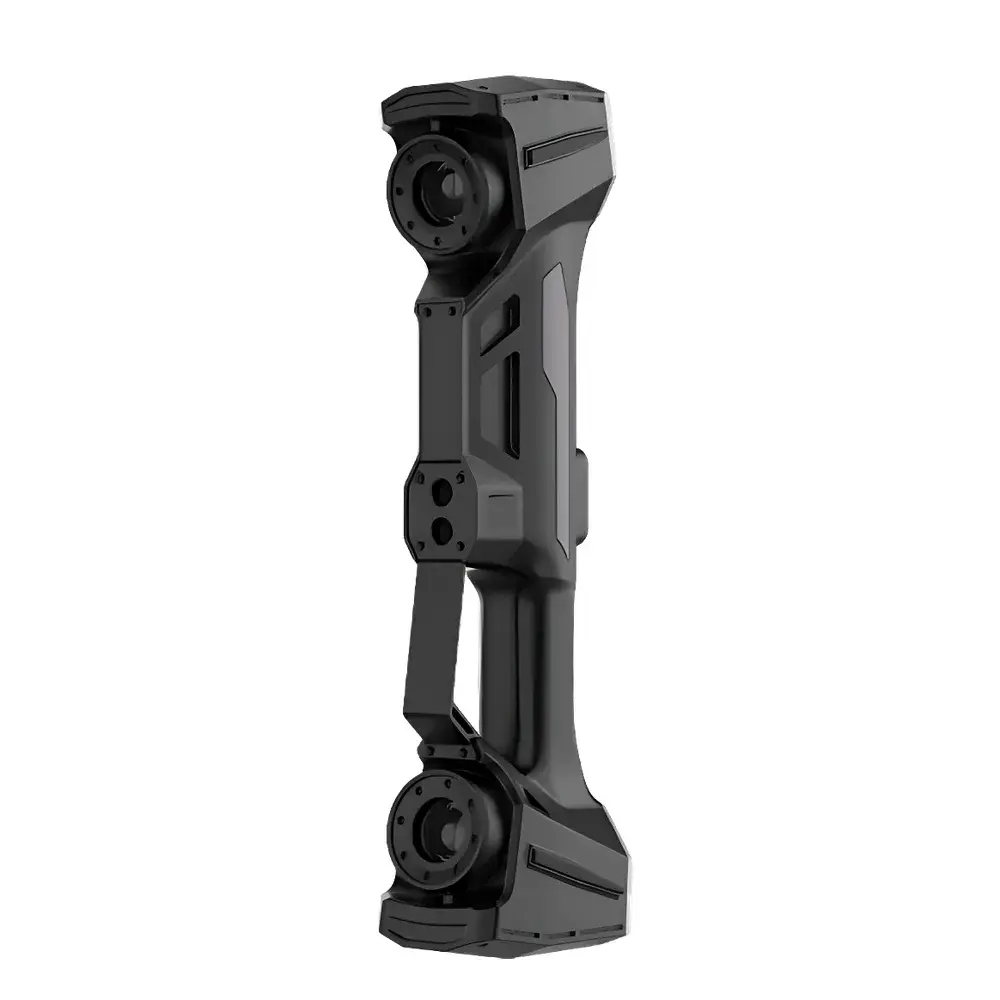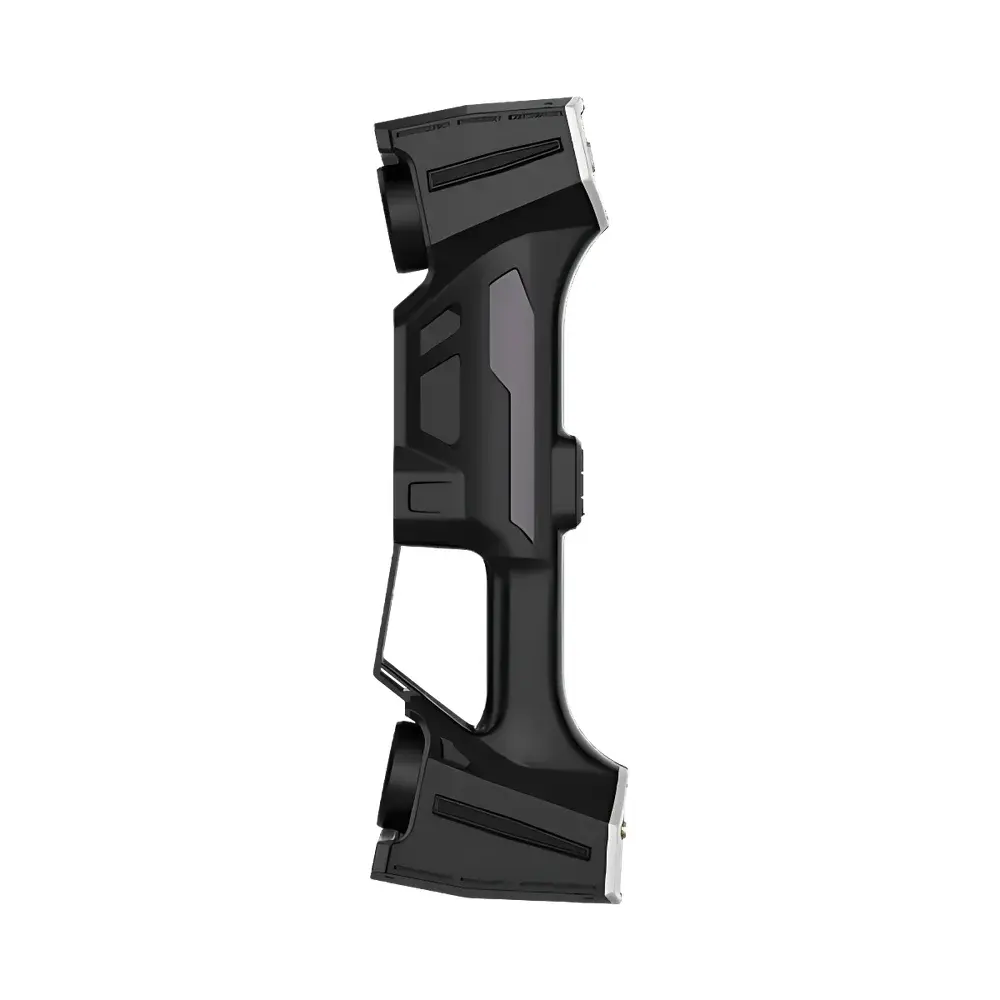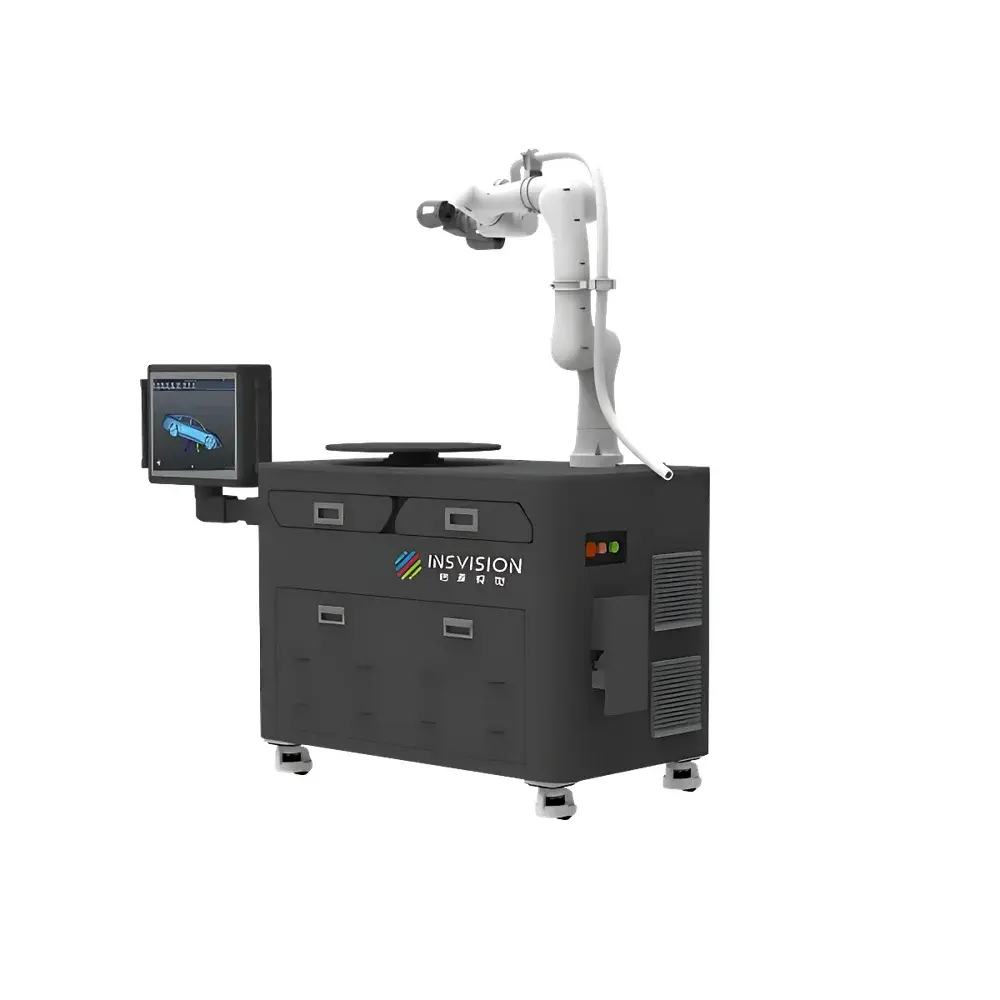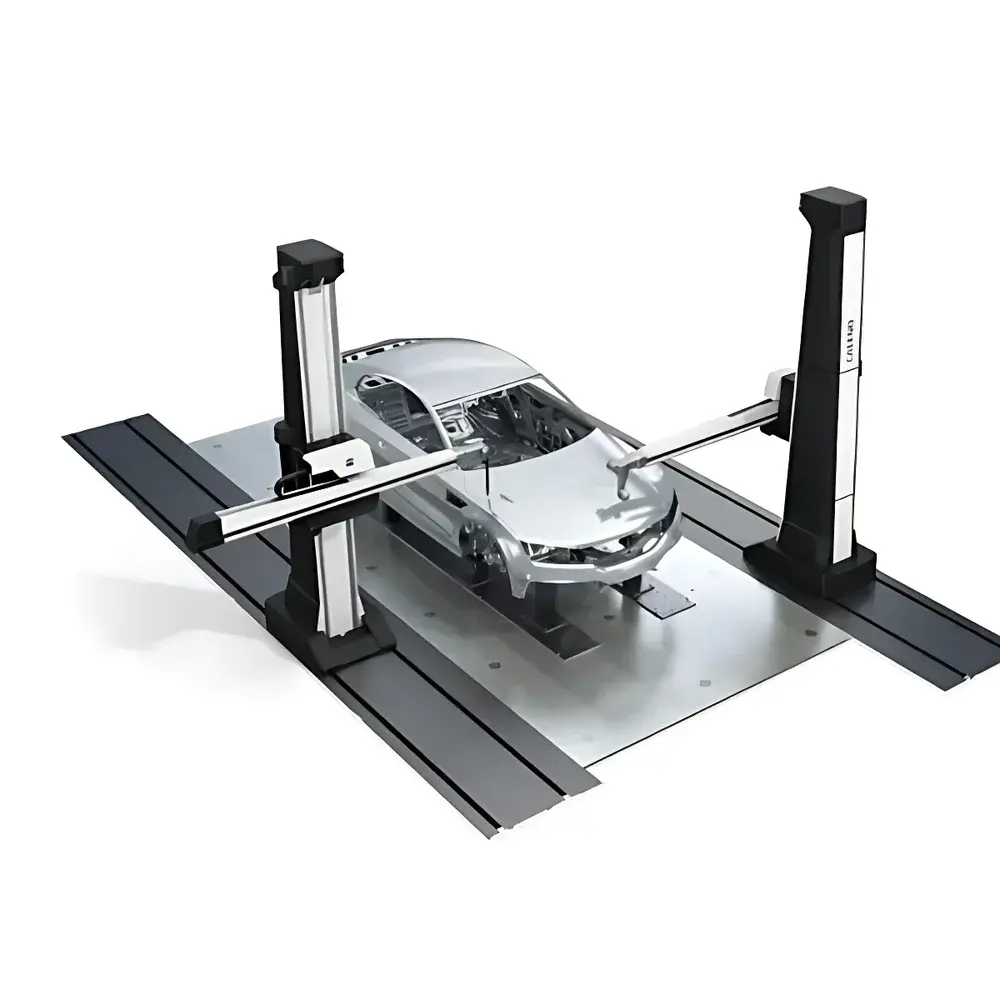
ZEISS CALENO Multi-Sensor Horizontal-Arm CMM
| Brand | ZEISS |
|---|---|
| Origin | Shanghai, China |
| Manufacturer Type | Original Equipment Manufacturer (OEM) |
| Regional Classification | Domestic (China-made) |
| Model | ZEISS CALENO |
| Configuration | Cantilever-Type |
| Operation Mode | Fully Automated |
| Instrument Class | Shop-Floor CMM |
| Measurement Principle | Hybrid Contact & Non-Contact (Tactile Probing + Optical Imaging) |
| Primary Application Sectors | Automotive Manufacturing, Powertrain Components, Large-Body Sheet Metal Assemblies |
Overview
The ZEISS CALENO is a next-generation multi-sensor horizontal-arm coordinate measuring machine (CMM) engineered for high-throughput, high-accuracy dimensional metrology in demanding production environments. Unlike conventional shop-floor CMMs, the CALENO integrates robotic motion architecture with metrological-grade mechanical stability—leveraging ZEISS’s proprietary Hambot kinematic platform. This hybrid design combines the dynamic acceleration and path flexibility of industrial robots with the thermal stability, geometric fidelity, and traceable uncertainty performance expected from precision metrology systems. At its core, the CALENO operates on a dual-measurement paradigm: tactile probing for certified dimensional verification per ISO 10360 and ASME B89.4.1, and non-contact optical imaging via the integrated ZEISS EagleEye vision system for rapid surface capture, edge detection, and feature-based alignment. The system is calibrated to ISO 17025-accredited standards and supports full uncertainty budgeting in accordance with VDI/VDE 2617 and EURAMET cg-18 guidelines.
Key Features
- Modular multi-sensor head with automatic tool changer (ATC), supporting interchangeable tactile probes (including scanning and trigger types), structured-light sensors, and telecentric optical modules
- Robust cantilever mechanical architecture with thermally compensated granite base and carbon-fiber arm—designed for long-term stability under ambient shop-floor conditions (15–30 °C, humidity ≤75% RH)
- ZEISS EagleEye high-resolution optical imaging system enabling sub-pixel edge detection and real-time point cloud generation; achieves up to 85% reduction in measurement cycle time versus tactile-only routines without compromising GUM-compliant uncertainty
- Integrated environmental monitoring (temperature, air pressure, humidity) with real-time compensation algorithms compliant with ISO 14253-2 and VDI/VDE 2627
- Shop-floor hardened control cabinet with IP54-rated enclosure and redundant power conditioning for uninterrupted operation in electrically noisy manufacturing settings
- Collision avoidance system using 3D time-of-flight (ToF) sensors and predictive path modeling—certified per ISO/TS 15066 for collaborative operation zones
Sample Compatibility & Compliance
The ZEISS CALENO accommodates parts ranging from 1.2 m × 0.8 m × 0.6 m (L×W×H) up to 4.5 m × 2.0 m × 1.2 m, with mass capacity up to 250 kg. It supports direct mounting on reinforced concrete foundations or vibration-isolated steel frames meeting ISO 5347 Class 2 requirements. The system complies with CE marking directives (Machinery Directive 2006/42/EC, EMC Directive 2014/30/EU), and meets functional safety requirements per EN ISO 13849-1 PL e / Category 4. All tactile probe calibrations are traceable to PTB (Physikalisch-Technische Bundesanstalt) reference standards, and optical sensor validation follows ISO 10360-8 Annex D protocols for vision-based CMMs. For regulated industries, audit-ready calibration records and measurement reports support FDA 21 CFR Part 11 electronic signature compliance when paired with ZEISS CALYPSO software v9.10 or later.
Software & Data Management
Controlled by ZEISS CALYPSO metrology software (v9.10+), the CALENO provides unified programming, execution, and reporting across all sensor modalities. CALYPSO features embedded GD&T evaluation per ISO 1101 and ASME Y14.5-2018, automated report generation in PDF/XML formats, and native integration with Siemens Teamcenter, PTC Windchill, and SAP QM modules via OPC UA and RESTful APIs. Audit trails—including operator ID, timestamped parameter changes, sensor calibration status, and raw point-cloud metadata—are retained for ≥10 years in encrypted SQLite databases, satisfying GLP/GMP data integrity requirements. Optional ZEISS PiWeb Connect enables secure cloud-based dashboarding and cross-site comparison of process capability indices (Cp/Cpk) with role-based access controls.
Applications
The CALENO is deployed extensively in Tier-1 automotive suppliers for inline validation of body-in-white (BIW) components, chassis subassemblies, and battery enclosures. Its hybrid sensing capability enables simultaneous verification of critical GD&T characteristics—including position, profile, perpendicularity, and surface texture parameters (Sa, Sq)—on mixed-material assemblies (steel, aluminum, CFRP). Additional use cases include aerospace structural brackets, railcar bogie frames, and large-scale agricultural equipment housings. In R&D labs, the system supports reverse engineering workflows with <0.02 mm volumetric accuracy (MPEE0,MPE per ISO 10360-2), while its programmable ATC allows unattended overnight inspection of production lots under lights-out manufacturing protocols.
FAQ
Is the ZEISS CALENO certified for use in ISO/IEC 17025 accredited laboratories?
Yes—the base mechanical system, tactile probe modules, and EagleEye optical subsystem undergo annual third-party verification by DAkkS-accredited bodies. Calibration certificates include expanded uncertainties (k=2) and full traceability chains.
Can the CALENO be integrated into an existing factory automation network?
It supports PROFINET, EtherNet/IP, and OPC UA server/client modes for seamless PLC synchronization, MES handshaking, and real-time SPC data streaming.
What is the typical warm-up time before achieving specified measurement uncertainty?
Under stable ambient conditions (±1 °C/h variation), the system reaches thermal equilibrium and full specification compliance within 30 minutes after power-on.
Does ZEISS provide on-site training for operators and metrologists?
Yes—comprehensive certification programs include CALYPSO programming, GD&T evaluation methodology, multi-sensor fusion strategies, and ISO 14253-1 conformance testing procedures.
How is sensor calibration maintained during automated tool-changing cycles?
Each sensor module carries an embedded RFID tag storing its latest calibration matrix, which is automatically loaded and validated at every ATC engagement; drift correction occurs via in-situ artifact referencing using ZEISS-certified ceramic gauge blocks.