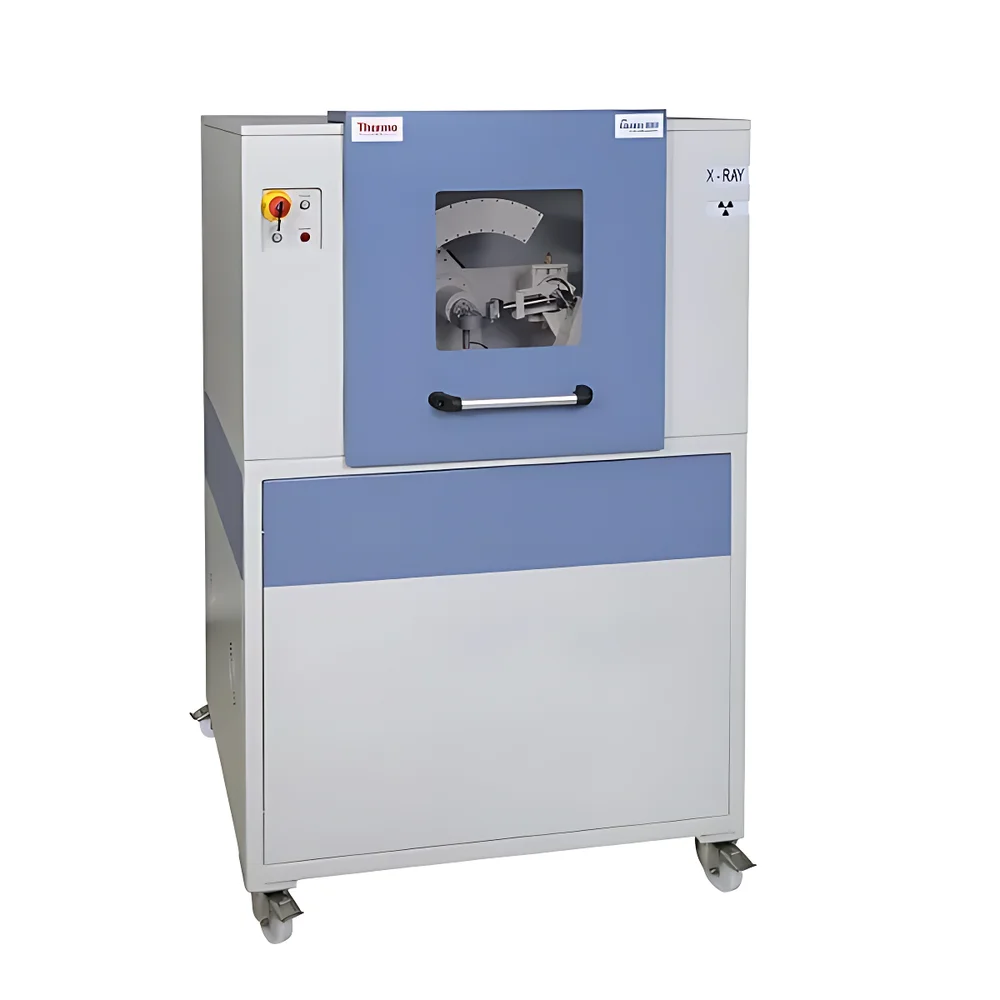
Thermo Fisher Scientific ARL EQUINOX 3000 Real-Time Powder X-ray Diffractometer

| Brand | Thermo Fisher Scientific |
|---|---|
| Origin | USA |
| Model | ARL EQUINOX 3000 |
| Instrument Type | Powder X-ray Diffractometer |
| Detector | Position-Sensitive Detector (PSD) |
| 2θ Angular Range | >120° (simultaneous acquisition) |
| Angular Resolution | ≤0.05° 2θ |
| Minimum Acquisition Time | 1 second per pattern |
| Beam Spot Size | down to 10 µm (with multi-axis goniometer) |
| Optical Configuration | Monochromatic optics (Cu Kα, optional Co/Fe/Mo sources) |
| Sample Environment Options | Variable-temperature stages, controlled-atmosphere chambers, humidity cells |
| Software Suite | Thermo Scientific™ ARL™ EQUINOX Software (including Rietveld refinement, phase identification, quantitative analysis, crystallite size/strain modeling) |
Ask about pricing, availability and specifications.
Overview
The Thermo Fisher Scientific ARL EQUINOX 3000 is a high-performance, real-time powder X-ray diffractometer engineered for rapid, high-fidelity structural characterization of crystalline and semi-crystalline materials. Based on the fundamental principle of Bragg diffraction, the system utilizes monochromatic X-ray radiation (typically Cu Kα at 1.5418 Å) incident upon polycrystalline samples to generate diffraction patterns governed by lattice spacing and crystal symmetry. Unlike sequential scanning systems, the ARL EQUINOX 3000 employs a curved position-sensitive detector (PSD) that captures the entire diffraction profile across a continuous 2θ range exceeding 120° in a single exposure — enabling true simultaneous data collection without mechanical movement of the detector or goniometer during acquisition. This architecture delivers exceptional time resolution (as low as 1 second per full-pattern acquisition), making it uniquely suited for in situ and operando studies including phase transformations, reaction kinetics, thermal cycling, and dynamic process monitoring.
Key Features
- Real-time, simultaneous 2θ detection over >120° angular range using a sealed-tube X-ray source and curved PSD — eliminating step-scanning artifacts and significantly reducing measurement uncertainty.
- High angular resolution of ≤0.05° 2θ, achieved through precision monochromator optics and optimized beam collimation, supporting accurate peak position determination and lattice parameter refinement.
- Micro-diffraction capability enabled by a motorized multi-axis goniometer with sub-micron sample positioning repeatability and beam focusing optics delivering spot sizes down to 10 µm — ideal for heterogeneous samples, thin films, and localized phase analysis.
- Modular sample stage design compatible with industry-standard environmental accessories: programmable temperature stages (−180°C to +1600°C), gas-tight reaction chambers (inert, oxidizing, reducing atmospheres), and humidity-controlled cells.
- Rugged, maintenance-free sealed X-ray tube with long service life and stable output — no water cooling required, minimizing infrastructure dependencies and operational downtime.
Sample Compatibility & Compliance
The ARL EQUINOX 3000 accommodates a broad spectrum of sample forms: loose powders, pressed pellets, bulk solids, thin films, coatings, and mounted fragments. Its flexible sample holder interface supports standard 25 mm and 50 mm diameter holders, capillary mounts, and custom fixtures for irregular geometries. The instrument complies with international safety standards IEC 61010-1 (electrical safety) and IEC 62471 (photobiological safety for X-ray emission). Data integrity and regulatory traceability are supported via software features aligned with GLP and GMP requirements, including user-access controls, electronic signatures, and full audit trail logging per FDA 21 CFR Part 11 guidelines. Method validation protocols conform to ASTM E975 (standard practice for XRD phase analysis) and ISO 17873 (quantitative phase analysis using Rietveld refinement).
Software & Data Management
The Thermo Scientific™ ARL™ EQUINOX Software provides an integrated environment for instrument control, data acquisition, visualization, and advanced analysis. Core modules include automatic phase identification against ICDD PDF-4+ database, quantitative Rietveld refinement (using GSAS-II or TOPAS engines), crystallite size and microstrain analysis (via Williamson-Hall and Warren-Averbach methods), and amorphous content estimation. Batch processing, scripting (Python API), and export to common formats (XYE, CIF, CSV, HDF5) ensure interoperability with third-party modeling and statistical platforms. All raw and processed data are stored with metadata (instrument parameters, sample ID, operator, timestamp, environmental conditions), supporting FAIR data principles (Findable, Accessible, Interoperable, Reusable).
Applications
- Cement & Construction Materials: Quantification of clinker phases (alite, belite, aluminate), hydration kinetics, sulfate resistance assessment, and slag/glass content analysis.
- Metallurgy & Advanced Alloys: In situ tracking of phase evolution during heat treatment, residual stress mapping in weld zones, and texture analysis of rolled or additively manufactured components.
- Pharmaceuticals & Cosmetics: Polymorph screening, stability testing under variable RH/temperature, excipient compatibility studies, and crystallinity verification of active pharmaceutical ingredients (APIs).
- Nanomaterials & Microelectronics: Size-strain analysis of quantum dots and metal-organic frameworks (MOFs), epitaxial quality evaluation of thin-film heterostructures, and interfacial reaction layer identification.
- Geosciences & Mining: Mineralogical quantification in ore blends, clay speciation in soils, and fluid-rock interaction modeling under simulated diagenetic conditions.
- Academic Research & Teaching: Designed for reproducible undergraduate labs and high-throughput graduate-level structural investigations — with intuitive workflows and comprehensive documentation support.
FAQ
What X-ray source options are available for the ARL EQUINOX 3000?
Standard configuration uses a Cu Kα sealed-tube source; optional anode materials include Co, Fe, Mo, and Cr — selected based on sample absorption characteristics and desired diffraction geometry.
Can the system perform in situ heating experiments above 1000°C?
Yes — with the high-temperature furnace accessory (up to 1600°C in inert atmosphere), coupled with real-time pattern acquisition and automated thermal ramping protocols.
Is Rietveld refinement included in the base software package?
Yes — full Rietveld quantification, including background modeling, peak shape fitting, and structural parameter optimization, is provided as a standard analytical module.
How is data security ensured during multi-user operation?
Role-based access control, encrypted local storage, session time-outs, and complete electronic audit trails meet ISO/IEC 27001-aligned data governance requirements.
Does the system support external detectors or third-party goniometers?
No — the ARL EQUINOX 3000 is a fully integrated platform; detector geometry, optics, and motion control are co-engineered for optimal performance and cannot be substituted with non-Thermo components.
More from Thermo Fisher Scientific
View all Thermo Fisher Scientific products → Thermo Scientific RadEye PRD-ER4 Portable High-Sensitivity Personal Radiation Detector
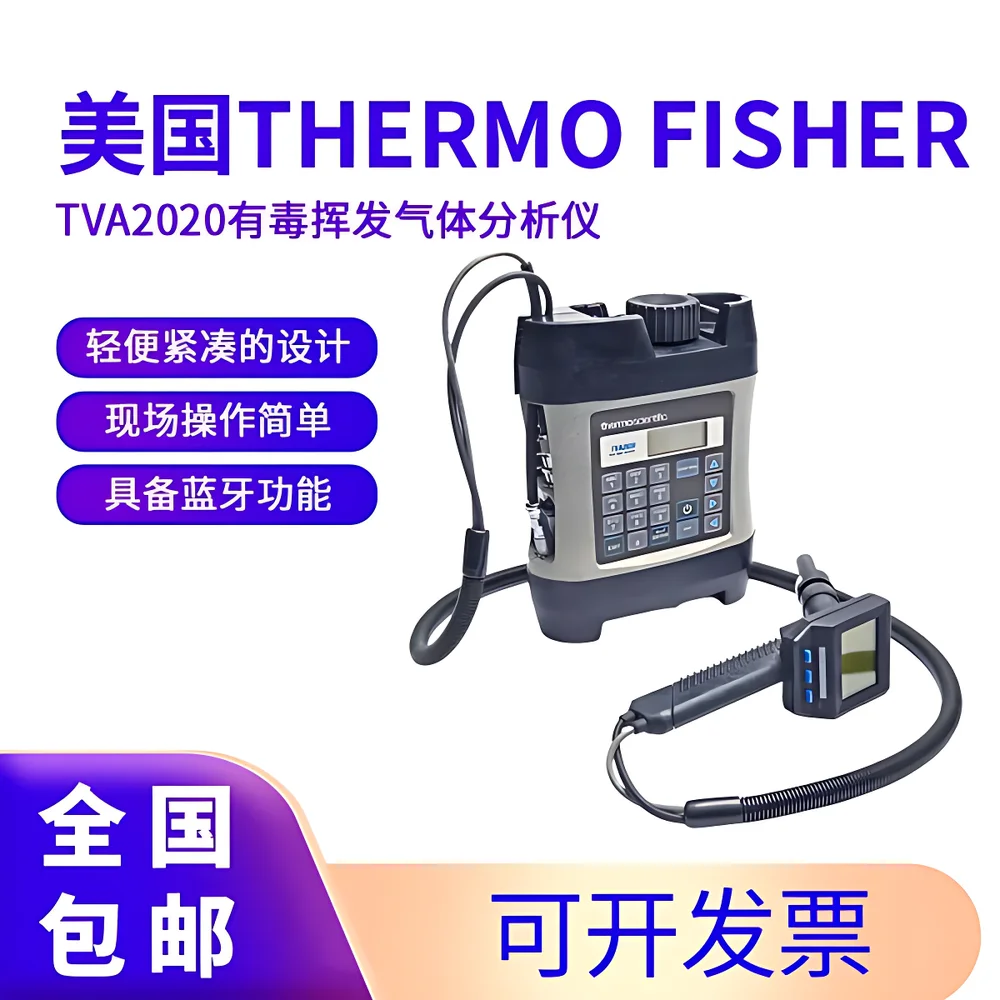
- Thermo Fisher Scientific TVA2020 Portable VOC Analyzer with Dual FID/PID Detection
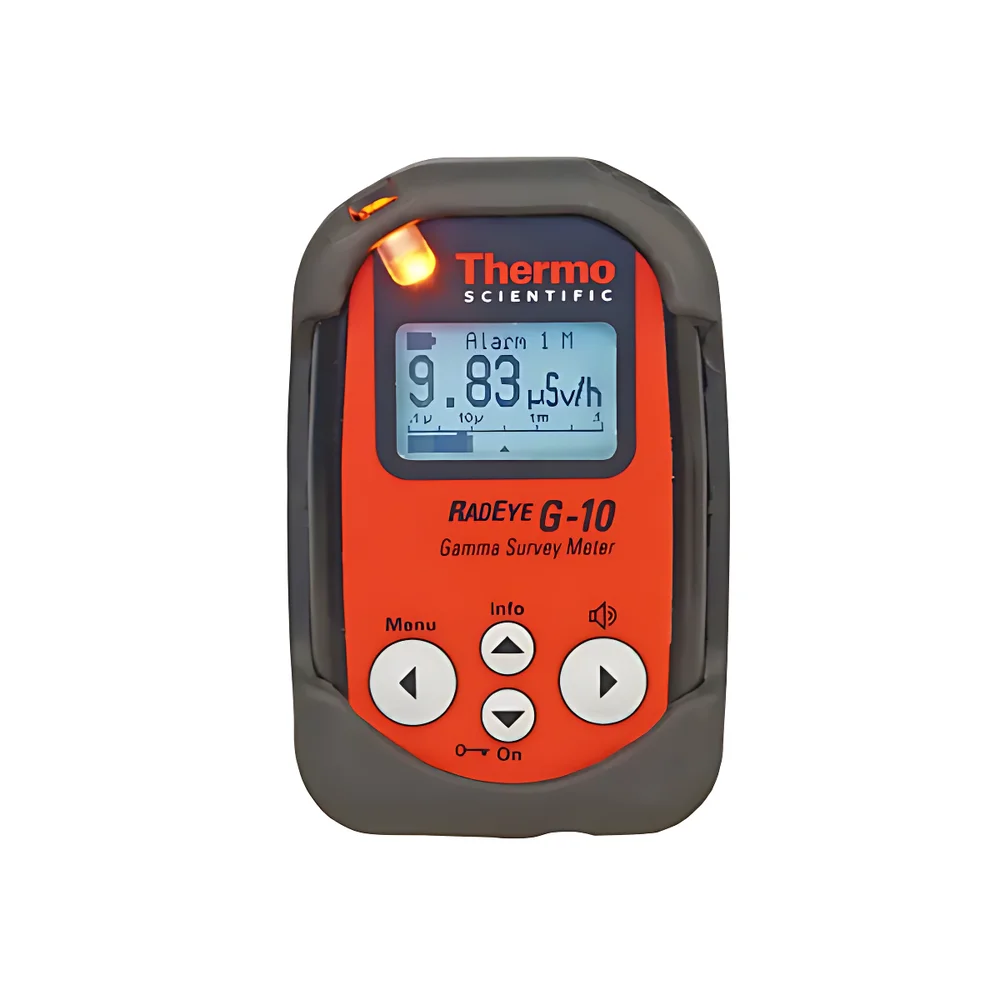
- Thermo Fisher Scientific RadEye G-10 Portable Personal Gamma Radiation Detector
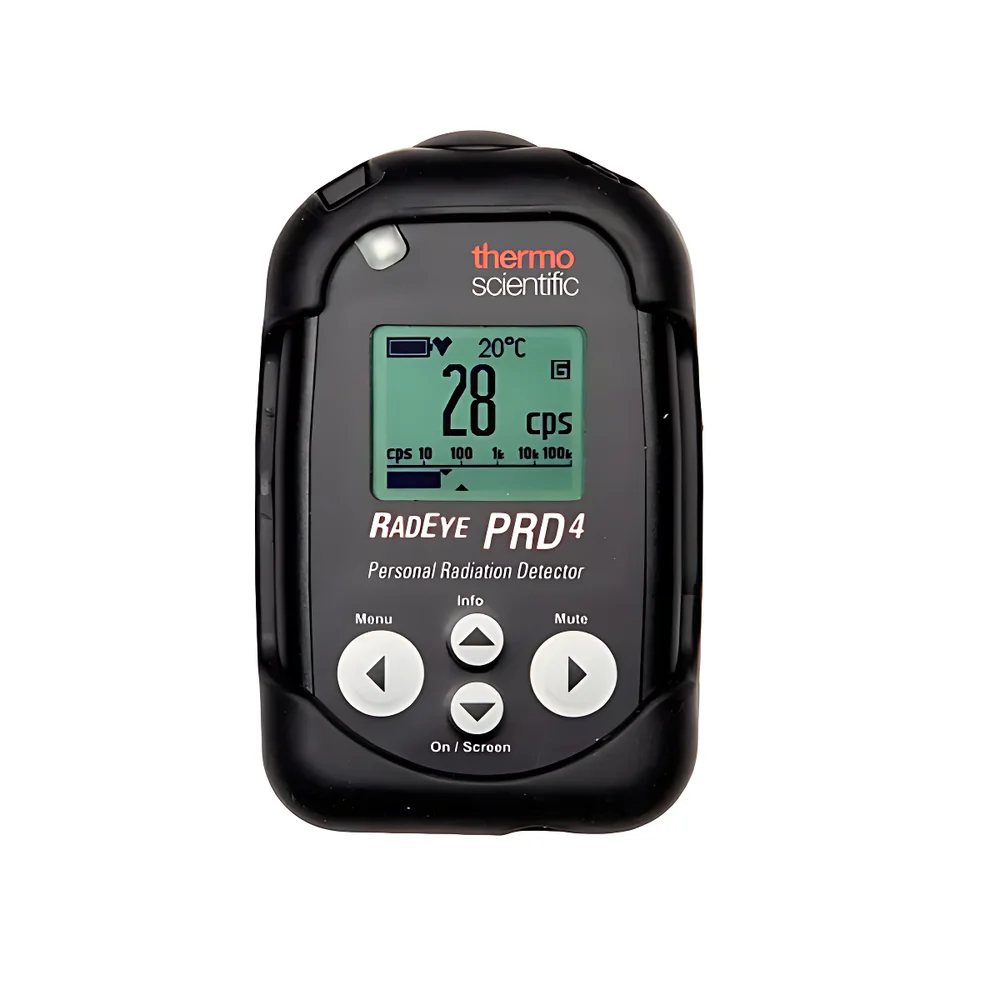
- Thermo Scientific RadEye PRD4 Portable High-Sensitivity Personal Radiation Detector