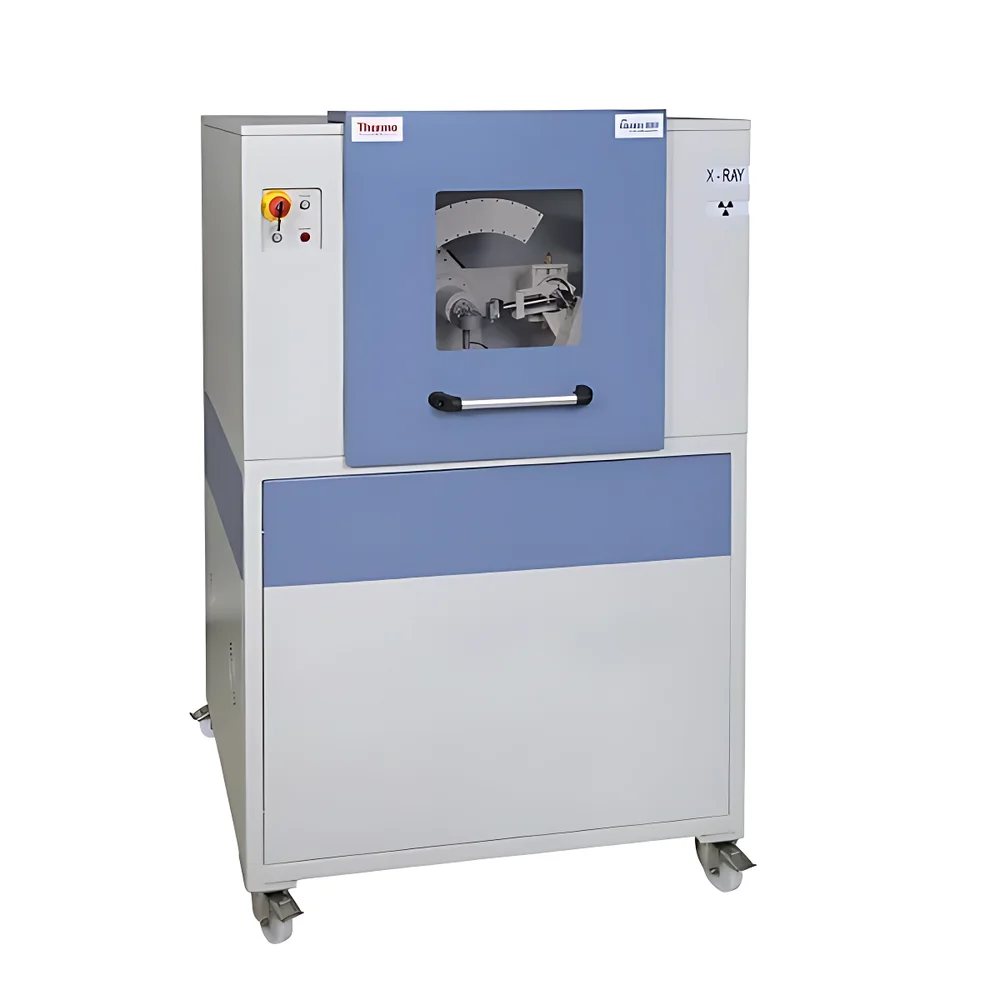
Thermo Fisher Scientific ARL EQUINOX 5000 Real-Time X-ray Diffractometer

| Brand | Thermo Fisher Scientific |
|---|---|
| Origin | USA |
| Model | ARL EQUINOX 5000 |
| Instrument Type | Powder X-ray Diffractometer |
| Detector | Position-Sensitive Detector (PSD) |
| 2θ Angular Range | >120° (simultaneous acquisition) |
| Angular Resolution | ≤0.05° 2θ |
| Minimum Acquisition Time | 1 second |
| Goniometer | Multi-axis precision diffractometer |
| Microbeam Capability | Down to 10 μm |
| Monochromator | Fixed or variable monochromatic optics |
| Sample Environment Options | Temperature-controlled stages, atmospheric/gas-controlled chambers |
| Software Suite | Thermo Scientific™ EQUINOX Software (including Rietveld refinement, phase identification, crystallite size/strain analysis, quantitative phase analysis) |
Ask about pricing, availability and specifications.
Overview
The Thermo Fisher Scientific ARL EQUINOX 5000 is a high-performance, real-time powder X-ray diffractometer engineered for both routine quality assurance and advanced materials research. It operates on the fundamental principle of Bragg diffraction, where monochromatic X-rays interact with crystalline lattices to produce angle- and intensity-resolved diffraction patterns. Unlike sequential scanning systems, the ARL EQUINOX 5000 employs a curved position-sensitive detector (PSD) that captures the full diffraction pattern—spanning over 120° in 2θ—simultaneously in a single exposure. This parallel data acquisition architecture eliminates mechanical scanning delays, enabling true real-time monitoring of dynamic processes such as phase transformations, crystallization kinetics, and in situ thermal or gas-induced structural evolution. Its modular goniometer design supports precise sample alignment and accommodates microbeam optics down to 10 μm spot size, making it suitable for heterogeneous samples, thin films, and spatially resolved microdiffraction.
Key Features
- Real-time simultaneous detection across >120° 2θ range using a sealed-tube or rotating-anode X-ray source coupled with a curved PSD
- Angular resolution of ≤0.05° 2θ, ensuring high-fidelity separation of closely spaced reflections for accurate lattice parameter determination
- Minimum data collection time of 1 second per pattern—enabling time-resolved studies at sub-minute temporal resolution
- Multi-axis diffractometer with motorized χ, φ, and translation stages for precise sample orientation, texture analysis, and grazing-incidence geometry
- Integrated monochromator options—including graphite monochromators and multilayer optics—for enhanced peak-to-background ratio and reduced Kβ contamination
- Expandable sample environment support: programmable temperature stages (–180°C to +1600°C), controlled-atmosphere chambers (inert, oxidizing, reducing gases), and humidity-controlled cells
Sample Compatibility & Compliance
The ARL EQUINOX 5000 accommodates a broad spectrum of solid-state samples, including powders, pressed pellets, bulk metals, thin films, coatings, nanomaterials, and geological specimens. Its flexible sample holders accept standard 25 mm and 50 mm diameter holders, capillary tubes, and custom fixtures for irregular geometries. The system complies with international safety standards including IEC 61010-1 (electrical safety) and IEC 62471 (photobiological safety for X-ray sources). For regulated environments, instrument operation and data handling are compatible with GLP and GMP workflows; audit trails, electronic signatures, and user-access controls can be implemented via optional software modules aligned with FDA 21 CFR Part 11 requirements. Method validation protocols conform to ASTM E975 (standard practice for XRD residual stress measurement) and ISO 21382 (quantitative phase analysis by Rietveld refinement).
Software & Data Management
The Thermo Scientific™ EQUINOX Software suite provides an integrated platform for instrument control, data acquisition, visualization, and quantitative analysis. Core modules include automatic phase identification against ICDD PDF-4+ databases, full-pattern Rietveld refinement (using GSAS-II or TOPAS engines), crystallite size and microstrain modeling (via Williamson-Hall or Warren-Averbach methods), and quantitative phase analysis (QPA) with internal standard or reference intensity ratio (RIR) approaches. Raw data is stored in vendor-neutral formats (e.g., .raw, .xye, CIF), supporting third-party interoperability with CrystalMaker, DIFFRAC.SUITE, and Python-based analysis pipelines (e.g., pyFAI, lmfit). All processing steps are logged with timestamped metadata, enabling traceable, reproducible reporting in accordance with ISO/IEC 17025 documentation requirements.
Applications
- Cement and metallurgical process control: real-time monitoring of clinker phase composition, slag hydration, and alloy phase stability during heat treatment
- Nanomaterials and advanced ceramics: size-strain analysis of nanoparticles, polymorph screening in battery cathodes (e.g., NMC, LFP), and defect quantification in sintered oxides
- Pharmaceutical development: polymorph identification, amorphous content assessment, and stability testing under accelerated humidity/temperature conditions
- Geoscience and mining: rapid mineralogical quantification in drill core samples, clay speciation, and ore grade estimation via QPA
- Microelectronics and thin-film characterization: texture analysis of CVD/PVD-deposited layers, stress mapping in interconnects, and epitaxial quality assessment
- Academic and teaching laboratories: intuitive interface and modular hardware facilitate hands-on training in crystallography, solid-state chemistry, and materials physics
FAQ
What X-ray source configurations are supported on the ARL EQUINOX 5000?
The system is compatible with sealed-tube Cu Kα sources (2.2 kW standard, upgradable to 3 kW), as well as high-brilliance rotating anode sources (e.g., Rigaku FR-E+, Bruker MICROSTAR) for microfocus applications.
Can the ARL EQUINOX 5000 perform in situ or operando experiments?
Yes—its real-time acquisition capability, combined with optional heating/cooling stages and environmental chambers, enables in situ XRD during thermal cycling, gas exposure, electrochemical cycling, and mechanical loading.
Is Rietveld refinement included in the base software package?
Basic Rietveld functionality is embedded; advanced refinement—including anisotropic displacement parameters, magnetic structure modeling, and multi-phase constraints—requires optional add-on modules or integration with external engines.
How does the PSD-based detection compare to CCD or CMOS detectors in terms of dynamic range and linearity?
The curved PSD offers superior count-rate linearity (>10⁶ cps) and negligible dead-time effects compared to integrating detectors, making it ideal for quantitative intensity measurements without saturation artifacts.
What level of technical support and application assistance is provided post-installation?
Thermo Fisher offers factory-certified installation, on-site training, annual preventive maintenance contracts, and access to global application scientists for method development and troubleshooting—aligned with ISO 9001-certified service delivery protocols.
More from Thermo Fisher Scientific
View all Thermo Fisher Scientific products → Thermo Scientific RadEye PRD-ER4 Portable High-Sensitivity Personal Radiation Detector
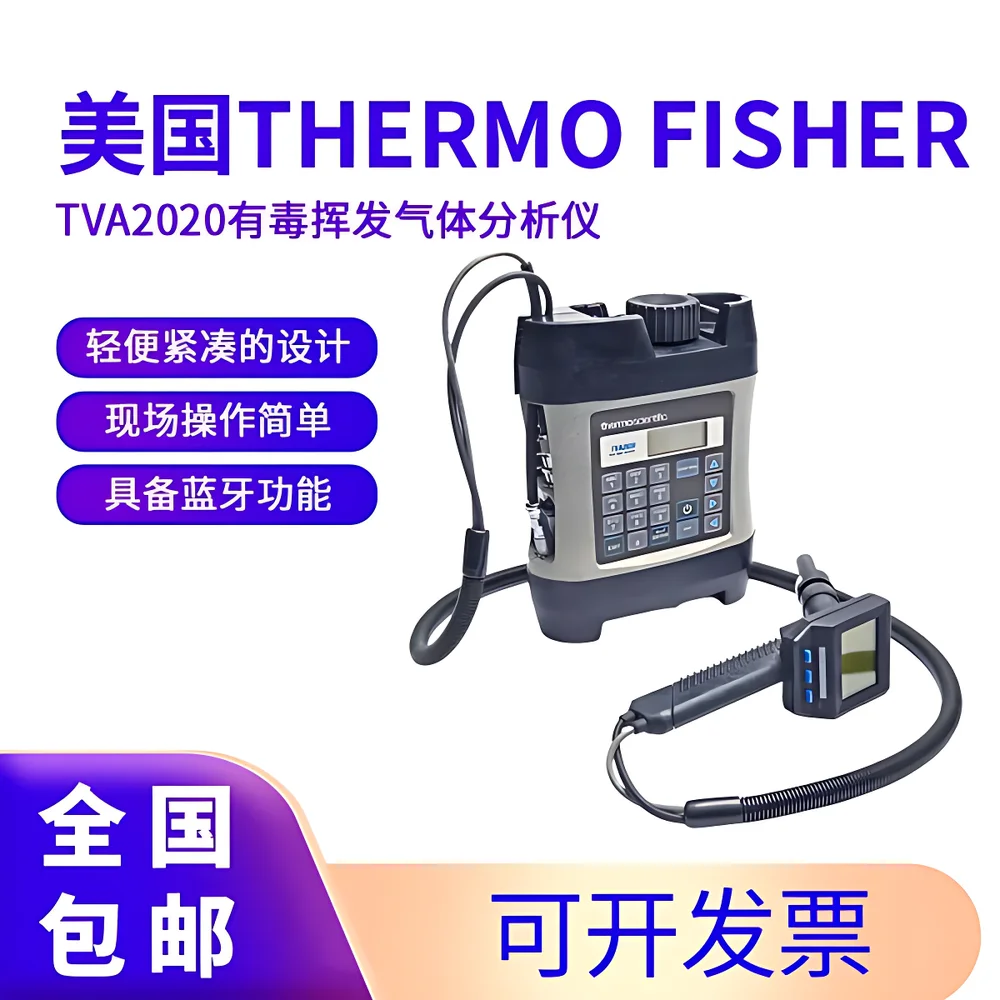
- Thermo Fisher Scientific TVA2020 Portable VOC Analyzer with Dual FID/PID Detection
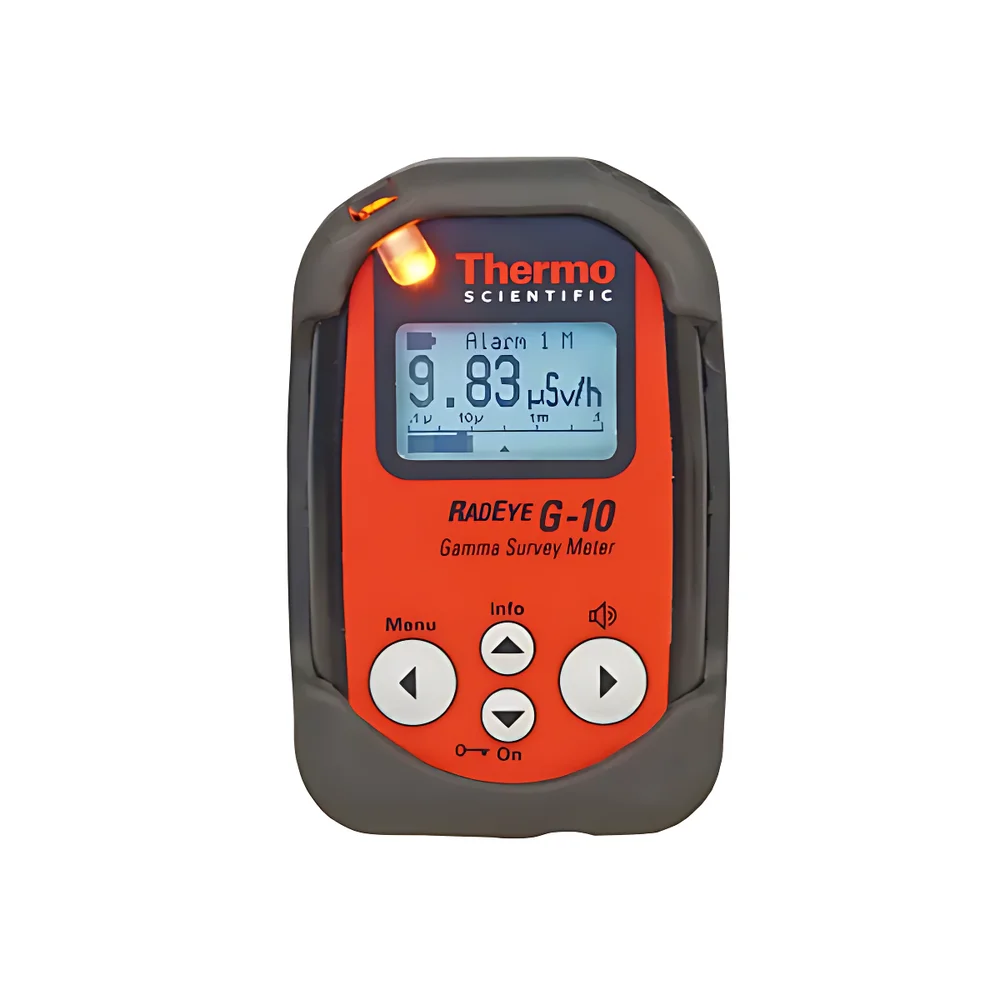
- Thermo Fisher Scientific RadEye G-10 Portable Personal Gamma Radiation Detector
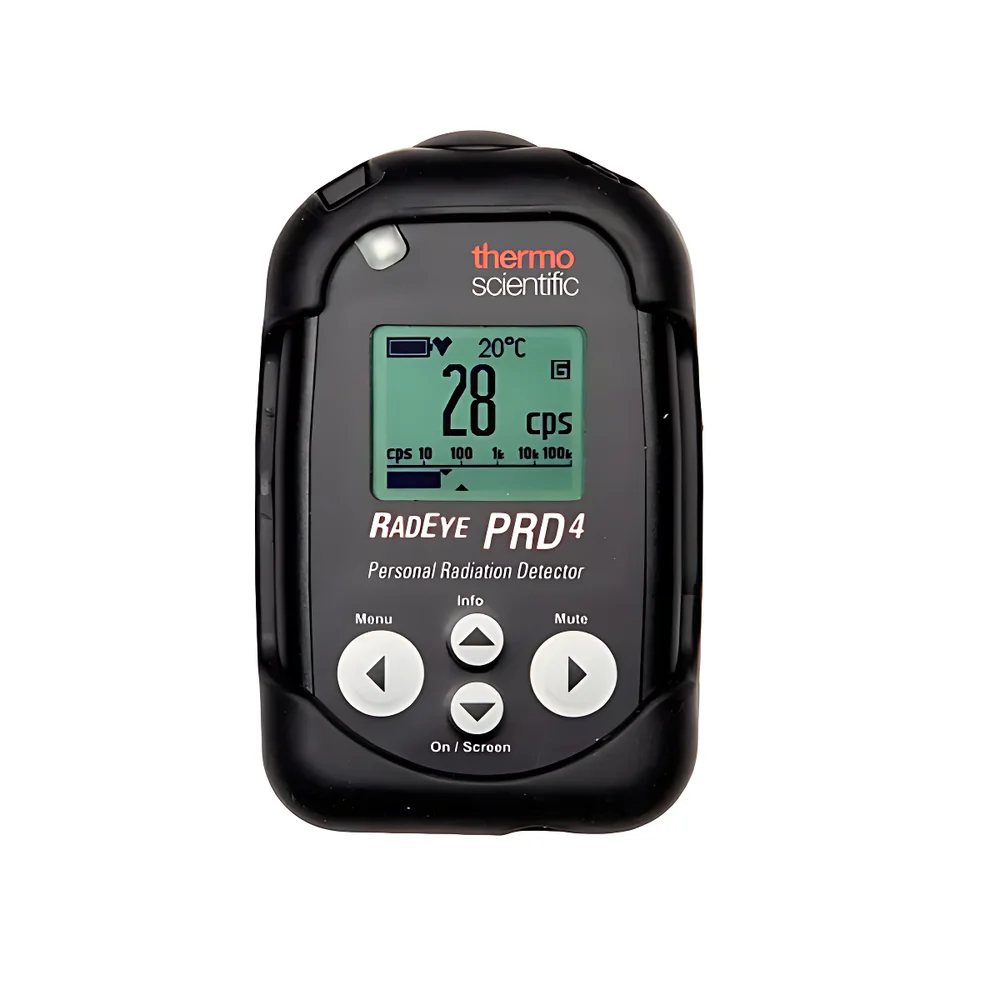
- Thermo Scientific RadEye PRD4 Portable High-Sensitivity Personal Radiation Detector