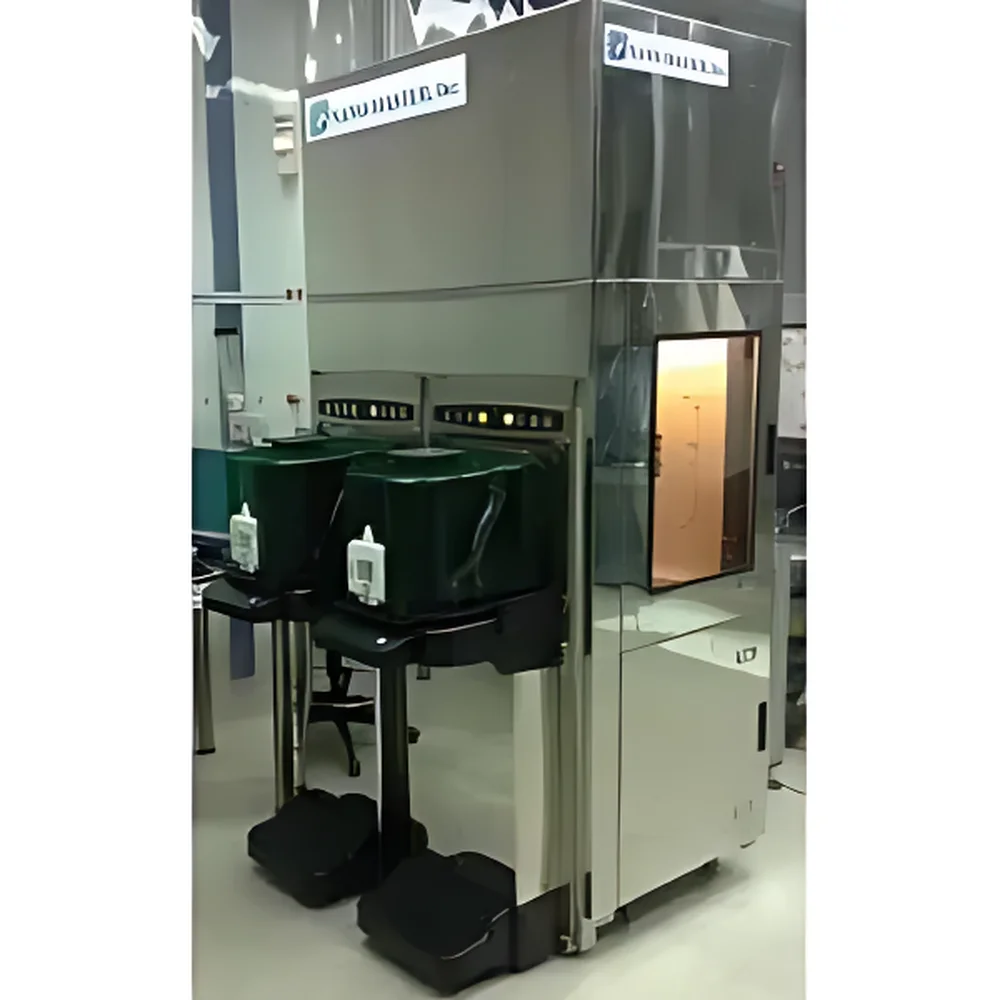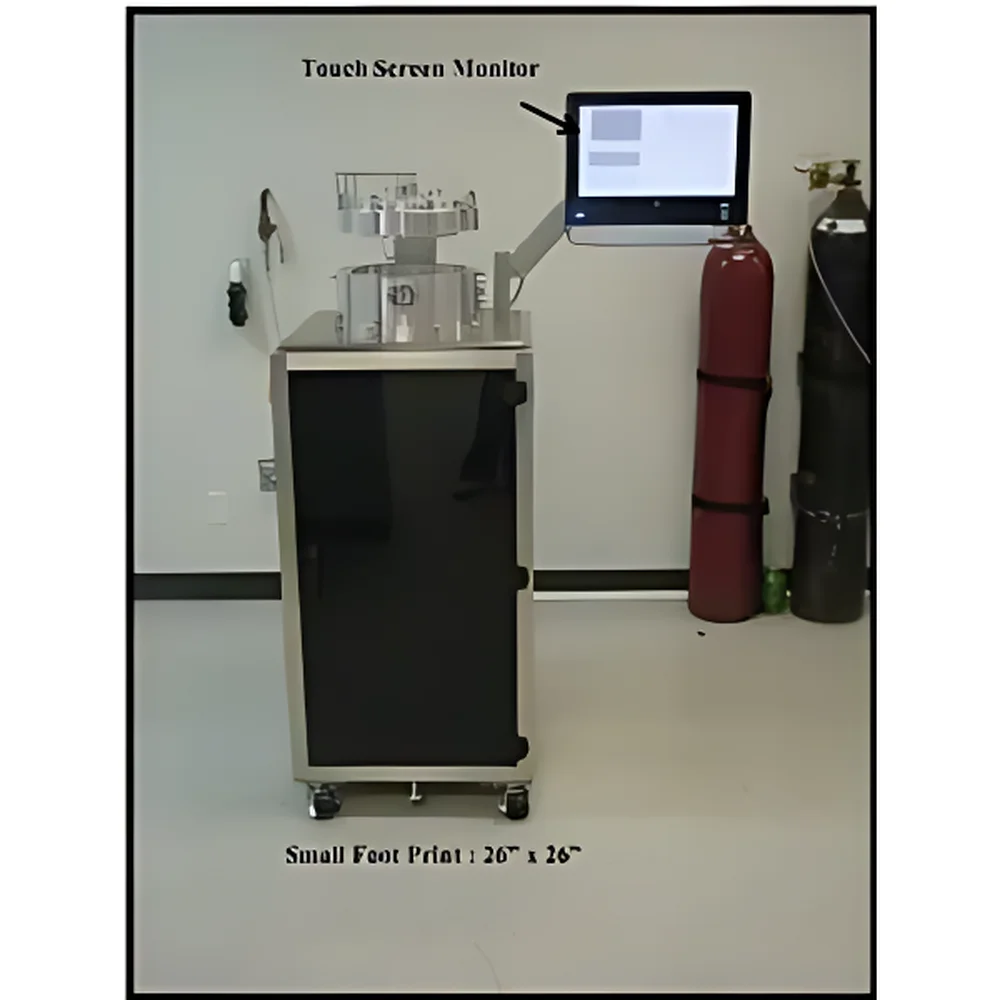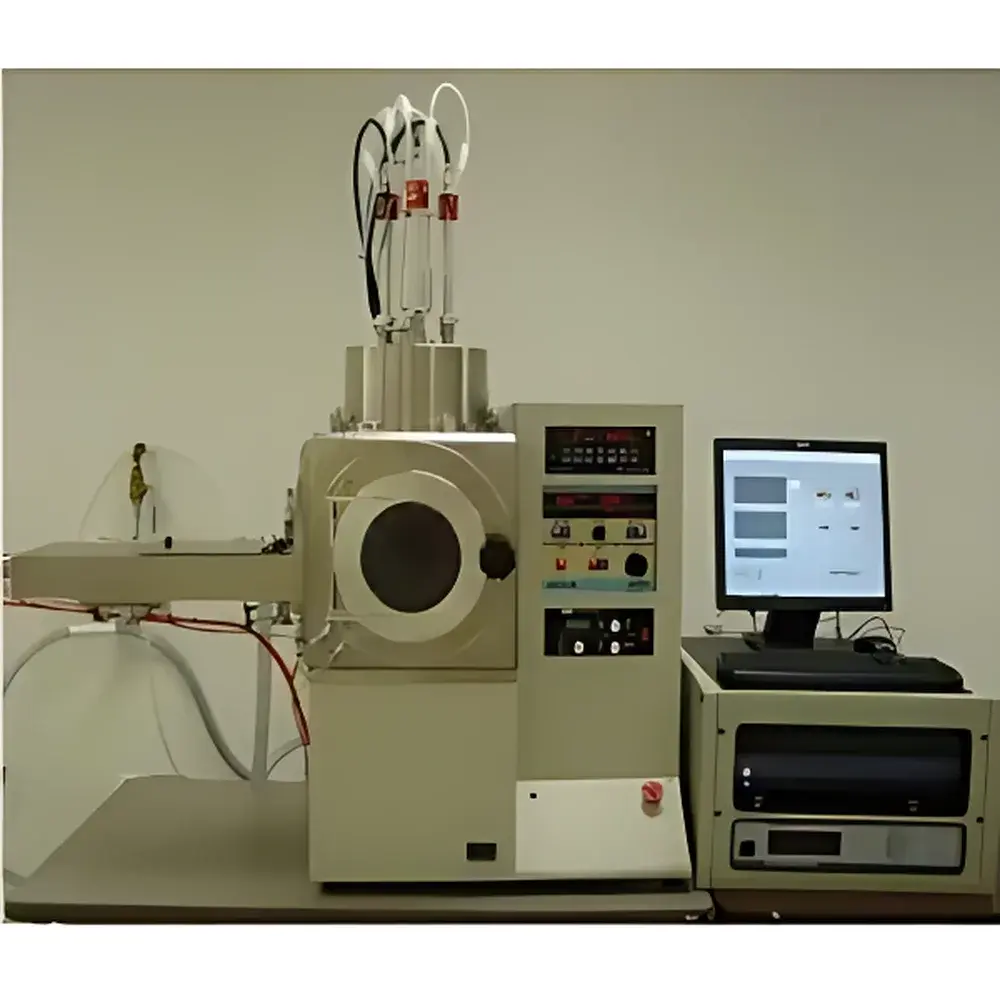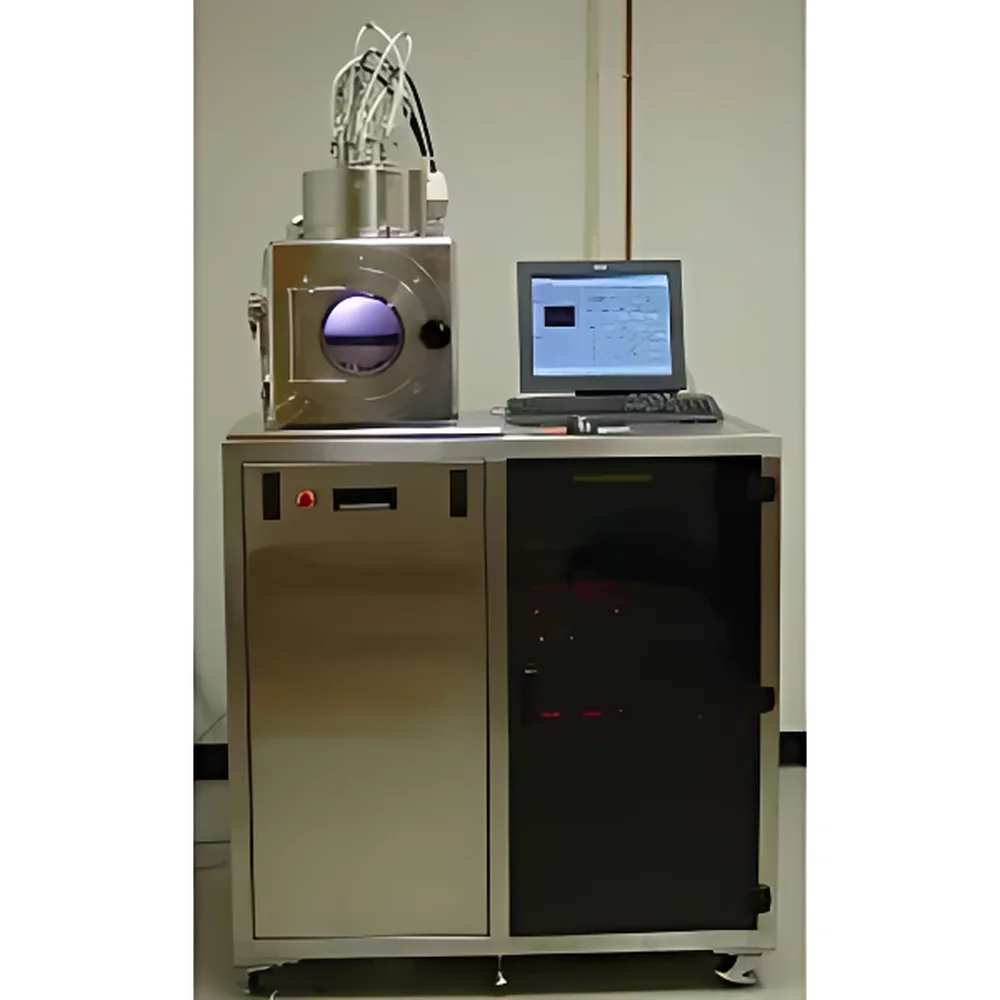
Nano-Master NTE-4000 (M) Thermal Evaporation System

| Brand | Nano-Master |
|---|---|
| Origin | USA |
| Manufacturer Type | Authorized Distributor |
| Origin Category | Imported |
| Model | NTE-4000 (M) |
| Price Range | USD 68,000 – 109,000 |
| Substrate Compatibility | Up to 7" square or 200 mm diameter wafers |
| Sample Stage | Motorized rotation with programmable speed control |
| Evaporation Sources | Dual crucible configuration |
| Power Supply | 2 kVA SRC (Solid-State Relay Controlled) DC power supply |
| Thickness Monitoring | Quartz crystal microbalance (QCM) based real-time thickness monitor |
| Control Interface | LabVIEW-based PC software with full automation and scriptable sequences |
| System Architecture | Standalone vacuum deposition platform |
Ask about pricing, availability and specifications.
Overview
The Nano-Master NTE-4000 (M) Thermal Evaporation System is a high-precision, standalone physical vapor deposition (PVD) platform engineered for reproducible thin-film fabrication in academic research, semiconductor prototyping, and advanced materials development laboratories. Operating on resistive thermal evaporation principles, the system heats conductive source materials—such as metals (Au, Al, Cr), oxides (ITO, SiO₂), and organic semiconductors—to their vaporization point within high-vacuum environments (typically <5 × 10⁻⁶ Torr base pressure). Vapor atoms travel ballistically across the chamber and condense uniformly onto substrates mounted on a motorized, rotationally controlled stage. Unlike sputtering or e-beam systems, thermal evaporation delivers high deposition rates with minimal substrate heating and no plasma-induced damage—making it ideal for temperature-sensitive layers, multilayer heterostructures, and lift-off patterning processes.
Key Features
- Dual independent crucible evaporation sources enable sequential or co-deposition of two distinct materials without breaking vacuum—critical for alloy formation, bilayer electrodes, or graded interfaces.
- Motorized sample stage supports precise rotational speed control (0–30 rpm, programmable via LabVIEW), ensuring exceptional thickness uniformity (<±2% across 200 mm wafers) and repeatable step coverage on patterned substrates.
- 2 kVA solid-state relay-controlled (SRC) DC power supply delivers stable, ripple-free current output with fast response time (<10 ms), essential for maintaining consistent evaporation rate during critical nucleation phases.
- Integrated quartz crystal microbalance (QCM) thickness monitor provides real-time, in-situ film growth rate and cumulative thickness feedback with sub-angstrom resolution and drift-compensated calibration.
- Full LabVIEW-based control architecture supports automated recipe execution, interlocked safety protocols (vacuum interlocks, shutter sequencing, power ramping), and timestamped audit logs compliant with GLP documentation requirements.
Sample Compatibility & Compliance
The NTE-4000 (M) accommodates substrates up to 7-inch square or 200 mm round wafers—including silicon, glass, flexible polymers (PET, PI), and oxidized or lithographically patterned surfaces. Chamber geometry and baffle design minimize shadowing effects and support conformal deposition on low-aspect-ratio features. The system meets ISO 14644-1 Class 5 cleanroom compatibility standards when operated in controlled environments. Vacuum components comply with ASTM F2627-18 (standard guide for vacuum system integrity testing), while electrical subsystems conform to UL 61010-1 and CE/EMC Directive 2014/30/EU. Optional integration with FDA 21 CFR Part 11-compliant electronic signature modules enables GMP-aligned process validation for regulated R&D applications.
Software & Data Management
Control and monitoring are executed through a native LabVIEW application running on an embedded industrial PC. The software provides intuitive graphical interfaces for vacuum pump sequencing, source power ramping, rotation profile definition, QCM calibration, and multi-step deposition recipes. All operational parameters—including chamber pressure, source current/voltage, rotation speed, thickness, and rate—are logged at user-defined intervals (down to 100 ms) into timestamped .tdms files. Export options include CSV and MATLAB-compatible formats. Audit trails record operator ID, session start/stop times, parameter modifications, and alarm events—supporting traceability per ISO/IEC 17025 and internal QA protocols. Remote monitoring via secure TCP/IP interface is available with optional network licensing.
Applications
- Deposition of ohmic contacts (Ti/Au, Cr/Au) and gate electrodes in microelectronics and MEMS device fabrication.
- Preparation of transparent conductive oxide (TCO) layers for OLED and perovskite solar cell test structures.
- Evaporation of organic small-molecule layers (e.g., NPB, Alq₃, C₆₀) in organic thin-film transistor (OTFT) and photodetector research.
- Multi-layer optical coatings (anti-reflection, beam-splitter stacks) requiring precise stoichiometric control and interface sharpness.
- Functional metallization of biosensor substrates (e.g., Au films for SPR or electrochemical impedance spectroscopy).
FAQ
What vacuum level is required for optimal thermal evaporation performance?
Base pressure ≤5 × 10⁻⁶ Torr is recommended prior to evaporation; this minimizes residual gas collisions and ensures mean free path exceeds chamber dimensions for ballistic vapor transport.
Can the NTE-4000 (M) be upgraded to support electron-beam evaporation?
No—the NTE-4000 (M) is purpose-built for resistive thermal evaporation only; e-beam functionality requires a fundamentally different source architecture (e.g., Nano-Master NE series).
Is remote troubleshooting supported?
Yes—via secure VNC-enabled remote desktop access (with customer authorization) and diagnostic log export for rapid root-cause analysis by Nano-Master Field Applications Engineers.
How often does the quartz crystal sensor require replacement?
Typical lifetime ranges from 50–200 depositions depending on material aggressiveness and thickness; automated QCM degradation alerts are integrated into the LabVIEW interface.
Does the system include cryogenic shrouding for background water vapor suppression?
Cryoshrouds are optional accessories; standard configuration includes liquid nitrogen-cooled baffles compatible with standard LN₂ dewars for enhanced H₂O partial pressure control.