

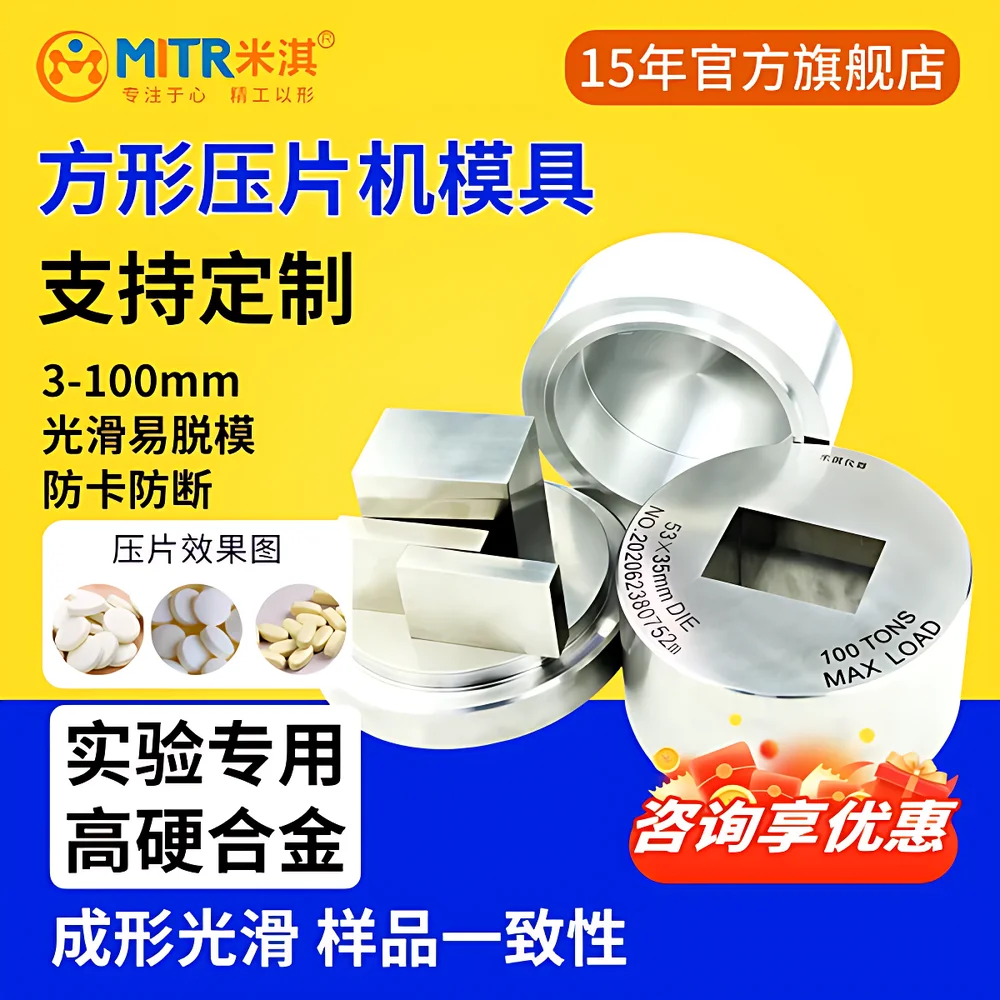
Mitri MJ-3 Customizable Tungsten Carbide Pellet Die Set for Infrared Spectroscopy Sample Preparation

| Brand | Mitri |
|---|---|
| Model | MJ-3 |
| Material | Tungsten Carbide (WC-Co) |
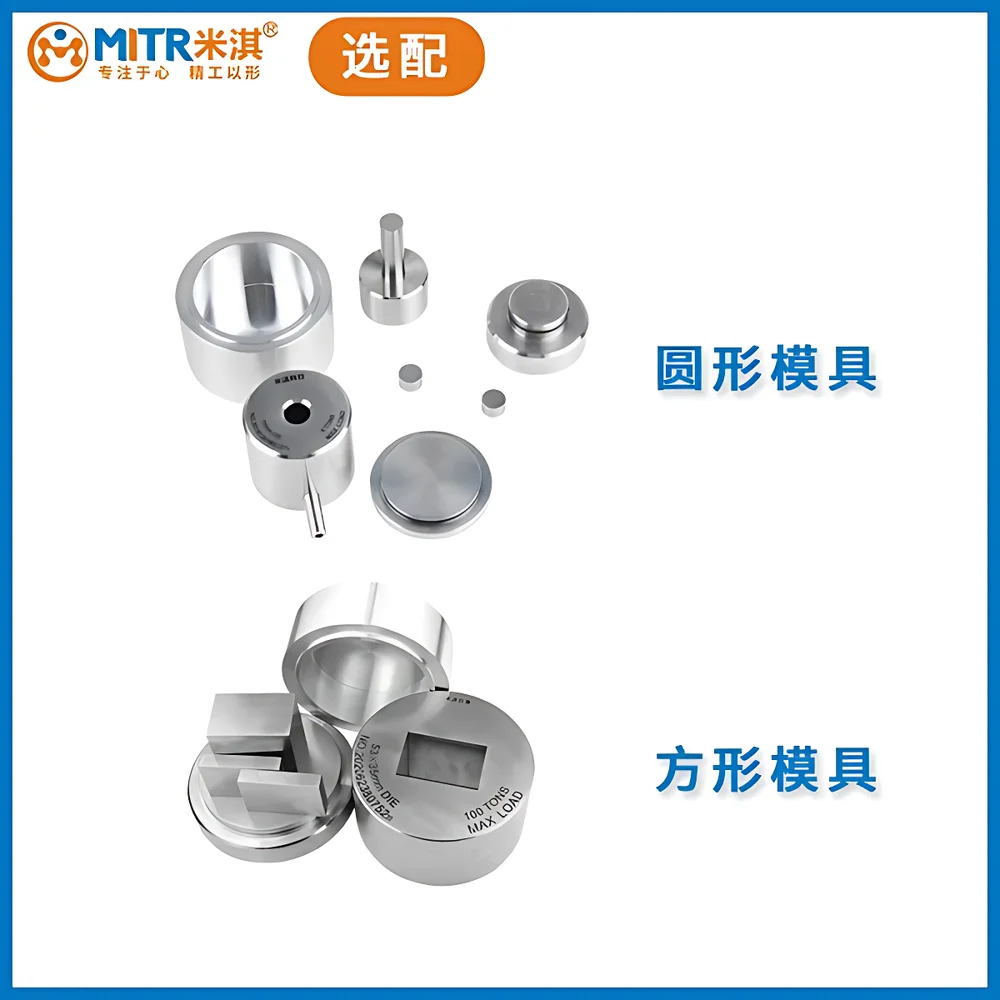
| Compatible Press Types | Manual & Hydraulic Pellet Presses (e.g., Specac, Pike, Harrick, Carver) |
| Standard Bore Diameters | 7 mm, 10 mm, 13 mm, 16 mm, 25 mm |
| Thickness Tolerance | ±0.005 mm |
| Surface Finish | Ra ≤ 0.05 µm (mirror-polished) |
| Max Operating Pressure | 25 t (245 kN) |
| Compliance | ISO 9001-certified manufacturing |
| Origin | Hunan, China |
Ask about pricing, availability and specifications.
Overview
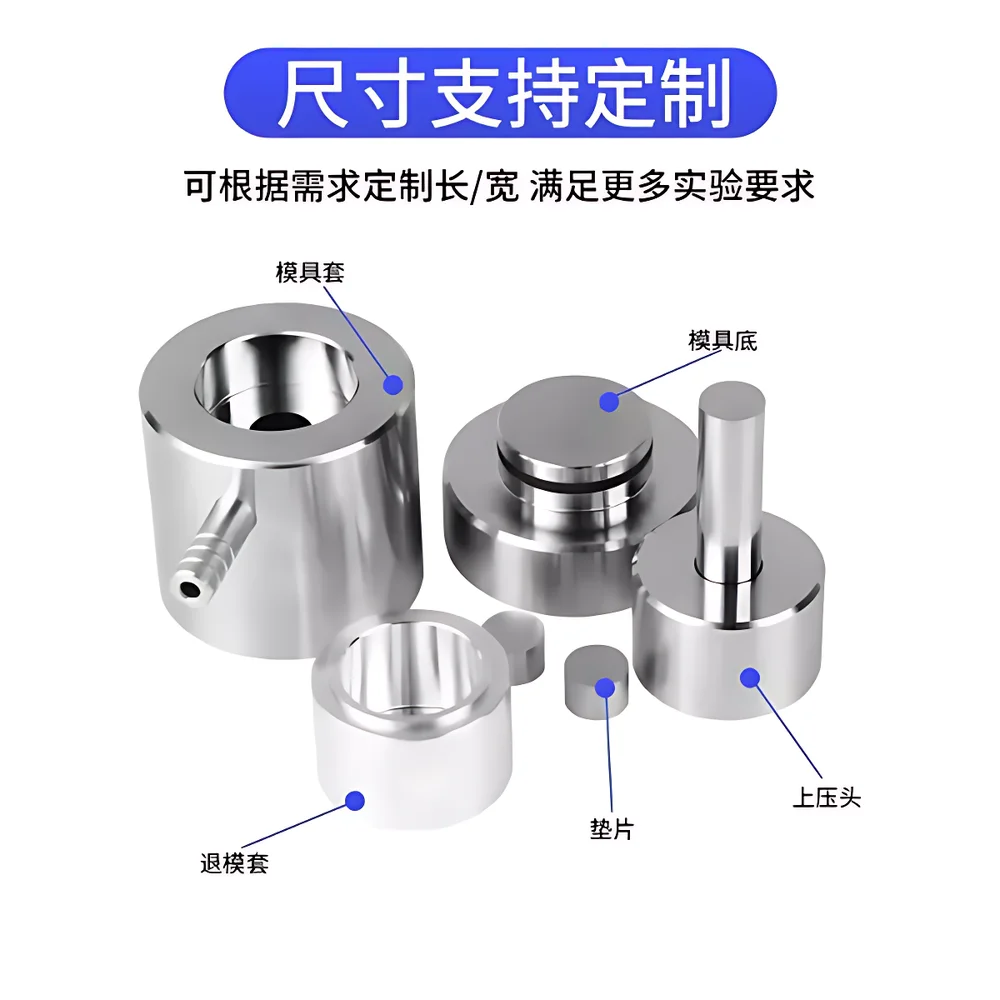
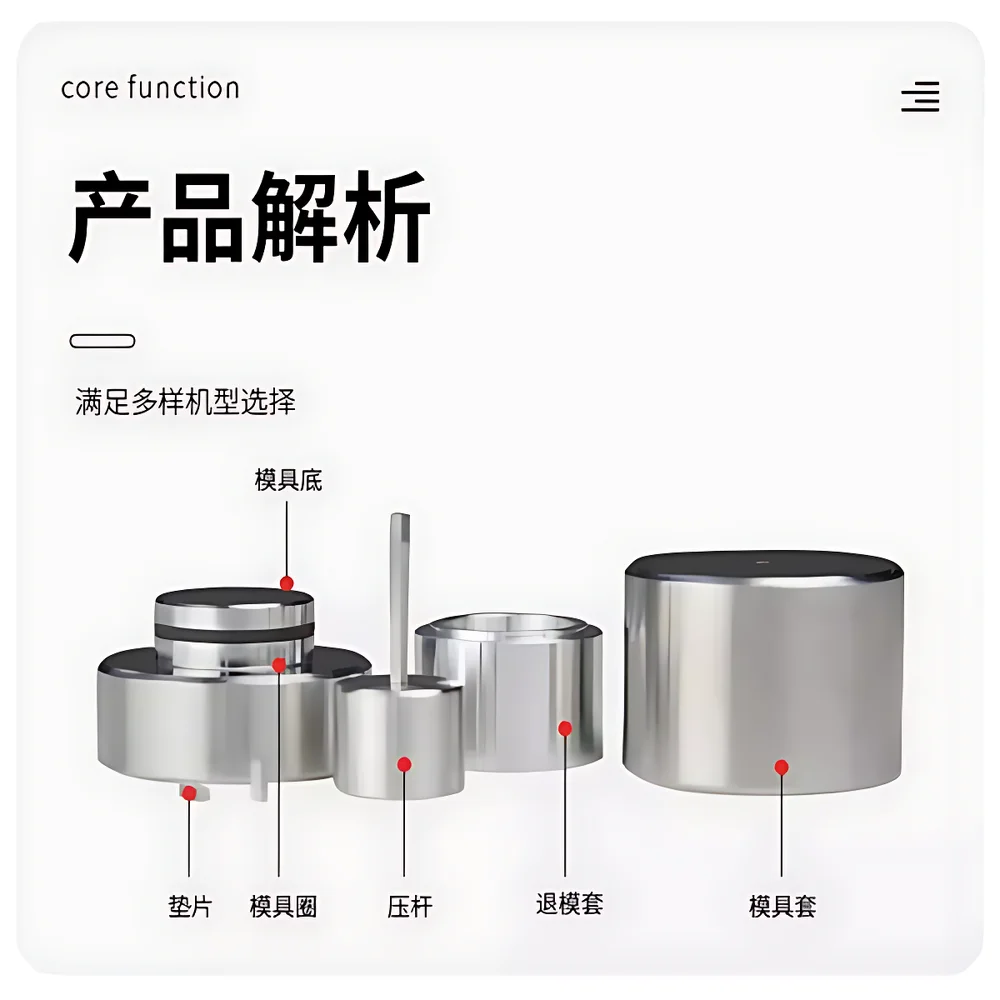
The Mitri MJ-3 Tungsten Carbide Pellet Die Set is a precision-engineered sample preparation tool designed exclusively for high-pressure infrared (IR) spectroscopy applications, including Fourier-transform infrared (FTIR) and near-infrared (NIR) analysis. Unlike standard stainless-steel or mild-steel dies, the MJ-3 utilizes sintered tungsten carbide (WC-Co, 94% WC / 6% Co) — a material selected for its exceptional hardness (HRA ≥ 92), compressive strength (>3,800 MPa), and dimensional stability under repeated loading cycles up to 25 metric tons. The die set operates on the principle of uniaxial cold compaction: powdered samples—such as KBr, NaCl, CsI, or polymer blends—are placed between two parallel, ultra-flat anvils and subjected to controlled hydraulic or manual pressure to form optically transparent, low-scatter pellets with uniform thickness and minimal surface roughness. This process eliminates spectral interference from air gaps, particle scattering, and matrix heterogeneity—critical for quantitative absorbance calibration and reproducible peak intensity ratios in routine QC and research-grade IR workflows.
Key Features
- Monolithic tungsten carbide construction ensures zero plastic deformation after >10,000 compression cycles at rated load
- Mirror-finished anvil surfaces (Ra ≤ 0.05 µm) minimize light scattering and improve pellet optical clarity
- Interchangeable bore inserts allow rapid adaptation across common IR pellet diameters (7–25 mm) without recalibration
- Integrated alignment sleeve and hardened steel guide pins guarantee coaxial loading and eliminate off-center stress concentration
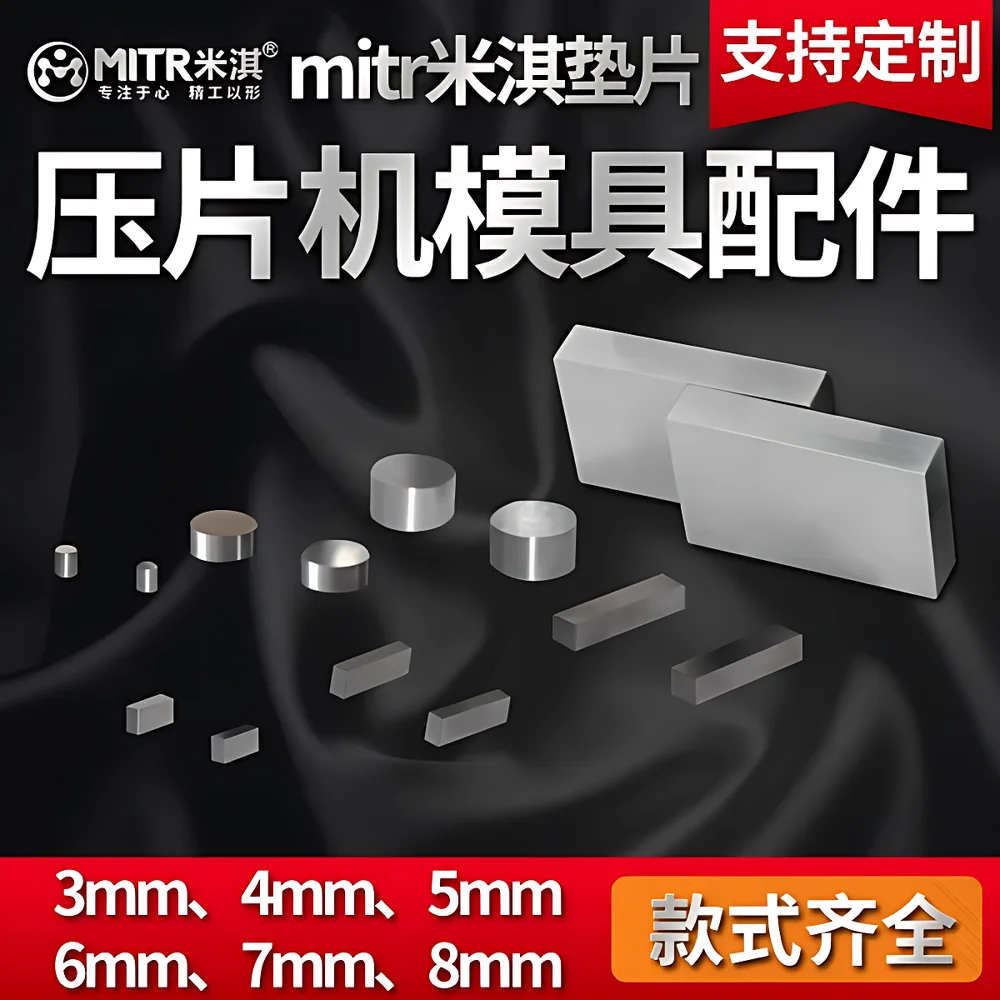
- Customizable thickness spacers (0.1–5.0 mm in 0.1-mm increments) enable precise control over pellet mass-to-area ratio for Beer–Lambert law compliance
- Non-magnetic, corrosion-resistant composition prevents contamination in trace-level inorganic or pharmaceutical powder analysis
Sample Compatibility & Compliance
The MJ-3 die set accommodates a broad spectrum of IR-compatible matrices and analytes: halide salts (KBr, NaCl, CsI), alkali earth carbonates (BaF₂), polymeric binders (PE, PTFE), and thermally labile APIs. Its design conforms to ASTM E1421–22 (“Standard Practice for Describing and Measuring Performance of Fourier Transform Mid-Infrared (FT-MIR) Spectrometers”) and supports GLP/GMP-aligned documentation protocols. All dies are serialized and supplied with a certificate of conformance indicating batch-specific hardness verification (Rockwell A scale), surface roughness metrology (contact profilometry per ISO 4287), and dimensional inspection reports (CMM-measured bore concentricity < 0.008 mm). No lubricants or release agents are required due to the inherent non-stick properties of polished WC.
Software & Data Management
While the MJ-3 is a mechanical die system requiring no embedded electronics or firmware, it integrates seamlessly into digital laboratory workflows via compatibility with industry-standard press controllers (e.g., Carver 3912 Digital Controller, Specac Autopress Pro). Users may log die usage history—including cycle count, applied pressure, and sample ID—in LIMS platforms (e.g., LabWare, Thermo Fisher SampleManager) using standardized metadata fields. For audit readiness, Mitri provides optional traceability packages including raw material mill certificates (ASTM B313), heat treatment records, and post-machining surface integrity reports compliant with FDA 21 CFR Part 11 electronic record requirements.
Applications
- Routine quality control of pharmaceutical excipients and active ingredients (USP , EP 2.2.24)
- Quantitative analysis of catalysts, battery cathode materials, and ceramic precursors
- Method development for ASTM D7984 (FTIR analysis of polymer composites)
- Forensic drug identification using spectral library matching (NIST SRD-115)
- Environmental monitoring of microplastics via pyrolysis-FTIR coupling
- Academic research requiring high-reproducibility pellet geometry for Mie scattering correction models
FAQ
What is the maximum recommended pressure for the MJ-3 die set?
The MJ-3 is rated for continuous operation up to 25 metric tons (245 kN); exceeding this load risks irreversible anvil flattening and loss of bore concentricity.
Can I use the same die for both KBr and CsI pellets?
Yes—tungsten carbide’s chemical inertness prevents reaction with hygroscopic or corrosive matrices; however, dedicated cleaning protocols (ethanol sonication + nitrogen drying) are required between salt types.
Is calibration required before first use?
No formal calibration is needed, but users should verify bore diameter and anvil parallelism using certified gauge blocks and optical flats per ISO 10360-2 prior to critical measurements.
Do you offer NIST-traceable dimensional certification?
Upon request, Mitri provides third-party CMM validation reports accredited to ISO/IEC 17025:2017, including uncertainty budgets for all critical dimensions.
How does the MJ-3 compare to stainless-steel dies in long-term repeatability?
Accelerated wear testing shows MJ-3 maintains bore tolerance within ±0.005 mm after 5,000 cycles, whereas 316SS dies typically exceed ±0.025 mm deviation after 800 cycles under identical conditions.

