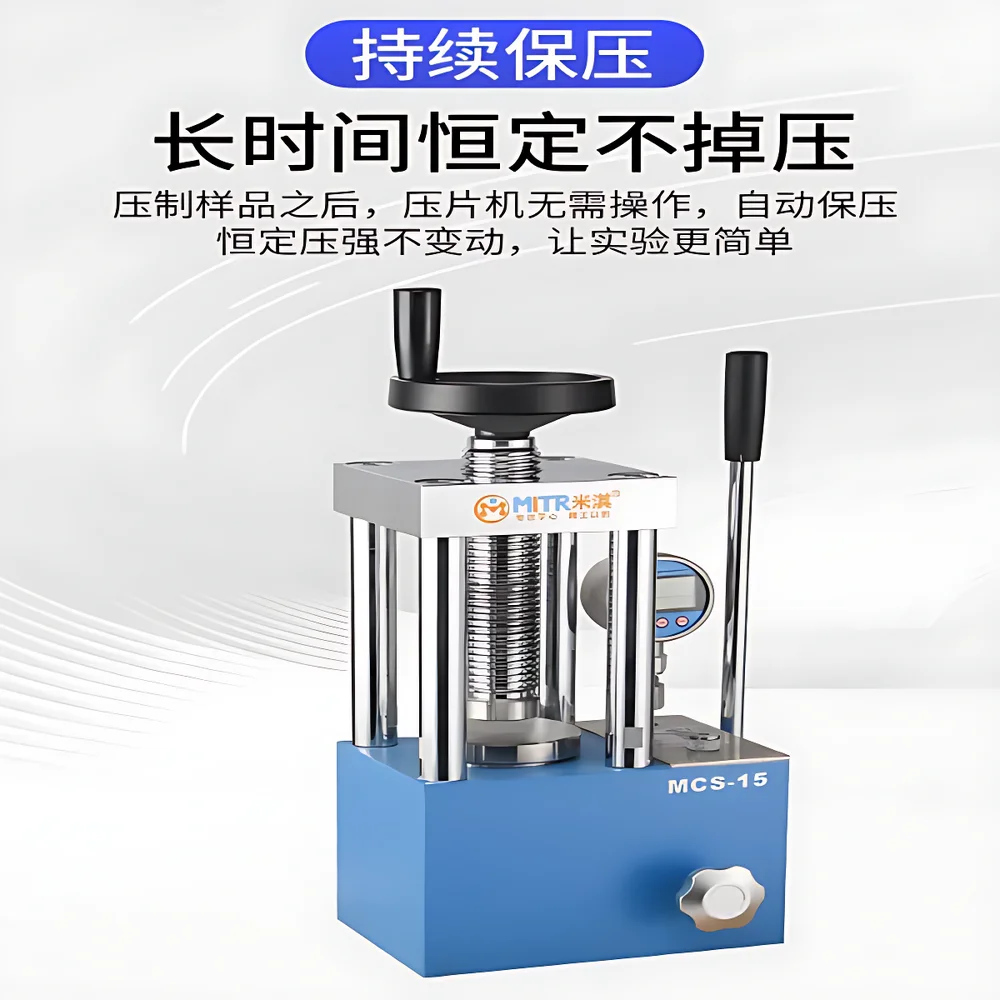
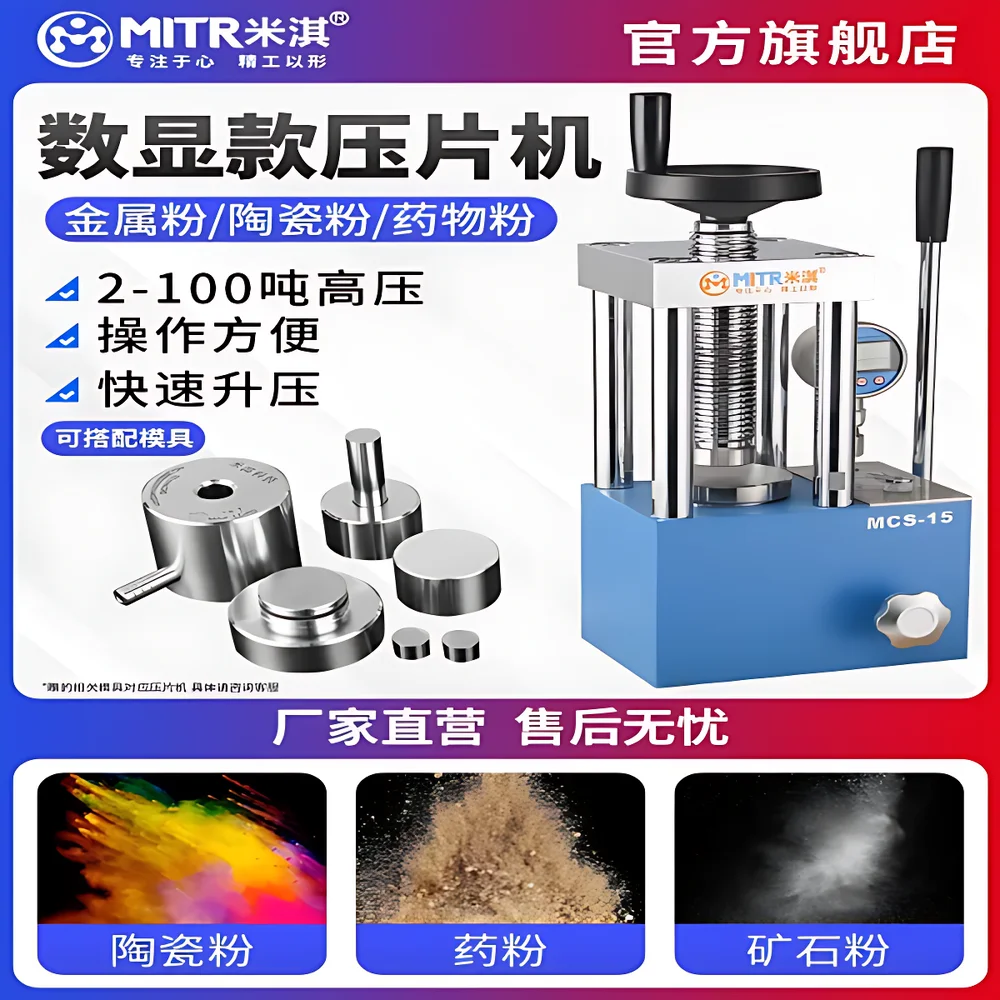
MITR PC-9 Manual Hydraulic Pellet Press for FTIR and Spectroscopy Sample Preparation

| Brand | MITR |
|---|---|
| Origin | Hunan, China |
| Manufacturer Type | Direct Manufacturer |
| Country of Origin | China |
| Model | PC-9 |
| Instrument Type | Manual Hydraulic Pellet Press |
| Operating Mode | Manual |
| Application | Solid Sample Pelletization for Infrared (FTIR), XRF, XRD, and Fluorescence Spectroscopy |
| Force Range | 3–40 Ton (29.4–392 kN) |
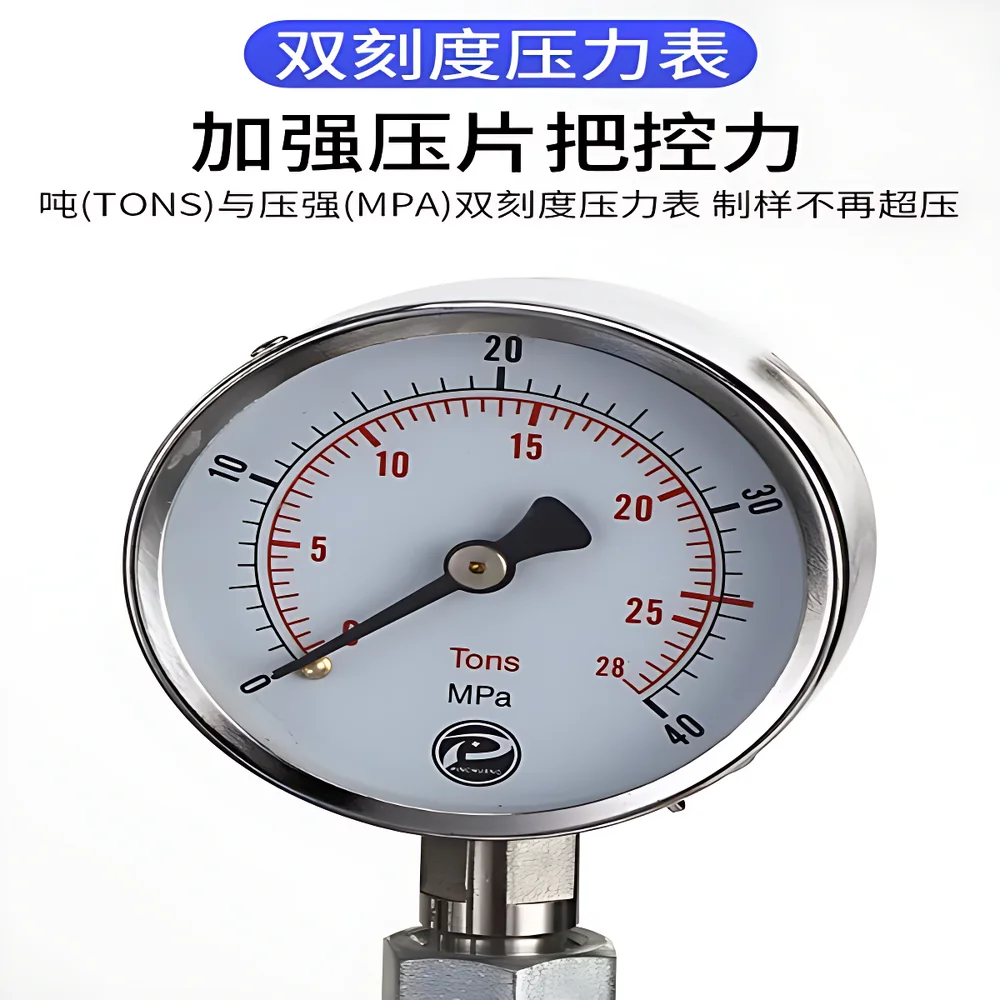
| Display | Digital Pressure & Force Readout |
| Safety Design | Reinforced Frame with Protective Guard |
| Compatible Die Sizes | 3–14 mm (customizable) |
| Compliance | Designed per ISO 17025 laboratory practice guidelines for sample preparation reproducibility |
Ask about pricing, availability and specifications.
Overview
The MITR PC-9 Manual Hydraulic Pellet Press is an engineered solution for high-reproducibility solid-sample pelletization in analytical laboratories. Designed specifically for Fourier Transform Infrared (FTIR), X-ray Fluorescence (XRF), X-ray Diffraction (XRD), and wavelength-dispersive fluorescence spectroscopy, the press applies controlled uniaxial compressive force via a precision-machined hydraulic system to consolidate powdered specimens into uniform, binder-free pellets. Its operation follows classical cold-pressing principles—no heating element is integrated by default, though optional heated die assemblies are available for thermally assisted compaction. The device operates within a calibrated force range of 3 to 40 metric tons (29.4–392 kN), enabling users to select appropriate pressure levels based on material compressibility, density requirements, and spectral transparency specifications. All structural components—including the C-frame, piston assembly, and load-bearing platens—are fabricated from high-strength alloy steel to ensure dimensional stability under repeated loading cycles and long-term mechanical integrity.
Key Features
- Manual hydraulic actuation with dual-stage pressure amplification for precise, repeatable force application
- Digital force readout with real-time kN/ton display and zero-point calibration function
- Reinforced safety guard integrated into frame design to prevent accidental contact during compression
- Modular die cavity system compatible with standard cylindrical dies (3–14 mm diameter), including custom geometries upon request
- Interchangeable upper and lower punches with hardened stainless-steel surfaces (HV ≥ 600) for extended wear resistance
- Low-profile base plate with T-slot configuration for secure mounting of auxiliary fixtures or vacuum die holders
- No external power supply required—fully operational with hand-pump actuation only
Sample Compatibility & Compliance
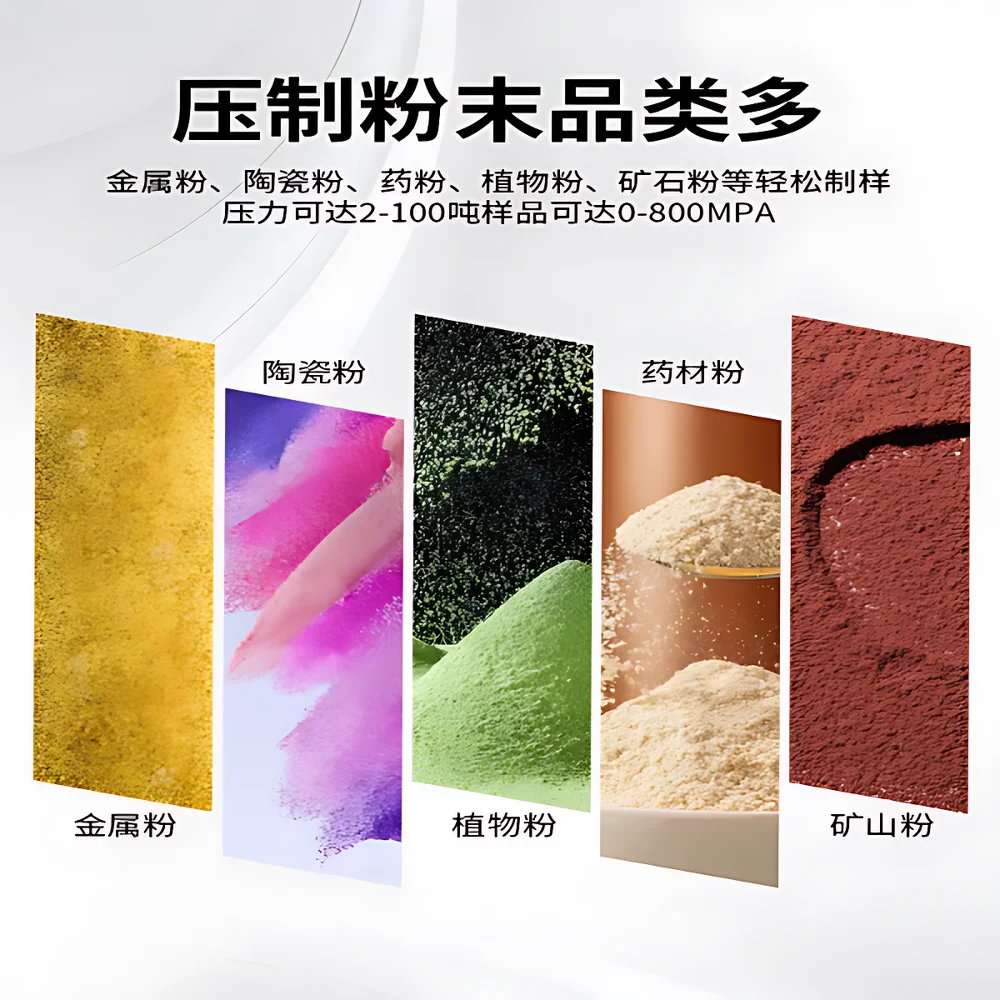
The PC-9 accommodates a broad spectrum of inorganic and organic powders, including KBr, NaCl, CsI, BaF₂, and polymer-based matrices used in FTIR transmission analysis; metal oxides and geological standards for XRF quantitation; and crystalline pharmaceutical intermediates for XRD phase identification. It supports both flat-faced and recessed die configurations, facilitating preparation of pellets with defined thickness tolerances (±0.02 mm) critical for Beer–Lambert law compliance in quantitative IR spectroscopy. The instrument conforms to general laboratory best practices outlined in ISO/IEC 17025:2017 (Section 7.2.2: Method Validation for Sample Preparation), and its mechanical consistency enables traceable documentation of pressing parameters—force, dwell time, and die geometry—for GLP-compliant reporting and audit readiness.
Software & Data Management
As a manually operated press, the PC-9 does not incorporate embedded firmware or digital control logic. However, its digital force transducer outputs analog voltage signals (0–5 V) compatible with third-party data acquisition systems (e.g., LabVIEW, MATLAB, or custom SCADA interfaces) when connected via optional analog output module (sold separately). Users may log pressing events—including peak force, hold duration, and cycle count—into LIMS or ELN platforms using standardized CSV export protocols. For regulated environments requiring electronic records, integration with 21 CFR Part 11–compliant systems is achievable through validated external DAQ hardware and procedural SOPs governing manual parameter entry and signature verification.
Applications
- Preparation of transparent KBr pellets for mid-IR spectral analysis (4000–400 cm⁻¹)
- Compaction of heterogeneous mineral powders for quantitative XRF calibration standards
- Production of dense ceramic green bodies for subsequent sintering and microstructural evaluation
- Routine quality control of battery cathode/anode materials (e.g., LiCoO₂, graphite) prior to electrochemical testing
- Standardized tablet formation for dissolution rate studies in pharmaceutical development
- Consolidation of nanomaterials for TEM grid mounting or cross-sectional FIB-SEM analysis
FAQ
What is the maximum recommended operating pressure for routine FTIR pellet preparation?
For optimal spectral clarity and minimal scattering artifacts, MITR recommends 8–12 tons (78–118 kN) for KBr-based pellets at room temperature.
Can the PC-9 be used with heated dies?
Yes—optional thermostatically controlled die heaters (up to 200 °C) are available as accessories and mount directly onto standard die holders without frame modification.
Is calibration certification included with shipment?
Each unit ships with a factory-verified force calibration certificate traceable to NIM (National Institute of Metrology, China) standards; ISO/IEC 17025-accredited recalibration services are offered annually.
How is die alignment maintained during repeated use?
The press features precision-ground concentric guide sleeves and self-centering punch retainers that maintain ≤ ±0.01 mm radial runout over 10,000 compression cycles.
Does the PC-9 meet CE or UL safety directives?
While not CE-marked (as it contains no electrical drive system), the mechanical design complies with EN 692:2005 (mechanical presses) and ANSI B11.1–2020 safety requirements for manually actuated laboratory equipment.
More from MITR
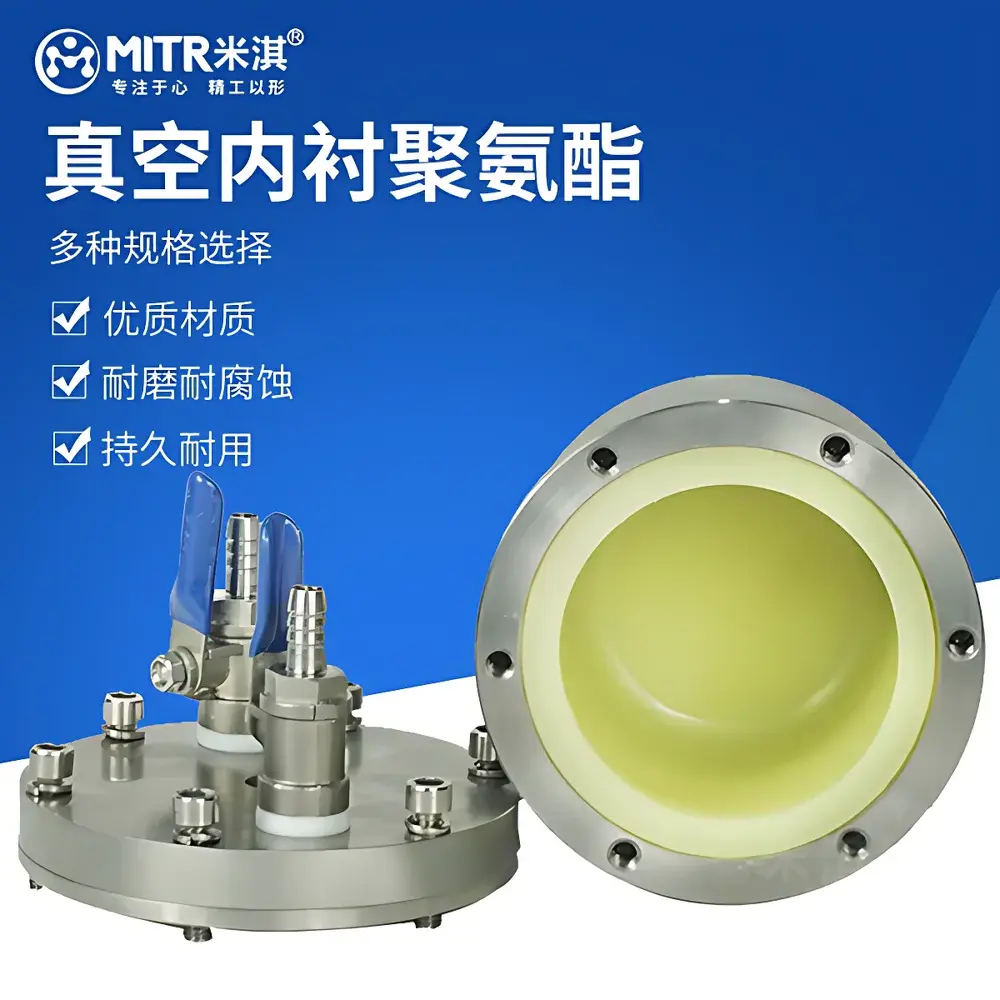
View all MITR products → Vacuum-Lined Polyurethane Jar for Planetary Ball Mills
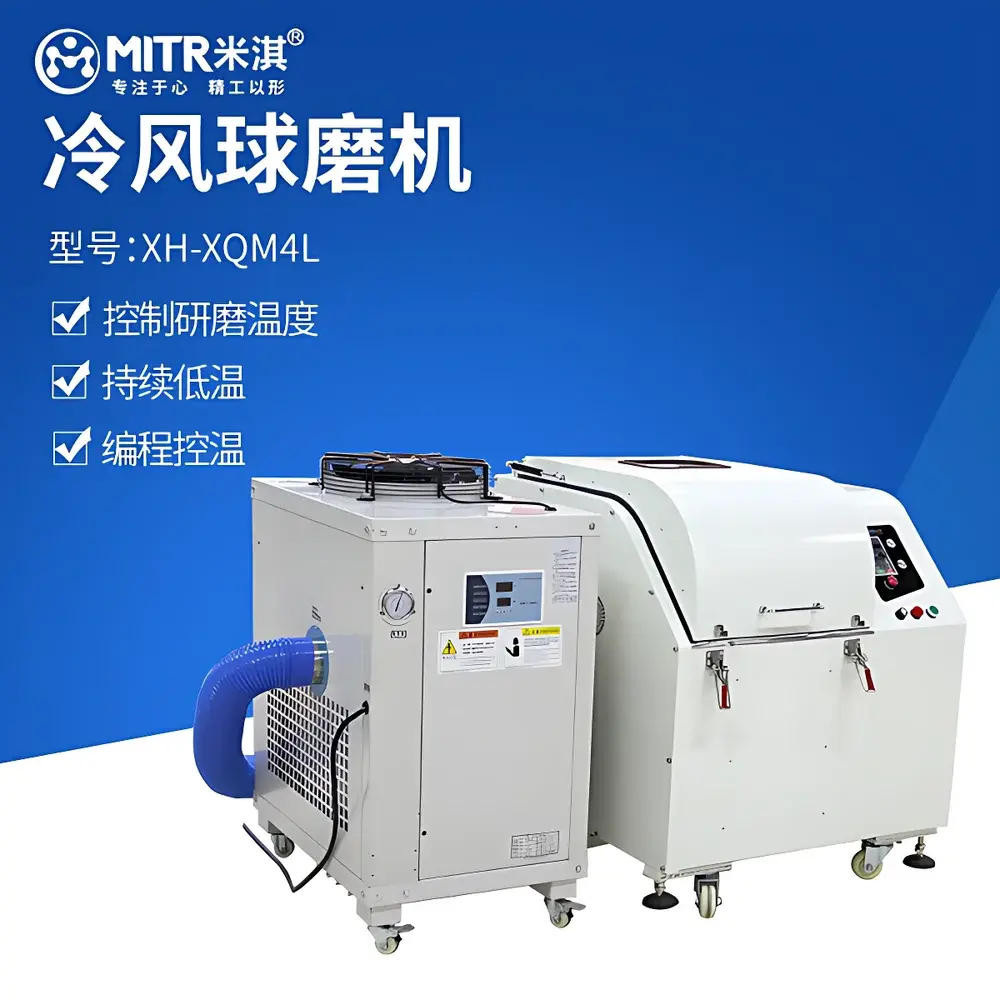
- MITR XH-XQM Series Cryogenic Planetary Ball Mill with Air-Cooling System
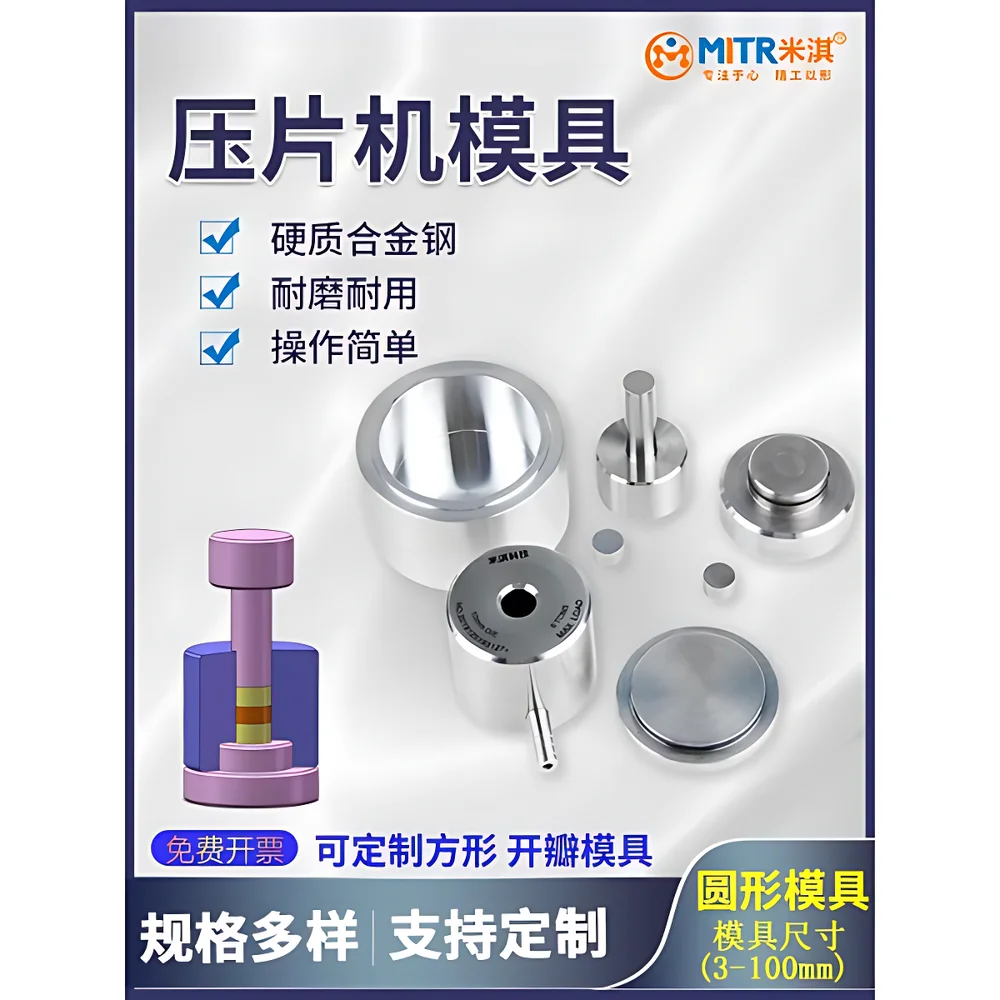
- MITR MJ Series Laboratory Powder Pellet Press Dies – Stainless Steel Square & Round Die Sets for FTIR, XRF, and Spectroscopic Sample Preparation
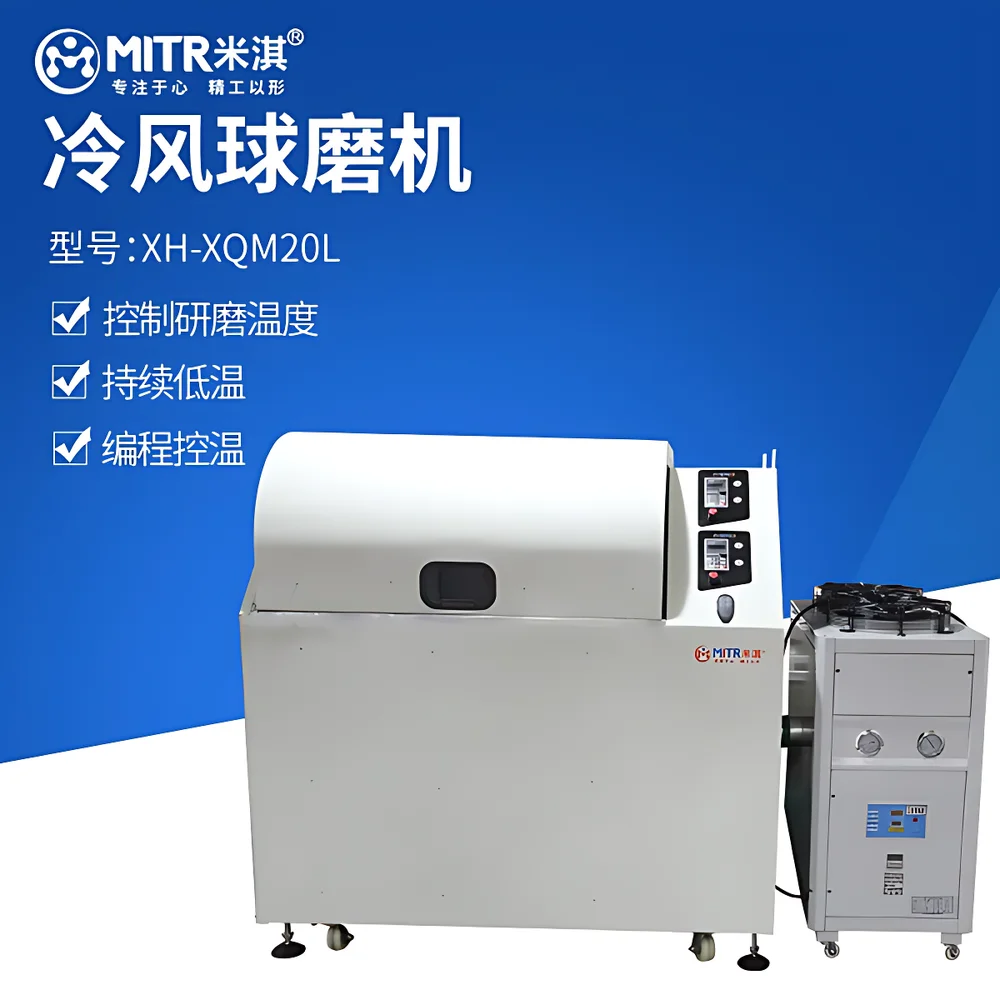
- MITR XH-XQM20L Cryogenic Circulating Cold-Air Planetary Ball Mill