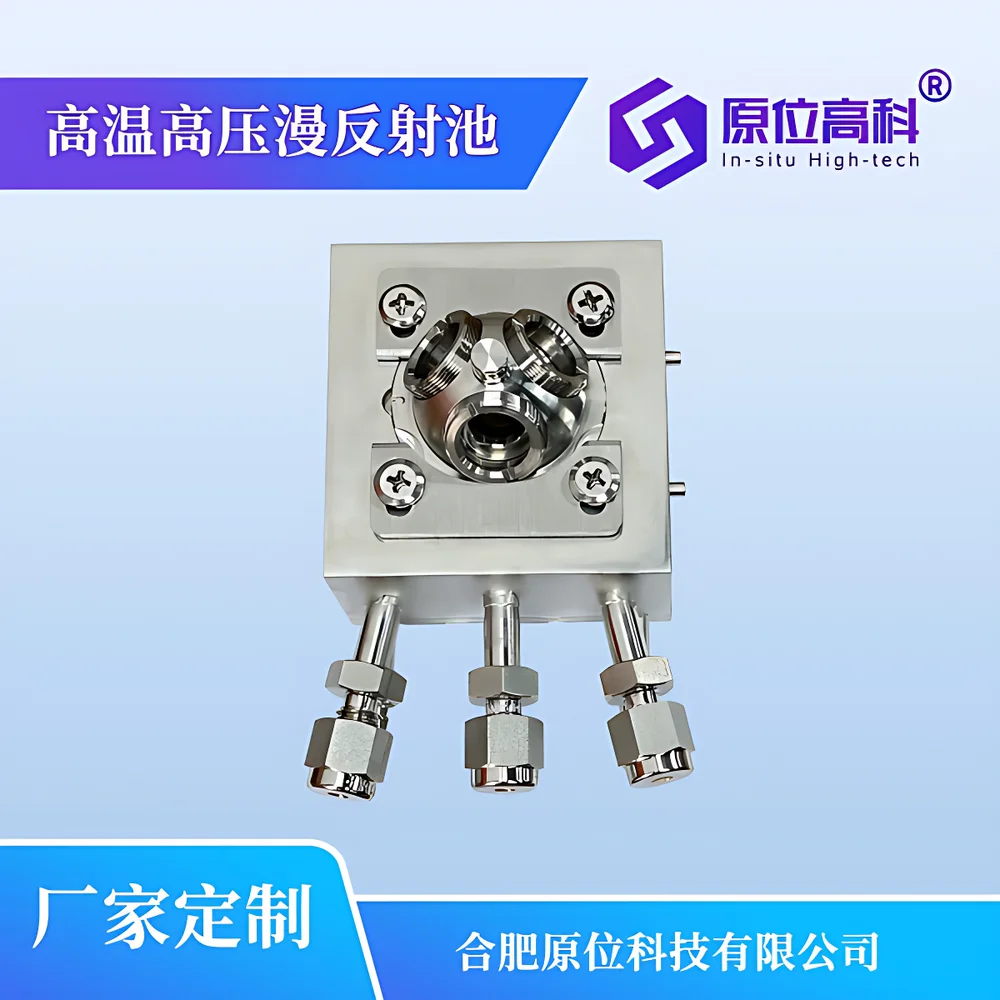
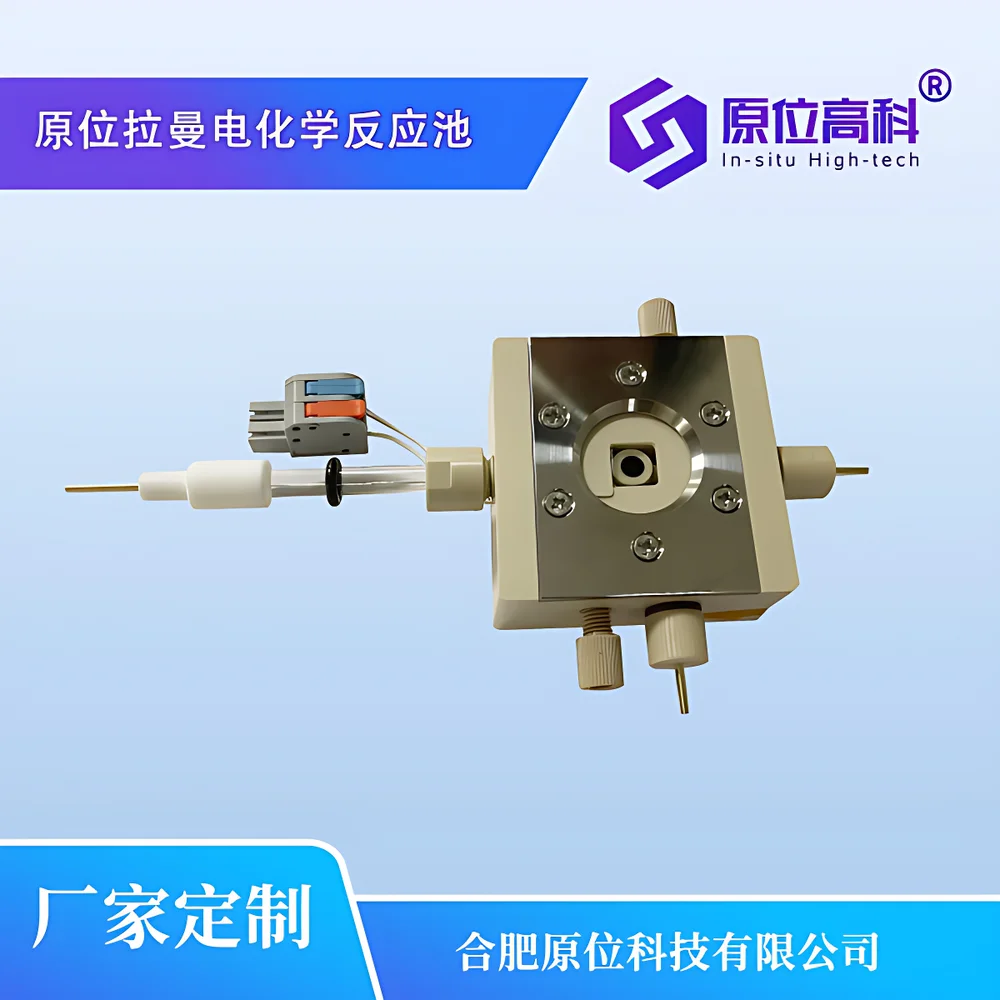
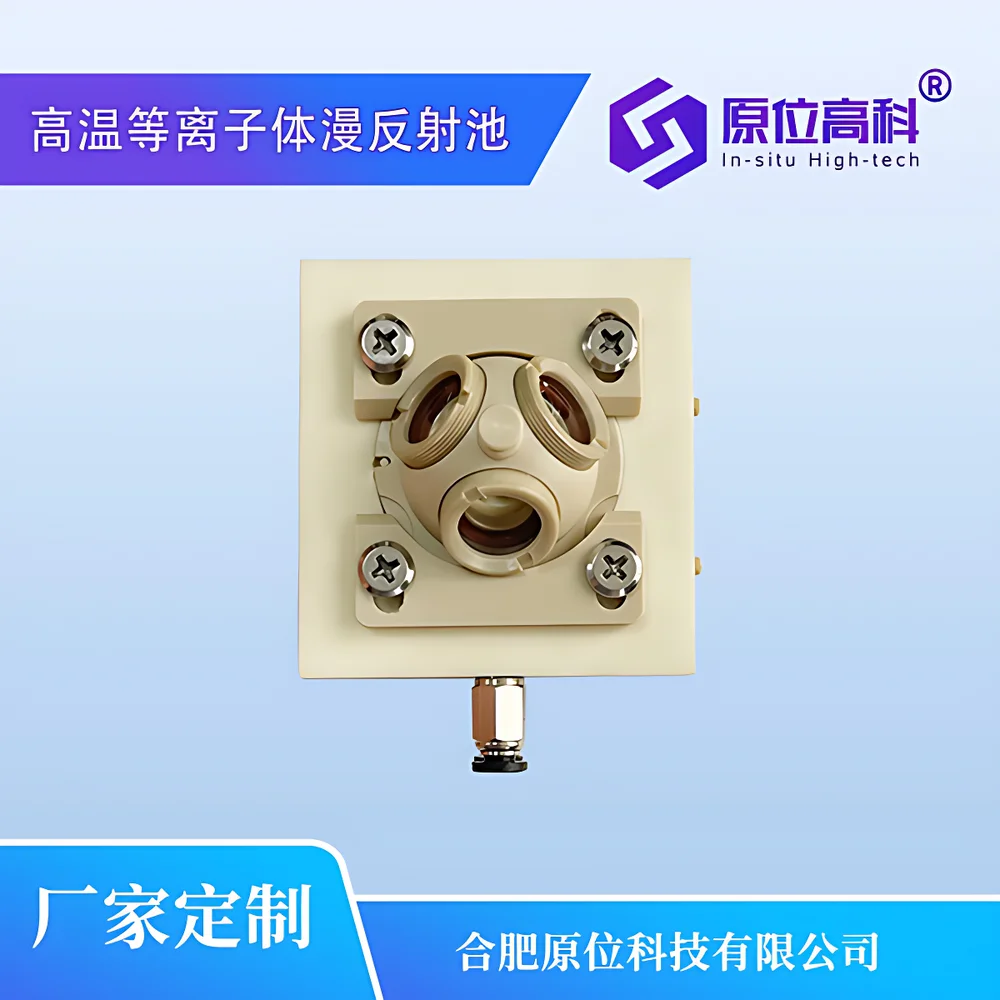
In-situ High-tech CIS-XRD-HC High-Temperature In-Situ XRD Cell for Thermal Battery Analysis

| Brand | In-situ High-tech |
|---|---|
| Origin | Anhui, China |
| Manufacturer Type | Direct Manufacturer |
| Country of Origin | China |
| Model | CIS-XRD-HC |
| Pricing | Upon Request |
| Max Operating Temperature | 500 °C |
| Heating Rate | 25–30 °C/min |
| Sample-Sensor Temperature Deviation | 20–60 °C |
| Internal Pressure | Ambient (1 atm) |
| Cell Body Material | Electropolished SUS316 Stainless Steel |
| Window Material | Polyimide Film (PI) |
| Standard Battery Format | Ø18 mm × 2 mm (customizable) |
| Temperature Control System | Dedicated Programmable PID Controller with Touchscreen Interface & PC Software |
| Cooling System | 270 W Recirculating Chiller |
Ask about pricing, availability and specifications.
Overview
The In-situ High-tech CIS-XRD-HC is a purpose-engineered high-temperature in-situ X-ray diffraction (XRD) cell designed for real-time structural characterization of electrochemical materials during thermal battery operation. It enables synchrotron- and laboratory-based XRD measurements under controlled thermal conditions up to 500 °C, supporting time-resolved phase evolution studies during heating, cooling, and isothermal holds. The cell operates at ambient pressure and integrates a thermally stable mechanical architecture with minimal X-ray absorption—critical for maintaining high signal-to-noise ratio and angular resolution in Bragg peak detection. Its design follows the fundamental requirements of in-situ XRD methodology: precise thermal localization, minimal parasitic scattering, geometric reproducibility across repeated experiments, and compatibility with standard θ–2θ goniometer geometries. Unlike generic hot stages, the CIS-XRD-HC incorporates dedicated thermal decoupling between the sample zone and sensor location, allowing users to correlate measured diffraction patterns with true local sample temperature through calibrated offset correction.
Key Features
- Stainless steel cell body fabricated from electropolished SUS316, offering high corrosion resistance against residual electrolyte vapors and thermal oxidation stability up to 500 °C.
- Ultra-thin polyimide (PI) X-ray window (thickness optimized for Cu-Kα and Mo-Kα radiation), providing >85% transmission efficiency while maintaining mechanical integrity and vacuum/pressure integrity.
- Integrated PID-controlled heating system with programmable ramp/hold profiles, enabling precise thermal protocols aligned with battery cycling or decomposition kinetics studies.
- Dedicated 270 W recirculating chiller for active heat management of baseplate and peripheral components, ensuring thermal gradient control and long-term operational stability during extended acquisitions.
- Modular sample holder accommodating standard CR2032-format coin cells (Ø18 mm × 2 mm), with optional custom inserts for pouch, blade-coated, or pelletized electrodes.
- Touchscreen controller with embedded firmware and companion Windows-based software for remote logging, script-based temperature sequencing, and timestamp-synchronized data export.
Sample Compatibility & Compliance
The CIS-XRD-HC supports a broad range of solid-state and molten-salt thermal battery chemistries, including Li–S, Na–NiCl₂, Fe–air, and Li–FeS₂ systems. Its ambient-pressure configuration eliminates the need for complex gas handling infrastructure, making it suitable for routine lab deployment without specialized safety enclosures. All wetted surfaces comply with ASTM F899-22 standards for stainless steel surface finish in analytical instrumentation. The polyimide window meets ISO 4042:2018 specifications for polymer film dimensional stability under thermal cycling. While not certified to IEC 61000-6-3 for EMC, the unit is engineered for electromagnetic compatibility in proximity to XRD detectors and motion controllers. Full traceability documentation—including material certifications, thermal calibration reports, and mechanical assembly records—is provided per GLP-aligned quality assurance protocols.
Software & Data Management
The bundled control software supports bidirectional communication via USB 2.0 or RS-485, enabling synchronization of temperature logs with XRD acquisition timestamps (e.g., Bruker DIFFRAC.EVA, PANalytical HighScore, or custom Python-based collection pipelines). Export formats include CSV (for T vs. time), JSON (for metadata embedding), and XML (for integration into LIMS environments compliant with ISO/IEC 17025:2017 Annex A2). Audit trail functionality records all parameter changes, user logins, and firmware updates—meeting baseline requirements for FDA 21 CFR Part 11–aligned electronic recordkeeping when deployed in regulated R&D settings.
Applications
- In-situ monitoring of phase transitions in cathode materials (e.g., Ni-rich layered oxides, sulfides) during thermal runaway simulation.
- Real-time tracking of interfacial reaction products (e.g., Li₂S, Na₃Sb) at electrode/electrolyte boundaries under elevated temperature.
- Structural evolution studies of solid electrolytes (e.g., LATP, LLZO) during sintering or thermal aging.
- Validation of computational phase diagrams via experimental confirmation of metastable intermediates in multi-step redox reactions.
- Method development for operando XRD of next-generation thermal storage devices requiring sub-minute temporal resolution.
FAQ
What X-ray sources is the CIS-XRD-HC compatible with?
It is validated for use with sealed-tube Cu-Kα (λ = 1.5418 Å) and Mo-Kα (λ = 0.7107 Å) sources, as well as bending-magnet and insertion-device beamlines at synchrotron facilities.
Can the cell be used under inert atmosphere or controlled gas flow?
The standard configuration is ambient-pressure only; however, optional gas-tight variants with Swagelok-compatible feedthroughs are available upon request.
How is temperature calibration performed?
Each unit ships with a NIST-traceable calibration certificate covering 50–500 °C, based on dual-point verification using Pt100 sensors embedded adjacent to the sample stage and reference thermocouple comparison.
Is the polyimide window replaceable in the lab?
Yes—the window module is tool-free and field-replaceable using standard cleanroom tweezers; replacement kits include pre-aligned PI films with certified thickness uniformity (±2% CV).
Does the system support automated multi-sample workflows?
While the base unit is single-cell, robotic sample changers (e.g., Anton Paar XRK 900 interface) can be integrated via custom mounting brackets and API-enabled temperature scripting.