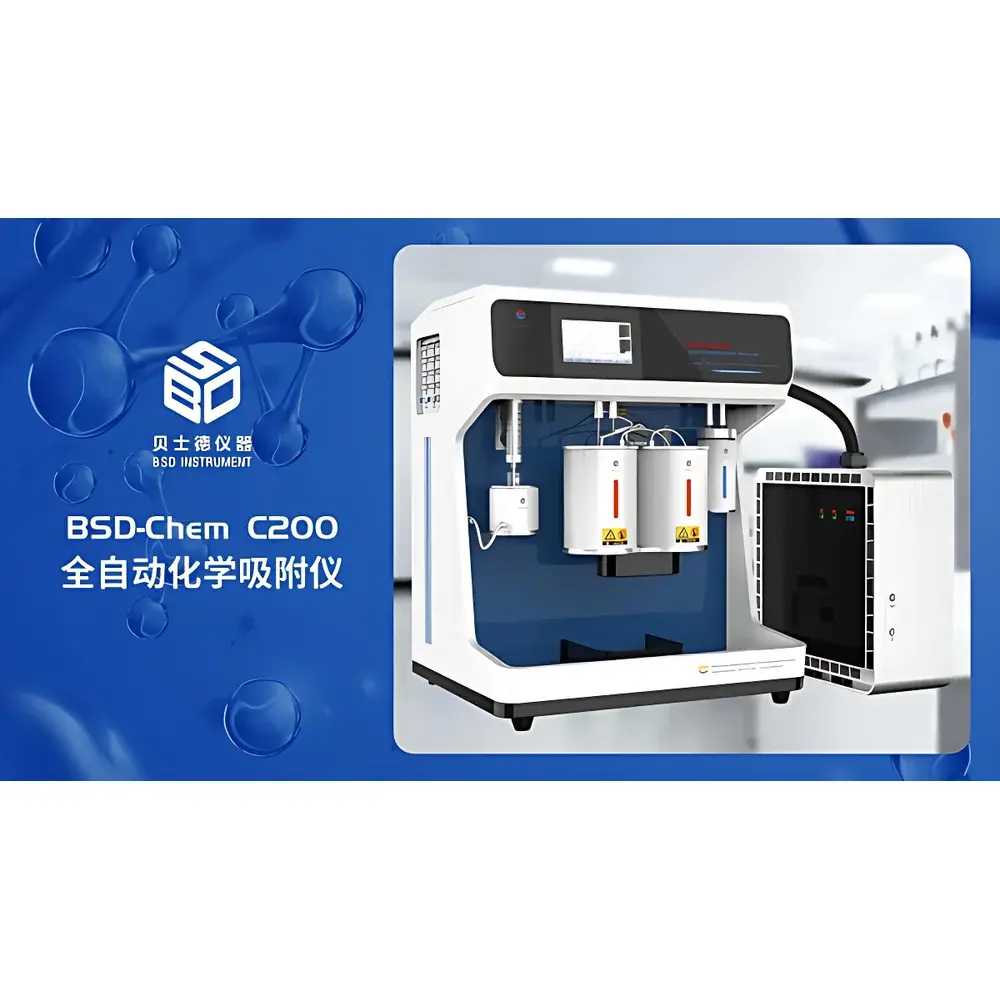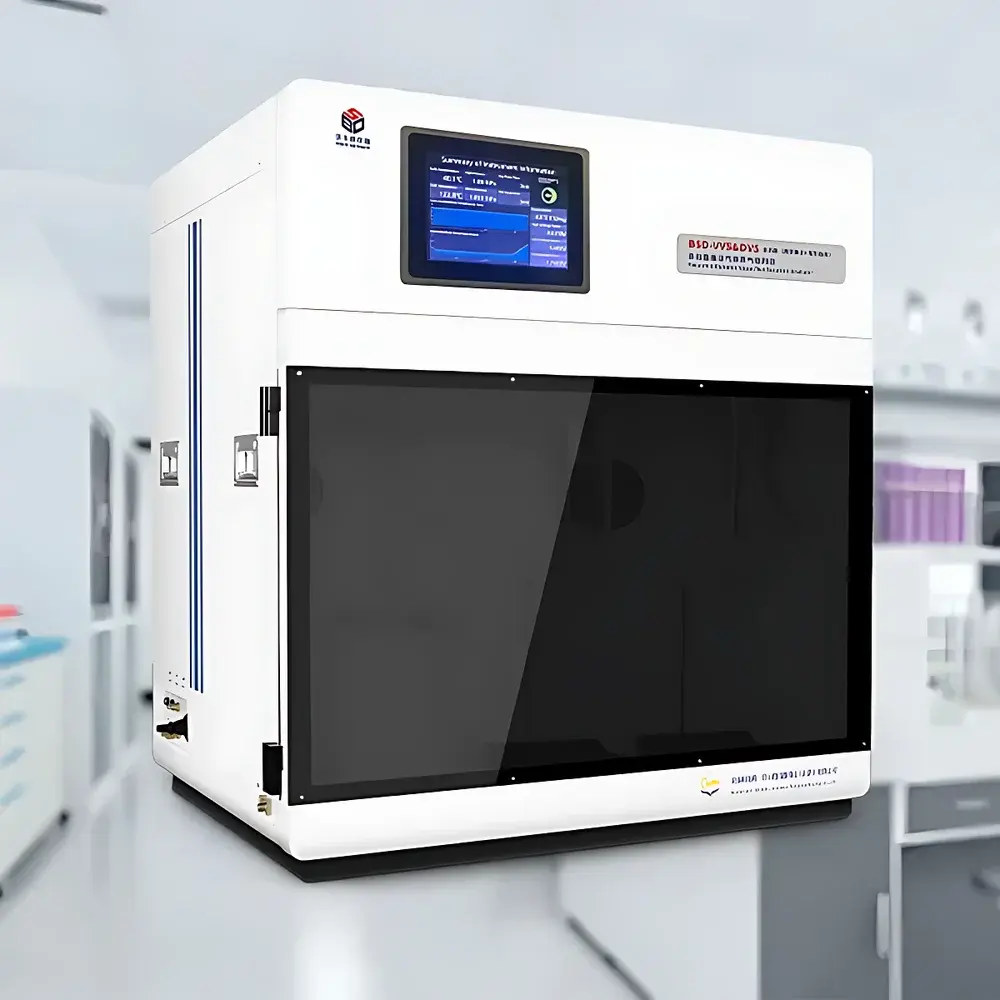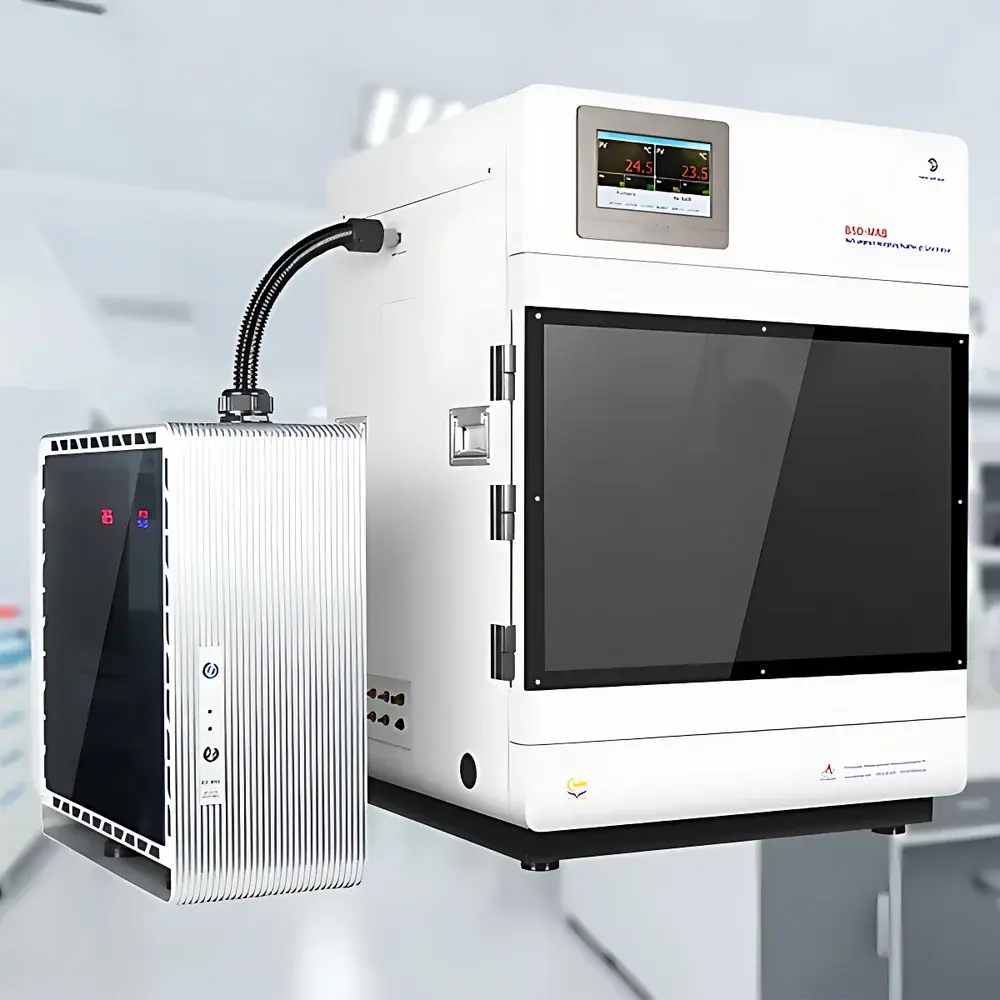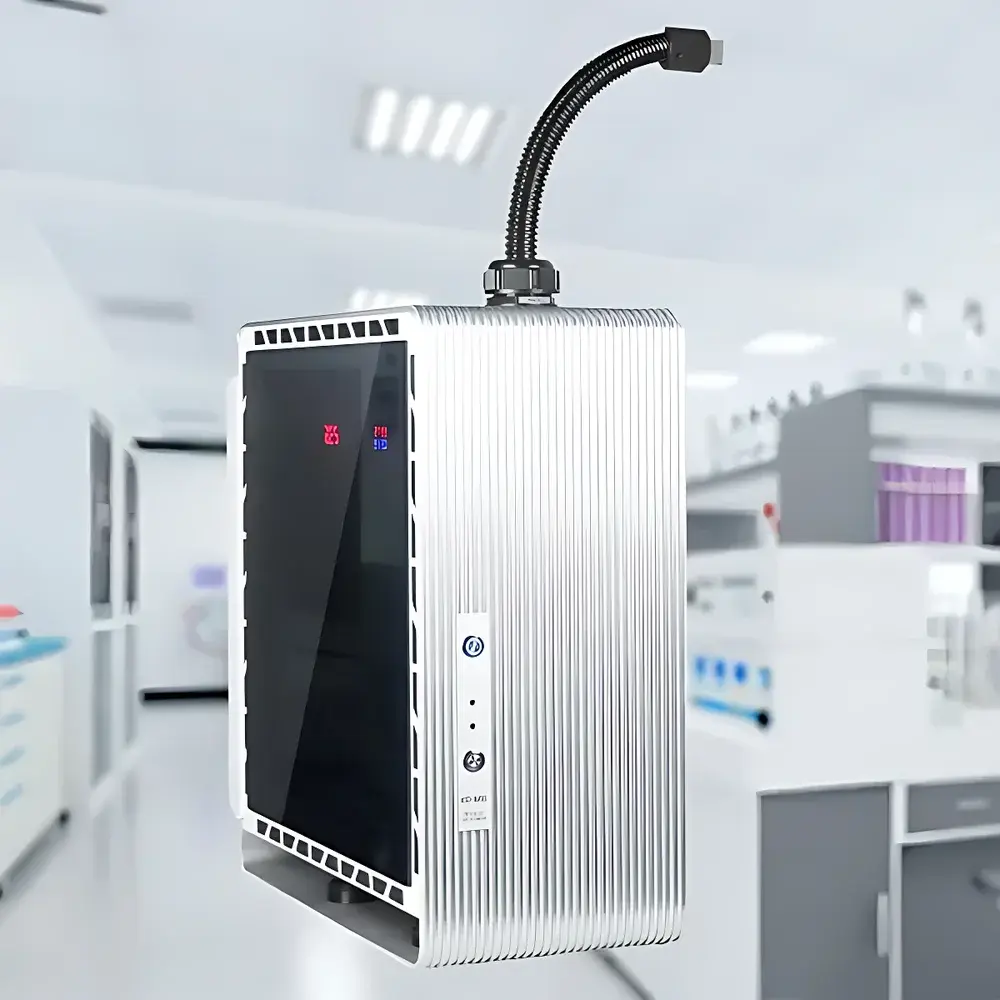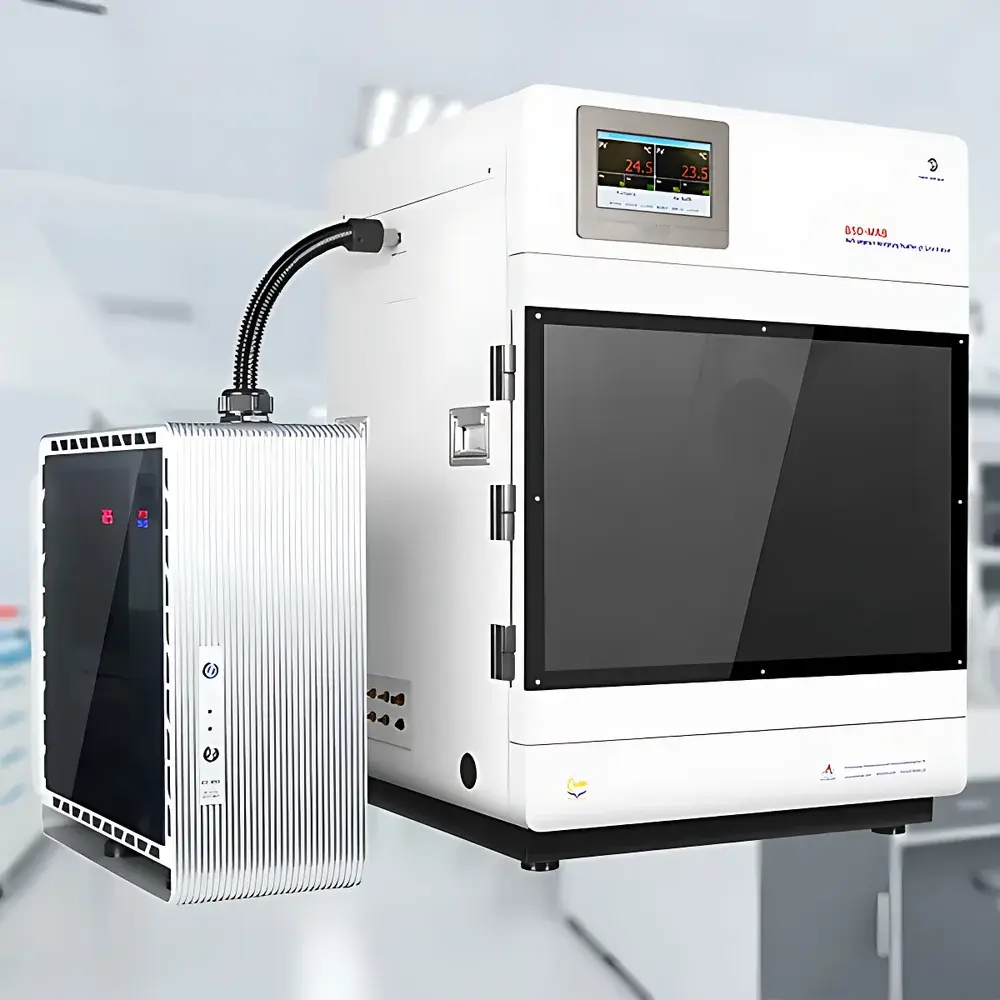
Beishide BSD-MAB Dynamic Multi-Component Adsorption Breakthrough Curve Analyzer

| Brand | Beishide Instrument |
|---|---|
| Origin | Beijing, China |
| Manufacturer Type | Manufacturer |
| Country of Origin | Domestic (China) |
| Model | BSD-MAB- |
| Pricing | Upon Request |
Ask about pricing, availability and specifications.
Overview
The Beishide BSD-MAB Dynamic Multi-Component Adsorption Breakthrough Curve Analyzer is a precision-engineered benchtop system designed for quantitative characterization of competitive adsorption behavior in fixed-bed configurations. It operates on the fundamental principle of dynamic breakthrough analysis—where a controlled gas mixture flows continuously through a packed bed of solid adsorbent (e.g., activated carbon, zeolites, MOFs), and time-resolved concentration profiles of individual components at the column outlet are measured to generate breakthrough curves. This method replicates real-world process conditions encountered in pressure swing adsorption (PSA), temperature swing adsorption (TSA), flue gas purification, VOC abatement, and natural gas upgrading. Unlike static equilibrium isotherm measurements, the BSD-MAB captures kinetic selectivity, mass transfer limitations, co-adsorption effects, and displacement phenomena under transient flow conditions—making it indispensable for scaling fixed-bed separation processes and validating adsorbent performance under industrially relevant hydrodynamic and thermodynamic constraints.
Key Features
- Modular fixed-bed reactor system with interchangeable stainless-steel columns (ID 6–12 mm, height up to 300 mm) accommodating granular or pelletized adsorbents
- Integrated thermal conductivity detector (TCD) for real-time, dual-component gas concentration monitoring with sub-ppm detection limit for CO₂, CH₄, C₂H₆, NH₃, SO₂, and common VOCs (e.g., benzene, toluene)
- Mass flow controllers (MFCs) with ±0.5% full-scale accuracy for precise regulation of multi-gas mixtures (carrier + 2–3 analytes) across flow rates from 5 to 500 mL/min (NTP)
- Programmable temperature control (ambient to 200 °C) with axial uniformity ≤±1 °C for isothermal breakthrough and TPD studies
- Pressure regulation capability up to 10 bar(g), supporting both ambient-pressure and high-pressure PSA simulation
- Direct coupling interface for quadrupole mass spectrometer (QMS) to extend analysis to ≥3-component systems, enabling quantification of overlapping breakthrough fronts and trace-level competitive adsorption
- Automated data acquisition synchronized with gas switching, temperature ramps, and pressure steps—ensuring temporal alignment between process parameters and detector response
Sample Compatibility & Compliance
The BSD-MAB accommodates a broad spectrum of porous solid adsorbents including but not limited to activated carbons, silica gels, aluminas, zeolites (e.g., 13X, 5A), metal–organic frameworks (MOFs), and functionalized polymers. It supports testing under ISO 10121-1 (air filter media), ASTM D5228 (activated carbon iodine number), and USP (chromatographic system suitability) aligned experimental protocols. All hardware components comply with CE electromagnetic compatibility (EMC) directives and IEC 61010-1 safety standards for laboratory equipment. Data integrity meets GLP/GMP expectations through timestamped, non-editable raw signal logs and audit-trail-enabled configuration records—facilitating 21 CFR Part 11 readiness when integrated with validated LIMS or ELN platforms.
Software & Data Management
The proprietary BSD-ControlSuite software provides intuitive experiment sequencing, real-time visualization of breakthrough curves, and automated calculation of critical parameters: breakthrough time (tb), exhaustion time (te), dynamic adsorption capacity (qdyn, mmol/g), selectivity ratio (αA/B), mass transfer zone (MTZ) length, and fractional removal efficiency. Raw chromatographic/TCD data are exported in ASCII (.csv) and HDF5 formats for third-party kinetic modeling (e.g., linear driving force, pore diffusion, or Langmuir–Freundlich rate models). Software includes built-in tools for baseline correction, peak deconvolution (for partially resolved fronts), and comparative overlay of datasets across temperature/pressure/flow variables—enabling systematic parametric sensitivity analysis essential for process intensification studies.
Applications
- Design and optimization of PSA/TSA cycles for O₂/N₂ separation, biogas upgrading (CH₄/CO₂), and hydrogen purification
- Evaluation of adsorbent lifetime and regeneration efficiency in indoor air purifiers and automotive cabin filters
- Quantification of competitive adsorption coefficients for flue gas components (CO₂, SO₂, NOₓ, H₂O) on amine-grafted sorbents
- Screening of MOF candidates for selective capture of low-concentration VOCs (e.g., formaldehyde, acetaldehyde) in ppm-range challenge gases
- Elucidation of co-adsorption mechanisms and surface displacement kinetics in binary/multi-component hydrocarbon mixtures
- Correlation of TPD-derived desorption energetics with dynamic breakthrough selectivity to inform adsorbent surface modification strategies
FAQ
Can the BSD-MAB quantify adsorption selectivity for three or more components simultaneously?
Yes—when coupled with a calibrated quadrupole mass spectrometer, the system resolves and quantifies ≥3 gaseous analytes in real time, enabling direct calculation of multi-component selectivity ratios and competitive loading isotherms.
What is the minimum detectable concentration for NH₃ or SO₂ using the built-in TCD?
Under optimized carrier gas composition and flow conditions, the TCD achieves reliable quantification down to 1–5 ppmv for polar gases such as NH₃ and SO₂, subject to column retention and detector calibration.
Does the system support automated cyclic adsorption–desorption testing?
Yes—the software allows user-defined multi-step protocols including adsorption, purge, heating ramp, and cooling phases, enabling full TSA cycle evaluation with in-situ regeneration monitoring.
Is it possible to integrate external environmental chambers for humidity-controlled breakthrough studies?
The BSD-MAB features analog/digital I/O ports and Modbus TCP support, permitting seamless synchronization with external humidity generators or climate chambers for controlled H₂O co-adsorption experiments.
How is data traceability ensured for regulatory submissions?
All acquisitions include embedded metadata (operator ID, instrument serial, calibration timestamps, method version), and raw files are cryptographically hashed upon export—supporting ALCOA+ principles required for FDA/EMA submissions.