
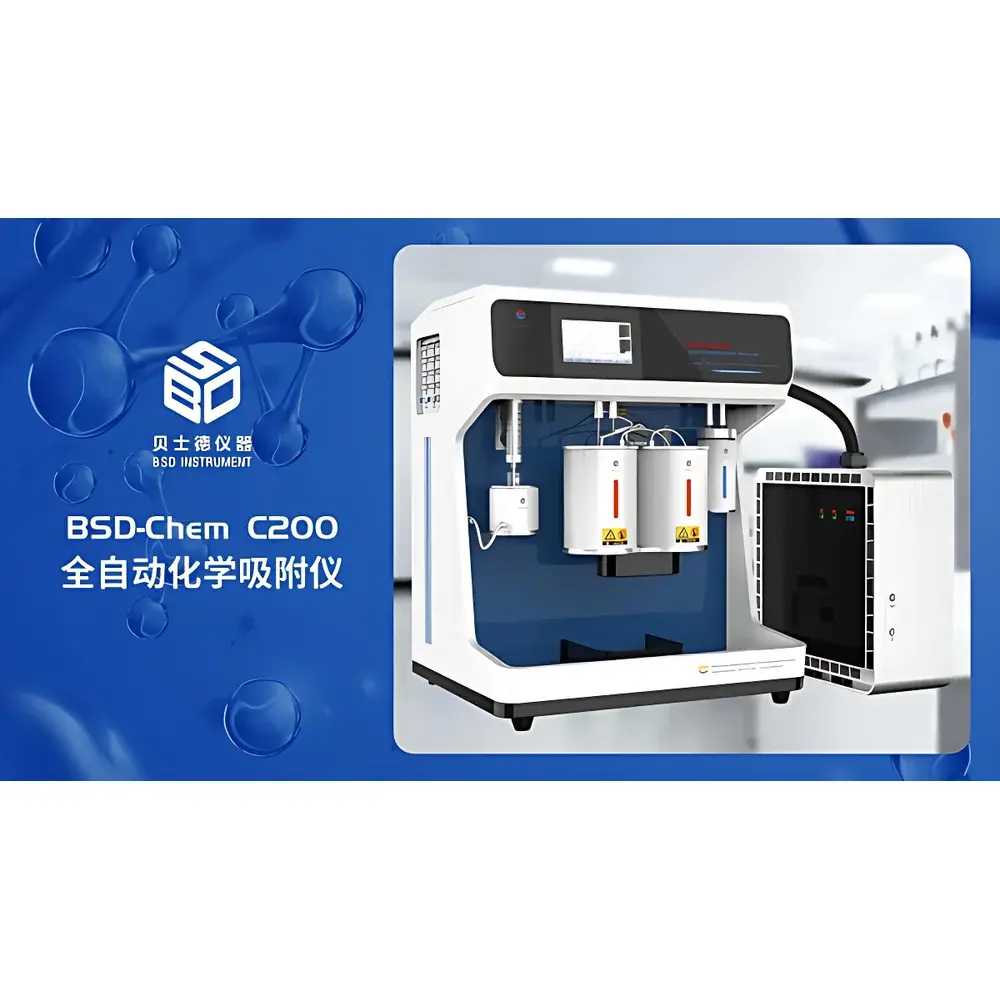
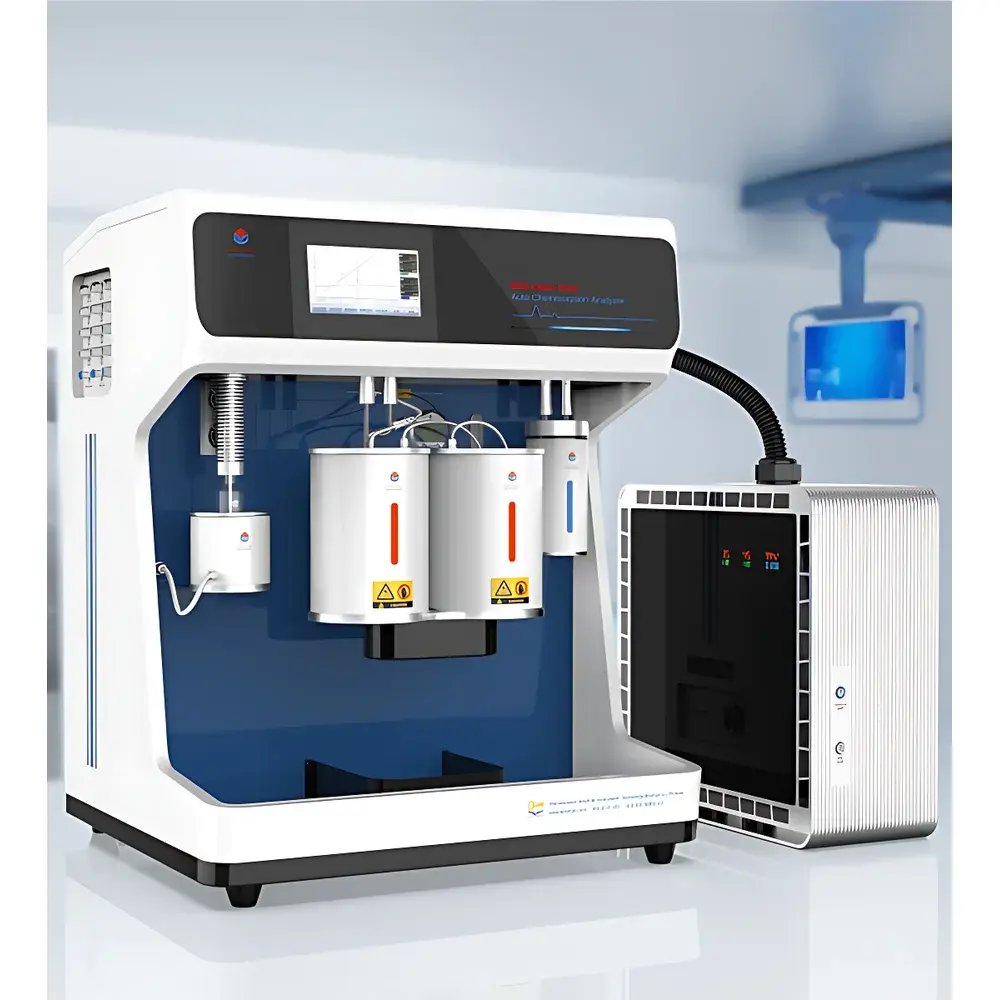
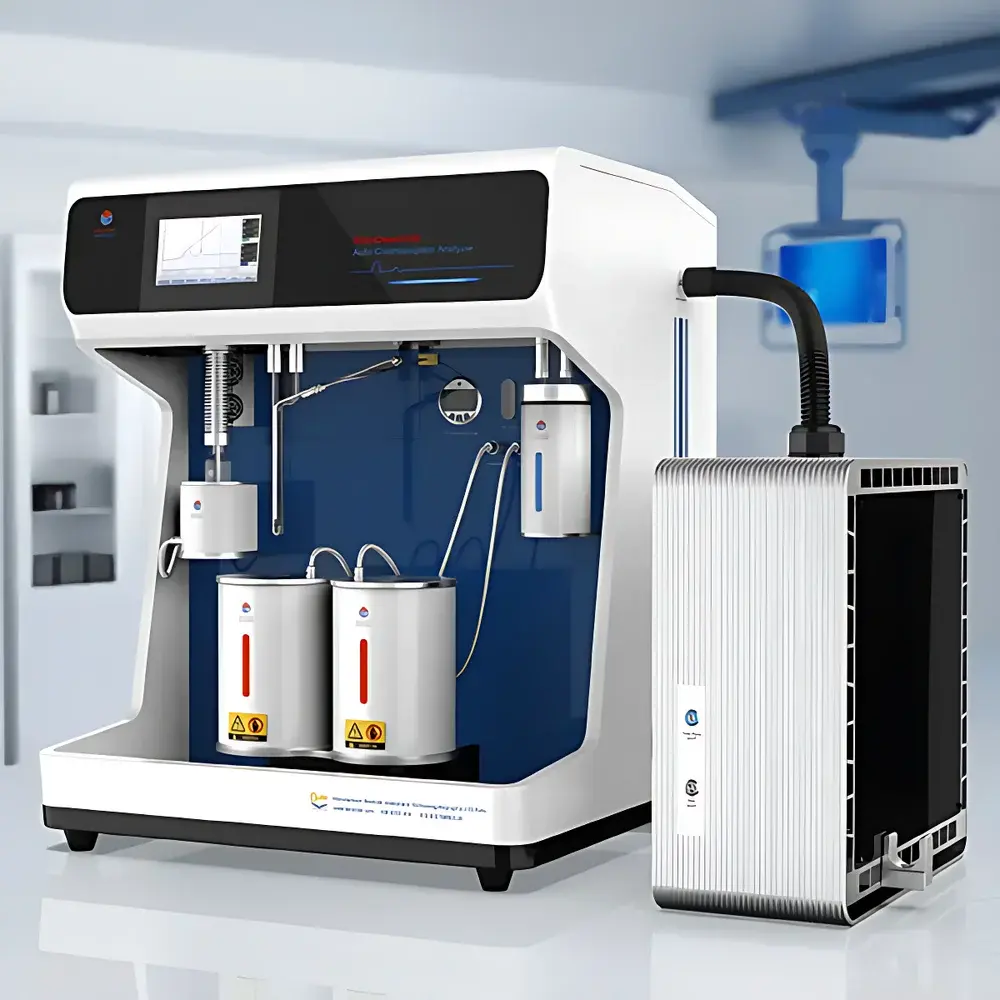
Beishide BSD-ChemC200 Automated Chemisorption Analyzer
| Brand | Beishide Instrument |
|---|---|
| Origin | Beijing, China |
| Manufacturer Type | Direct Manufacturer |
| Instrument Type | Automated Chemisorption Analyzer |
| Test Principle | Continuous Flow Method |
| Gas Inlet Ports | 12 channels |
| Heating Temperature Range | Ambient to 1200 °C |
| Isothermal Stability | Ambient to 60 °C |
| Ramp Rate | 1–100 °C/min |
| Pressure Options | Atmospheric (standard), optional up to 10 MPa |
| Core Functions | TPD, TPR, TPO, TPSR, TPS, Pulse Titration, Desorption Kinetics (Ed, Ad, n), Adsorption Kinetics (Ea, ΔH, Aa) |
| Optional Coupling | Online MS (INFICON), FT-IR (Thermo Fisher Nicolet iS20/iS5) |
Overview
The Beishide BSD-ChemC200 Automated Chemisorption Analyzer is a high-precision, research-grade instrument engineered for quantitative characterization of surface chemical reactivity, active site distribution, and catalytic behavior under controlled thermal and gaseous environments. It operates on the continuous flow principle—where reactive gases are dynamically introduced over a solid catalyst or adsorbent while temperature is precisely ramped or held—enabling real-time monitoring of gas consumption, evolution, or breakthrough via thermal conductivity detection (TCD). The system supports full thermoprogrammed analysis workflows including temperature-programmed desorption (TPD), reduction (TPR), oxidation (TPO), surface reaction (TPSR), and sulfidation (TPS), as well as pulse chemisorption and kinetic modeling of both adsorption and desorption processes. Its dual-furnace architecture, integrated vacuum purging, and temperature-referenced U-tube sample holder collectively ensure measurement integrity, reproducibility, and trace-level sensitivity—critical for catalyst development, materials science, and heterogeneous reaction mechanism studies in academic and industrial R&D laboratories.
Key Features
- Dual interchangeable high-temperature furnaces (ambient to 1200 °C), enabling uninterrupted sequential testing: one furnace heats while the other cools automatically via internal forced-air convection, eliminating manual intervention and downtime.
- Integrated vacuum pump system for deep dead-volume purging—reducing baseline drift and residual gas interference by actively evacuating and refilling gas lines prior to analysis, per patented ZL202220485326.8 design.
- U-shaped quartz sample tube with embedded temperature reference sleeve—housing the thermocouple in direct thermal proximity to the sample bed—ensuring ±0.5 °C temperature accuracy and minimizing thermal lag during rapid ramps.
- 12 independent gas inlet ports with three mass flow controllers (MFCs), supporting simultaneous or sequential delivery of non-corrosive, corrosive, and vapor-phase reagents—including NH₃, H₂, O₂, CO, CO₂, H₂S, and steam (via standard integrated steam generator).
- TCD detector with dual operational modes: “high-sensitivity” mode (optimized for low-concentration species such as weakly adsorbed NH₃) and “wide-range” mode (for quantifying large concentration transients during strong desorption events).
- Standard cold trap and thermostatically controlled gas pathways (40–80 °C for gas lines; 60–110 °C for TCD cell) to suppress condensable interference (e.g., H₂O, hydrocarbons) and maintain detector stability.
- Automated multi-step protocol execution—including pre-treatment, adsorption, purge, and programmed heating—with full software-defined sequence logic and hardware-triggered event synchronization.
Sample Compatibility & Compliance
The BSD-ChemC200 accommodates powdered, pelletized, or supported catalysts (e.g., Pt/Al₂O₃, zeolites, MOFs, transition metal oxides) in standard 6–8 mm OD quartz U-tubes. It supports vapor-phase chemisorption of water, alcohols, and organic amines via its built-in steam generator and corrosion-resistant gas train components. For safety-critical applications involving H₂, CO, or hydrocarbons, dual combustible gas sensors monitor distinct zones of the instrument chassis in real time. All pneumatic and thermal subsystems comply with IEC 61010-1 (Electrical Safety for Laboratory Equipment) and meet CE marking requirements. Data acquisition and reporting support audit-trail functionality aligned with GLP and GMP frameworks, including user authentication, electronic signatures, and immutable test log archiving—facilitating regulatory submissions under FDA 21 CFR Part 11 when paired with validated software modules.
Software & Data Management
The proprietary ChemStation™ software provides an intuitive, workflow-driven interface for method creation, real-time signal visualization (TCD voltage, temperature, flow rate), and post-run kinetic analysis. It includes embedded algorithms for Ed, Ad, and n calculation from TPD spectra using the Polanyi–Wigner equation, and Ea, ΔH, and Aa derivation from isothermal uptake data. Raw data are stored in vendor-neutral ASCII (.csv) and HDF5 formats, ensuring long-term accessibility and third-party compatibility (e.g., Python-based kinetic modeling, MATLAB curve fitting). Optional integration with INFICON Transpector® MS or Thermo Fisher Nicolet iS20 FT-IR enables synchronized spectral acquisition—correlating mass fragments (m/z) or IR absorbance bands (cm⁻¹) directly with thermal events. All calibration records, maintenance logs, and instrument configuration snapshots are version-controlled and exportable for internal QA review or external audit.
Applications
- Catalyst characterization: Quantification of acid/base site density (NH₃/CO₂-TPD), reducibility profiles (H₂-TPR), oxygen mobility (O₂-TPO), and sulfur tolerance (H₂S-TPS) across automotive, petrochemical, and green hydrogen catalysts.
- Adsorption mechanism elucidation: Discrimination between physisorption and chemisorption via activation energy mapping; differentiation of multilayer vs. monolayer adsorption using Langmuir–Freundlich isotherm fitting.
- Stability and deactivation studies: Automated cyclic TPD–TPR sequences to evaluate sintering resistance, coke formation kinetics, and regeneration efficiency over 50+ cycles.
- Surface reaction pathway analysis: Coupled TPSR–MS experiments to identify transient intermediates (e.g., formate, carbonyl, nitrosyl species) during CO₂ hydrogenation or NOx reduction.
- Material screening: High-throughput comparative evaluation of metal–support interactions in bimetallic catalysts, leveraging standardized pulse titration protocols for active metal dispersion and particle size estimation.
FAQ
What analytical techniques does the BSD-ChemC200 support beyond standard TPD and TPR?
It supports TPO, TPSR, TPS, pulse chemisorption, and full desorption/adsorption kinetic modeling—including Ed, Ad, n, Ea, ΔH, and Aa derivation—using built-in nonlinear regression tools.
Can the instrument operate under elevated pressure conditions?
Yes—while atmospheric operation is standard, optional pressure-rated configurations support up to 10 MPa, enabling high-pressure chemisorption studies relevant to syngas conversion and Fischer–Tropsch synthesis.
Is coupling with mass spectrometry or FT-IR possible without hardware modification?
Yes—the system features standardized vacuum and gas-phase interfaces (CF-35 flange for MS; KBr window port for FT-IR) and includes driver-level communication protocols for synchronized data acquisition with INFICON and Thermo Fisher instruments.
How does the dual-furnace design improve throughput?
By eliminating cooldown wait times: while one furnace executes a 1200 °C TPR run, the second furnace simultaneously cools via automated internal air circulation—ready for the next sample within minutes, not hours.
What validation documentation is provided for GLP/GMP compliance?
Factory-installed IQ/OQ documentation, NIST-traceable temperature and flow calibration certificates, and software validation packages (including 21 CFR Part 11 readiness reports) are available upon request.
Related Products



