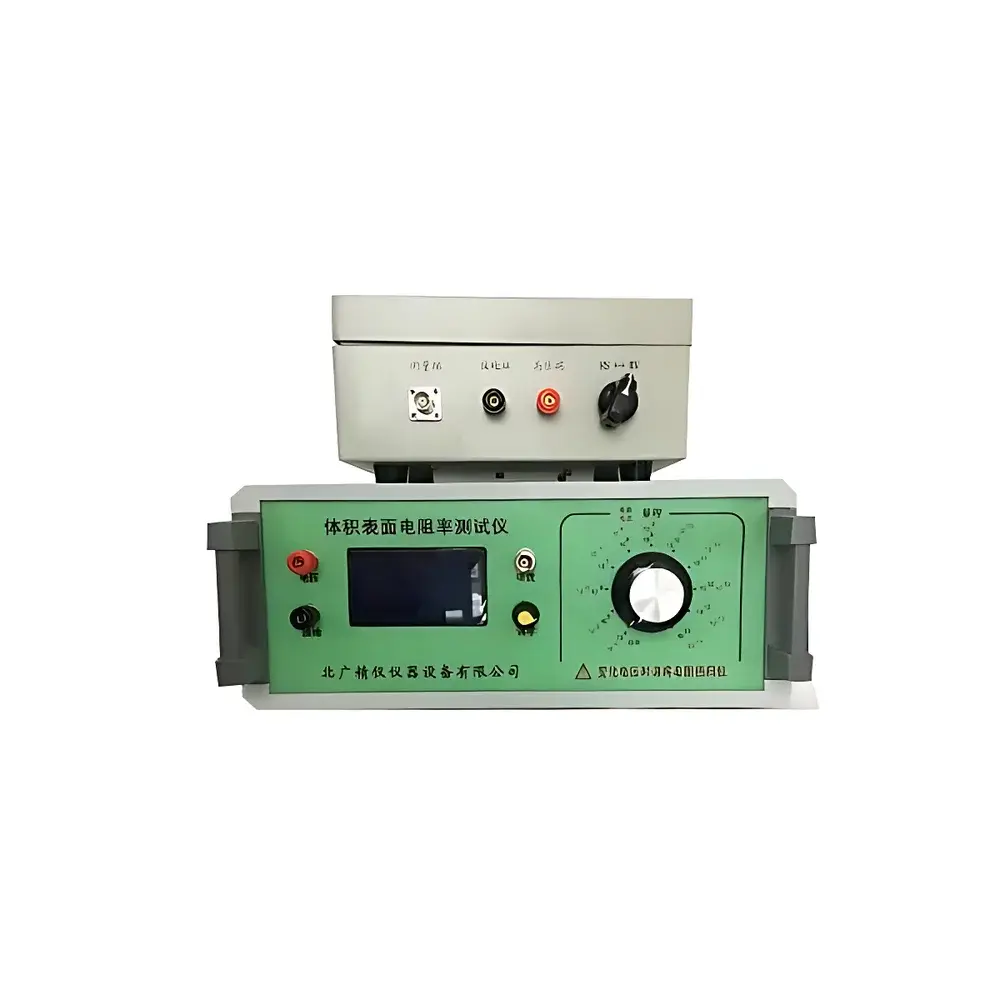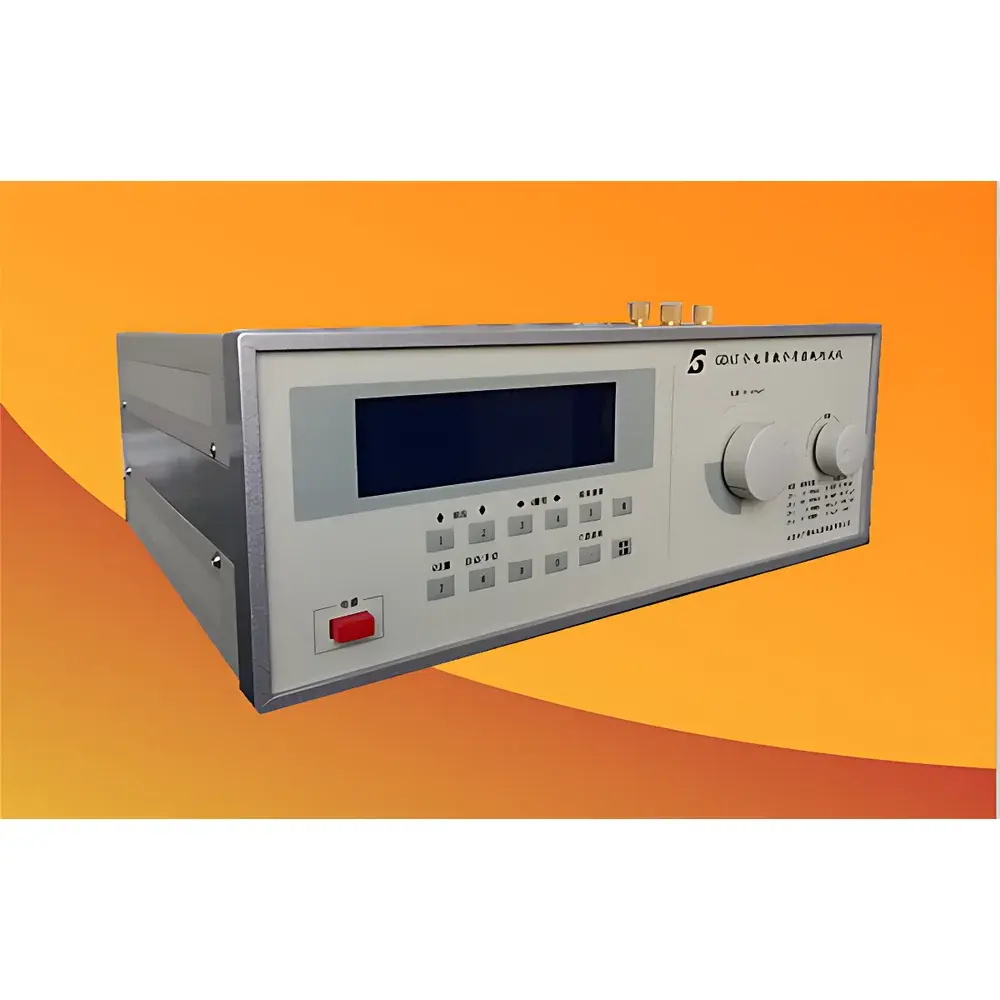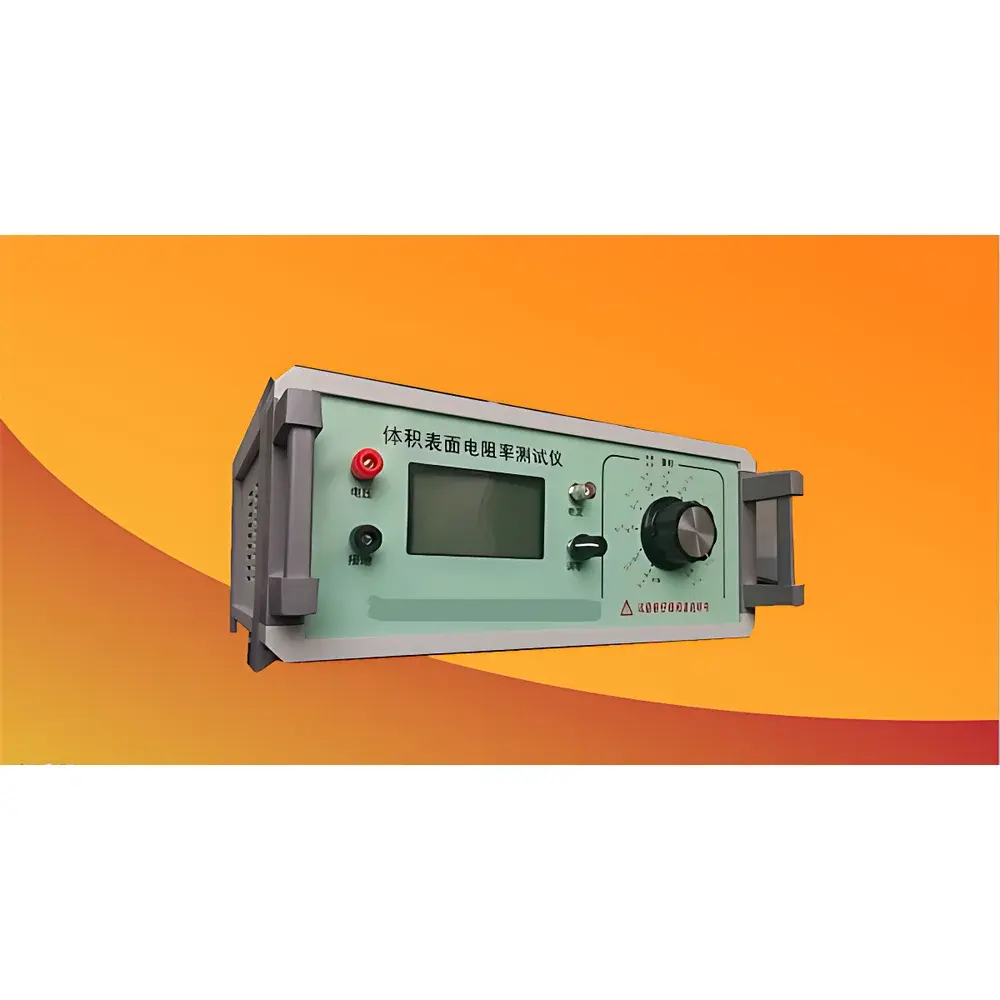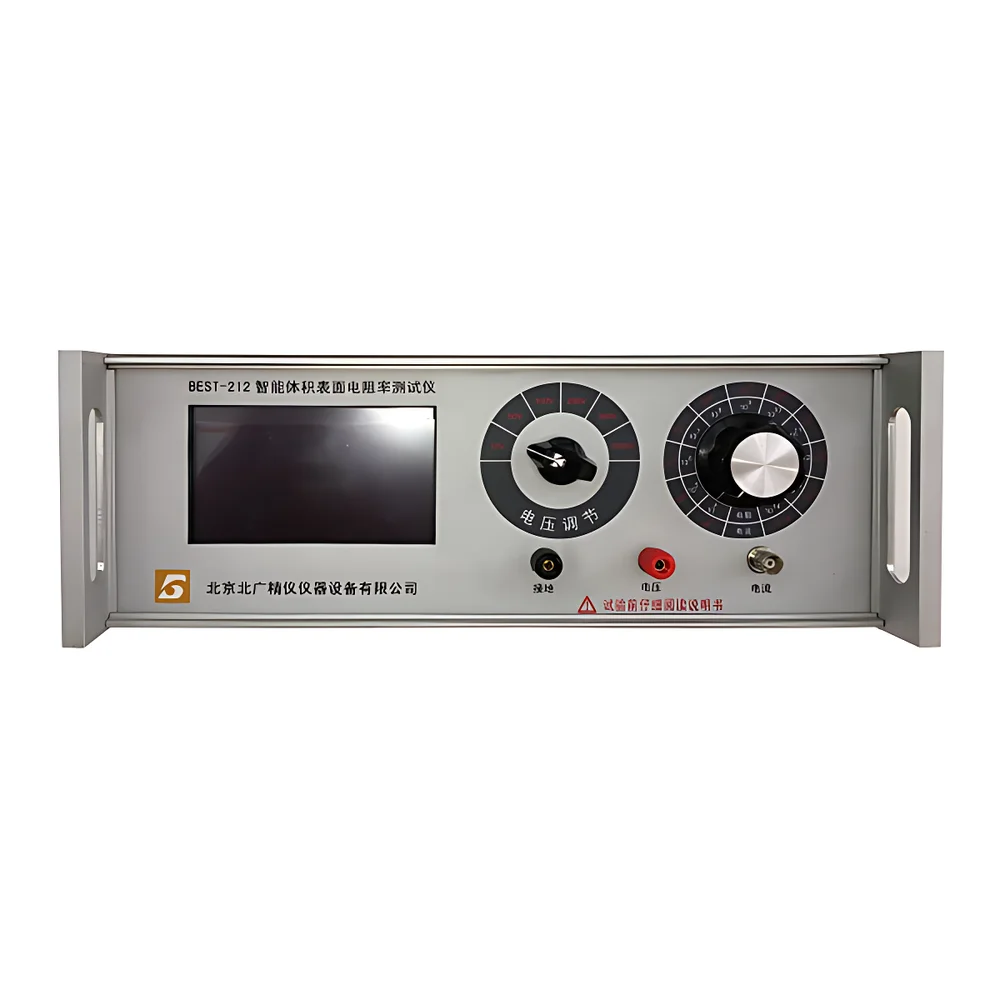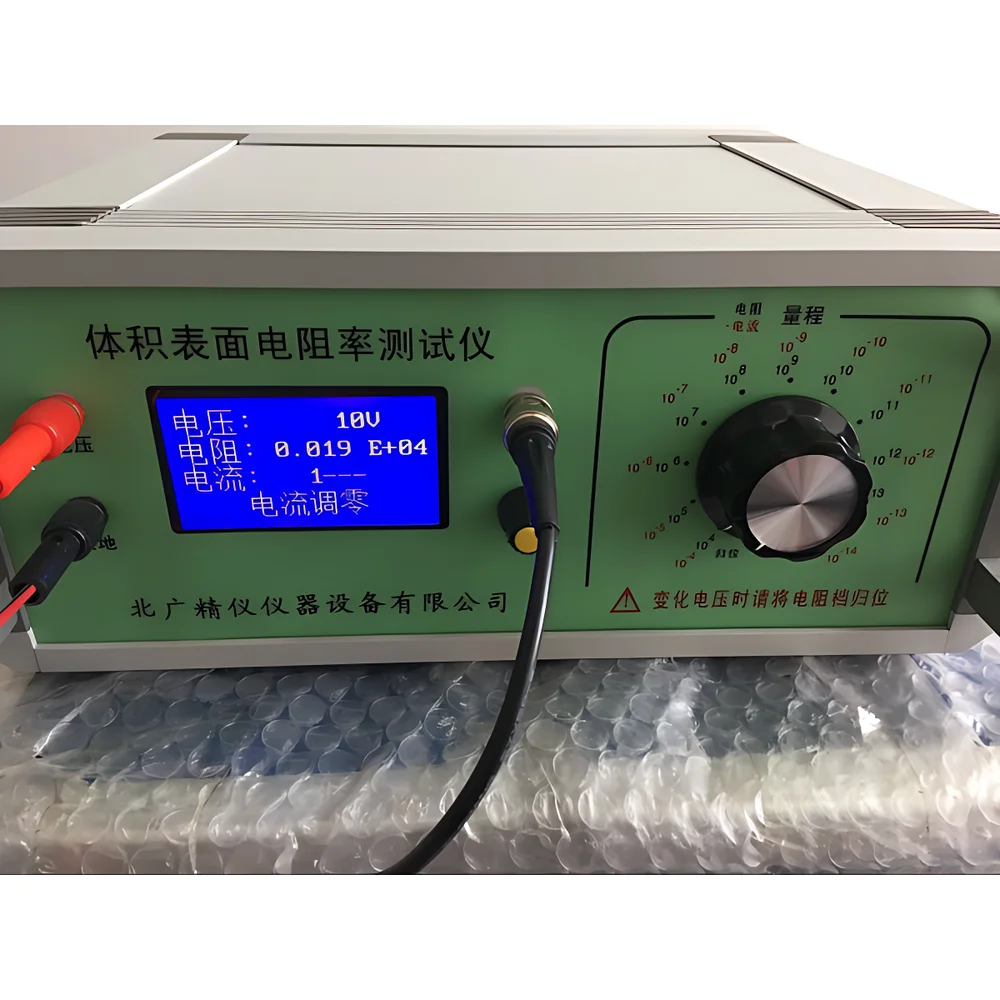
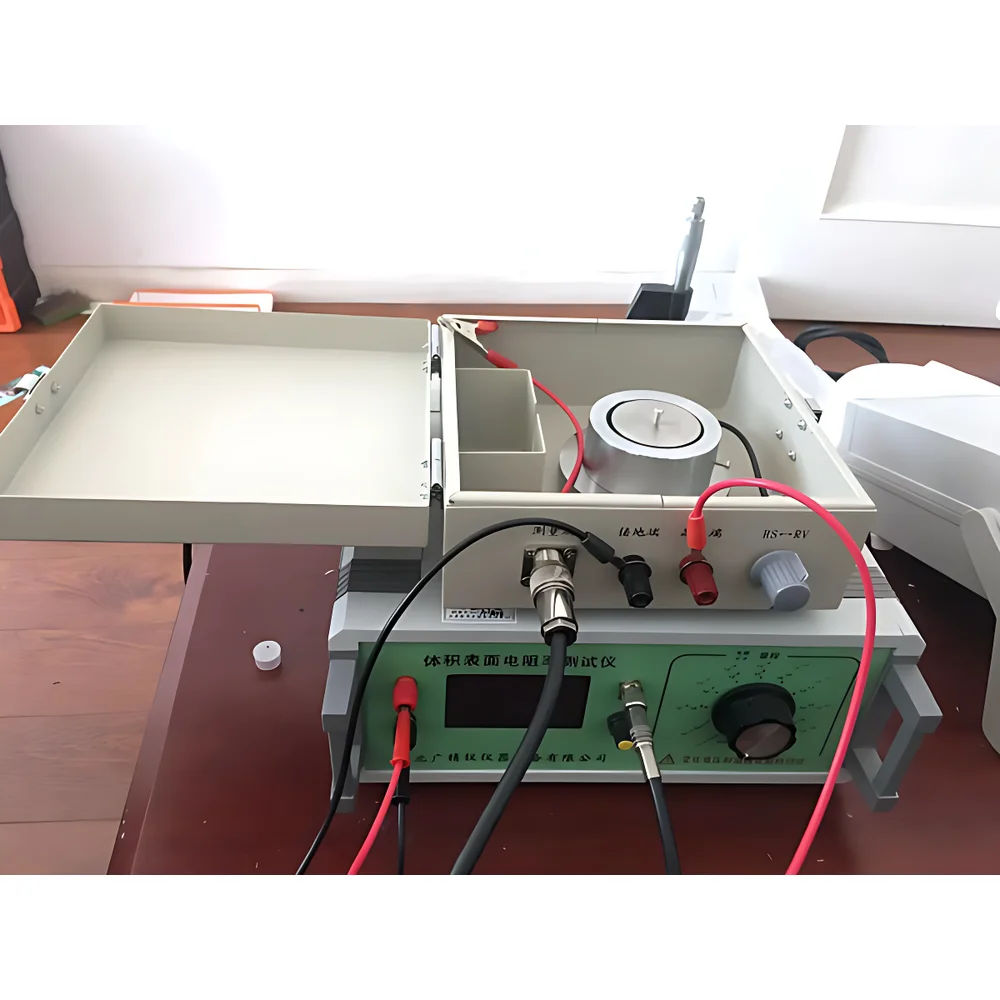
Beijing North Guang Precision Instrument BEST121 Digital High-Resistance Meter for Volume and Surface Resistivity Measurement of Mica and Other Insulating Materials

| Brand | Beijing North Guang Precision Instrument |
|---|---|
| Origin | Beijing, China |
| Manufacturer Type | OEM Manufacturer |
| Product Category | Domestic |
| Model | BEST121 |
| Price | USD 1,280 (FOB) |
| Resistance Range | 1×10⁴ Ω to 1×10¹⁸ Ω |
| Current Measurement Range | 2×10⁻⁴ A to 1×10⁻¹⁶ A |
| Test Voltages | DC 10 V, 50 V, 100 V, 250 V, 500 V, 1000 V |
| Basic Accuracy | ±1% (at 23 °C, 40–60% RH) |
| Input Impedance | >10¹⁵ Ω |
| Operating Environment | 0–40 °C, <80% RH (non-condensing) |
Ask about pricing, availability and specifications.
Overview
The Beijing North Guang BEST121 Digital High-Resistance Meter is a precision instrument engineered for the standardized measurement of volume resistivity (ρv) and surface resistivity (ρs) of solid insulating materials—including mica, rubber, plastics, laminates, ceramics, and antistatic composites—according to internationally recognized test protocols. It operates on the fundamental principle of Ohm’s Law (R = V/I), employing dual high-stability analog front-end circuitry to simultaneously acquire DC test voltage (V) and leakage current (I) across the specimen. The instrument computes resistance in real time via high-resolution analog-to-digital conversion and large-scale integrated signal processing, eliminating dynamic error associated with conventional electrometer-based meters where voltage or current fluctuations induce display lag. Its design ensures stable readings even under variable source voltage conditions, with theoretical computational error approaching zero and practical repeatability within ±0.5% over calibrated ranges. Unlike transient-reading instruments, the BEST121 maintains metrological integrity during extended polarization periods (e.g., 60 s per ASTM D257), enabling compliance with time-dependent resistivity reporting requirements.
Key Features
- Simultaneous digital display of resistance value (Ω) and measured current (A) on a high-contrast LCD screen
- Six programmable DC test voltages: 10 V, 50 V, 100 V, 250 V, 500 V, and 1000 V—selectable via front-panel toggle switch
- Ultra-high input impedance (>10¹⁵ Ω) electrometer amplifier stage, minimizing loading effects on high-resistance specimens
- Auto-ranging resistance measurement from 1×10⁴ Ω to 1×10¹⁸ Ω with manual range selection (10⁴ to 10¹⁸ in decade steps)
- Current measurement sensitivity down to 1×10⁻¹⁶ A, supporting low-conductivity material characterization
- Integrated guard terminal (G) and three-electrode configuration support (unguarded, guarded, and guarded-ring electrodes) for accurate surface vs. volume separation per IEC 60093 and GB/T 1410
- Shielded test enclosure included to suppress environmental electromagnetic interference and surface leakage paths
- Compliant with GLP documentation workflows: all test parameters (voltage, range, dwell time) are manually recorded; optional RS232 interface supports external logging
Sample Compatibility & Compliance
The BEST121 accommodates rigid solids (e.g., mica sheets, PCB substrates), flexible films (antistatic packaging), elastomers (silicone rubber gaskets), powders (filled polymer compounds), and liquids (plasticizers, insulating oils) when used with appropriate electrode fixtures (e.g., liquid cell with concentric ring electrodes). It meets the electrical safety and metrological requirements of multiple international standards, including ASTM D257–99 (Standard Test Methods for DC Resistance or Conductance of Insulating Materials), GB/T 1410–2006 (Test Methods for Volume and Surface Resistivity of Solid Insulating Materials), GB/T 1692–2008 (Resistivity Testing of Vulcanized Rubber), and GB/T 12703.4–2010 (Electrostatic Evaluation of Textiles). For regulatory traceability, the instrument supports calibration against NIST-traceable high-resistance standards (e.g., 10¹² Ω and 10¹⁴ Ω reference resistors), and its operation adheres to ISO/IEC 17025 general requirements for testing laboratories when paired with documented procedures and periodic verification.
Software & Data Management
The BEST121 is a standalone hardware meter without embedded firmware-based data storage or cloud connectivity. However, it provides an RS232 serial interface (standard) for integration into laboratory information management systems (LIMS) or custom PC-based acquisition software. All measured values—including resistance, current, applied voltage, and operator-selected range—are output as ASCII-formatted strings (e.g., “R=1.25E+15Ω,I=8.7E-15A,V=500V”). This enables automated capture into Excel, MATLAB, or validated QA/QC databases compliant with FDA 21 CFR Part 11 when deployed with audit-trail-enabled host software. While the unit itself does not store historical data, its deterministic analog architecture ensures full reproducibility: identical test setups yield identical readings across instruments, facilitating inter-laboratory comparison and method transfer validation.
Applications
- Quality control of mica insulation in high-voltage transformers and capacitors
- Verification of surface resistivity of ESD-safe flooring, workbenches, and footwear per ANSI/ESD S20.20
- Volume resistivity assessment of aerospace-grade polyimide films and ceramic matrix composites
- Routine testing of cable jacketing materials (PVC, XLPE) for dielectric integrity
- Research-grade characterization of conductive fillers (carbon black, graphene) in polymer matrices
- Validation of cleaning efficacy on semiconductor handling tools via post-cleaning surface resistivity drift
- Compliance testing of medical device housings per IEC 60601-1 clause on leakage current limits
FAQ
What is the difference between volume resistivity and surface resistivity?
Volume resistivity (ρv) quantifies bulk conduction through a material’s cross-section (unit: Ω·m); surface resistivity (ρs) measures lateral conduction along the material’s interface (unit: Ω/sq). The BEST121 distinguishes them using three-electrode geometry: volume mode applies voltage across top/bottom electrodes with guard; surface mode uses concentric ring electrodes on one face.
Can the BEST121 measure resistivity of liquids?
Yes—when used with a standardized liquid cell (e.g., ASTM D1169-compliant cup electrode), provided temperature and humidity are controlled per GB/T 10581–2006. Sample conditioning at 23±2 °C and 65±5% RH for ≥2 h is mandatory.
Is the instrument suitable for GMP-regulated environments?
It supports GMP adherence through procedural controls: defined calibration intervals (recommended annually), documented test parameters, and use of certified reference resistors. Full 21 CFR Part 11 compliance requires external electronic recordkeeping with signature and audit trail.
Why must the “Rx” terminals be open during zero adjustment?
To nullify input offset voltage and amplifier bias current errors before measurement. Shorting Rx during zeroing risks damaging the femtoamp-level current amplifier.
How often should calibration be performed?
Initial calibration upon installation, then annually—or after any mechanical shock, voltage overload event, or observed drift exceeding ±1% of full-scale reading at mid-range (e.g., 10¹³ Ω @ 500 V).
More from Beijing North Guang Precision Instrument
View all Beijing North Guang Precision Instrument products → Beijing North Guang Precision Instrument BEST-121 Point-to-Point Surface Resistivity Tester for Textiles and Antistatic Garments
- Beijing North Guang Precision Instrument GDAT-A High-Frequency Q-Meter for Dielectric Constant and Dissipation Factor Measurement
- Beijing North Guang Precision Instrument BEST-1211 Volume & Surface Resistivity Tester for Silicone Rubber and Insulating Materials
- Beijing North Guang Precision Instrument BEST Series Digital High-Resistance DC Insulation Resistance Tester