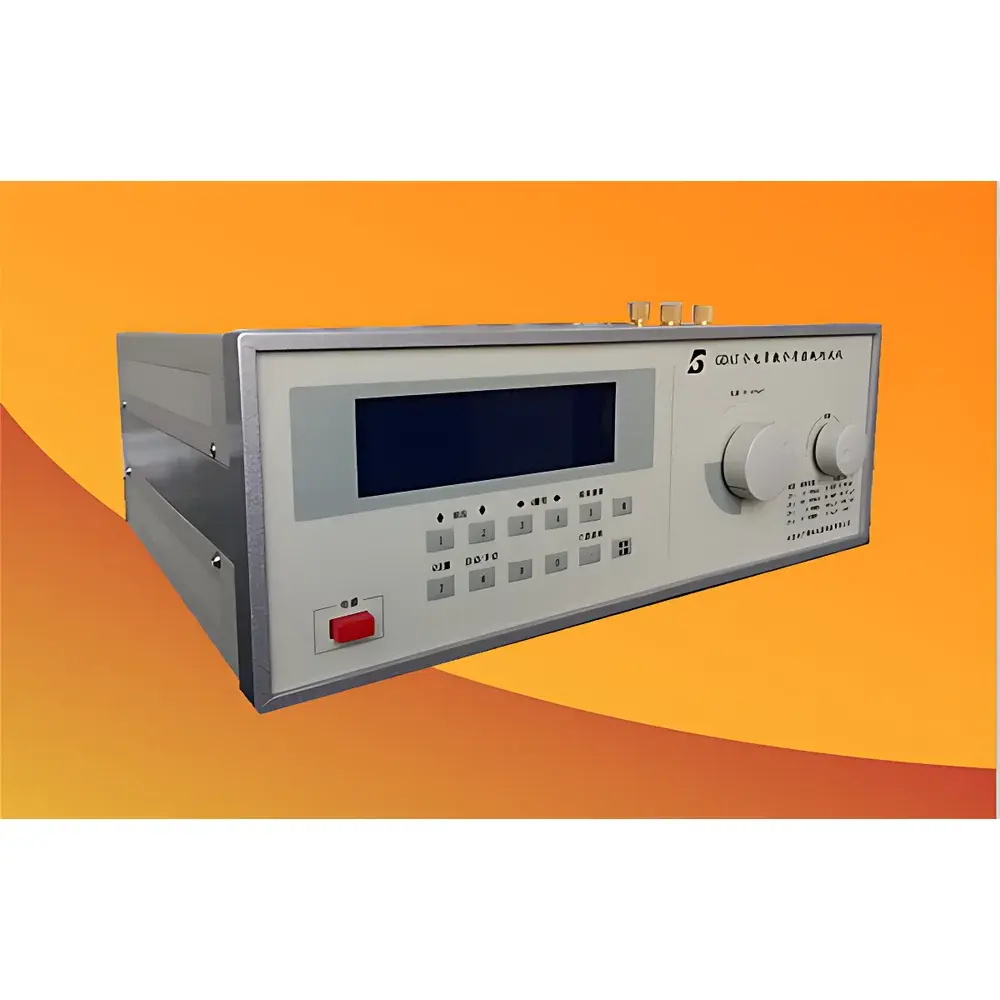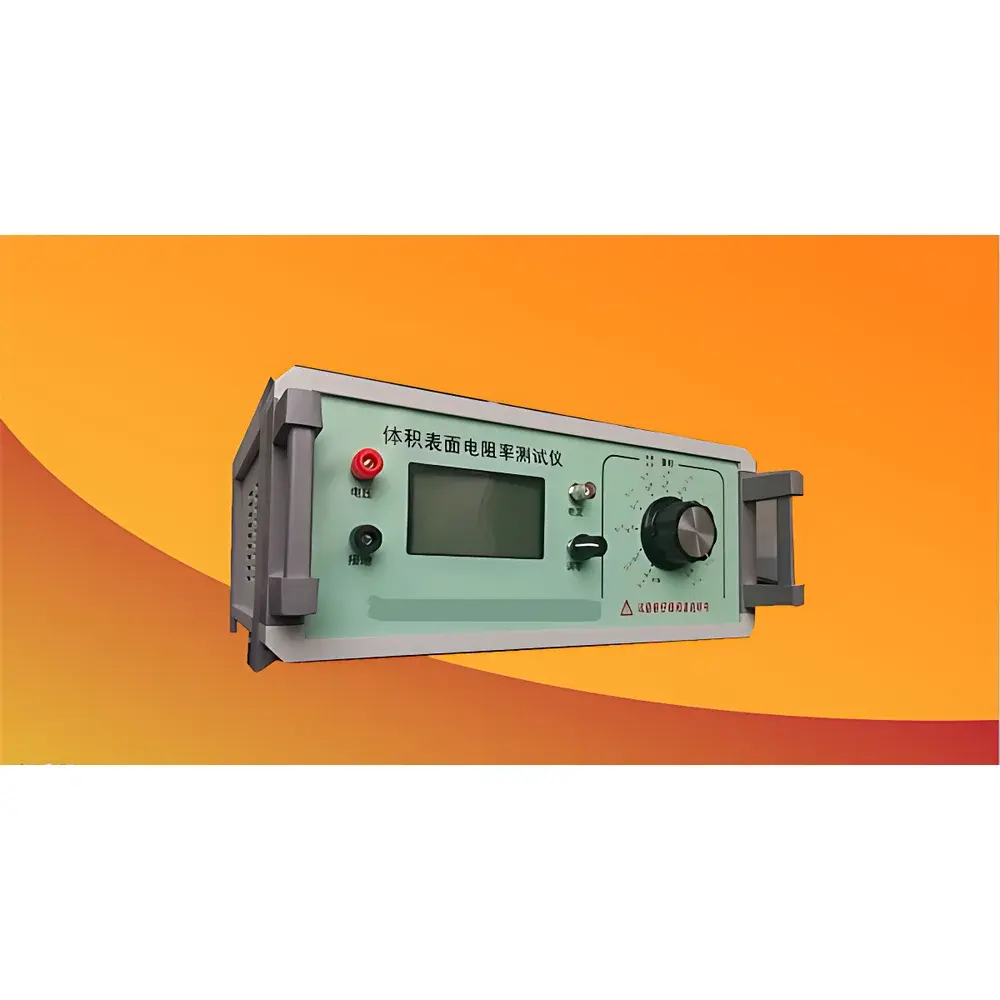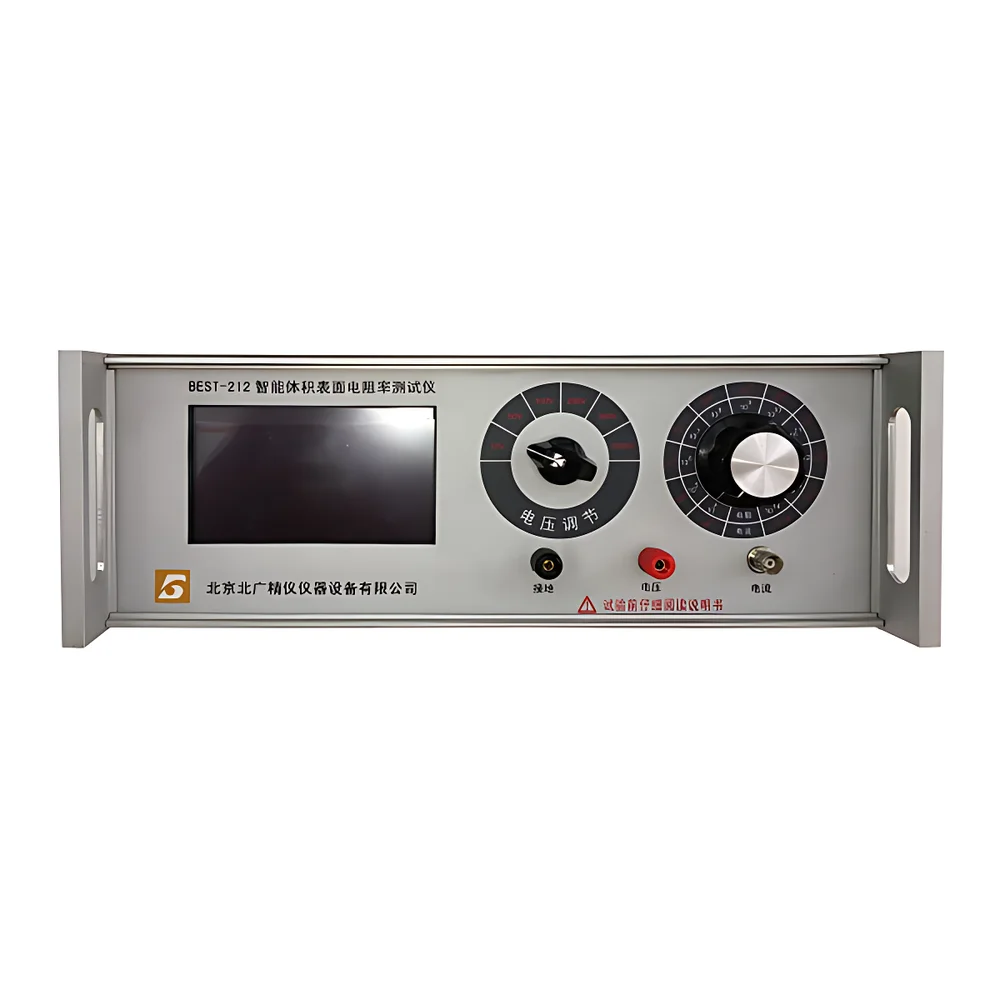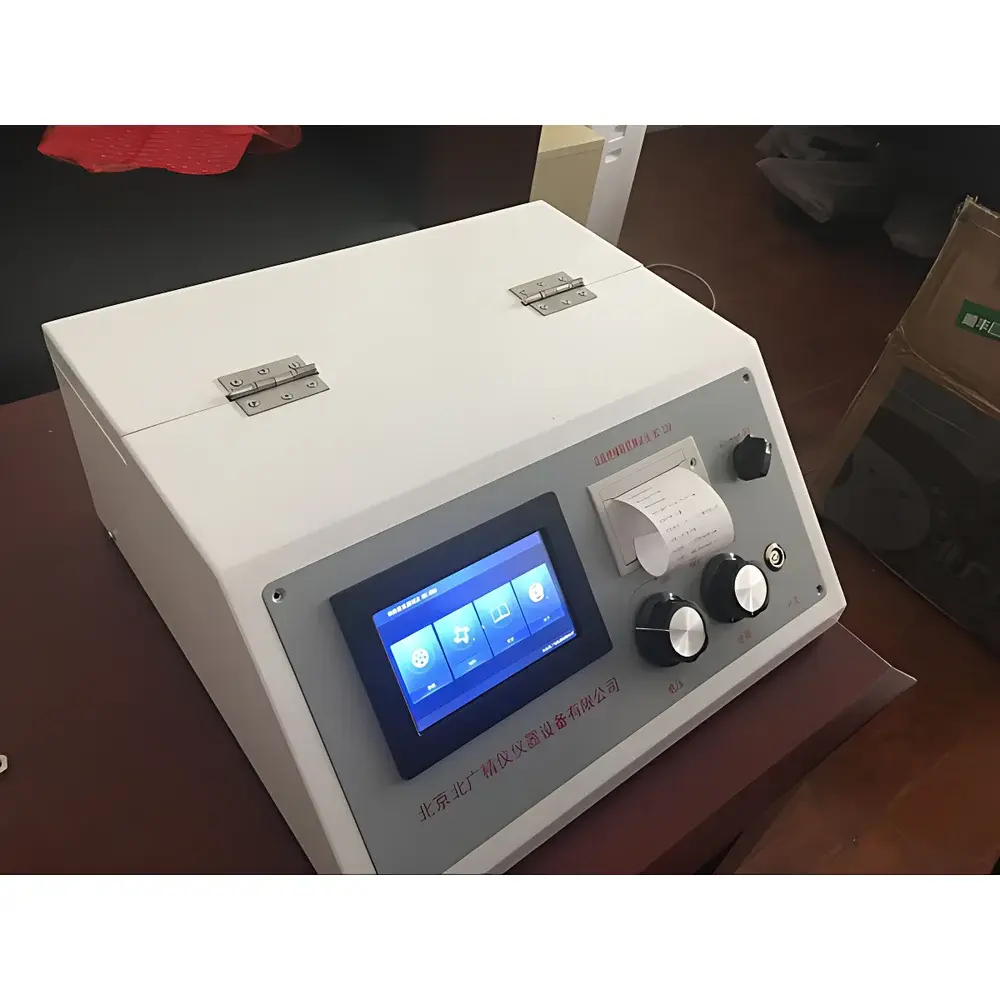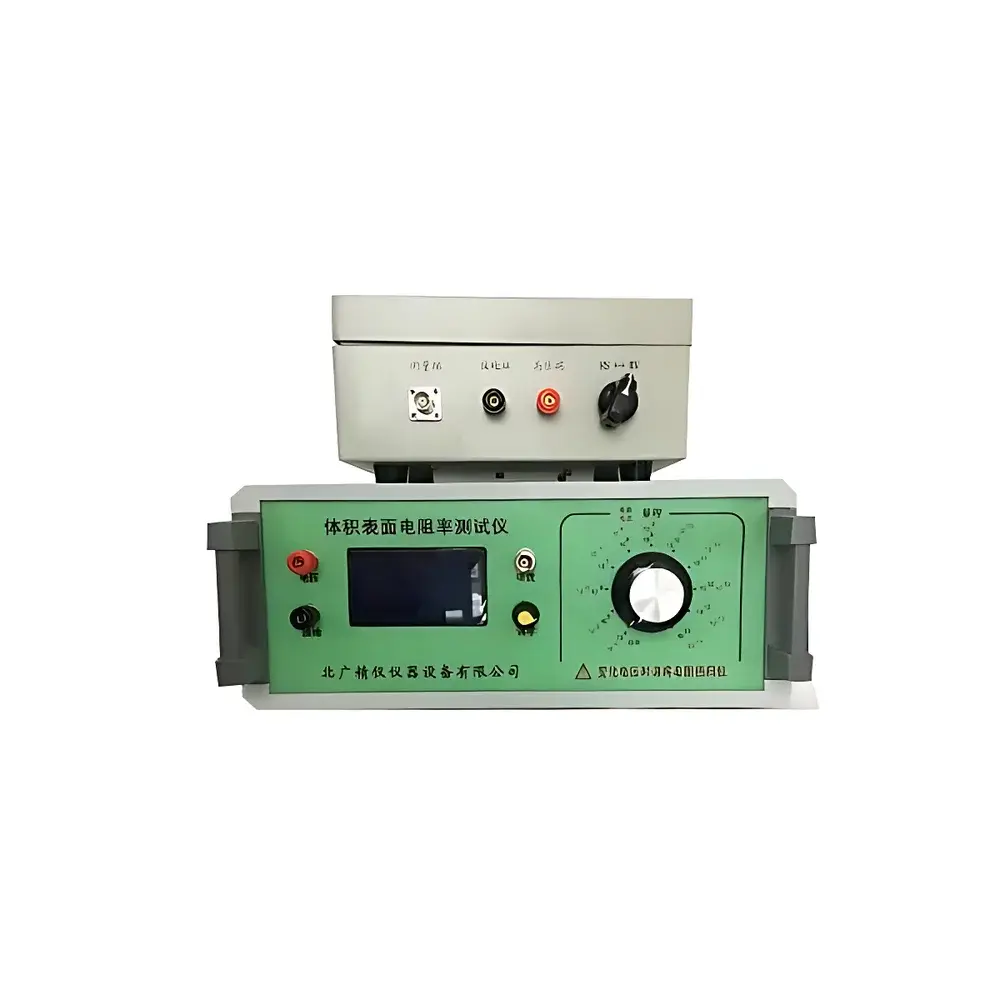
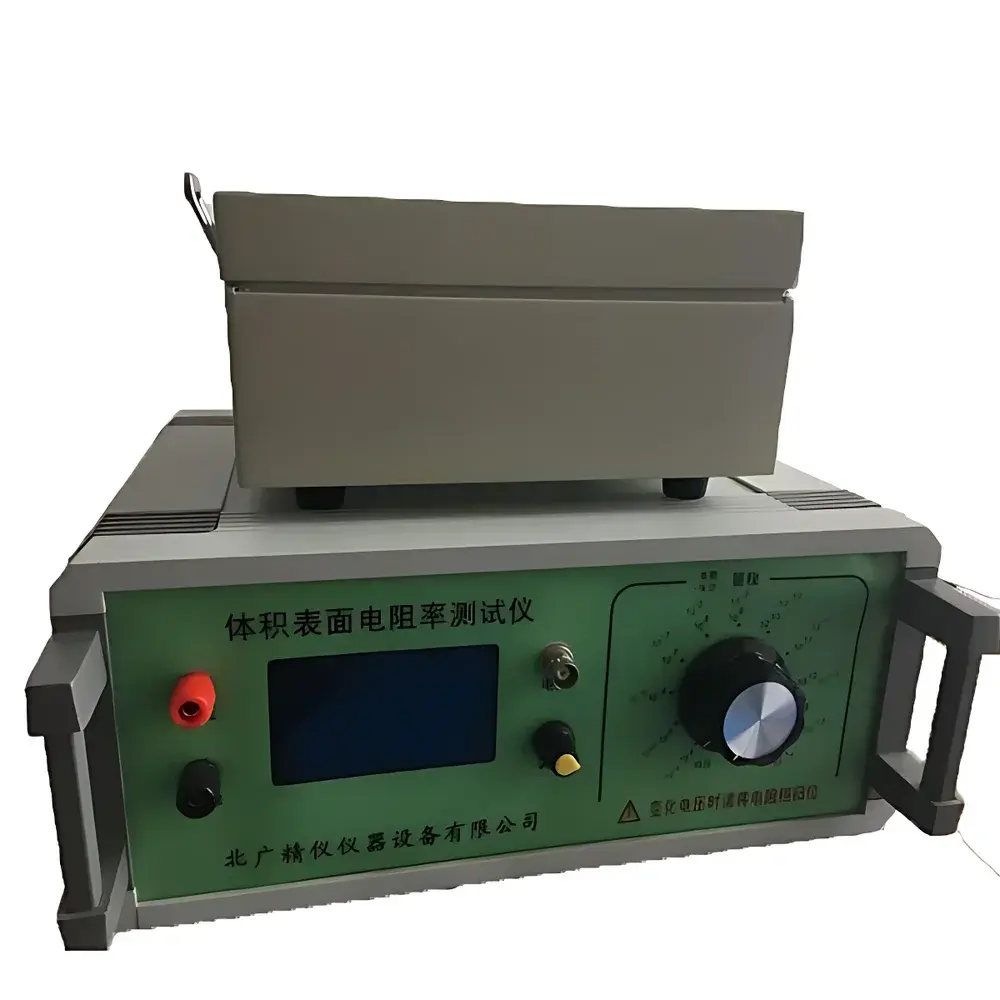
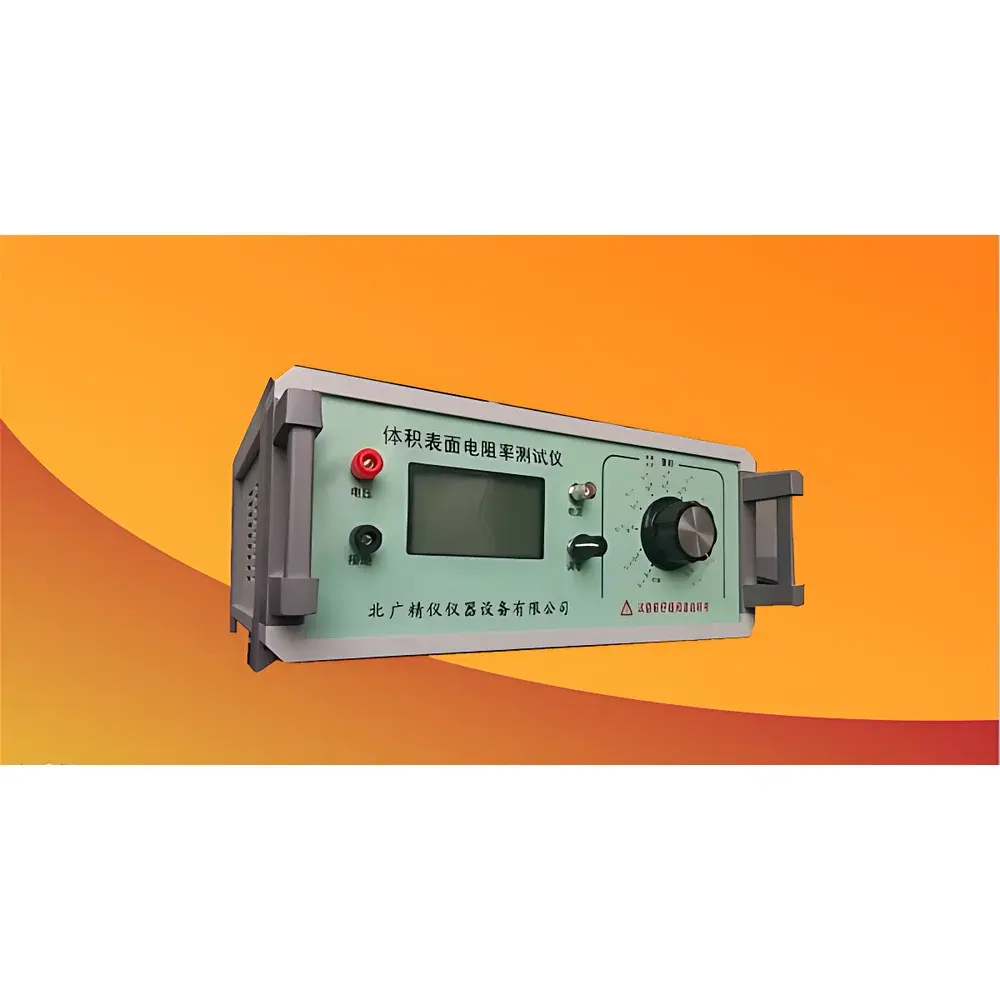
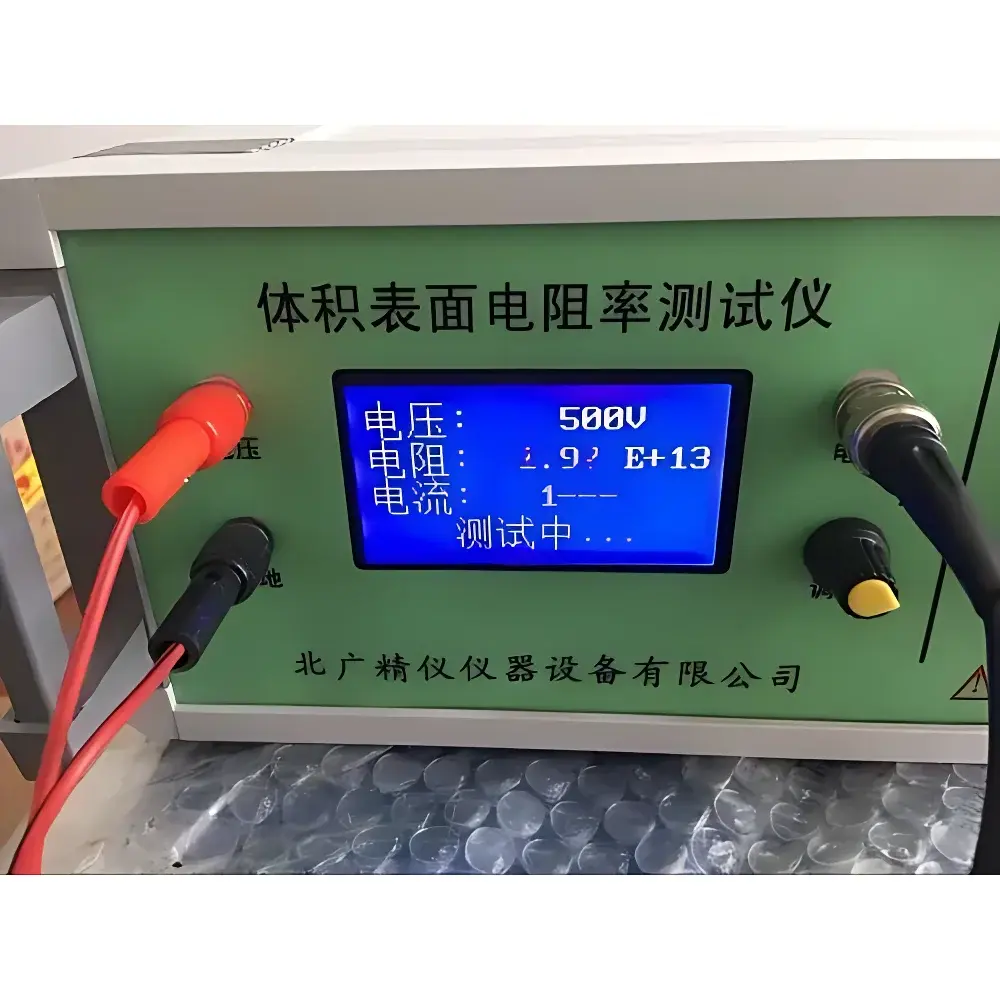
Beijing North Guang Precision Instrument BEST-121 Point-to-Point Surface Resistivity Tester for Textiles and Antistatic Garments

| Brand | Beijing North Guang Precision Instrument |
|---|---|
| Origin | Beijing, China |
| Manufacturer Type | Direct Manufacturer |
| Model | BEST-121 |
| Maximum Test Voltage | 20 kV |
| Resistance Range | 1 × 10⁴ Ω to 1 × 10¹⁸ Ω |
| Current Range | 2 × 10⁻⁴ A to 1 × 10⁻¹⁶ A |
| Test Voltages | 10 V / 50 V / 100 V / 250 V / 500 V / 1000 V (selectable) |
| Basic Accuracy | ±1% |
| Display | 32-bit LED LCD (simultaneous resistance & current readout) |
| Operating Environment | 0–40 °C, <80% RH |
| Power Supply | AC 220 V, 50 Hz, ~5 W |
| Dimensions | 285 mm × 245 mm × 120 mm |
| Weight | ~2.5 kg |
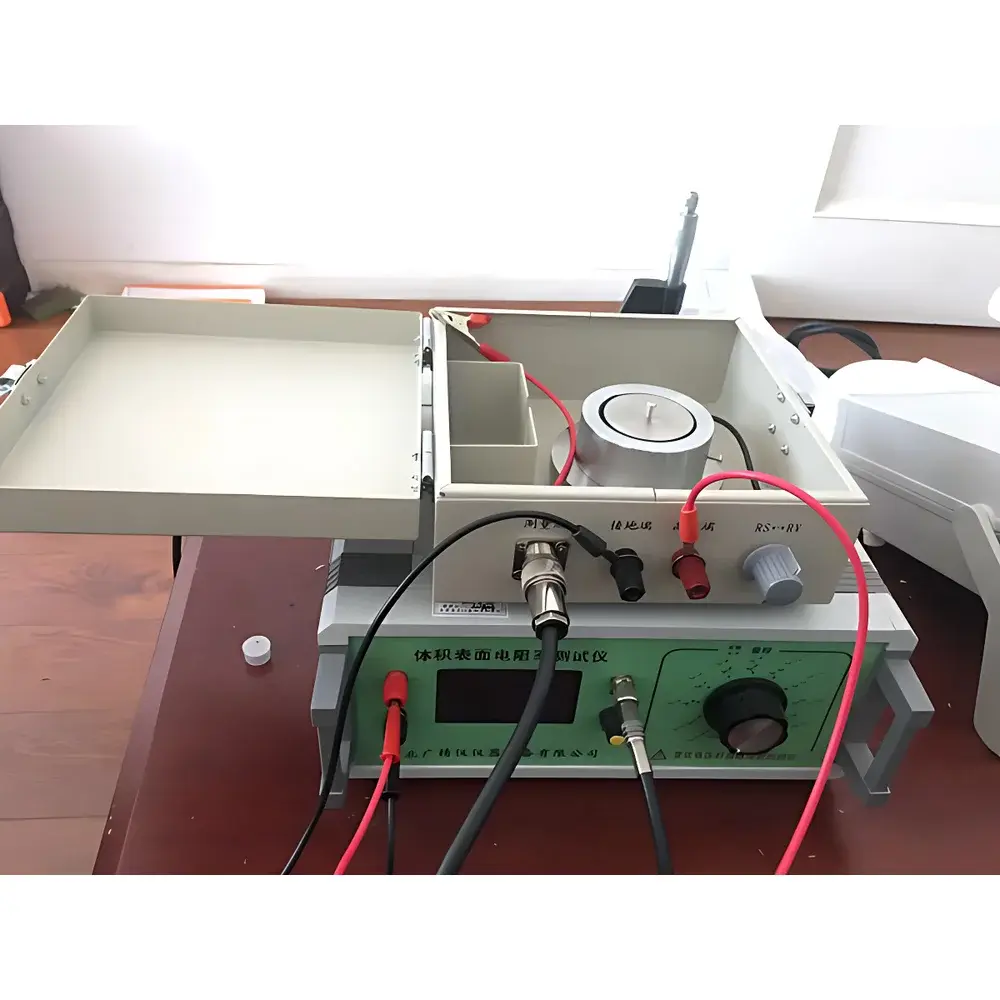
| Standard Electrodes | Solid disc, ring, and cylindrical electrodes (diameter 50 mm, outer/inner ring Ø75/55±0.2 mm, thickness 10 mm, height 30 mm) |
| Compliance | GB/T 1410–2006, GB/T 12703.4–2010, GB/T 2439–2001, ASTM D257–99 |
Ask about pricing, availability and specifications.
Overview
The Beijing North Guang Precision Instrument BEST-121 Point-to-Point Surface Resistivity Tester is a precision electrometric instrument engineered for the quantitative evaluation of electrical surface resistivity and point-to-point resistance in antistatic textiles, garments, and related functional materials. It operates on the principle of direct-current (DC) voltage application across two defined electrode configurations—solid disc, concentric ring, or cylindrical—to measure steady-state current flow under controlled polarization conditions. The instrument implements guarded electrode methodology per IEC 62631-3-1 and ASTM D257, ensuring accurate separation of surface conduction from bulk (volume) contributions. Designed for metrological traceability in quality control laboratories, it supports standardized electrostatic performance verification required by occupational safety regulations, cleanroom protocols, and ESD-sensitive manufacturing environments. Its 20 kV dielectric withstand rating enables safe evaluation of insulation integrity during high-voltage screening, while its ultra-low current measurement capability (down to 10⁻¹⁶ A) ensures reliable characterization of highly resistive polymer-based fabrics and carbon-loaded composites.
Key Features
- Wide resistance measurement range: 1 × 10⁴ Ω to 1 × 10¹⁸ Ω, covering insulative, dissipative, and conductive material classes per ANSI/ESD S20.20 and IEC 61340-5-1 classification tiers.
- Programmable DC test voltages (10 V–1000 V), with optional 20 kV dielectric withstand verification mode for system-level safety validation.
- Guarded three-terminal measurement architecture minimizes leakage current errors and eliminates surface contamination artifacts during textile testing.
- 32-bit LED display provides simultaneous real-time readouts of resistance value (Ω) and measured current (A), eliminating manual calculation steps.
- Modular electrode system includes standardized solid-disc (Ø100 mm), concentric-ring (outer Ø75 mm / inner Ø55±0.2 mm), and cylindrical (Ø50 mm) configurations compliant with GB/T 12703.4–2010 and EN 1149-1.
- Integrated shielding enclosure (200 × 200 × 90 mm internal cavity, 50 mm effective height) suppresses electromagnetic interference and environmental humidity effects during high-impedance measurements.
- Calibration-traceable design supports routine verification using certified 1 × 10⁸ Ω reference resistors (±5% tolerance at 100 V), fulfilling GLP audit requirements.
Sample Compatibility & Compliance
The BEST-121 accommodates diverse sample geometries—including woven/knitted fabrics, coated nonwovens, laminated antistatic garments, footwear soles, and ESD flooring tiles—via interchangeable electrode fixtures. For textile testing, specimens must conform to conditioning protocols specified in GB/T 22042 (EN 1149-1), GB/T 22043 (EN 1149-2), and ANSI/ESD STM2.1: preconditioning at 23 ± 1 °C / 25 ± 5 % RH for ≥24 h prior to surface resistivity assessment, or at 20 ± 5 °C / 35 ± 5 % RH for 6 h following standardized laundering per GB 12014. All measurement procedures adhere strictly to the electrode geometry, contact pressure, and electrification time (60 s) stipulated in GB/T 1410–2006 and ASTM D257–99. The instrument’s compliance framework extends to ISO/IEC 17025-accredited calibration practices, supporting regulatory submissions for medical device packaging (ISO 11607), aerospace textiles (SAE ARP5316), and semiconductor handling apparel (JEDEC J-STD-033).
Software & Data Management
While the BEST-121 operates as a standalone benchtop unit with no embedded software stack, its analog output interface (0–2 V DC proportional to log₁₀(R)) enables integration with external data acquisition systems compliant with FDA 21 CFR Part 11 and EU Annex 11 requirements. Users may connect the instrument to validated LabVIEW, MATLAB, or LIMS platforms via isolated analog-to-digital converters to generate audit-trail-enabled test reports containing operator ID, timestamp, environmental metadata (temperature/humidity logs), electrode configuration, applied voltage, and raw resistance/current values. All measurement records retain full traceability to NIST-traceable reference standards through documented calibration certificates updated annually per ISO/IEC 17025 clause 6.5.
Applications
- Quantitative verification of point-to-point resistance in antistatic workwear per GB 12014 and ANSI/ESD STM2.1 for electronics assembly lines.
- Surface resistivity mapping of conductive fibers and carbon-nanotube-infused textiles per GB/T 22042 and EN 1149-1.
- Volumetric resistivity assessment of multilayer laminates used in military-grade protective clothing (MIL-STD-1686).
- Quality assurance testing of ESD-safe floor mats, chair casters, and workstation surfaces per IEC 61340-4-1.
- Research-grade characterization of charge decay kinetics in triboelectric nanogenerators and electrospun piezoelectric membranes.
- Validation of cleaning efficacy on reusable antistatic garments through longitudinal resistivity trend analysis.
FAQ
What is the minimum sample size required for surface resistivity testing?
For concentric-ring electrode configuration per GB/T 12703.4–2010, specimens must exceed 100 mm in both length and width. Smaller samples require custom electrode adaptation.
Can the instrument measure volume resistivity of thin films?
Yes—when used with guarded parallel-plate electrodes and thickness-corrected calculations per GB/T 1410–2006, provided film thickness is uniformly measurable within ±0.01 mm.
Is operator training required for GLP-compliant use?
Yes—users must complete documented competency assessment covering electrode cleaning (ethanol-wiped, air-dried), zero-current calibration, voltage ramping protocol, and environmental monitoring log entry.
How often must the instrument be recalibrated?
Annual calibration against NIST-traceable standards is recommended; interim verification using 1 × 10⁸ Ω resistor is mandatory before each daily test session.
Does the tester support automated data export?
Not natively—but analog output allows connection to validated third-party DAQ systems with electronic signature and audit trail capabilities.
More from Beijing North Guang Precision Instrument
View all Beijing North Guang Precision Instrument products → Beijing North Guang Precision Instrument GDAT-A High-Frequency Q-Meter for Dielectric Constant and Dissipation Factor Measurement
- Beijing North Guang Precision Instrument BEST-1211 Volume & Surface Resistivity Tester for Silicone Rubber and Insulating Materials
- Beijing North Guang Precision Instrument BEST Series Digital High-Resistance DC Insulation Resistance Tester
- Beijing North Guang Precision Instrument BEST-330 Volume and Surface Resistivity Meter