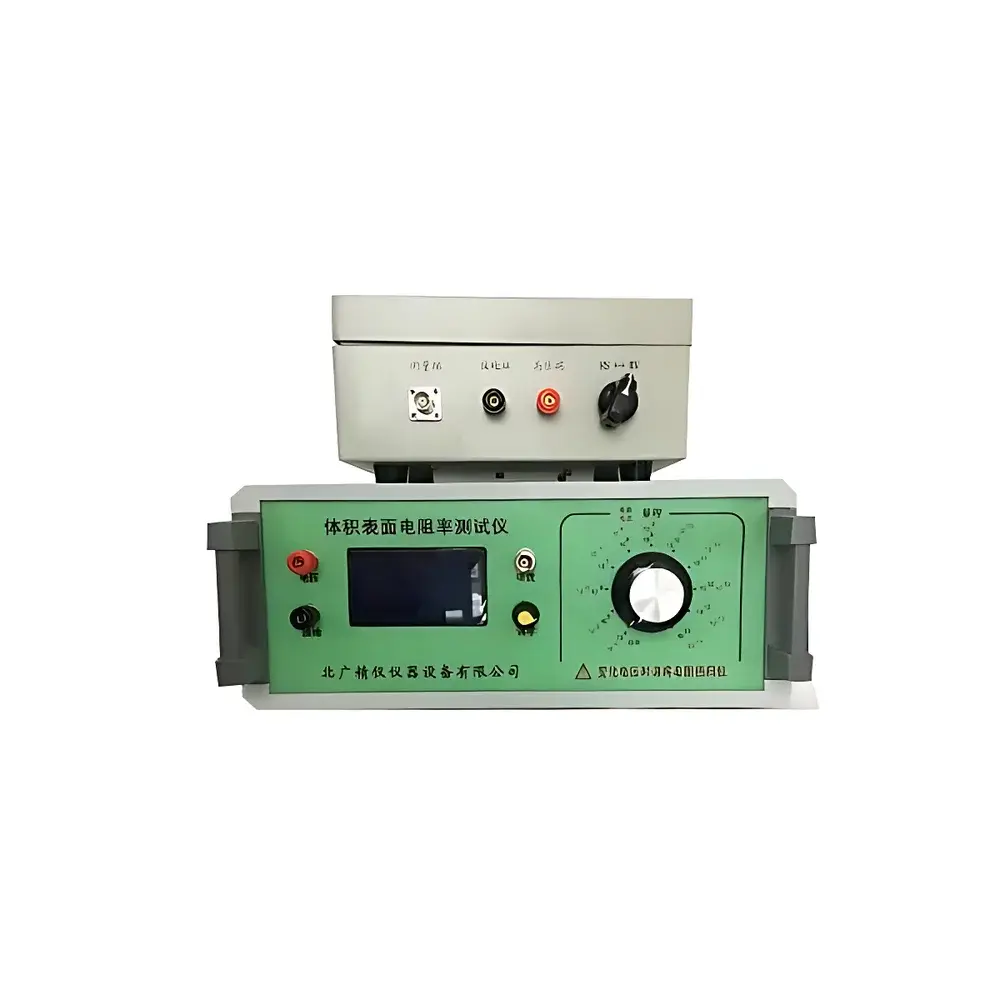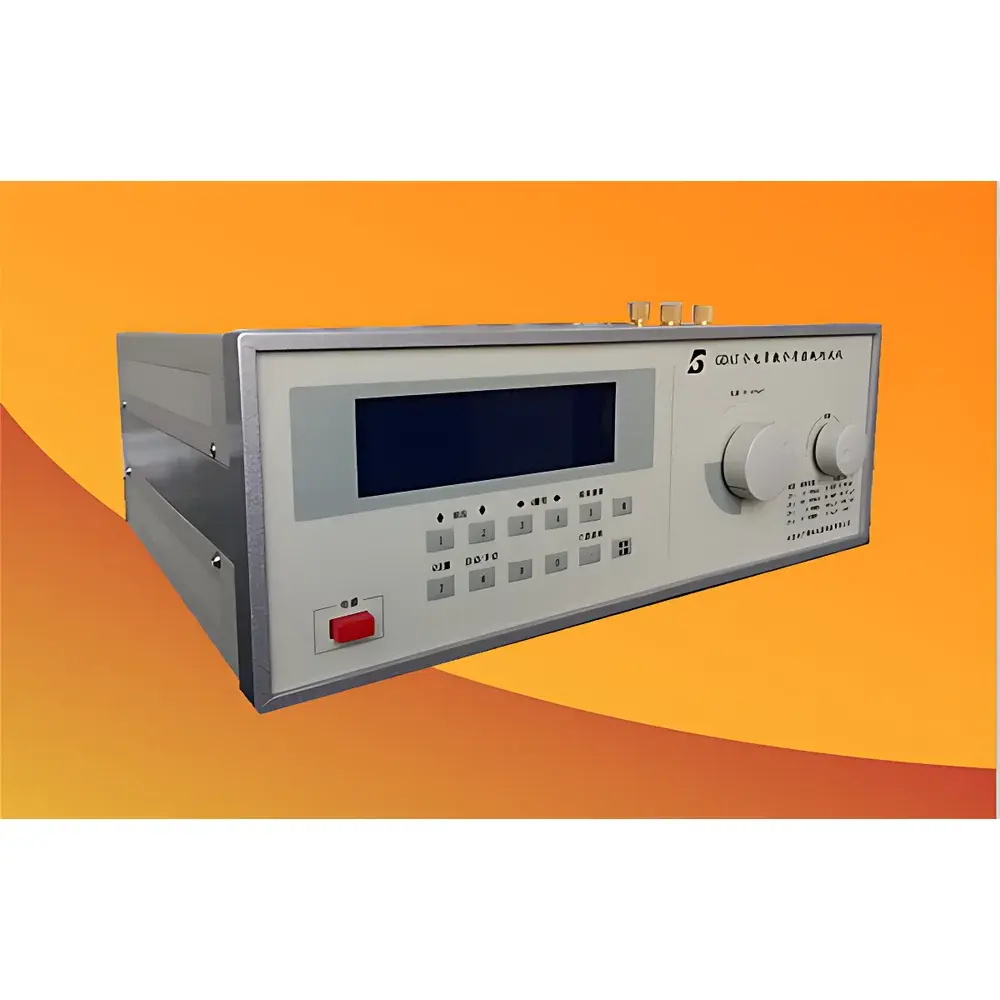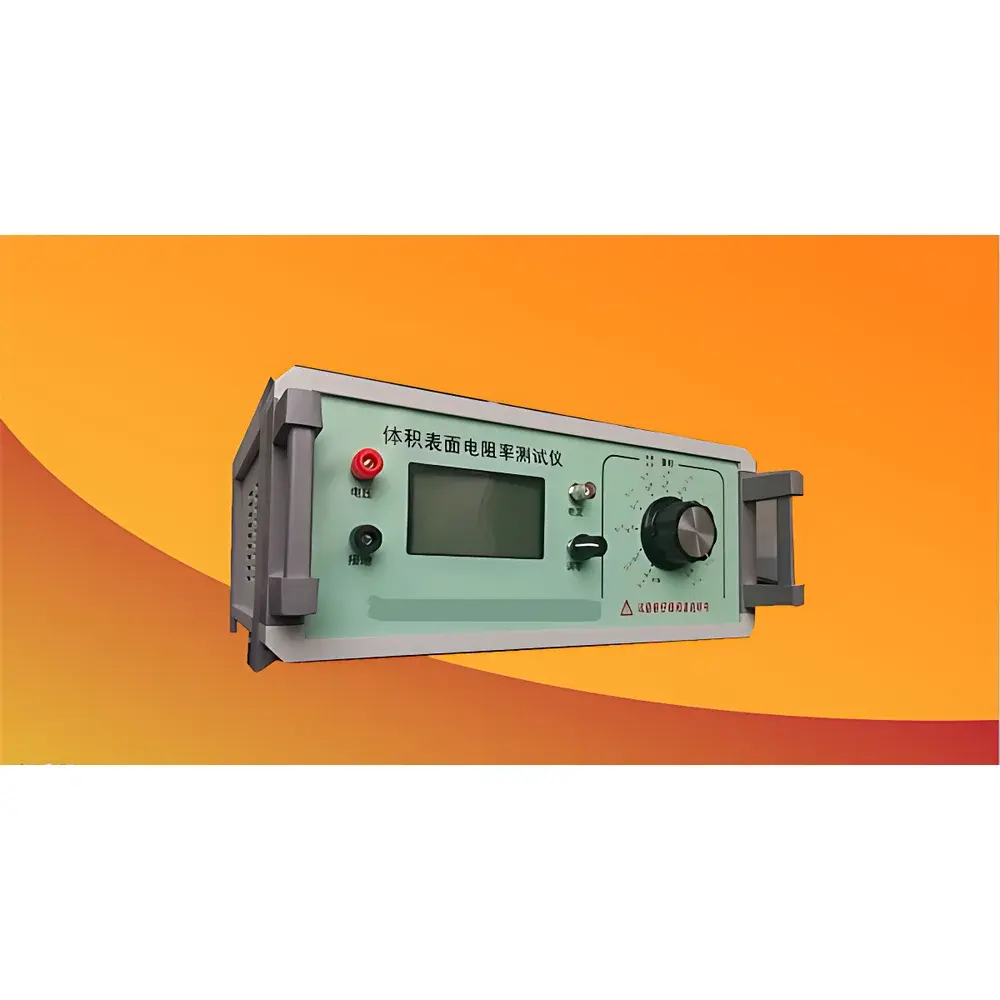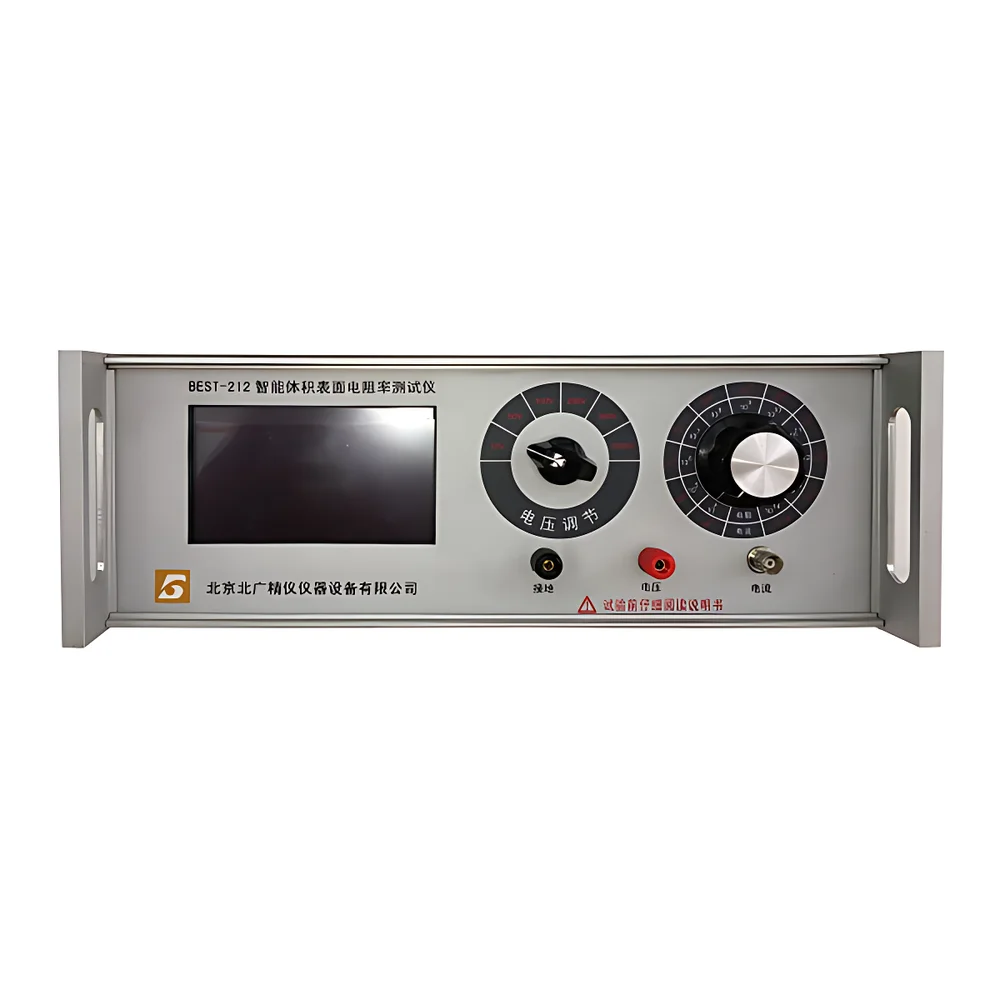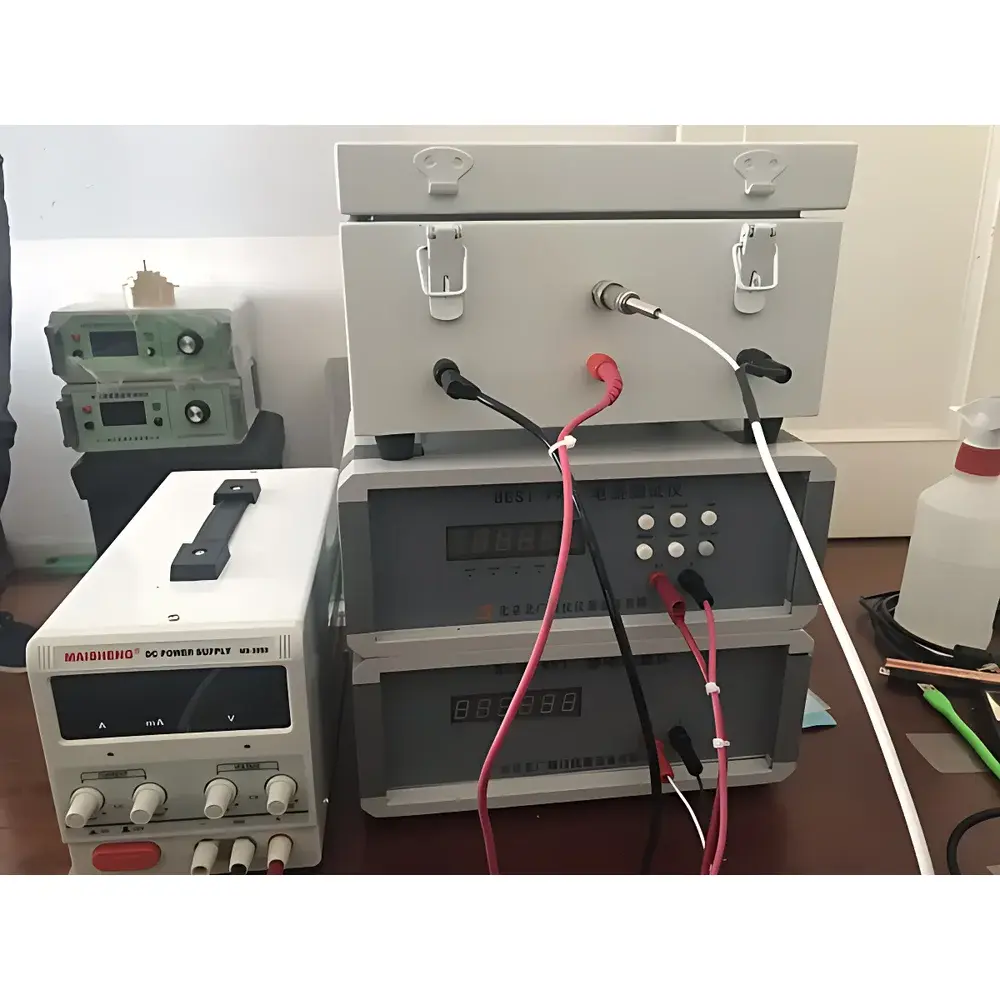
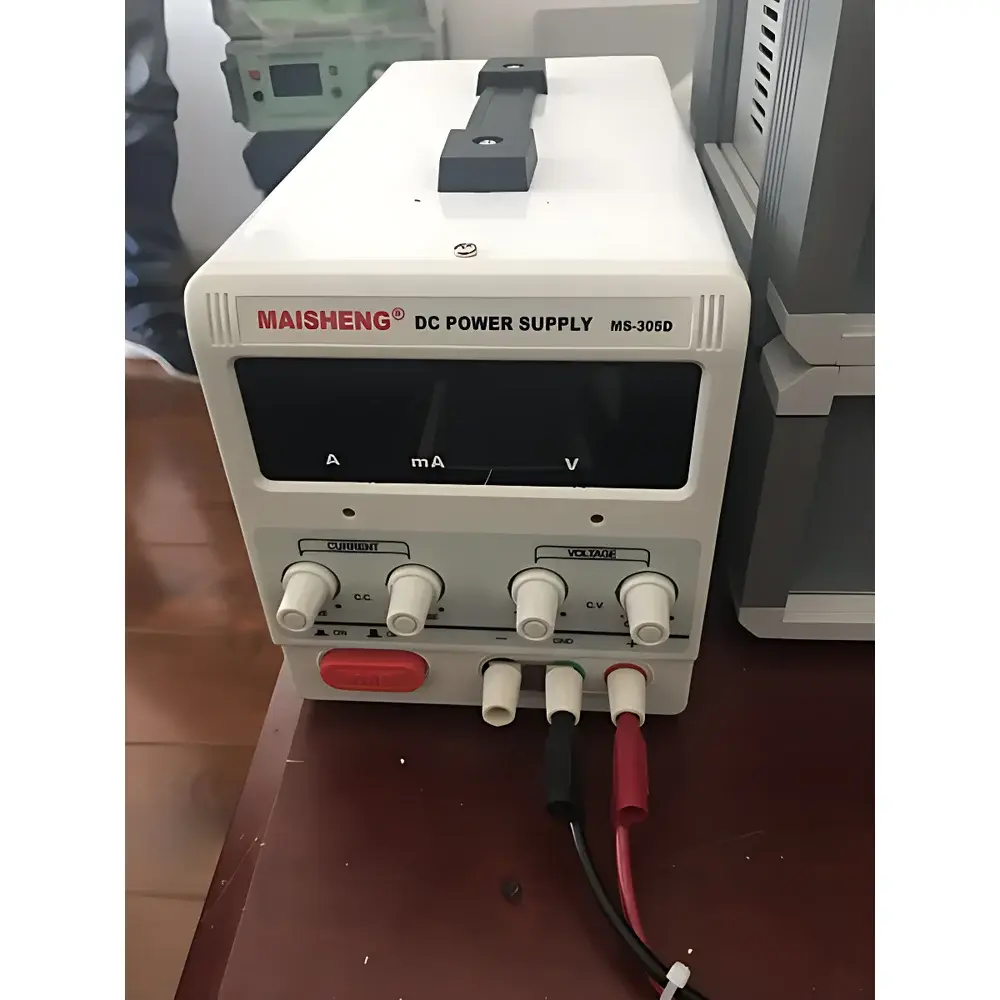
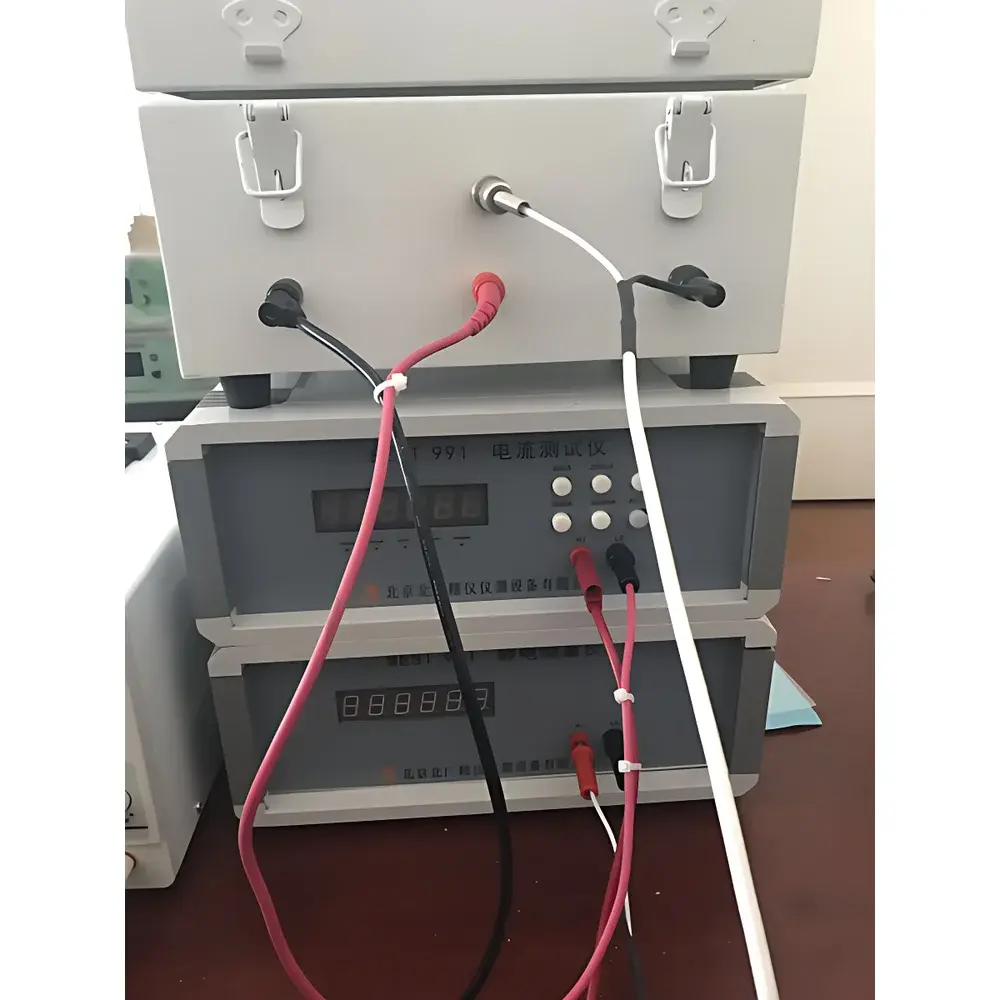
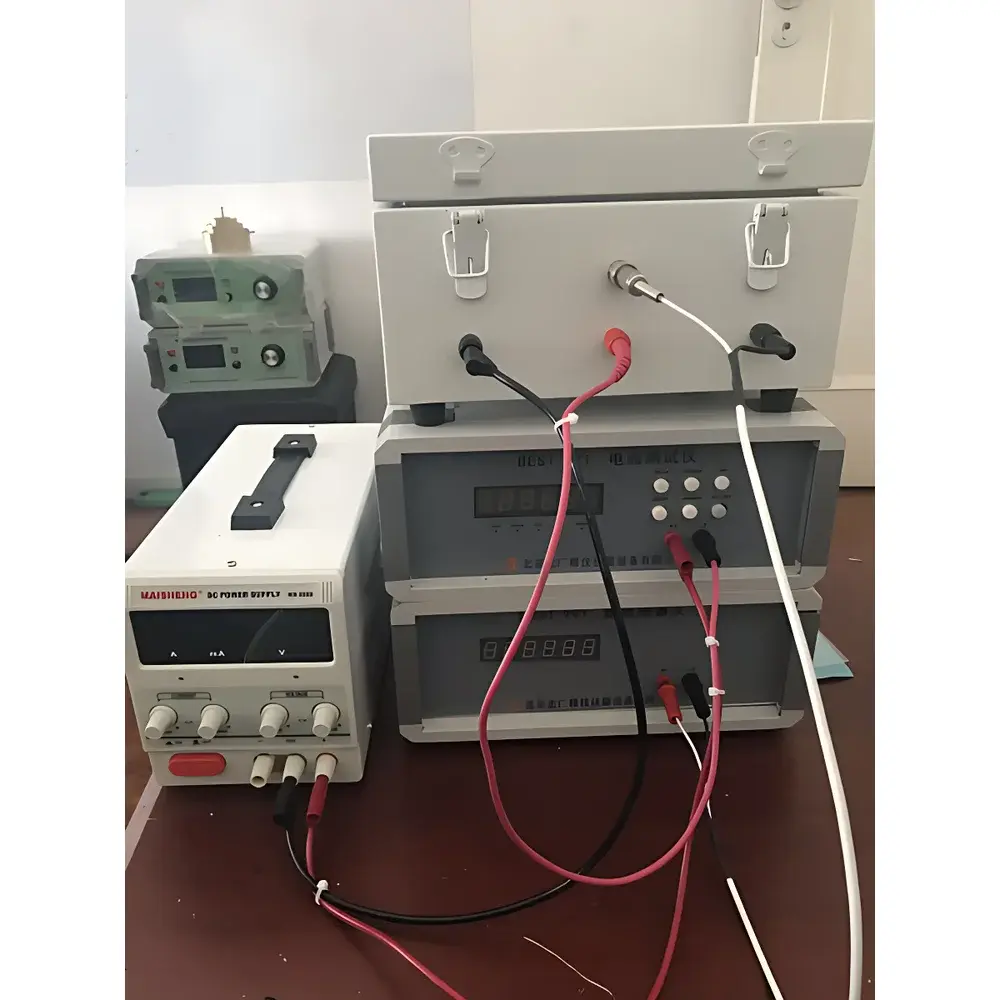
Beijing North Guang Precision Instrument BEST-191 Four-Terminal Volume and Surface Resistivity Tester for Electrostatic Dissipative and Conductive Materials

| Brand | Beijing North Guang Precision Instrument |
|---|---|
| Origin | Beijing, China |
| Manufacturer Type | Direct Manufacturer |
| Product Origin | Domestic (China) |
| Model | BEST-191 |
| Price | USD 3,500 (FOB Beijing) |
| Measurement Range | 10⁻⁹ Ω·m to 10¹¹ Ω·m |
| Accuracy | ±1%–±5% (depending on range) |
| Electrometer Input Impedance | ≥1 × 10¹⁴ Ω |
| Voltage Source Stability | ±1% |
| Picoammeter Resolution | 1 fA (1 × 10⁻¹⁵ A) |
| Current Electrode Spacing | 100 mm |
| Potential Electrode Spacing | 20 mm |
| Shielded Test Enclosure | Included with Standard ASTM/ISO/GJB-Compliant Four-Electrode Fixture |
| Insulating Base Resistivity | ≥1 × 10¹⁴ Ω·m |
Ask about pricing, availability and specifications.
Overview
The Beijing North Guang Precision Instrument BEST-191 is a precision four-terminal resistivity measurement system engineered for accurate determination of volume and surface resistivity in electrostatic dissipative (ESD), antistatic, conductive, and insulating materials. Unlike conventional two- or three-electrode methods—whose measurements are compromised by contact resistance at electrode–sample interfaces—the BEST-191 implements the true four-terminal (Kelvin) configuration. This eliminates voltage drop errors across contact interfaces, enabling traceable, low-uncertainty characterization of bulk electrical properties across an ultra-wide dynamic range—from metallic conductors (10⁻⁹ Ω·m) to highly insulating polymers (10¹¹ Ω·m). The system operates on the principle of constant-current source excitation combined with high-impedance potential sensing, adhering to fundamental metrological best practices for resistivity quantification in solid dielectrics and composites. Its architecture is purpose-built for laboratories requiring compliance-driven validation in electronics manufacturing, aerospace ESD control, cleanroom material qualification, and polymer R&D.
Key Features
- Four-terminal (Kelvin) measurement topology eliminating contact resistance artifacts and ensuring high reproducibility in volume resistivity testing
- Ultra-broad resistivity range: 10⁻⁹ Ω·m to 10¹¹ Ω·m—covering conductive metals, carbon-loaded plastics, static-dissipative elastomers, and high-purity insulators
- Integrated high-impedance electrometer (BEST-13): input impedance ≥1 × 10¹⁴ Ω, DC voltage range ±200 mV to ±200 V, drift <0.5% over 24 h
- Dual-mode picoammeter (BEST-12): current resolution down to 1 fA (1 × 10⁻¹⁵ A), accuracy ±0.5–2% depending on decade range, with NORMAL/FAST mode selection for variable input impedance matching
- Digitally regulated, low-noise DC voltage source with ±1% stability and programmable output for standardized test protocols
- Shielded test enclosure with pre-aligned, NIST-traceable four-electrode fixture compliant with ASTM D991, ISO 3915, ISO 1853, GB/T 15662, and GB 2439
- Insulating base plate with certified resistivity ≥1 × 10¹⁴ Ω·m to minimize leakage path interference during high-resistance measurements
Sample Compatibility & Compliance
The BEST-191 supports flat, rigid, or semi-rigid sheet, film, and molded specimens up to 150 mm × 150 mm. It accommodates standard thicknesses from 0.1 mm to 25 mm and is routinely used for testing ESD-safe work surfaces, conductive flooring, packaging foams, carbon-fiber composites, silicone gaskets, and polymer-based antistatic additives. All measurement procedures align with internationally recognized standards: ASTM D991 (rubber and elastomeric ESD materials), ISO 3915 (conductive plastics), ISO 1853 (conductive rubber), GB/T 15662 (plastics), GB 2439 (rubber), and JT/T 230–1995 (automotive grounding straps). The system’s design facilitates GLP-compliant documentation workflows and is compatible with audit-ready data logging when integrated with external PC-based acquisition software.
Software & Data Management
While the BEST-191 operates as a standalone benchtop instrument with front-panel digital readouts, it features analog and digital output interfaces (RS-232, optional USB) for integration into laboratory information management systems (LIMS) or custom QA/QC platforms. Raw voltage and current readings are timestamped and exportable in CSV format. For regulated environments—including those governed by FDA 21 CFR Part 11—the system supports external validation of measurement chains via third-party software with electronic signature, audit trail, and user access control. Calibration records—including electrometer gain verification, current source linearity checks, and electrode geometry certification—are maintained per ISO/IEC 17025 requirements.
Applications
- Qualification of ESD-safe materials in semiconductor fabrication cleanrooms (ANSI/ESD S20.20 compliance support)
- Volume resistivity mapping of conductive polymer films for flexible electronics substrates
- Routine QC testing of automotive static-dissipative hoses, fuel lines, and grounding straps per JT/T 230
- Development and formulation screening of carbon-black or metal-flake loaded thermoplastics
- Validation of antistatic coatings on medical device housings and pharmaceutical packaging
- Research-grade characterization of novel 2D-material composites (e.g., graphene-enhanced elastomers)
- Failure analysis of insulation breakdown in high-voltage cable jacketing and aerospace wire harnesses
FAQ
Why does the BEST-191 use a four-terminal method instead of two-terminal measurement?
Four-terminal measurement separates current injection and voltage sensing functions, eliminating voltage drop errors caused by contact resistance and lead wire impedance—critical for accurate resistivity determination in low-conductivity materials.
Is the system suitable for measuring thin films or coatings?
Yes, provided the sample has uniform thickness and covers the full electrode footprint; correction factors for thickness and electrode geometry are applied per ASTM D257 and IEC 62631-3-1.
Can the BEST-191 be calibrated to national metrology institute (NMI) standards?
All subsystems (electrometer, picoammeter, voltage source) are individually calibratable using NIST-traceable reference resistors and high-impedance standards; full-system calibration certificates are available upon request.
What environmental conditions are required for optimal accuracy?
Operation is specified at 18–28 °C and relative humidity <70%; for measurements below 10⁹ Ω·m, controlled humidity (<30% RH) and temperature stabilization are recommended to minimize surface conduction artifacts.
Does the system meet electromagnetic compatibility (EMC) requirements for lab use?
The instrument complies with CISPR 11 Group 1 Class B emission limits and IEC 61326-1 immunity requirements for industrial and laboratory environments.
More from Beijing North Guang Precision Instrument
View all Beijing North Guang Precision Instrument products → Beijing North Guang Precision Instrument BEST-121 Point-to-Point Surface Resistivity Tester for Textiles and Antistatic Garments
- Beijing North Guang Precision Instrument GDAT-A High-Frequency Q-Meter for Dielectric Constant and Dissipation Factor Measurement
- Beijing North Guang Precision Instrument BEST-1211 Volume & Surface Resistivity Tester for Silicone Rubber and Insulating Materials
- Beijing North Guang Precision Instrument BEST Series Digital High-Resistance DC Insulation Resistance Tester