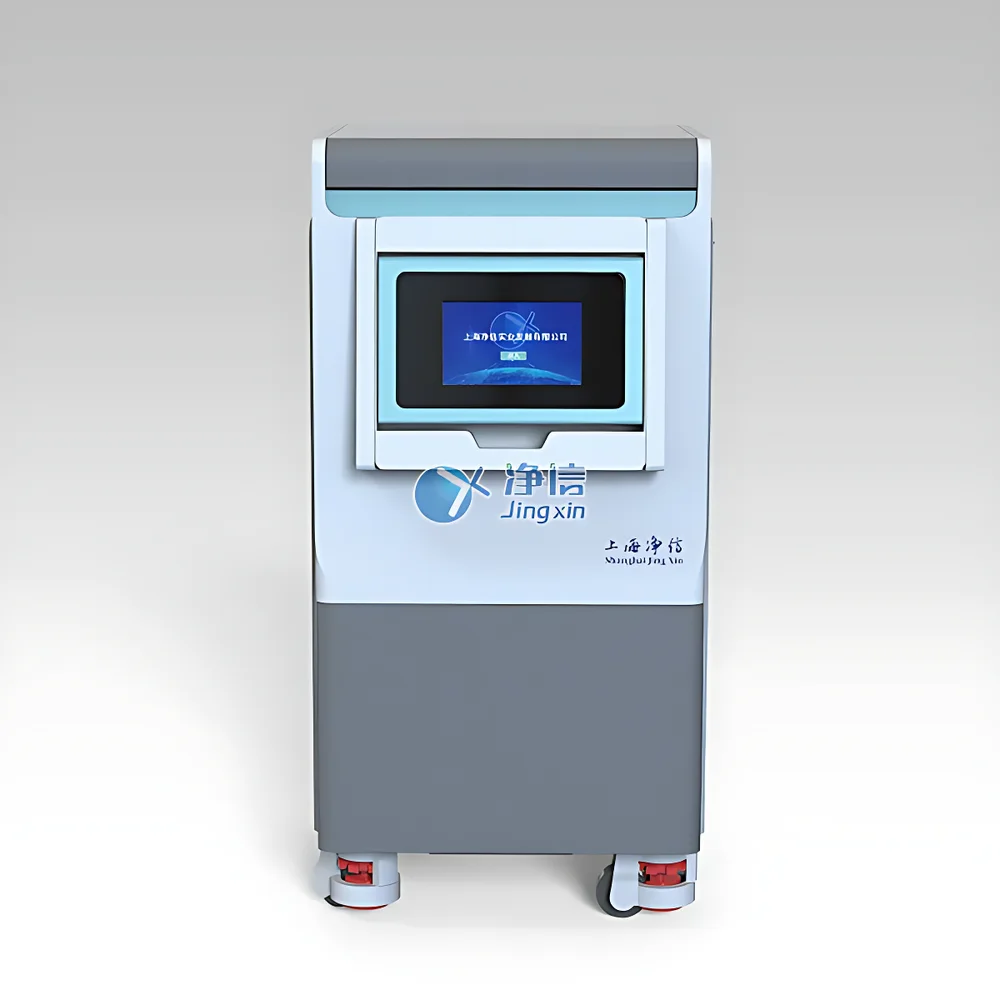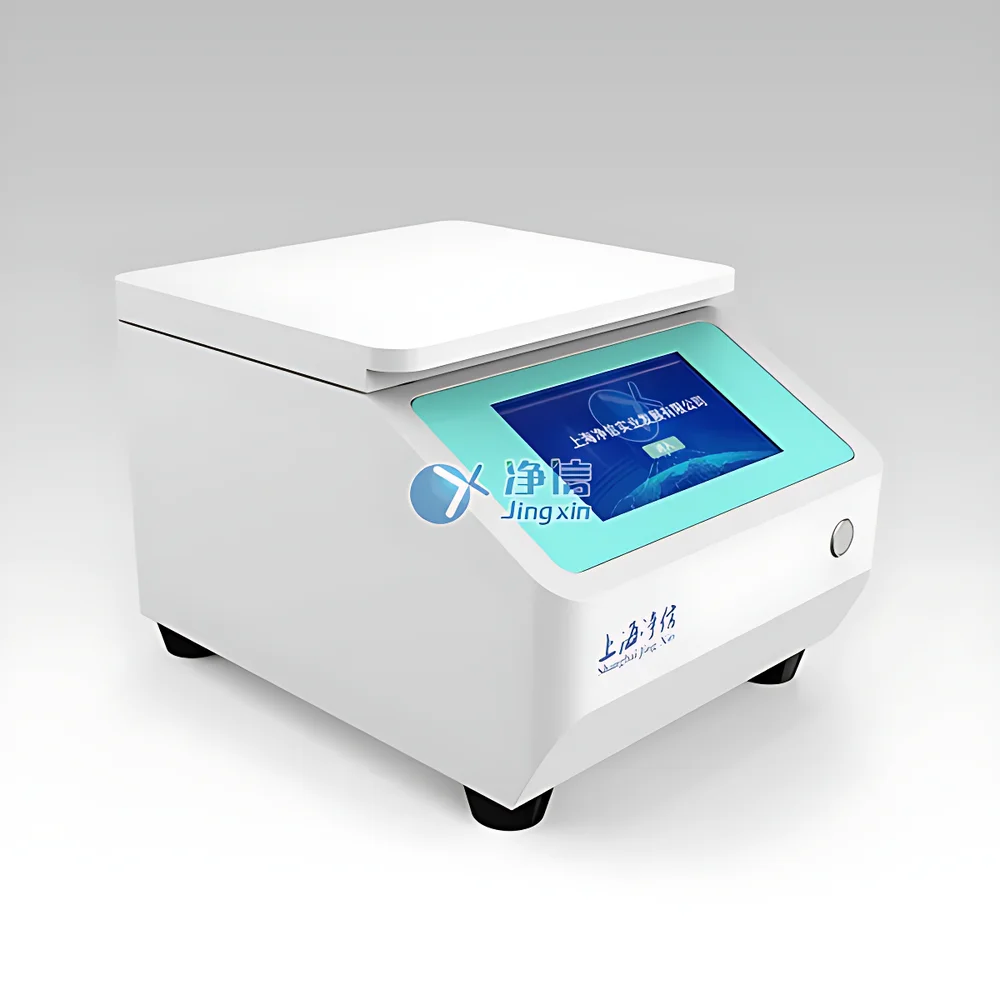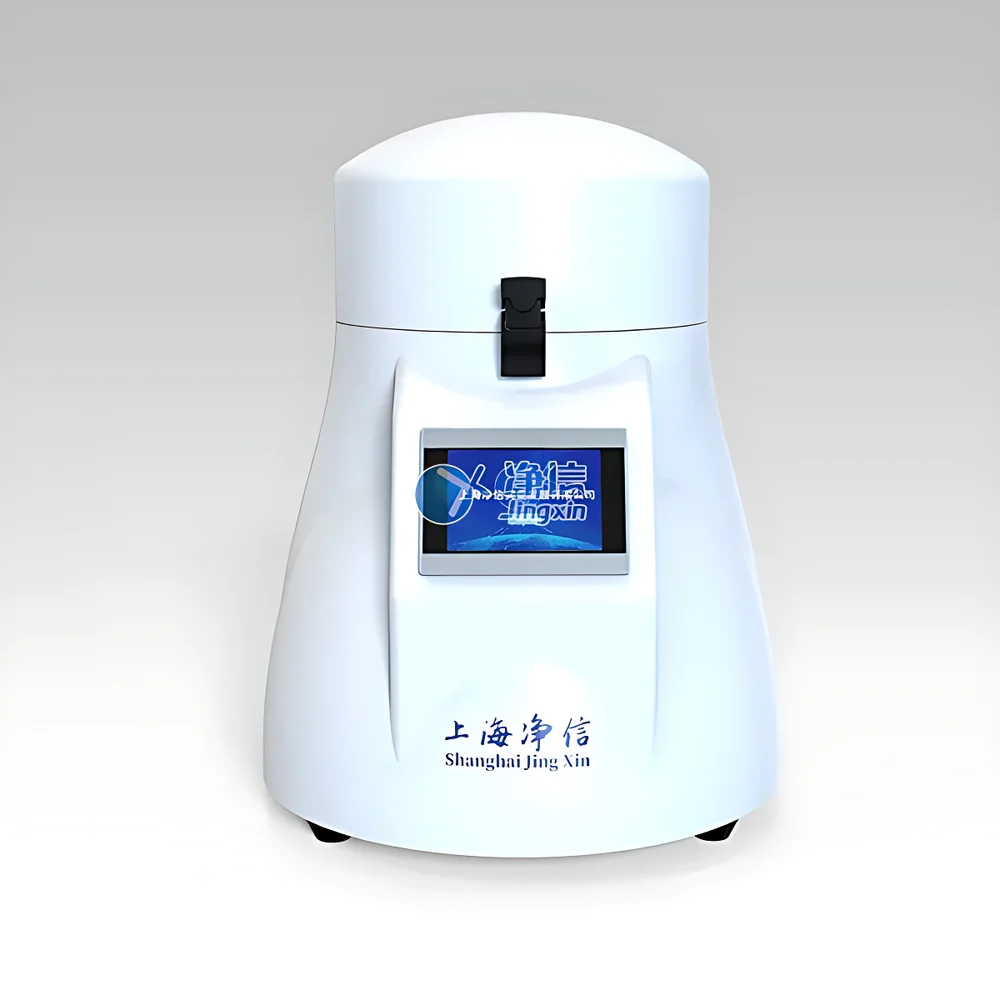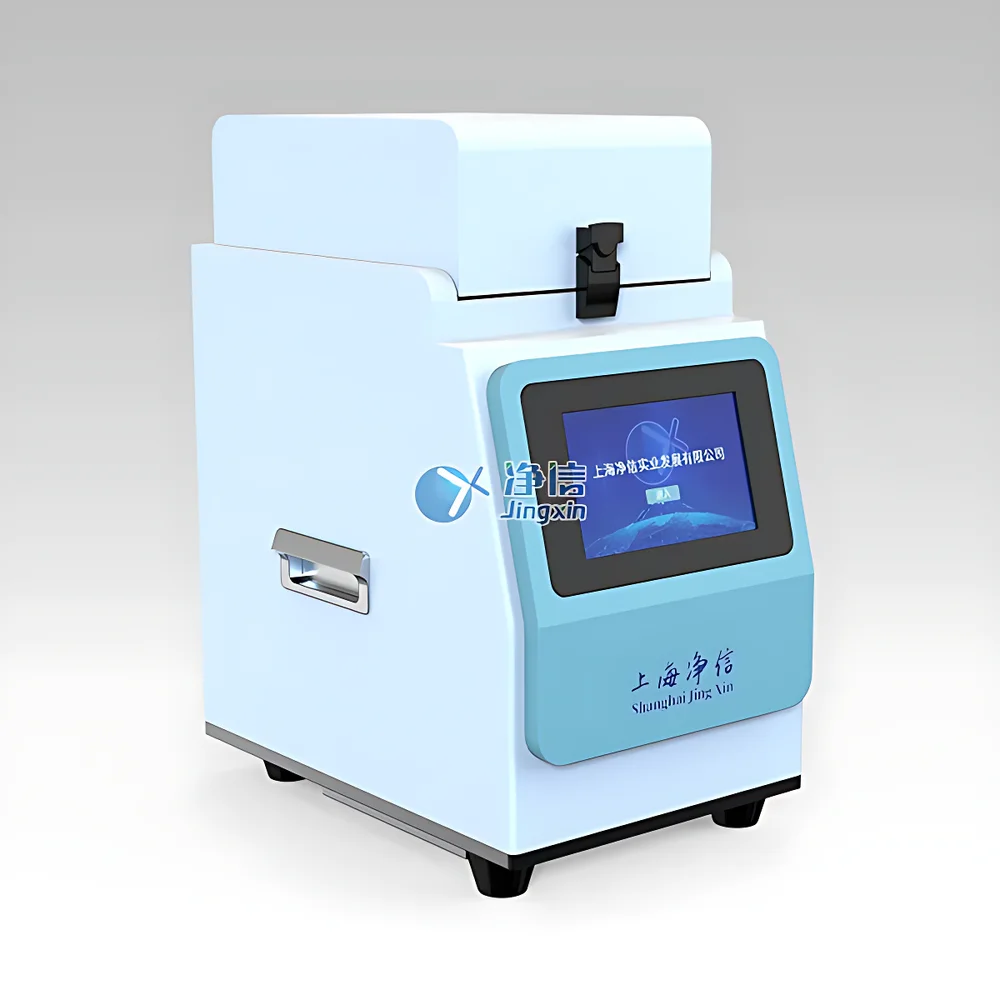
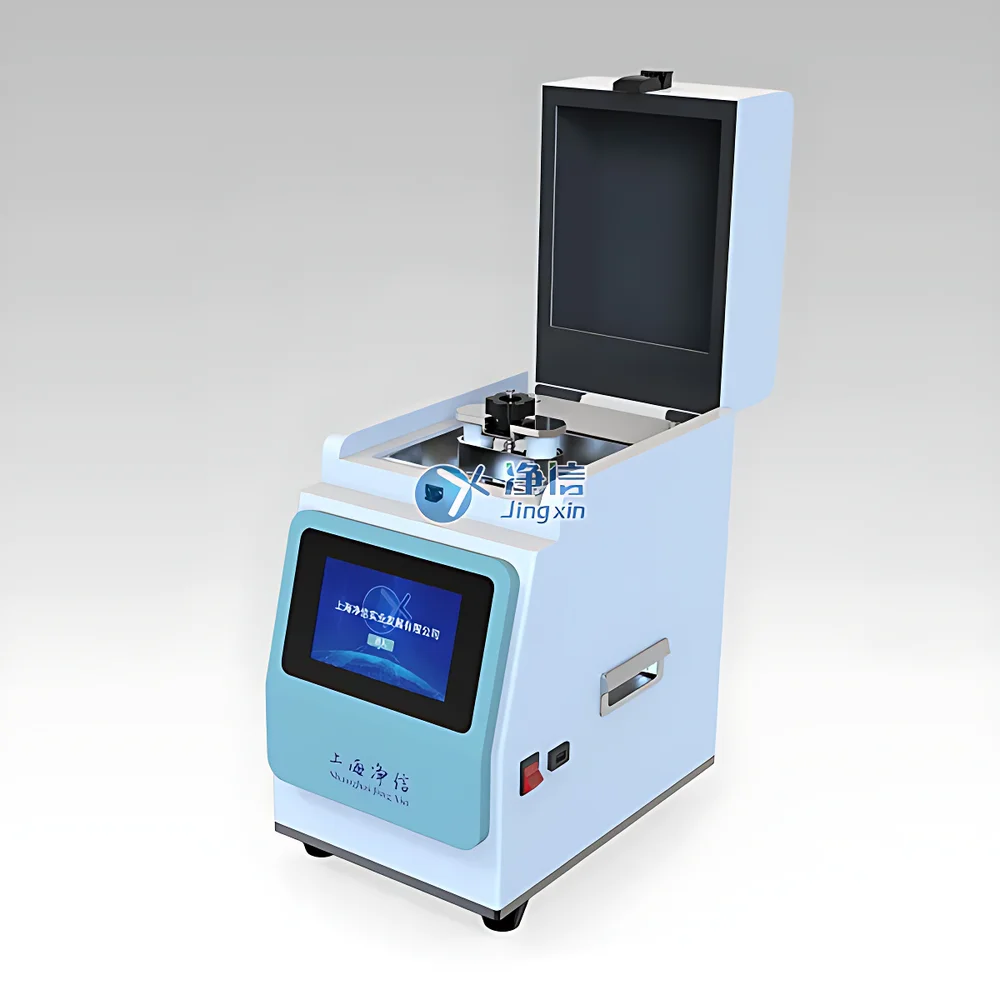
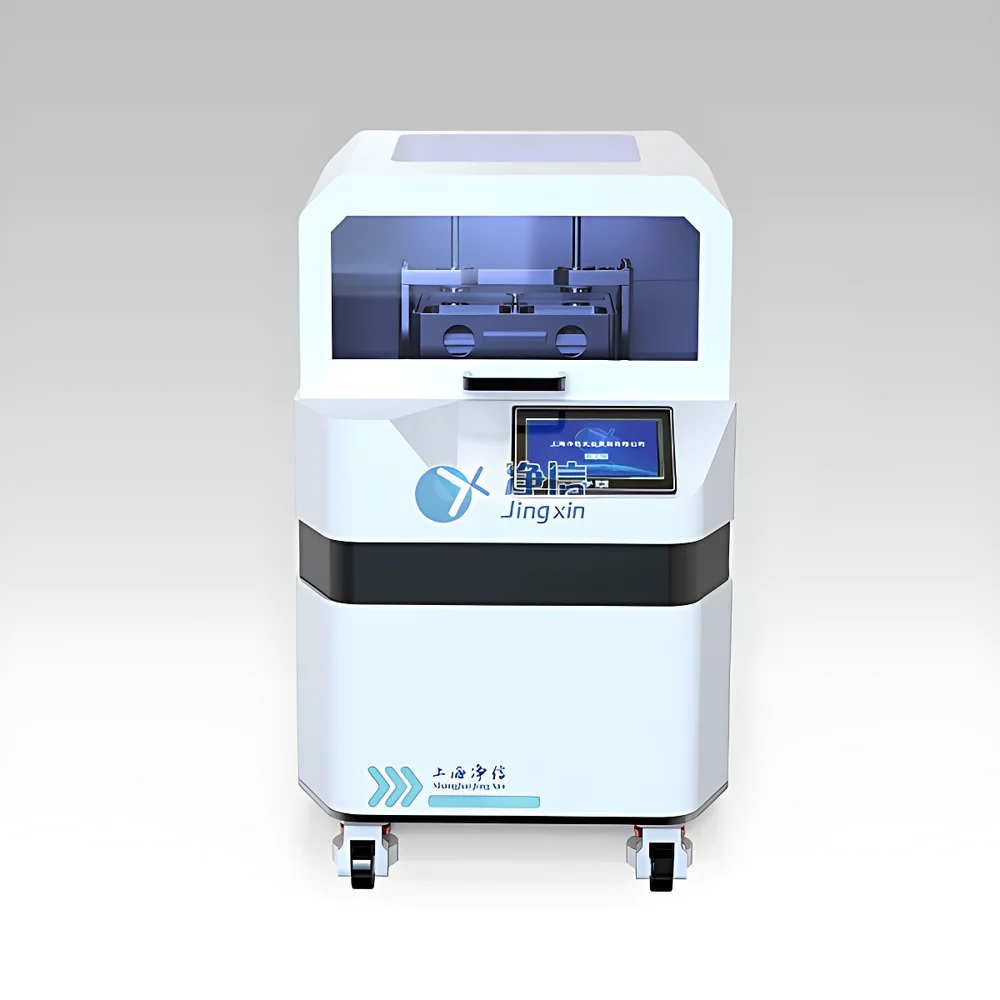
Jingxin KZ-II High-Throughput Cryogenic Tissue Grinder

| Brand | Jingxin (Shanghai Jingxin Scientific Instrument Co., Ltd.) |
|---|---|
| Origin | Shanghai, China |
| Manufacturer Type | Direct Manufacturer |
| Instrument Type | Benchtop High-Speed Vibratory Tissue Grinder |
| Sample Compatibility | Hard, brittle, fibrous, and temperature-sensitive biological & non-biological materials |
| Feed Size | < 5 mm (adaptable via custom adapters) |
| Output Particle Size | 0.01–0.5 mm (bulk), down to ~5 µm (final homogenate, dependent on bead type, duration, and protocol) |
| Throughput Configurations | 24 × (0.2–0.5 mL) tubes |
| Vibration Frequency Range | 0–70 Hz (0–4200 rpm equivalent) |
| Processing Time | Programmable from 0 s to 9999 min |
| Noise Level | < 55 dB(A) at 1 m (unloaded) |
| Cooling Compatibility | Liquid nitrogen immersion (pre-chilled adapters), optional air-cooling integration |
| Bead Materials | Stainless steel, chromium steel, zirconia, tungsten carbide, quartz, glass |
| Bead Diameter | 0.1–30 mm |
| Safety Features | Lid interlock, emergency stop button, auto-centering clamping mechanism |
| Adapter Materials | PTFE, stainless steel, hardened alloy |
| Dimensions (W×D×H) | 450 × 500 × 580 mm |
| Weight | 55 kg |
Ask about pricing, availability and specifications.
Overview
The Jingxin KZ-II High-Throughput Cryogenic Tissue Grinder is an engineered benchtop vibratory homogenizer designed for rapid, reproducible, and contamination-free mechanical lysis of diverse biological and synthetic samples. It operates on the principle of high-frequency three-dimensional orbital oscillation—generating controlled, multi-axis kinetic energy transfer via grinding beads within sealed tubes. Unlike conventional horizontal or vertical shakers, the KZ-II employs a proprietary 3D “figure-eight” motion path that ensures uniform bead trajectory, enhanced collision efficiency, and minimized thermal buildup during short-duration cycles. This architecture enables complete cellular disruption—including tough plant cell walls, fibrous animal tissues, bacterial spores, and polymer matrices—within seconds to minutes, without requiring extended sonication, enzymatic digestion, or repeated freeze-thaw steps. The system supports both ambient and cryogenic workflows, with seamless integration of pre-chilled PTFE or metal adapters for temperature-sensitive applications such as RNA integrity preservation or labile metabolite stabilization.
Key Features
- Three-dimensional oscillation mechanism delivering consistent 360° bead motion in a figure-eight pattern—optimized for maximal shear, impact, and attrition forces across heterogeneous sample matrices.
- Programmable digital touchscreen interface with storage for up to ten user-defined protocols; parameters include frequency (0–70 Hz), duration (0 s–9999 min), and cycle repetition.
- Integrated safety architecture: automatic lid interlock, emergency stop button, precision auto-centering clamping, and vibration-dampened chassis reducing operational displacement and acoustic emission (< 55 dB(A)).
- Cryogenic compatibility: adapters can be pre-cooled in liquid nitrogen (1–2 min immersion) and mounted directly onto the platform—eliminating post-transfer warming and enabling sub-zero grinding without external refrigeration units.
- Modular throughput design supporting multiple tube formats simultaneously: 24 × 0.2–0.5 mL, 24 × 2 mL, 8 × 5–15 mL, 4 × 25 mL, or 2 × 50 mL configurations—with fully customizable adapter geometries available upon request.
- Chemically inert and autoclavable components: PTFE, zirconia, stainless steel, and hardened alloy construction ensure compatibility with aggressive solvents, chaotropic agents, and stringent decontamination protocols.
Sample Compatibility & Compliance
The KZ-II accommodates a broad spectrum of sample types—biological, environmental, and industrial—without modification to core hardware. Validated applications include mammalian organs (liver, brain, kidney), plant tissues (leaves, seeds, lignified stems), microbial cultures (Gram-positive bacteria, yeast, spores), forensic specimens, pharmaceutical tablets, polymers (PE, PS, resins), coal, shale, and composite materials. All grinding occurs within sealed, single-use or reusable tubes—ensuring zero cross-contamination between samples and full containment of aerosols or volatile compounds. The system conforms to general laboratory biosafety standards (BSL-1/2), supports GLP-compliant documentation via parameter logging, and facilitates traceability when used alongside Jingxin’s ISO-certified nucleic acid and protein extraction kits (e.g., Jingxin-1 through Jingxin-9 series). While not FDA 21 CFR Part 11–validated out-of-the-box, its programmable audit trail, locked parameter sets, and electronic protocol storage provide foundational infrastructure for regulated environments.
Software & Data Management
The KZ-II features an embedded microcontroller with capacitive touchscreen HMI—requiring no external PC or driver installation. Users define and store protocols by name, frequency, time, and cycle count; each run logs timestamp, actual frequency deviation, and total elapsed time. Ten preset profiles are retained after power loss. Optional data export (via USB port) allows CSV-formatted logs for LIMS integration or QC review. For laboratories implementing electronic records, the system supports manual annotation of batch IDs and operator initials per run. No cloud connectivity or remote access is included—ensuring data sovereignty and alignment with institutional IT security policies.
Applications
This instrument serves as a primary homogenization tool in molecular biology, pharmacology, food safety, and materials science labs. Typical use cases include: rapid lysis prior to DNA/RNA extraction (e.g., for qPCR, NGS library prep, or methylation analysis); protein solubilization for Western blotting or mass spectrometry; preparation of homogeneous suspensions for particle size analysis or elemental testing; comminution of solid dosage forms in pharmaceutical QA/QC; and dispersion of nanomaterials in polymer composites. Its ability to process multiple samples under identical kinetic conditions makes it especially suited for comparative studies, clinical cohort screening, and high-throughput assay development where inter-sample variability must be minimized.
FAQ
Can the KZ-II be used for RNA extraction without degradation?
Yes—when paired with pre-chilled PTFE adapters and cryo-grade zirconia beads, the system achieves effective lysis within 30–60 seconds while maintaining RNA integrity (RIN > 8.5 demonstrated in liver and leaf tissue).
Is it possible to grind samples below −80 °C?
Direct sub-80 °C operation is not supported; however, liquid nitrogen–precooled adapters sustain temperatures below −150 °C for the first 2–3 minutes of grinding—sufficient for most cold-labile applications.
What maintenance does the KZ-II require?
No routine lubrication or calibration is needed. Recommended practices include periodic inspection of clamping mechanism integrity, cleaning of the platform surface with 70% ethanol, and verification of bead wear after 500+ cycles.
Are replacement adapters and beads supplied by Jingxin?
Yes—Jingxin provides OEM-certified adapters in PTFE and stainless steel, plus validated bead sets (zirconia, stainless steel, glass) in diameters from 0.1 mm to 10 mm, all traceably packaged and lot-numbered.
Does the KZ-II meet CE or UL safety standards?
The instrument complies with IEC 61010-1:2010 for laboratory electrical equipment safety. CE marking is applicable for EU shipment; UL listing is not currently held but may be pursued per regional distributor agreement.
More from Jingxin (Shanghai Jingxin Scientific Instrument Co., Ltd.)
View all Jingxin (Shanghai Jingxin Scientific Instrument Co., Ltd.) products → Jingxin JXFSTPRP-192CL High-Speed Cryogenic Grinding and Homogenization System
- Jingxin JX-CKSM-4WK 4-Channel Temperature-Controlled Single-Cell Suspension Preparation System
- Jingxin JX-24 High-Efficiency Automated Cryogenic Tissue Grinder
- Jingxin Tissuelyser-192 High-Throughput Cryogenic Tissue Homogenizer