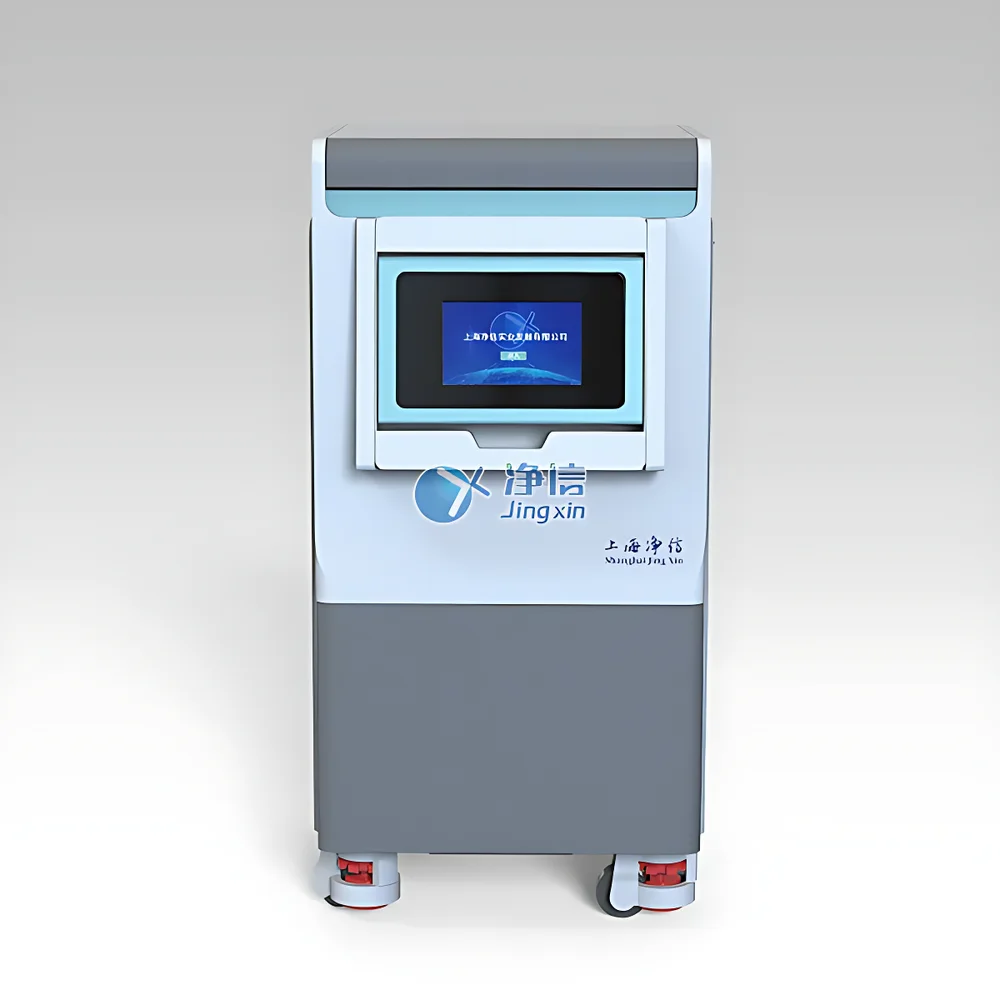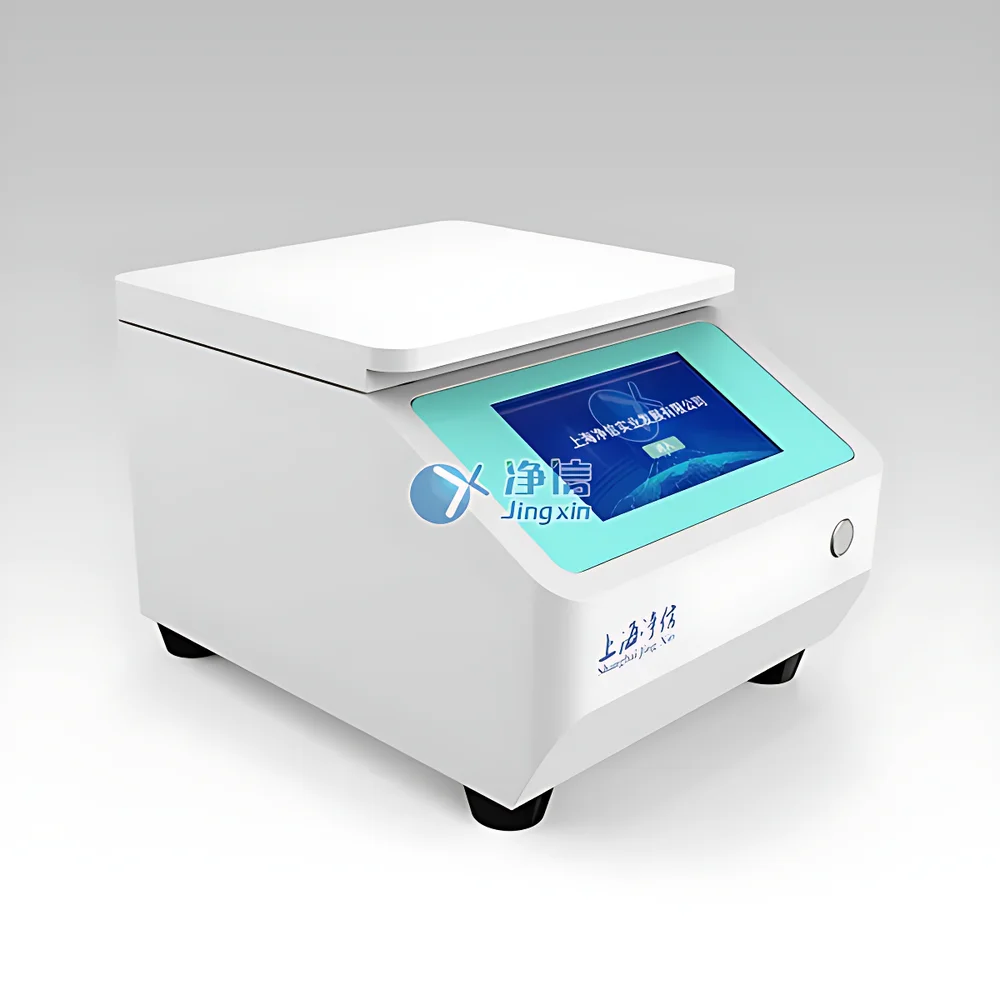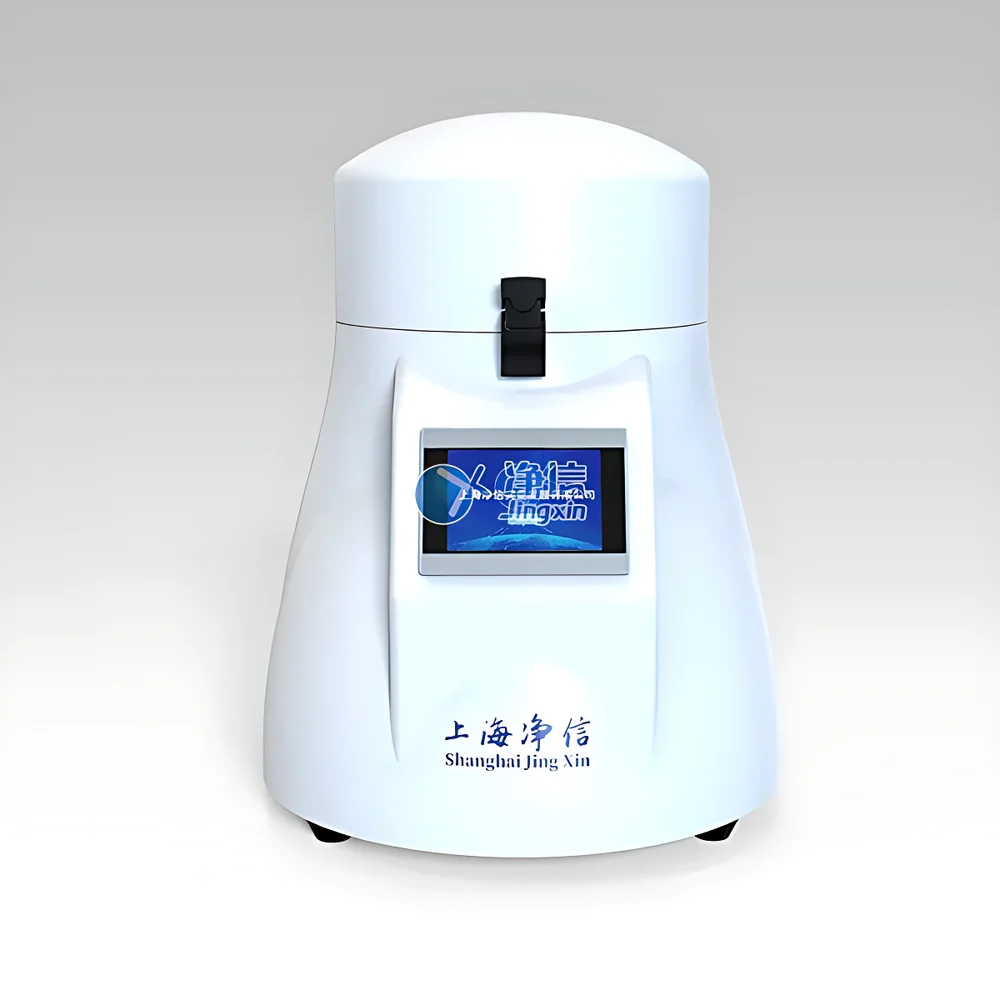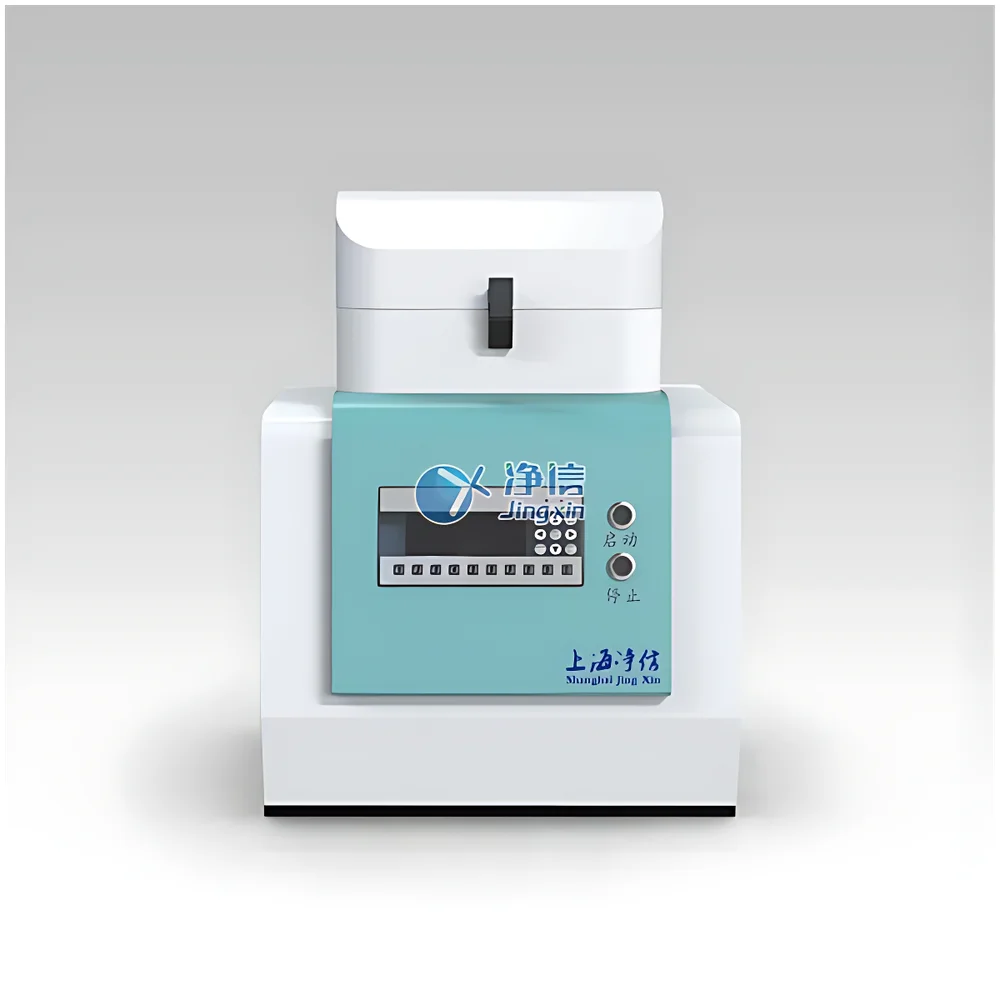
Jingxin Tissuelyser-64L High-Capacity Multi-Sample Tissue Grinder

| Brand | Jingxin (Shanghai Jingxin Scientific Instrument Co., Ltd.) |
|---|---|
| Origin | Shanghai, China |
| Manufacturer Type | Direct Manufacturer |
| Instrument Type | Benchtop Vibratory Tissue Grinder |
| Sample Applicability | Hard and brittle biological & non-biological samples |
| Final Particle Size | ≤5 µm |
| Feed Size | No strict limitation—determined by adapter geometry |
| Batch Capacity | 64 × (0.2–0.5 mL), 64 × 2 mL, 12 × 5 mL, 8 × (7–15) mL, 2 × 25 mL, or 2 × 50 mL |
| Operating Frequency Range | 0–70 Hz (equivalent to 0–4200 oscillations/min) |
| Noise Level | <55 dB(A) |
| Power Supply | 220 V AC, 50 Hz |
| Net Weight | 30 kg |
| Dimensions (W×D×H) | 400 × 280 × 530 mm |
| Display | LED segment display with keypad interface |
| Safety Features | Lid interlock, vertical oscillation architecture, vibration-dampened base |
| Optional Cryogenic Integration | Compatible with liquid nitrogen immersion or external air-cooling systems |
Ask about pricing, availability and specifications.
Overview
The Jingxin Tissuelyser-64L is a high-throughput, vertically oscillating multi-sample tissue grinder engineered for rapid, reproducible mechanical lysis of diverse biological and synthetic materials. It operates on the principle of high-frequency reciprocating motion—transferring kinetic energy from stainless-steel or ceramic grinding beads to samples sealed within centrifuge tubes or specialized adapters. This energy transfer induces shear, impact, and friction forces sufficient to disrupt cellular membranes, homogenize fibrous tissues, and reduce particle size to sub-5 µm median diameters without significant thermal degradation. Unlike planetary or rotary mills, the Tissuelyser-64L employs a robust single-axis vertical drive mechanism with a ≥10 mm diameter hardened steel shaft—ensuring structural integrity under sustained high-load operation. Its design prioritizes consistency across parallel samples, making it suitable for applications demanding statistical rigor, such as transcriptomic profiling, proteomic extraction, and metabolite recovery where batch-to-batch variability must be minimized per GLP-compliant workflows.
Key Features
- High-capacity parallel processing: Supports up to 64 samples simultaneously in 2 mL tubes—or configurable combinations including 12 × 5 mL, 8 × 7–15 mL, and dual 25/50 mL vessels—enabling scalable throughput without compromising uniformity.
- Programmable oscillation control: Adjustable frequency (0–70 Hz), duration (0–9999 s), and ramp profiles (acceleration/deceleration completed within ≤2 s) ensure method reproducibility across operators and laboratories.
- Cryogenic-ready architecture: Adapters may be pre-chilled in liquid nitrogen (1–2 min immersion) and mounted directly onto the instrument; no secondary freezing step required. Optional integration with regulated LN₂ flow systems or forced-air chillers supports sub-zero grinding for thermolabile analytes.
- Contamination-controlled workflow: All sample containment occurs within sealed, disposable or autoclavable tubes. Bead-based lysis eliminates blade contact, preventing cross-contamination and preserving nucleic acid integrity—critical for NGS library preparation and qPCR assays.
- Acoustically optimized enclosure: Sound-dampened housing maintains ambient noise below 55 dB(A), permitting installation in shared core facilities without interference to adjacent instrumentation or personnel.
- Direct manufacturing traceability: As an OEM-integrated manufacturer—not a rebrander—Jingxin maintains full control over motor sourcing (imported brushless DC units), corrosion-resistant chassis fabrication, and precision-machined motion components.
Sample Compatibility & Compliance
The Tissuelyser-64L accommodates heterogeneous sample classes including plant tissues (roots, leaves, seeds), animal organs (liver, brain, muscle), microbial cultures (yeast, Gram-positive/negative bacteria), forensic specimens, pharmaceutical excipients, polymers (PE, PS, resins), and geological matrices (soil, coal, shale). Its mechanical lysis efficacy has been validated in over 1,184 peer-reviewed publications indexed in Web of Science and Scopus. While not certified to ISO/IEC 17025 or FDA 21 CFR Part 11 out-of-the-box, the system supports audit-ready documentation when paired with laboratory information management systems (LIMS) via timestamped parameter logs. Routine calibration verification aligns with ASTM E2927-20 (Standard Guide for Validation of Mechanical Disruption Methods) and USP (Cell Culture Performance Testing).
Software & Data Management
The unit features a dedicated keypad-based controller with non-volatile memory for storing ≥10 user-defined protocols. Each run records frequency, duration, and start/stop timestamps—exportable via USB for integration into electronic lab notebooks (ELN) or LIMS platforms. Though lacking cloud connectivity, its deterministic behavior enables full traceability in GxP environments when combined with procedural SOPs and operator training records. Firmware updates are distributed via secure FTP upon request, supporting long-term compliance with evolving internal quality standards.
Applications
- Routine nucleic acid isolation: Efficient disruption of tough plant cell walls and bacterial spores prior to column- or magnetic-bead-based DNA/RNA purification.
- Proteome extraction: Preservation of native protein conformation and enzymatic activity through rapid, low-heat lysis—validated for downstream Western blotting and LC-MS/MS analysis.
- Metabolomics sample prep: Homogenization of frozen tissues under cryogenic conditions to quench enzymatic degradation and stabilize labile small molecules.
- Material science dispersion: Uniform deagglomeration of nanoparticles, polymer composites, and catalyst powders for rheological or spectroscopic characterization.
- Pharmaceutical QA/QC: Batch-wise grinding of tablets, capsules, or excipient blends to assess content uniformity per USP .
FAQ
What types of grinding media are compatible with the Tissuelyser-64L?
Stainless steel, chrome steel, zirconia, tungsten carbide, and quartz beads ranging from 0.1 mm to 30 mm in diameter are supported—selection based on sample hardness and desired particle size distribution.
Can the instrument operate continuously for extended durations?
Yes—designed for unattended operation up to 9999 seconds per cycle; thermal management ensures stable performance during repeated runs without duty-cycle limitations.
Is validation support available for regulated environments?
Jingxin provides IQ/OQ documentation templates and technical assistance for protocol development aligned with ISO 13485, GLP, and GMP requirements.
How does the vertical oscillation mechanism improve reproducibility versus horizontal shakers?
Vertical motion minimizes tube-to-tube variance by eliminating lateral sliding forces; consistent bead trajectory and impact energy distribution yield lower CV% in extracted biomolecule yields across replicates.
What maintenance is required to sustain optimal performance?
Routine cleaning of adapters and housing; annual inspection of drive shaft coupling and motor brushes; no lubrication required due to sealed bearing design.
More from Jingxin (Shanghai Jingxin Scientific Instrument Co., Ltd.)
View all Jingxin (Shanghai Jingxin Scientific Instrument Co., Ltd.) products → Jingxin JXFSTPRP-192CL High-Speed Cryogenic Grinding and Homogenization System
- Jingxin JX-CKSM-4WK 4-Channel Temperature-Controlled Single-Cell Suspension Preparation System
- Jingxin JX-24 High-Efficiency Automated Cryogenic Tissue Grinder
- Jingxin Tissuelyser-192 High-Throughput Cryogenic Tissue Homogenizer