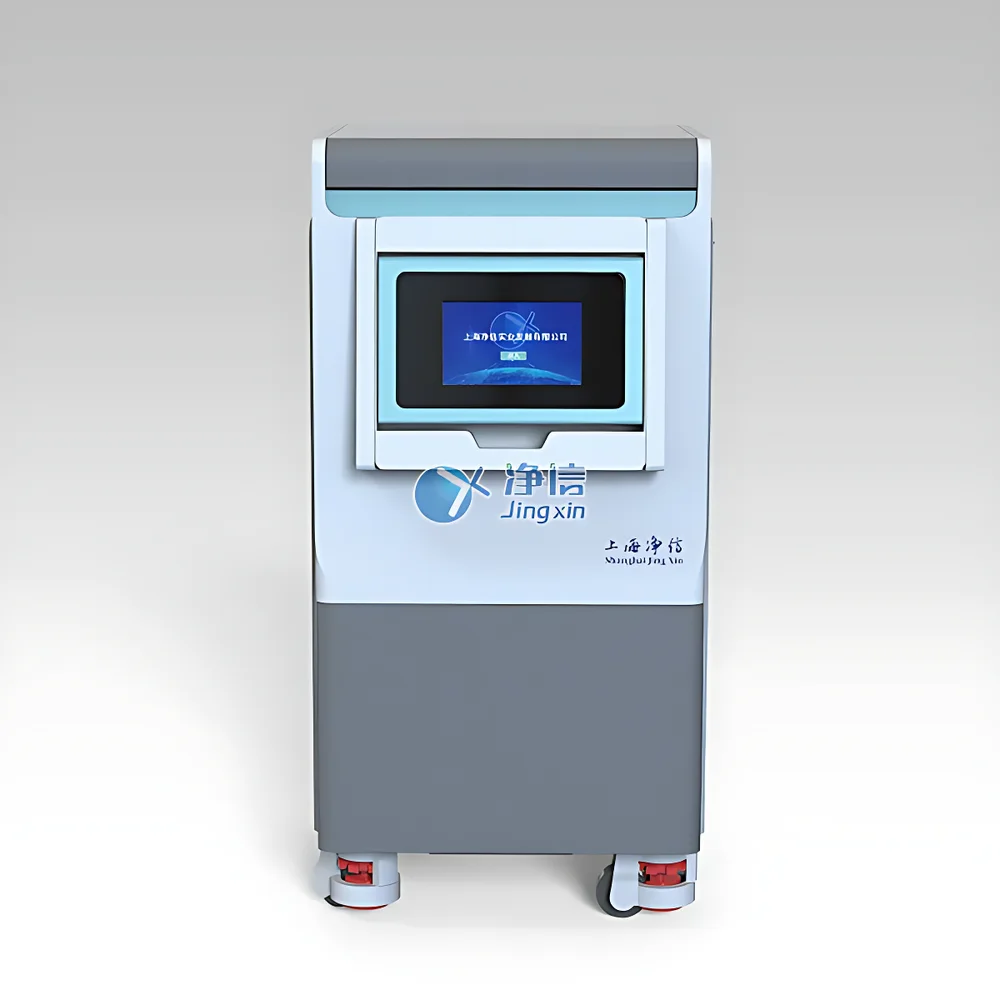
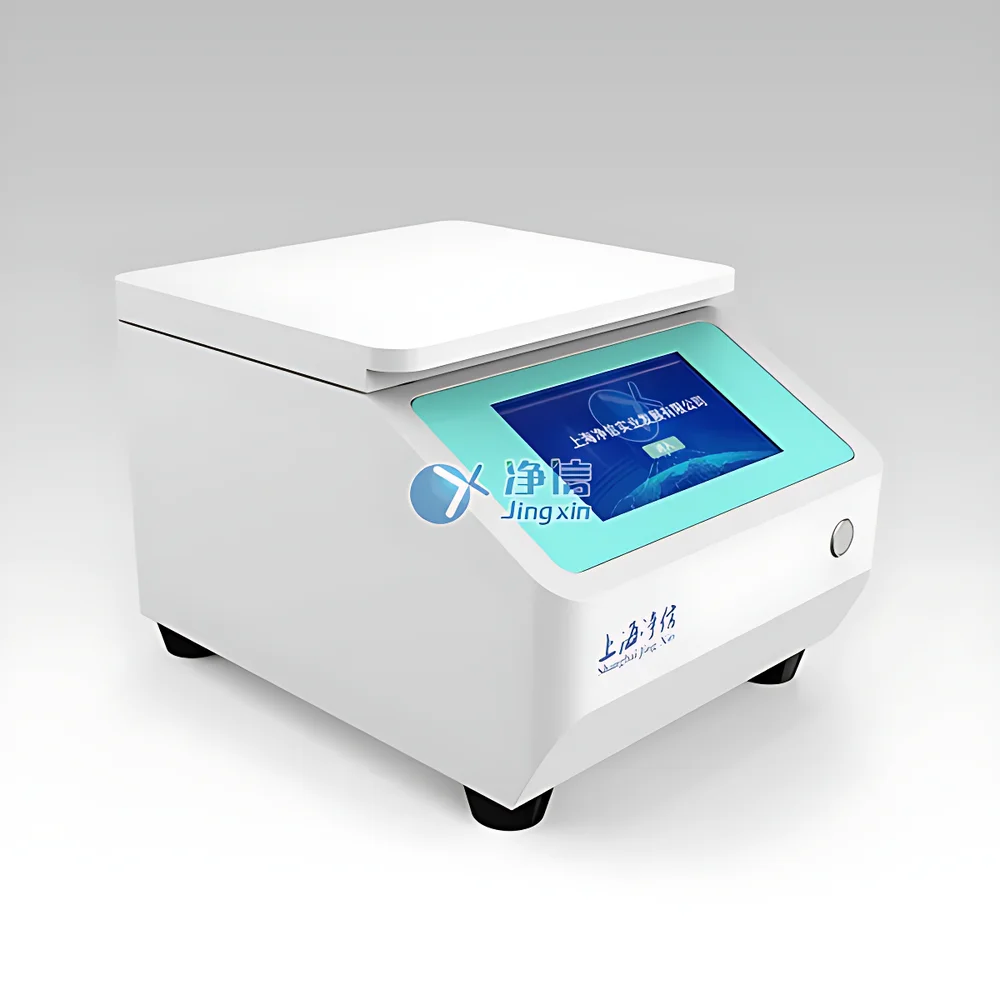
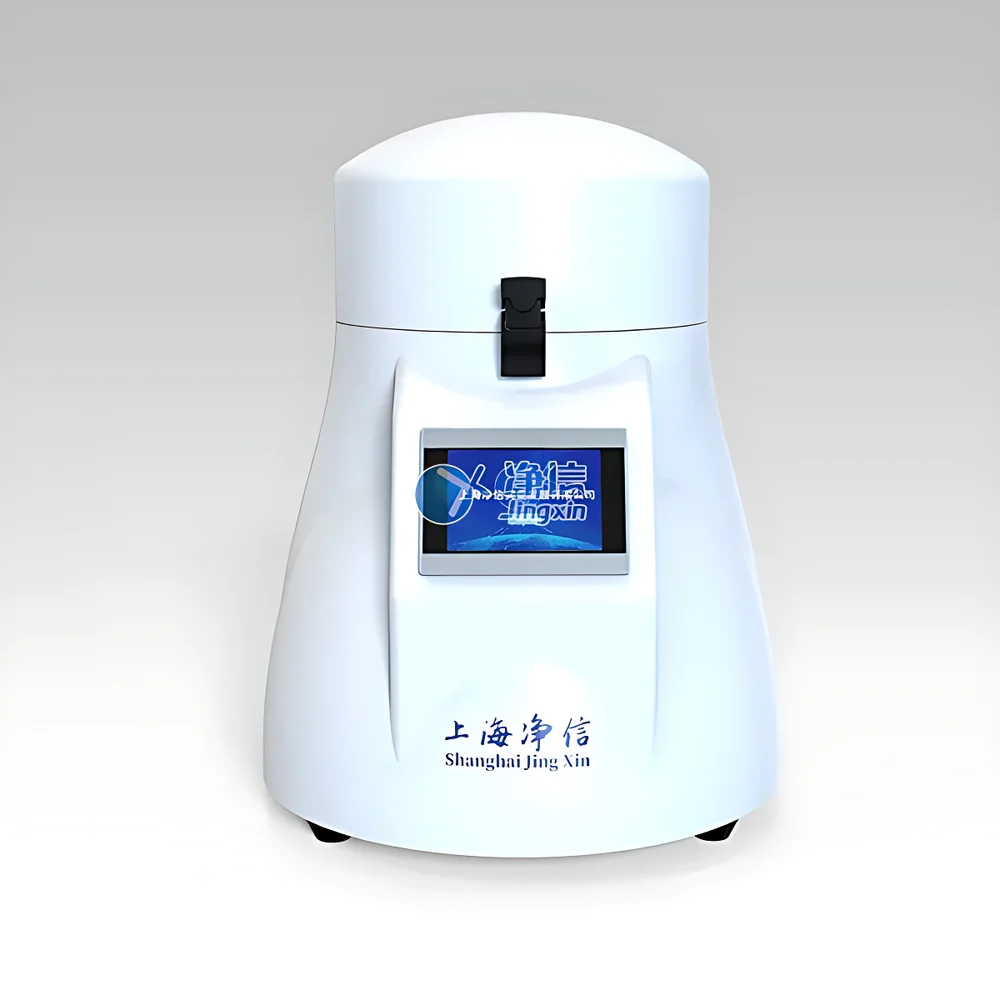
Jingxin JXFSTPRP-96 High-Throughput Cryogenic Tissue Grinder

| Brand | Jingxin (Shanghai Jingxin Scientific Instrument Co., Ltd.) |
|---|---|
| Origin | Shanghai, China |
| Manufacturer Type | Direct Manufacturer |
| Product Category | Domestic |
| Model | JXFSTPRP-96 |
| Instrument Type | High-Throughput Cryogenic Tissue Grinder |
| Sample Compatibility | Frozen biological and non-biological samples |
| Feed Size | ≤ 8 mm |
| Final Particle Size | ~5 µm |
| Throughput | 96 samples per batch |
| Vibration Frequency Range | 0–70 Hz (0–2100 rpm) |
| Noise Level | <55 dB(A) |
| Operating Modes | Dry grinding, wet grinding, cryogenic grinding |
| Compatible Vial Formats | 96 × 0.2–0.5 mL, 96 × 2 mL, 48 × 5 mL, 24 × 7–15 mL, 4 × 25 mL, 2 × 50 mL, 1 × 100 mL |
| Grinding Media Materials | Stainless steel, chromium steel, zirconium oxide, tungsten carbide, quartz sand |
| Grinding Bead Diameter | 0.1–30 mm |
Ask about pricing, availability and specifications.
Overview
The Jingxin JXFSTPRP-96 High-Throughput Cryogenic Tissue Grinder is an engineered solution for rapid, reproducible, and contamination-free homogenization of diverse biological and non-biological samples under controlled thermal conditions. Based on high-frequency three-dimensional orbital vibration—specifically an “8-shaped” motion trajectory—the instrument subjects samples to simultaneous impact, shear, and compression forces via grinding beads (e.g., zirconia, stainless steel, or ceramic). This principle enables efficient cell lysis, tissue disruption, and particle size reduction without significant thermal buildup, making it particularly suitable for nucleic acid and protein integrity preservation. Unlike conventional rotor-stator homogenizers or sonication-based systems, the JXFSTPRP-96 eliminates manual handling variability, avoids cross-contamination through fully sealed tube processing, and delivers uniform mechanical energy distribution across all 96 positions in a single run—critical for high-throughput genomics, proteomics, and quality control workflows in regulated environments.
Key Features
- Three-dimensional orbital vibration system with programmable frequency (0–70 Hz) and time (0–9999 min), ensuring consistent energy input across all sample positions.
- Cryogenic compatibility: Supports direct immersion of adapters in liquid nitrogen (1–2 min pre-cooling) followed by immediate mounting—no secondary freezing required, minimizing thermal shock and ice crystal formation.
- Full-seal sample processing: All tubes remain closed during operation; disposable tubes and beads prevent carryover between batches—essential for GLP-compliant sample preparation.
- Modular adapter design: Accepts standardized formats including 96 × 0.2–0.5 mL, 96 × 2 mL, and larger volumes up to 100 mL; custom adapters available upon request.
- Low-noise operation (<55 dB[A]) achieved via German-engineered anti-vibration suspension (Schleifen-1 principle) and balanced dynamic load distribution—enabling integration into shared laboratory spaces without acoustic interference.
- Intuitive touchscreen interface with password-protected method storage, audit-trail-capable parameter logging, and user-defined protocol recall—aligned with FDA 21 CFR Part 11 readiness when paired with validated LIMS integration.
Sample Compatibility & Compliance
The JXFSTPRP-96 accommodates heterogeneous sample types across life sciences and materials research: animal tissues (liver, brain, muscle), plant organs (seeds, leaves, roots), microbial cultures (E. coli, yeast, spores), pharmaceutical tablets, polymers (PE, PS, resins), and volatile matrices (coal, oil shale, waxes). Its ability to maintain sub-zero temperatures during grinding supports protocols requiring RNA integrity (e.g., RIN >8.5) and native protein conformation retention. The system complies with ISO 17025-relevant operational rigor for method validation, and its sealed-tube workflow meets requirements for biosafety level 2 (BSL-2) containment when processing pathogenic specimens. Optional PTFE or hardened alloy adapters ensure chemical resistance against organic solvents and acidic/basic extraction buffers used in ASTM D346, USP , and EN 14346-compliant sample prep.
Software & Data Management
The embedded controller supports real-time monitoring of vibration frequency, elapsed time, and cycle completion status. Method parameters—including frequency ramp profiles, hold durations, and pause intervals—are stored with timestamped operator ID and version control. Exportable CSV logs include start/stop timestamps, setpoints, and error codes—facilitating traceability in ISO/IEC 17025-accredited labs. When integrated with enterprise-grade laboratory information management systems (LIMS), the grinder supports electronic signature capture, change control documentation, and automated report generation for internal audits or regulatory inspections (e.g., FDA pre-approval reviews, MHRA GMP assessments).
Applications
- High-throughput nucleic acid isolation: Enables parallel lysis of 96 tissue samples for downstream qPCR, NGS library prep, or microarray analysis—reducing hands-on time by >70% versus manual mortar-and-pestle methods.
- Proteomic sample prep: Preserves post-translational modifications (PTMs) and reduces protease-mediated degradation through sub-zero grinding kinetics—validated for phosphoproteome enrichment workflows.
- Pharmaceutical QA/QC: Homogenizes solid dosage forms (tablets, capsules) for content uniformity testing per USP and dissolution profiling per USP .
- Environmental and agricultural testing: Processes soil, sediment, and plant biomass for pesticide residue analysis (AOAC 2007.01), heavy metal extraction (EPA 3050B), and mycotoxin screening.
- Materials science: Disperses polymer composites, ceramics, and nanomaterials for SEM/TEM sample preparation and rheological characterization.
FAQ
Can the JXFSTPRP-96 be used for ambient-temperature grinding?
Yes—the instrument operates effectively at room temperature for robust matrices such as plastics, soils, and dried botanicals. Temperature control is optional, not mandatory.
Is method validation support available for regulated laboratories?
Jingxin provides IQ/OQ documentation templates, performance qualification (PQ) test protocols, and raw data export formats compatible with 21 CFR Part 11-compliant electronic records.
What maintenance is required to ensure long-term precision?
Annual calibration of vibration amplitude and frequency output is recommended; grinding bead wear should be monitored via visual inspection every 200 cycles. No lubrication or internal alignment is needed due to the maintenance-free electromagnetic drive architecture.
How does the 8-shaped motion improve homogenization uniformity compared to linear shakers?
The triaxial trajectory ensures multi-angle bead collisions within each tube, eliminating dead zones and reducing inter-sample CV to <3.5% for DNA yield across 96 replicates—verified per CLSI EP15-A3 guidelines.
Are third-party grinding beads compatible with this system?
Yes—any ISO-certified grinding media meeting dimensional tolerances (±0.05 mm sphericity) and density specifications (≥5.5 g/cm³ for zirconia; ≥7.8 g/cm³ for stainless steel) may be used without voiding warranty.
More from Jingxin (Shanghai Jingxin Scientific Instrument Co., Ltd.)
View all Jingxin (Shanghai Jingxin Scientific Instrument Co., Ltd.) products → Jingxin JXFSTPRP-192CL High-Speed Cryogenic Grinding and Homogenization System
- Jingxin JX-CKSM-4WK 4-Channel Temperature-Controlled Single-Cell Suspension Preparation System
- Jingxin JX-24 High-Efficiency Automated Cryogenic Tissue Grinder
- Jingxin Tissuelyser-192 High-Throughput Cryogenic Tissue Homogenizer