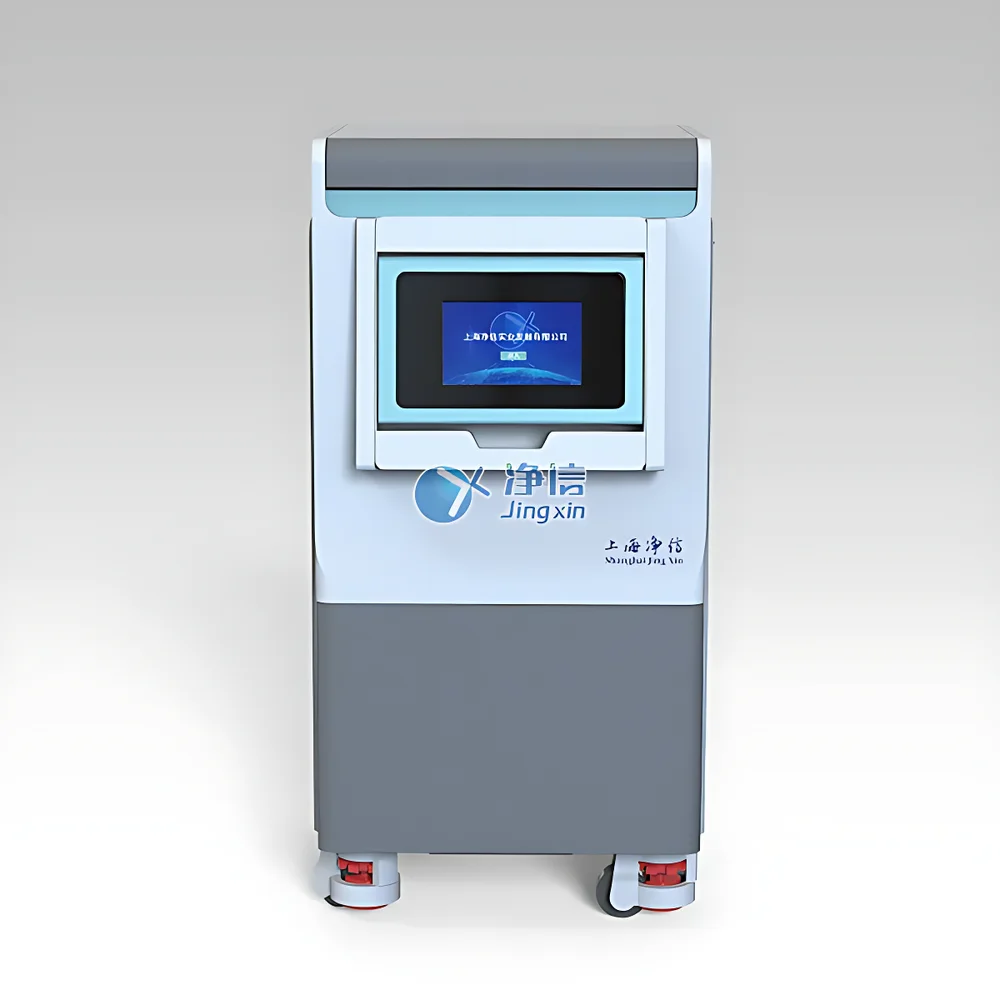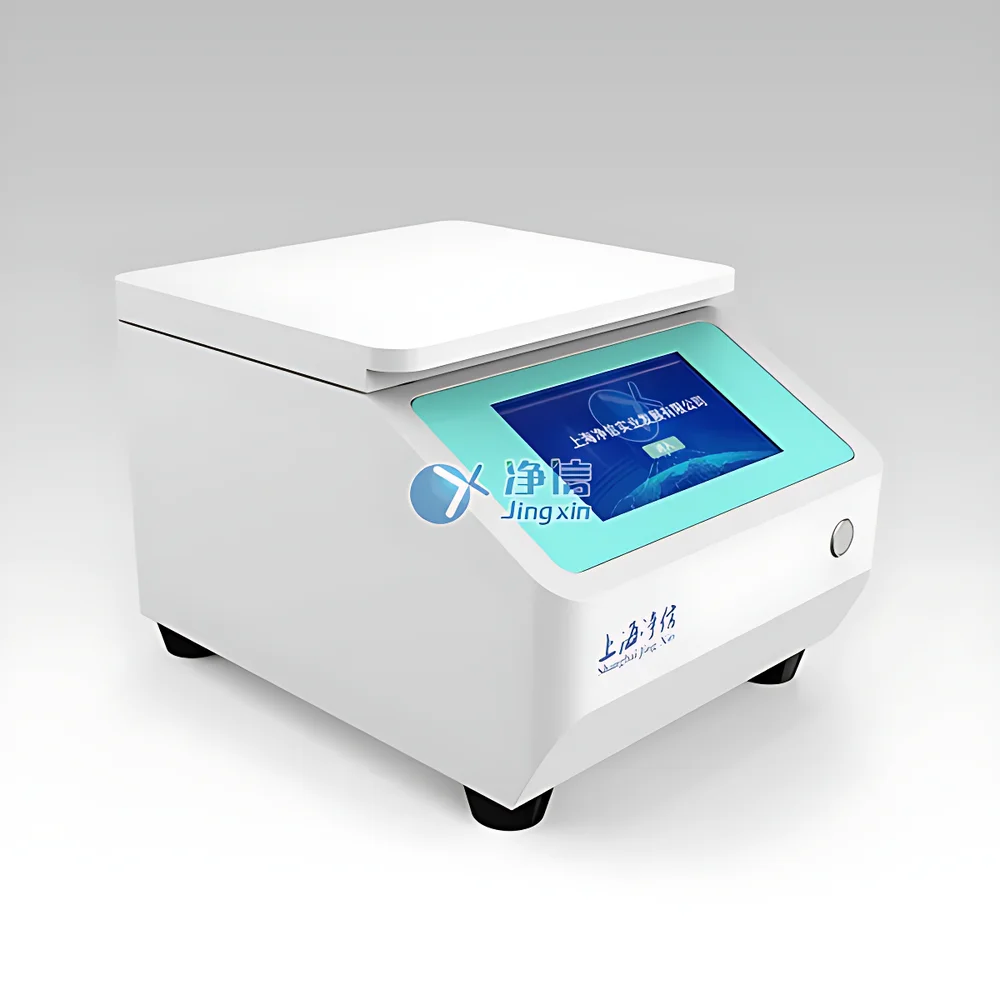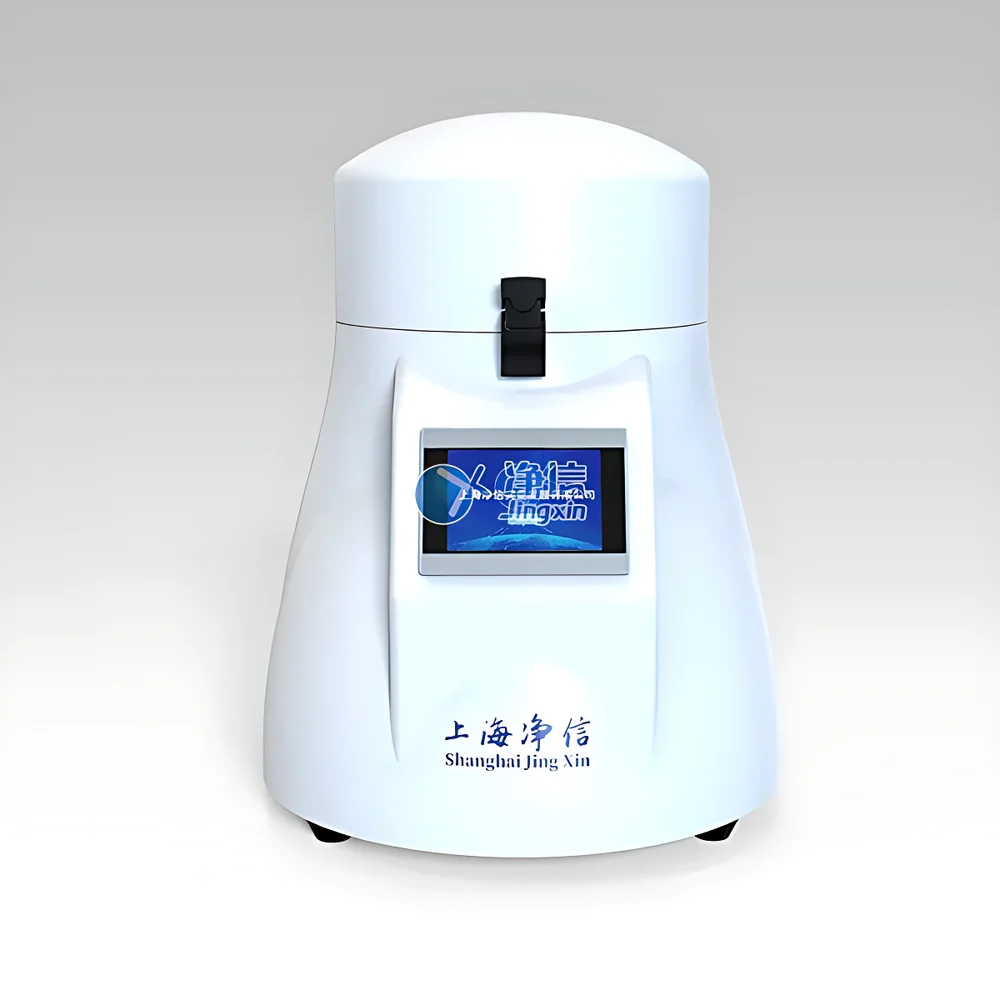
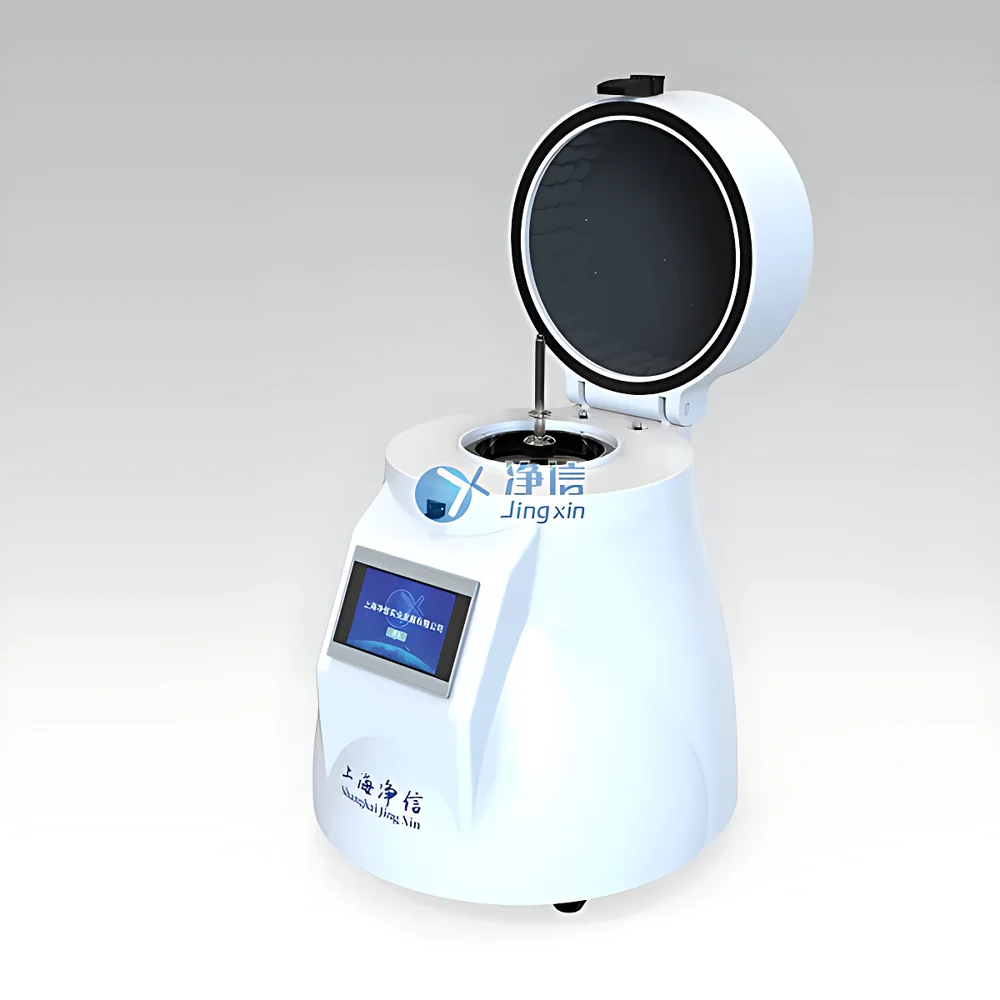
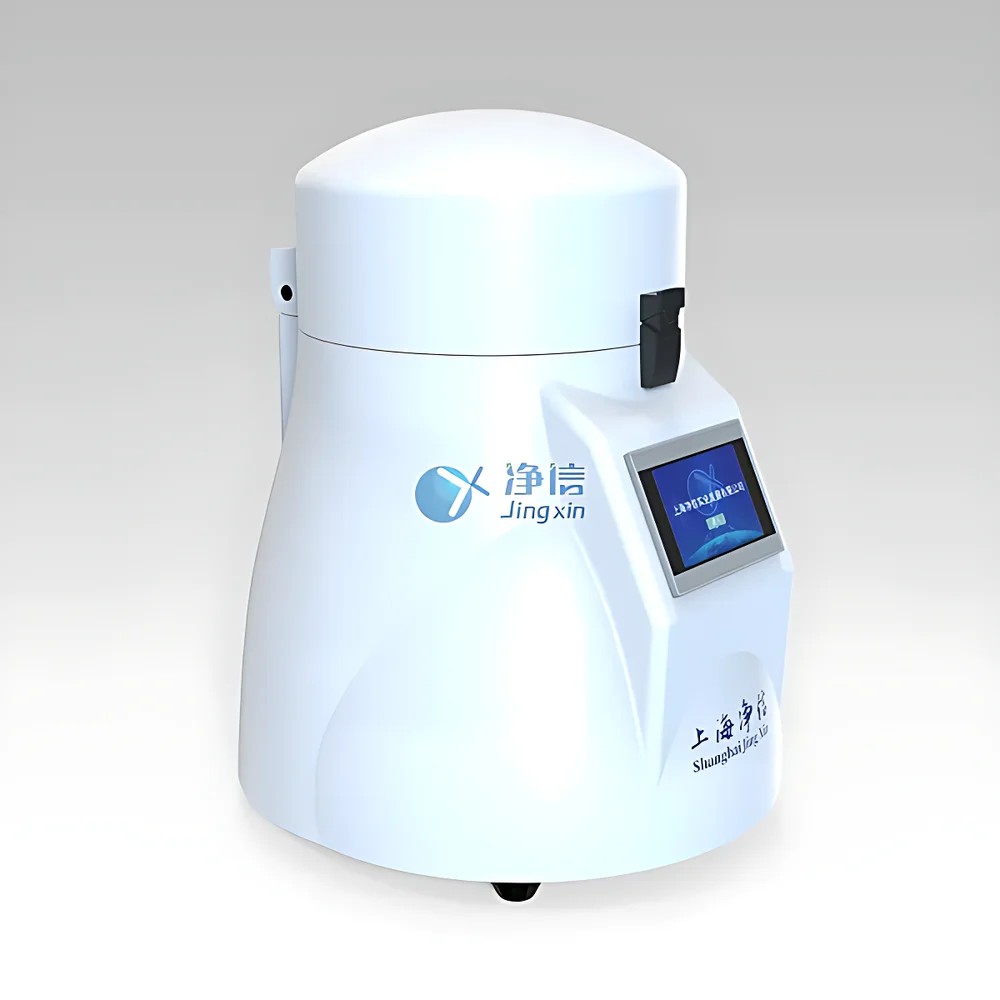
Jingxin JX-24 High-Efficiency Automated Cryogenic Tissue Grinder

| Brand | Jingxin (Shanghai Jingxin Scientific Instrument Co., Ltd.) |
|---|---|
| Origin | Shanghai, China |
| Manufacturer Type | OEM Manufacturer |
| Country of Origin | China |
| Model | JX-24 |
| Pricing | Upon Request |
| Sample Capacity | 24 × 0.2–0.5 mL or 24 × 2 mL tubes |
| Motion Mode | 3D orbital oscillation (figure-eight trajectory) |
| Frequency Range | 0–70 Hz |
| Processing Time | 0–9999 s (user-programmable) |
| Acceleration | Achieves target frequency within 2 s |
| Final Particle Size | ~5 µm |
| Noise Level | <65 dB(A) |
| Grinding Modes | Dry, Wet, and Cryogenic (liquid nitrogen-compatible) |
| Safety Features | Interlocked safety door, physical emergency stop button, sealed-tube operation |
| Drive System | Brushless pulsed DC motor |
| Dimensions (W×D×H) | 380 × 380 × 500 mm |
| Auto-centering clamping mechanism | Yes |
Ask about pricing, availability and specifications.
Overview
The Jingxin JX-24 High-Efficiency Automated Cryogenic Tissue Grinder is an engineered solution for high-throughput, reproducible mechanical lysis of biological and environmental samples. It operates on the principle of high-frequency 3D orbital oscillation—where sample tubes undergo controlled figure-eight motion in three spatial axes—enabling uniform kinetic energy transfer via grinding beads. This motion profile ensures consistent bead-to-sample impact frequency and shear force distribution across all positions, minimizing positional bias and maximizing homogenization efficiency. Unlike rotary or reciprocating grinders, the JX-24’s triaxial vibration architecture eliminates centrifugal stratification and tube slippage, making it especially suitable for low-volume, high-value samples such as frozen tissues, microbial pellets, and soil microbiomes. Designed for integration into genomic, proteomic, and metabolomic workflows, the instrument supports rapid cell disruption while preserving nucleic acid integrity (yielding longer fragments) and native protein conformation (enhancing specific activity post-extraction).
Key Features
- High-throughput capability: Simultaneous processing of up to 24 samples in ≤60 seconds, with programmable time resolution down to 1 second.
- Cryogenic compatibility: Fully supports liquid nitrogen-cooled adapters (12-position and 24-position variants), enabling sub-zero grinding to inhibit nuclease/protease activity and prevent thermal degradation.
- Sealed-tube operation: All sample tubes remain hermetically closed during grinding—eliminating cross-contamination between samples and protecting operators from aerosolized biohazards.
- Precision motion control: Digital frequency regulation (0–70 Hz) with <2-second ramp-up response; auto-centering clamping ensures mechanical alignment stability across repeated cycles.
- Integrated safety architecture: Electromechanical interlock prevents operation unless the safety door is fully latched; dedicated hardware emergency stop button provides immediate motor cutoff independent of software state.
- Low-noise, maintenance-free drive: Brushless pulsed DC motor delivers stable torque output over extended duty cycles, with acoustic emission maintained below 65 dB(A) under standard operating conditions.
Sample Compatibility & Compliance
The JX-24 accommodates diverse sample types—including mammalian tissues, plant roots/leaves, fungal mycelia, bacterial cell pellets, yeast, spores, archived fossil specimens, and environmental matrices (e.g., soil, sediment, compost). Tube formats include standard 0.2–0.5 mL PCR strips, 2 mL microcentrifuge tubes, and custom-configured vessels (subject to mechanical fit verification). The system complies with ISO 13485-aligned manufacturing practices and meets general laboratory equipment safety requirements per IEC 61010-1:2010. While not certified for clinical diagnostics (IVDR/CE-IVD), its design supports GLP-compliant documentation when paired with validated SOPs and audit-trail-capable LIMS interfaces.
Software & Data Management
The onboard controller features a tactile membrane keypad and LCD display for local parameter configuration: grinding frequency (Hz), duration (s), pause intervals (optional), and pre-cooling delay (for cryo protocols). No external PC or proprietary software is required for routine operation. For traceability, users may manually log method IDs, operator initials, and batch numbers. Though the device lacks built-in data export or electronic signature functionality, its deterministic mechanical behavior—combined with fixed-frequency calibration points—ensures method reproducibility across instruments and laboratories. Integration with third-party ELN systems is feasible via timestamped manual entry or optional RS-232/USB logging modules (available upon request).
Applications
- Routine DNA/RNA extraction from fibrous or lipid-rich tissues (e.g., liver, brain, adipose) where enzymatic or sonication methods yield incomplete lysis.
- Microbial community analysis: Efficient disruption of Gram-positive bacteria and archaeal cells resistant to chemical lysis alone.
- Plant metabolomics: Homogenization of polyphenol- and polysaccharide-rich samples without significant oxidation or gel formation.
- Biobanking: Standardized cryo-grinding of archived tissues to ensure inter-batch comparability in longitudinal studies.
- Quality control in biomanufacturing: Rapid lot-release testing of cell culture harvests for intracellular product recovery assessment.
FAQ
What types of grinding beads are compatible with the JX-24?
Stainless steel, tungsten carbide, zirconium oxide, and ceramic beads (0.1–2.0 mm diameter) are supported; bead material selection must align with downstream analytical requirements (e.g., avoid metal contamination in ICP-MS workflows).
Can the JX-24 be used for hard materials like bone or teeth?
Yes—when combined with cryogenic cooling and appropriate bead size/composition (e.g., 1.4 mm stainless steel), the instrument achieves effective pulverization of mineralized tissues; however, extended runtimes (>3 min) may accelerate wear on polymer adapter components.
Is validation support available for regulated environments?
Jingxin provides basic IQ/OQ documentation templates and factory calibration certificates; full PQ execution requires user-defined acceptance criteria and in-house protocol development per ISO/IEC 17025 or FDA 21 CFR Part 11 expectations.
How often does the drive motor require servicing?
The brushless DC motor is rated for >20,000 hours of continuous operation; no scheduled maintenance is specified beyond periodic inspection of clamping mechanisms and vibration-dampening feet.
Does the instrument meet electromagnetic compatibility (EMC) standards for shared lab environments?
It conforms to EN 61326-1:2013 for laboratory-use electrical equipment, including radiated and conducted emissions limits, ensuring coexistence with sensitive instrumentation such as mass spectrometers and patch-clamp amplifiers.