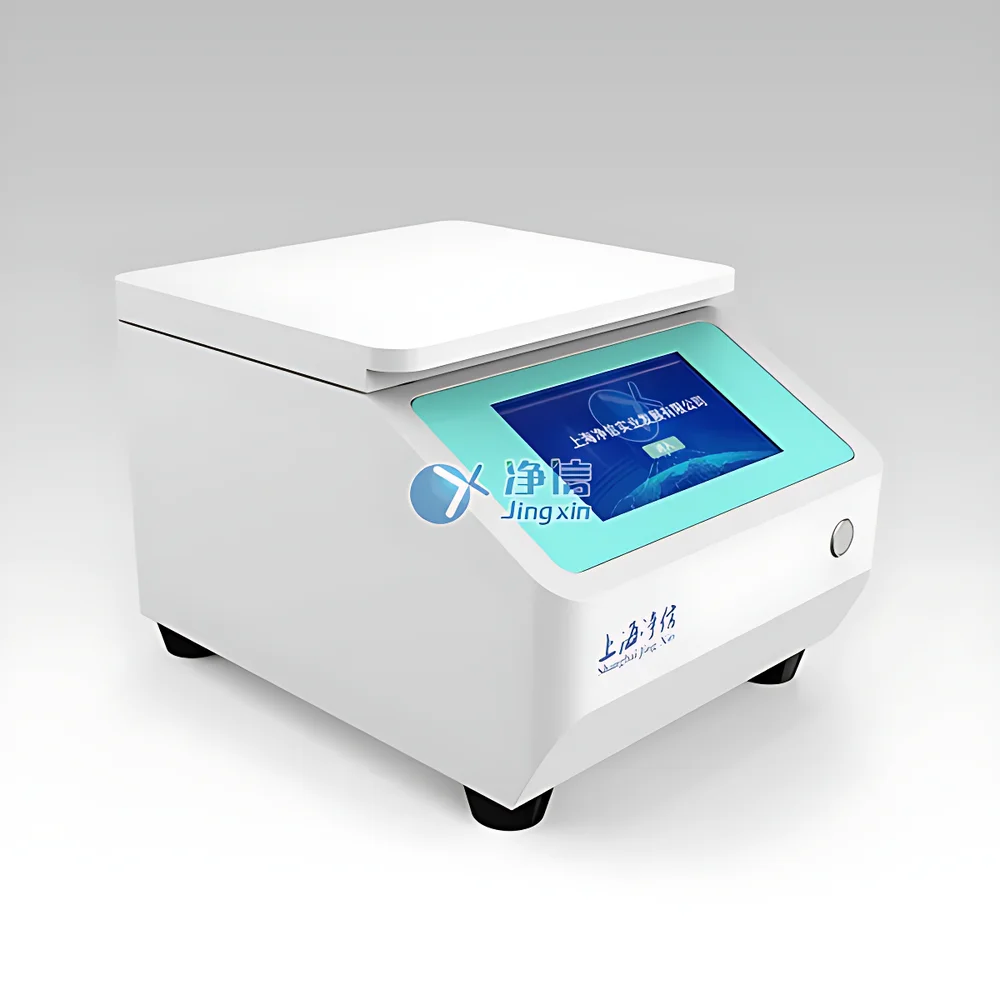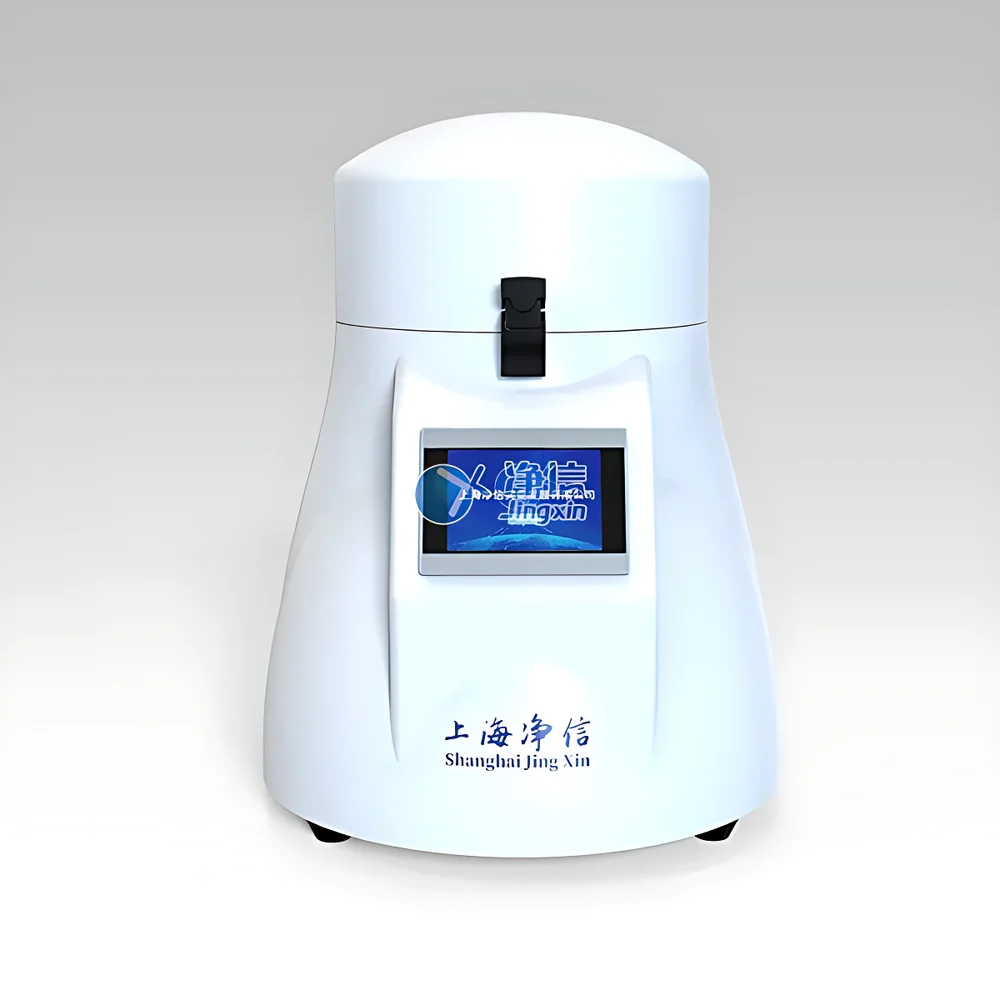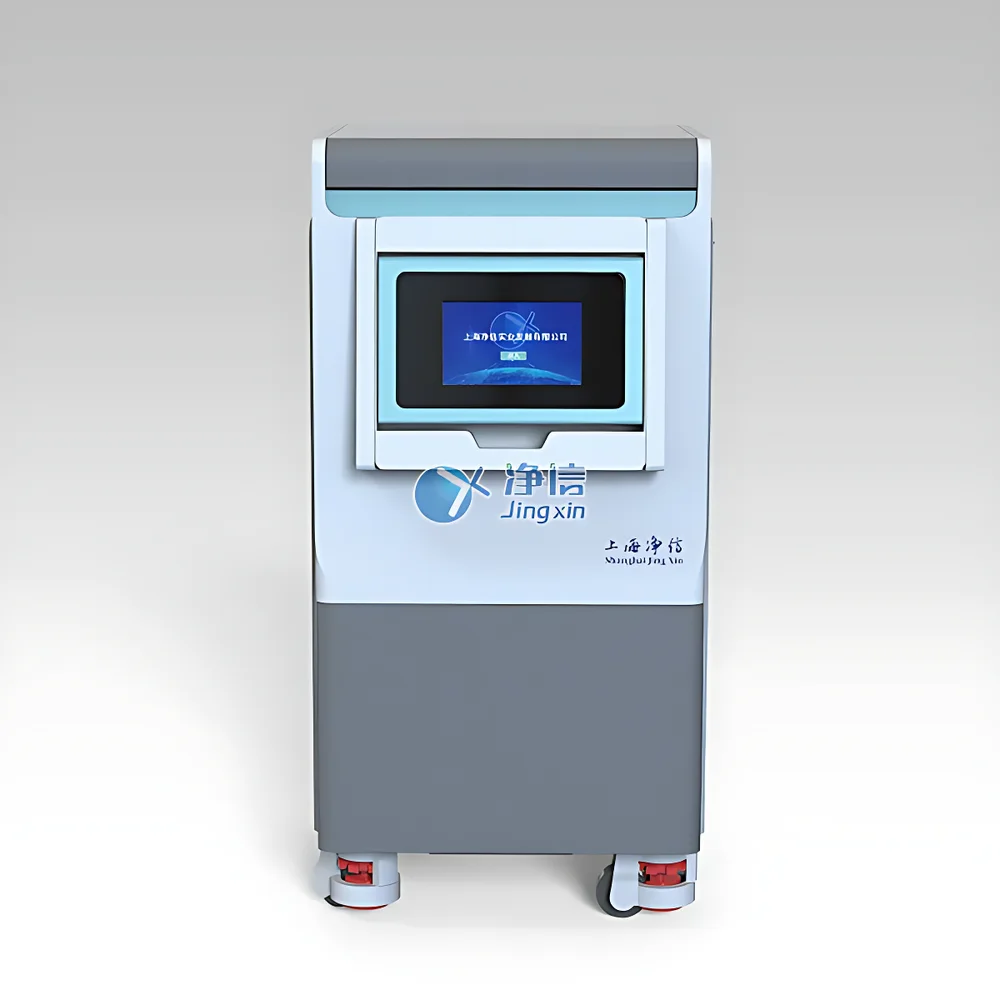
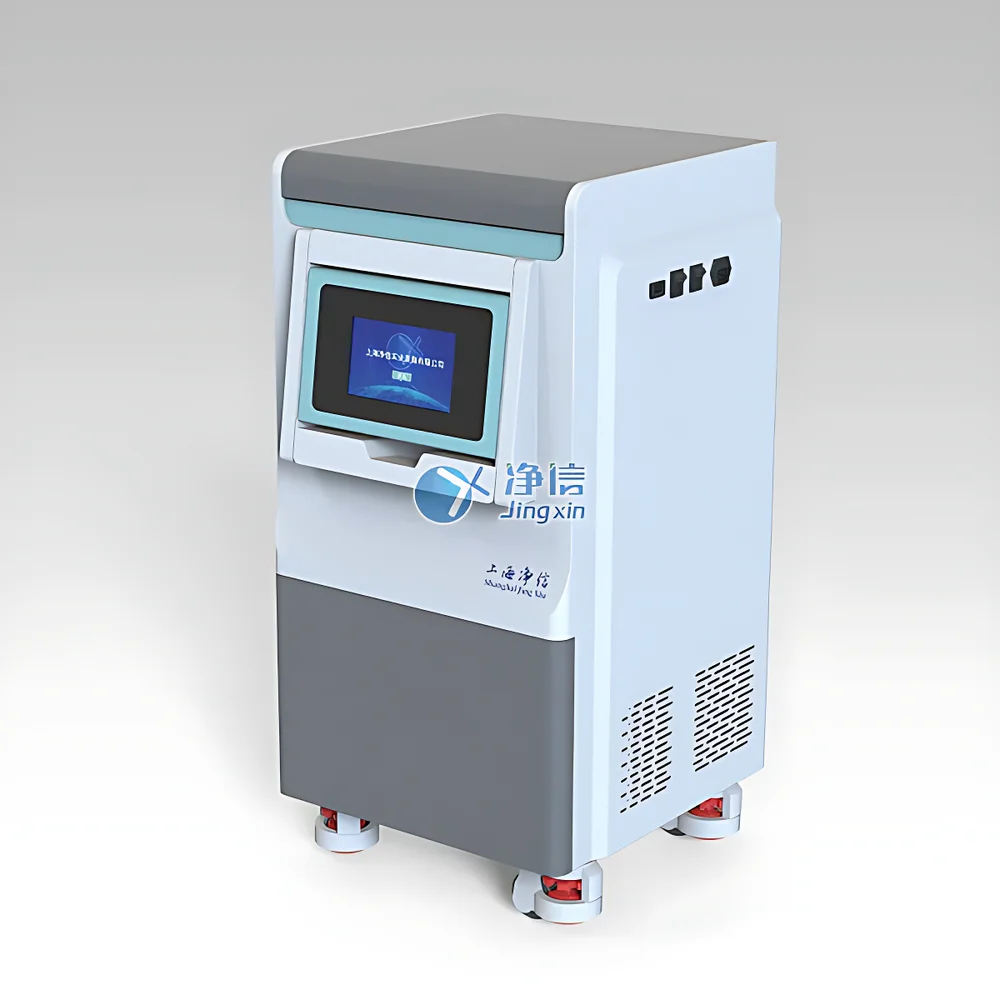
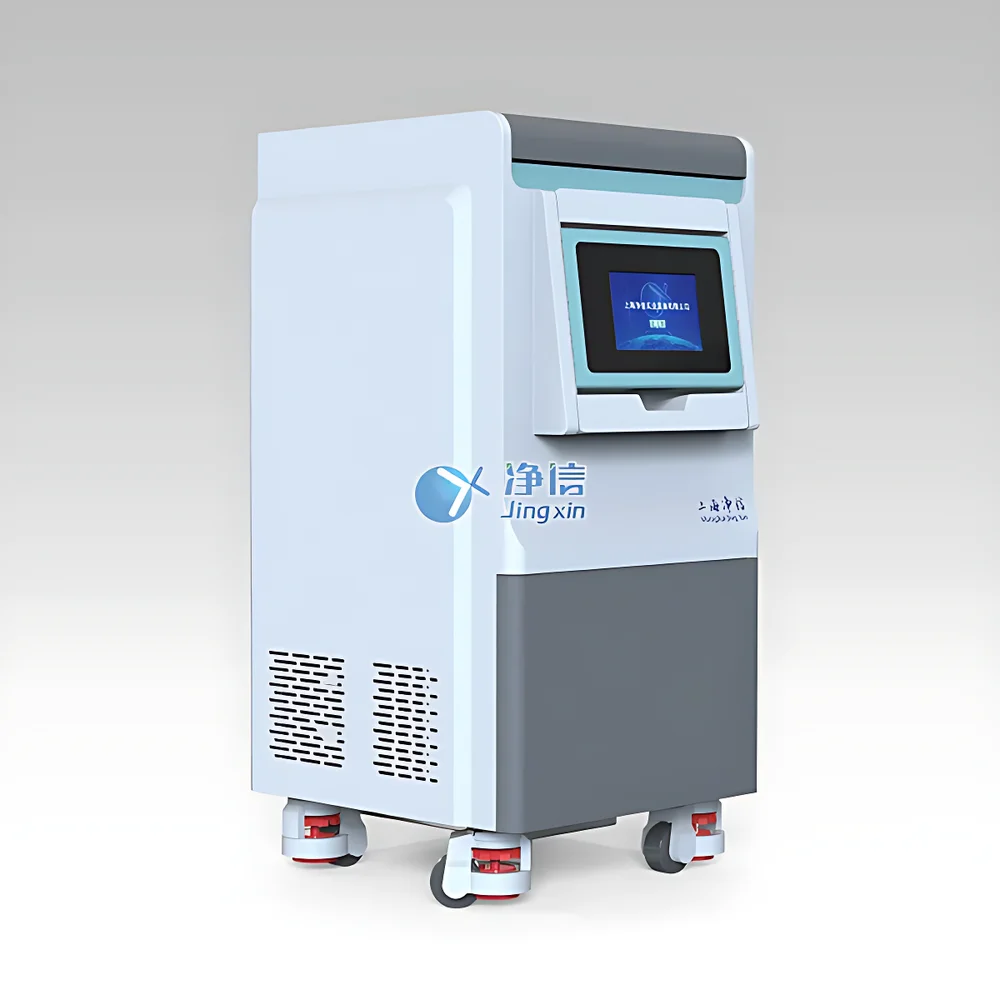
Jingxin JXFSTPRP-192CL High-Speed Cryogenic Grinding and Homogenization System

| Brand | Jingxin (Shanghai Jingxin Scientific Instrument Co., Ltd.) |
|---|---|
| Origin | Shanghai, China |
| Manufacturer Type | Original Equipment Manufacturer (OEM) & Direct Producer |
| Instrument Type | Cryogenic Benchtop Grinder/Homogenizer |
| Sample Compatibility | Frozen, heat-sensitive, brittle, fibrous, and tough biological & non-biological materials |
| Output Particle Size | ~5 µm (typical median) |
| Input Particle Size | No restriction (compatible with whole tissues, pellets, powders, or chunks) |
| Throughput Capacity | Up to 192 × 2 mL tubes, 96-well plates, 48 × 5 mL tubes, 32 × 7–15 mL tubes, 16 × 50 mL tubes, 8 × 100 mL tubes, or dual 25/50 mL stainless-steel jars |
| Cooling Range | –50 °C to ambient |
| Vibration Frequency | 0–70 Hz |
| Noise Level | <45 dB(A) |
| Safety | Dual electromagnetic door locks, lid-open auto-stop, IP20-rated enclosure |
| Compliance | Designed for GLP-compliant workflows |
Ask about pricing, availability and specifications.
Overview
The Jingxin JXFSTPRP-192CL is a high-frequency, cryogenically enabled benchtop grinding and homogenization system engineered for reproducible, low-temperature mechanical disruption of diverse sample matrices. It operates on the principle of high-energy vertical oscillation—where samples sealed in cryo-compatible tubes or jars are subjected to rapid, reciprocating motion against grinding media (e.g., stainless steel, zirconia, or tungsten carbide beads), inducing impact, shear, and compressive forces sufficient to fracture cellular structures, disintegrate fibrous tissues, and reduce particulate matter to sub-5 µm median particle size. Unlike rotary or rotor-stator homogenizers, this system eliminates thermal buildup through integrated compressor-based cooling (–50 °C to ambient), preserving labile biomolecules—including native RNA integrity, phosphorylated proteins, and epigenetic markers—during rapid (<60 s) multi-sample processing. Its architecture supports unattended, parallel preparation of up to 192 samples per run, making it suitable for high-throughput applications in molecular biology, agricultural residue analysis, pharmaceutical QA/QC, and environmental monitoring laboratories.
Key Features
- Vertical oscillation mechanism ensures uniform energy transfer across all tube positions, minimizing inter-sample variability and enhancing reproducibility (CV < 5% for RNA yield across replicate tissue homogenates).
- Programmable three-stage operation mode: users define acceleration ramp, main grinding phase, and deceleration profile—each with independent frequency, duration, and pause intervals (1–600 s inter-cycle delay).
- Intelligent touchscreen interface with password-protected parameter storage (up to 20 user-defined protocols), real-time vibration frequency display, and event logging (start/stop timestamps, error codes, temperature history).
- Dual electromagnetic safety locks rated at 60 kg holding force; automatic motor cutoff upon lid detection failure or thermal overload (>65 °C internal cabinet temp).
- Modular adapter system accommodates standardized formats: 192 × 2 mL deep-well plates, 96 × 2 mL PCR tubes, 48 × 5 mL conical tubes, 32 × 7–15 mL tubes, 16 × 50 mL centrifuge tubes, 8 × 100 mL bottles, and dual 25/50 mL stainless-steel grinding jars.
- Acoustically damped metal chassis reduces operational noise to <45 dB(A), enabling installation in shared lab spaces without acoustic isolation requirements.
Sample Compatibility & Compliance
The JXFSTPRP-192CL processes a broad spectrum of challenging matrices without pre-cutting or pre-freezing: fresh/frozen animal tissues (liver, brain, muscle), plant organs (roots, leaves, seeds), microbial cultures (E. coli, yeast, filamentous fungi), forensic specimens, polymer composites (PE, PS, PET), coal and shale, pharmaceutical tablets, and volatile organics (waxes, resins). Its cryogenic capability satisfies ASTM D7269 (standard practice for cryogenic grinding of polymers) and supports ISO 22174:2017 (nucleic acid extraction from complex biological samples). The fully enclosed grinding chamber prevents aerosol generation and cross-contamination—critical for regulated environments requiring adherence to CLIA, GLP, or GMP standards. Tube retention fixtures employ a spring-loaded “snap-fit” compression design to prevent tube rupture under high-frequency stress, validated per IEC 61000-4-2 ESD immunity testing.
Software & Data Management
While the instrument operates standalone via its embedded controller, optional Ethernet/USB connectivity enables integration with LIMS and ELN platforms. Audit-trail functionality logs operator ID, protocol name, timestamped start/stop events, actual vs. setpoint temperature and frequency, and door-open incidents—fully traceable for 21 CFR Part 11 compliance when paired with validated third-party electronic signature modules. Raw log files export in CSV format; no proprietary binary formats are used. Firmware updates are performed via secure HTTPS download and digital signature verification.
Applications
- Molecular biology: High-yield, inhibitor-free lysis of mammalian, plant, and microbial cells prior to DNA/RNA/protein extraction—particularly critical for FFPE, adipose, or lignin-rich samples.
- Residue analysis: Accelerated homogenization of food, feed, and environmental samples (soil, sediment) for pesticide (e.g., organophosphates), veterinary drug (e.g., fluoroquinolones), and mycotoxin quantification per AOAC 2007.01 and EN 15662:2018 protocols.
- Materials science: Nanoscale dispersion of fillers (carbon black, silica) in polymer melts; particle size reduction of battery cathode precursors (LiCoO₂, NMC).
- Clinical diagnostics: Standardized tissue pulverization for biomarker discovery workflows, including phosphoproteomics and metabolomics where thermal degradation must be avoided.
- Pharmaceutical development: Uniform blending of active pharmaceutical ingredients (APIs) with excipients at cryogenic temperatures to suppress polymorphic transition.
FAQ
What is the minimum sample volume per tube required for effective homogenization?
For optimal energy transfer, ≥100 µL liquid-phase or ≥20 mg solid-phase material is recommended per 2 mL tube. Lower volumes may require bead-to-sample ratio optimization.
Can the system accommodate custom tube formats not listed in the standard adapter catalog?
Yes—Jingxin offers OEM adapter engineering services; lead time is typically 4–6 weeks for mechanical validation and thermal compatibility testing.
Is the –50 °C cooling capacity maintained during extended 9999-second runs?
The compressor maintains setpoint within ±2 °C over continuous 30-minute operation under full 192-tube load; ambient temperature must remain ≤25 °C and humidity <60% RH.
How does the system ensure compliance with ISO/IEC 17025 method validation requirements?
Each unit ships with a factory-verified calibration certificate (traceable to NIST standards) covering frequency accuracy (±0.5 Hz), temperature uniformity (±1.5 °C across chamber), and acoustic emission—supporting Method Validation Annex A.2 documentation.
Are grinding beads included with purchase, or sold separately?
Beads are optional accessories; stainless steel (1.5–3 mm), zirconia (0.1–2 mm), and tungsten carbide (3–8 mm) sets are available in certified lot-controlled packaging with CoA for heavy-metal leach testing.