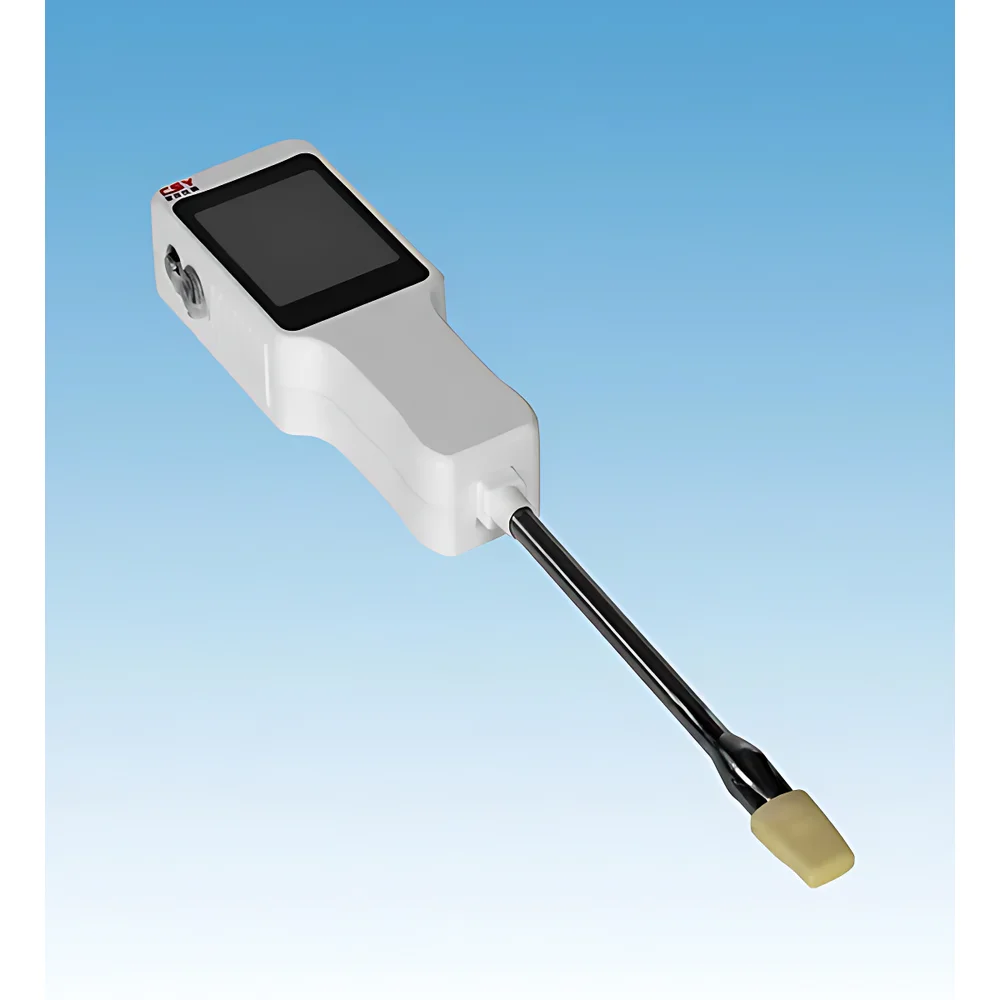
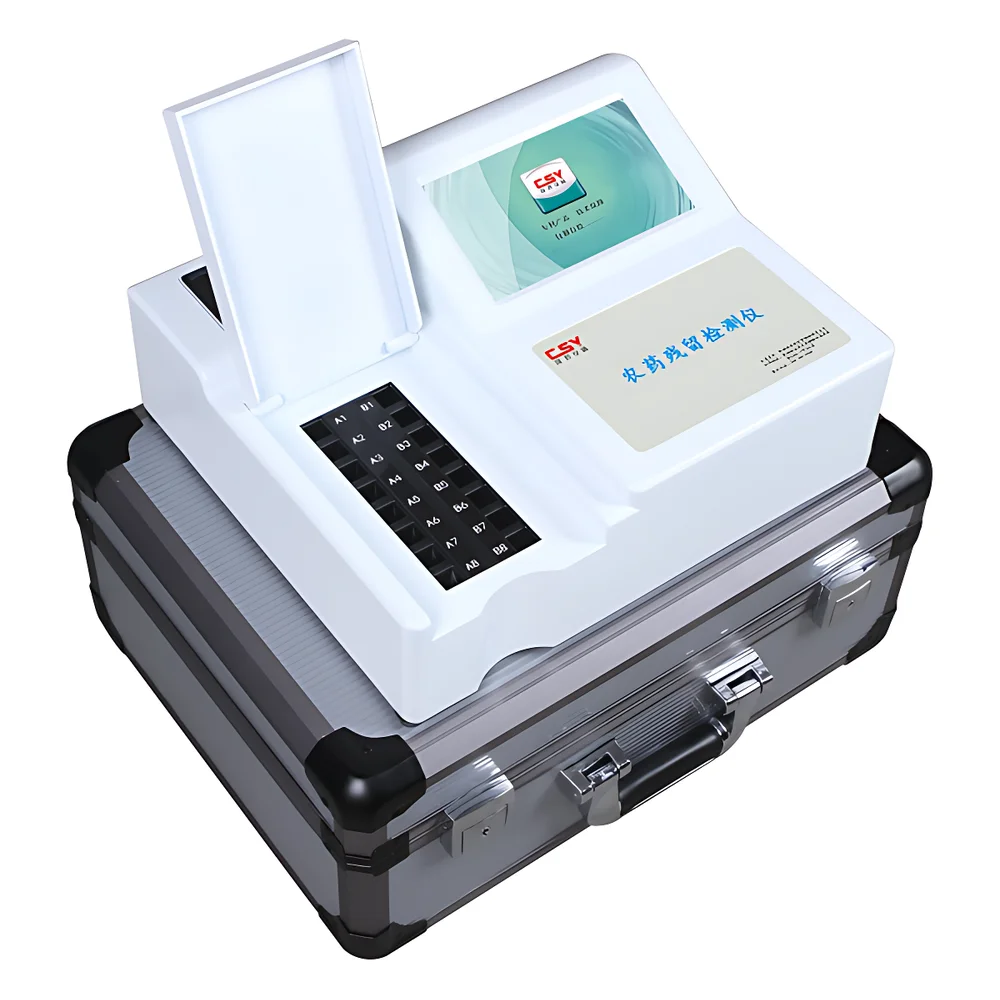
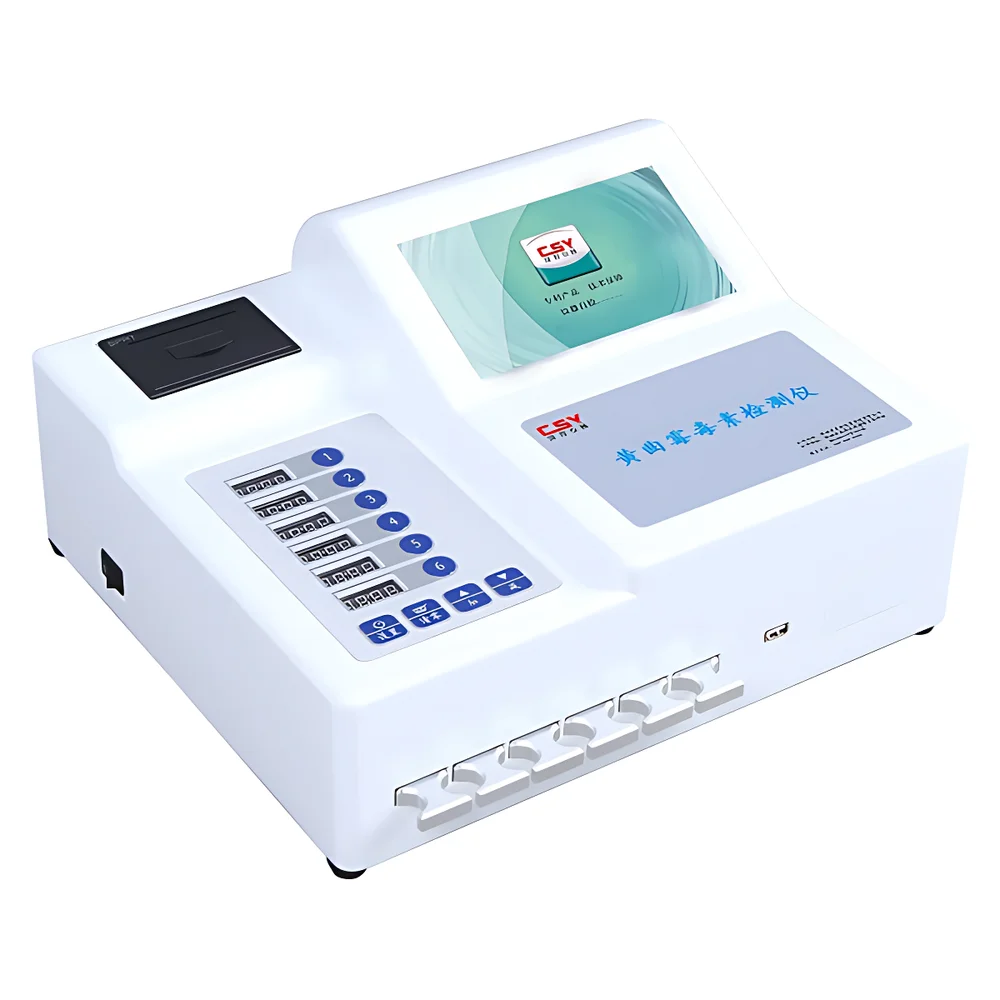
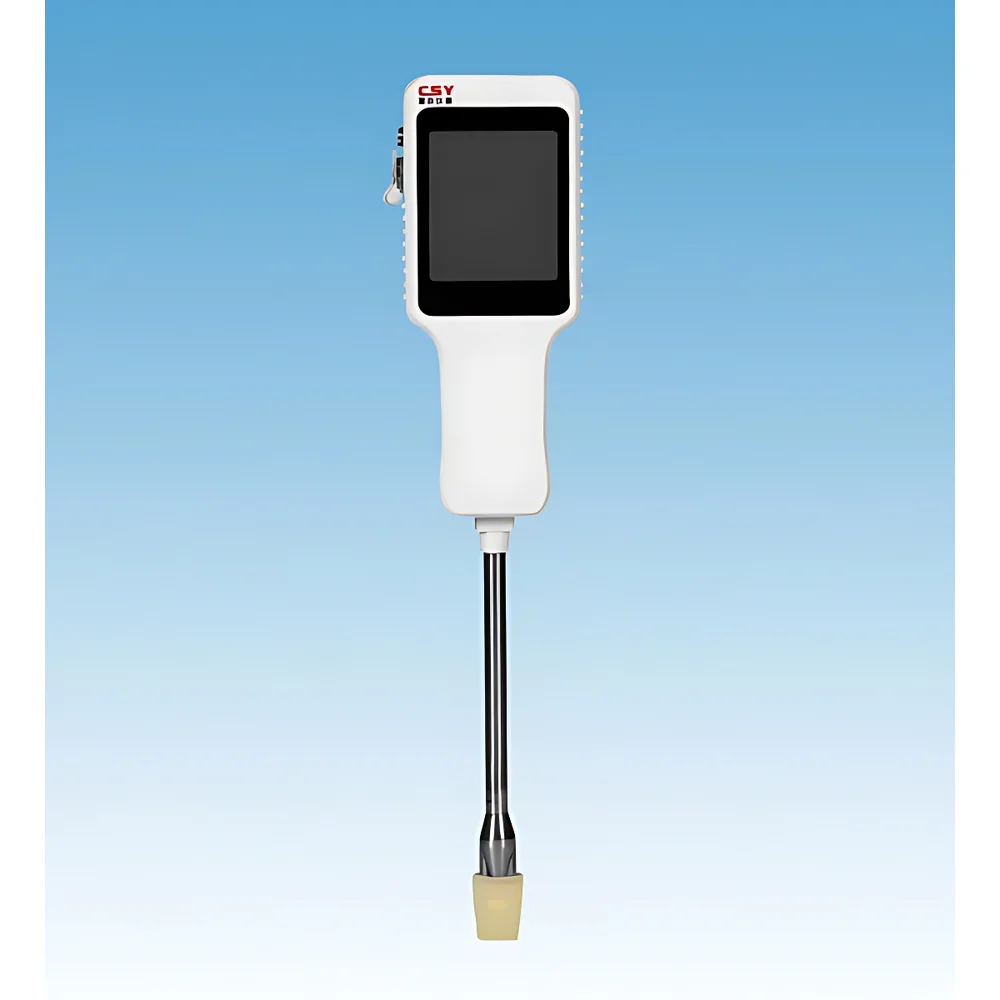
CSY-SLX Chenhua Grain Rapid Detection Analyzer by CSY Instrument

| Brand | CSY Instrument |
|---|---|
| Origin | Shenzhen, China |
| Model | CSY-SLX |
| Detection Channels | 10–20 |
| Wavelength Range | Not specified (optical absorbance-based) |
| Detection Time | <10 min per sample (typical for enzymatic/colorimetric assays) |
| Repeatability | ≤±1% T (transmittance) |
| Temperature Incubation Range | 25–45 °C |
| Display | ≥7-inch capacitive touchscreen |
| Interface | RS-232, USB, Wi-Fi, Ethernet |
| Linearity Error | ≤±5% |
| Photometric Accuracy | ≤±1% T |
| Photometric Stability | ≤±1% T / 3 min |
| Software | Integrated digital LIMS-ready backend for user/project/sample management |
Ask about pricing, availability and specifications.
Overview
The CSY-SLX Chenhua Grain Rapid Detection Analyzer is a dedicated optical benchtop analyzer engineered for the rapid, on-site assessment of rice aging and oxidative deterioration in cereal-based food matrices. It operates on the principle of quantitative colorimetric and enzymatic assay detection—measuring characteristic chromophore formation (e.g., malondialdehyde–thiobarbituric acid adducts), carbonyl content, or peroxide value–derived absorbance changes at defined wavelengths. Unlike general-purpose spectrophotometers, the CSY-SLX integrates temperature-controlled incubation, multi-channel simultaneous measurement, and assay-specific calibration logic to deliver standardized, reproducible results aligned with national grain quality grading protocols (e.g., GB/T 20569–2006 for aged rice identification). Designed for QC laboratories, grain procurement centers, and food safety inspection stations, it enables objective discrimination between freshly milled rice, stored rice, and severely oxidized “chenhua” (aged/stale) grain—supporting compliance with China’s Regulations on Grain Quality and Safety Supervision and international food authenticity frameworks.
Key Features
- Multi-Channel Parallel Detection: 10–20 independent optical channels enable concurrent analysis of multiple samples or replicate assay conditions—reducing batch testing time and improving throughput for high-volume screening.
- Integrated Temperature-Controlled Incubation: Precise thermal regulation from 25 °C to 45 °C ensures optimal reaction kinetics for enzymatic and derivatization-based assays (e.g., TBA-MDA, carbonyl DNPH), minimizing inter-laboratory variability.
- High Photometric Performance: Optical system calibrated to ≤±1% transmittance accuracy and ≤±1% T stability over 3 minutes—meeting minimum performance thresholds for regulatory-grade food chemistry analyzers per ISO 8549 and GB/T 21303.
- Modular Assay Workflow Support: Pre-configured templates for common rice aging markers (peroxide value, free fatty acid, conjugated dienes, TBARS); users may define custom calibrations via the embedded LIMS-ready software interface.
- Robust Connectivity Architecture: Dual wired (RS-232, Ethernet) and wireless (Wi-Fi, USB host/device) interfaces support seamless integration into centralized data networks, enabling remote monitoring, automated report generation, and audit-trail-compliant data archiving.
- Human-Centric Operation: 7-inch industrial-grade capacitive touchscreen with intuitive icon-driven navigation; supports multi-user role assignment (admin, operator, reviewer) with password-protected access levels.
Sample Compatibility & Compliance
The CSY-SLX is validated for homogenized aqueous extracts and organic solvent supernatants derived from milled rice, rice flour, rice noodles, glutinous rice cakes (nian gao), and tangyuan. Sample preparation follows AOAC Official Method 971.21–based extraction protocols, with built-in validation checks for turbidity interference and matrix blank correction. The instrument conforms to electromagnetic compatibility (EMC) standards GB/T 18268.1 and safety standard GB 4793.1. While not certified under FDA 21 CFR Part 11 out-of-the-box, its audit-log functionality (user actions, timestamped result exports, calibration history) provides foundational traceability required for GLP-aligned operations and third-party accreditation (e.g., CNAS, CMA).
Software & Data Management
The embedded Linux-based firmware hosts a full-featured laboratory information management system (LIMS) module. Users can create and manage hierarchical databases for test items (e.g., “TBARS-Rice”, “FFA-Flour”), sample groups (e.g., “Q3-2024-Procurement-Batch”), and personnel profiles with granular permission settings. All measurements are automatically timestamped and tagged with operator ID, assay protocol version, and environmental metadata (ambient temperature, humidity if sensor-equipped). Data export supports CSV, PDF, and XML formats; cloud synchronization is configurable via secure HTTPS or SFTP. Audit trails comply with ALCOA+ principles—ensuring Attributable, Legible, Contemporaneous, Original, Accurate, Complete, Consistent, Enduring, and Available records for internal QA reviews or regulatory inspections.
Applications
- Rapid screening of paddy and milled rice lots for oxidative rancidity prior to storage or sale
- Verification of shelf-life claims for ready-to-cook rice products and frozen rice desserts
- Monitoring lipid oxidation kinetics during accelerated aging studies (e.g., 40 °C/75% RH storage)
- Supporting HACCP critical control point verification at milling and packaging facilities
- Field-deployable verification of grain quality in rural procurement hubs lacking wet-lab infrastructure
- Training and proficiency testing for food safety inspectors under provincial grain bureau programs
FAQ
What types of rice-based samples can be analyzed without modification?
Rice kernels, polished rice flour, cooked rice slurries, and homogenized rice noodle/tangyuan extracts—provided they undergo standardized solvent extraction (e.g., chloroform–methanol or trichloroacetic acid) per included SOPs.
Is method validation documentation provided with the instrument?
Yes: Certificate of Conformance, factory calibration report, and a technical validation package—including precision (within-run/between-day CVs), linearity (5-point calibration curve R² ≥0.995), and specificity data against interfering starches and proteins—is supplied in English and Chinese.
Can the CSY-SLX connect to enterprise LIMS platforms like LabWare or STARLIMS?
Via its RESTful API and configurable HL7/CSV export scheduler, yes—integration requires minimal middleware configuration by the customer’s IT team or CSY’s certified partners.
Does the system support external barcode scanning for sample tracking?
Yes: USB HID-compatible scanners are auto-recognized; scanned IDs populate the “Sample ID” field and trigger pre-assigned assay templates.
What maintenance is required to sustain photometric accuracy?
Annual optical alignment verification using CSY-certified neutral density filters; daily warm-up (15 min) and blank calibration recommended before analytical runs.