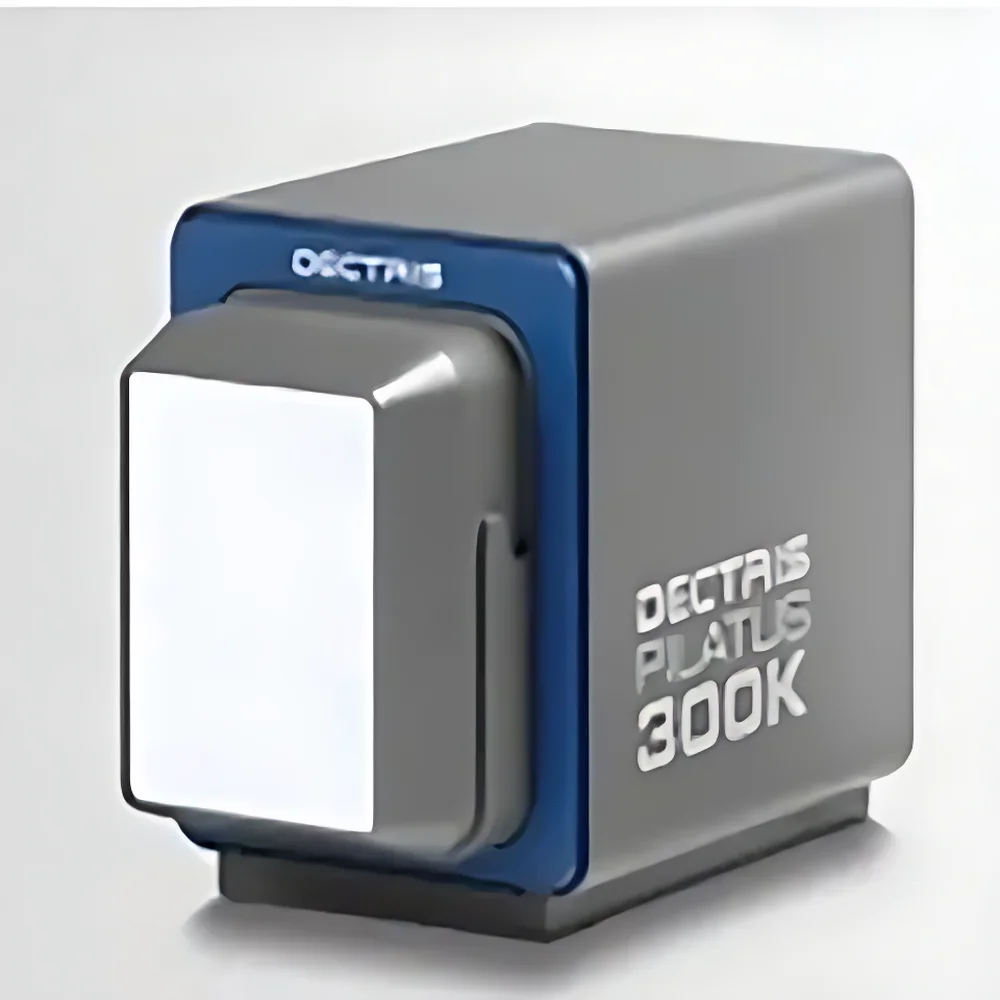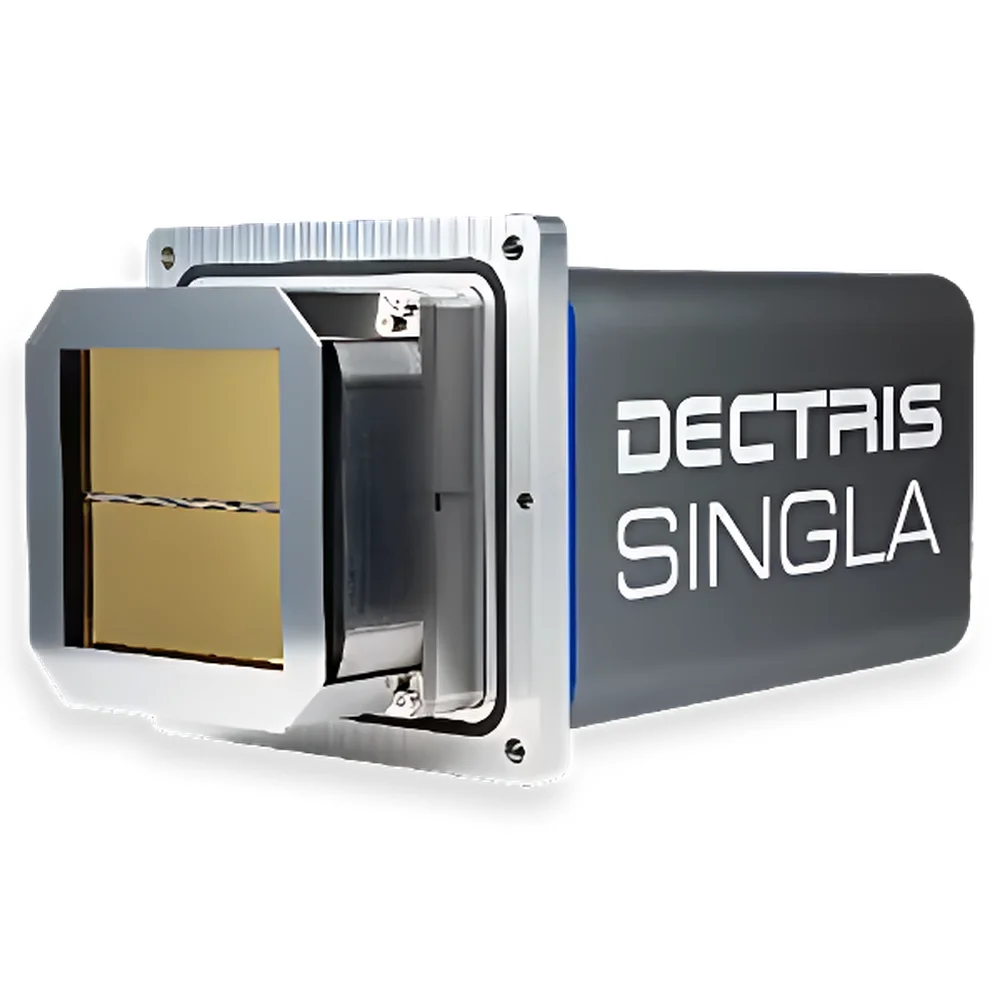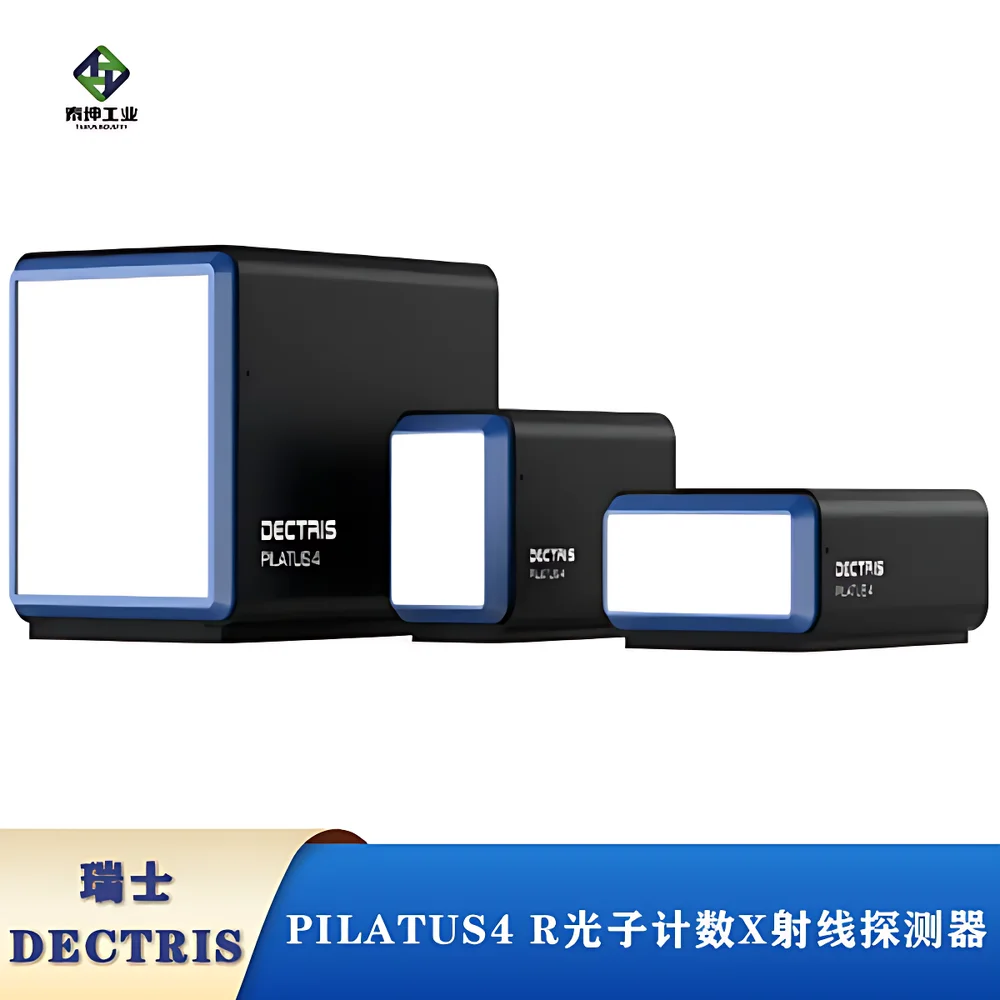
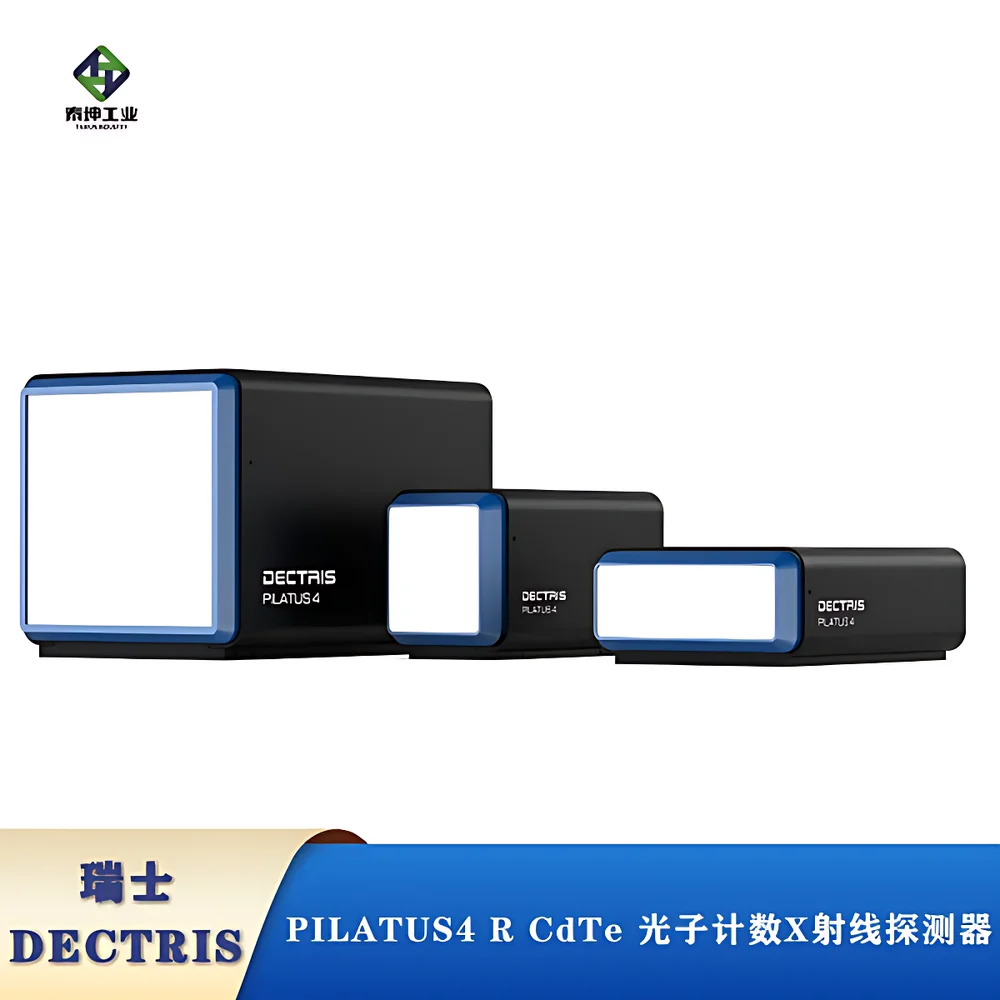
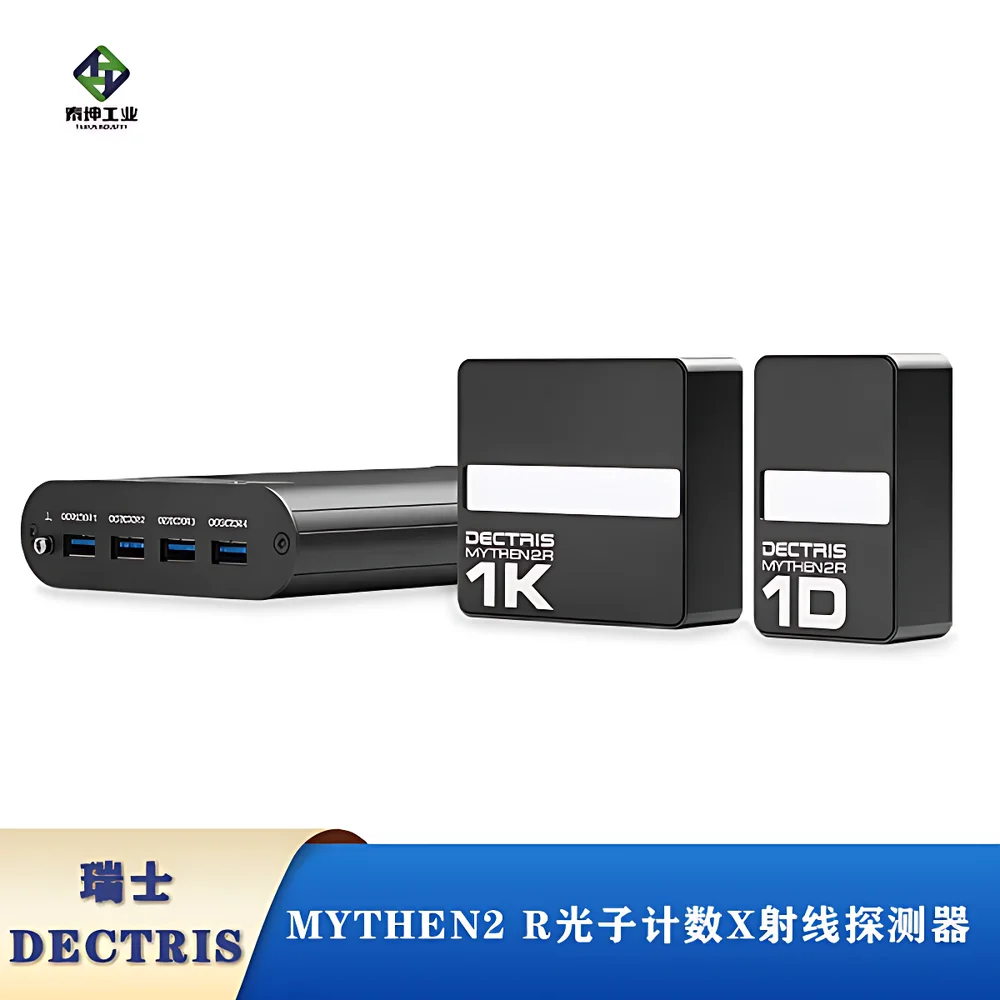
DECTRIS POLLUX High-Energy-Resolution Photon-Counting X-ray Detector

| Brand | DECTRIS |
|---|---|
| Origin | Switzerland |
| Model | POLLUX |
| Instrument Type | Powder X-ray Diffractometer Detector |
| Form Factor | Benchtop |
| Power Consumption | 3000 W |
| Energy Resolution | < 600 eV (FWHM at Mn Kα) |
| Frame Rate | Up to 400 Hz |
| Readout Modes | 2D, 1D, and 0D |
| Active Area | Large-format hybrid pixel array |
| Energy Discrimination | Dual-threshold photon counting |
| Cooling | Passive thermal management |
| Compliance | Designed for integration into ISO/IEC 17025-compliant XRD systems |
| Software Interface | EPICS, TANGO, and vendor-neutral HDF5 output |
Ask about pricing, availability and specifications.
Overview
The DECTRIS POLLUX is a high-energy-resolution, single-photon-counting X-ray detector engineered for demanding laboratory-based X-ray diffraction (XRD) and scattering applications. Built upon DECTRIS’ proprietary hybrid pixel technology, the POLLUX operates on the principle of direct-conversion photon counting with real-time energy discrimination—enabling rejection of fluorescence and Compton-scattered background photons at the hardware level. Unlike integrating detectors that accumulate charge over time, the POLLUX digitally registers each incident X-ray photon above user-defined energy thresholds, delivering intrinsically noise-free, quantitative intensity data. Its design targets the core challenges in modern XRD workflows: low signal-to-background ratio in complex matrices, dynamic range limitations during high-flux measurements, and the need for rapid, reproducible data acquisition without mechanical motion or absorber attenuation. As a benchtop-integrated detector, it is optimized for use with sealed-tube and microfocus X-ray sources, supporting both Bragg–Brentano and parallel-beam geometries typical in powder XRD, residual stress analysis, and reflectivity studies.
Key Features
- High energy resolution (< 600 eV FWHM at Mn Kα) enables precise elemental background suppression and improved peak separation in multi-phase samples.
- Dual-energy threshold discrimination allows real-time rejection of fluorescent radiation and high-energy scatter, significantly enhancing peak-to-background ratios without post-processing.
- Large active area hybrid pixel sensor ensures wide angular coverage and high solid-angle collection efficiency—reducing scan time while preserving statistical fidelity.
- Frame rates up to 400 Hz support rapid scanning protocols, time-resolved experiments, and high-throughput screening of combinatorial libraries or in situ reaction monitoring.
- Multi-mode readout (2D imaging, 1D line integration, and 0D point detection) provides flexibility across application domains—from full-pattern Rietveld refinement to grazing-incidence reflectivity profiling.
- Passive thermal management and radiation-hardened ASIC architecture ensure long-term stability and operational reliability in continuous-duty lab environments.
Sample Compatibility & Compliance
The POLLUX detector is compatible with standard Cu Kα, Mo Kα, and Cr Kα laboratory X-ray sources, as well as synchrotron beamlines operating in the 4–25 keV range. It supports samples in powder, thin-film, bulk, and liquid-cell configurations—making it suitable for phase identification, crystallite size/strain analysis, epitaxial layer characterization, and nanoscale structural investigations. The detector’s firmware and data acquisition architecture are designed to meet traceability requirements under GLP and GMP frameworks. Raw data output conforms to HDF5 standards with embedded metadata (wavelength, geometry, exposure time, energy thresholds), facilitating audit-ready documentation per FDA 21 CFR Part 11 and ISO/IEC 17025 guidelines. No internal moving parts or consumables eliminate calibration drift and reduce maintenance overhead.
Software & Data Management
POLLUX integrates natively with industry-standard control environments including EPICS and TANGO, enabling seamless incorporation into automated diffractometer platforms. Vendor-provided software tools support real-time visualization, energy-gated histogramming, and on-the-fly background subtraction. All acquired frames are stored in self-describing HDF5 files containing calibrated intensity, pixel position, and energy-tagged event lists—ensuring full reproducibility and compatibility with third-party analysis packages such as GSAS-II, TOPAS, and PyFAI. Optional API access permits custom scripting for machine learning–driven pattern classification or adaptive acquisition logic. Audit trails record all parameter changes, user logins, and acquisition timestamps—supporting regulatory compliance in pharmaceutical and materials certification labs.
Applications
- Powder X-ray diffraction (PXRD) for quantitative phase analysis, crystallinity assessment, and lattice parameter refinement.
- Residual stress mapping via sin²ψ analysis using high-angular-resolution Debye–Scherrer rings.
- X-ray reflectivity (XRR) and grazing-incidence XRD (GIXRD) for thin-film thickness, density, and interfacial roughness quantification.
- Wavelength-dispersive X-ray spectroscopy (WDXRF) coupling for high-resolution elemental distribution mapping.
- Small-angle (SAXS) and wide-angle (WAXS) scattering experiments requiring simultaneous q-range coverage and photon-energy selectivity.
FAQ
What X-ray source voltages and anode materials is the POLLUX detector rated for?
The POLLUX is optimized for operation with laboratory X-ray tubes operating between 20–60 kV, including Cu, Mo, Co, Cr, and Ag anodes. Its energy discrimination range spans 4–25 keV.
Does the POLLUX require liquid nitrogen or active cooling?
No—it employs passive thermal management with conductive heat sinking and thermally stable ASIC design, eliminating cryogenic dependencies and associated infrastructure.
Can the POLLUX be used for time-resolved diffraction experiments?
Yes. With frame rates up to 400 Hz and sub-millisecond shutterless acquisition, it supports pump-probe studies, in situ heating/cooling, and electrochemical cell monitoring.
Is raw photon-event data accessible for advanced processing?
Yes. Full event-mode data (x, y, energy, timestamp) is available in HDF5 format, enabling custom spectral deconvolution, coincidence filtering, or AI-assisted feature extraction.
How does the dual-threshold mode improve data quality in fluorescence-rich samples?
By setting lower and upper energy gates around the characteristic emission line (e.g., Cu Kα at 8.04 keV), the system excludes both bremsstrahlung continuum and sample-induced fluorescence—yielding cleaner diffraction patterns with higher statistical confidence.