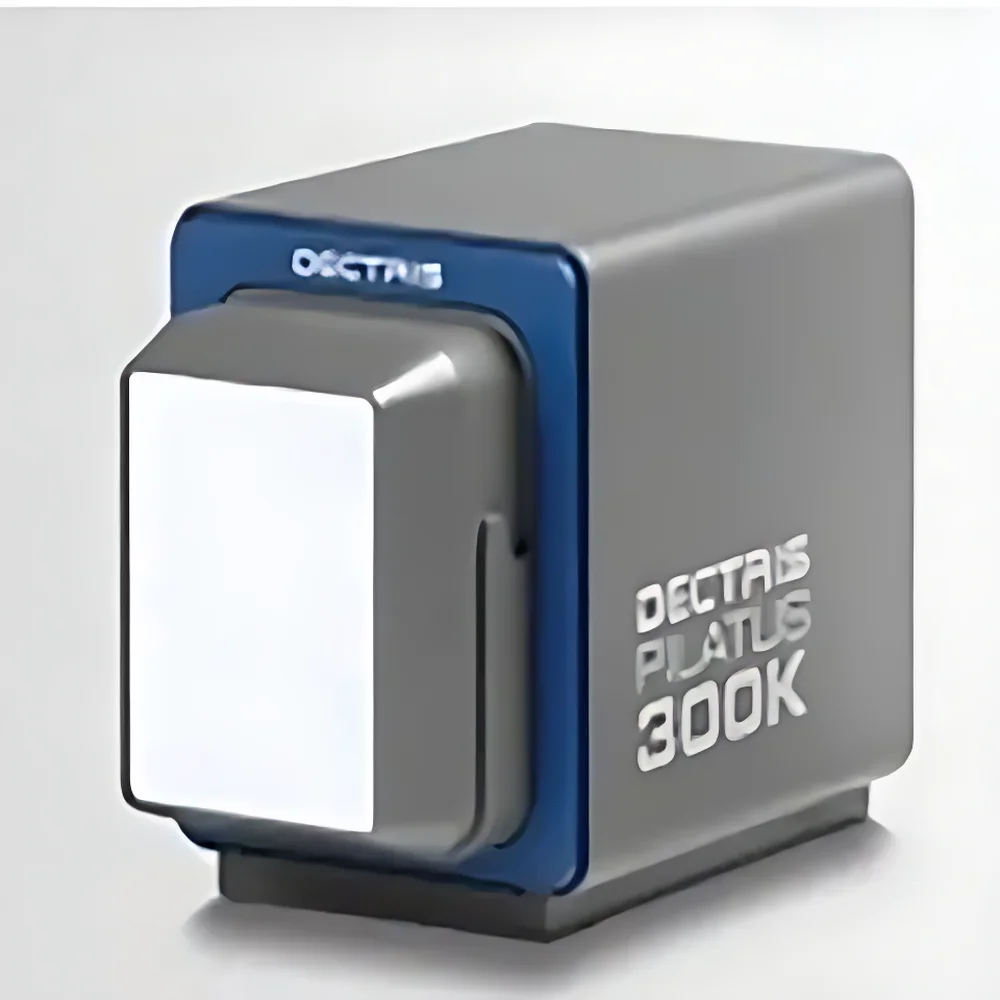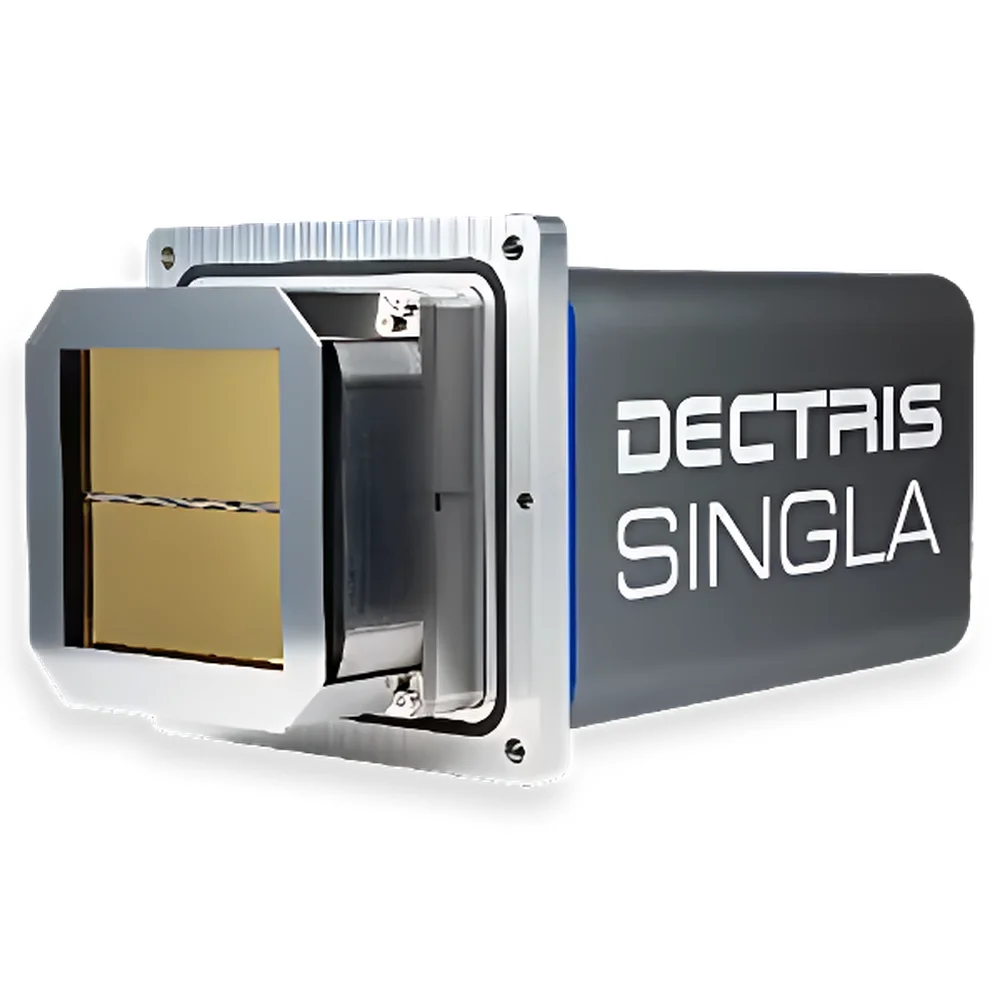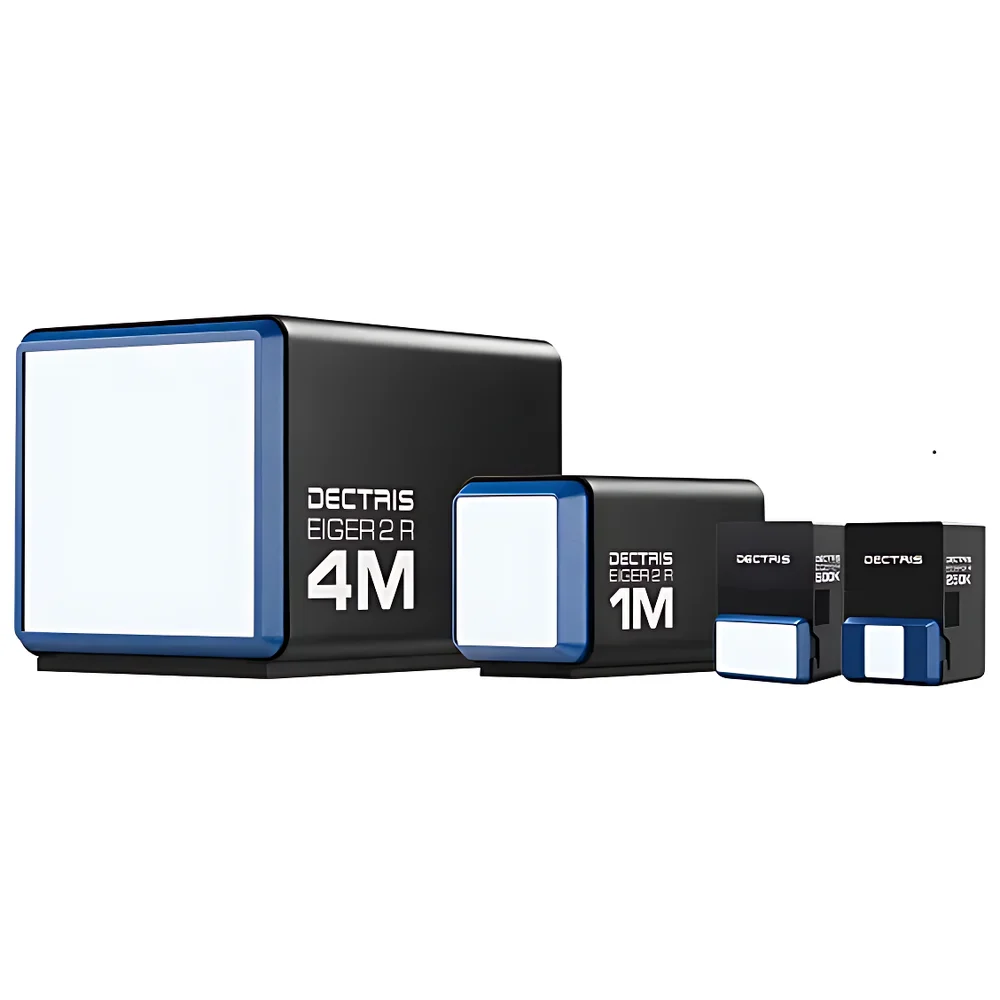
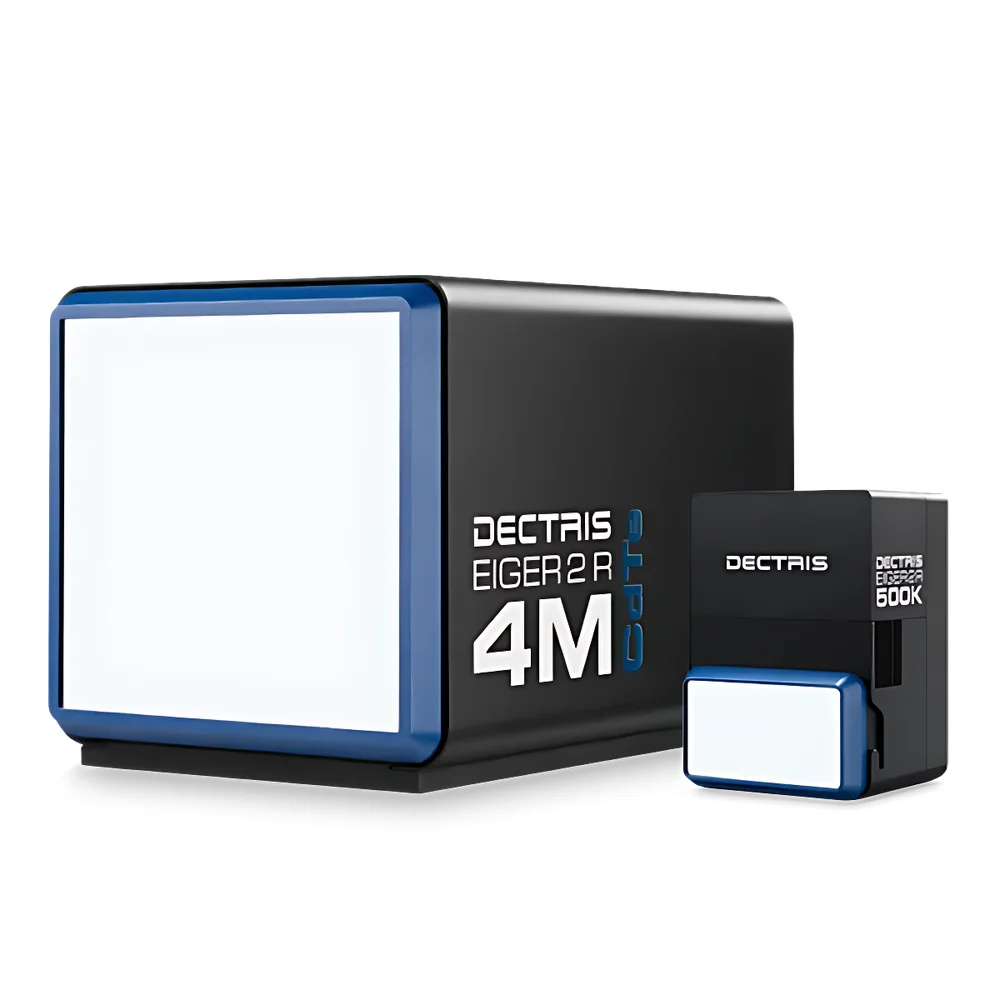
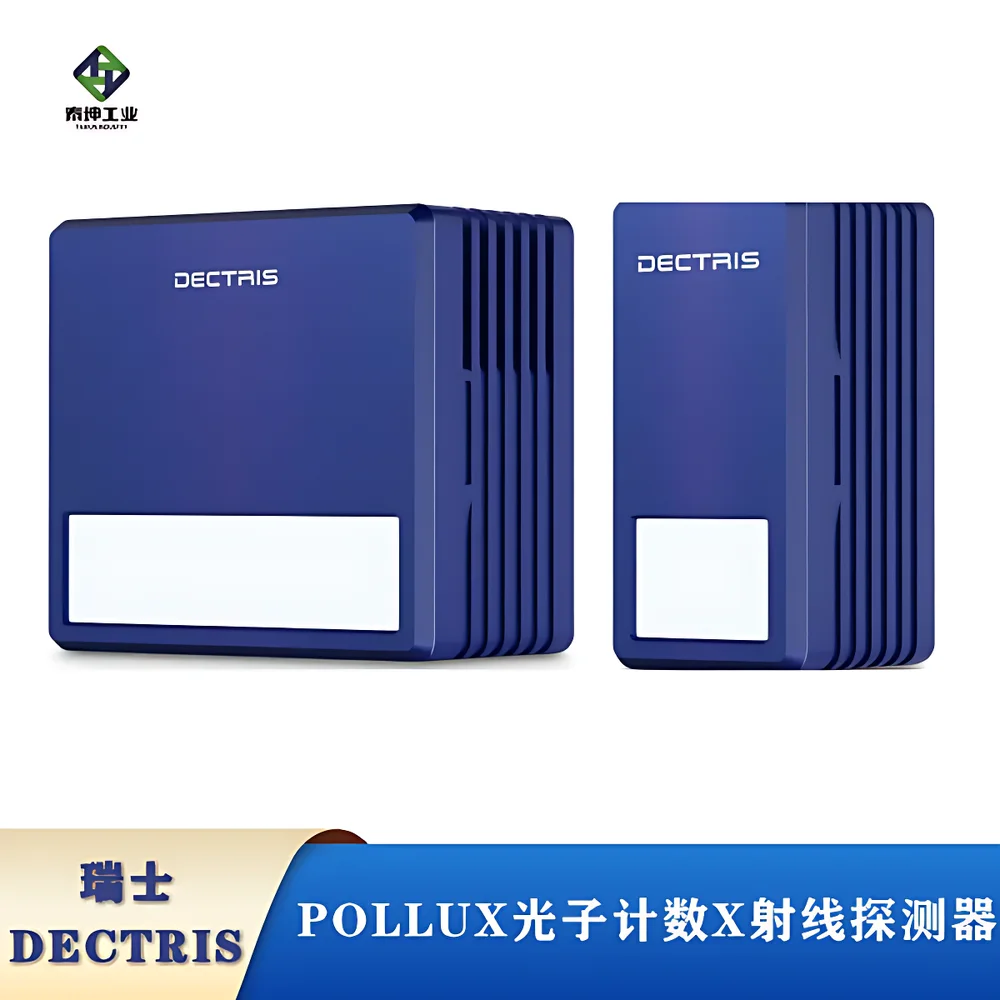
DECTRIS POLLUX Photon-Counting X-ray Detector

| Brand | DECTRIS |
|---|---|
| Origin | Switzerland |
| Model | POLLUX |
| Instrument Type | Powder X-ray Diffractometer |
| Form Factor | Benchtop |
| Power Consumption | 3 W |
| Energy Resolution | 350 eV (FWHM at Mn-Kα) |
| Frame Rate | Up to 400 Hz |
| Readout Modes | 0D, 1D, and 2D |
| Active Area | 128 × 128 mm² (typical for PILATUS/POLLUX-class hybrid pixel detectors) |
| Detection Principle | Hybrid Pixel Photon-Counting with Single-Photon Sensitivity |
| Energy Discrimination | Dual-threshold energy discrimination |
| Cooling | Passive thermal management |
| Compliance | Designed for GLP/GMP-aligned laboratories |
Ask about pricing, availability and specifications.
Overview
The DECTRIS POLLUX is a high-performance, benchtop photon-counting X-ray detector engineered for precision powder X-ray diffraction (PXRD), residual stress analysis, X-ray reflectivity (XRR), and small- and wide-angle X-ray scattering (SAXS/WAXS). Built upon DECTRIS’s proprietary hybrid pixel technology, the POLLUX operates on the principle of direct conversion of incident X-ray photons into electronic signals within a silicon sensor layer, followed by per-pixel pulse-height analysis. This architecture enables true single-photon counting with zero readout noise, eliminating the signal degradation inherent in integrating detectors. Its dual-energy threshold discrimination capability allows real-time suppression of fluorescence background and high-energy scatter—critical for enhancing peak-to-background ratio in complex matrices such as polycrystalline alloys, pharmaceutical co-crystals, or thin-film multilayers. With a typical active area of 128 × 128 mm² and passive thermal stabilization, the POLLUX delivers stable, reproducible performance without active cooling infrastructure—making it ideal for shared-lab environments and OEM integration into compact diffractometers.
Key Features
- Hybrid pixel sensor architecture with single-photon sensitivity and zero readout noise, ensuring quantitative intensity fidelity across dynamic ranges exceeding 10⁶
- Dual-threshold energy discrimination for selective rejection of characteristic fluorescence (e.g., Fe-Kβ, Cu-Kα₂) and Compton-scattered radiation
- Three operational readout modes: 0D point detection for high-speed time-resolved studies, 1D line-scan mode for rapid phase identification, and 2D area detection for full Debye–Scherrer ring capture in transmission or reflection geometries
- Maximum frame rate of 400 Hz at full resolution—enabling sub-second acquisition for in situ/operando PXRD experiments
- Benchtop form factor (< 250 mm × 200 mm footprint) with standardized UHV-compatible flange interface (CF-63 or DN40) and GigE Vision-compliant data output
- Passive thermal design with aluminum housing and thermal mass optimization—no liquid cooling, no moving parts, minimal power draw (3 W typical)
Sample Compatibility & Compliance
The POLLUX supports a broad range of sample configurations—including capillary-mounted powders, flat-plate reflectivity samples, thin-film stacks, and bulk metallic specimens—without requiring beam attenuation or detector repositioning. Its high detective quantum efficiency (DQE) above 0.8 at 8 keV ensures robust data collection from low-flux sources (e.g., sealed-tube Cu anodes) and microfocus sources alike. The detector complies with electromagnetic compatibility (EMC) directive 2014/30/EU and meets RoHS 2011/65/EU material restrictions. Firmware and control logic are structured to support audit trails and user-access logging—facilitating alignment with ISO/IEC 17025:2017 laboratory accreditation requirements and enabling traceable operation under FDA 21 CFR Part 11–compliant data management systems when integrated with validated software platforms.
Software & Data Management
The POLLUX is fully supported by DECTRIS’ open-source dcu (detector control unit) firmware and the cross-platform DAViD (DECTRIS Acquisition and Visualization Daemon) software suite. DAViD provides real-time visualization, ROI-based histogramming, energy-gated image subtraction, and HDF5-native data export compliant with NeXus format (NXmx standard). Raw frames include embedded metadata (exposure time, threshold settings, temperature, frame ID), enabling automated calibration propagation in pipelines compliant with FAIR (Findable, Accessible, Interoperable, Reusable) data principles. Integration with third-party analysis environments—including GSAS-II, TOPAS, and PyFAI—is achieved via standardized NDArray protocol over TCP/IP or direct memory-mapped file access.
Applications
- Powder X-ray Diffraction (PXRD): Quantitative phase analysis, crystallite size/strain determination (via Williamson–Hall or Rietveld refinement), and polymorph screening in pharmaceuticals and battery cathode materials
- Residual Stress Mapping: High-angular-resolution sin²ψ measurements using asymmetric Bragg–Brentano geometry or side-inclination setups
- X-ray Reflectivity (XRR): Sub-nanometer interfacial roughness and density profiling of multilayer thin films (e.g., SiO₂/TiN stacks, organic photovoltaic layers)
- Wavelength-Dispersive X-ray Spectroscopy (WDXRF) coupling: As a position-sensitive detector in Rowland-circle spectrometers for elemental mapping with <10 eV energy resolution
- SAXS/WAXS simultaneous acquisition: Time-resolved structural evolution during polymer processing, nanoparticle self-assembly, or protein folding kinetics
FAQ
What X-ray source energies is the POLLUX optimized for?
The POLLUX is calibrated for optimal performance between 5 keV and 25 keV, with primary use cases centered on Cu-Kα (8.04 keV), Mo-Kα (17.48 keV), and Ag-Kα (22.16 keV) radiation.
Does the POLLUX require cryogenic cooling?
No—its silicon sensor operates stably at ambient temperatures (15–30 °C) thanks to passive heat dissipation and low-power CMOS readout electronics.
Can the POLLUX be used in vacuum or inert gas environments?
Yes—the detector housing features CF-63 or DN40 vacuum flanges and is rated for operation under ≤10⁻⁶ mbar pressure or N₂/He purge conditions.
Is energy calibration traceable to national standards?
Yes—factory calibration includes Mn-Kα (5.895 keV) and Cu-Kα (8.047 keV) reference lines, with certificate of calibration traceable to PTB (Physikalisch-Technische Bundesanstalt) standards.
How is detector dead time managed at high flux?
The per-pixel digital pulse processing engine implements paralyzable dead time correction with <1% nonlinearity up to 1.2 × 10⁶ counts/s/pixel, validated per ISO 15382:2017 Annex B.