Beiguang Jingyi GEST- Series Coating Volume & Surface Resistivity Tester

| Brand | Beiguang Jingyi / All Precision Instrument |
|---|---|
| Origin | Beijing, China |
| Manufacturer Type | OEM Manufacturer |
| Product Origin | Domestic (China) |
| Model | GEST- |
| Price | USD 1,700 (approx.) |
| Resistance Range | 1×10⁴ Ω to 1×10¹⁸ Ω |
| Current Range | 2×10⁻⁴ A to 1×10⁻¹⁶ A |
| Test Voltages | 10 V, 50 V, 100 V, 250 V, 500 V, 1000 V (selectable) |
| Basic Accuracy | ±1% |
| Display | 3.5-digit LCD |
| Dimensions | 285 mm × 245 mm × 120 mm |
| Weight | ~5 kg |
| Power Supply | AC 220 V ±10%, 50 Hz |
| Power Consumption | ~5 W |
| Operating Environment | 0–40 °C, RH <80% |
Ask about pricing, availability and specifications.
Overview
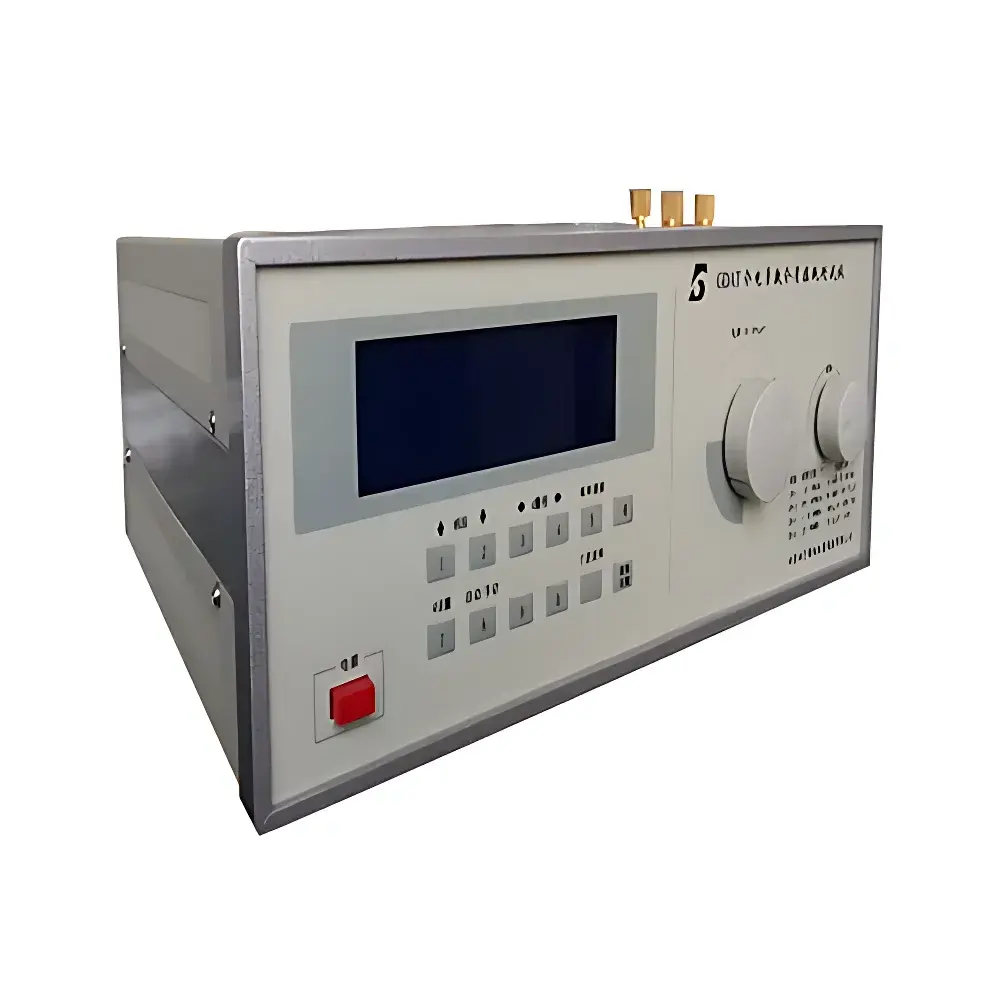
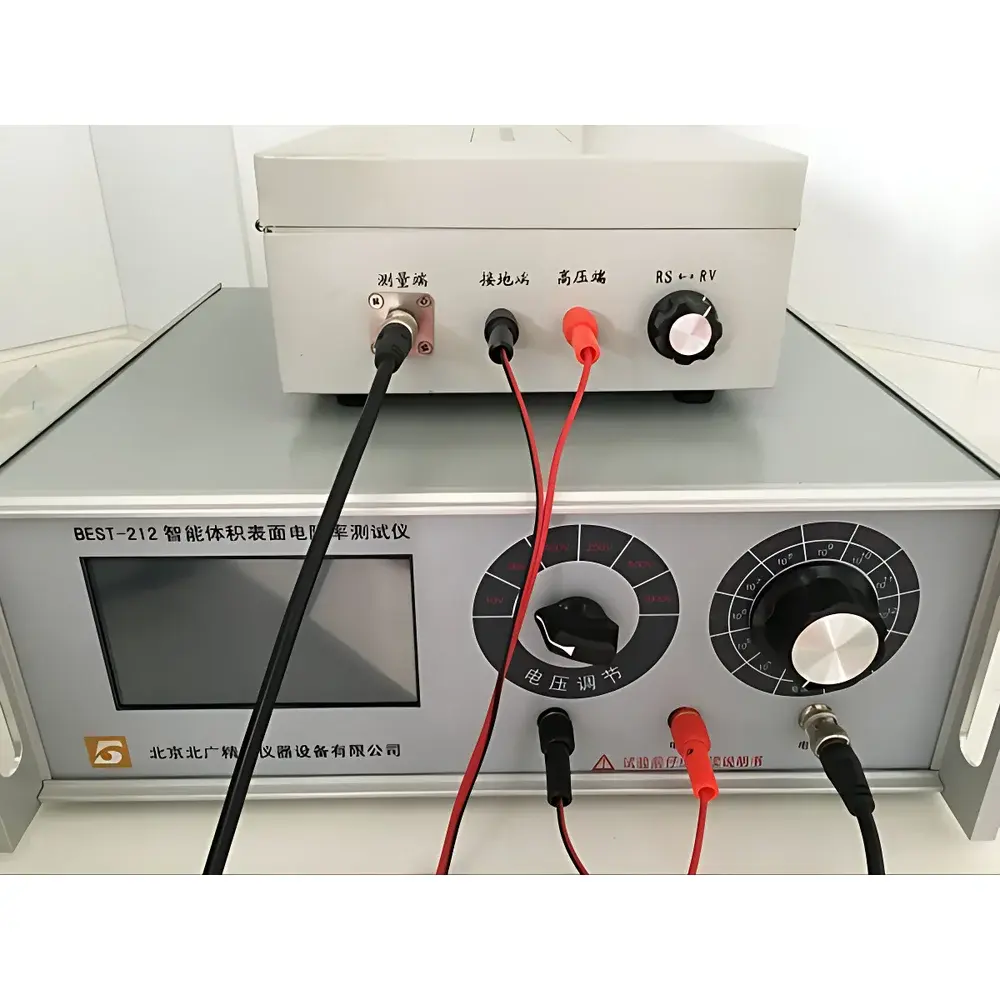
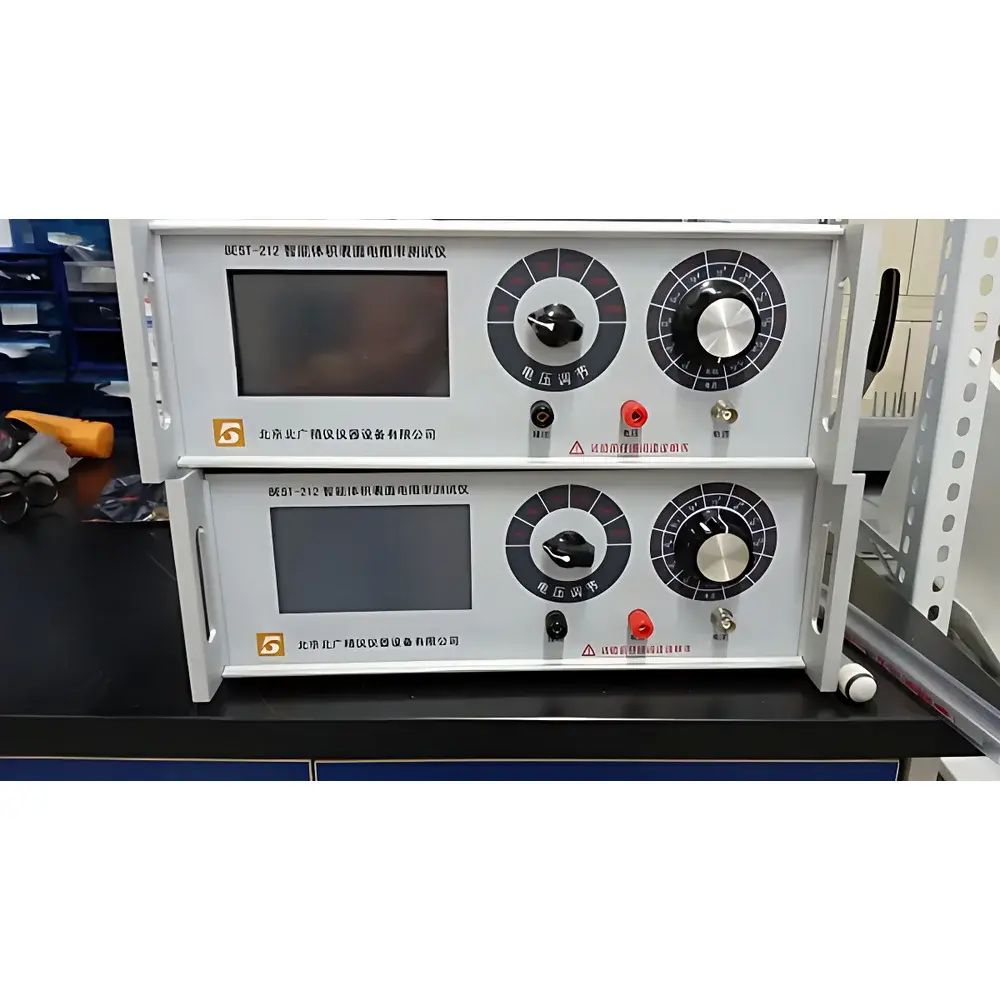
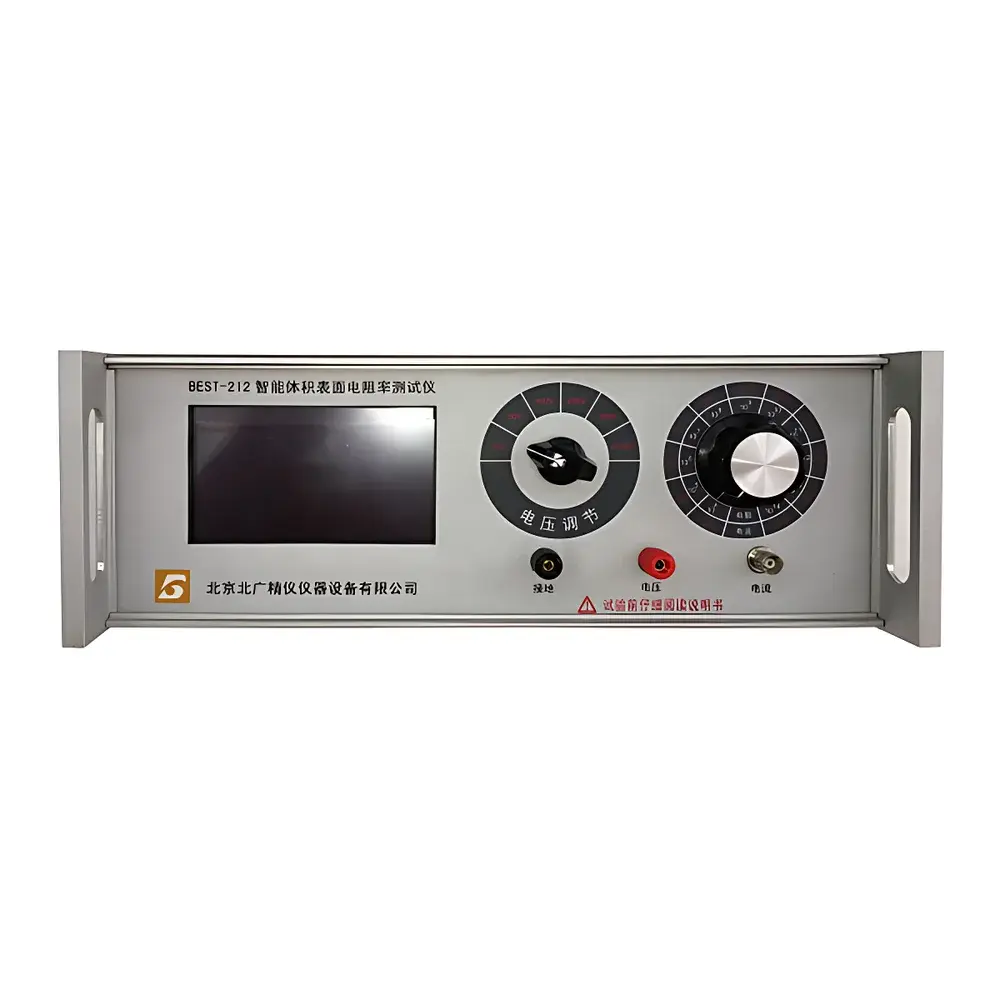
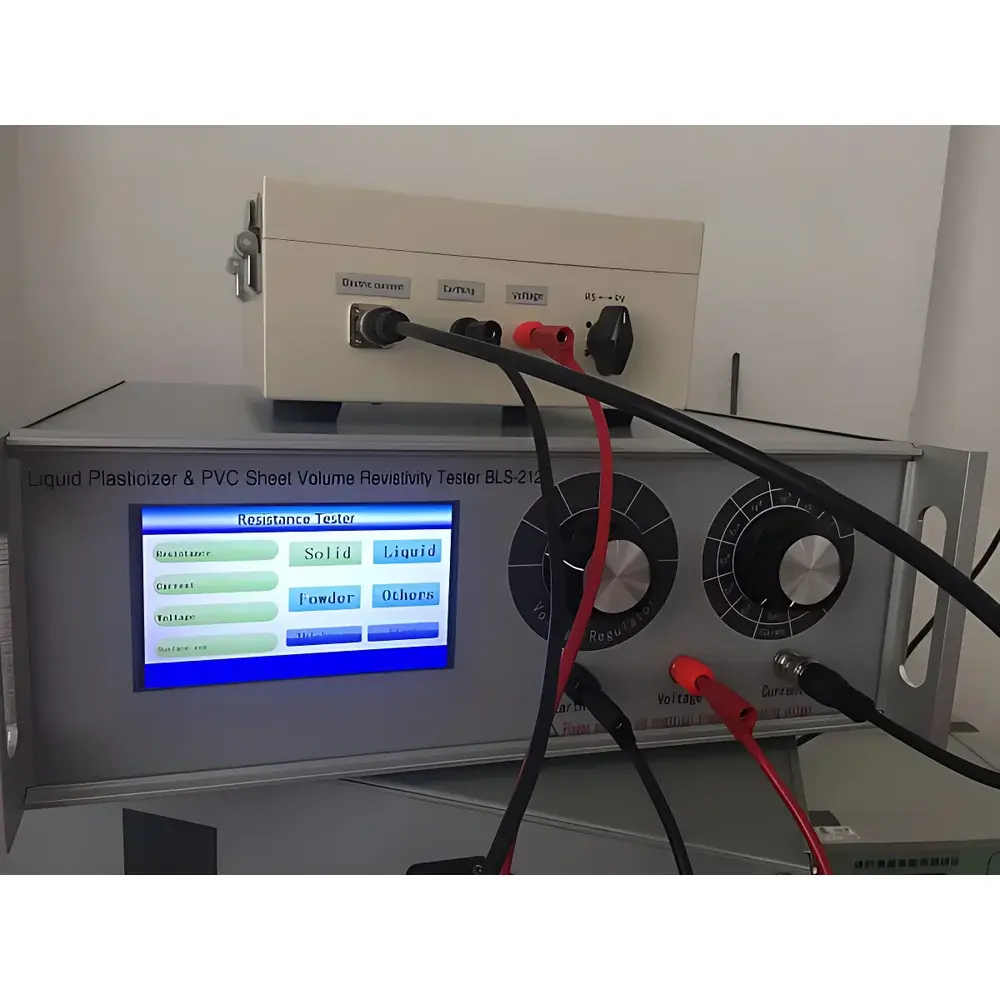
The Beiguang Jingyi GEST- Series Coating Volume & Surface Resistivity Tester is a precision digital high-resistance meter engineered for quantitative evaluation of electrical insulation performance in thin-film coatings, polymer composites, antistatic materials, and solid dielectric substrates. It operates on the principle of constant-voltage DC resistivity measurement, compliant with standardized electrode configurations defined in ASTM D257 and GB/T 1410–2006. The instrument employs a dual-channel, guarded electrometer architecture with integrated voltage sourcing and picoammeter functionality—enabling simultaneous high-impedance voltage application and ultra-low current detection down to 10⁻¹⁶ A. Its design incorporates Intel-based large-scale integrated circuits to minimize thermal drift and ensure long-term stability during extended polarization periods required for volume resistivity determination. Unlike transient or AC-based methods, this system delivers steady-state resistivity values under controlled DC bias, supporting rigorous compliance with quality assurance protocols in electronics manufacturing, aerospace coating validation, and ISO/IEC 17025-accredited laboratories.
Key Features
- Ultra-wide resistance measurement range: 1×10⁴ Ω to 1×10¹⁸ Ω, covering insulative, semiconductive, and antistatic material classes
- Programmable test voltages: six discrete DC levels (10 V, 50 V, 100 V, 250 V, 500 V, 1000 V), selectable via rear-panel switch with interlocked safety logic
- Guarded tri-electrode support: fully compatible with standardized three-terminal configurations per GB/T 1410 and ASTM D257 for unambiguous separation of surface vs. volume conduction paths
- Dual-range digital display: independent 3.5-digit readouts for resistance (Ω) and leakage current (A), enabling real-time Ohm’s Law verification
- Integrated shielding enclosure: supplied Faraday cage minimizes electromagnetic interference and capacitive coupling during sub-picoamp measurements
- Auto-zeroing circuitry with open-circuit calibration routine ensures baseline integrity prior to each measurement cycle
- Low-power, thermally stable architecture: power consumption ≤5 W; operating temperature range 0–40 °C with humidity tolerance up to 80% RH non-condensing
Sample Compatibility & Compliance
The GEST- tester accommodates rigid and flexible planar specimens—including conductive polymer films, epoxy-coated metal substrates, carbon-loaded elastomers, ESD flooring tiles, and conformal dielectric layers on PCBs. Its tri-electrode interface supports both surface resistivity (Rs) and volume resistivity (ρv) determinations using standardized electrode geometries: central disc (50 mm Ø), guard ring (60–80 mm Ø), and bottom plate (100 mm Ø). Compliance extends to international standards including ASTM D257 (Standard Test Methods for DC Resistance or Conductance of Insulating Materials), IEC 62631-3-1 (Dielectric and resistive properties of solid insulating materials), and GB/T 1410–2006 (Test methods for volume resistivity and surface resistivity of solid electrical insulating materials). For regulated environments, the instrument’s fixed-voltage operation, manual test sequence control, and absence of automated data export satisfy basic GLP documentation requirements—though it does not implement FDA 21 CFR Part 11 electronic signature or audit trail functionality.
Software & Data Management
This is a hardware-centric, manually operated resistivity tester with no embedded microprocessor-based firmware or proprietary software suite. All operational parameters—including voltage selection, range switching, and zero calibration—are executed via physical front/rear panel controls. Measurement data are recorded manually from the dual LCD display; no USB, RS-232, or Ethernet connectivity is provided. Users requiring digital data capture must employ external logging tools (e.g., digital multimeter interfaces or oscilloscope-based current monitoring). While lacking automated report generation, the instrument supports full traceability when used within documented SOPs: operators record applied voltage, polarization time (per standard-specified durations—e.g., 60 s per ASTM D257), electrode configuration, ambient conditions, and raw readings. Calibration certificates and factory verification reports are supplied with each unit to support metrological traceability to national standards.
Applications
- Quality control of antistatic packaging films and transport trays in semiconductor handling environments
- Validation of conductive primer layers on aerospace composite airframes per MIL-STD-1686
- Routine screening of ESD-safe footwear, floor mats, and workbench surfaces in Class 100 cleanrooms
- Research-grade characterization of nanocomposite coatings (e.g., graphene- or CNT-doped polymers) for tunable resistivity profiling
- Pre-compliance testing of insulating varnishes and conformal coatings per IPC-CC-830B
- Volume resistivity assessment of battery separator membranes and solid electrolyte films
FAQ
Why do resistance readings vary across different range settings?
This reflects inherent trade-offs in electrometer design: higher resistance ranges use increased feedback resistance and reduced input bias current, which improves sensitivity but lowers bandwidth and increases susceptibility to noise and dielectric absorption effects. Readings below 199 Ω on any scale indicate near-overload conditions where accuracy degrades per specification (±1% applies only above 200 Ω full-scale). Always select the lowest range yielding a stable, non-saturated reading.
Can this instrument measure time-dependent resistivity (e.g., dielectric absorption)?
Yes—by recording sequential resistance values at standardized time intervals (e.g., 1 min, 10 min, 60 min) after voltage application, users can construct polarization curves and calculate dielectric absorption ratio (DAR) or polarization index (PI), consistent with IEEE 43 guidelines for insulation diagnostics.
Is tri-electrode measurement mandatory?
No—but strongly recommended for materials where surface contamination or moisture ingress may dominate conduction. Two-electrode mode is acceptable only for homogeneous, bulk-insulating solids with polished, uncontaminated surfaces.
What maintenance is required to sustain accuracy?
Annual recalibration against NIST-traceable high-resistance standards is advised. Clean electrodes with isopropyl alcohol before each use; verify continuity of shield connections; store in low-humidity environment with voltage selector set to 10 V and range switch at 10⁴ Ω to discharge internal capacitance.
Does the instrument comply with IEC 61000-4 immunity standards?
It meets basic industrial EMC requirements per IEC 61326-1 (Class A emissions, Group 1 equipment), but lacks formal immunity certification for electrostatic discharge (IEC 61000-4-2) or fast transient bursts (IEC 61000-4-4). Use within grounded, shielded lab environments is recommended.
More from Beiguang Jingyi / All Precision Instrument
View all Beiguang Jingyi / All Precision Instrument products → Beiguang Jingyi BWN-3KN High-Precision Electromechanical Tensile Testing Machine for Polymeric Materials
- Beiguang Jingyi BN-10KN Universal Tensile Testing Machine
- Beiguang Jingyi GDAT-70MHz High-Frequency Dielectric Constant Analyzer
- Beiguang Jingyi BWN-5000N Geotextile Tensile and Puncture Testing Machine