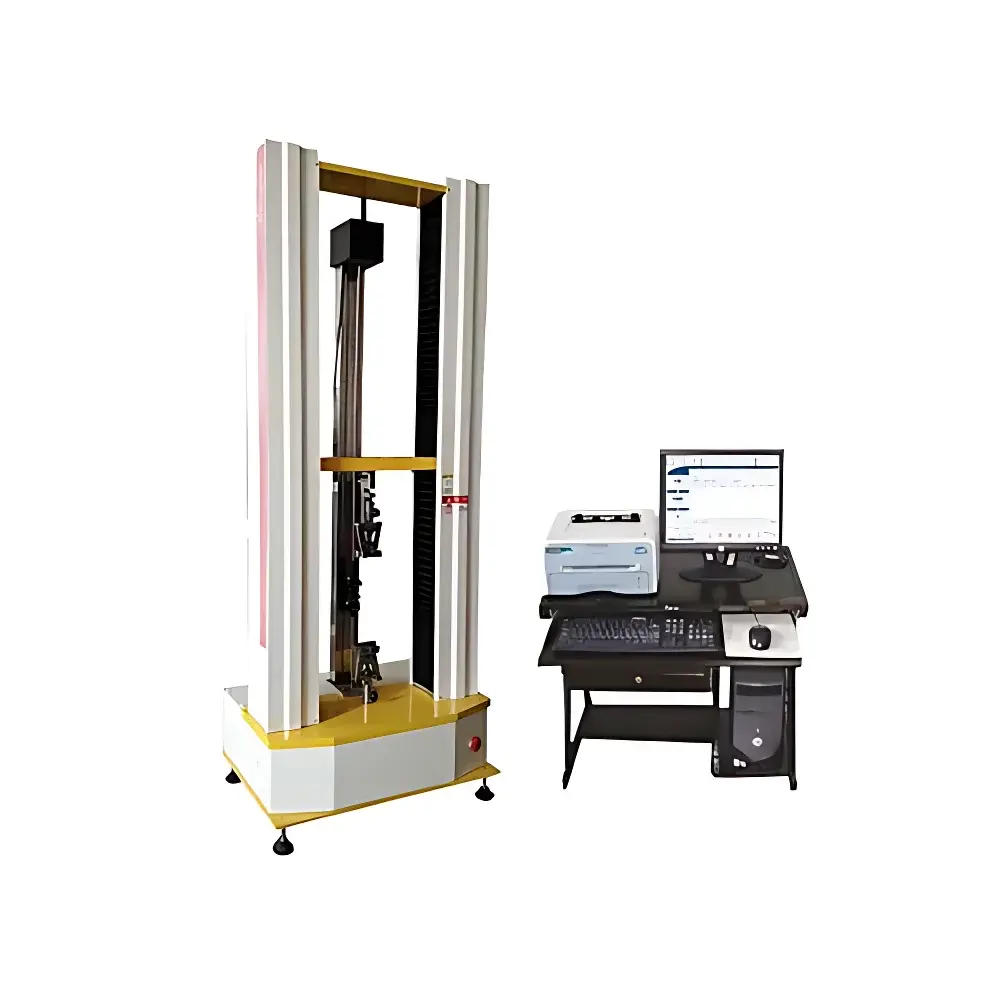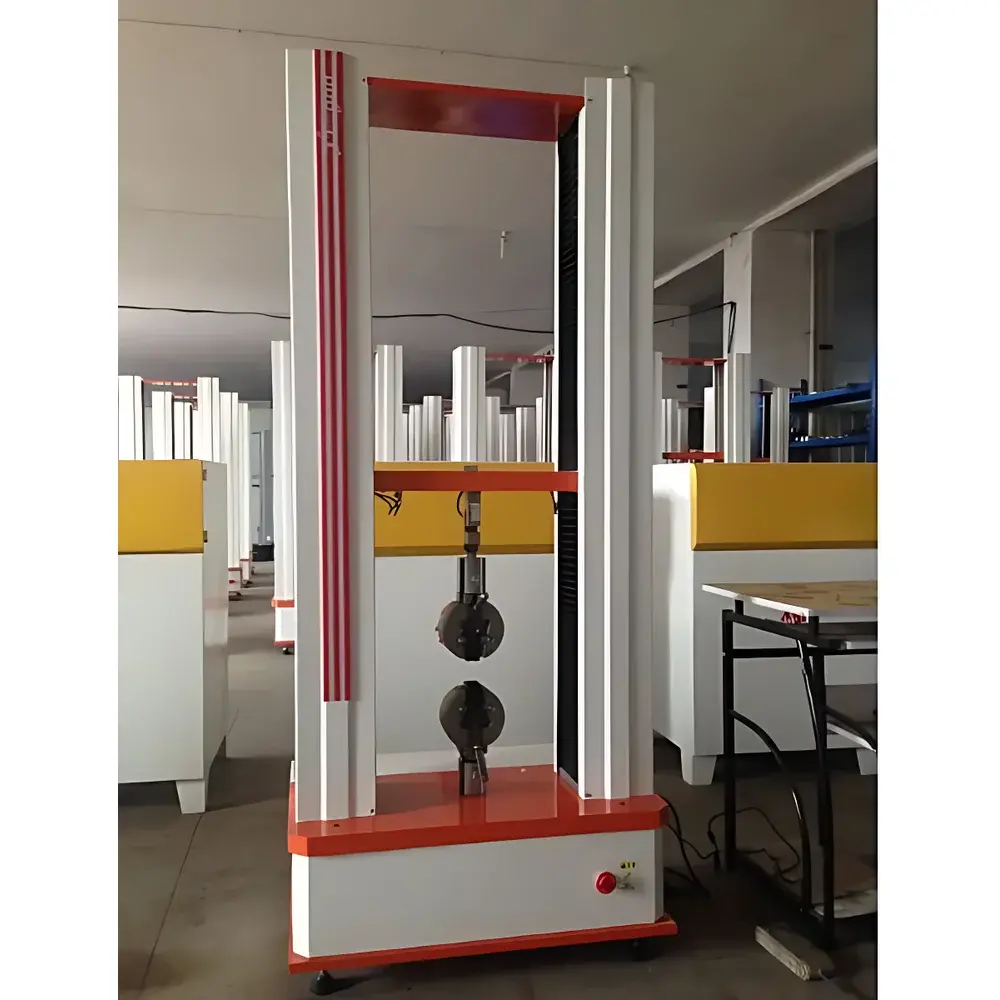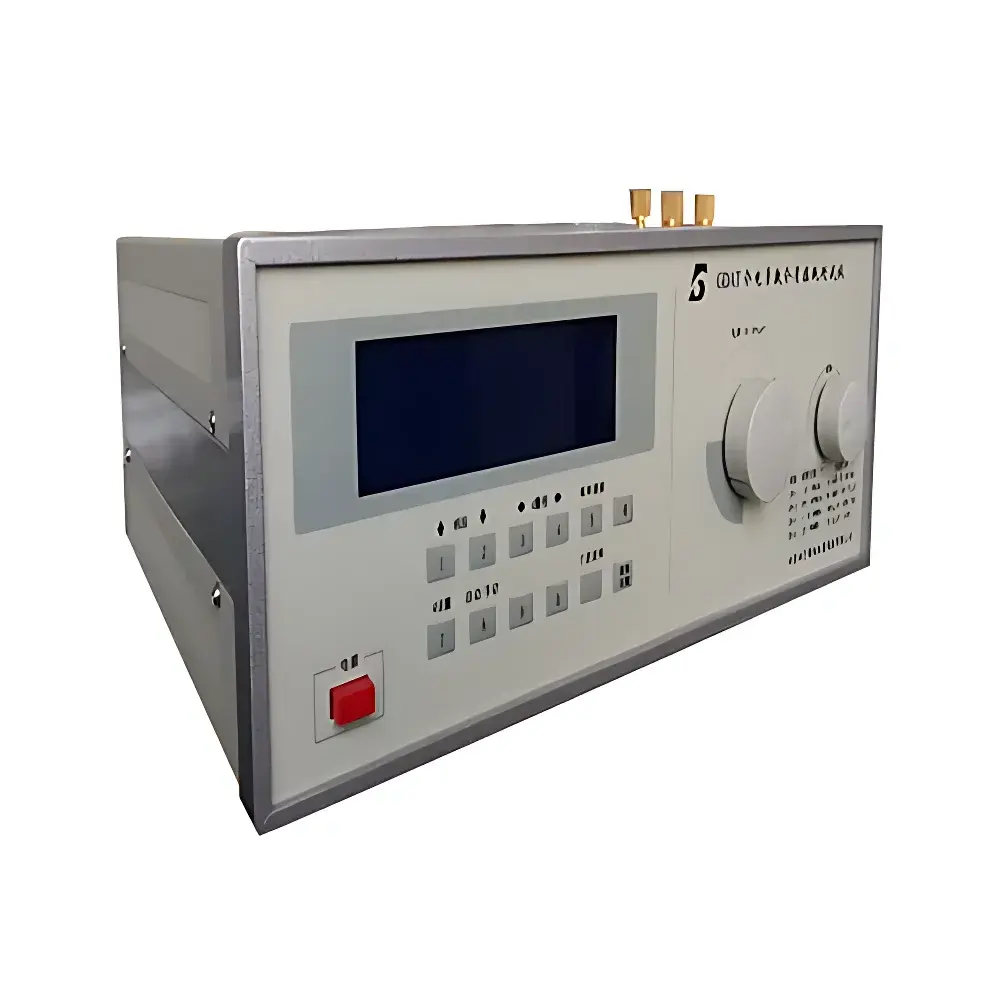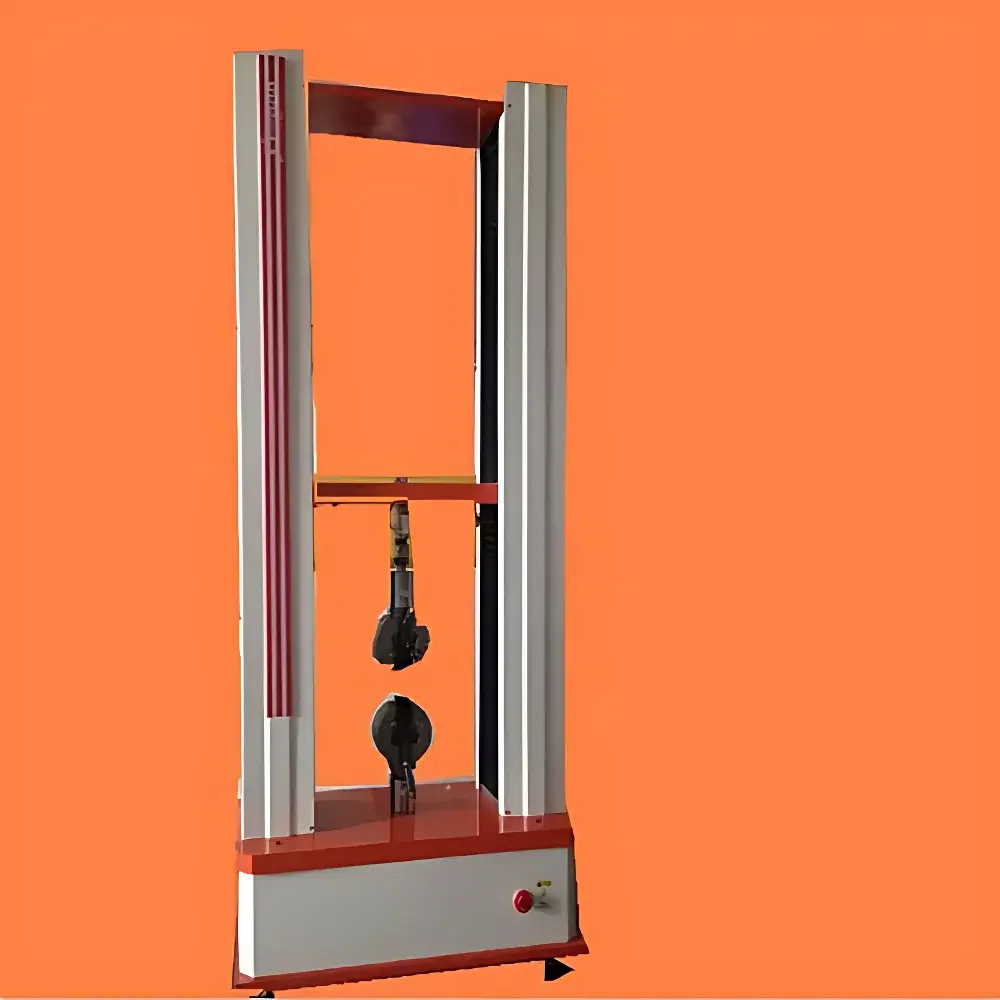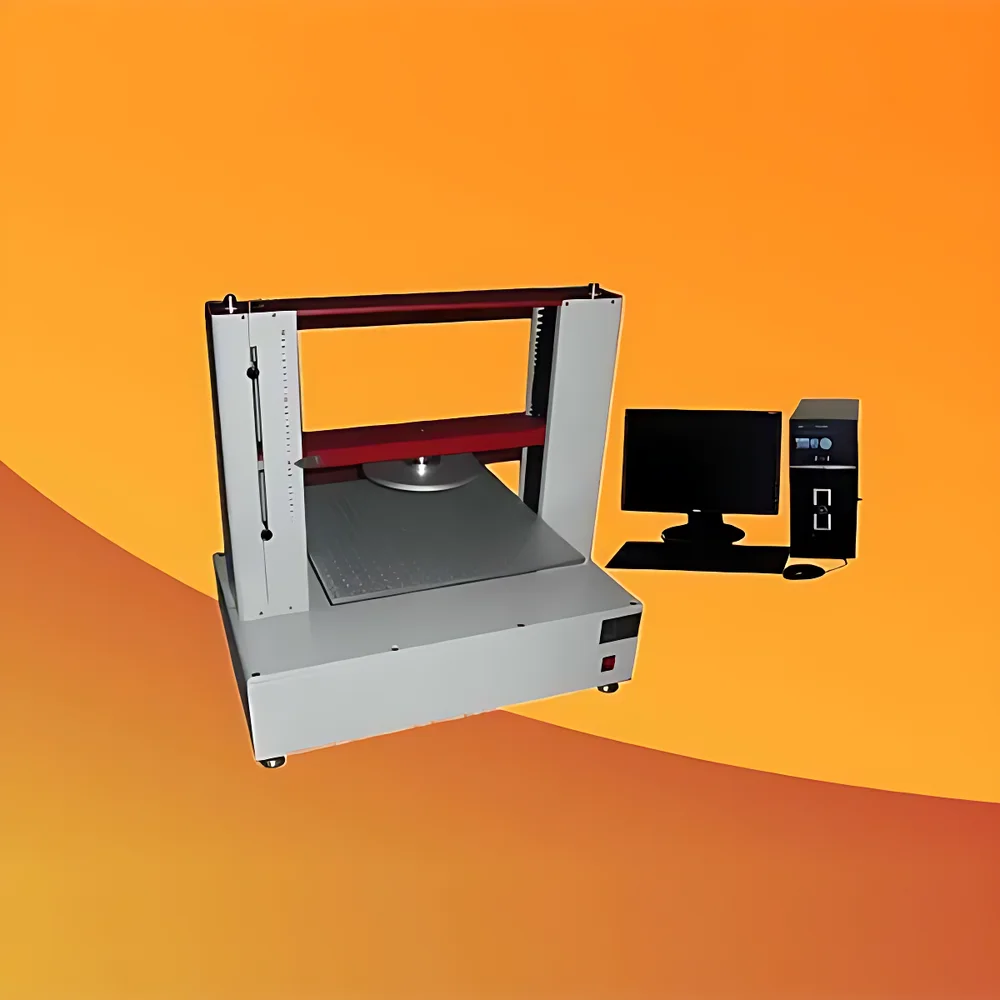
Beiguang Jingyi PMYX-2000 Foam Indentation Hardness Tester

| Brand | Beiguang Jingyi / All Precision Instrument |
|---|---|
| Origin | Beijing, China |
| Manufacturer Type | OEM Manufacturer |
| Country of Origin | China |
| Model | PMYX-2000 |
| Price | Upon Request |
| Test Speed | 100 mm/min ±20 mm |
| Force Range | 0–2000.0 N |
| Force Resolution | 0.25 N |
| Accuracy | <1% FS |
| Maximum Stroke | 3500 mm (customizable) |
| Indenter Diameter | 200 mm |
| Test Platform Dimensions | 500 × 600 mm |
| Vent Hole Pattern Diameter | 250 × 250 mm |
| Overall Dimensions | 500 × 600 × 800 mm |
| Power Supply | 220 V / 50 Hz |
Ask about pricing, availability and specifications.
Overview
The Beiguang Jingyi PMYX-2000 Foam Indentation Hardness Tester is a precision mechanical testing instrument engineered for the standardized evaluation of indentation hardness in flexible polymeric foams—primarily open-cell and closed-cell polyurethane, latex, and viscoelastic foams used in seating, bedding, automotive interiors, and packaging applications. It operates on the principle of controlled axial compression: a motor-driven indenter applies a defined displacement rate to a conditioned foam specimen under ambient or climate-controlled conditions, while high-fidelity load cells continuously record force response. The system complies with internationally recognized test methodologies—including ISO 2439 (A, B, and C methods), ASTM D3574, and GB/T 10807—enabling reproducible quantification of initial resistance (IFD – Indentation Force Deflection), progressive stiffness, and recovery behavior. Designed for laboratory and QC environments, the PMYX-2000 integrates embedded CPU control architecture with real-time bidirectional force–displacement curve visualization, supporting both manual and automated test sequences without operator intervention post-initiation.
Key Features
- Triple-method compliance: User-selectable A (constant-rate displacement), B (constant-force dwell), and C (cyclic indentation) test modes per ISO 2439 and ASTM D3574 specifications.
- High-resolution force measurement: 0.25 N minimum resolution over a 0–2000.0 N range, calibrated traceably to national standards using certified reference loads.
- Precise displacement control: Programmable crosshead speed of 100 mm/min (±20 mm tolerance), with optional speed adjustment to accommodate low-stiffness or high-damping materials.
- Robust mechanical architecture: Rigid frame construction with guided linear motion system ensures minimal deflection and high repeatability across repeated cycles (CV < 1.2% per ASTM D3574 Annex A).
- Integrated safety logic: Automatic overload shutdown (>105% full scale), dual-limit position sensing (electronic + mechanical), and emergency stop circuitry compliant with IEC 61000-6-2 EMC requirements.
- Flexible sample handling: Standard 200 mm diameter flat indenter; compatible with non-standard geometries (e.g., seat back contours) via custom fixture mounting on the 500 × 600 mm test platform.
- Dual-control interface: Supports local keypad operation, PC-based software control (Windows OS), and optional EPC (Embedded Process Controller) mode for standalone deployment in production lines.
Sample Compatibility & Compliance
The PMYX-2000 accommodates standard foam specimens measuring 380 × 380 × 50 mm (per ISO 2439) as well as irregularly shaped components such as automotive seat cushions, mattress layers, and ergonomic support pads. Its vented platen (250 × 250 mm hole pattern) facilitates air escape during rapid compression, minimizing pneumatic resistance artifacts common in high-resilience foams. All test procedures adhere strictly to regulatory frameworks governing material qualification in regulated industries: ISO 2439:2021 (foam hardness), ASTM D3574-22 (flexible cellular materials), and GB/T 10807-2006 (Chinese national standard). For GLP/GMP environments, audit-ready test logs—including timestamped force/displacement data, operator ID, calibration status, and environmental metadata—can be exported in CSV or PDF format. Optional 21 CFR Part 11-compliant software modules support electronic signatures and secure data integrity protocols.
Software & Data Management
The proprietary control software provides full test lifecycle management: method configuration, real-time curve overlay, statistical reporting (mean, SD, CV%), and pass/fail threshold evaluation against predefined specification limits. Raw data streams are captured at ≥100 Hz sampling rate and stored in encrypted binary archives with SHA-256 checksum verification. Export options include CSV (for Excel/SPC analysis), XML (for LIMS integration), and vector-based SVG plots suitable for technical documentation. Calibration records, maintenance logs, and user access history are retained locally with configurable retention policies. Remote diagnostics via USB or RS232 enables firmware updates and parameter validation without onsite service visits. Software validation documentation (IQ/OQ/PQ templates) is available upon request for regulated laboratory implementation.
Applications
This instrument serves critical quality assurance functions across multiple sectors: R&D labs evaluating foam formulation variants (e.g., density, crosslink density, additive effects); Tier-1 automotive suppliers validating seat comfort metrics (IFD25, IFD65, IFD100); furniture manufacturers ensuring consistency in cushioning performance across production batches; and third-party certification bodies performing accredited conformity assessments per ISO/IEC 17025. It is routinely deployed in academic research on polymer viscoelasticity, aging studies (compression set after thermal cycling), and comparative benchmarking of bio-based vs. petrochemical foams. Institutions including Tsinghua University, Sichuan University, and the Southwest Institute of Physics have utilized the PMYX-2000 for materials characterization requiring traceable, repeatable indentation metrics under controlled environmental conditions.
FAQ
What standards does the PMYX-2000 support for foam hardness testing?
It fully implements ISO 2439 (Methods A, B, C), ASTM D3574 (Sections 4–6), and GB/T 10807, with preconfigured test templates and report formats aligned to each standard’s procedural requirements.
Can the system test non-rectangular foam components like automotive seat backs?
Yes—the 500 × 600 mm test platform and modular fixture interface allow secure mounting of contoured or oversized samples; custom indenter profiles can be supplied upon engineering review.
Is calibration traceability provided with the instrument?
Each unit ships with a factory calibration certificate traceable to CNAS-accredited standards; annual recalibration services with documented uncertainty budgets are available through authorized service centers.
How is data integrity ensured for regulated environments?
The system supports role-based user accounts, electronic audit trails, and optional 21 CFR Part 11-compliant software modules featuring digital signatures, data encryption, and immutable log archiving.
What maintenance is required to sustain measurement accuracy?
Routine checks include periodic verification of force transducer linearity (using certified deadweights), lubrication of lead screws every 6 months, and annual verification of encoder resolution and crosshead alignment per ISO 7500-1.
More from Beiguang Jingyi / All Precision Instrument
View all Beiguang Jingyi / All Precision Instrument products → Beiguang Jingyi BWN-3KN High-Precision Electromechanical Tensile Testing Machine for Polymeric Materials
- Beiguang Jingyi BN-10KN Universal Tensile Testing Machine
- Beiguang Jingyi GDAT-70MHz High-Frequency Dielectric Constant Analyzer
- Beiguang Jingyi BWN-5000N Geotextile Tensile and Puncture Testing Machine