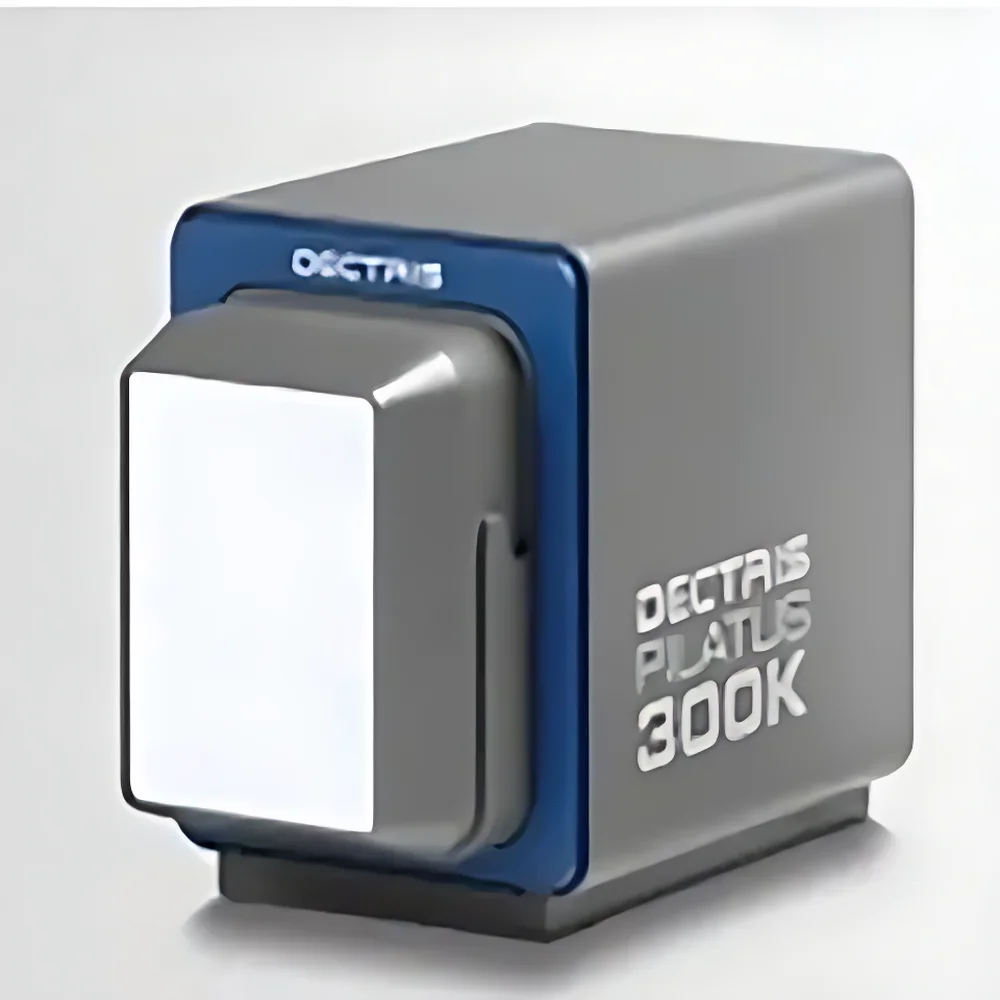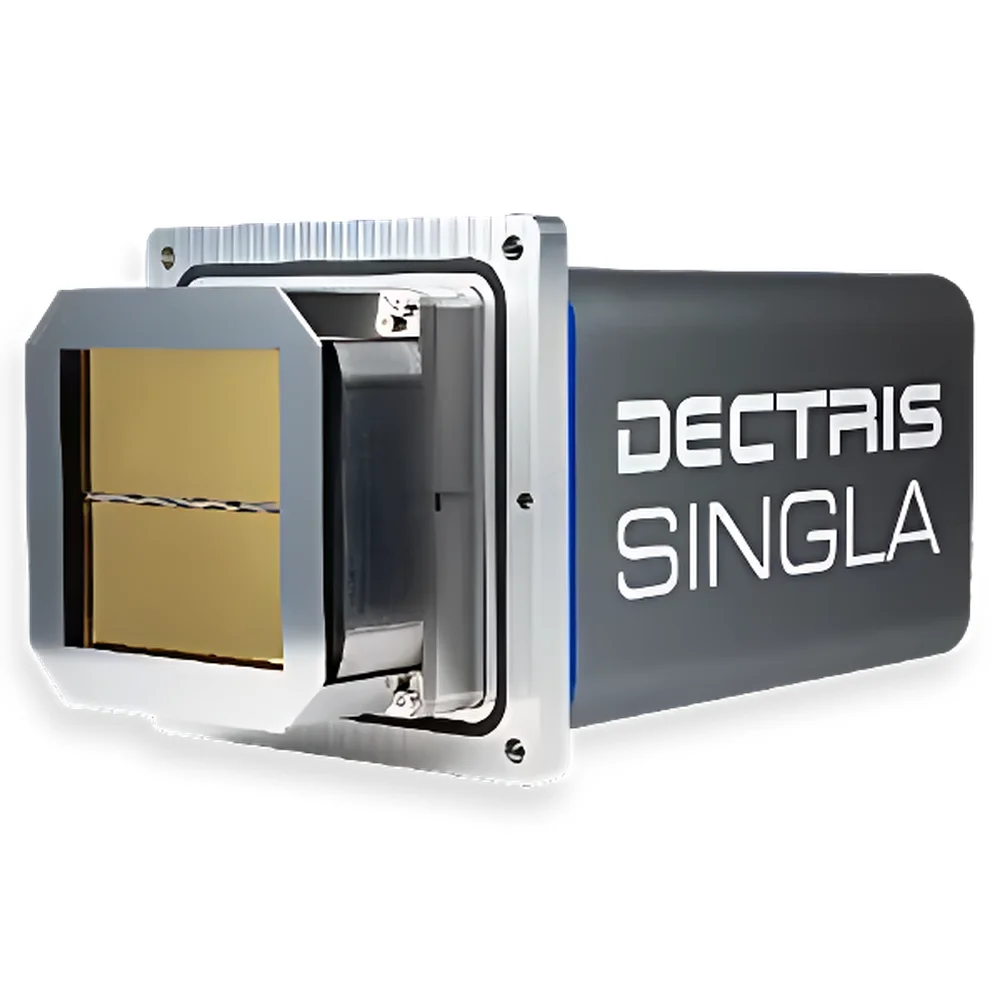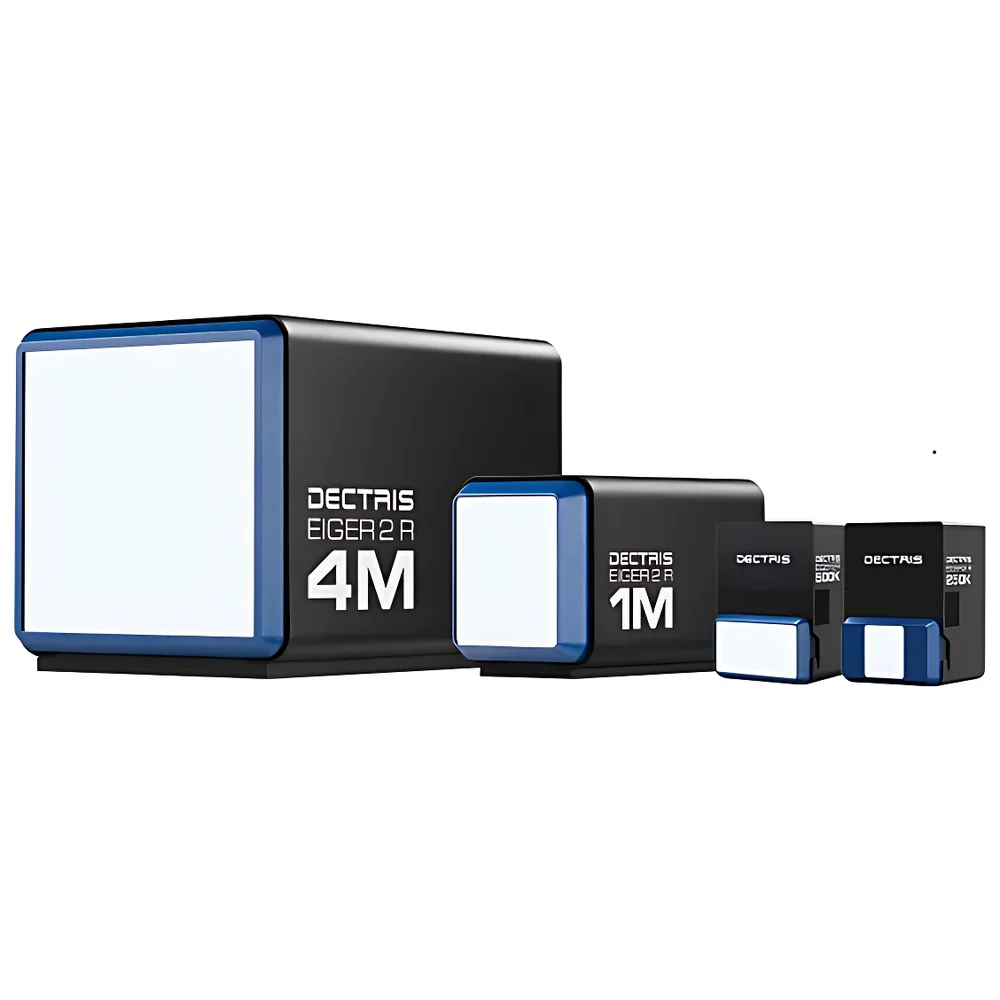
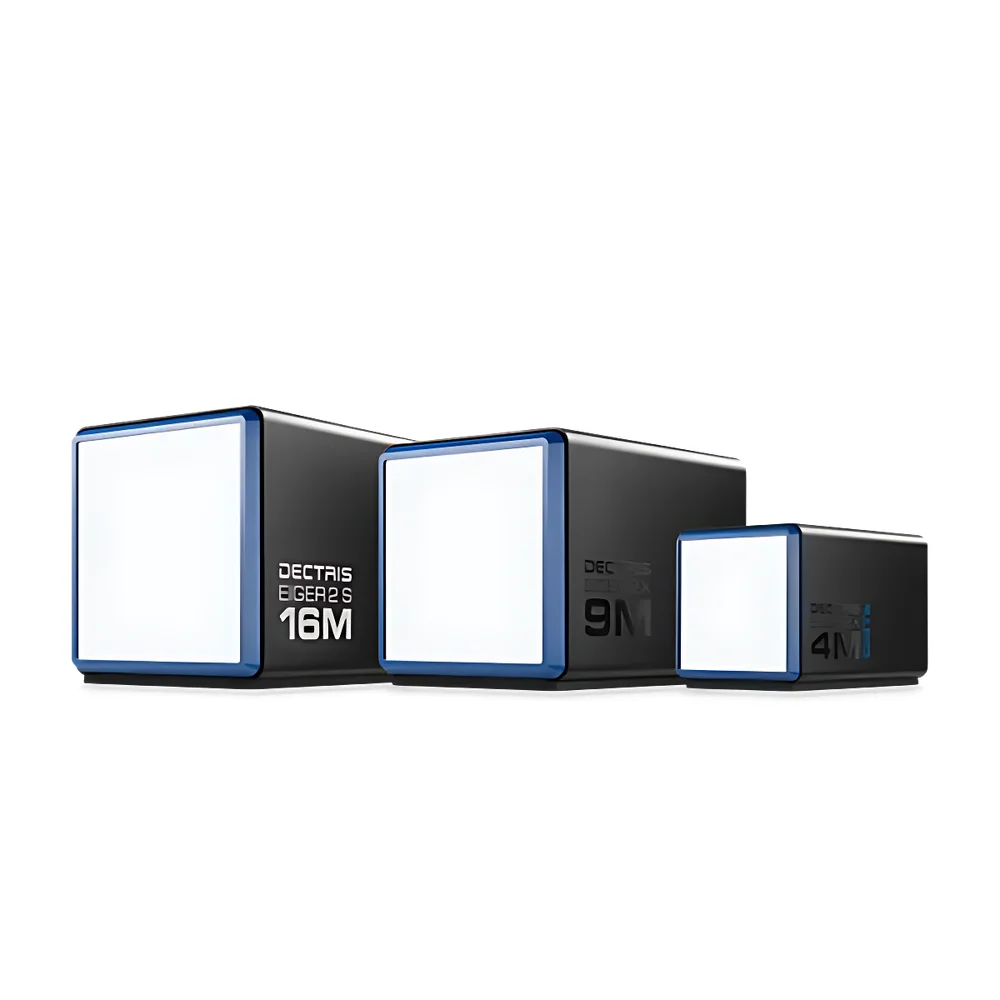
DECTRIS POLLUX High-Resolution Photon-Counting X-ray Detector for X-ray Diffractometers

| Brand | DECTRIS |
|---|---|
| Origin | Switzerland |
| Model | POLLUX |
| Instrument Type | X-ray Detector |
| Form Factor | Benchtop |
| Power Consumption | 3 W |
| Spatial Resolution | < 600 µm |
| Frame Rate | Up to 400 Hz |
| Readout Modes | 0D, 1D, and 2D |
| Energy Discrimination | Dual-threshold photon counting |
| Effective Area | Large-format active area (typical for compact hybrid pixel detectors) |
| Cooling | Passive thermal management |
Ask about pricing, availability and specifications.
Overview
The DECTRIS POLLUX is a high-performance, benchtop photon-counting X-ray detector engineered specifically for laboratory-scale X-ray diffractometers and scattering systems. Based on hybrid pixel detector technology, it operates on the principle of direct conversion of X-ray photons into electrical signals within a silicon sensor layer, followed by per-pixel pulse-height analysis and digital threshold discrimination. This architecture eliminates readout noise and dark current—key limitations of integrating detectors—and delivers true single-photon sensitivity with intrinsic energy discrimination. The POLLUX is not a general-purpose imaging sensor; it is purpose-built for quantitative diffraction and scattering applications where signal fidelity, dynamic range, and background suppression are critical. Its design targets users requiring rapid, high-precision data acquisition in powder X-ray diffraction (PXRD), residual stress analysis, X-ray reflectivity (XRR), and small-/wide-angle X-ray scattering (SAXS/WAXS), particularly in environments where space, power budget, and system integration simplicity are constrained.
Key Features
- Photon-counting operation with dual-energy threshold discrimination, enabling real-time rejection of fluorescence and high-energy background scatter without mechanical filters or absorbers.
- Large effective detection area optimized for wide angular coverage—supports high solid-angle collection in both Bragg-Brentano and parallel-beam geometries.
- Three native readout modes: 0D (integrated intensity), 1D (line profile), and full 2D frame acquisition—enabling flexible experimental configurations without hardware reconfiguration.
- Frame rates up to 400 Hz, facilitating rapid scanning protocols, time-resolved studies, and high-throughput screening workflows.
- Passively cooled architecture with robust, radiation-hardened electronics—designed for continuous operation in standard laboratory environments without external chillers or forced-air systems.
- Benchtop form factor with standardized mechanical and electrical interfaces (e.g., USB 3.0, TTL trigger I/O), supporting seamless integration into OEM diffractometers or custom-built beamlines.
Sample Compatibility & Compliance
The POLLUX detector is compatible with standard Cu Kα (8.04 keV), Mo Kα (17.48 keV), and Ag Kα (22.16 keV) X-ray sources, as well as synchrotron white-beam and monochromated configurations. It meets the functional requirements of ISO 17873:2015 (X-ray diffraction — Measurement of residual stress), ASTM E975 (Standard Practice for X-ray Determination of Residual Stress), and supports GLP/GMP-aligned data acquisition when paired with compliant software platforms. While the detector itself does not carry CE or FDA certification as a standalone medical device, its electronic design complies with IEC 61000-6-3 (EMC emission limits) and IEC 61000-6-2 (immunity). Data provenance and auditability are preserved through timestamped frame metadata and optional hardware-based trigger synchronization.
Software & Data Management
The POLLUX is fully supported by the open-source EIGER/PILATUS control suite (including the Dectris EIGER2 SDK and Python API), enabling low-level access to gain calibration, threshold tuning, and dead-time correction parameters. Raw frames are output in HDF5 format compliant with NeXus conventions (NXdetector), ensuring compatibility with major scientific analysis pipelines—including GSAS-II, TOPAS, Fit2D, and PyFAI. Optional integration with commercial diffractometer control software (e.g., PANalytical Empyrean, Bruker DIFFRAC.SUITE) is available via vendor-certified drivers. All acquired data include embedded metadata (exposure time, thresholds, temperature, frame number), satisfying traceability requirements under 21 CFR Part 11 when deployed in regulated QC/QA laboratories.
Applications
- Powder X-ray diffraction (PXRD) for phase identification, crystallite size analysis, and Rietveld refinement—benefiting from high peak-to-background ratio and minimal point-spread function broadening.
- Residual stress mapping via sin²ψ analysis, where high angular resolution and low-noise intensity measurement are essential for accurate lattice strain quantification.
- X-ray reflectivity (XRR) measurements on thin films and multilayers, leveraging the detector’s linear response over six orders of magnitude and absence of saturation artifacts.
- Wavelength-dispersive X-ray spectroscopy (WDXRF) coupling, where energy-discriminative capability enables simultaneous multi-line detection without spectrometer scanning.
- SAXS/WAXS experiments requiring high dynamic range and fast frame acquisition for kinetic studies of polymer self-assembly, protein folding, or nanoparticle nucleation.
FAQ
Does the POLLUX require liquid nitrogen or active cooling?
No. It employs passive thermal management and operates reliably at ambient laboratory temperatures (15–30 °C) without cryogenic or chiller support.
Can the POLLUX be used with sealed-tube X-ray sources?
Yes. It is optimized for use with standard laboratory Cu and Mo rotating anode or microfocus sealed-tube sources, including those with Göbel mirrors or multilayer optics.
Is energy calibration required before each experiment?
No. Factory-calibrated energy thresholds remain stable over time; routine verification can be performed using characteristic fluorescence lines (e.g., Cu Kα, Ni Kα) during system qualification.
What is the typical dead time per pixel?
The per-pixel dead time is ≤ 200 ns, enabling accurate high-flux measurement without significant count loss up to 10⁶ photons/pixel/second.
How is spatial distortion corrected?
Geometric distortion is characterized during manufacturing and stored in the detector’s firmware; real-time correction is applied in software using pre-measured pixel maps and affine transformation matrices.