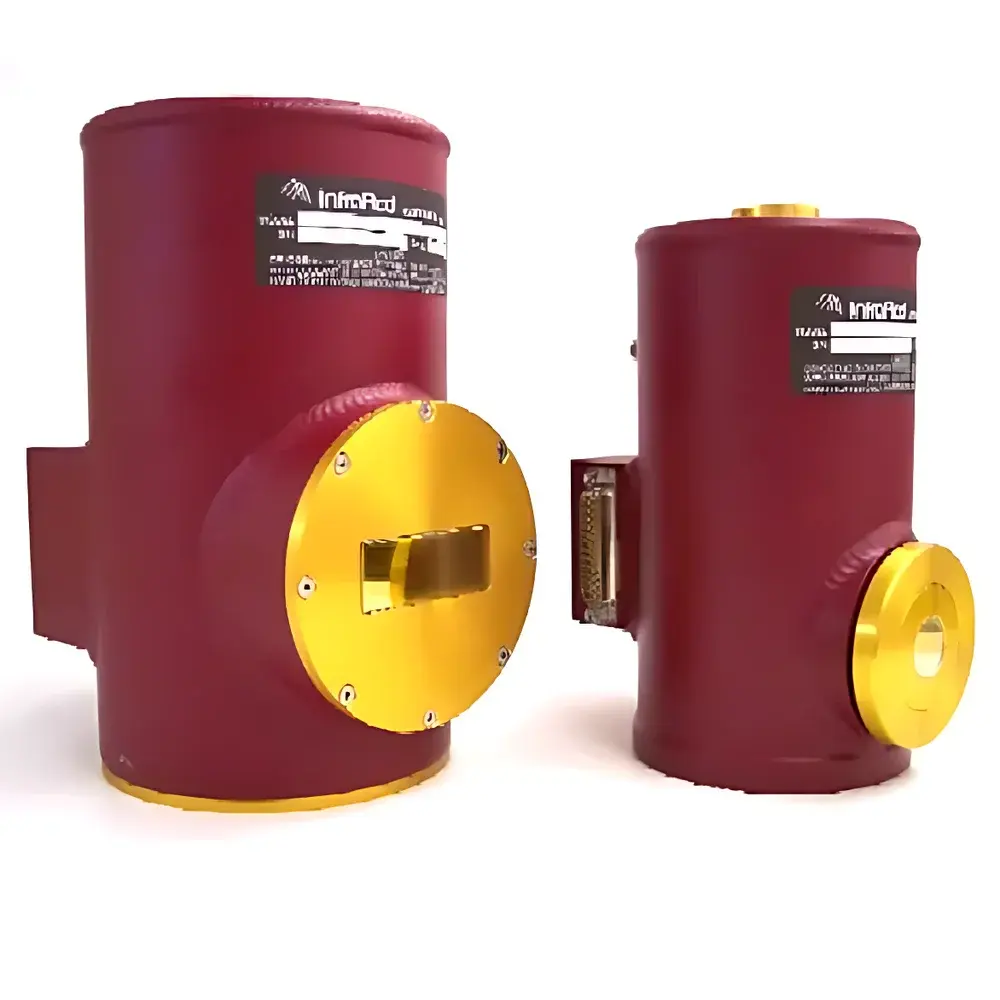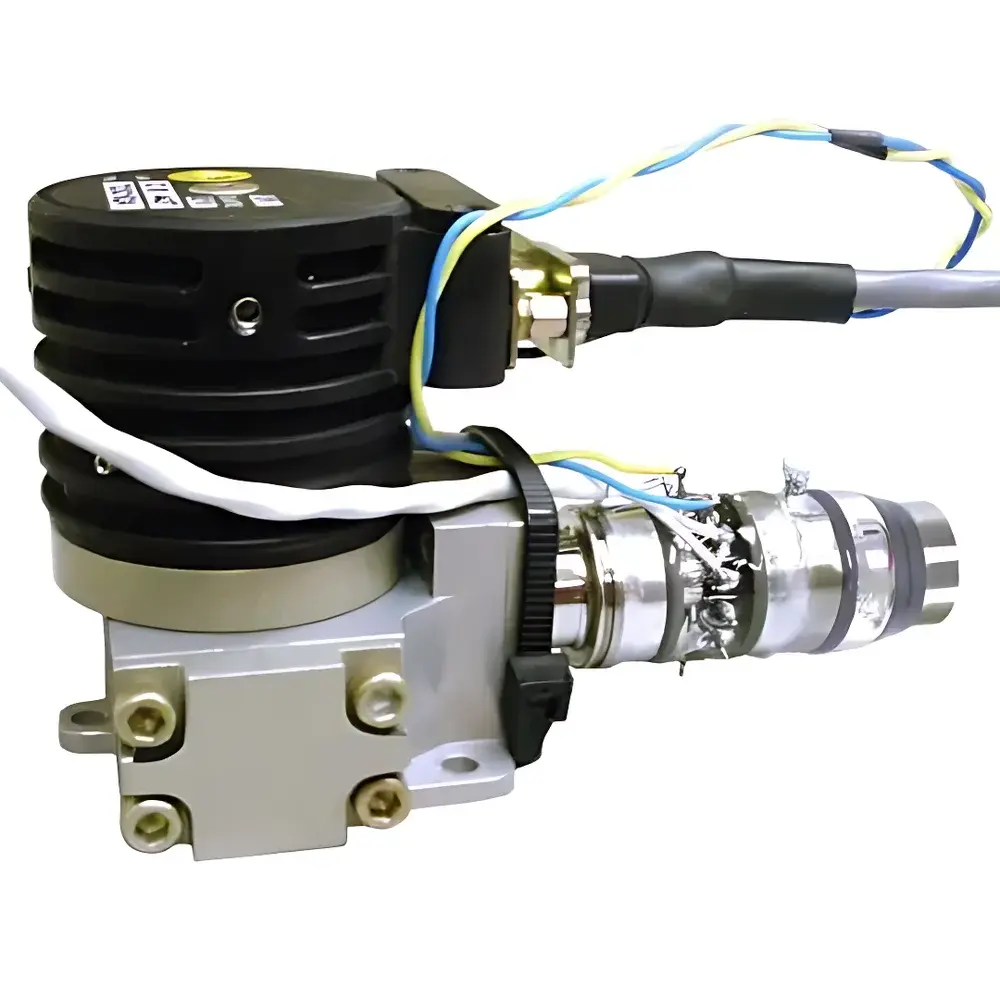
InfraRed Associates K508 Cryogenically Cooled Infrared Detector

| Brand | InfraRed Associates |
|---|---|
| Origin | USA |
| Model | K508 |
| Detector Type | Cryogenically Cooled InSb / HgCdTe Dual-Band Photodetector |
| Spectral Range | 1–5.5 µm (InSb) + Extended MCT Band (Configurable) |
| Cooling Method | Liquid Nitrogen or Stirling Cooler Compatible |
| Element Configuration | Single-Element or Linear Array (2–128 elements) |
| Component Category | Optical Instrument Component |
| Compliance | ASTM E1256, ISO 18434-1, MIL-STD-810G (Thermal Shock & Vibration) |
Ask about pricing, availability and specifications.
Overview
The InfraRed Associates K508 is a high-performance cryogenically cooled dual-band infrared detector engineered for precision radiometric and spectral applications requiring simultaneous or sequential detection across two distinct mid-wave infrared (MWIR) spectral bands. Built upon a monolithic or co-aligned hybrid architecture, the K508 integrates an indium antimonide (InSb) photodiode with a mercury cadmium telluride (HgCdTe or MCT) photodetector—both optically registered to a common focal plane. This enables true spatial and temporal correlation of signals from adjacent but spectrally non-overlapping regions (e.g., 1–5.5 µm for InSb and 3–12 µm or 5–14 µm for tunable MCT), eliminating registration error inherent in discrete-detector systems. The detector operates under cryogenic conditions—typically at 77 K (LN₂) or via closed-cycle Stirling cooler—to suppress thermal noise, maximize detectivity (D* > 1 × 10¹¹ cm·√Hz/W for InSb; > 5 × 10¹⁰ cm·√Hz/W for optimized MCT), and ensure shot-noise-limited performance. Its mechanical design conforms to standard optical breadboard mounting interfaces (e.g., 1/4″-20 and M6 threaded holes), facilitating integration into FTIR spectrometers, Fourier-transform infrared microscopes, calibrated blackbody radiometers, and military-grade surveillance platforms.
Key Features
- Dual-band co-focal architecture: InSb and HgCdTe elements precisely aligned on a single substrate or optomechanical mount for pixel-level spatial registration.
- Cryogenic compatibility: Supports both liquid nitrogen dewars and compact Stirling coolers (e.g., Ricor K508-compatible cold finger interface), enabling field-deployable or lab-stationary operation.
- Low-noise integrated biasing: Optional MCT-1000 preamplifier module provides regulated voltage bias, transimpedance gain (10⁴–10⁶ V/A), and DC-coupled output—eliminating external bias supplies and load resistors.
- Configurable spectral response: Standard InSb band (1–5.5 µm); MCT cutoff wavelength selectable during fabrication (3–12 µm typical), supporting application-specific cut-on/cut-off filtering.
- Scalable array formats: Available as single-element detectors or linear arrays (2-, 8-, 16-, 32-, 64-, or 128-element configurations) with uniform responsivity (< ±3% variation) and inter-element crosstalk < –40 dB.
- Hermetically sealed TO-8 or CS-mount packages: Aluminized Kovar housings with AR-coated ZnSe or Ge windows (optional broadband or bandpass coatings).
Sample Compatibility & Compliance
The K508 is designed for use with collimated or focused IR beams from FTIR interferometers (e.g., Bruker VERTEX, Thermo Nicolet iS50), quantum cascade laser (QCL) sources, synchrotron IR beamlines, and calibrated cavity radiators. It meets critical metrological requirements for traceable radiometry per ASTM E1256 (Standard Test Methods for Radiation Thermometers) and ISO 18434-1 (Condition monitoring — Thermography — Part 1: General procedures). Its ruggedized mechanical construction complies with MIL-STD-810G for operational shock, vibration, and thermal cycling (–40 °C to +70 °C ambient, with stable 77 K detector temperature). For regulated environments, the MCT-1000 amplifier supports configurable analog output scaling and optional digital I²C interface—enabling audit-ready data logging compatible with GLP/GMP workflows and FDA 21 CFR Part 11-compliant acquisition software.
Software & Data Management
While the K508 is a hardware-level detector component, its integration into measurement systems leverages industry-standard drivers and APIs. When paired with the MCT-1000 amplifier, analog voltage outputs (±10 V, 50 Ω) interface seamlessly with NI DAQmx, Keysight U2300A, or Spectrum M2i series digitizers. SDKs support MATLAB, Python (via PyVISA or NIDAQmx Python bindings), and LabVIEW for real-time signal processing—including lock-in amplification, FFT-based spectral analysis, and multi-channel synchronization for array readout. Raw detector data retains full bit-depth (16–24-bit ADC resolution depending on DAQ configuration), preserving dynamic range for post-acquisition calibration against NIST-traceable reference sources.
Applications
- FTIR spectroscopy: Dual-band referencing for atmospheric correction, moisture interference suppression, and real-time baseline stabilization.
- Infrared microscopy: Simultaneous acquisition of structural (InSb) and compositional (MCT) contrast in polymer, pharmaceutical, and semiconductor thin-film analysis.
- Radiometric calibration: Primary and secondary standard transfer using blackbody sources (e.g., CI Systems BB3500) across 100–3000 K temperature ranges.
- Defense & aerospace: Missile warning systems (MWS), countermeasure evaluation, and spectral signature discrimination in cluttered thermal backgrounds.
- Gas sensing: Multi-gas quantification (e.g., CO, CO₂, NOₓ, CH₄) via differential absorption spectroscopy across overlapping and adjacent MWIR bands.
- Quantum optics research: Time-resolved photoconductive decay measurements and low-flux photon counting in pump-probe configurations.
FAQ
What cooling methods are supported for the K508 detector?
The K508 is compatible with liquid nitrogen (LN₂) dewars and commercially available Stirling cycle coolers (e.g., Ricor K508, Sumitomo RDK-101). Mounting flanges and cold-finger interfaces adhere to industry-standard dimensions.
Can the MCT cutoff wavelength be customized?
Yes—InfraRed Associates offers custom HgCdTe compositions to target specific long-wavelength cutoffs (λc) between 3 µm and 14 µm, subject to material availability and minimum order quantities.
Is the K508 suitable for vacuum environments?
All standard K508 packages are hermetically sealed and rated for operation under high vacuum (≤10⁻⁶ Torr); optional conflat (CF) flange mounts are available for ultra-high-vacuum beamline integration.
Does the K508 include factory calibration data?
Each unit ships with NIST-traceable spectral responsivity curves (A/W vs. wavelength), noise-equivalent power (NEP), and D* values measured at 77 K under defined bias and modulation conditions.
How is electrical interfacing handled for array configurations?
Linear arrays utilize multiplexed analog output or LVDS serialized digital output (configurable); pinouts comply with IEEE 1394b and Camera Link Base standards for plug-and-play integration with commercial frame grabbers.