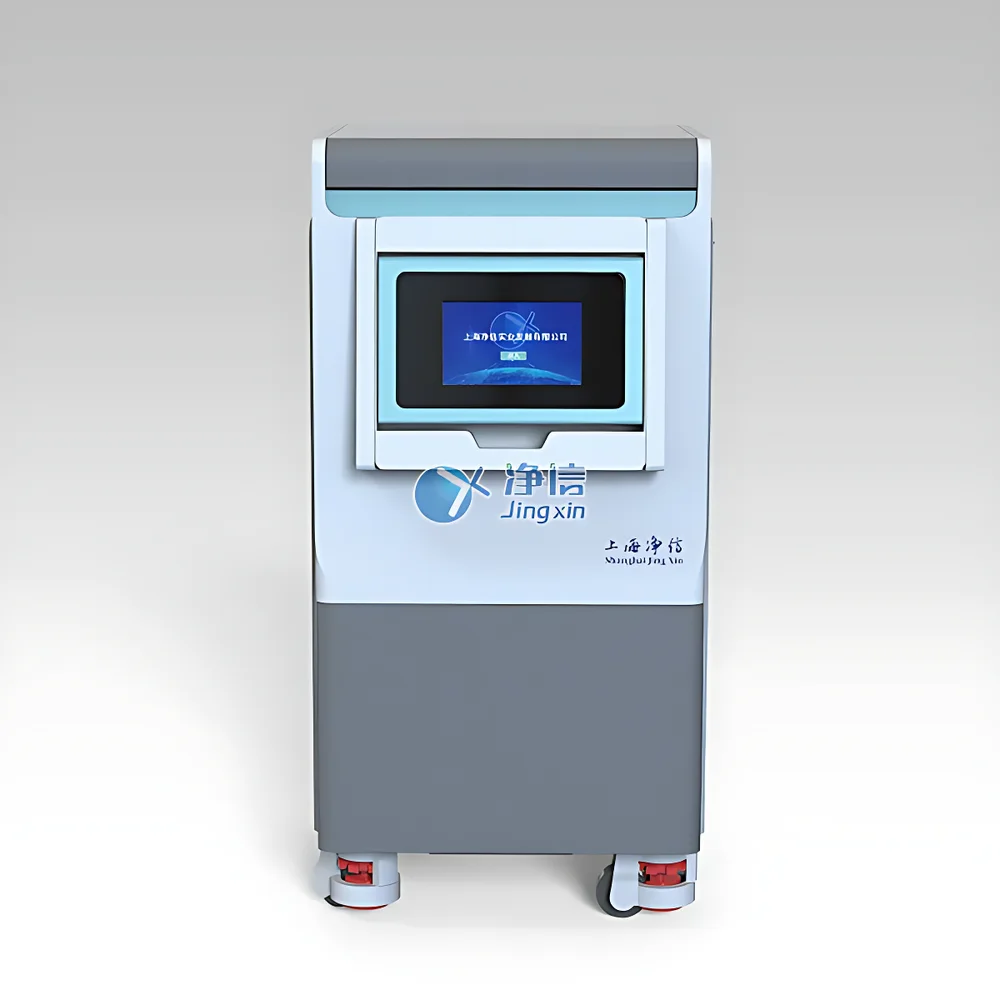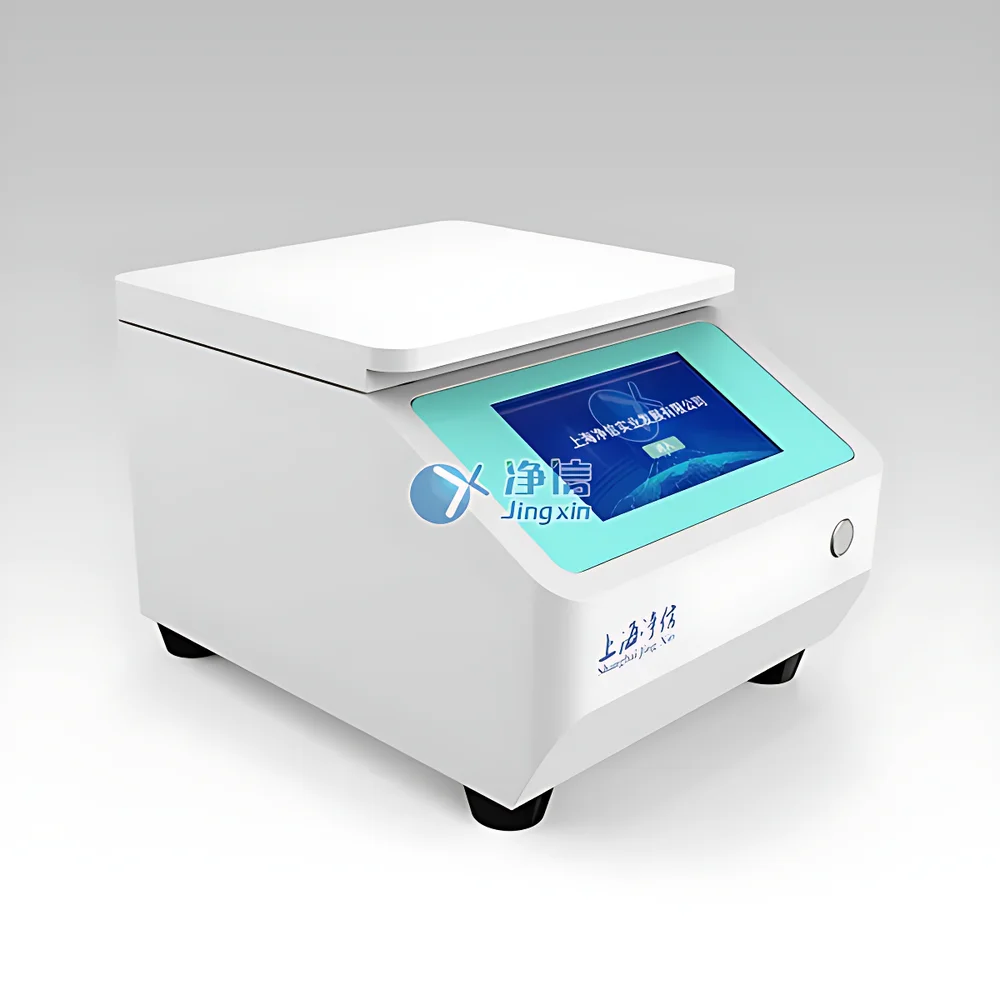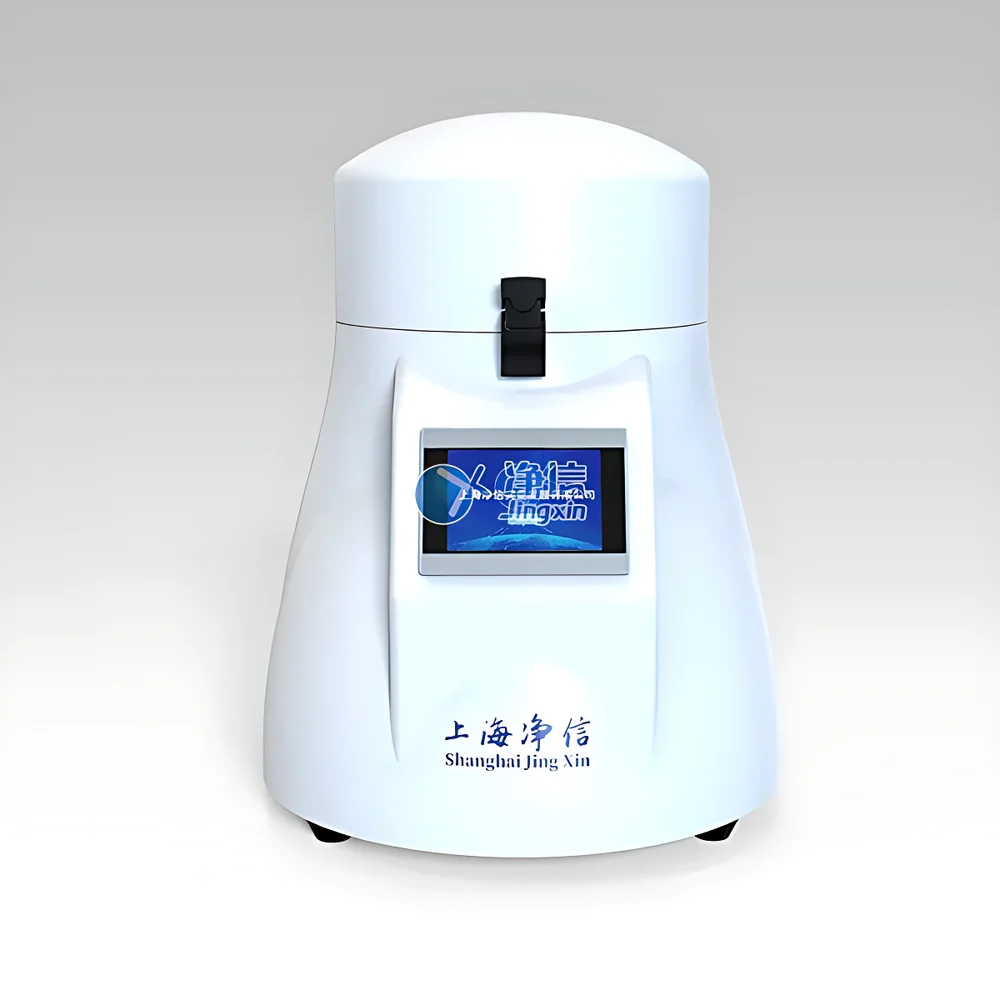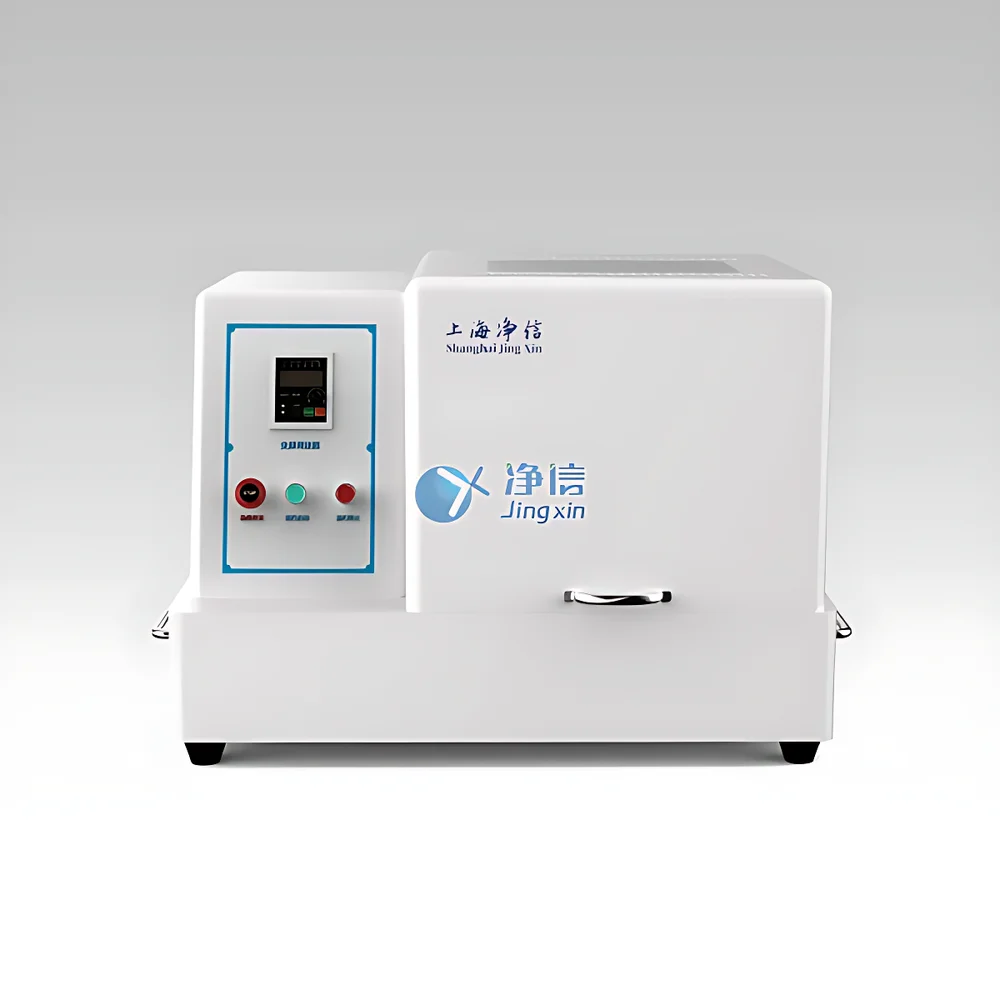
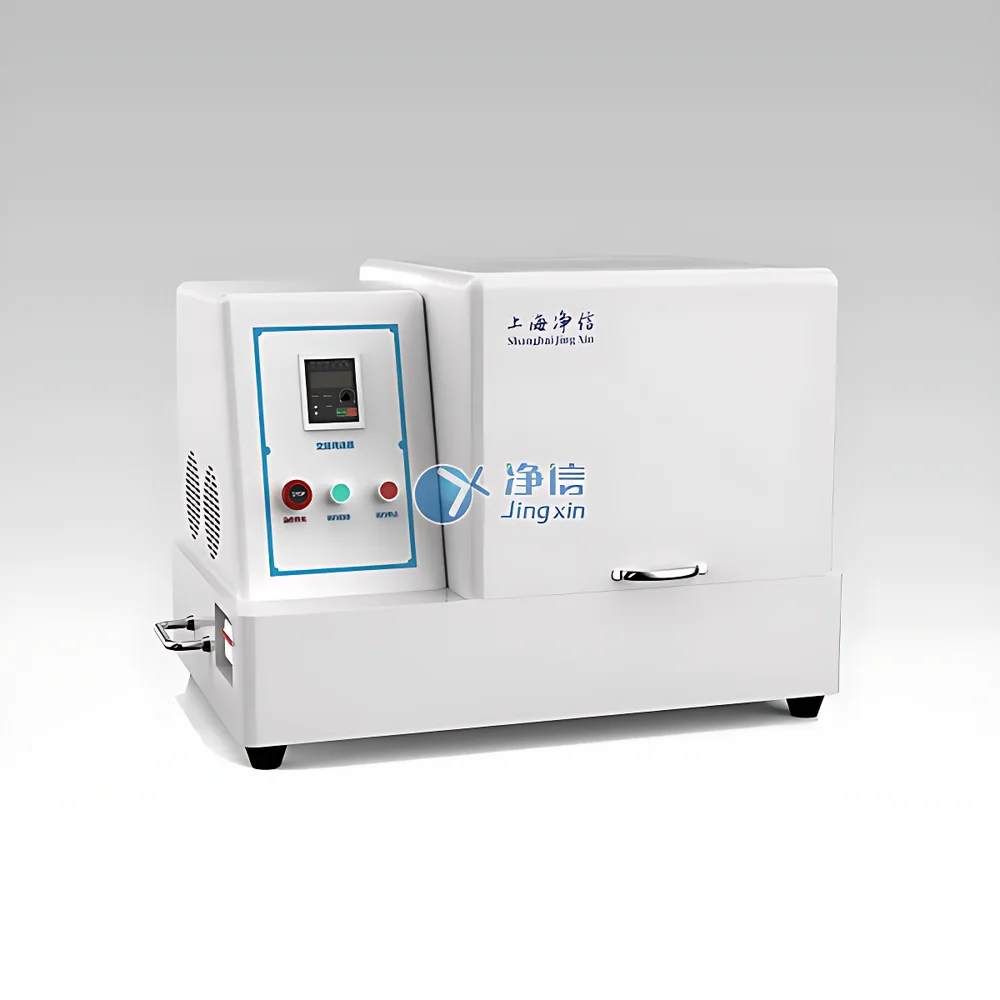
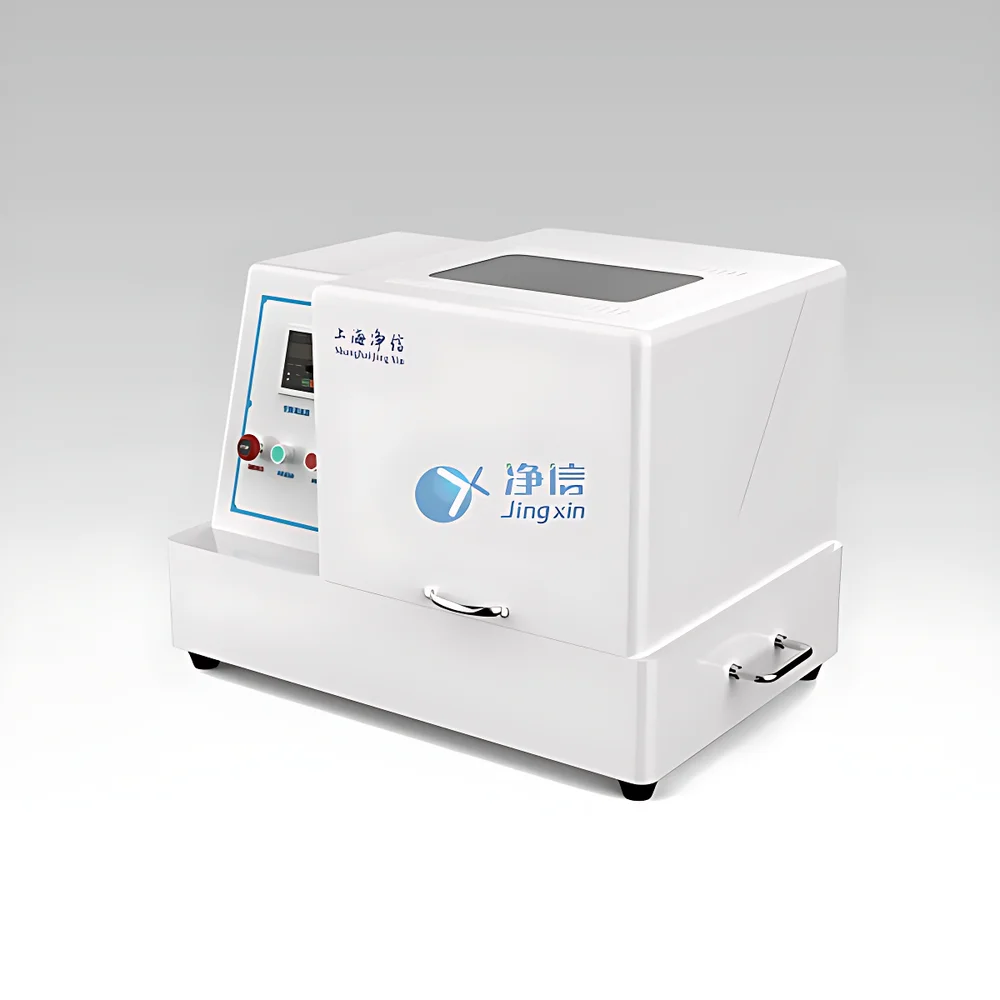
Jingxin JX-5G High-Energy Planetary Ball Mill

| Brand | Jingxin (Shanghai Jingxin Scientific Instrument Co., Ltd.) |
|---|---|
| Origin | Shanghai, China |
| Manufacturer Type | Direct Manufacturer |
| Instrument Type | Planetary Ball Mill |
| Sample Applicability | Hard, brittle, fibrous, and medium-hard materials |
| Final Particle Size | < 100 nm |
| Batch Capacity | 4 × 3000 mL |
| Main Disc Speed | 35–290 rpm |
| Jar Speed | 70–580 rpm |
| Max Feed Size | ≤ 10 mm |
| Jar Volume Options | 50–3000 mL |
| Grinding Media Diameter | 3–20 mm |
| Media Mass per Jar | 200–1000 g |
| Drive Ratio (Sun Disk | Jar): 1:2 |
| Bidirectional Operation | Yes |
| Emergency Stop | Yes |
| Cooling Option | Optional cryogenic or external coolant jacket |
| Inert Atmosphere Compatibility | Yes (vacuum/gas-tight jar kits available) |
| Certification | CE |
| Net Weight | 165 kg |
| Dimensions (L×W×H) | 900 × 620 × 650 mm |
| Noise Reduction | Gear-driven low-noise transmission + fully enclosed acoustic shielding |
Ask about pricing, availability and specifications.
Overview
The Jingxin JX-5G High-Energy Planetary Ball Mill is an industrial-grade laboratory grinding system engineered for reproducible, high-intensity comminution of hard, brittle, fibrous, and temperature-sensitive materials. It operates on the principle of planetary motion—where grinding jars rotate about their own axes while simultaneously revolving around a central sun wheel—generating centrifugal accelerations up to 60 g. This dual-axis kinematic configuration induces intense impact, shear, and friction forces between grinding media and sample particles, enabling ultra-fine size reduction down to sub-100 nm with narrow particle size distribution. Designed for both dry and wet grinding protocols, the JX-5G supports routine sample preparation in materials science, pharmaceutical development, geochemical analysis, metallurgy, and nanomaterial synthesis. Its robust cast-iron frame, precision-machined gear train, and thermally stable drive architecture ensure long-term operational consistency under repeated high-load cycles.
Key Features
- Simultaneous processing of four 3000 mL grinding jars—total batch capacity of 12 L—enabling high-throughput sample preparation without compromising uniformity.
- Adjustable main disc speed (35–290 rpm) and corresponding jar speed (70–580 rpm), with precise 1:2 transmission ratio and programmable forward/reverse alternation to minimize media segregation and thermal buildup.
- Comprehensive material compatibility: over twelve jar and grinding media options—including stainless steel (304/316), tungsten carbide (WC), zirconia (ZrO₂), alumina (Al₂O₃), agate (SiO₂), PTFE, PU, nylon (PA), and PP—allow tailored selection based on chemical inertness, hardness, and contamination sensitivity.
- Integrated noise suppression system combining helical gear reduction and full acoustic enclosure, achieving sound pressure levels < 65 dB(A) at 1 m distance—meeting ISO 7779 and EU Directive 2006/42/EC requirements for laboratory occupational safety.
- Dual safety architecture: mechanical emergency stop button compliant with EN ISO 13850, plus overload protection circuitry and real-time motor current monitoring to prevent thermal damage during extended operation.
- Optional accessories include vacuum/gas-tight jars for oxygen-sensitive reactions, cryo-jacketed vessels for low-temperature milling (−196 °C with liquid nitrogen), and digital timer modules with audit-trail-capable logging (GLP/GMP-ready).
Sample Compatibility & Compliance
The JX-5G accommodates diverse sample classes per ASTM E11-22 (standard specifications for wire cloth and sieves) and ISO 13320:2020 (laser diffraction particle size analysis). Verified applications include: pharmaceutical actives (e.g., dried Glycyrrhiza uralensis, Astragalus membranaceus), geological matrices (soil, limestone, quartzite), metallic powders (Fe, Al, Mg alloys), ceramic precursors (Al₂O₃, SiC), polymers, carbon-based materials (graphite, biochar), and environmental solids (sludge, fly ash, cement clinker). All jar and media configurations comply with USP for extractables testing and meet FDA 21 CFR Part 11 requirements when paired with validated data acquisition software. CE marking confirms conformity with Machinery Directive 2006/42/EC, Electromagnetic Compatibility Directive 2014/30/EU, and RoHS 2011/65/EU.
Software & Data Management
While the base JX-5G model utilizes a tactile dial-key interface for parameter entry (speed, time, direction sequence), optional PC-integrated control modules support automated method storage, real-time RPM/temperature logging, and CSV export compatible with LIMS environments. Firmware includes configurable start/stop triggers, pause-resume functionality, and automatic power-off after cycle completion. Audit trails record operator ID, timestamp, parameter set, and runtime deviations—fully traceable for GLP audits per OECD Principles of Good Laboratory Practice (ENV/MC/CHEM(98)17) and ISO/IEC 17025:2017 clause 7.7.
Applications
- Nanoparticle synthesis: mechanochemical production of metal oxides, intermetallics, and MOFs via solid-state reaction pathways.
- Pharmaceutical pre-formulation: reduction of herbal extracts and APIs to enhance dissolution kinetics and bioavailability.
- Geochemical homogenization: preparation of certified reference materials (CRMs) for XRF, ICP-MS, and XRD analysis.
- Metallurgical powder processing: alloying of immiscible metals (e.g., Al–Ti, Cu–Ni) and amorphous phase induction.
- Environmental sample digestion: pretreatment of soils and sediments prior to EPA Method 3050B acid extraction.
- Materials characterization: generation of representative sub-50 µm fractions for BET surface area, DSC, and TGA measurements.
FAQ
What is the maximum feed particle size the JX-5G can accept?
The recommended maximum initial particle dimension is ≤ 10 mm, depending on material hardness and brittleness. Pre-crushing may be required for oversized aggregates to ensure efficient energy transfer and avoid jar deformation.
Can the JX-5G perform cryogenic grinding?
Yes—when equipped with optional cryo-jackets and compatible low-temperature media (e.g., stainless steel or zirconia), the system supports liquid nitrogen-cooled milling to −196 °C, preserving thermolabile compounds and inhibiting agglomeration.
Is inert atmosphere processing supported?
Absolutely. Vacuum-sealed and gas-purged jar kits (with O-ring seals and Schrader valves) are available for argon/nitrogen glovebox integration, critical for air-sensitive catalysts and reactive metal powders.
How is calibration and performance verification performed?
Users validate throughput and fineness using NIST-traceable reference standards (e.g., SRM 1980 for particle size). Routine checks include rotational speed verification via optical tachometer and jar sealing integrity testing per ISO 10648-2.
What maintenance intervals are recommended?
Gear oil replacement every 2000 operating hours; periodic inspection of jar clamps, drive belts, and emergency stop functionality per manufacturer’s Maintenance Log (Revision 3.1, 2023).
More from Jingxin (Shanghai Jingxin Scientific Instrument Co., Ltd.)
View all Jingxin (Shanghai Jingxin Scientific Instrument Co., Ltd.) products → Jingxin JXFSTPRP-192CL High-Speed Cryogenic Grinding and Homogenization System
- Jingxin JX-CKSM-4WK 4-Channel Temperature-Controlled Single-Cell Suspension Preparation System
- Jingxin JX-24 High-Efficiency Automated Cryogenic Tissue Grinder
- Jingxin Tissuelyser-192 High-Throughput Cryogenic Tissue Homogenizer