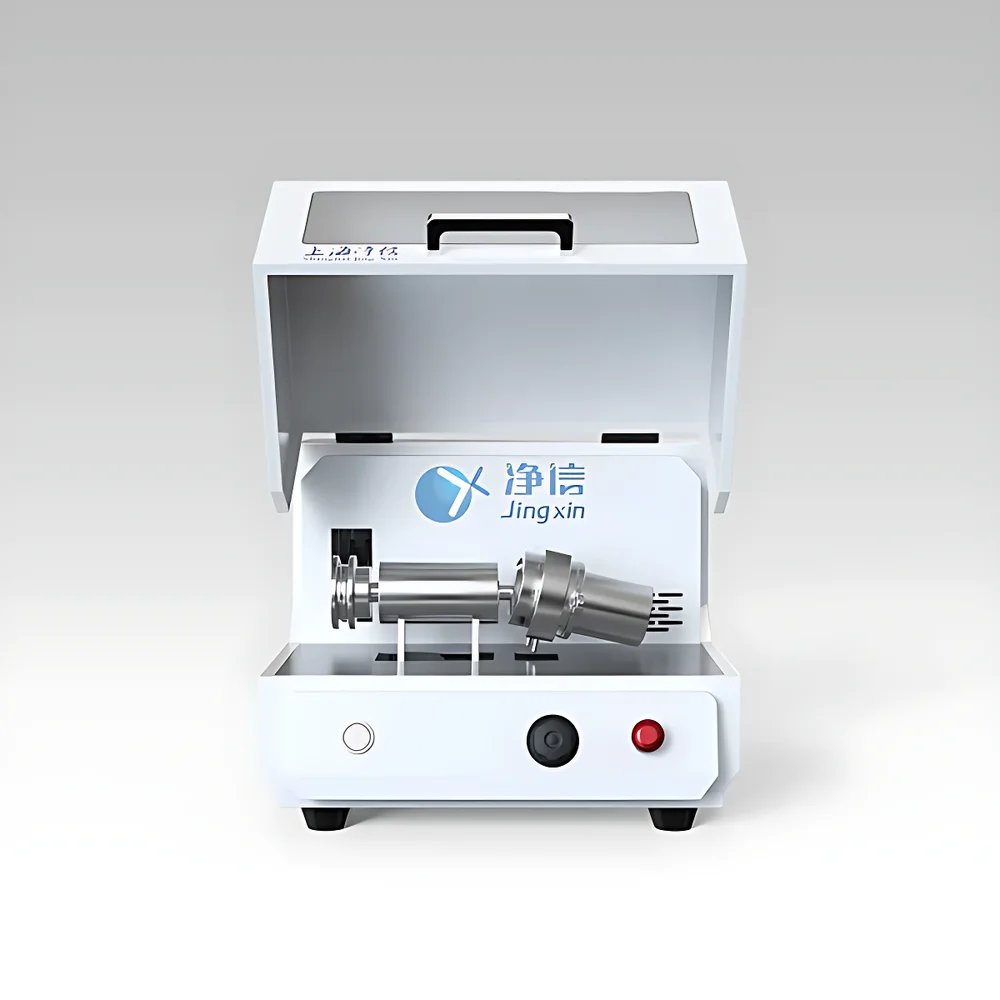
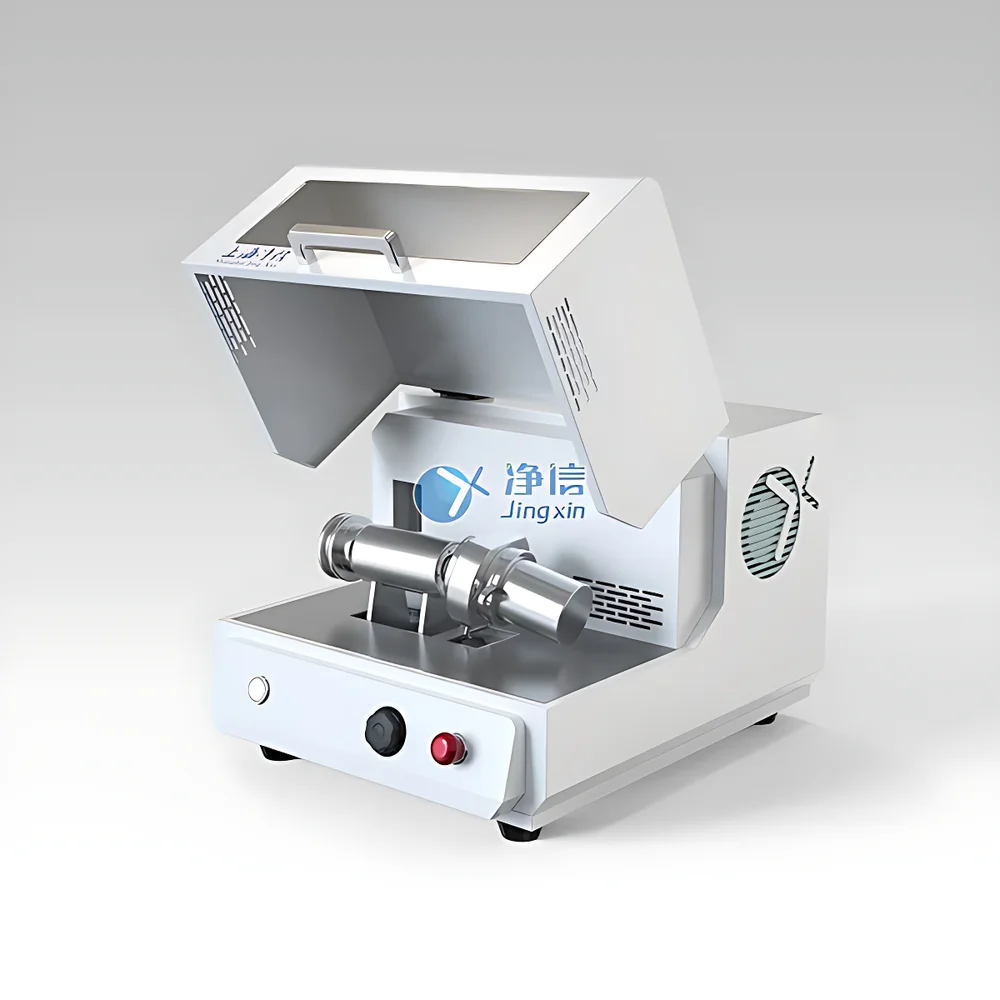
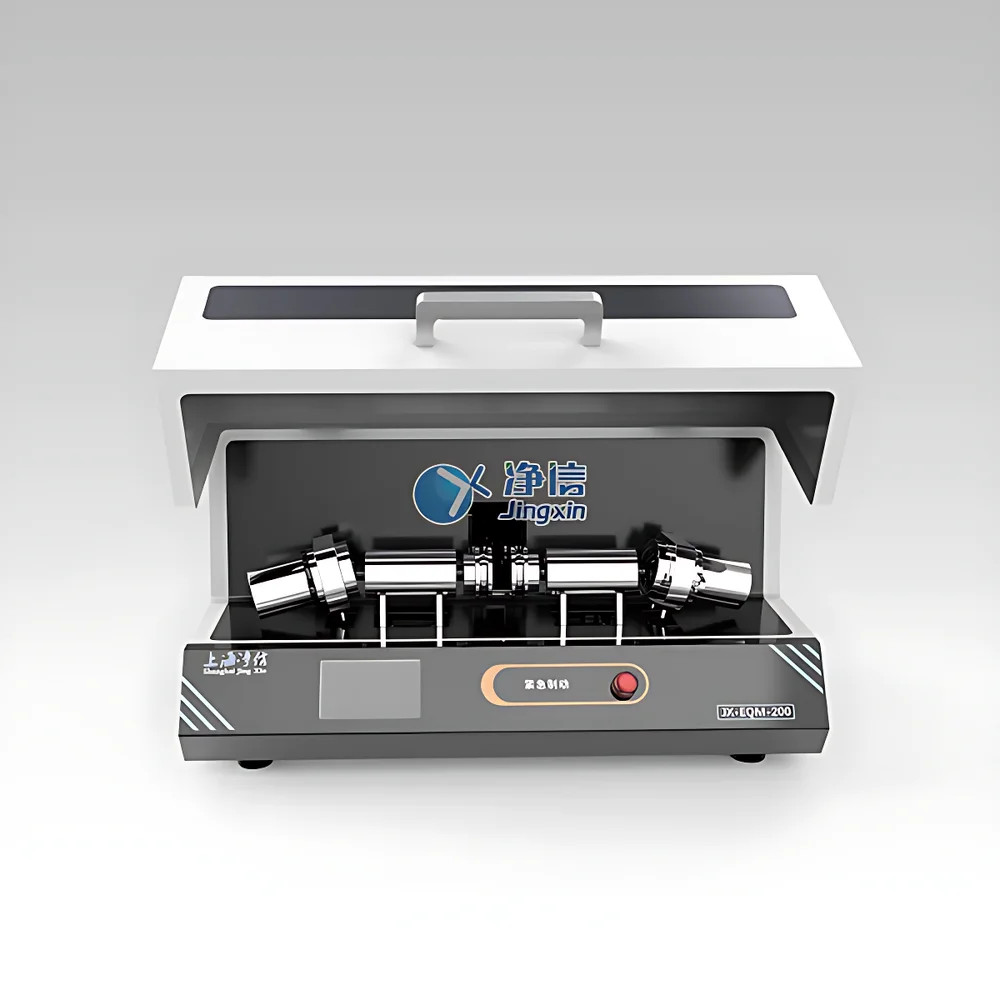
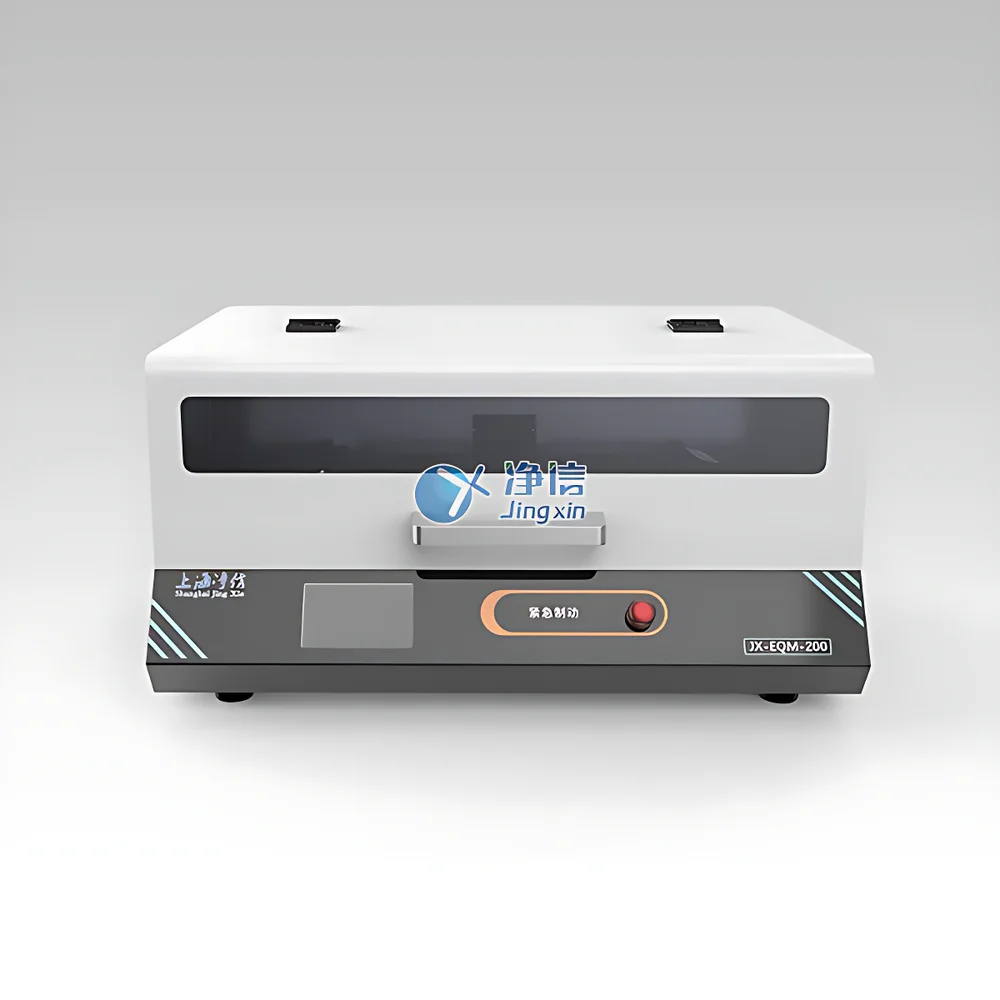
Jingxin JX-EQM-I High-Energy Vibratory Ball Mill

| Brand | Jingxin (Shanghai Jingxin Scientific Instrument Co., Ltd.) |
|---|---|
| Origin | Shanghai, China |
| Manufacturer Type | Direct Manufacturer |
| Equipment Type | Vibratory Ball Mill |
| Model | JX-EQM-I |
| Sample Suitability | Hard & Brittle Materials |
| Maximum Feed Size | < 1 mm |
| Final Particle Size Range | 0.1–20 µm |
| Standard Jar Capacity | 80 mL (Stainless Steel) |
| Optional Jar Capacities | 25 mL / 50 mL |
| Operating Speed | 1700 rpm |
| Grinding Modes | Dry, Wet, Vacuum/Inert Atmosphere |
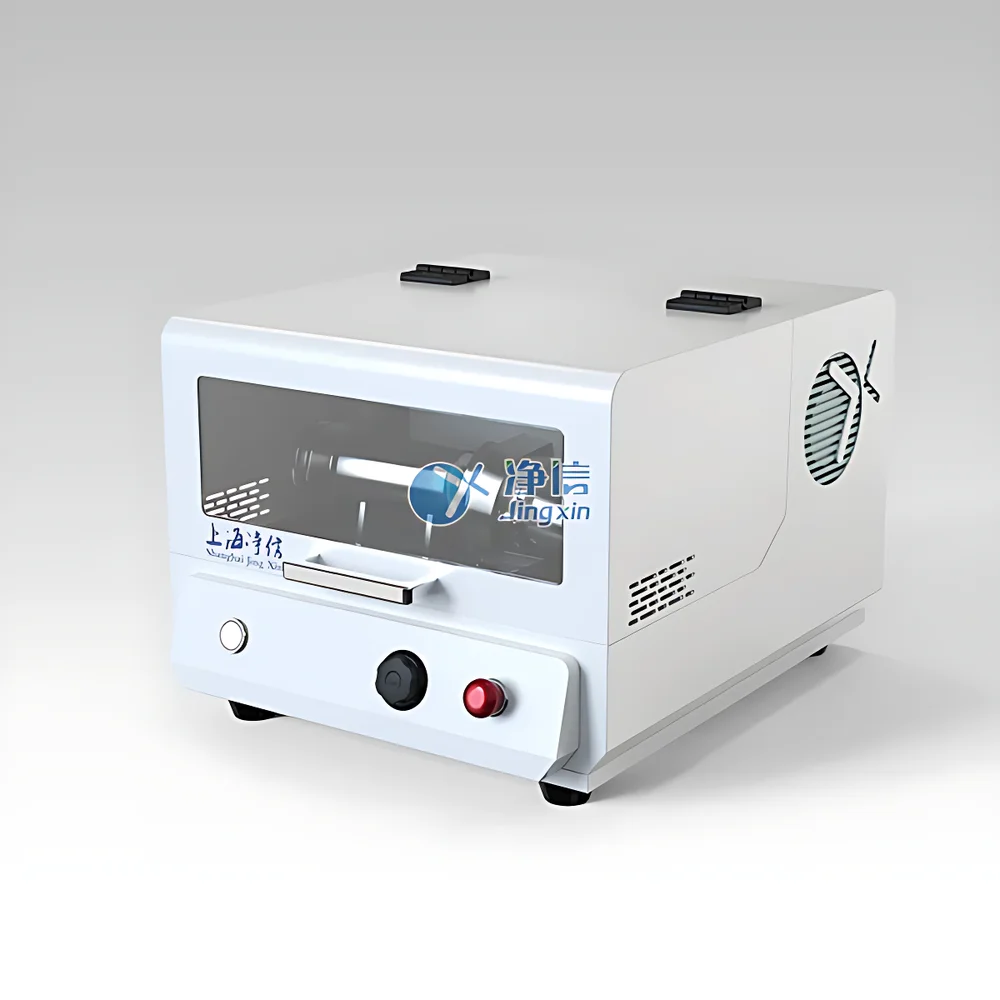
| Dimensions (W×D×H) | 450 × 386 × 280 mm |
| Safety Features | Emergency Stop, Overload Protection, Programmable Timer, Password Lock, Auto Memory Function |
| Jar Materials | Stainless Steel, Zirconia, Alumina, Agate, Nylon |
| Cooling | Integrated Air-Cooling System |
| Viewing Window | Yes |
Ask about pricing, availability and specifications.
Overview
The Jingxin JX-EQM-I High-Energy Vibratory Ball Mill is a compact, desktop-grade laboratory milling system engineered for rapid, reproducible size reduction of hard, brittle, and heterogeneous solid samples. Unlike planetary ball mills that rely on rotational centrifugal forces, the JX-EQM-I employs a high-frequency eccentric oscillation principle: a motor-driven eccentric shaft induces intense three-dimensional vibrational motion—vertical oscillation combined with lateral swinging—transferring kinetic energy directly to the grinding jar and its contents. This mechanism generates significantly higher impact energy per unit time compared to conventional planetary or centrifugal mills, enabling efficient comminution in minutes rather than hours. Designed for R&D labs with limited floor space and demanding throughput requirements, the JX-EQM-I delivers consistent sub-20 µm particle distributions without requiring complex alignment or mechanical calibration. Its robust cast-aluminum frame, precision-balanced drive assembly, and integrated thermal management ensure stable operation during extended duty cycles—critical for method development, quality control, and sample homogenization across regulated environments.
Key Features
- High-efficiency eccentric vibration drive delivering up to 1700 rpm effective impact frequency, achieving 3–5× faster grinding kinetics versus standard planetary mills
- Single-jar configuration with standardized 80 mL stainless steel grinding jar (25 mL and 50 mL options available in agate, zirconia, alumina, nylon, and stainless steel)
- Programmable digital controller supporting precise run-time scheduling, intermittent grinding cycles, and auto-memory recall of previous protocols
- Integrated safety architecture including emergency stop button, real-time overload detection, password-protected parameter locking, and automatic shutdown on thermal or mechanical anomaly
- Dual-mode ventilation and transparent polycarbonate viewing window for real-time process monitoring under ambient or inert conditions
- Modular vacuum/inert gas interface compatible with sealed jars for oxygen-sensitive, pyrophoric, or reactive material processing (e.g., battery cathode precursors, metal organic frameworks)
- Low-power consumption design (≤300 W nominal), optimized for continuous operation in shared lab infrastructure without dedicated HVAC support
Sample Compatibility & Compliance
The JX-EQM-I accommodates a broad spectrum of inorganic and organic matrices—including ceramics, alloys, minerals, plant tissues, bone, pharmaceutical excipients, polymers, and composite feedstocks—with feed particle sizes up to 1 mm. Final particle size distribution falls consistently within 0.1–20 µm, verified by laser diffraction (ISO 13320) or SEM-based particle analysis. All wet-grinding configurations comply with ISO 898-1 for solvent compatibility labeling; vacuum-capable jars meet ASTM F2714 specifications for leak integrity under ≤10⁻² mbar. The instrument’s electrical design conforms to IEC 61010-1:2010 for laboratory equipment safety, while firmware supports audit-ready operation logs required under GLP and GMP frameworks (21 CFR Part 11-compliant data export via USB).
Software & Data Management
The embedded microcontroller records timestamped operational metadata—including total runtime, cycle count, peak current draw, and thermal profile—for each grinding sequence. Data export is supported via USB 2.0 to CSV-compatible spreadsheets, enabling traceability in QA/QC documentation. While no proprietary PC software is bundled, the device’s serial command protocol (ASCII-based, RS-232 over USB-C) allows integration into LabVantage, STARLIMS, or custom Python-based laboratory information management systems (LIMS). All parameter changes are logged with user ID (via password entry) and system timestamp—satisfying ALCOA+ principles for raw data integrity.
Applications
This mill serves critical preprocessing roles in materials science (e.g., mechanochemical synthesis of MOFs and solid electrolytes), geochemistry (homogenization of rock powders prior to XRF or ICP-MS), pharmaceutical development (API micronization per USP <725>), agricultural research (DNA-preserving tissue disruption), and environmental analysis (extraction-ready soil/sludge pulverization). It is routinely deployed in ISO/IEC 17025-accredited testing labs for certified reference material (CRM) preparation and interlaboratory comparison studies where inter-batch repeatability (RSD <3% for d₅₀ across n=10 replicates) is mandatory.
FAQ
What distinguishes vibratory ball milling from planetary ball milling?
Vibratory mills apply high-frequency linear oscillation amplified by eccentric mass dynamics, generating dominant impact forces; planetary mills rely on Coriolis acceleration from orbital rotation, emphasizing shear and compression. The former achieves finer, more uniform distributions in shorter times for hard/brittle samples.
Can the JX-EQM-I be used for cryogenic grinding?
No—it lacks liquid nitrogen jacketing or低温 (-80°C) rated components. For cryo-milling, a dedicated cryo-capable vibratory mill with reinforced seals and thermal insulation is recommended.
Is validation documentation available for GMP environments?
Yes—factory-issued IQ/OQ protocols, calibration certificates for timer and speed verification, and material compliance declarations (RoHS, REACH) are provided upon request.
What maintenance intervals are recommended?
Biannual inspection of eccentric bearing preload, drive belt tension (if applicable), and jar clamp torque is advised. No lubrication of the main oscillation mechanism is required—sealed-for-life bearings eliminate routine greasing.
How is particle size distribution verified post-milling?
Users typically employ laser diffraction (Malvern Mastersizer), dynamic image analysis (Sympatec QICPIC), or sedimentation methods (ASTM D422) depending on material density and dispersion stability. The mill itself does not include integrated particle sizing.
More from Jingxin (Shanghai Jingxin Scientific Instrument Co., Ltd.)
View all Jingxin (Shanghai Jingxin Scientific Instrument Co., Ltd.) products → Jingxin JXFSTPRP-192CL High-Speed Cryogenic Grinding and Homogenization System
- Jingxin JX-CKSM-4WK 4-Channel Temperature-Controlled Single-Cell Suspension Preparation System
- Jingxin JX-24 High-Efficiency Automated Cryogenic Tissue Grinder
- Jingxin Tissuelyser-192 High-Throughput Cryogenic Tissue Homogenizer