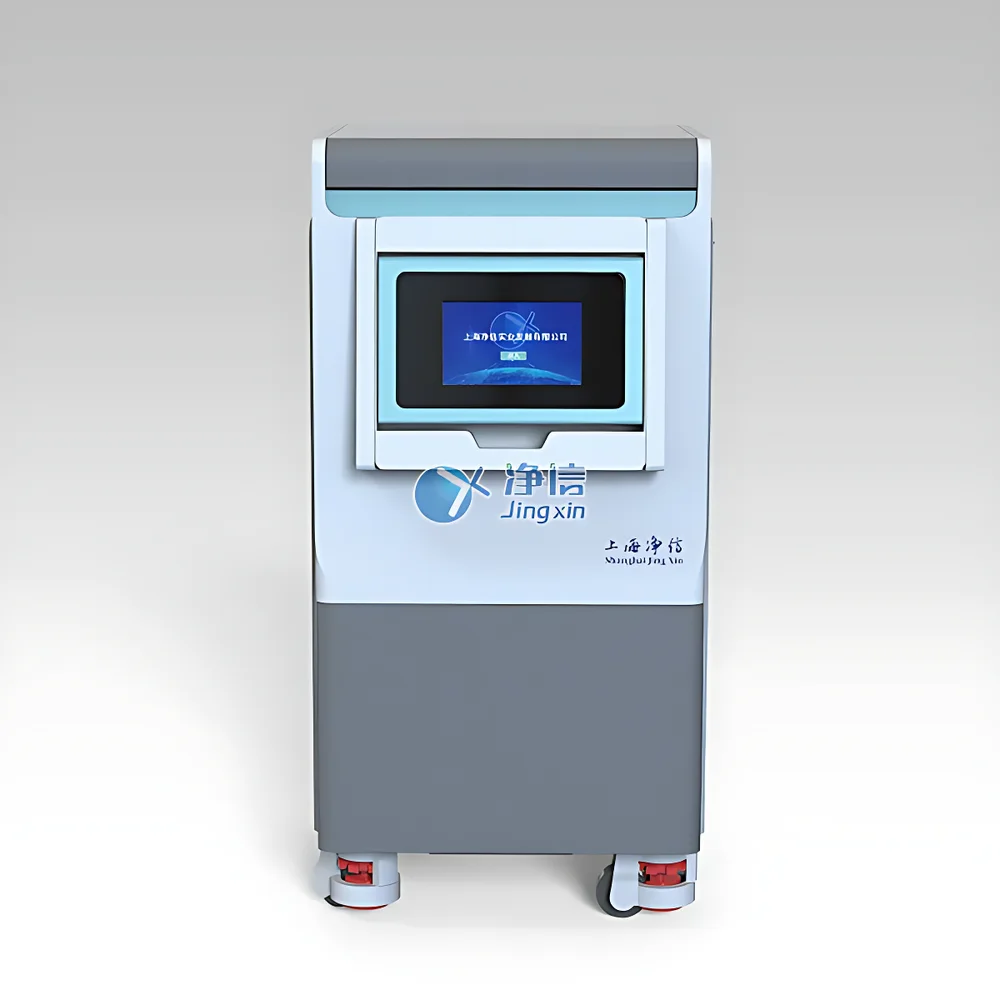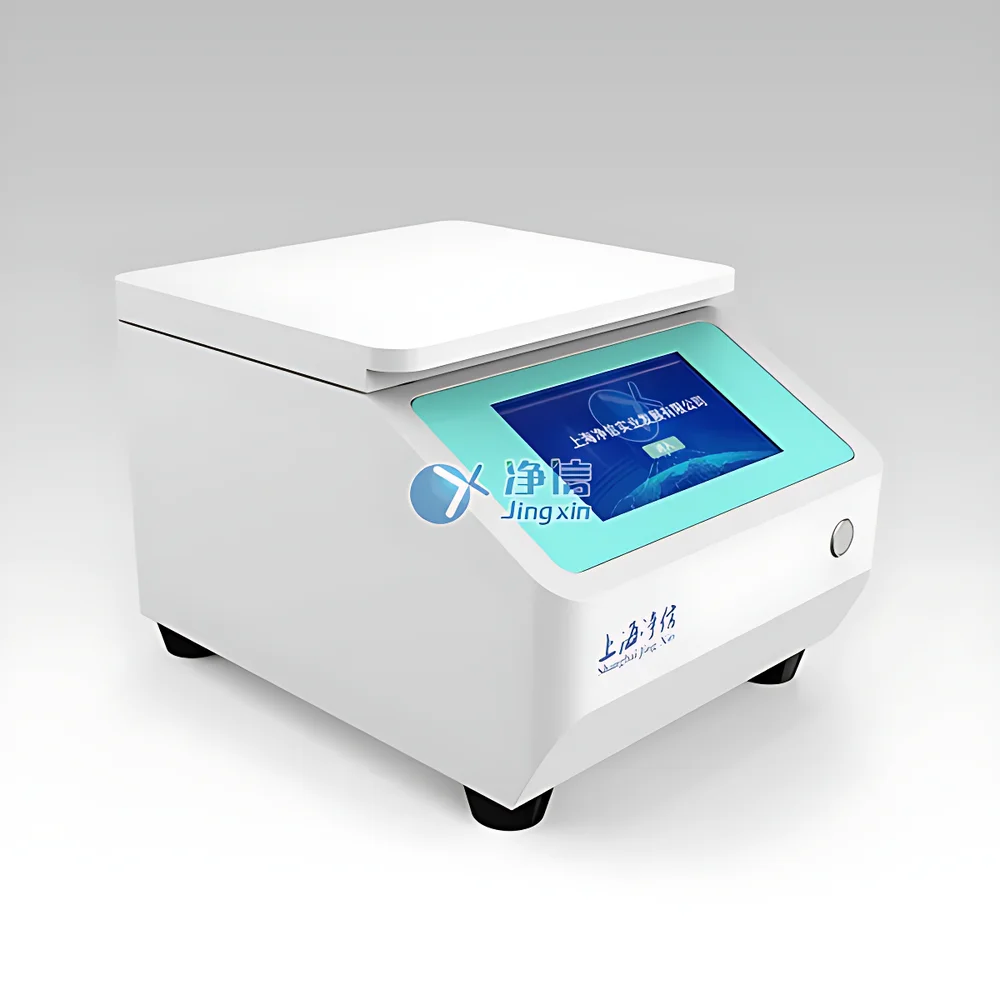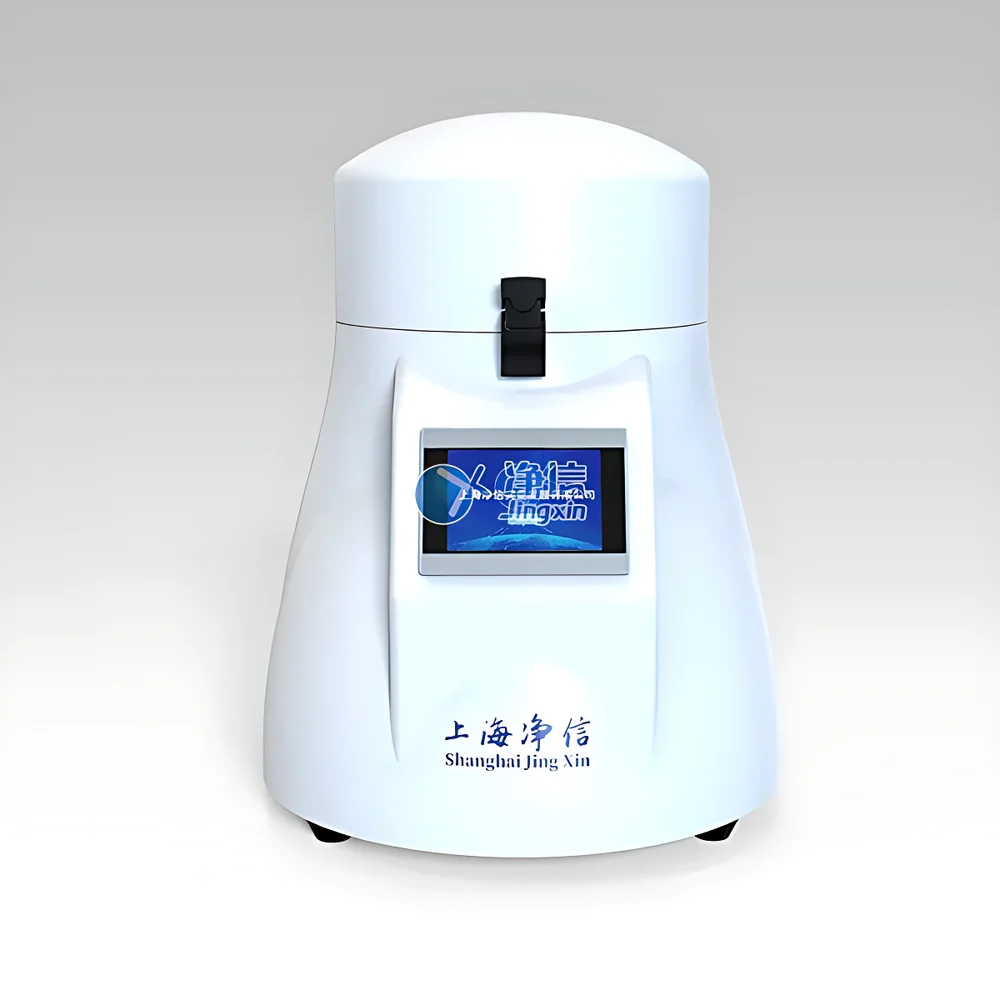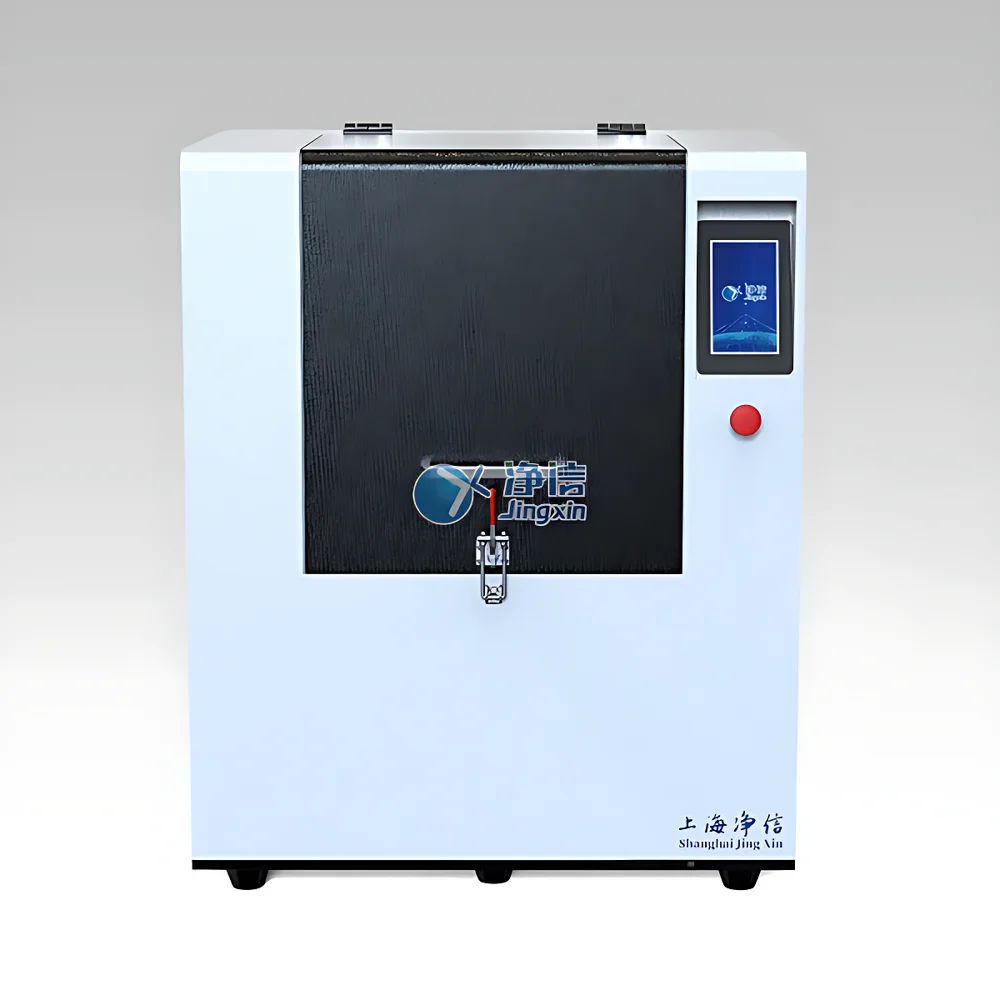
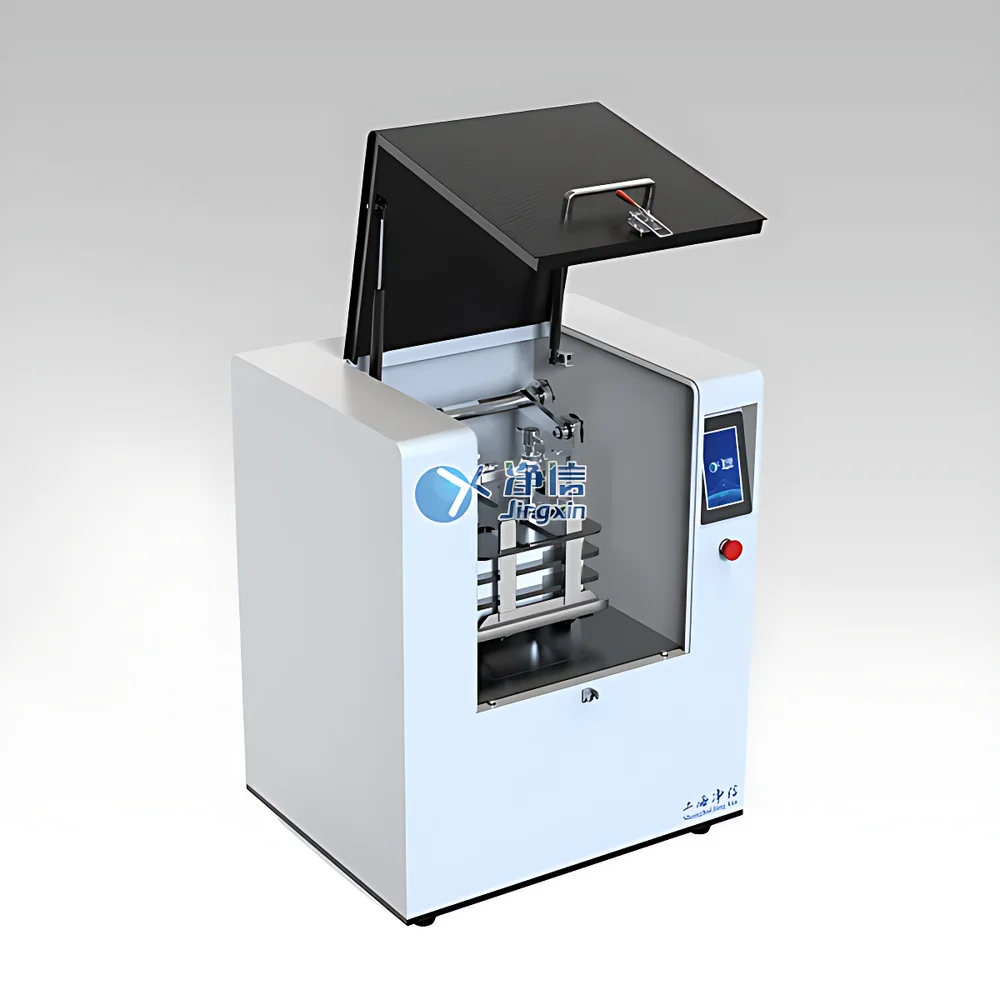
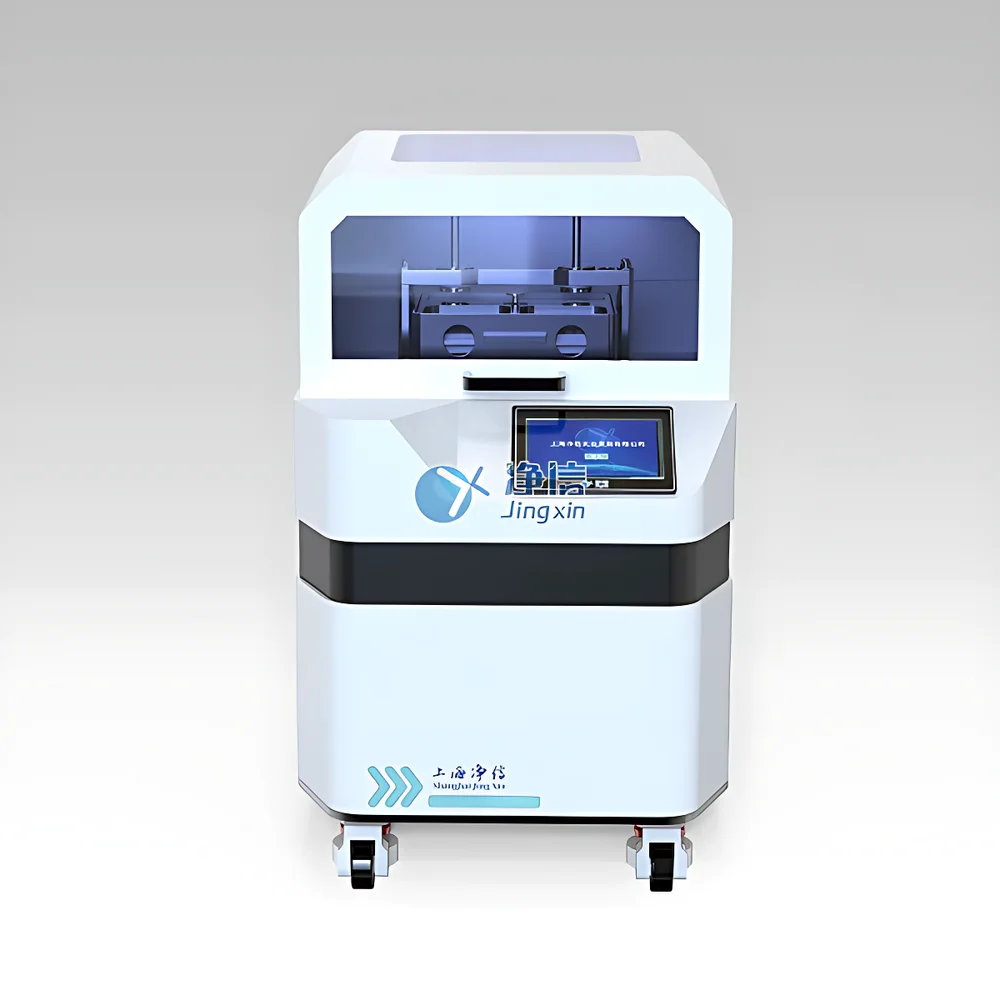
Jingxin JXFSTPRP-1152 High-Throughput Tissue Grinder

| Brand | Jingxin (Shanghai Jingxin Scientific Instrument Co., Ltd.) |
|---|---|
| Origin | Shanghai, China |
| Manufacturer Type | Original Equipment Manufacturer (OEM/ODM) |
| Model | JXFSTPRP-1152 |
| Throughput | Up to 1152 samples in 15 seconds |
| Compatible Vessels | 12×0.5 mL × 96-well deep-well plates, 90×5 mL tubes, 72×(7–15) mL tubes, 9×50 mL stainless steel jars, 30×50 mL wear-resistant tubes |
| Final Particle Size | ~5 µm |
| Platform Count | 30 |
| Frequency Range | 0–50 Hz |
| Rated Power | 1100 W |
| Vertical Stroke | 38 mm |
| Tube Holder Options | 96-well plate adapter, 2 mL centrifuge tube adapter |
| Input Voltage | 220 V AC single-phase, <10 A |
| Dimensions (L×W×H) | ≈580×470×700 mm |
| Grinding Media | 316 stainless steel balls (2–4 mm standard), optional glass, zirconia, tungsten carbide, or quartz beads (0.1–30 mm diameter) |
| Grinding Modes | Dry grinding, wet grinding, cryogenic grinding |
| Cycle Time Range | 0–9999 s |
| Acceleration/Deceleration Time | ≤2 s |
| Noise Level | <55 dB(A) |
| Data Storage | 20 programmable protocols with tissue-specific presets (e.g., heart, spleen, lung, kidney, bone, skin, hair) |
| Compliance | Designed for GLP-compliant sample prep workflows |
Ask about pricing, availability and specifications.
Overview
The Jingxin JXFSTPRP-1152 High-Throughput Tissue Grinder is an engineered solution for rapid, reproducible mechanical homogenization of biological and non-biological solid samples. It operates on the principle of high-frequency, three-dimensional orbital shaking combined with impact-based bead-beating — a method grounded in controlled kinetic energy transfer to achieve efficient cell lysis, tissue disruption, and particle size reduction. Unlike rotor-stator or blade-based homogenizers, this system delivers uniform energy distribution across hundreds of samples simultaneously without thermal buildup, making it especially suitable for nucleic acid, protein, and metabolite extraction workflows where integrity preservation is critical. Its fully enclosed architecture, coupled with disposable or autoclavable consumables, eliminates cross-contamination risks inherent in manual or low-throughput methods.
Key Features
- True high-throughput capacity: Processes up to 1152 individual samples in under 15 seconds using a 30-position dual-tier platform configuration.
- Three-axis motion system: Simultaneous vertical oscillation (38 mm stroke) and horizontal orbital displacement ensures comprehensive bead agitation and maximizes collision frequency between grinding media and sample matrices.
- Programmable precision: 20 user-defined protocol slots with pre-optimized settings for diverse tissue types — including fibrous (muscle, tendon), calcified (bone, teeth), lipid-rich (adipose, brain), and keratinized (hair, nail) specimens.
- Thermal management design: Stainless steel chamber with rounded corners and sloped base minimizes retention zones; optional transparent polycarbonate lid and acoustic dampening enclosure reduce operational noise to <55 dB(A).
- Modular consumable compatibility: Supports multiple vessel formats — 96-well deep-well plates (0.5 mL), 5 mL polypropylene tubes, 7–15 mL wide-bore tubes, 50 mL stainless steel jars, and custom-fabricated wear-resistant containers.
- Cryogenic readiness: Integrated mounting points and thermal isolation pathways allow seamless integration with liquid nitrogen cooling manifolds or external air-cooling units for sub-zero grinding applications.
Sample Compatibility & Compliance
The JXFSTPRP-1152 accommodates a broad spectrum of heterogeneous materials, including but not limited to mammalian and plant tissues, microbial pellets, soil aggregates, geological minerals (e.g., basalt, quartz), polymer composites, and pharmaceutical excipients. All contact surfaces are constructed from electropolished 316 stainless steel, meeting FDA-compliant material specifications for laboratory equipment (21 CFR Part 820). The instrument’s closed-tube operation satisfies ISO 15189 and CLIA requirements for contamination control in clinical molecular diagnostics. When paired with validated RNA/DNA extraction kits, it supports workflows aligned with ISO/IEC 17025 accreditation criteria for testing laboratories.
Software & Data Management
The embedded microcontroller enables full parameter logging — including frequency (Hz), duration (s), cycle count, and timestamp — for each run. Protocol files are stored internally (20 max) and support export via USB interface for audit trail generation. While no proprietary software suite is bundled, the device outputs standardized CSV-formatted logs compatible with LIMS integration and electronic lab notebook (ELN) platforms. All data entries include operator ID fields and automatic versioning, facilitating compliance with 21 CFR Part 11 requirements when deployed in regulated GxP environments.
Applications
This grinder serves as a primary sample preparation tool in genomics (DNA/RNA isolation), proteomics (protein extraction from recalcitrant tissues), microbiome studies (fecal and oral swab homogenization), environmental analysis (soil metagenomic DNA recovery), forensic toxicology (tissue digestion prior to LC-MS/MS), and materials science (polymer dispersion and nanocomposite milling). Its ability to process thermolabile samples at ambient or sub-zero temperatures makes it indispensable for epigenetic and single-cell omics workflows requiring minimal degradation.
FAQ
What types of grinding media are supported?
Standard configurations include 316 stainless steel beads (2–4 mm); optional media include borosilicate glass, yttria-stabilized zirconia, tungsten carbide, and fused quartz — all available in diameters ranging from 0.1 mm to 30 mm.
Can the instrument be used for cryogenic grinding?
Yes — the chamber design allows retrofitting with liquid nitrogen delivery ports or connection to external refrigerated air systems, enabling consistent sub-zero processing without condensation or frost accumulation.
Is validation documentation available for regulatory submissions?
Factory-installed calibration certificates and IQ/OQ templates are provided upon request; users must perform PQ under their own SOPs per ISO/IEC 17025 or FDA guidance.
How is cross-contamination prevented during high-throughput runs?
By enforcing sealed-tube operation, eliminating shared blades or probes, and supporting single-use consumables — all validated through ATP bioluminescence assays per ISO 14644-1 Class 5 cleanroom standards.
What maintenance intervals are recommended?
Bearing inspection every 12 months; drive belt replacement every 24 months; routine cleaning of chamber interior and adapters after each use with 70% ethanol or approved disinfectants.
More from Jingxin (Shanghai Jingxin Scientific Instrument Co., Ltd.)
View all Jingxin (Shanghai Jingxin Scientific Instrument Co., Ltd.) products → Jingxin JXFSTPRP-192CL High-Speed Cryogenic Grinding and Homogenization System
- Jingxin JX-CKSM-4WK 4-Channel Temperature-Controlled Single-Cell Suspension Preparation System
- Jingxin JX-24 High-Efficiency Automated Cryogenic Tissue Grinder
- Jingxin Tissuelyser-192 High-Throughput Cryogenic Tissue Homogenizer