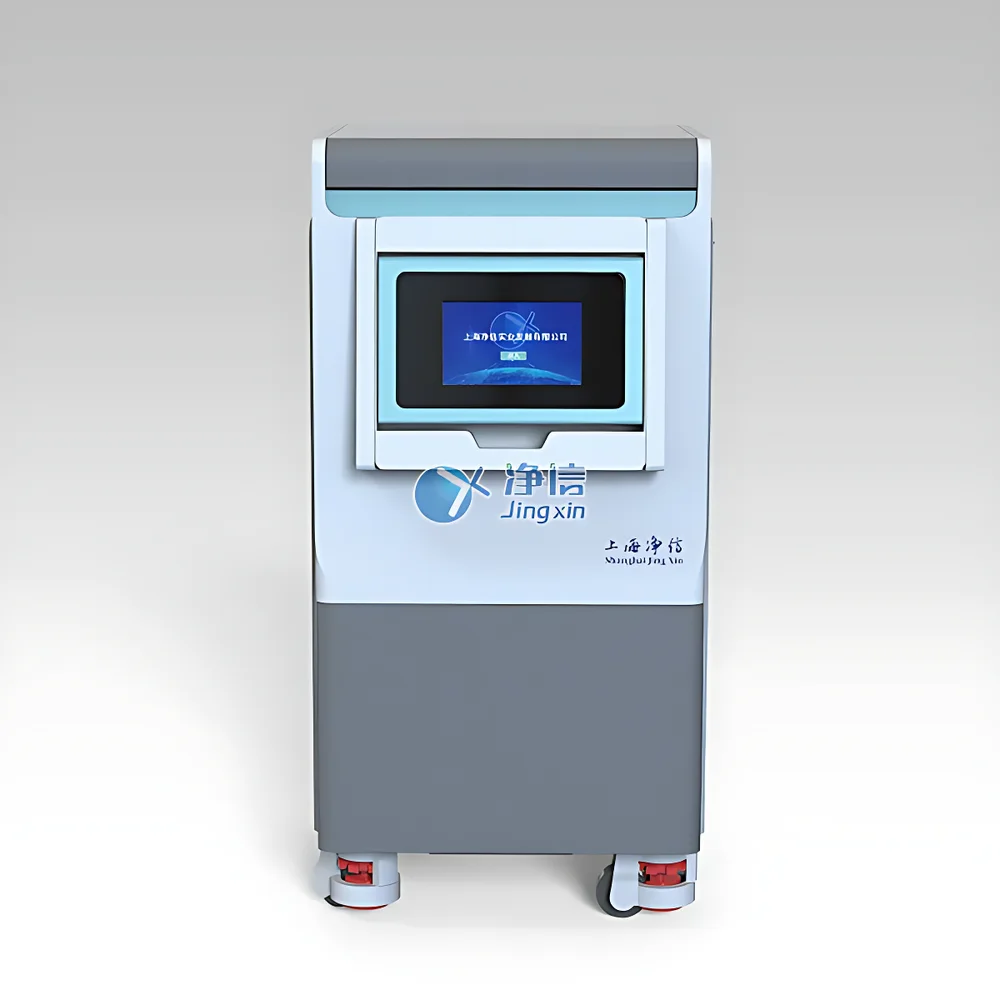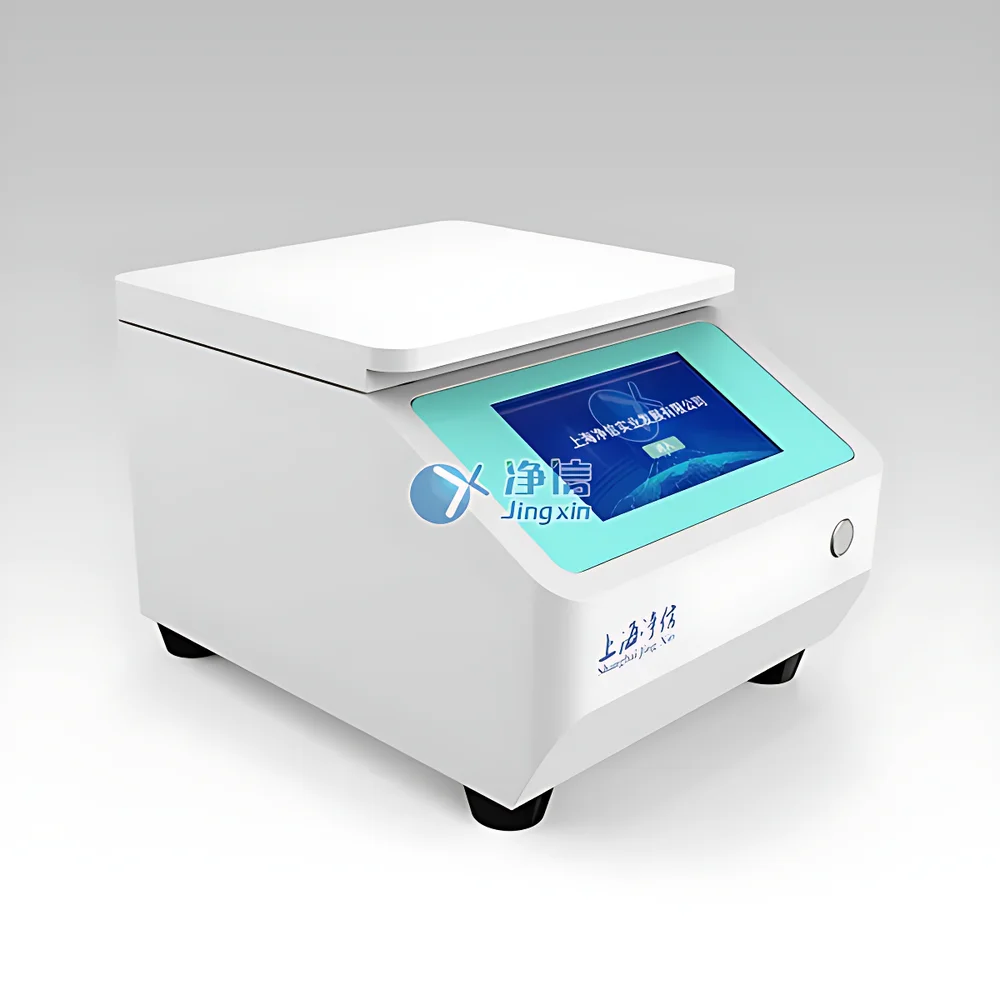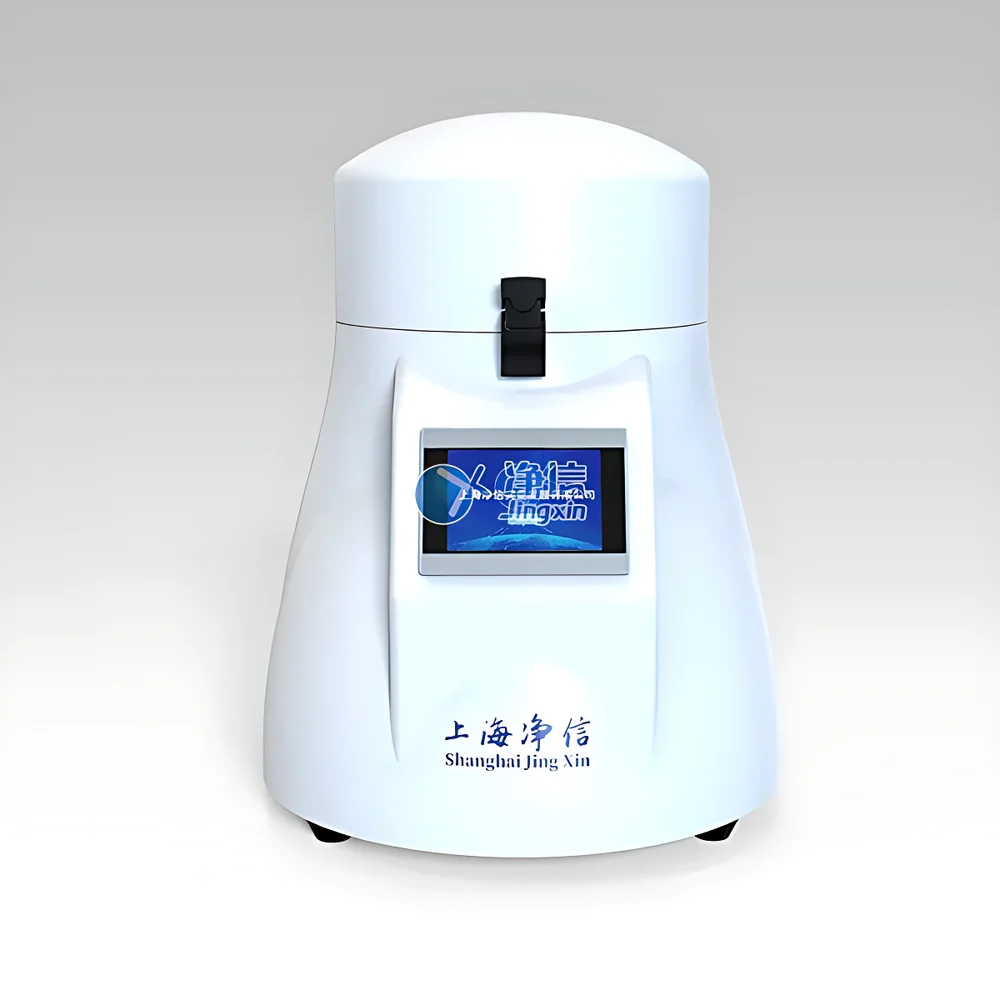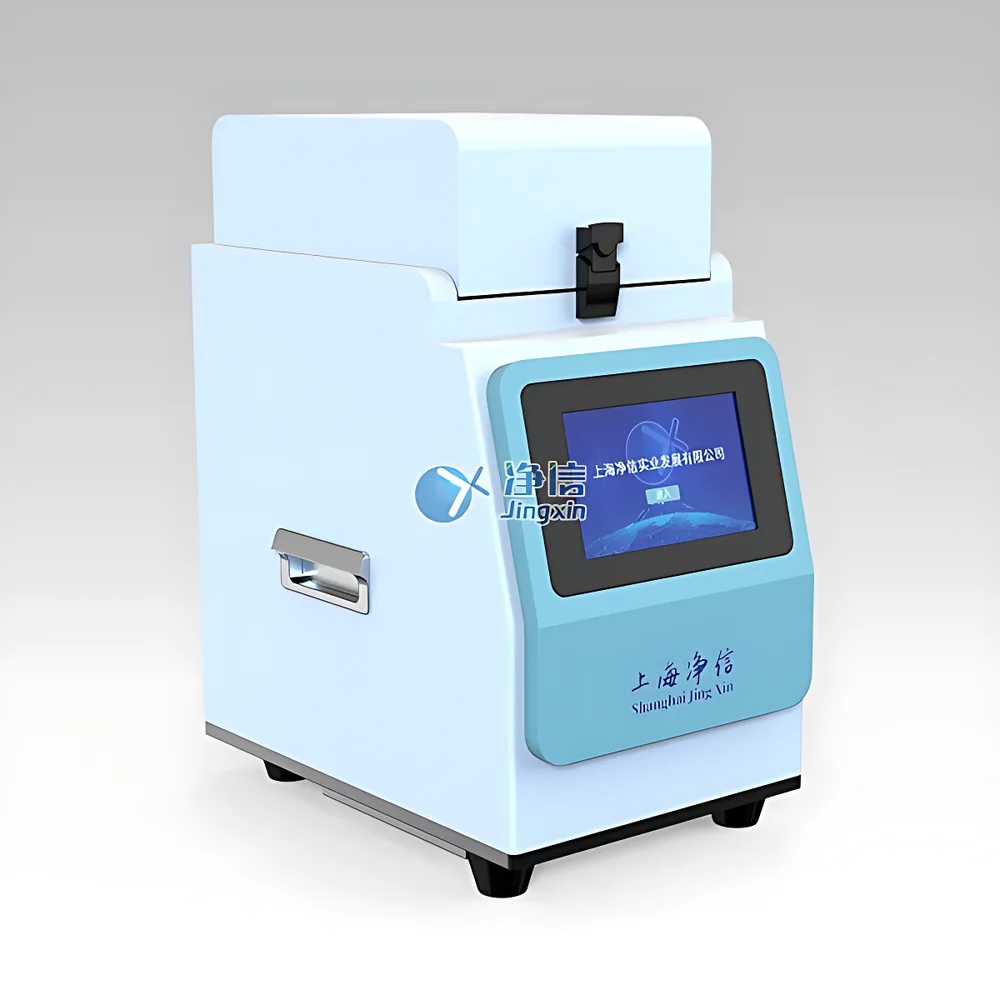
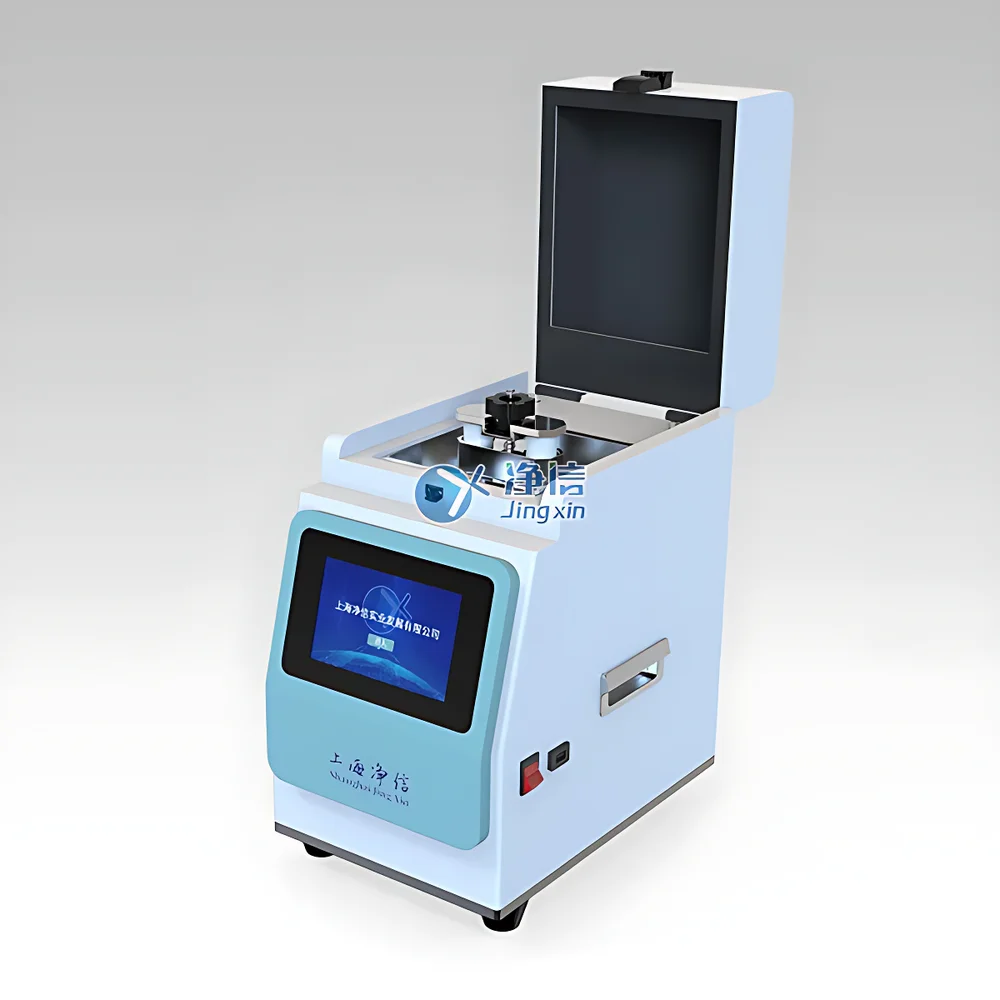
Jingxin TISS-48 High-Speed Tissue Grinder for Plant and Biological Sample Homogenization

| Brand | Jingxin (Shanghai Jingxin Scientific Instrument Co., Ltd.) |
|---|---|
| Origin | Shanghai, China |
| Manufacturer Type | OEM/ODM Manufacturer |
| Country of Origin | China |
| Model | TISS-48 |
| Price | Upon Request |
| Throughput | Up to 48 × 2 mL tubes per run |
| Frequency Range | 0–70 Hz |
| Processing Time | 0–9999 s (user-programmable) |
| Final Particle Size | ~5 µm |
| Noise Level | <65 dB(A) |
| Dimensions (W×D×H) | 260 × 380 × 495 mm |
| Drive System | Brushless Pulse Motor |
| Safety Features | Interlocked safety door, physical emergency stop button, auto-centering clamping system |
| Compatible Grinding Media | Zirconia, stainless steel, chrome steel, tungsten carbide beads, quartz sand |
| Grinding Modes | Dry grinding, wet grinding, cryogenic grinding (with optional liquid nitrogen adapters) |
Ask about pricing, availability and specifications.
Overview
The Jingxin TISS-48 High-Speed Tissue Grinder is an engineered solution for high-throughput, reproducible mechanical lysis of diverse biological and non-biological samples. It operates on the principle of high-frequency vertical reciprocating vibration—also termed “bead-beating homogenization”—where kinetic energy from rapidly oscillating grinding beads induces shear, impact, and compression forces within sealed sample tubes. This mechanism enables efficient disruption of cellular and subcellular structures while preserving molecular integrity of nucleic acids and proteins. Unlike conventional methods such as mortar-and-pestle grinding, rotor-stator homogenizers, or probe-based sonication—which suffer from thermal degradation, operator variability, and cross-contamination risks—the TISS-48 delivers consistent mechanical energy input across all samples simultaneously. Its design supports routine use in molecular biology laboratories, biobanking facilities, agricultural research centers, and quality control environments where standardized pre-analytical sample preparation is critical for downstream applications including qPCR, RNA-Seq, proteomics, and metabolite extraction.
Key Features
- High-throughput capability: Processes up to 48 × 2 mL tubes in a single run, with programmable cycle times as short as 15 seconds.
- Universal compatibility: Accommodates multiple tube formats—including 0.2–0.5 mL, 2 mL, and custom-configured vessels—enabling seamless integration with existing labware ecosystems.
- Cryogenic readiness: Optional liquid nitrogen-cooled adapters (12- and 24-position) allow low-temperature grinding of thermolabile or volatile samples such as plant secondary metabolites, lipids, or polymer composites.
- Contamination control: All sample tubes remain fully sealed during operation; disposable tubes and single-use beads eliminate carryover between runs.
- Precision control interface: Touchscreen controller permits independent adjustment of vibration frequency (0–70 Hz), duration (0–9999 s), and acceleration/deceleration profiles.
- Robust safety architecture: Includes interlocked safety door, hardware-based emergency stop button, automatic motor cutoff upon lid opening, and center-aligned clamping to ensure balanced load distribution and mechanical stability.
- Low-noise operation: Engineered acoustic enclosure and brushless pulse motor reduce operational noise to <65 dB(A), ensuring compatibility with shared laboratory spaces.
Sample Compatibility & Compliance
The TISS-48 demonstrates broad applicability across sample classes defined by structural complexity and matrix resistance. Validated use cases include fibrous plant tissues (roots, stems, leaves), dense animal organs (liver, muscle, bone), microbial pellets (E. coli, yeast, spores), pharmaceutical tablets, coal and oil shale, synthetic polymers (PE, PS, resins), and textile fibers. Each application benefits from adjustable bead composition—zirconia for high-density tissue, stainless steel for general-purpose lysis, tungsten carbide for ultra-hard materials—to optimize energy transfer and minimize sample heating. While not certified to ISO/IEC 17025 or FDA 21 CFR Part 11 out-of-the-box, the instrument’s repeatable performance, audit-ready parameter logging (via optional data export), and closed-tube workflow support GLP/GMP-aligned workflows when integrated into validated SOPs. It complies with IEC 61000-6-2 (EMC immunity) and IEC 61000-6-4 (EMC emission) standards for laboratory equipment.
Software & Data Management
The embedded touchscreen controller stores up to 100 user-defined protocols, each retaining frequency, time, ramp rate, and pause intervals. Protocol execution logs—including date/time stamp, cycle count, and actual measured frequency deviation—are retained onboard for traceability. For integration into LIMS or ELN platforms, USB export functionality allows CSV-formatted logs to be transferred for long-term archival. Though no proprietary cloud service is provided, the device supports manual export of raw metadata compatible with common laboratory informatics systems. Future firmware updates may introduce RS-232 or Ethernet connectivity options for remote monitoring and centralized protocol deployment in multi-instrument environments.
Applications
- Molecular biology: Rapid isolation of intact genomic DNA, high-yield total RNA (>20 kb fragments), and native-soluble proteins from recalcitrant plant species (e.g., bamboo, lignified wood) and mammalian tissues.
- Agricultural science: High-throughput genotyping-by-sequencing (GBS) sample prep, pathogen detection in field-collected crops, and metabolite profiling of fruit pulp or seed endosperm.
- Pharmaceutical QA/QC: Uniform dispersion of active pharmaceutical ingredients (APIs) in excipient matrices, particle size reduction of tablet formulations prior to HPLC analysis.
- Environmental testing: Homogenization of soil microcosms, sediment cores, and biofilm-covered surfaces for metagenomic sequencing.
- Materials science: Mechanical alloying of polymer blends, dispersion of nanofillers in composites, and controlled fragmentation of brittle ceramics or graphite flakes.
FAQ
What types of grinding media are recommended for plant tissue homogenization?
Zirconia beads (0.5–2.0 mm diameter) are preferred for fibrous or lignified plant material due to their high density and chemical inertness. Stainless steel beads may be used for softer tissues but require post-grinding removal via magnetic separation.
Can the TISS-48 be used under biosafety level 2 (BSL-2) conditions?
Yes—when operated with sealed, certified biosafety tubes and appropriate PPE, the enclosed grinding chamber prevents aerosol generation. Validation studies confirm >99.9% containment efficiency for BSL-2 pathogens when using certified tube caps.
Is cryogenic grinding supported without modification?
Liquid nitrogen cooling requires optional LN₂-compatible adapters (sold separately). These maintain thermal stability during extended cycles and prevent bead fusion or tube embrittlement.
How is calibration verified for reproducibility across instruments?
Each unit undergoes factory verification of frequency accuracy (±0.5 Hz tolerance at 50 Hz) and mechanical balance (vibration amplitude uniformity <±3% across all positions). Users may perform periodic validation using calibrated accelerometer sensors mounted on the adapter plate.
Does the system comply with EU RoHS or REACH directives?
Yes—the instrument meets RoHS Directive 2011/65/EU restrictions on hazardous substances and conforms to REACH Annex XVII requirements for nickel release and phthalate content in plastic components.
More from Jingxin (Shanghai Jingxin Scientific Instrument Co., Ltd.)
View all Jingxin (Shanghai Jingxin Scientific Instrument Co., Ltd.) products → Jingxin JXFSTPRP-192CL High-Speed Cryogenic Grinding and Homogenization System
- Jingxin JX-CKSM-4WK 4-Channel Temperature-Controlled Single-Cell Suspension Preparation System
- Jingxin JX-24 High-Efficiency Automated Cryogenic Tissue Grinder
- Jingxin Tissuelyser-192 High-Throughput Cryogenic Tissue Homogenizer