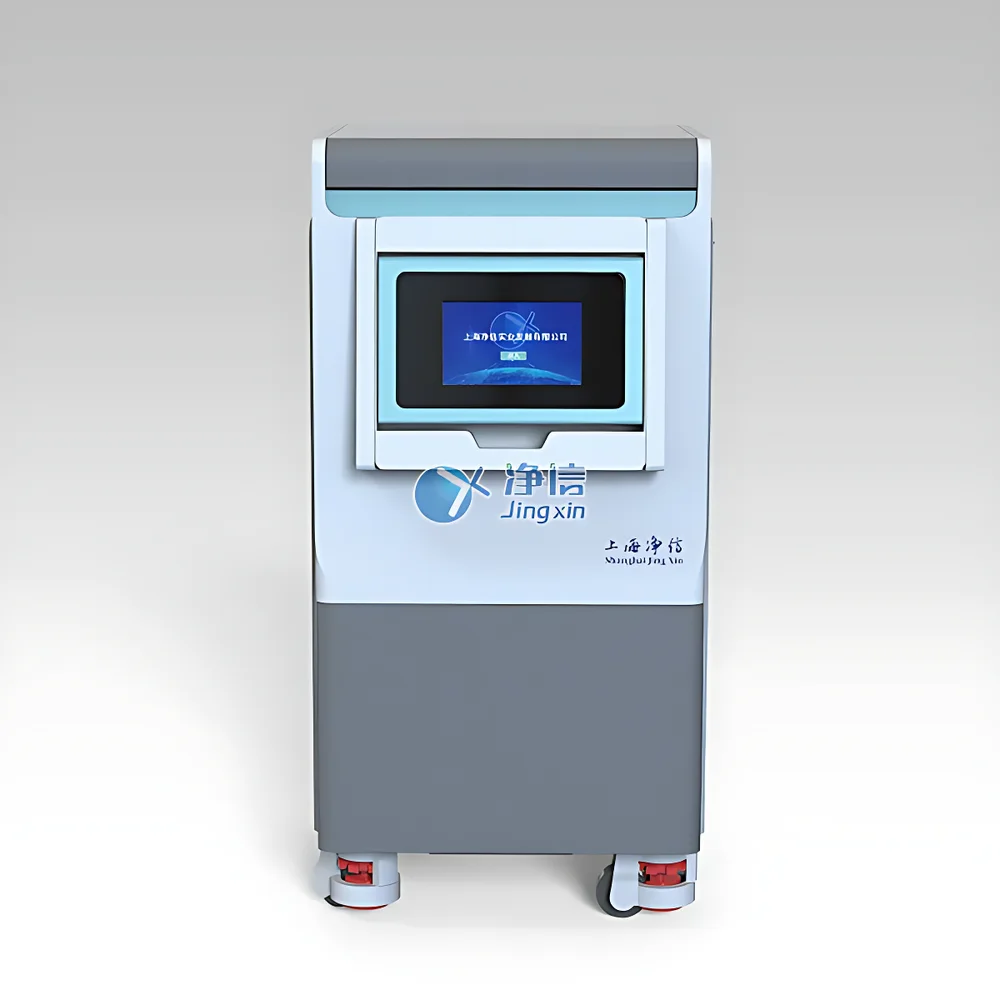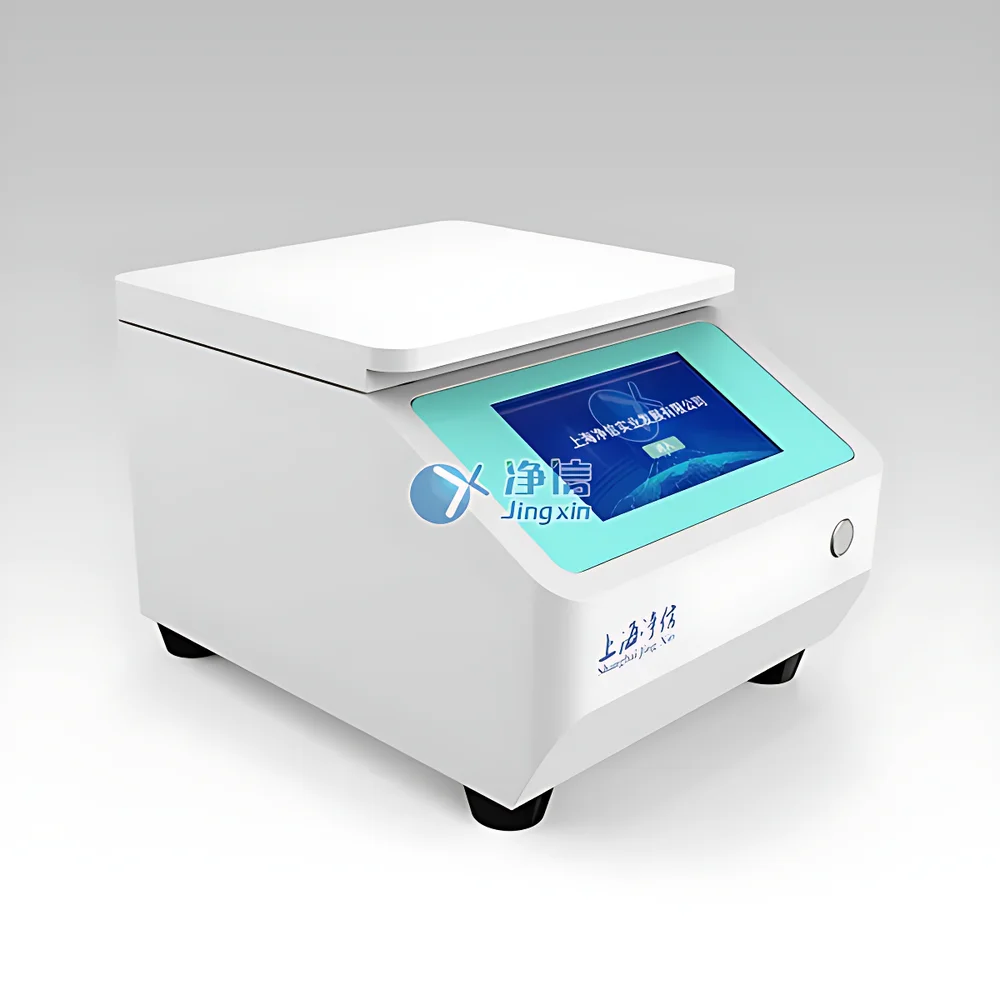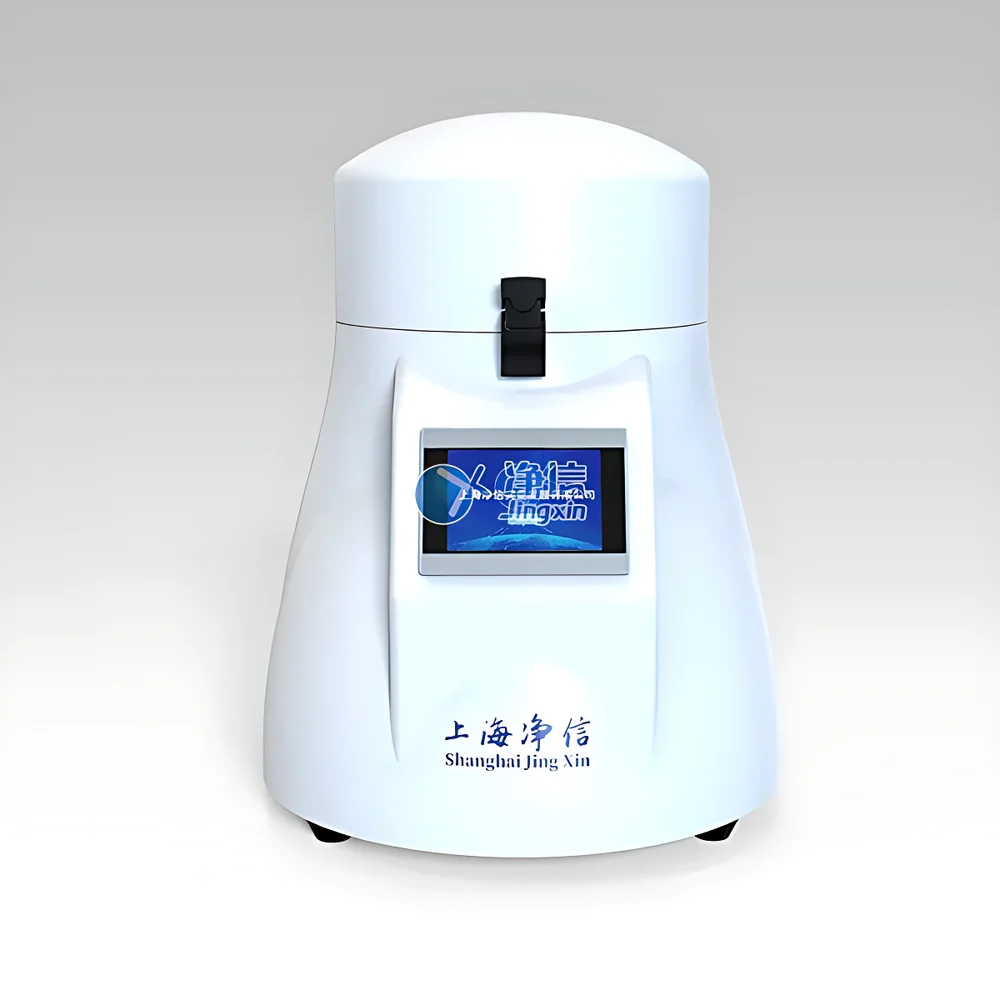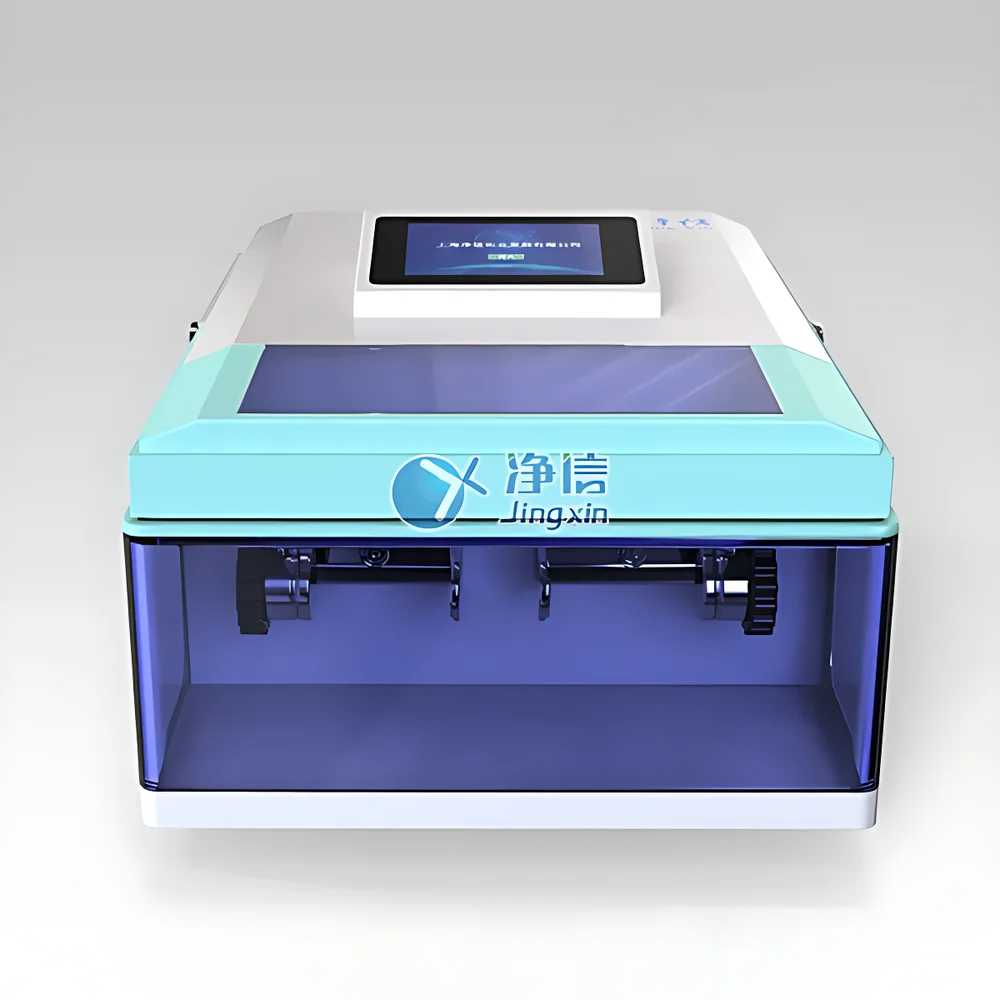
Jingxin TISSUELYSER-II High-Throughput Tissue Grinder

| Brand | Jingxin (Shanghai Jingxin Scientific Instrument Co., Ltd.) |
|---|---|
| Origin | Shanghai, China |
| Manufacturer Type | Direct Manufacturer |
| Equipment Type | High-Throughput Vibratory Tissue Grinder |
| Model | TISSUELYSER-II |
| Sample Applicability | Hard, brittle, fibrous, elastic, and heat-sensitive biological & inorganic materials |
| Maximum Feed Size | ≤8 mm |
| Final Particle Size | ~5 µm (material-dependent) |
| Throughput Capacity | 1–192 samples per run (configurable via 2 × 96-well plates, 2 × 28-tube racks, or dual 25/50 mL grinding jars) |
| Vibration Frequency Range | 0–70 Hz |
| Typical Grinding Duration | 30 s–3 min |
| Dry/Wet/Cryogenic Grinding | Supported |
| Drive Motor | 90 W brushless AC motor, 2800 rpm |
| Power Input | 150 W |
| Dimensions (L×W×H) | 490 × 380 × 270 mm |
| Net Weight | 26.7 kg |
| Grinding Vessel Materials | Titanium alloy, stainless steel, PTFE, polyethylene (custom options available) |
| Vessel Types | Screw-cap grinding tubes (15/25/50 mL), 2 mL deep-well plates, 96-well plates |
| Clamping System | Auto-centering, dual-platform quick-lock mechanism |
Ask about pricing, availability and specifications.
Overview
The Jingxin TISSUELYSER-II is a high-throughput vibratory tissue grinder engineered for reproducible, contamination-free homogenization of diverse biological and inorganic samples under controlled mechanical energy input. It operates on the principle of high-frequency orbital oscillation—two counterbalanced arms generate an “8-shaped” motion that drives grinding beads (e.g., tungsten carbide or stainless steel) to impact, shear, and abrade samples within sealed vessels. This mechanism enables efficient cell lysis, tissue pulverization, and particle size reduction without significant thermal accumulation, especially when combined with pre-chilling or cryogenic adapters. Designed for compliance with laboratory workflow standards, the TISSUELYSER-II supports GLP-aligned sample preparation protocols across molecular biology, forensic toxicology, environmental monitoring, and regulatory quality control laboratories.
Key Features
- High-frequency vibration system (0–70 Hz) delivering consistent kinetic energy transfer for rapid, uniform sample disruption.
- Dual independent grinding platforms accommodating up to 192 samples simultaneously—configurable for 2 × 96-well plates, 2 × 28-tube racks, or two large-volume grinding jars (25 mL or 50 mL).
- Intelligent touchscreen interface with digital timer (0–9999 s), real-time frequency display, and programmable start/stop sequences for method reproducibility.
- Cryogenic compatibility: integrated support for pre-cooled grinding vessels and dry ice/liquid nitrogen cooling accessories to preserve labile analytes (e.g., RNA, metabolites, enzymes).
- Zero-cross-contamination design: sealed screw-cap grinding tubes and disposable centrifuge tube adapters eliminate carryover between runs.
- Versatile vessel compatibility: titanium alloy, stainless steel, PTFE, and polyethylene grinding jars—selected based on sample reactivity, abrasion resistance, and downstream compatibility (e.g., PCR, LC-MS).
- Auto-centering clamping mechanism ensures precise alignment and mechanical stability during high-speed operation, minimizing vibration-induced wear and noise.
Sample Compatibility & Compliance
The TISSUELYSER-II processes a broad spectrum of sample types—including animal tissues (liver, muscle, bone), plant material (leaves, seeds, roots), microbial cultures (bacteria, yeast), forensic specimens (hair, blood swabs), environmental matrices (soil, sludge, sediment), and industrial solids (polymers, alloys, ceramics). Its ability to achieve sub-5 µm particle size distribution—verified by laser diffraction and SEM analysis—supports applications requiring fine particulate homogeneity for extraction efficiency and analytical precision. The instrument meets structural safety requirements per IEC 61010-1 and supports audit-ready workflows compliant with ISO/IEC 17025, FDA 21 CFR Part 11 (when paired with validated LIMS integration), and GLP/GMP documentation practices.
Software & Data Management
While the TISSUELYSER-II operates as a standalone benchtop unit with embedded firmware, its protocol-driven architecture facilitates traceability through operator-defined method files stored locally on the device. Each run logs timestamp, frequency setting, duration, and platform configuration—exportable via USB for integration into laboratory information management systems (LIMS) or electronic lab notebooks (ELN). Optional firmware upgrades enable remote diagnostics and calibration verification logs, supporting routine maintenance records required under ISO 17025 Clause 6.4.2 (Equipment Management).
Applications
- Molecular biology: Rapid lysis of mammalian, plant, and microbial cells for DNA/RNA isolation prior to qPCR, NGS library prep, or methylation analysis.
- Clinical & forensic labs: Homogenization of hair, bone, or tissue biopsies for toxicology screening, STR profiling, or SNP genotyping.
- Environmental testing: Preparation of soil, sediment, or biofilm samples for heavy metal quantification (ICP-MS), pesticide residue analysis (GC-MS/MS), or microplastic identification.
- Pharmaceutical QA/QC: Uniform grinding of tablets, capsules, or excipients for content uniformity testing (USP ) and dissolution method development.
- Materials science: Pre-treatment of ceramics, composites, or geological specimens for XRD phase analysis or SEM-EDS elemental mapping.
- Food safety: Disruption of heterogeneous food matrices (e.g., spices, nuts, dairy powders) for allergen detection (ELISA) or mycotoxin extraction (HPLC-FLD).
FAQ
What is the maximum recommended sample volume per tube for optimal grinding efficiency?
For 2 mL tubes, fill no more than 1/3 of total volume with sample + beads; for 25–50 mL jars, maintain 30–50% fill ratio to ensure sufficient bead mobility and energy transfer.
Can the TISSUELYSER-II be used for RNA extraction without degradation?
Yes—when operated with pre-chilled titanium or stainless steel vessels and cryogenic adapters, RNA integrity (RIN > 8.5) is routinely maintained across vertebrate and plant tissues.
Is validation documentation available for GxP-regulated environments?
Jingxin provides IQ/OQ templates aligned with ASTM E2500 and ISO/IEC 17025; full PQ support requires site-specific performance qualification using certified reference materials.
How often does the drive motor require maintenance?
The brushless AC motor is rated for >20,000 hours of operation; no scheduled lubrication or replacement is required under normal use conditions.
Are third-party grinding beads compatible with the TISSUELYSER-II?
Yes—standardized 0.5–4 mm diameter beads made from zirconia, stainless steel, or tungsten carbide are fully interoperable; bead density and hardness must match application-specific energy requirements.
More from Jingxin (Shanghai Jingxin Scientific Instrument Co., Ltd.)
View all Jingxin (Shanghai Jingxin Scientific Instrument Co., Ltd.) products → Jingxin JXFSTPRP-192CL High-Speed Cryogenic Grinding and Homogenization System
- Jingxin JX-CKSM-4WK 4-Channel Temperature-Controlled Single-Cell Suspension Preparation System
- Jingxin JX-24 High-Efficiency Automated Cryogenic Tissue Grinder
- Jingxin Tissuelyser-192 High-Throughput Cryogenic Tissue Homogenizer