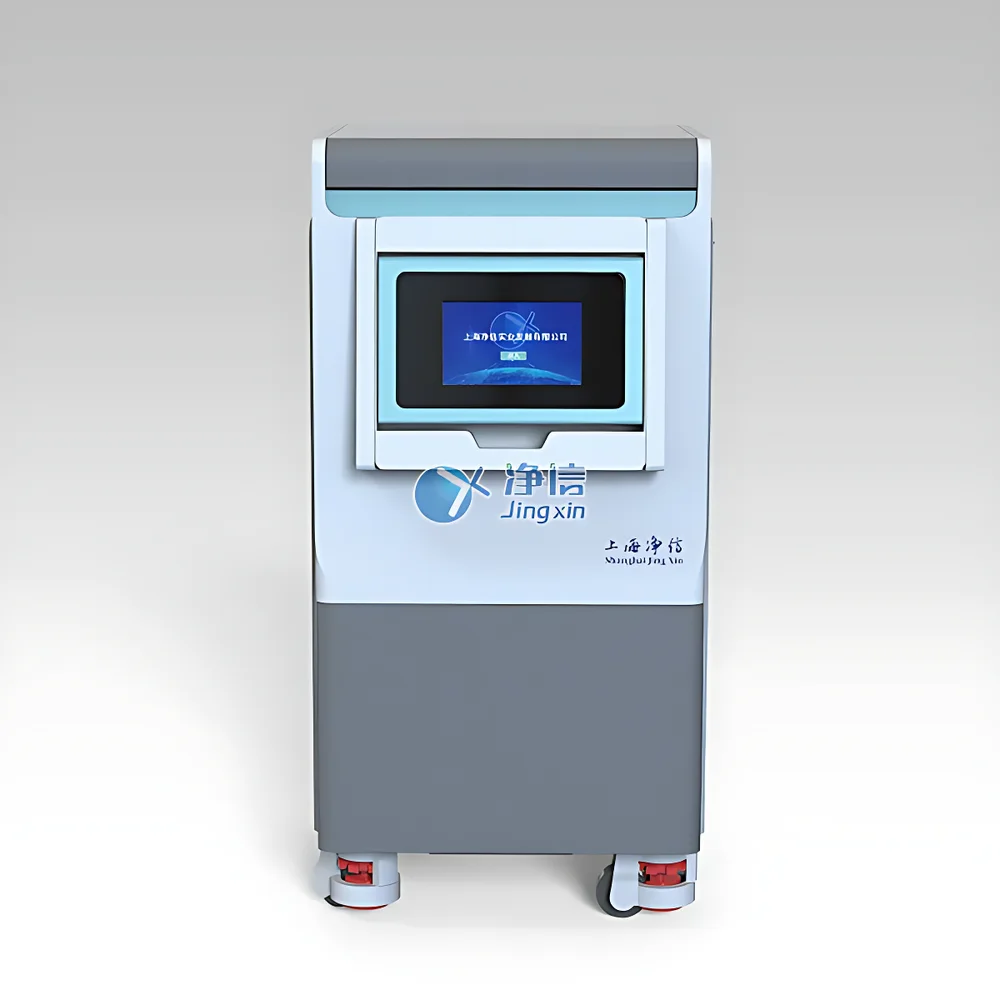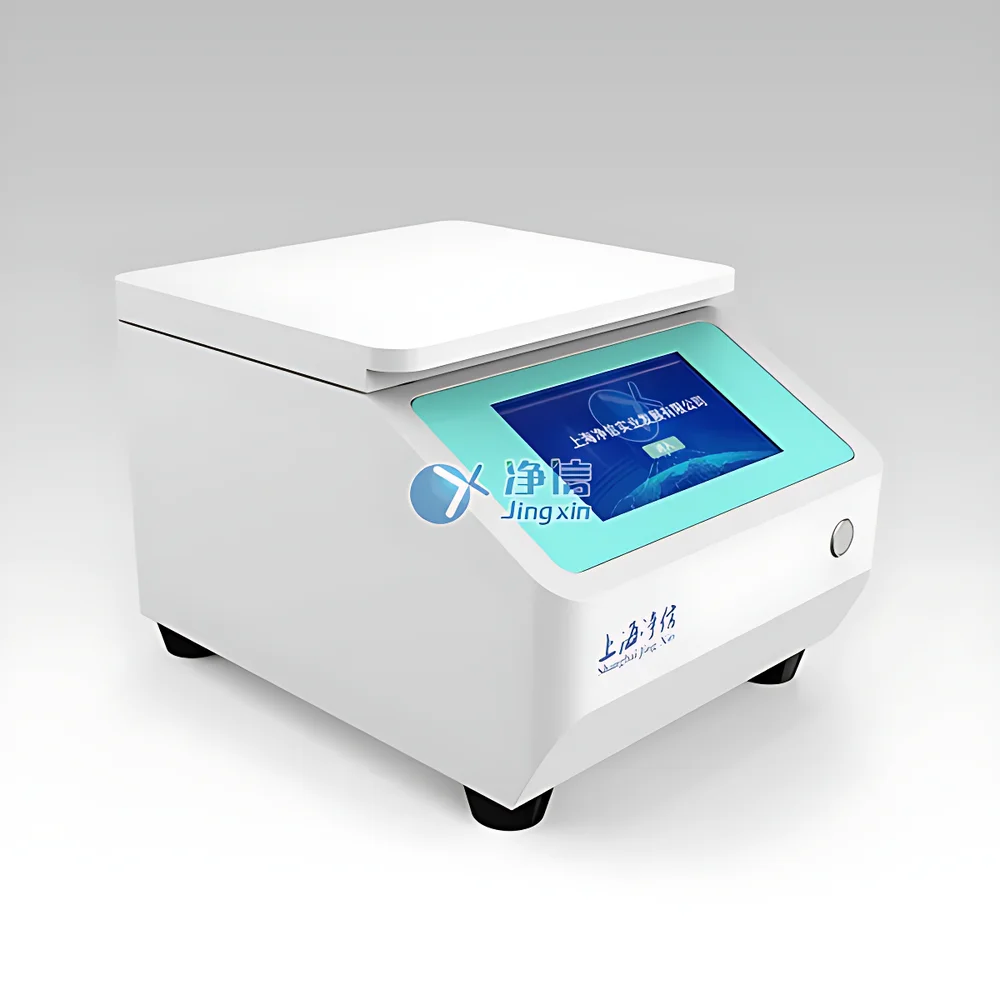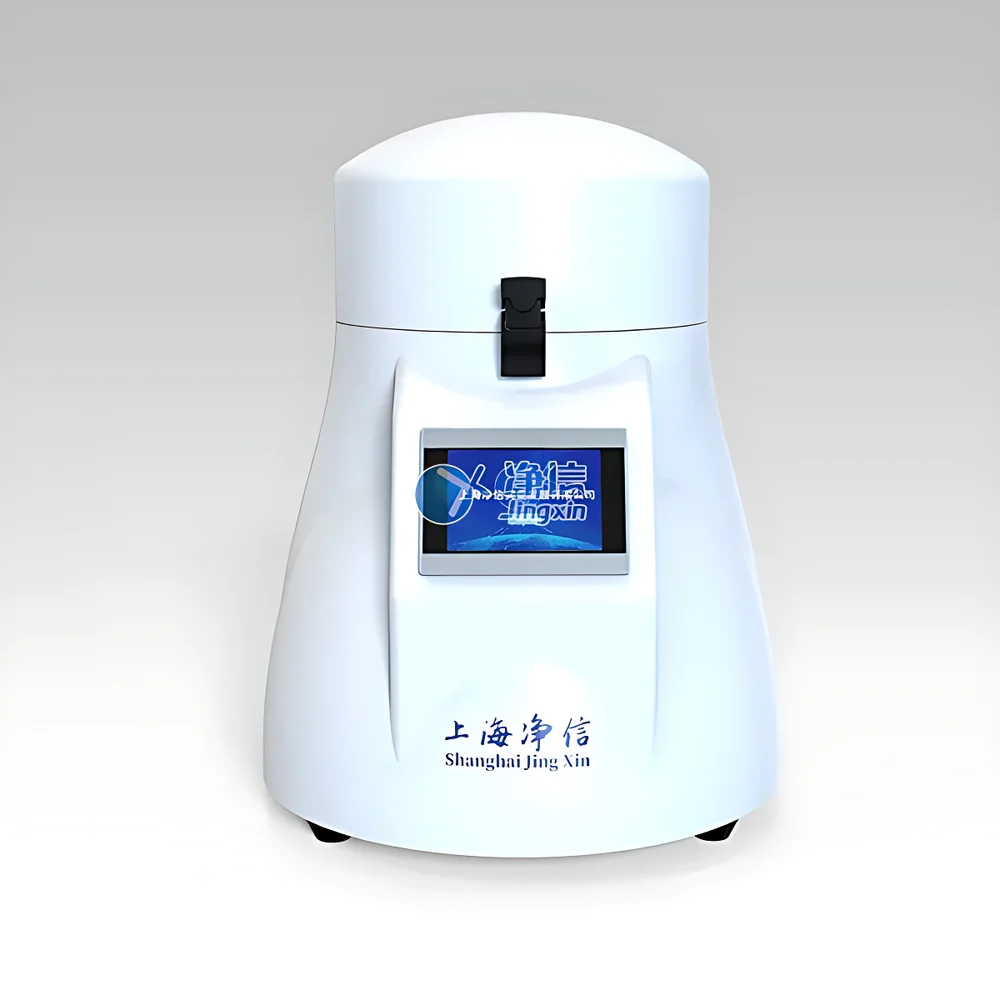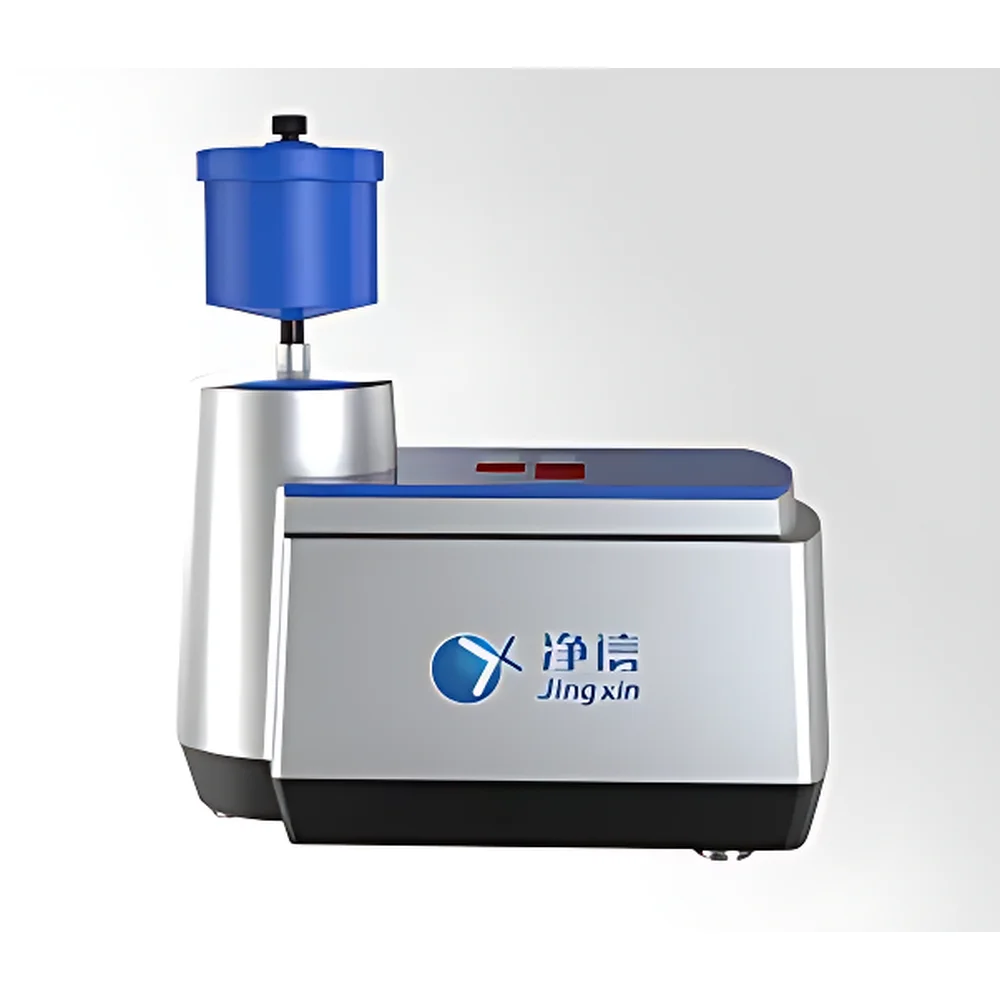
Jingxin Tissuelyser-LT High-Efficiency Multi-Sample Tissue Homogenizer and Cell Disruptor

| Brand | Jingxin (Shanghai Jingxin Scientific Instrument Co., Ltd.) |
|---|---|
| Origin | Shanghai, China |
| Manufacturer Type | Direct Manufacturer |
| Product Category | Domestic |
| Model | Tissuelyser-LT |
| Instrument Type | Benchtop Vibratory Tissue Disruptor |
| Sample Compatibility | Soft biological tissues, cells, microorganisms, plant/animal organs, soil, fungi, yeast, spores, and archival specimens |
| Output Particle Size | ≥0.5 mm (post-processing, dependent on bead size and protocol) |
| Input Sample Size | Adjustable via interchangeable adapters |
| Vibration Frequency Range | 0–35 Hz |
| Processing Time | 0–9999 min (user-programmable) |
| Capacity | Up to 12 × 2 mL tubes simultaneously |
| Bead Diameter Options | 0.1–8 mm |
| Bead Materials | Stainless steel, chromium steel, zirconium oxide, tungsten carbide, quartz sand |
| Grinding Modes | Dry grinding and wet grinding |
| Adapter Material | Anodized aluminum alloy |
| Noise Level | <55 dB(A) |
| Safety Features | Auto-centering clamping mechanism, lid interlock, full-tube containment during operation |
| Display | Integrated capacitive touchscreen interface |
Ask about pricing, availability and specifications.
Overview
The Jingxin Tissuelyser-LT is a high-frequency vertical vibratory tissue homogenizer engineered for reproducible, scalable, and contamination-controlled mechanical lysis of biological samples. It operates on the principle of high-energy bead-beating—where kinetic energy from rapid vertical oscillation transfers to grinding beads within sealed sample tubes, inducing shear, impact, and compression forces sufficient to disrupt cell membranes, organelles, and extracellular matrices. Unlike rotor-stator or sonication-based systems, this instrument delivers uniform energy input across all positions in a single run, minimizing inter- and intra-batch variability. Its design prioritizes integrity of labile biomolecules: RNA integrity numbers (RIN) >8.5 and protein specific activity retention are routinely achieved under optimized protocols. The system is widely adopted in molecular biology, translational research, microbiome analysis, and biobanking workflows where consistent nucleic acid yield, fragment length preservation, and low protease/RNase activation are critical.
Key Features
- Parallel processing of up to 12 × 2 mL sample tubes per cycle—achieving complete lysis in as little as 15 seconds to 3 minutes, depending on tissue type and bead selection.
- Full-tube containment architecture: Samples remain sealed throughout homogenization; compatible with disposable polypropylene tubes and sterilizable beads to eliminate cross-contamination and external aerosol exposure.
- Programmable digital control via capacitive touchscreen: Precise adjustment of frequency (0–35 Hz), duration (0–9999 min), and pause intervals; onboard memory stores multiple user-defined methods.
- Vertical oscillation drive with auto-centering clamping: Ensures symmetrical force distribution, reduces mechanical drift, and extends adapter lifespan; validated for >10,000 cycles under routine use.
- Acoustically dampened housing: Noise emission maintained below 55 dB(A) at 1 m distance—suitable for shared laboratory environments without requiring dedicated acoustic enclosures.
- Modular adapter system: Interchangeable aluminum alloy holders accommodate diverse tube formats (e.g., 0.2 mL PCR strips, 2 mL microcentrifuge tubes, 5 mL round-bottom tubes) with tool-free installation and positive-lock engagement.
Sample Compatibility & Compliance
The Tissuelyser-LT supports a broad spectrum of soft and semi-soft biological matrices—including mammalian liver/spleen, plant leaves, bacterial pellets, fungal mycelia, nematodes, and frozen soil cores—without pre-chopping or cryogenic pretreatment. Its closed-tube operation aligns with Good Laboratory Practice (GLP) requirements for traceability and sample accountability. When used with certified RNase/DNase-free consumables and validated bead sets, the system meets ISO 17025 criteria for method consistency in nucleic acid extraction workflows. For regulated environments, audit trails can be generated externally via timestamped protocol logs exported to CSV; while the device itself does not provide 21 CFR Part 11-compliant electronic signatures, it integrates seamlessly into LIMS-managed extraction platforms that enforce electronic record controls.
Software & Data Management
The embedded firmware supports method-driven operation with no external PC dependency. All parameters—including frequency ramp profiles, total runtime, and real-time vibration status—are displayed and logged locally on the touchscreen. Users may export method configurations and session timestamps via USB flash drive in plain-text format for documentation archiving. No proprietary software installation is required; however, the instrument’s standardized RS-232 serial interface enables integration with third-party laboratory automation controllers or custom Python/Node-RED scripts for scheduled batch runs and centralized log aggregation.
Applications
- High-yield isolation of intact total RNA from fibrous or lipid-rich tissues (e.g., brain, adipose, seed endosperm) for downstream qRT-PCR and RNA-seq.
- Rapid lysis of Gram-positive bacteria and yeast for plasmid preparation and genomic DNA library construction.
- Homogenization of environmental samples (soil, rhizosphere, biofilm scrapings) prior to metagenomic DNA extraction and microbial community profiling.
- Preparation of subcellular fractions—mitochondria, nuclei, and membrane vesicles—with minimal co-sedimentation artifacts.
- Disruption of cryopreserved archival specimens (e.g., FFPE tissue sections, lyophilized spores) under controlled temperature conditions when paired with pre-chilled adapters.
FAQ
What types of grinding beads are recommended for RNA extraction from mammalian tissues?
Zirconium oxide (ZrO₂) beads (0.5–2.0 mm diameter) are preferred for RNA work due to their chemical inertness, low metal ion leaching, and efficient disruption of nucleosome-bound chromatin without excessive shearing.
Can the Tissuelyser-LT process samples at sub-zero temperatures?
Yes—when used with pre-cooled aluminum adapters and dry ice or liquid nitrogen chilling of tubes prior to loading, the system maintains sample integrity during cryo-mechanical lysis. Avoid condensation inside the chamber by allowing adapters to equilibrate briefly before sealing.
Is validation support available for GMP-compliant processes?
Jingxin provides IQ/OQ documentation templates and technical notes for performance qualification (e.g., frequency accuracy verification, tube retention testing, temperature stability assessment), which laboratories may adapt per internal SOPs and regulatory expectations.
More from Jingxin (Shanghai Jingxin Scientific Instrument Co., Ltd.)
View all Jingxin (Shanghai Jingxin Scientific Instrument Co., Ltd.) products → Jingxin JXFSTPRP-192CL High-Speed Cryogenic Grinding and Homogenization System
- Jingxin JX-CKSM-4WK 4-Channel Temperature-Controlled Single-Cell Suspension Preparation System
- Jingxin JX-24 High-Efficiency Automated Cryogenic Tissue Grinder
- Jingxin Tissuelyser-192 High-Throughput Cryogenic Tissue Homogenizer