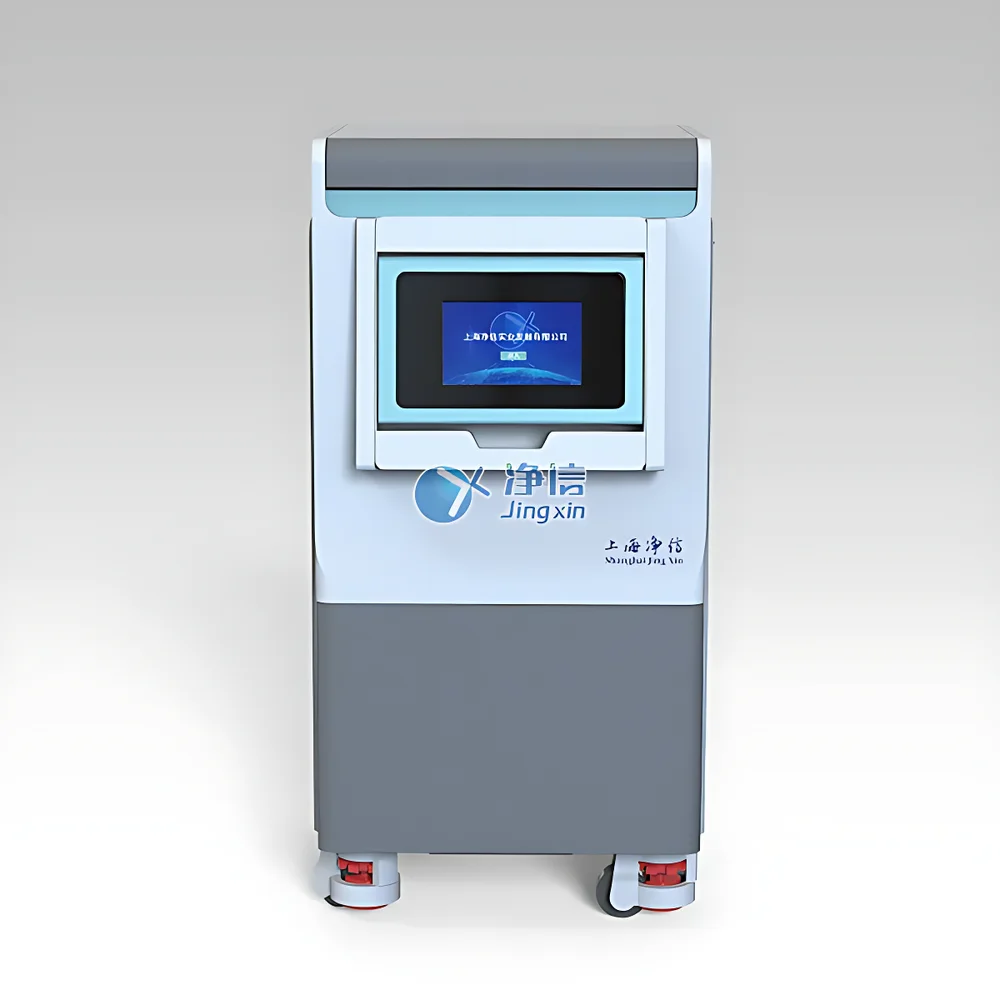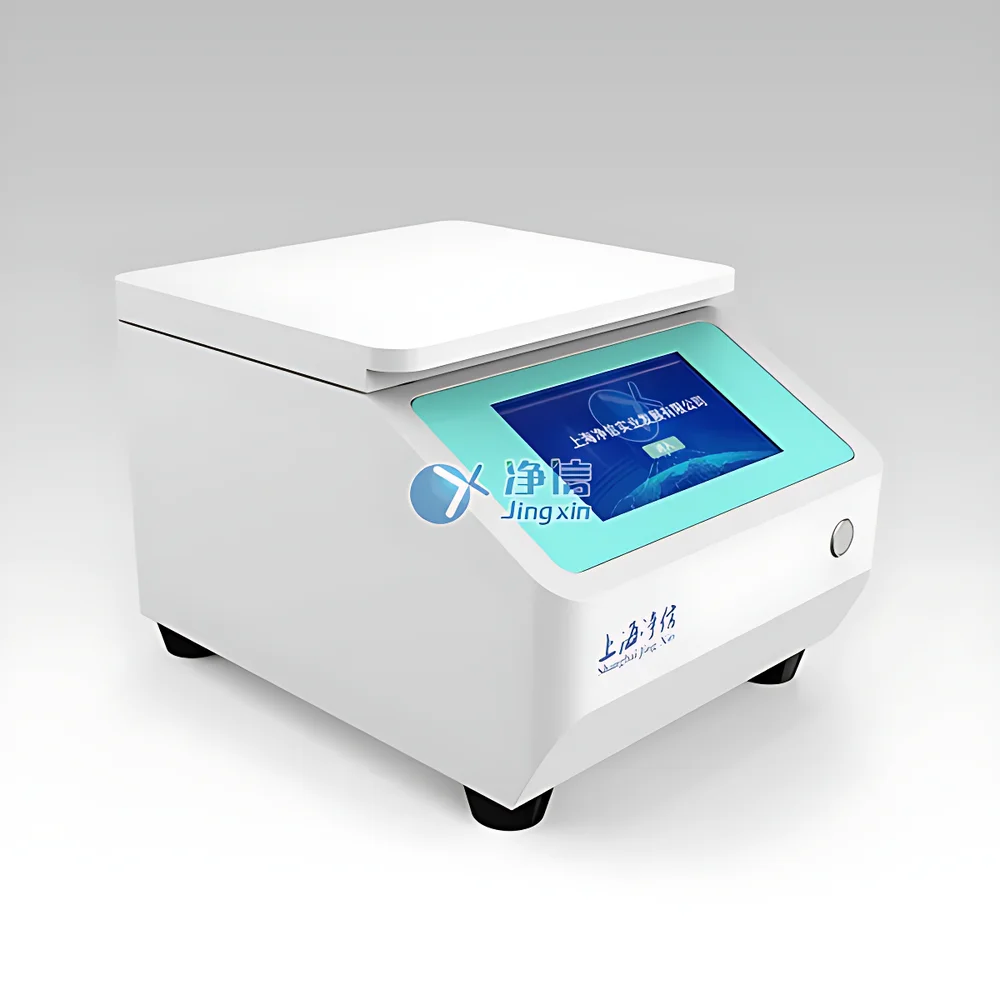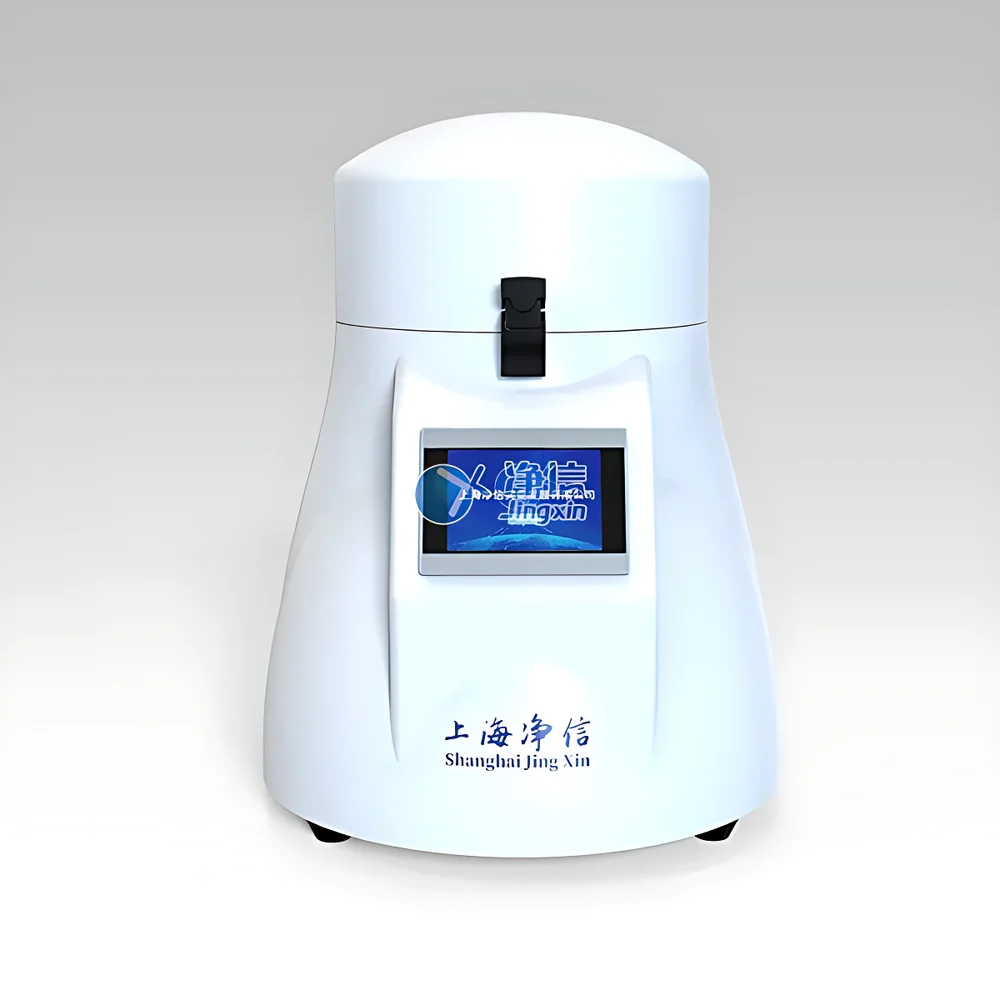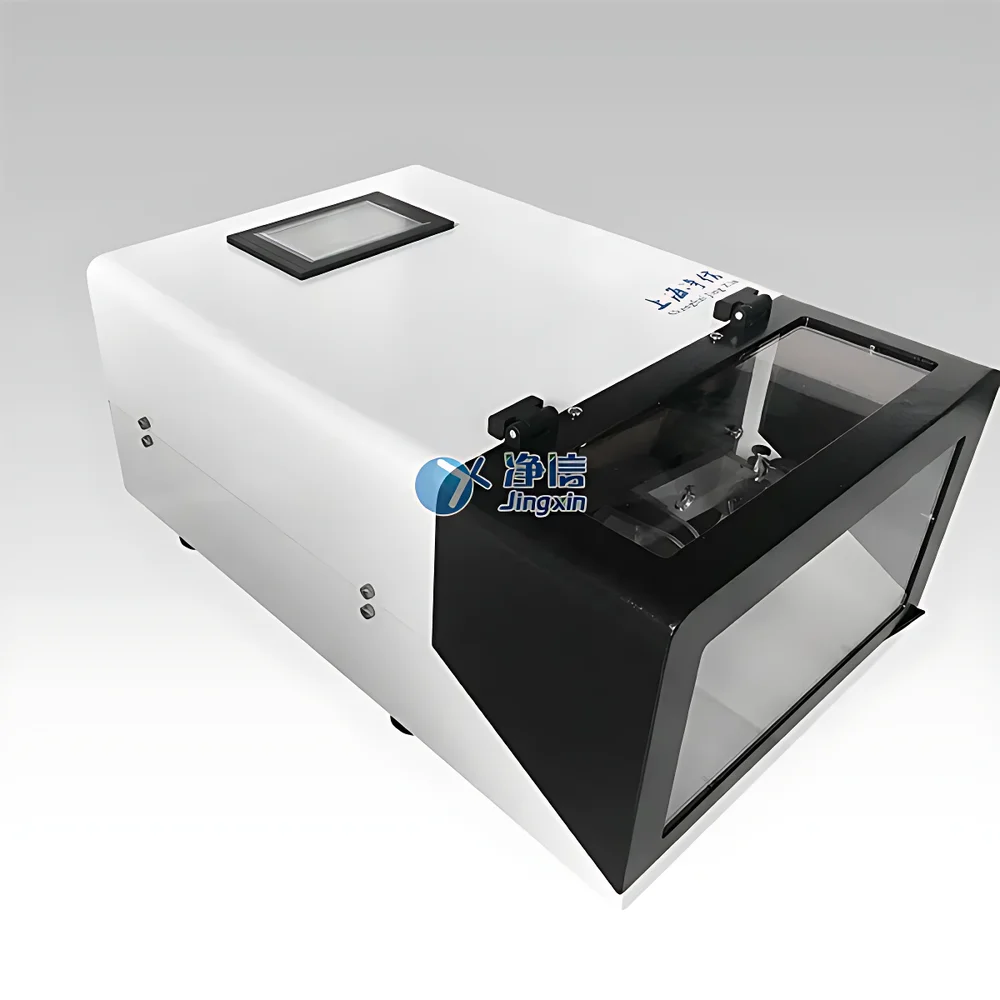
Jingxin TL-2010S High-Throughput Tissue Grinder

| Brand | Jingxin (Shanghai Jingxin Scientific Instrument Co., Ltd.) |
|---|---|
| Origin | Shanghai, China |
| Manufacturer Type | Direct Manufacturer |
| Instrument Type | Benchtop Horizontal Vibratory Ball Mill |
| Sample Compatibility | Cryogenic (Liquid Nitrogen-Compatible) |
| Final Particle Size | < 0.01 mm |
| Throughput Capacity | 2 × 15 mL grinding jars, 24 × 2.0 mL tubes, 10 × 5.0 mL tubes |
| Maximum Speed | 5000 rpm |
| Relative Centrifugal Force (RCF) | 4390 × g |
| Programmable Timer Range | 0–9999 min |
| Speed Accuracy | ±30 rpm |
| Total Chamber Volume | 1000 mL (4 × 250 mL equivalent) |
| Noise Level | < 55 dB(A) |
| Power Supply | AC 220 V ± 22 V, 50/60 Hz, 10 A |
| Rated Power | 400 W |
| Dimensions (L×W×H) | 450 × 545 × 380 mm |
| Net Weight | ~40 kg |
| Safety Certification | CE-compliant |
Ask about pricing, availability and specifications.
Overview
The Jingxin TL-2010S High-Throughput Tissue Grinder is a benchtop horizontal vibratory ball mill engineered for reproducible, high-efficiency mechanical disruption of biological and non-biological samples under ambient, chilled, or cryogenic conditions. It operates on the principle of high-frequency horizontal reciprocating motion combined with impact and shear forces generated by grinding media (e.g., stainless steel, tungsten carbide, or ceramic beads) within sealed containers. This mechanism enables rapid cell lysis, tissue homogenization, particle size reduction, and matrix dispersion—critical steps in downstream molecular analysis (e.g., DNA/RNA/protein extraction), metabolomics, pharmacokinetic sample preparation, and materials science workflows. Unlike rotary or planetary mills, the TL-2010S’s dual-platform oscillation architecture ensures balanced load distribution and minimal thermal accumulation during extended runs, making it particularly suitable for temperature-sensitive biomolecules when used with liquid nitrogen cooling accessories.
Key Features
- Dual independent grinding platforms support simultaneous processing of heterogeneous sample sets—e.g., parallel lysis of mammalian tissues and plant roots—with no cross-contamination risk.
- Cryogenic compatibility via standard liquid nitrogen immersion basket (supplied as 1 pair), enabling sub-zero grinding to preserve labile nucleic acids, enzymes, and post-translational modifications.
- Precision programmable control system allows user-defined protocols: grinding duration (0–9999 min), pause intervals, and cycle repetition—essential for method validation and GLP-compliant documentation.
- CE-certified safety interlock: automatic motor shutdown upon lid opening; reinforced polycarbonate viewing window with pressure-rated sealing gasket.
- Optimized vibration damping chassis and acoustic enclosure reduce operational noise to <55 dB(A), meeting ISO 7779 requirements for routine laboratory environments.
- Modular consumables support: interchangeable adapters accommodate 2.0 mL microcentrifuge tubes (24 positions), 5.0 mL tubes (10 positions), and 15 mL screw-cap grinding jars (2 positions); optional jar materials include hardened stainless steel and PTFE-lined variants for trace-metal-sensitive or corrosive applications.
Sample Compatibility & Compliance
The TL-2010S processes diverse sample matrices without chemical pretreatment, including fibrous plant tissues (roots, stems, leaves, seeds), animal soft/hard tissues (muscle, liver, bone, teeth), microbial pellets, food matrices (cheese, grains, spices), environmental solids (soil, sediment, biochar), and inorganic powders (minerals, oxides, catalysts). Its mechanical action preserves analyte integrity better than enzymatic or sonication-based methods for certain recalcitrant samples. The instrument complies with EU Machinery Directive 2006/42/EC and Electromagnetic Compatibility Directive 2014/30/EU, evidenced by CE marking. While not intrinsically 21 CFR Part 11 compliant, audit-ready operation is supported through external electronic lab notebook (ELN) integration and manual protocol logging—common practice in ISO/IEC 17025-accredited testing laboratories.
Software & Data Management
The TL-2010S operates via an embedded LCD interface with tactile membrane buttons—no proprietary software required. All parameter settings (time, speed, cycles) are retained in non-volatile memory across power cycles. For traceability, users are advised to record run logs—including batch IDs, operator initials, ambient temperature, and cryogen volume—in accordance with internal SOPs or ISO 15189 Annex A.4. Optional RS-232 or USB-to-serial interfaces enable connection to LIMS or ELN systems for automated metadata capture (e.g., timestamped start/stop events, error codes), satisfying FDA-recommended ALCOA+ principles (Attributable, Legible, Contemporaneous, Original, Accurate, Complete, Consistent, Enduring, Available).
Applications
- High-yield genomic DNA and total RNA isolation from frozen animal tissues and tough plant materials.
- Pre-analytical sample homogenization prior to LC-MS/MS quantification of small-molecule metabolites or peptides.
- Rapid comminution of pharmaceutical tablets or excipients for dissolution testing per USP <701>.
- Production of nano-dispersed catalyst precursors or battery electrode slurries in R&D settings.
- Soil microbiome studies requiring uniform disruption of clay-bound microbial cells without bias from chemical lysis agents.
FAQ
Can the TL-2010S be used for RNA extraction without RNase contamination?
Yes—when operated with pre-chilled PTFE-lined jars, stainless steel beads, and liquid nitrogen cooling, it minimizes enzymatic degradation. Users must follow RNase-free handling protocols (e.g., DEPC-treated consumables, glove changes) as the instrument itself does not provide sterile or nuclease-free conditions.
Is speed calibration traceable to national standards?
The ±30 rpm speed tolerance is factory-verified using a NIST-traceable optical tachometer. Certificate of Conformance is provided with each unit; annual recalibration is recommended per ISO/IEC 17025 Clause 6.5.
What maintenance is required for long-term reliability?
Biannual inspection of drive belt tension, vibration isolator elastomers, and electrical grounding continuity is advised. No lubrication of the oscillation mechanism is needed—the linear bearing system is sealed and lifetime-greased.
Does the instrument support GMP documentation workflows?
While lacking built-in electronic signatures or audit trails, its deterministic, repeatable operation supports IQ/OQ/PQ validation. Customers routinely qualify it per ASTM E2500-22 for equipment suitability in regulated environments.
More from Jingxin (Shanghai Jingxin Scientific Instrument Co., Ltd.)
View all Jingxin (Shanghai Jingxin Scientific Instrument Co., Ltd.) products → Jingxin JXFSTPRP-192CL High-Speed Cryogenic Grinding and Homogenization System
- Jingxin JX-CKSM-4WK 4-Channel Temperature-Controlled Single-Cell Suspension Preparation System
- Jingxin JX-24 High-Efficiency Automated Cryogenic Tissue Grinder
- Jingxin Tissuelyser-192 High-Throughput Cryogenic Tissue Homogenizer