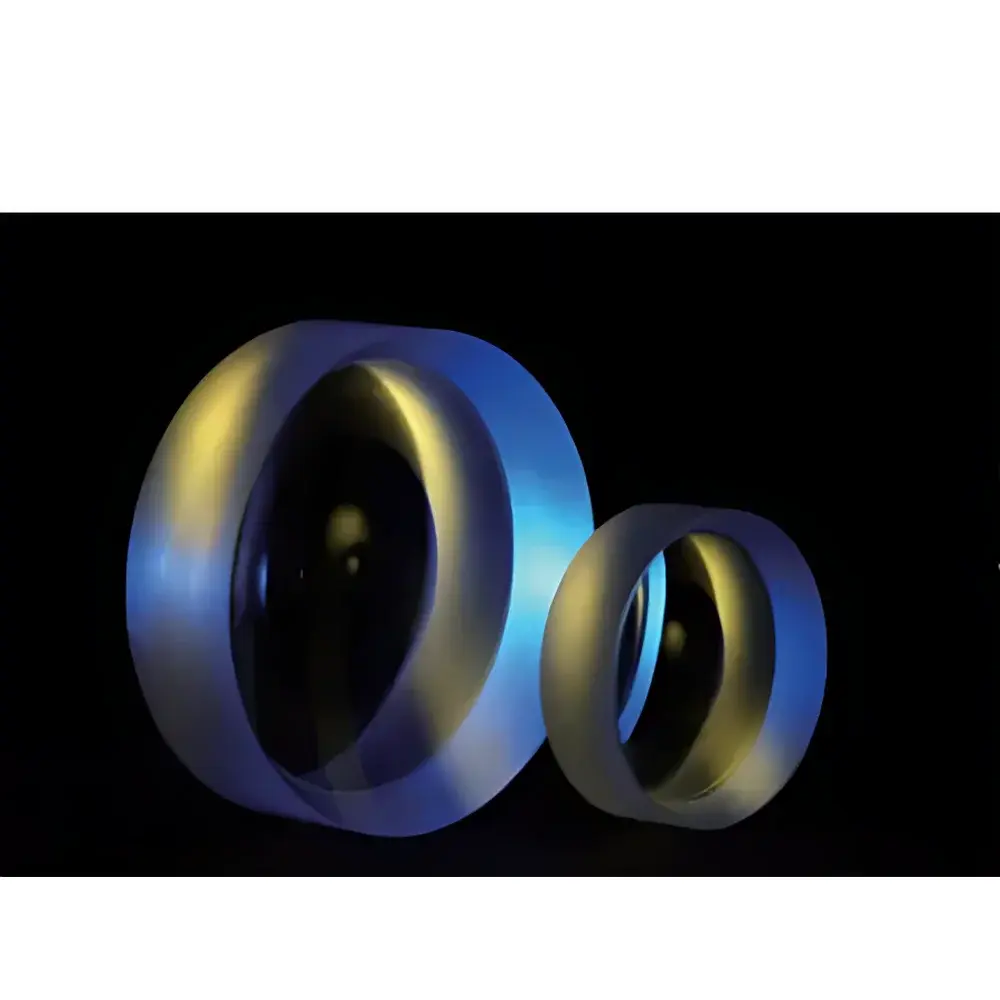
MiXran Meg1026 Calcium Fluoride (CaF₂) Double-Concave Lens

| Brand | MiXran |
|---|---|
| Model | Meg1026 |
| Material | Calcium Fluoride (CaF₂) |
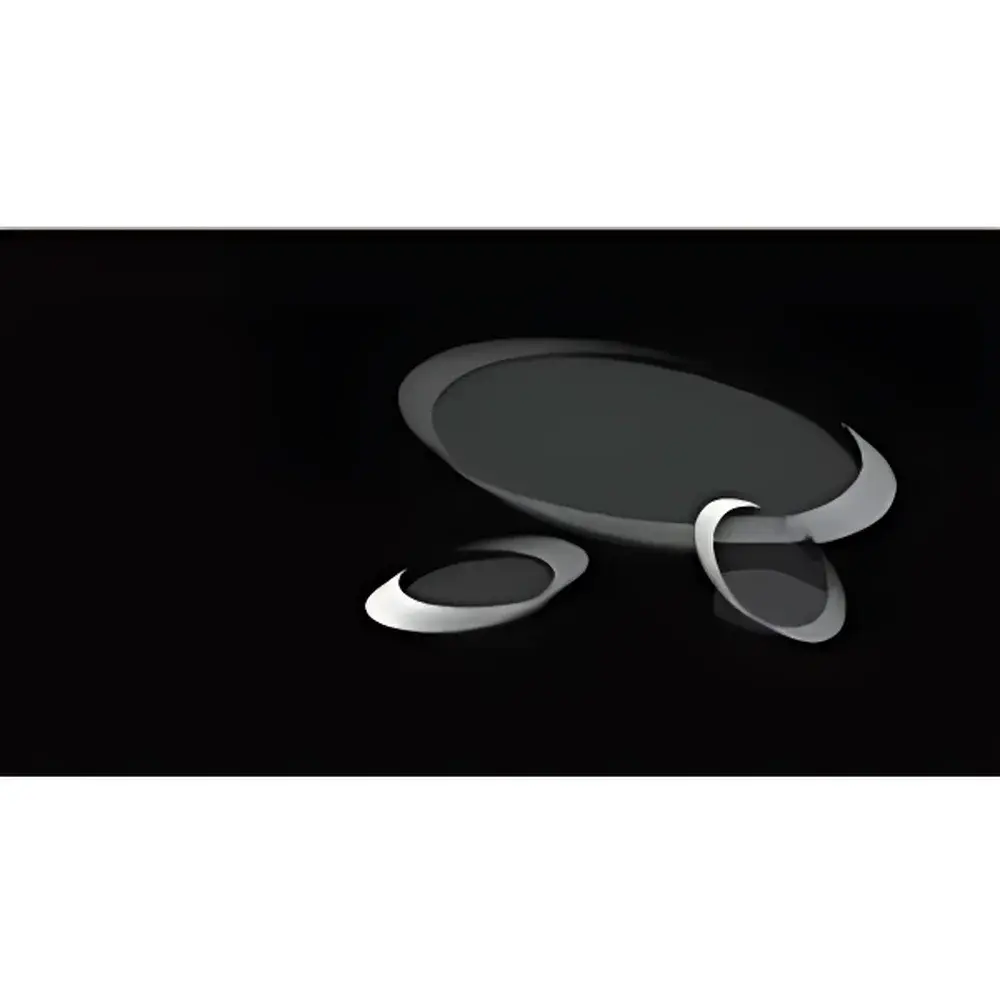
| Lens Type | Double-Concave |
| Coating Options | Uncoated or IR1 Broadband Anti-Reflection Coating (Rₐᵥg < 1.5% @ 3–5 µm) |
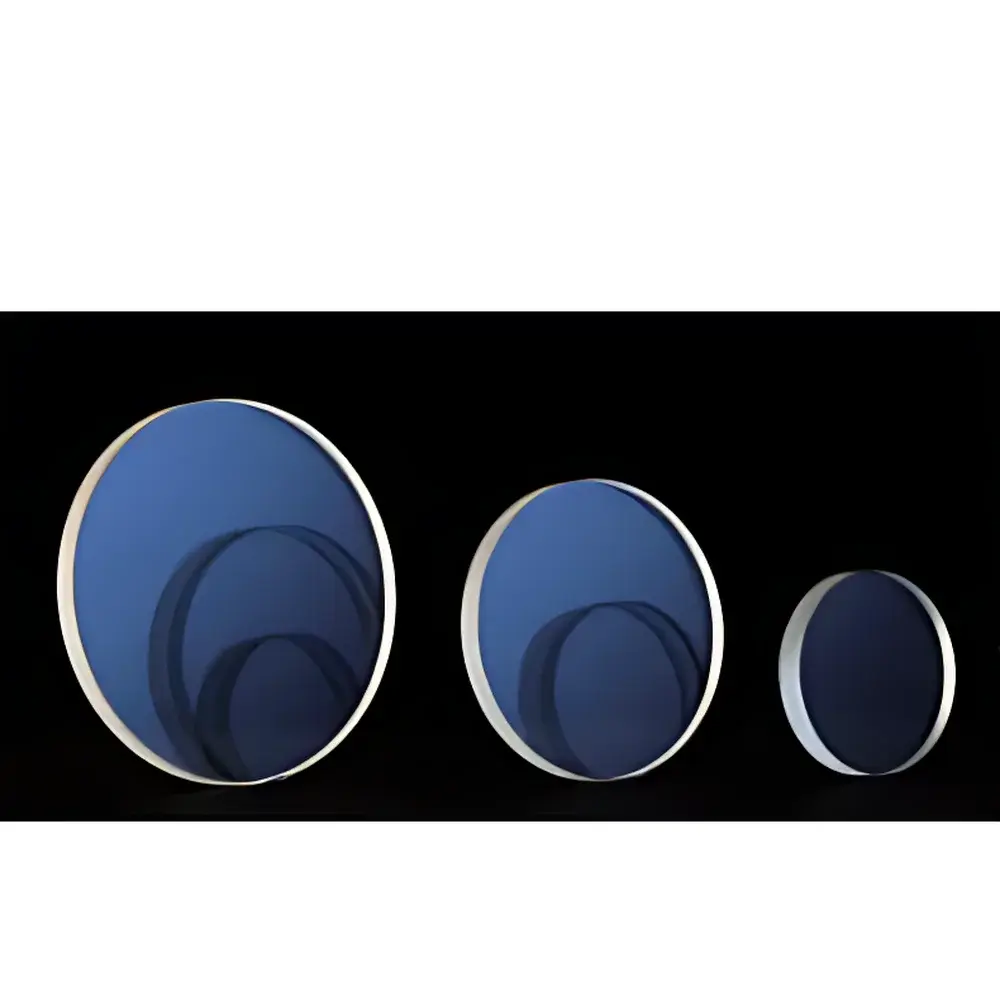
| Diameter | 12.7 mm, 25.4 mm |
| Focal Length (EFL) | –15 mm, –25 mm, –30 mm, –50 mm |
| Radius of Curvature (R₁ = R₂) | –13.4 mm, –22.1 mm, –26.4 mm, –43.8 mm |
| Center Thickness (Tc) | 2.5 mm, 3 mm, 4.9 mm, 6.8 mm |
| Edge Thickness | 5.7 mm, 9 mm |
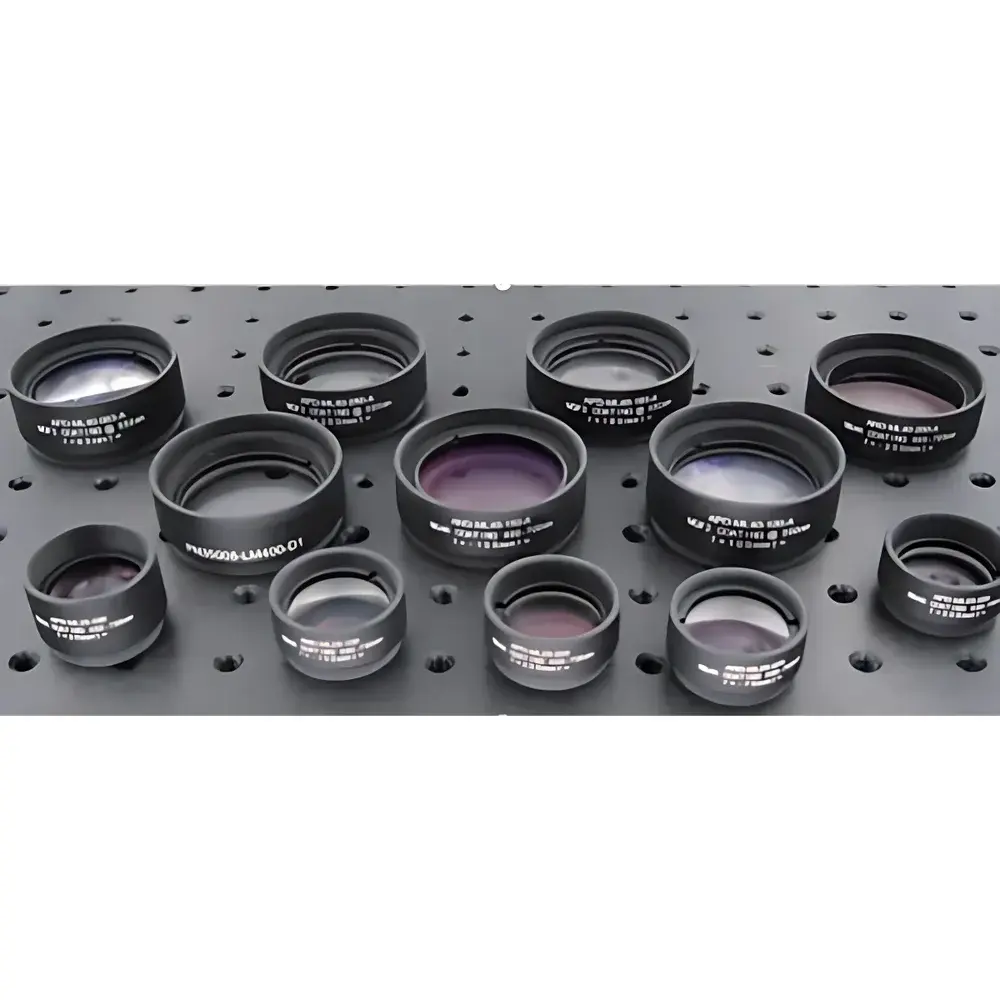
| Mounting Compatibility | Standard SM1-threaded lens mounts (e.g., Thorlabs SM1RR, Newport LMR1) |
| Compliance | ISO 10110-1 optical manufacturing standard |
| Origin | Beijing, China |
| Component Category | Optical Element |
Ask about pricing, availability and specifications.
Overview
The MiXran Meg1026 is a precision-engineered calcium fluoride (CaF₂) double-concave lens designed for demanding mid-infrared (MIR) optical systems operating in the 3–5 µm spectral band. Unlike fused silica or BK7 lenses, CaF₂ exhibits exceptional transmission (>90% per surface, uncoated) across this range and maintains low thermal expansion (18.9 × 10⁻⁶ /K) and high laser-induced damage threshold (LIDT > 500 MW/cm² at 1064 nm, pulsed), making it suitable for both passive beam shaping and high-energy MIR laser applications. Its double-concave geometry introduces negative optical power, enabling beam divergence control, virtual image formation, and correction of spherical aberration in multi-element assemblies. The lens is fabricated using single-crystal CaF₂ boules grown via the Bridgman method, ensuring homogeneity, low birefringence (<5 nm/cm), and minimal internal stress—critical parameters for interferometric and spectroscopic stability.
Key Features
- Pure single-crystal calcium fluoride substrate with orientation, verified by X-ray Laue diffraction
- Double-concave symmetric geometry (R₁ = R₂) enabling predictable Gaussian beam manipulation and simplified alignment
- Two coating options: uncoated for maximum UV–MIR broadband transmission (180 nm–8 µm), or IR1 broadband anti-reflection coating optimized for 3–5 µm (Rₐᵥg < 1.5% across full band)
- Surface quality: 20–10 scratch-dig per MIL-PRF-13830B; surface flatness λ/4 @ 633 nm (verified via phase-shifting interferometry)
- Edge finish: fine ground and chamfered to prevent chipping during mounting; no residual polishing compound or hydrocarbon contamination
- Dimensional tolerances: ±0.05 mm on diameter, ±0.2 mm on focal length, ±0.02 mm on center thickness—traceable to NIM (National Institute of Metrology, China) calibrated interferometers
Sample Compatibility & Compliance
The Meg1026 lens is compatible with industry-standard optomechanical mounts including SM1 (1.035″-40) threaded lens tubes (e.g., Thorlabs, Newport, Edmund Optics), and custom kinematic cell designs. All substrates undergo rigorous QC per ISO 10110-1 (optical element specification) and ISO 10110-7 (surface imperfection grading). Batch certification includes spectral transmittance data (200 nm–8 µm, measured on PerkinElmer Lambda 950 with integrating sphere), refractive index verification (n = 1.399 @ 4 µm, ±0.0005), and certificate of conformance with RoHS Directive 2011/65/EU. No hazardous substances—including lead, cadmium, or hexavalent chromium—are introduced during crystal growth, cutting, or polishing. For regulated environments (e.g., ISO/IEC 17025 labs), full traceability to raw material lot numbers and process logs is available upon request.
Software & Data Management
While the Meg1026 is a passive optical component, its performance integration is supported through standard optical design workflows. Zemax OpticStudio and CODE V prescription files (including dispersion data from Sellmeier coefficients for CaF₂) are provided upon order confirmation. Transmission spectra (.csv and .txt formats), surface error maps (.zmx-compatible), and mechanical drawings (STEP and PDF) are delivered digitally via secure client portal. All documentation conforms to GLP-aligned archival standards: version-controlled, time-stamped, and checksum-verified (SHA-256). For customers implementing automated optical assembly lines, machine-readable QR codes etched on packaging labels link directly to digital certificates and metrology reports.
Applications
- Mid-infrared spectroscopy: collimation and focusing optics in FTIR spectrometers (e.g., Bruker Vertex series) and quantum cascade laser (QCL) absorption systems
- Laser resonator design: negative elements for mode-matching and cavity length stabilization in CO and CO₂ laser systems
- Thermal imaging optics: field-flattening and relay lens components in cooled InSb and HgCdTe detector modules
- UV–MIR broadband beam delivery: achromatic pairs with BaF₂ or ZnSe elements in ultrafast OPA pump-probe setups
- Calibration reference: certified curvature and thickness values enable use as traceable artifacts in optical shop testing (e.g., radius measurement with Fizeau interferometer)
FAQ
Is the CaF₂ substrate resistant to hydrofluoric acid exposure?
No—CaF₂ is chemically stable in neutral and basic aqueous solutions but dissolves readily in hydrofluoric acid (HF) and strong mineral acids. Cleaning must be performed using only anhydrous ethanol, methanol, or acetone under Class 100 cleanroom conditions.
Can the Meg1026 lens be used in vacuum environments?
Yes. Single-crystal CaF₂ exhibits negligible outgassing (per ASTM E595: TML < 0.05%, CVCM < 0.01%) and is routinely deployed in UHV spectroscopic ellipsometers and space-qualified IR sensors.
What is the maximum permissible power density for continuous-wave (CW) operation at 4.5 µm?
For uncoated lenses, the practical limit is ~15 kW/cm² (CW, 4.5 µm, 1/e² beam); for IR1-coated variants, derate by 20% due to localized absorption in the multilayer stack.
Are custom diameters or focal lengths available?
Yes—custom geometries (diameters up to 100 mm, EFL from –10 mm to –200 mm) are manufacturable under NRE agreement with lead times of 8–12 weeks and full metrological validation.
Does MiXran provide mounting hardware recommendations?
Yes—recommended mounts include Thorlabs SM1RR retaining rings with nylon-tipped setscrews, or Newport LMR1 lens mount assemblies with kinematic tilt adjustment; all compatible with the specified edge thickness and clear aperture.