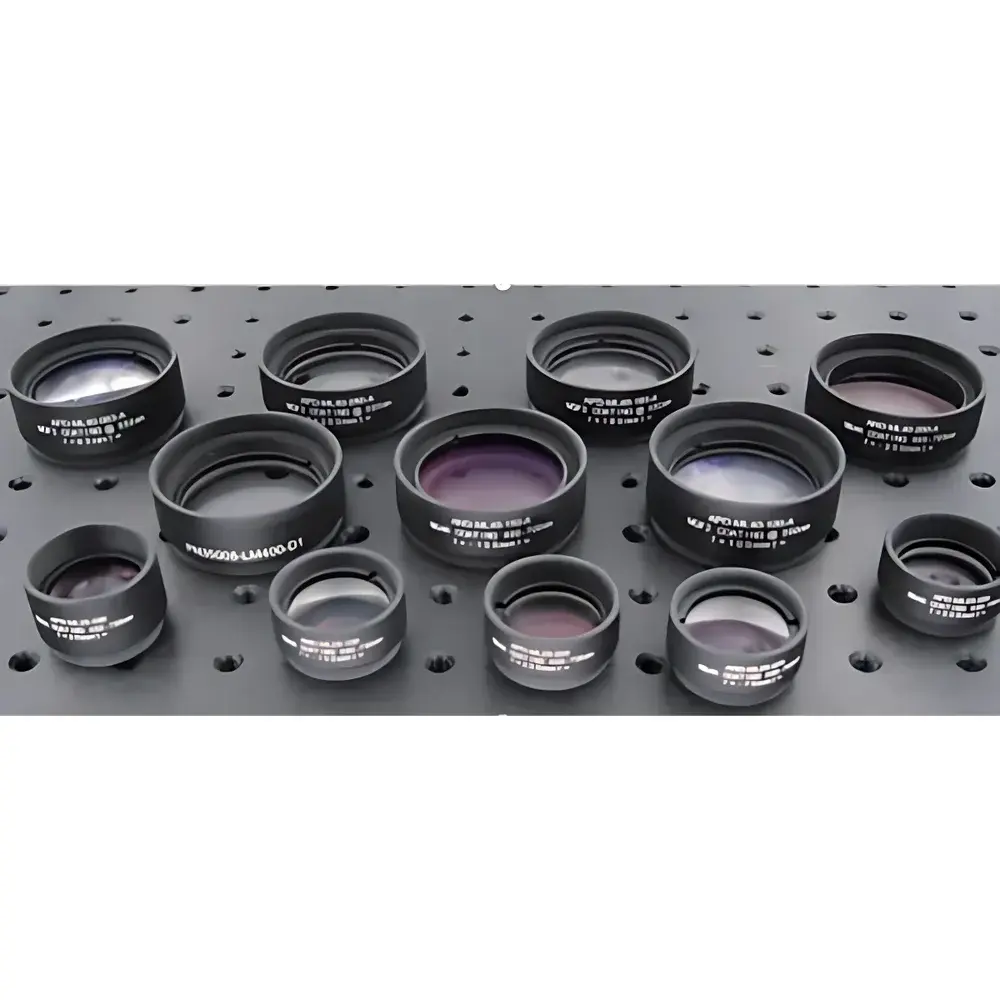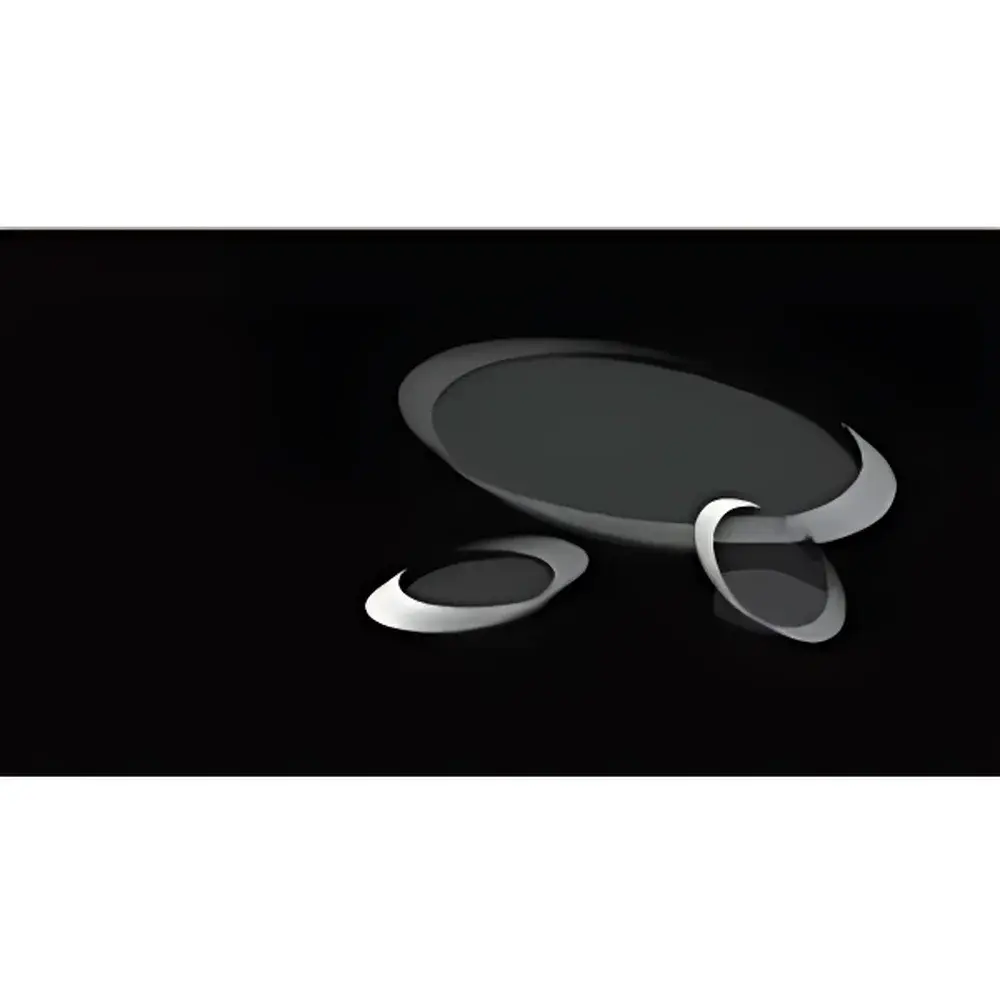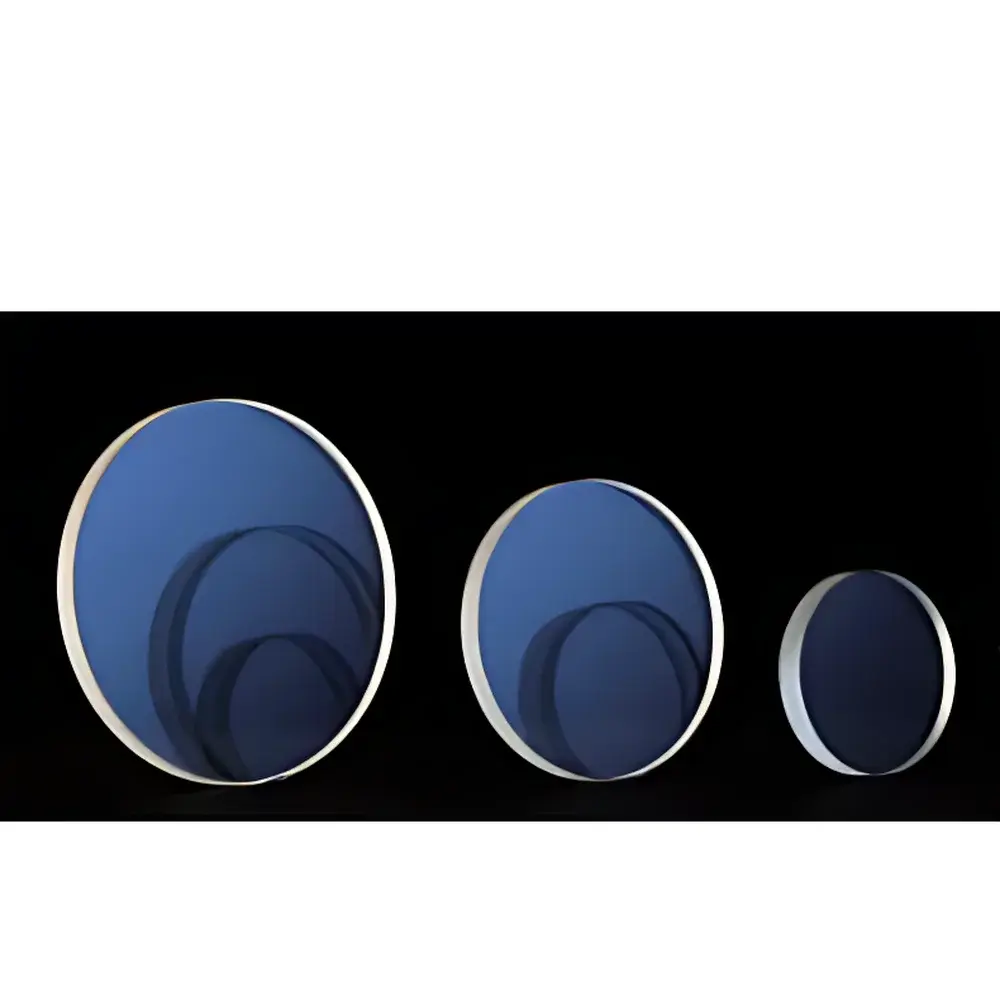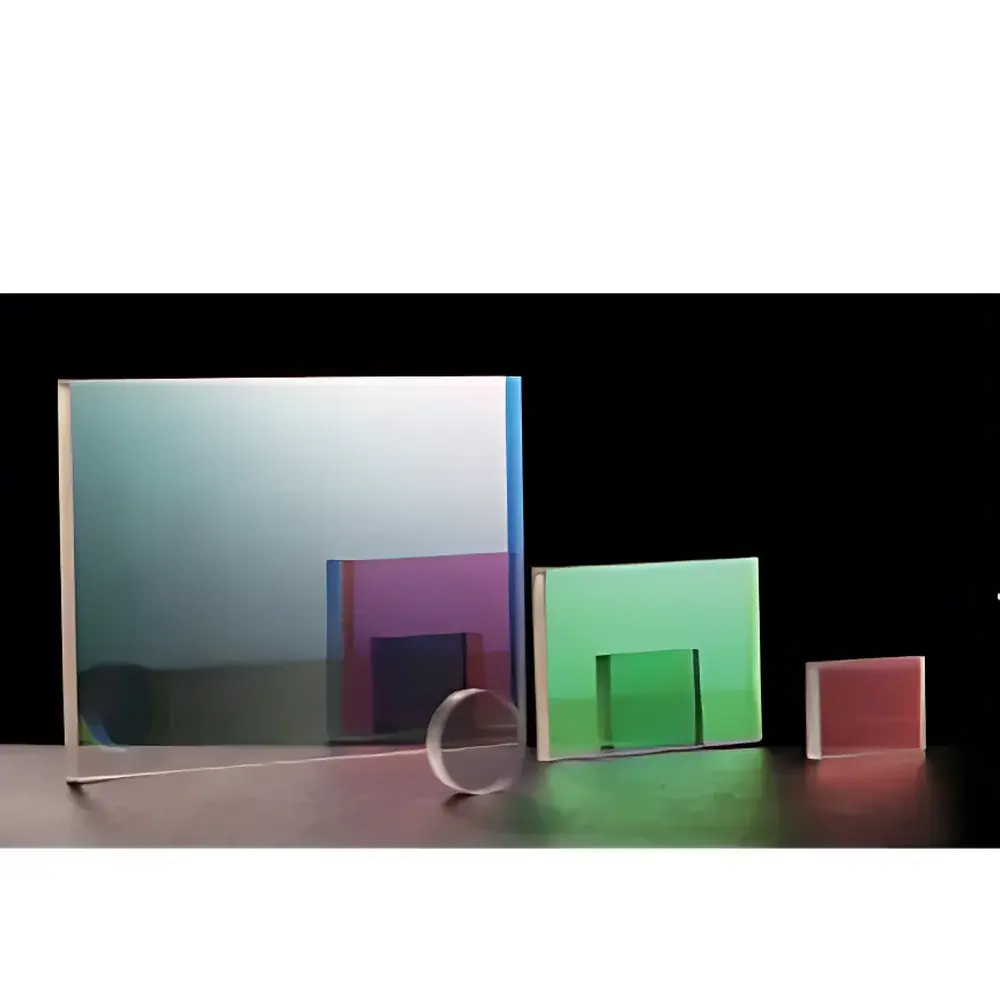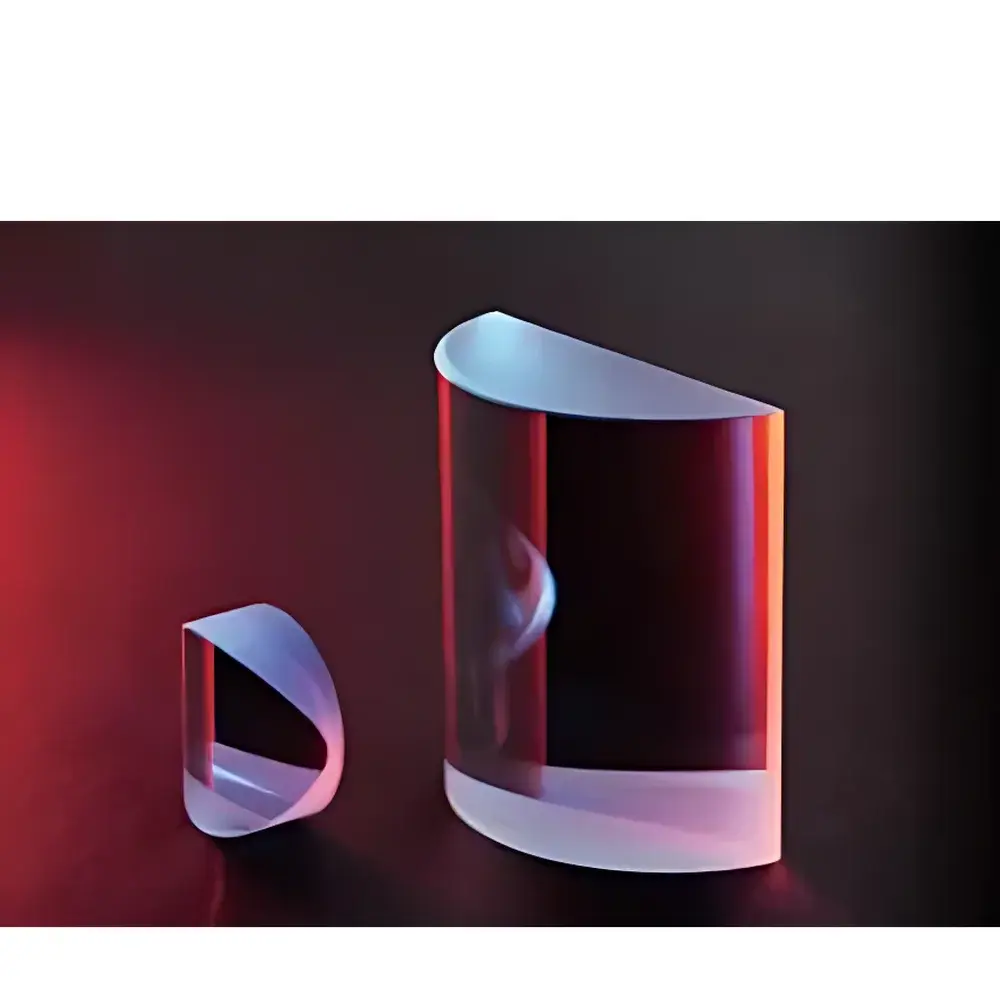
MiXran Meg1027 Calcium Fluoride (CaF₂) Plano-Convex Cylindrical Lens

| Brand | MiXran |
|---|---|
| Model | Meg1027 |
| Material | Calcium Fluoride (CaF₂) |
| Surface Quality | 40–20 scratch-dig |
| Clear Aperture | ≥90% of diameter |
| Coating Options | Uncoated or Broadband AR Coating (IR1, Rₐᵥg < 1.5% @ 3–5 µm) |
| Operating Wavelength Range | 0.18–8.0 µm |
| Transmission Range (CaF₂) | >90% from 200 nm to 7.5 µm |
| Damage Threshold | >5 J/cm² @ 1064 nm, 10 ns, 10 Hz |
| Thermal Expansion Coefficient | 18.85 × 10⁻⁶ /°C |
| Refractive Index (at 587.6 nm) | 1.434 |
| Density | 3.18 g/cm³ |
| Hardness (Knoop) | 175 kg/mm² |
Ask about pricing, availability and specifications.
Overview
The MiXran Meg1027 is a precision-engineered calcium fluoride (CaF₂) plano-convex cylindrical lens designed for demanding mid-infrared (MIR) optical systems, including thermal imaging, CO₂ laser beam shaping, spectroscopic instrumentation, and Fourier-transform infrared (FTIR) spectrometers. Unlike spherical lenses, cylindrical lenses focus light into a line rather than a point—making them essential for anamorphic beam correction, line generation, astigmatism compensation, and laser diode collimation in asymmetric emission profiles. Fabricated from high-purity synthetic CaF₂ crystal, the Meg1027 exhibits exceptional transmission across the deep ultraviolet (DUV) through mid-infrared spectrum (180 nm to 8.0 µm), with minimal absorption and negligible fluorescence—critical for low-noise detection and high-fidelity spectral analysis. Its low refractive index dispersion and excellent homogeneity ensure consistent wavefront fidelity and minimal chromatic aberration in broadband applications.
Key Features
- Optical substrate: High-grade synthetic calcium fluoride (CaF₂), certified for low OH⁻ content and bulk homogeneity per MIL-O-13830A
- Geometry: Plano-convex cylindrical profile with precision-polished cylindrical surface (R1) and flat (plano) surface; radius tolerance ±0.5%, surface figure λ/4 @ 633 nm
- Surface quality: 40–20 scratch-dig per ISO 10110-7, verified via interferometric inspection and dark-field microscopy
- Coating options: Standard uncoated configuration or optional broadband anti-reflection (BBAR) coating IR1 optimized for 3–5 µm (Rₐᵥg < 1.5%), deposited via ion-assisted e-beam evaporation
- Mechanical stability: Low thermal expansion coefficient (18.85 × 10⁻⁶ /°C) ensures dimensional stability under thermal cycling typical in environmental test chambers and field-deployable MIR systems
- Mounting compatibility: Designed for integration into standard kinematic lens mounts (e.g., Thorlabs SM1-series, Newport KM100) with centering tolerance ≤±10 µm
Sample Compatibility & Compliance
The Meg1027 is compatible with both free-space and fiber-coupled optical configurations operating in vacuum, dry nitrogen, or ambient laboratory environments. It meets material compliance requirements for Class 100 cleanroom handling (ISO 14644-1) and is RoHS 3 (2015/863/EU) and REACH SVHC-compliant. While not inherently FDA-regulated as a standalone component, its CaF₂ grade satisfies ASTM F2737-15 specifications for optical materials used in medical infrared diagnostic devices. For GLP/GMP-aligned optical assembly workflows, full traceability documentation—including batch-specific spectral transmittance curves, interferometric surface maps, and coating reflectance data—is available upon request.
Software & Data Management
As a passive optical component, the Meg1027 requires no embedded firmware or driver software. However, it is fully supported within industry-standard optical design platforms—including Zemax OpticStudio (v23+), CODE V (v12.5+), and FRED—via built-in CaF₂ material models (Schott SF11-equivalent dispersion data, Sellmeier coefficients validated against NIST SRD-113). Users may import manufacturer-provided STEP files (AP203e2-compliant) and spectral transmission datasets (CSV format, 1 nm resolution from 200 nm to 8000 nm) for accurate system-level modeling. All product-specific metrology reports are archived in secure cloud storage with audit-trail timestamps and ISO/IEC 17025-aligned calibration metadata.
Applications
- Mid-wave infrared (MWIR) imaging systems requiring diffraction-limited line focus for scanning slit detectors
- CO₂ laser (10.6 µm) and quantum cascade laser (QCL) beam conditioning in gas sensing platforms
- Anamorphic correction of elliptical output beams from edge-emitting laser diodes in LIDAR transceivers
- FTIR spectrometer fore-optics where low-autofluorescence and high UV-MIR throughput are mandatory
- UV lithography alignment optics (down to 193 nm ArF excimer) leveraging CaF₂’s deep-UV transparency
- High-energy pulsed laser systems (e.g., Ti:sapphire amplifier chains) where low nonlinear index and high damage threshold are critical
FAQ
Is the Meg1027 suitable for use below 200 nm (vacuum UV)?
Yes—high-purity CaF₂ transmits down to ~125 nm; however, operation below 180 nm requires vacuum or purged environments due to atmospheric oxygen absorption.
Can the IR1 coating be applied to custom dimensions or non-standard CaF₂ substrates?
Yes—MiXran offers custom coating services for OEM volumes (minimum order: 10 units); lead time and qualification testing apply.
What is the maximum permissible power density for continuous-wave (CW) operation at 4.5 µm?
For uncoated lenses, CW power handling is limited by thermal lensing; typical safe fluence is ≤1 kW/cm² at 4.5 µm with active cooling and uniform illumination.
Are mounting fixtures or alignment adapters included with purchase?
No—lens cells, retaining rings, and kinematic mounts are sold separately; recommended part numbers are provided in the technical datasheet.
Does MiXran provide ISO/IEC 17025-certified calibration reports for individual lenses?
Yes—certified spectral transmittance and surface figure reports are available at additional cost and require advance specification during order placement.