
仪景通 EVDENT BTXII Portable Benchtop X-ray Diffractometer

| [Brand | EVDENT |
|---|---|
| Origin | USA |
| Instrument Type | Powder X-ray Diffractometer |
| Model | BTXII |
| Power Supply | Battery-operated (up to 6 hours) |
| Sample Requirement | 15 mg |
| Detection Principle | Bragg’s Law-based X-ray Diffraction (Cu Kα radiation) |
| Compliance | Meets IEC 61010-1 for portable analytical instrumentation |
| Sample Form | Loose powder ≤150 µm] |
Ask about pricing, availability and specifications.
Overview
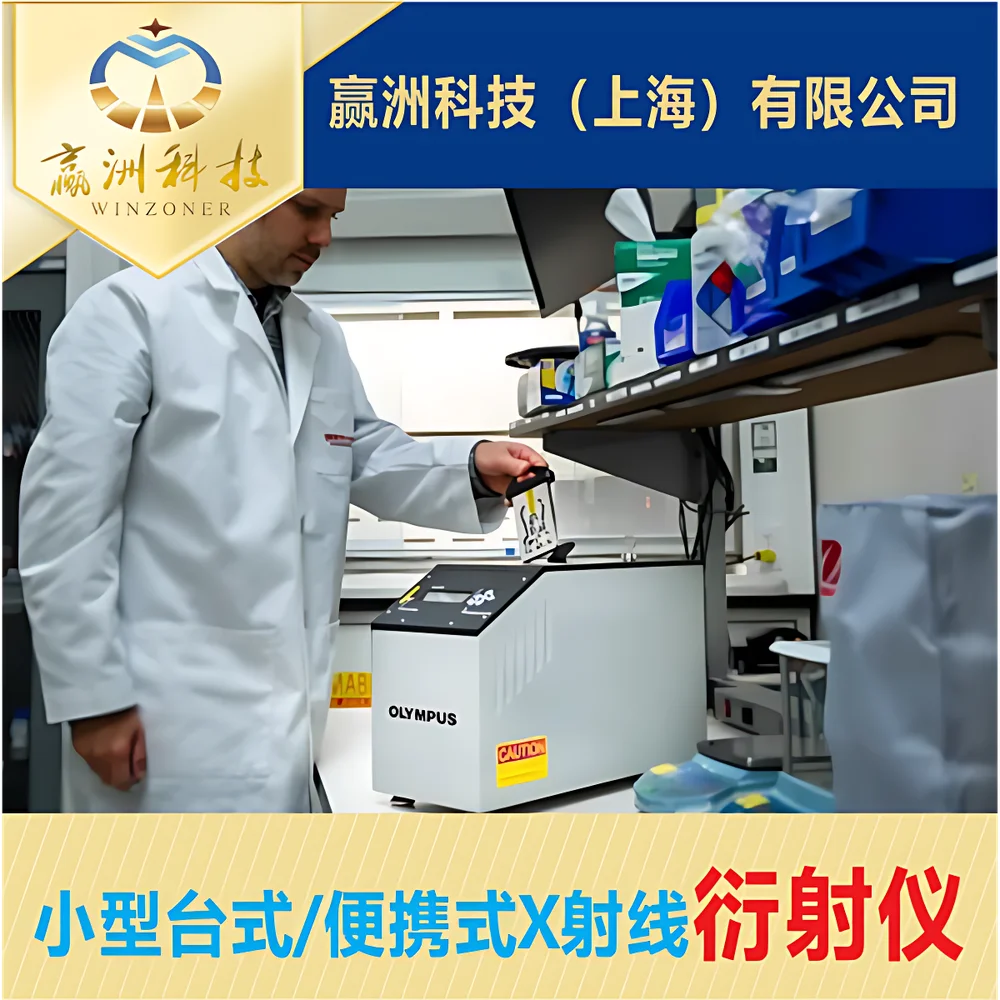
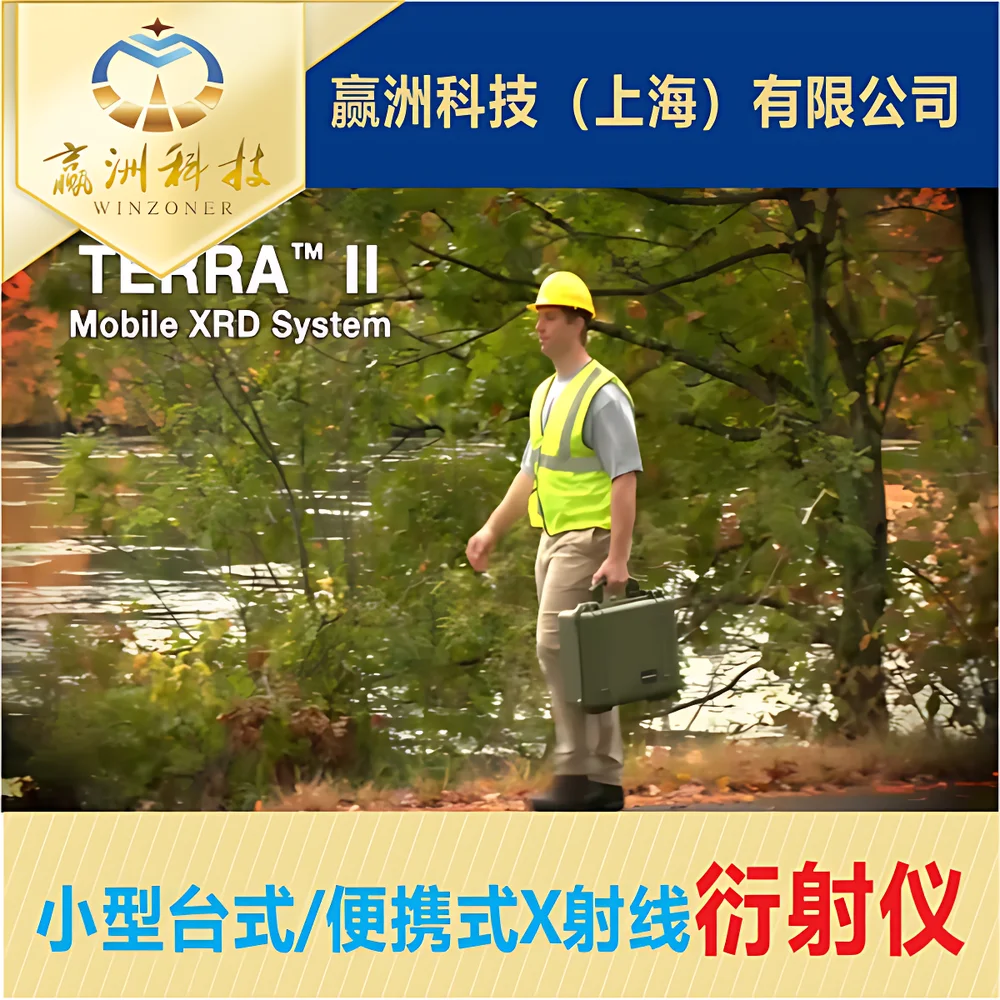
The EVDENT BTXII is a compact, battery-powered benchtop X-ray diffractometer engineered for rapid, on-site phase identification and semi-quantitative analysis of crystalline materials. Unlike conventional floor-standing XRD systems requiring high-voltage power supplies, water cooling, and vibration-isolated benches, the BTXII implements a fixed-anode Cu-target X-ray source coupled with a silicon strip detector operating under Bragg’s law geometry. Its optical path is optimized for high signal-to-noise ratio at low incident angles, enabling robust detection of major and minor crystalline phases in heterogeneous geological and industrial powders. Designed for field-deployable operation — including mining sites, well logging units, cement plants, and emergency response scenarios — the BTXII delivers laboratory-grade diffraction patterns without dependency on AC mains, compressed gas, or external chillers. The instrument complies with IEC 61010-1 safety standards for portable analytical equipment and incorporates inherent beam containment and interlock mechanisms meeting international radiation safety guidelines.
Key Features
- Battery-operated platform providing up to 6 hours of continuous operation per charge — ideal for remote or mobile deployment
- Integrated vibration sample stage minimizing preferred orientation effects; enables reliable analysis from as little as 15 mg of powder ≤150 µm
- No external utilities required: operates independently of AC power, water cooling, gas purge, or secondary transformers
- SwiftMin™ real-time mineral phase identification and quantification software embedded directly on the device
- Wireless connectivity (Wi-Fi 802.11ac) for remote monitoring, parameter adjustment, and automatic data export to laptops, tablets, or cloud repositories
- Ruggedized IP54-rated enclosure with shock-absorbing housing suitable for outdoor, offshore, and industrial environments
- Pre-calibrated angular range (5–70° 2θ) with fixed Cu Kα (λ = 1.5418 Å) source ensuring long-term wavelength stability
Sample Compatibility & Compliance
The BTXII accepts loose, dry powdered samples prepared via standard mortar-and-pestle grinding or handheld milling tools included in the optional Sample Prep Kit. It supports routine analysis of oxides, silicates, carbonates, sulfates, clays, catalysts, pharmaceutical polymorphs, and energetic materials (e.g., RDX, PETN). Sample homogeneity is enhanced by the proprietary oscillating sample holder, which induces particle convection during acquisition — significantly reducing texture-related artifacts common in traditional back-reflection or capillary-mounted geometries. From a regulatory standpoint, the system supports audit-ready workflows compliant with GLP and GMP principles when paired with SwiftMin’s secure user authentication, electronic signature capability, and full audit trail logging. While not FDA 21 CFR Part 11–certified out-of-the-box, its data export architecture (CSV, PDF, CIF, XML) facilitates integration into validated LIMS or ELN platforms meeting ISO/IEC 17025 and ASTM E1447 requirements.
Software & Data Management
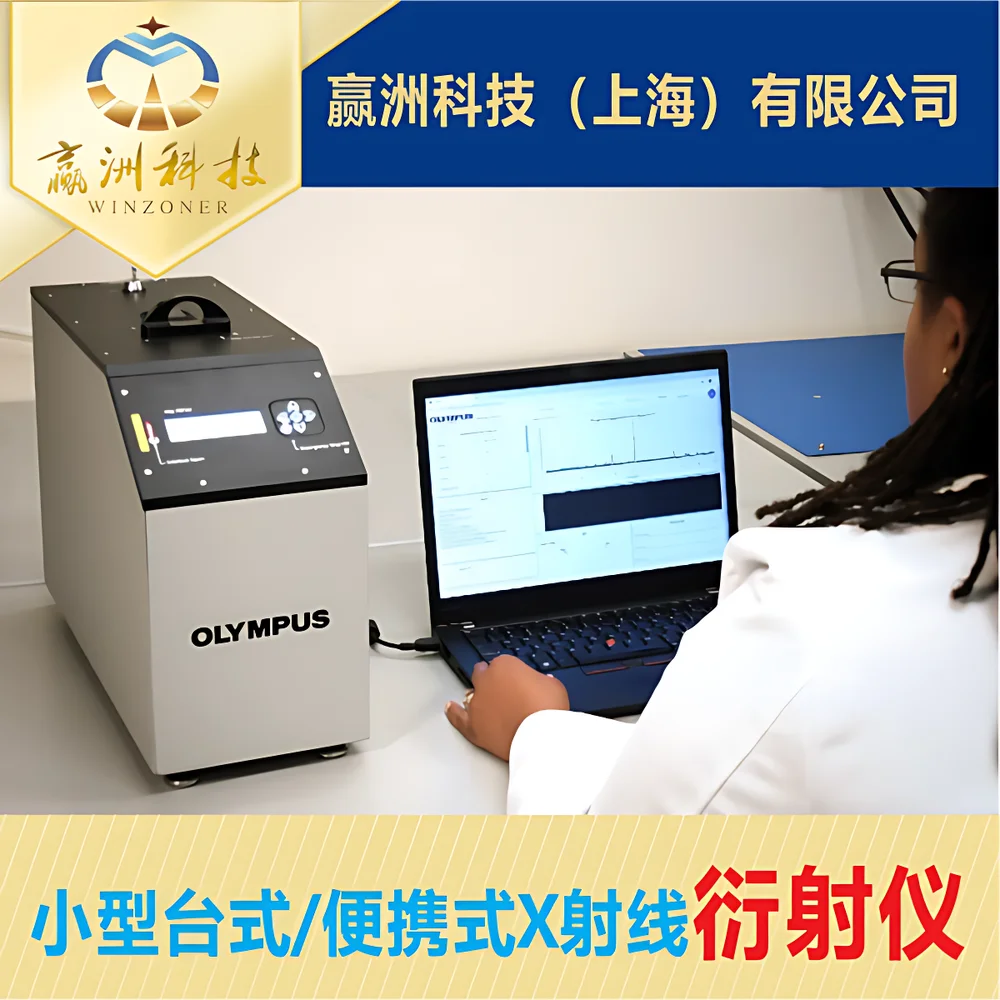
SwiftMin software provides a unified interface for instrument control, real-time pattern visualization, phase library matching (using ICDD PDF-4+ database), and Rietveld refinement-ready output. The single-screen dashboard displays raw intensity vs. 2θ plots alongside matched phases, weight percentages, and confidence scores. Calibration routines are preloaded and field-adjustable using NIST-traceable Si or Al2O3 standards. All acquisitions include metadata stamping (operator ID, GPS coordinates if enabled, timestamp, environmental temperature/humidity). Data can be exported manually or scheduled for auto-transfer upon completion or manual stop — supporting both local storage (microSD card) and networked destinations via SFTP or HTTPS endpoints. Raw .xye files retain full detector channel resolution for post-acquisition reprocessing in third-party packages such as TOPAS, GSAS-II, or HighScore Plus.
Applications
- Mineral exploration & ore grade estimation: rapid discrimination between quartz polymorphs, feldspars, micas, and sulfide assemblages
- Oilfield geochemistry: clay typing in cuttings, scale phase identification in downhole tubing, and hydrate characterization
- Cement & building materials: quantification of alite, belite, calcium sulfoaluminate, and free lime
- Pharmaceutical QC: polymorph screening, excipient compatibility assessment, and stability-indicating crystallinity checks
- Catalyst development: tracking zeolite framework integrity, metal oxide dispersion, and thermal degradation pathways
- Forensic & security applications: field identification of explosive residues, illicit drug crystalline forms, and counterfeit material signatures
- Academic geoscience: teaching XRD fundamentals with hands-on, low-barrier instrumentation in undergraduate labs
FAQ
Is the BTXII suitable for quantitative Rietveld analysis?
Yes — while optimized for rapid phase ID, its calibrated intensity response and angular accuracy support external Rietveld refinement using standard reference patterns and appropriate internal standards.
Does it require annual recalibration by a certified technician?
No — the fixed-source/detector geometry and factory-installed Cu anode eliminate drift-related recalibration needs. Users may perform verification runs with NIST SRM 640e Si standard at any time.
Can it analyze hydrated or air-sensitive samples?
Not natively — the sample chamber is ambient-air compatible. Optional inert-gas purge kits (Ar/N2) are available for moisture- or oxidation-prone specimens.
What is the minimum detectable phase concentration?
Under typical field conditions, phases present at ≥3 wt% are reliably identified; LOD improves to ~1.5 wt% with extended acquisition times (≥90 s) and optimal sample preparation.
Is training provided for new operators?
Yes — EVDENT offers online modules, on-site commissioning, and application-specific workshops covering sample prep, interpretation pitfalls, and regulatory documentation practices.
More from EVDENT
View all EVDENT products → EVDENT Handheld X-Ray Fluorescence (XRF) Spectrometer for Alloy Analysis
- EVDENT Vanta Series Portable X-Ray Fluorescence (XRF) Spectrometer for Soil Heavy Metal Screening and Lateritic Nickel Ore Exploration
- Vanta Element XRF Analyzer for RoHS Compliance Screening
- EVDENT Handheld Alloy Analyzer – Energy Dispersive X-Ray Fluorescence (ED-XRF) Spectrometer