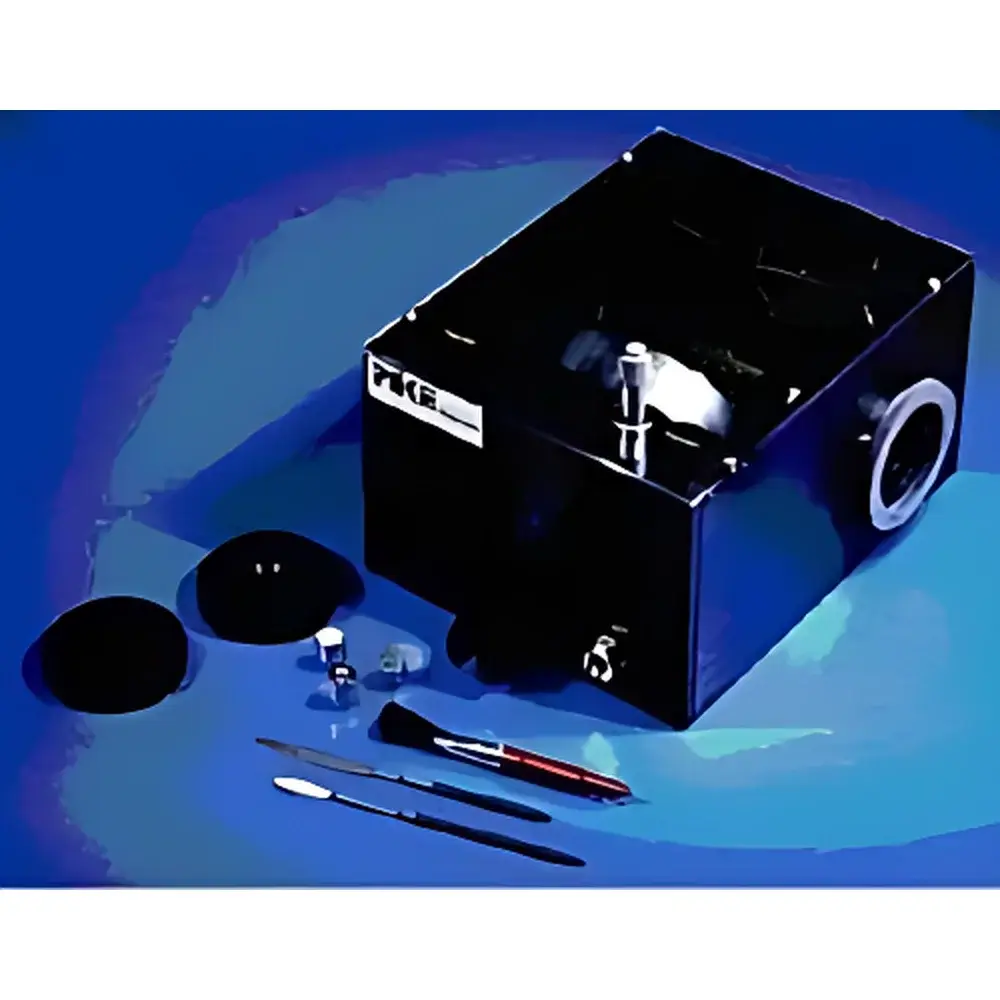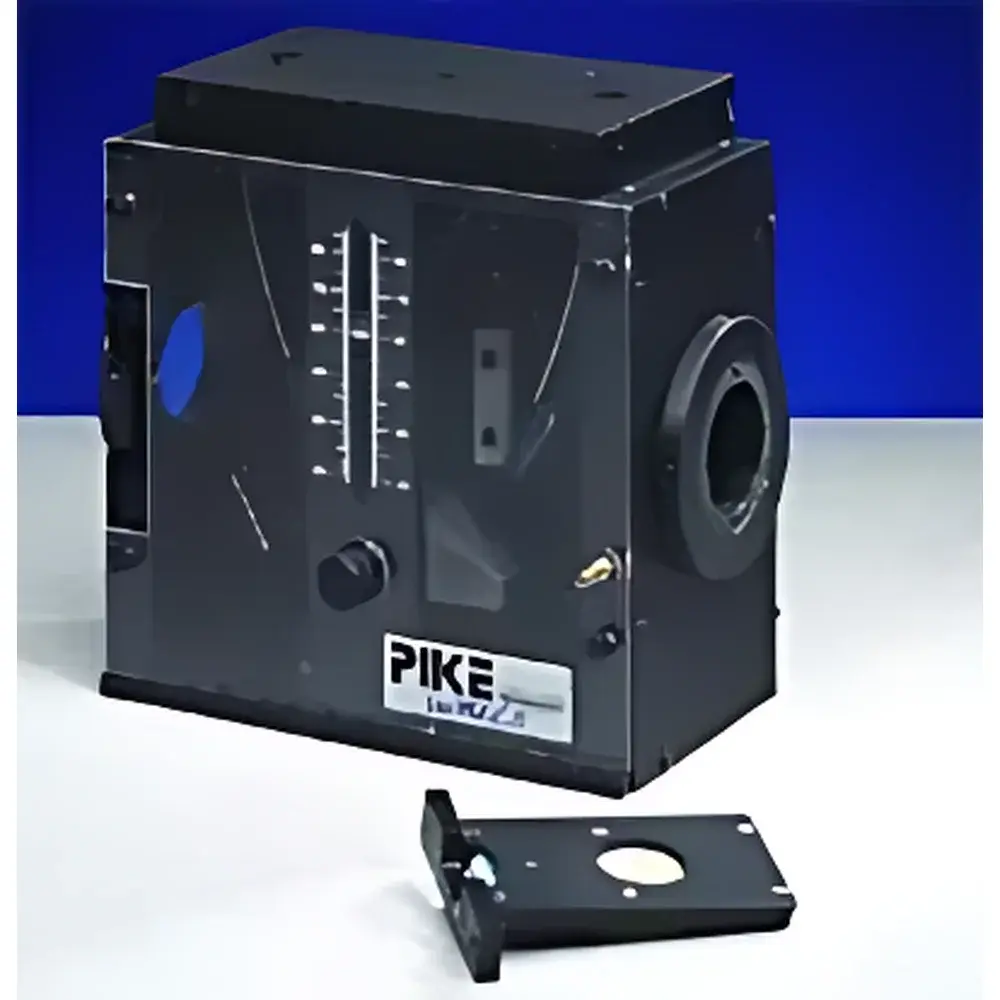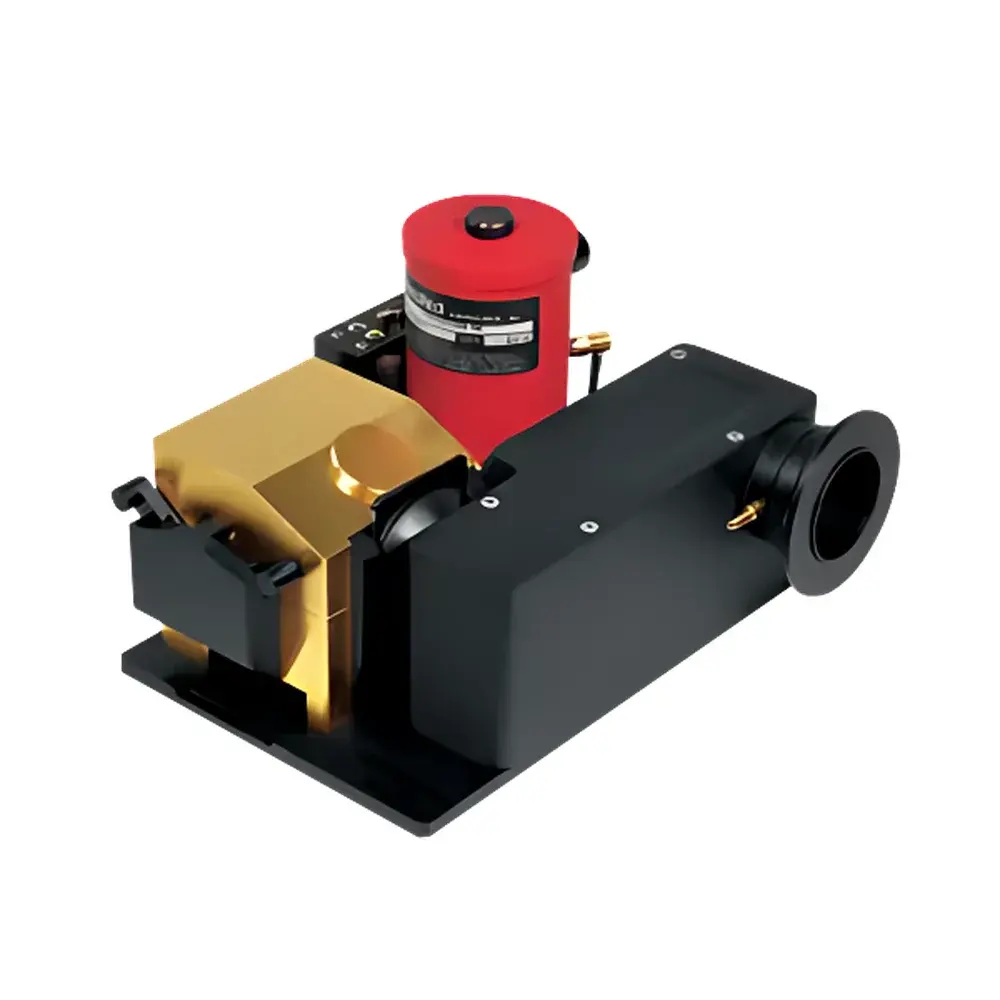
Pike IntegratIR Infrared Integrating Sphere

| Brand | Pike |
|---|---|
| Origin | USA |
| Model | IntegratIR |
| Sphere Diameter | 3 inches |
| Detector Options | DTGS or MCT |
| Incident Angle | 12° |
| Sample Loading | Top- or Bottom-Mount Configuration |
| Import Status | Imported Instrument |
| Distribution Type | Authorized Distributor |
Ask about pricing, availability and specifications.
Overview
The Pike IntegratIR Infrared Integrating Sphere is a precision optical accessory engineered for quantitative diffuse reflectance and transmittance measurements in Fourier Transform Infrared (FTIR) spectroscopy. Based on the fundamental principle of Lambertian integration, the sphere’s highly reflective, spectrally neutral PTFE-coated interior ensures uniform spatial distribution of incident IR radiation, minimizing angular dependence and enhancing measurement reproducibility across heterogeneous or rough-surfaced samples. Designed for seamless integration with commercial FTIR spectrometers—including those from Thermo Fisher, Bruker, and PerkinElmer—the IntegratIR sphere supports both routine quality control and advanced materials characterization workflows in academic, pharmaceutical, and industrial laboratories.
Key Features
- 3-inch internal diameter integrating sphere constructed from high-purity, sintered PTFE with >99% diffuse reflectance across 4000–400 cm⁻¹
- Fixed 12° off-axis incident beam geometry optimized to minimize specular reflection interference while preserving signal-to-noise ratio
- Interchangeable detector options: thermoelectrically cooled DTGS (deuterated triglycine sulfate) for general-purpose analysis or liquid-nitrogen-cooled MCT (mercury cadmium telluride) for high-sensitivity, rapid-scan applications
- Dual sample access configuration—top-mount for powder pellets and films, bottom-mount for liquids in sealed cells or temperature-controlled holders—enabling flexible experimental design without hardware modification
- Optomechanically aligned port layout compliant with standard FTIR bench interfaces (e.g., 25 mm round flange, kinematic mounting), ensuring minimal alignment drift during long-term operation
- Integrated baffling system to suppress first-order stray light and reduce sphere wall contribution to baseline offset
Sample Compatibility & Compliance
The IntegratIR accommodates a broad range of solid, semi-solid, and liquid samples including pharmaceutical tablets, polymer films, catalyst powders, geological specimens, and biological tissues. Its geometry supports ASTM E1421–22 (Standard Practice for Describing and Measuring Performance of Fourier Transform Mid-Infrared (FT-MIR) Spectrometers) and ISO 18387:2015 (Molecular spectroscopy — Vocabulary for infrared absorption spectrometry). When used with validated sampling protocols and certified reference materials (e.g., NIST SRM 1921b), data generated meets GLP and GMP documentation requirements for regulated environments. The sphere’s construction excludes adhesives, epoxies, or organic binders in optical paths—ensuring spectral integrity and eliminating outgassing artifacts under vacuum or purge conditions.
Software & Data Management
The IntegratIR operates transparently within native FTIR acquisition software suites (e.g., OMNIC, OPUS, Spectrum). It requires no proprietary firmware or driver installation; all calibration and background correction routines are executed via standard instrument control APIs. Reflectance spectra are reported as R/Rref (relative to pressed KBr or Spectralon® standards) with optional Kubelka–Munk transformation applied in post-processing. Audit-trail functionality—including operator ID, timestamp, instrument configuration hash, and raw interferogram metadata—is retained in accordance with FDA 21 CFR Part 11 when paired with compliant spectrometer platforms and networked LIMS integration.
Applications
- Quantitative analysis of active pharmaceutical ingredients (APIs) in tablet matrices using diffuse reflectance FTIR (DRIFTS)
- Surface oxidation state mapping of transition metal oxides via depth-sensitive 12° incidence geometry
- Coating thickness estimation on multilayer polymer substrates through interference fringe analysis in transmittance mode
- Moisture content profiling in hygroscopic excipients using O–H stretching band deconvolution
- Forensic fiber identification where microsampling constraints prohibit ATR or transmission methods
- Environmental particulate matter (PM₂.₅/PM₁₀) composition screening via direct powder loading without dilution
FAQ
Is the IntegratIR sphere compatible with vacuum or purged FTIR systems?
Yes—the sphere body is machined from solid aluminum with hermetic O-ring ports and supports continuous dry-air or nitrogen purge at flow rates ≥5 L/min. Vacuum operation down to 10⁻² mbar is feasible with optional quartz viewport upgrades.
Can I use the same sphere for both reflectance and transmittance measurements?
Yes—transmittance mode is enabled by removing the rear baffle and installing a dual-port sample holder; full sphere efficiency calibration must be repeated per mode per ASTM E1421 Annex A3.
What is the recommended calibration frequency for routine QC use?
A daily background scan is required; absolute reflectance calibration using a NIST-traceable Spectralon® standard is recommended weekly or after any mechanical disturbance to the optical path.
Does Pike provide application support for method development?
Authorized distributors offer documented SOPs for common pharmaceutical and polymer applications, including validation templates aligned with USP and ICH Q2(R2).