
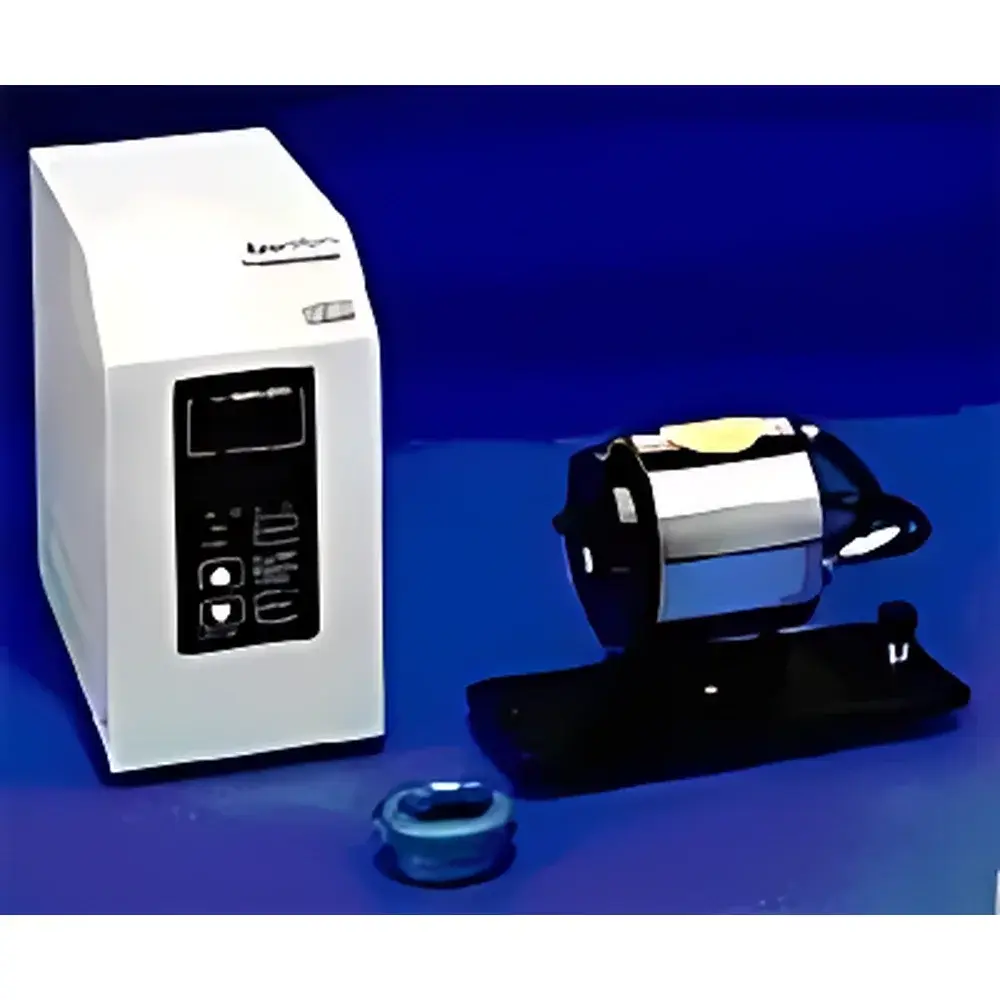
PIKE Heated Removable Liquid Cell 16XX-XX
| Brand | PIKE |
|---|---|
| Origin | USA |
| Manufacturer Type | Authorized Distributor |
| Product Origin | Imported |
| Model | 16XX-XX |
| Instrument Type | Laboratory FTIR Accessory |
| FTIR Spectral Range | 7800–400 cm⁻¹ |
| Optical Resolution | 0.5 cm⁻¹ |
| Scan Speed | 1 scan/sec |
| Signal-to-Noise Ratio | 15,000:1 |
| Temperature Control Range | Ambient to 200 °C |
| Window Material Options | CaF₂, BaF₂, ZnSe, KBr, CsI (selected per spectral region) |
| Window Dimensions | Ø32 mm × 3 mm thick |
| Clear Aperture | 13 mm diameter |
| Pathlength Options | Fixed via precision-machined metal spacers (e.g., 0.025 mm, 0.1 mm, 0.5 mm, 1.0 mm) |
Overview
The PIKE Heated Removable Liquid Cell 16XX-XX is a precision-engineered, temperature-controlled transmission accessory designed for integration with Fourier Transform Infrared (FTIR) spectrometers. It enables quantitative and qualitative analysis of liquid-phase samples under precisely regulated thermal conditions—critical for studying temperature-dependent molecular conformational changes, reaction kinetics, solvation effects, and phase transitions in chemical, pharmaceutical, and materials research. The cell operates on the principle of transmission IR spectroscopy: infrared radiation passes through the sample contained between two parallel, IR-transparent windows; absorbance spectra are acquired across the mid-IR range (400–7800 cm⁻¹), with high optical fidelity maintained by thermally stable alignment and low-strain window mounting. Its removable design allows rapid cleaning, solvent compatibility verification, and interchangeability with other PIKE accessories—including gas cells and solid-sample holders—without realignment of the FTIR optical train.
Key Features
- Wide temperature control range from ambient to 200 °C, enabled by integrated platinum resistance thermometer (Pt100) feedback and PID-controlled heating elements, ensuring ±0.5 °C thermal stability at setpoint.
- Modular, tool-free disassembly: top and bottom plates separate cleanly to expose windows and spacer, minimizing risk of window scratching or gasket deformation during maintenance.
- Interchangeable window sets compatible with near-, mid-, and far-IR regions—CaF₂ (UV–mid-IR), BaF₂ (extended mid-IR), ZnSe (robust mid-IR), KBr (broadband but hygroscopic), and CsI (far-IR)—each certified for low wavefront distortion and high transmittance.
- Precision-machined stainless steel spacers define optical pathlength with metrological traceability; standard options include 25 µm, 100 µm, 500 µm, and 1000 µm—enabling Beer–Lambert law-based concentration calibration across diverse analyte absorbance ranges.
- Optimized thermal mass distribution and insulated housing minimize thermal gradient-induced beam deviation, preserving spectral resolution and photometric accuracy even during dynamic temperature ramps.
Sample Compatibility & Compliance
The 16XX-XX accommodates a broad spectrum of liquid matrices—including polar protic solvents (e.g., water, methanol, ethanol), aprotic solvents (acetonitrile, chloroform, DMSO), ionic liquids, and viscous polymer solutions—without leakage or pressure buildup, thanks to its dual O-ring sealing architecture and pressure-relief venting. All wetted components comply with USP Class VI biocompatibility standards, and the cell is suitable for use in GLP-compliant laboratories when paired with validated FTIR systems. While the accessory itself does not carry CE or FDA 510(k) certification, it meets mechanical and thermal safety requirements outlined in IEC 61010-1 for laboratory equipment used in conjunction with Class 1 laser-based FTIR instruments.
Software & Data Management
The cell requires no proprietary software or drivers. It functions transparently within standard FTIR acquisition platforms—including Thermo OMNIC, Bruker OPUS, Agilent Resolutions Pro, and PerkinElmer Spectrum—supporting synchronized temperature logging alongside spectral acquisition. Users may configure temperature ramp profiles (linear, step, isothermal), trigger spectral collection at defined thermal setpoints, and export time–temperature–absorbance datasets for multivariate analysis (e.g., PCA, MCR-ALS). Audit trails, electronic signatures, and 21 CFR Part 11 compliance are managed at the host spectrometer software level; the 16XX-XX contributes calibrated thermal metadata to each spectrum’s header via analog voltage output (0–10 V) linked to the Pt100 sensor.
Applications
- Temperature-resolved studies of protein secondary structure (amide I/II band shifts) in aqueous buffer systems.
- In situ monitoring of esterification, hydrolysis, or polymerization reactions in sealed liquid-phase reactors.
- Quantitative analysis of trace water content in organic solvents using the 1360 cm⁻¹ H–O–H bending mode, with thermal stabilization eliminating condensation artifacts.
- Characterization of thermotropic liquid crystals and phase-separated polymer blends via reversible spectral discontinuities.
- Calibration validation of FTIR-based process analytical technology (PAT) methods under GMP-relevant thermal stress conditions.
FAQ
Is the 16XX-XX compatible with all FTIR spectrometers?
Yes—provided the instrument features a standard 25 mm round sample compartment with accessible beam height and sufficient clearance for the cell’s 62 mm height; adapter rings are available for non-standard mounts.
Can I use KBr windows above 70 °C?
No—KBr is hygroscopic and thermally unstable above ~70 °C; ZnSe or BaF₂ are recommended for operation above 100 °C.
How often should I replace the O-rings?
Under routine use (≤150 °C, non-aggressive solvents), fluorosilicone O-rings maintain integrity for ≥500 thermal cycles; visual inspection before each use is advised.
Does the cell support vacuum or inert gas purging?
Yes—an optional side-port fitting (M4 thread) enables continuous N₂ purge to suppress atmospheric CO₂/H₂O interference in high-resolution mid-IR measurements.
What is the maximum recommended heating rate?
For optimal thermal uniformity and window stress mitigation, a ramp rate ≤5 °C/min is recommended; faster rates may induce transient baseline drift due to thermal lensing.






