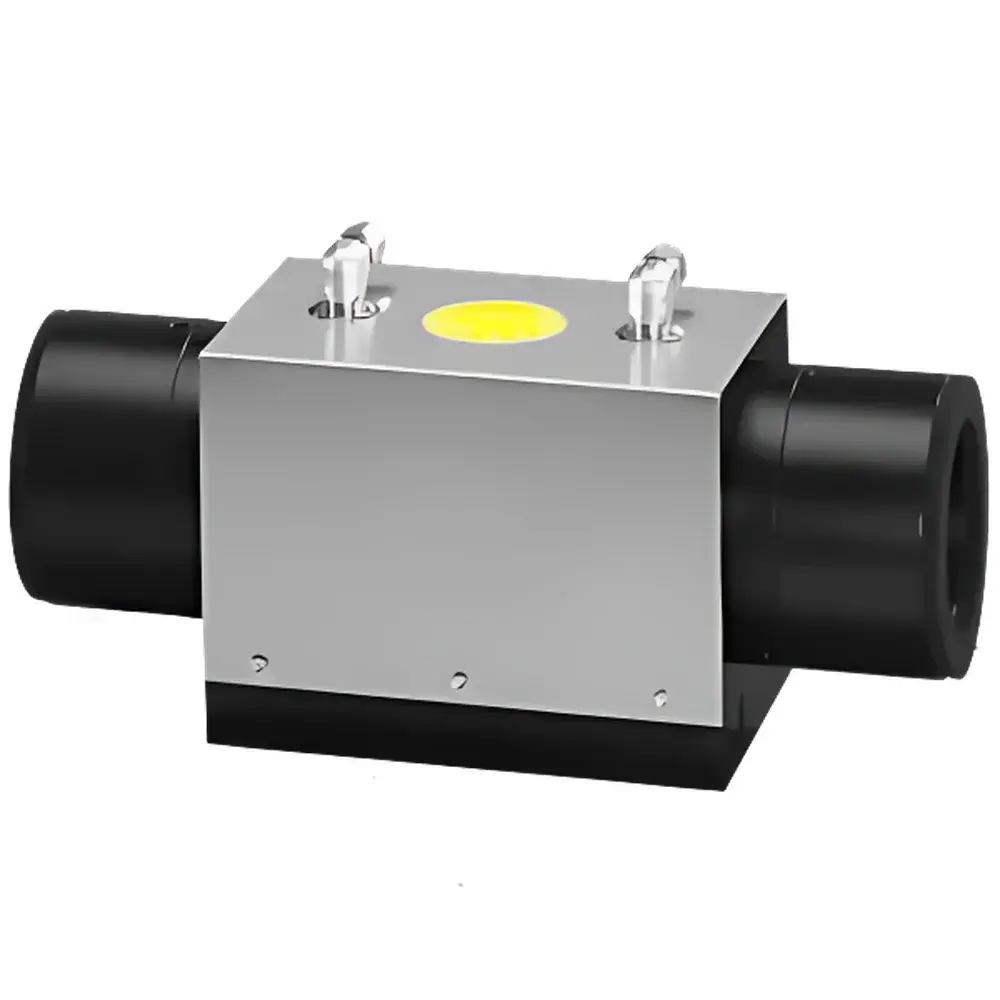
Pike Technologies TGA-FTIR Coupling Interface System

| Brand | Pike Technologies |
|---|---|
| Origin | USA |
| Model | TGA-FTIR |
| Optical Path Length | 100 mm |
| Transfer Line Temperature Range | Ambient to 300 °C |
| Window Material | Configurable (e.g., KBr, CsI, ZnSe) |
| Compatibility | Universal coupling interface for commercial TGA and FTIR spectrometers |
Ask about pricing, availability and specifications.
Overview
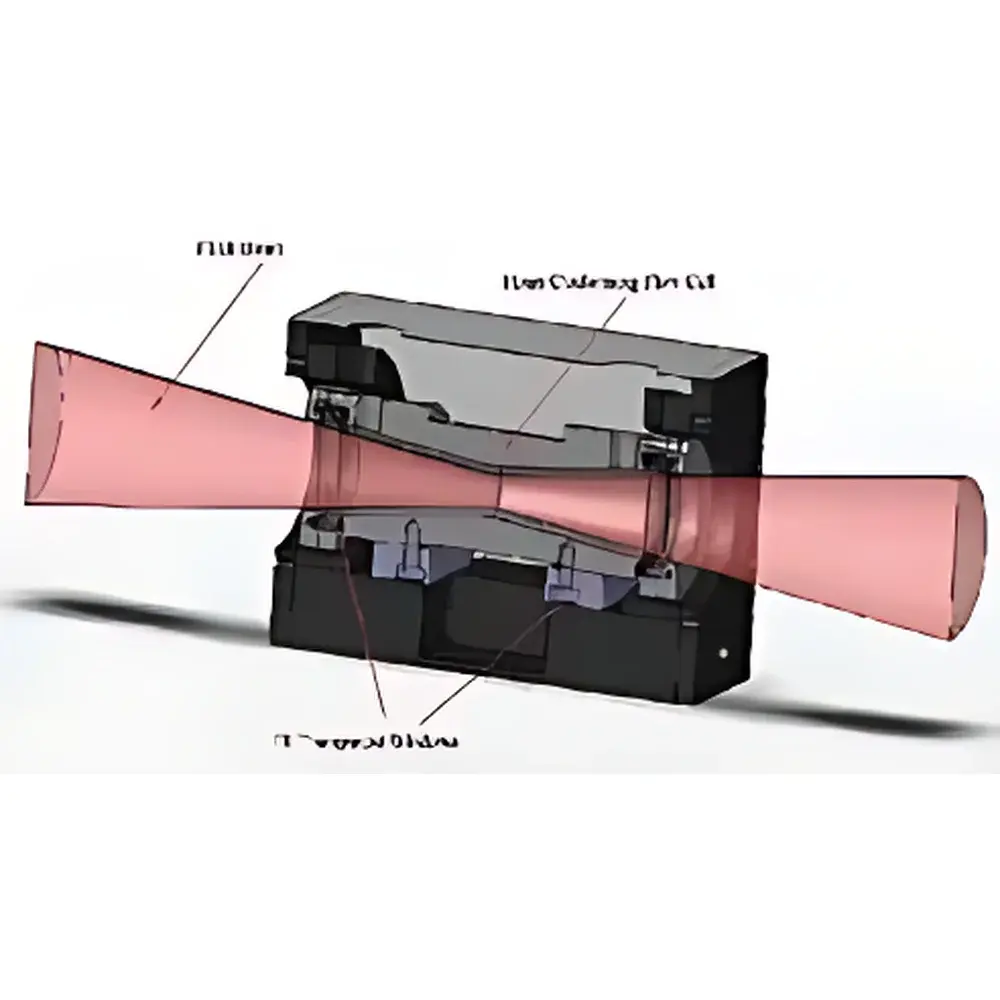
The Pike Technologies TGA-FTIR Coupling Interface System is an engineered gas-phase transfer solution designed to enable real-time, hyphenated thermal analysis and infrared spectroscopic detection. This interface operates on the principle of evolved gas analysis (EGA), where volatile and semi-volatile decomposition products released during thermogravimetric analysis (TGA) are transported via a heated capillary or transfer line into the sampling compartment of a Fourier-transform infrared (FTIR) spectrometer. The system maintains quantitative gas flow integrity and minimizes condensation or adsorption artifacts through precise thermal control of the entire gas path—from the TGA furnace outlet to the FTIR gas cell—ensuring spectral fidelity and temporal correlation between mass loss events and molecular identification.
Key Features
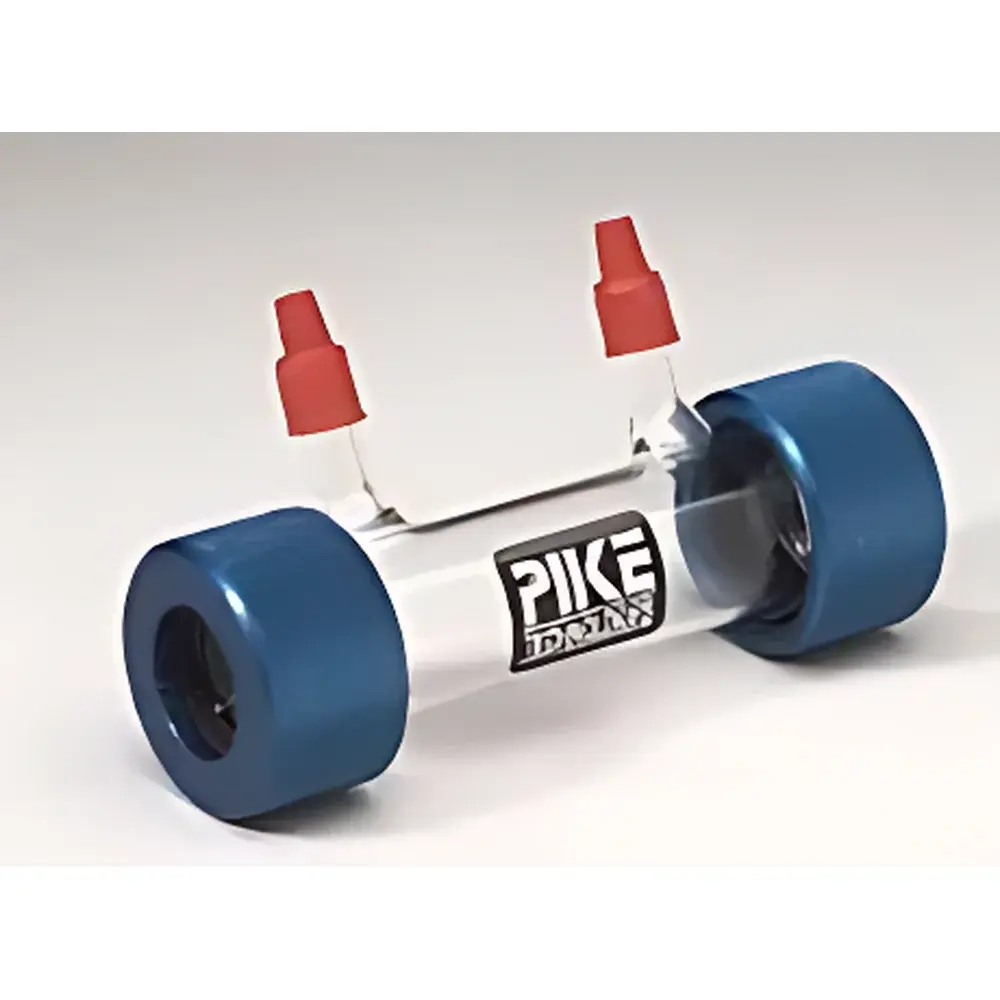
- 100 mm optical path length gas cell optimized for high-sensitivity IR detection of low-concentration evolved species
- Heated transfer line with independent temperature control (ambient to 300 °C), preventing recondensation of thermally labile compounds
- Modular, non-invasive mechanical design compatible with major TGA platforms (including TA Instruments, Mettler Toledo, PerkinElmer, Netzsch) and benchtop FTIR systems (e.g., Thermo Nicolet iS series, Bruker Tensor, Shimadzu IRTracer)
- Interchangeable IR-transparent window assemblies—standard options include KBr (hygroscopic, broad mid-IR transmission), CsI (enhanced moisture resistance), and ZnSe (chemically inert, suitable for acidic or corrosive effluents)
- Stainless steel construction with electropolished internal surfaces to minimize catalytic surface reactions and memory effects
- Integrated purge gas inlet (N₂ or synthetic air) with mass flow controller for background subtraction and baseline stabilization
Sample Compatibility & Compliance
The interface supports solid and powdered samples across diverse material classes—including polymers, pharmaceuticals, catalysts, battery electrode materials, and inorganic hydrates—without requiring derivatization or matrix modification. It conforms to ASTM E1131 (Standard Test Method for Compositional Analysis by Thermogravimetry) and ISO 11358-1 (Plastics — Thermogravimetry of polymers — Part 1: General principles). When integrated into validated laboratory workflows, the system supports GLP-compliant data acquisition when paired with FTIR software enabling 21 CFR Part 11–compliant audit trails, electronic signatures, and secure user access controls.
Software & Data Management
Data synchronization is achieved via TTL or analog trigger signals from the TGA instrument, enabling time-aligned acquisition of mass loss curves and IR spectra. Pike-supplied configuration files integrate seamlessly with OMNIC, OPUS, or Spectrum software suites, allowing direct overlay of derivative thermograms (DTG) with spectral contour plots or evolving factor analysis (EFA) heatmaps. Spectral libraries (e.g., Hummel Polymer Library, NIST Chemistry WebBook) can be deployed for automated peak assignment. All raw interferograms, processed spectra, and metadata (temperature ramp rate, gas flow, time stamps) are stored in vendor-neutral formats (.spa, .csv, .jdx) to ensure long-term archival integrity and third-party analytical interoperability.
Applications
- Identification of decomposition intermediates in polymer thermal stability studies (e.g., dehydrochlorination of PVC, pyrolysis of polyolefins)
- Quantification of residual solvents and excipient degradation pathways in lyophilized pharmaceutical formulations per ICH Q5C guidelines
- Monitoring of CO₂, H₂O, NH₃, SOₓ, and NOₓ evolution during coal or biomass combustion kinetics
- Characterization of desorption behavior in metal–organic frameworks (MOFs) and hydrogen storage materials
- Analysis of binder burnout profiles in ceramic green bodies and additive-manufactured metal powders
- Reaction mechanism elucidation in catalytic cracking and solid-state synthesis processes
FAQ
Is vacuum compatibility supported?
Yes—the interface features VCR or ConFlat flange options for integration into vacuum-enabled TGA-FTIR configurations, with pressure-rated seals up to 1 × 10⁻³ mbar.
Can the system be used with portable or micro-FTIR spectrometers?
It is compatible with any FTIR equipped with a standard external sample compartment and auxiliary gas cell port; however, minimum signal-to-noise ratio requirements apply for reliable detection below 10 ppmv concentration thresholds.
What maintenance protocols are recommended for long-term reliability?
Quarterly inspection of window cleanliness and seal integrity is advised; heating zone calibration should be verified annually using NIST-traceable thermocouples. No routine consumables are required beyond replacement windows under aggressive chemical exposure conditions.