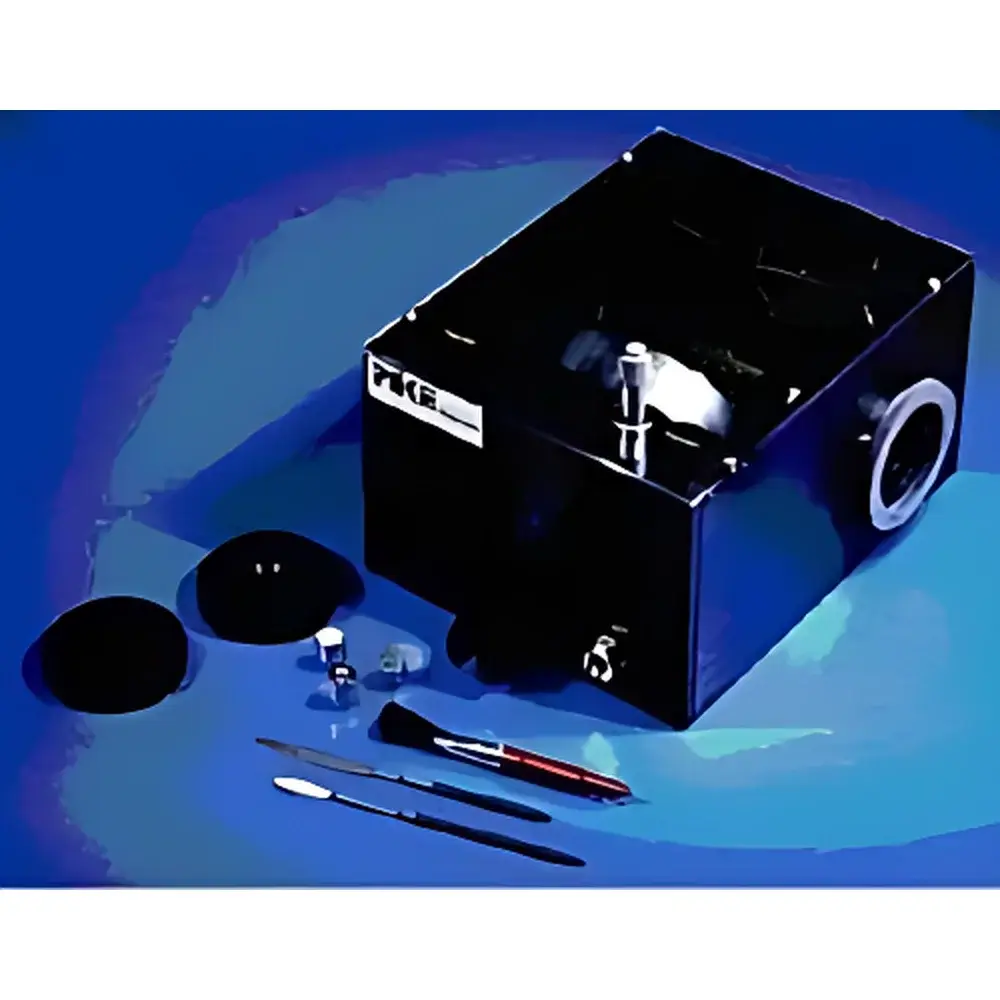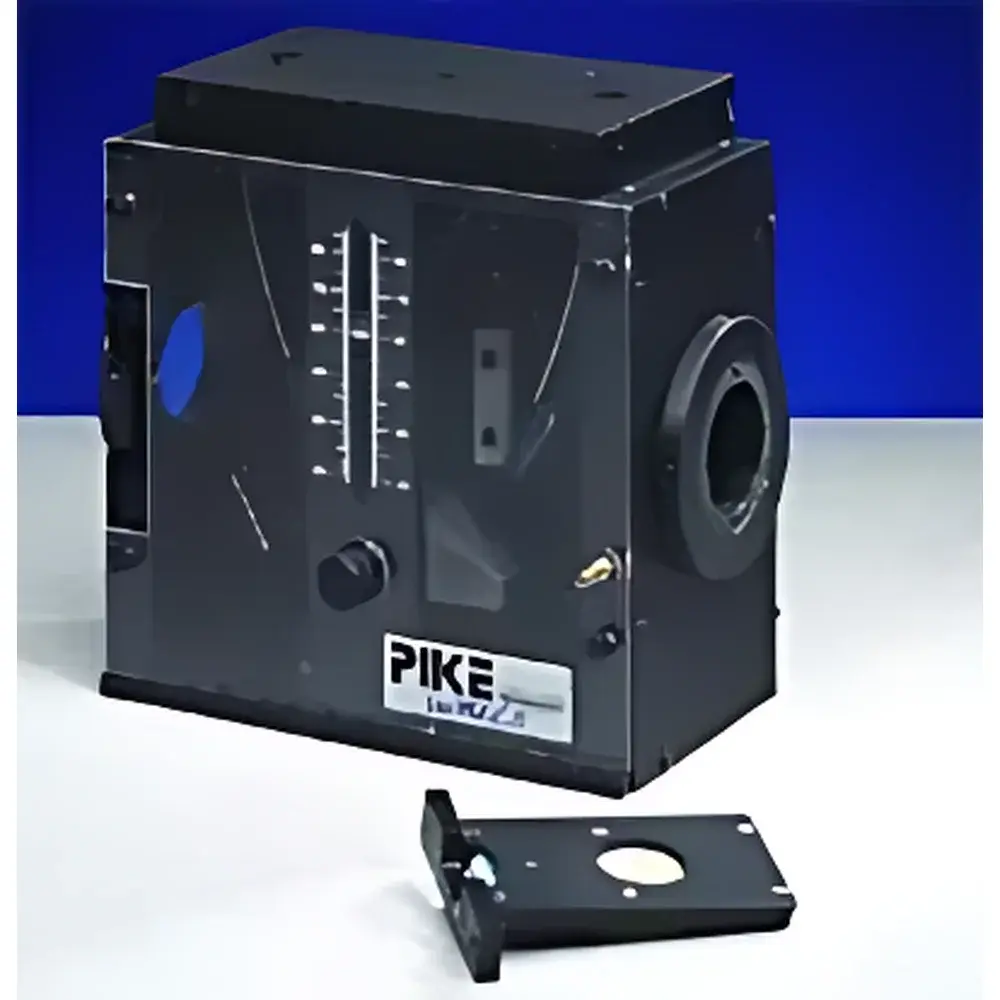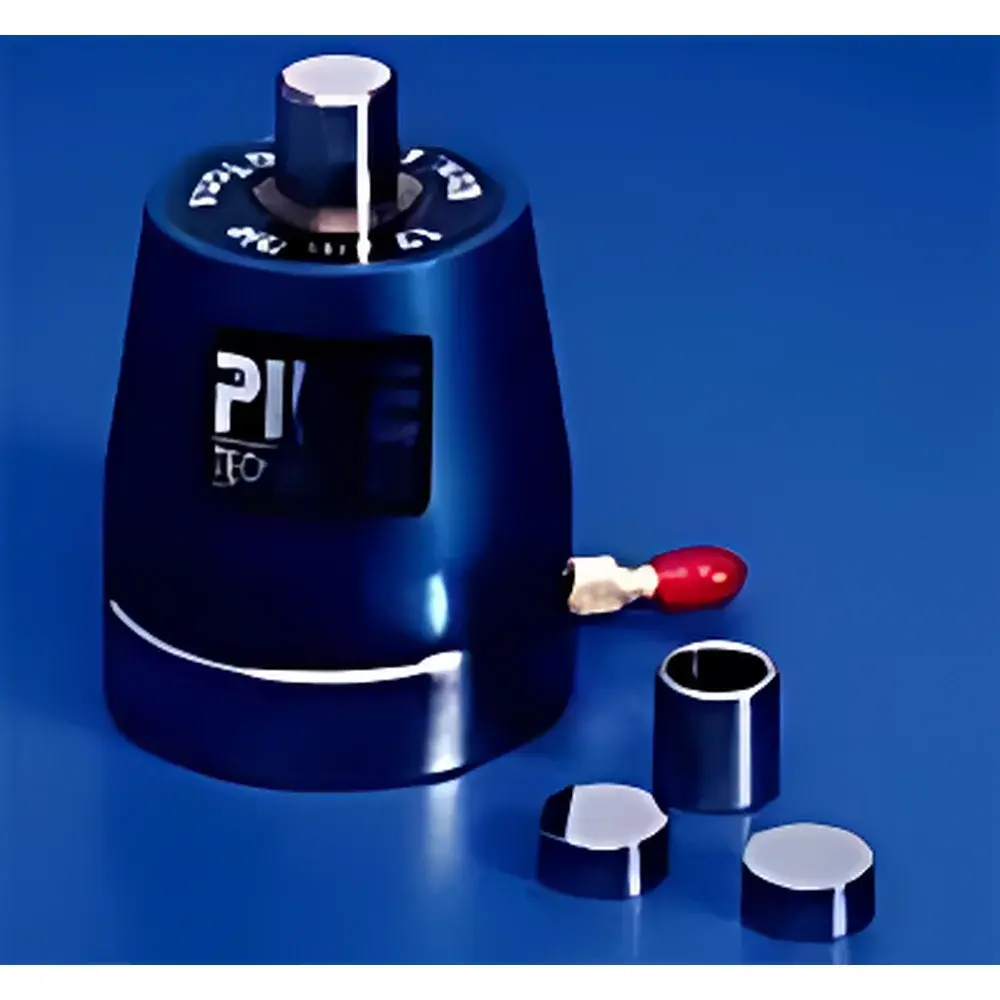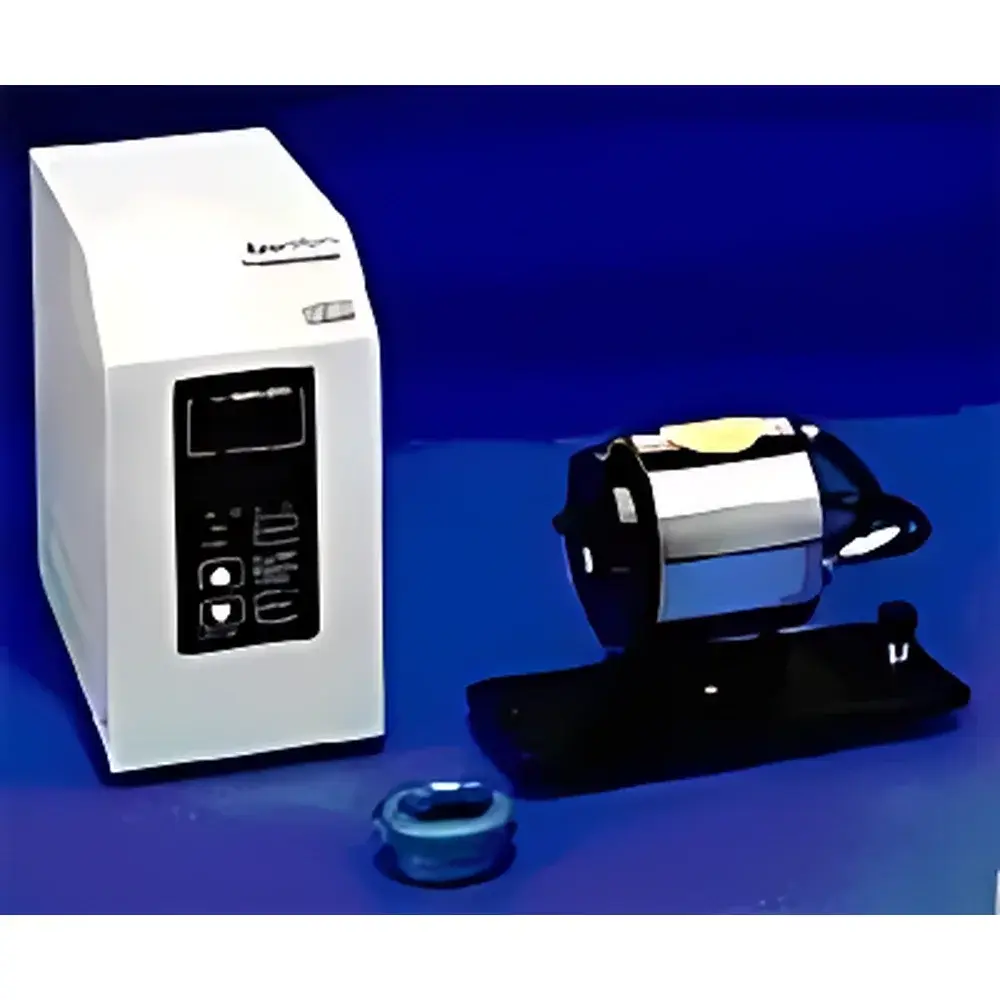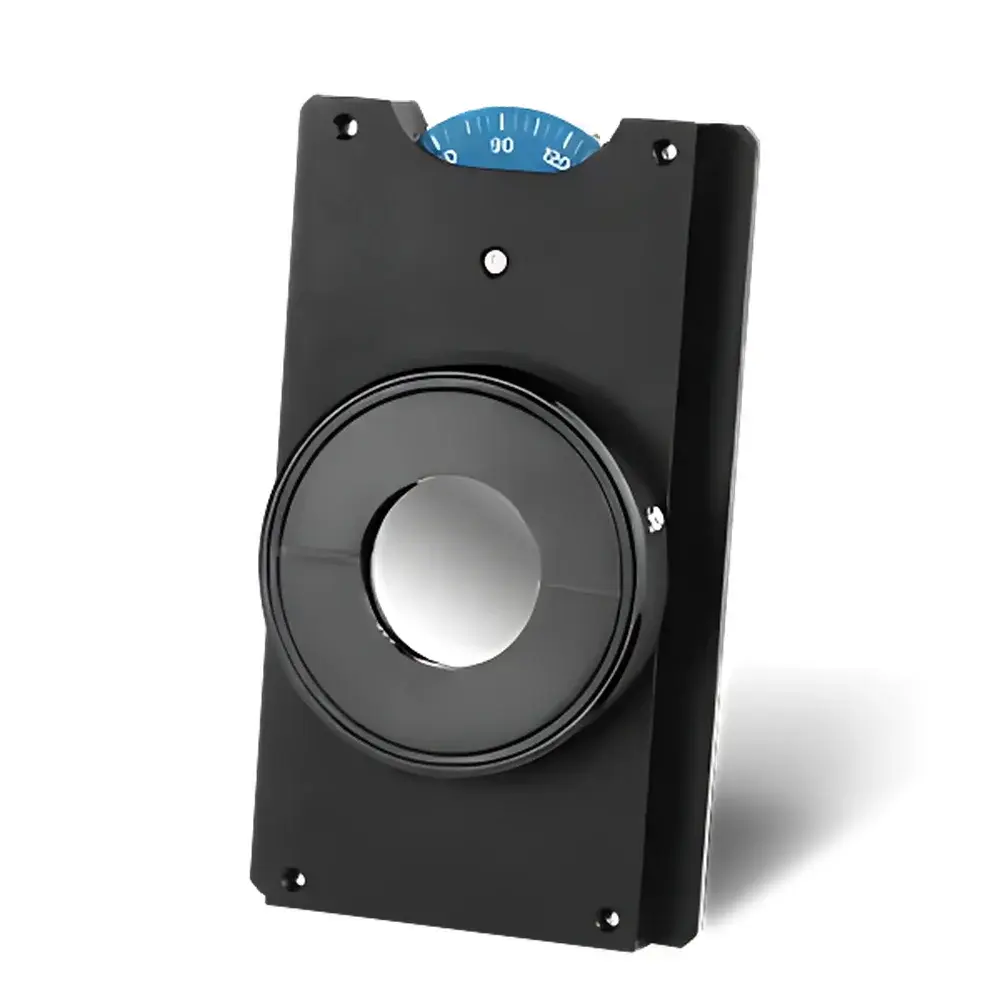
PIKE Polarizer for FTIR Spectroscopy

| Brand | PIKE |
|---|---|
| Origin | USA |
| Type | Infrared Polarizer (UV–FIR) |
| Mounting Compatibility | Manual and Motorized Control |
| Compatible Accessories | PIKE 80-Mirror Reflection Accessory, VeeMAX ATR Accessory, RotatIR Variable-Angle ATR, AGA Grazing-Angle Accessory |
| Wavelength Range | UV to Far-IR (190 nm – 1 mm) |
| Optical Substrate | CaF₂ (UV–MIR), KRS-5 (MIR–FIR), ZnSe (MIR), or Quartz (UV–NIR), depending on spectral region |
| Extinction Ratio | ≥10,000:1 (typical, wavelength-dependent) |
| Surface Quality | λ/10 @ 633 nm |
| Damage Threshold | >500 mJ/cm² (pulsed, 10 ns, 1064 nm) |
| Clear Aperture | ≥90% of stated diameter (e.g., 25.4 mm standard) |
Ask about pricing, availability and specifications.
Overview
The PIKE Polarizer is a high-performance, spectrally optimized optical component engineered for precise polarization control across the full electromagnetic range relevant to modern vibrational spectroscopy — from ultraviolet (190 nm) through near-infrared (NIR), mid-infrared (MIR), and far-infrared (FIR) up to 1 mm. Designed specifically for integration into Fourier-transform infrared (FTIR) spectrometers and accessory platforms, this polarizer enables rigorous polarization-resolved measurements essential for studying molecular orientation, anisotropic thin films, liquid crystal alignment, surface monolayers, and dichroic behavior in biological macromolecules. Its operation relies on wire-grid or birefringent crystal-based polarization separation, selected per spectral region to ensure maximum transmission efficiency and minimal phase distortion. Unlike generic optical polarizers, the PIKE Polarizer undergoes stringent spectral calibration and wavefront verification to meet the reproducibility demands of quantitative IR analysis under GLP-compliant laboratory protocols.
Key Features
- Spectrally segmented design: Optimized substrate materials (CaF₂ for UV–MIR, KRS-5 for MIR–FIR, ZnSe for high-power MIR, fused silica for UV–NIR) ensure broadband performance without absorption artifacts.
- Dual-mode actuation: Supports both manual rotation via precision micrometer-driven mount and computer-controlled motorized positioning (via RS-232 or USB interface) for automated polarization angle sweeps.
- High extinction ratio: ≥10,000:1 across designated bands, verified with calibrated polarimetric reference standards traceable to NIST.
- Mechanical compatibility: Engineered with standard PIKE threading (M25×0.75 or 1″-32 UNC) and kinematic mounting features for seamless integration with PIKE’s 80-Mirror reflection stage, VeeMAX diamond ATR, RotatIR variable-angle ATR, and AGA grazing-angle accessories.
- Low wavefront distortion: λ/10 surface flatness at 633 nm ensures minimal beam deviation and preserves interferometric fidelity in FTIR systems.
- Laser damage resilience: Rated for pulsed (≥500 mJ/cm², 10 ns, 1064 nm) and continuous-wave (≥5 W/cm², 10.6 µm) exposure — suitable for synchrotron IR beamlines and high-flux globar sources.
Sample Compatibility & Compliance
The PIKE Polarizer is compatible with solid, liquid, and gaseous samples when used in conjunction with polarization-sensitive accessories. It supports standardized measurement geometries including p- and s-polarized reflectance (ASTM E1421), Brewster-angle interrogation (ISO 15023-2), and dichroic ratio quantification (USP ). All units are supplied with ISO/IEC 17025-compliant calibration documentation, including spectral transmittance curves and angular acceptance profiles. The device meets mechanical and environmental requirements outlined in IEC 61326-1 for laboratory instrumentation and is designed for use in environments compliant with FDA 21 CFR Part 11 when paired with validated PIKE control software featuring audit trail and electronic signature functionality.
Software & Data Management
When operated in motorized mode, the PIKE Polarizer interfaces with PIKE’s proprietary SpectraManager™ software suite (v3.5+), enabling synchronized acquisition of polarization angle versus absorbance spectra. The software supports user-defined angle step sequences, real-time dichroic ratio mapping (Ap/As), and export of fully annotated datasets in ASTM E1421-compliant .spa or .csv formats. Raw polarization data can be imported into MATLAB®, Python (SciPy), or OriginPro® for advanced tensor analysis, Mueller matrix reconstruction, or orientation distribution function (ODF) modeling. All configuration changes and measurement logs are recorded with time-stamped, user-identified entries satisfying GLP/GMP audit requirements.
Applications
- Quantitative analysis of polymer chain orientation in blown films and extruded fibers (ASTM D882, ISO 1133).
- In-situ monitoring of Langmuir–Blodgett monolayer formation at air–water interfaces using p-polarized ATR.
- Dichroic characterization of membrane proteins reconstituted in oriented lipid bilayers.
- Polarization-modulated IR reflection–absorption spectroscopy (PM-IRRAS) for surface-bound catalysts and electrochemical interfaces.
- Calibration of ellipsometric parameters in multilayer thin-film metrology (SE, VASE).
- Far-IR studies of phonon modes in anisotropic crystals (e.g., quartz, calcite) under controlled stress conditions.
FAQ
What spectral ranges does the PIKE Polarizer cover?
It spans UV (190 nm) to far-infrared (1 mm), with model-specific optimization — CaF₂ for UV–MIR, KRS-5 for MIR–FIR, ZnSe for high-transmission MIR, and fused silica for UV–NIR applications.
Can it be used with non-PIKE spectrometers?
Yes — provided the optical path accommodates its physical dimensions (standard 25.4 mm clear aperture) and mounting interface; custom flanges and adapters are available upon request.
Is motorized control compatible with third-party automation platforms?
Yes — RS-232 and USB TTL protocols are documented in the PIKE Hardware Integration Guide, supporting LabVIEW™, Python pySerial, and EPICS IOC integration.
How is polarization angle accuracy verified?
Each unit includes a NIST-traceable angular calibration certificate, with ±0.1° repeatability confirmed via autocollimator measurement at 633 nm.
Does the polarizer require recalibration after installation?
No — factory calibration remains valid unless subjected to mechanical shock, thermal cycling beyond −10°C to +60°C, or direct contamination of optical surfaces.