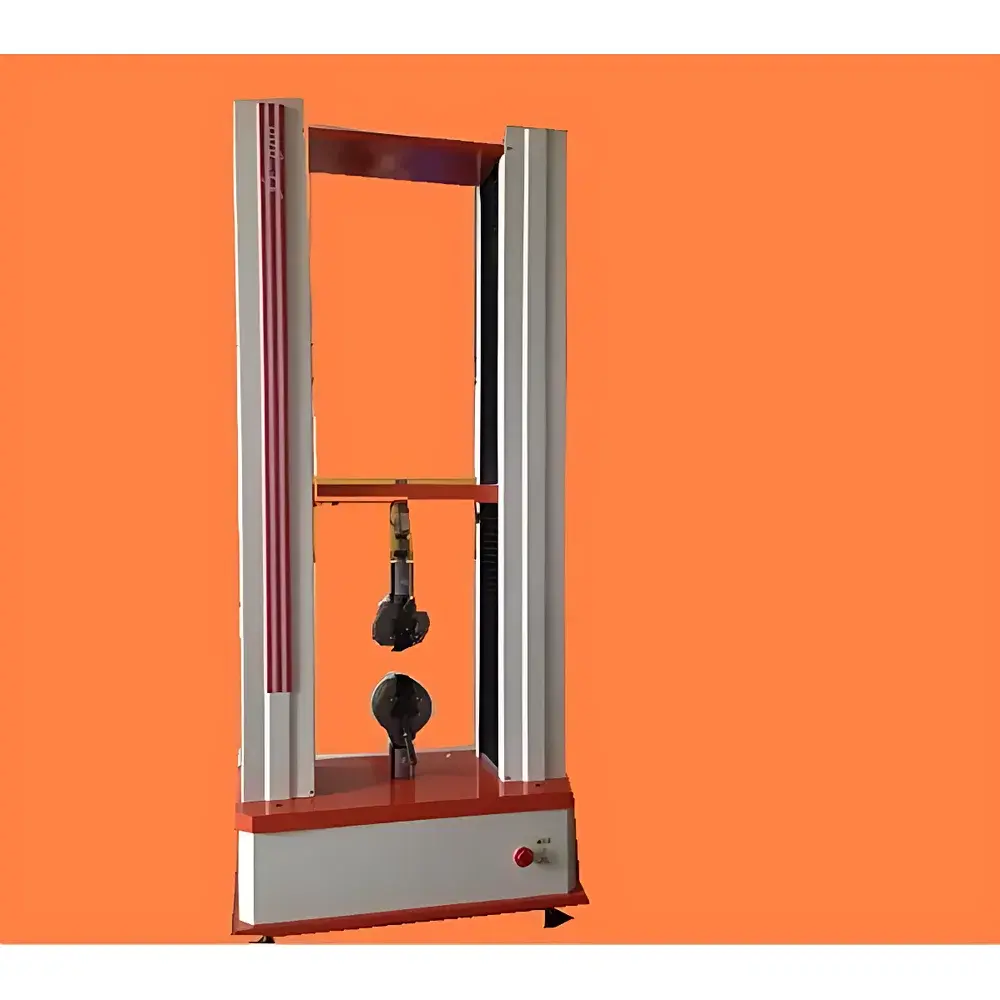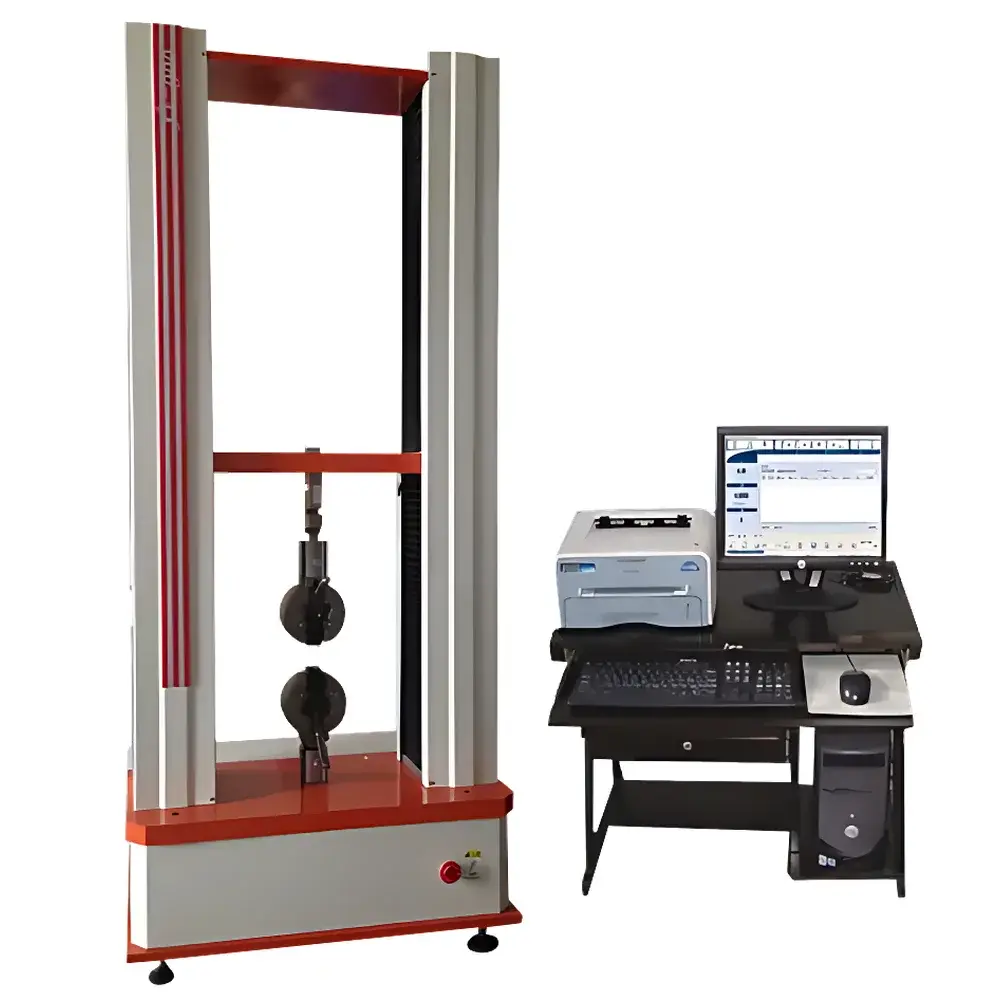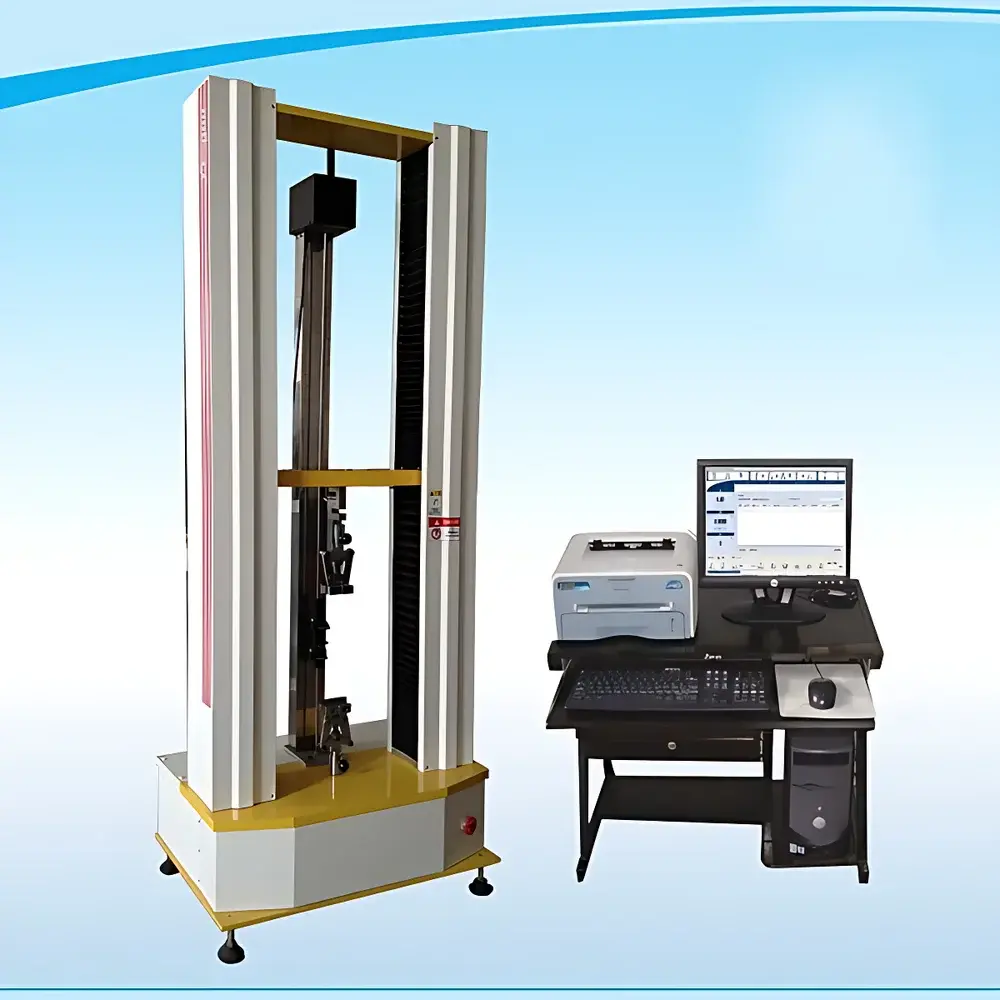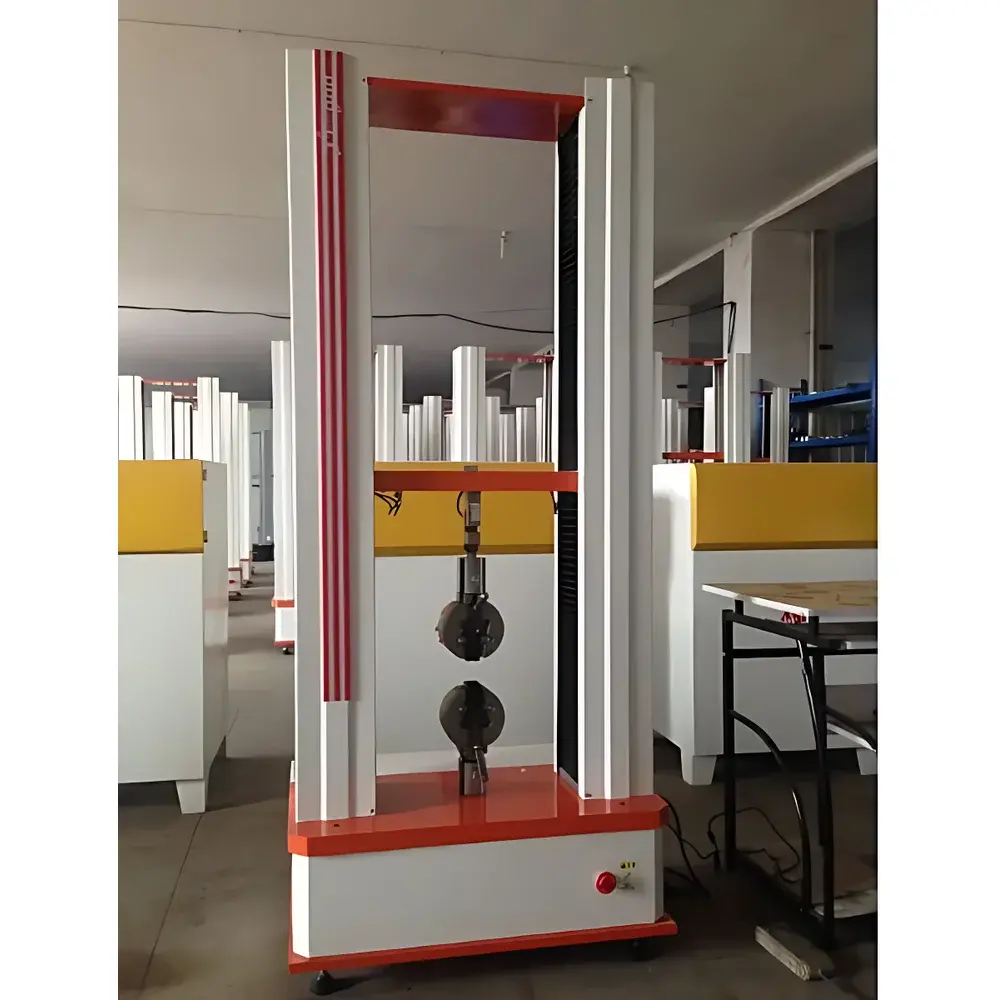
Beiguang Jingyi BW-N-50kN Universal Testing Machine

| Brand | Beiguang Jingyi |
|---|---|
| Origin | Beijing, China |
| Manufacturer Type | Direct Manufacturer |
| Instrument Type | Electromechanical Universal Testing Machine |
| Model | BW-N-50kN |
| Max Test Load | 50 kN |
| Accuracy Class | Class 1 (per GB/T 16491 & ISO 7500-1) |
| Force Resolution | 1/300,000 FS |
| Speed Range | 0.05–500 mm/min (infinitely variable) |
| Displacement Resolution | 0.001 mm |
| Crosshead Travel | 950 mm |
| Effective Test Width | 400 mm |
| Compliance | GB/T 16491, GB/T 1040, ASTM D412, ASTM D638, ISO 37, ISO 527, EN ISO 179, EN ISO 6892-1 |
Ask about pricing, availability and specifications.
Overview
The Beiguang Jingyi BW-N-50kN Universal Testing Machine is a high-precision electromechanical testing system engineered for static mechanical characterization of metals, polymers, composites, elastomers, textiles, foams, films, and advanced materials. It operates on the principle of controlled uniaxial force application—using a servo-motor-driven ball-screw actuation system—to perform tension, compression, bending, peel, shear, tear, and yield testing in strict accordance with international standards including ISO 6892-1 (metallic materials), ISO 527 (plastics), ASTM D412 (rubber), and EN ISO 179 (impact-modified plastics). The machine integrates a DSP+FPGA-based real-time control architecture enabling zero-latency data acquisition at up to 3.8 kHz across all synchronized channels—ensuring faithful capture of transient mechanical responses such as yield point onset, necking initiation, or brittle fracture propagation. Its dual-space (upper-tension/lower-compression) structural design provides optimal rigidity and thermal stability, while optical encoder feedback on the lead screw delivers displacement resolution of 0.001 mm and repeatability better than ±0.5% of reading over full stroke.
Key Features
- High-fidelity closed-loop control: PID-regulated servo system supports multi-loop switching (force, displacement, strain) without overshoot or settling delay—critical for creep, relaxation, and low-cycle fatigue protocols.
- Hardware-synchronized data acquisition: Simultaneous sampling across ≥3 load cell inputs and ≥6 position pulse channels; 32-stage hardware low-frequency debouncing eliminates jitter during ultra-low-speed hold tests (e.g., 0.01 mm/min).
- QEI-based quadrature encoding: Fourfold pulse multiplication increases displacement resolution by 4×, achieving effective resolution down to 0.01 µm—enabling precise measurement of micro-strain in thin films or nanocomposites.
- RoHS-compliant industrial-grade electronics: All ICs rated for −40 °C to +85 °C operation; gold-plated connectors ensure long-term signal integrity and corrosion resistance.
- Modular sensor expansion: Supports up to four calibrated load cells and eight extensometers—facilitating seamless transition between macro-scale tensile bars and micro-scale specimen fixtures.
- Dual-interface connectivity: RS232 (long-distance serial), USB 2.0 (portable PC integration), and CAN bus (multi-unit networked testing systems).
Sample Compatibility & Compliance
The BW-N-50kN accommodates specimens ranging from 0.1 mm-thick polymer films to 50 mm-diameter metal rods. Standard configurations include wedge-action tensile grips (0–7 mm), flat compression platens, and bend fixtures compliant with ISO 178 and ASTM D790. Optional accessories include pneumatic grips, environmental chambers (−70 °C to +300 °C), video extensometry, and digital image correlation (DIC) mounts. The system conforms to metrological requirements of ISO 7500-1 (static calibration), ISO 5893 (dynamic verification), and GLP-relevant traceability protocols. All force and displacement calibrations are NIST-traceable via third-party accredited laboratories. Software audit trails comply with FDA 21 CFR Part 11 requirements—including electronic signatures, user access logs, and immutable data archiving—supporting regulated environments in pharmaceutical packaging, medical device R&D, and aerospace component qualification.
Software & Data Management
HST-MAXTEST software provides full lifecycle test management—from parameter definition and method selection to real-time visualization and post-processing. It embeds over 40 preconfigured test methods aligned with GB, ASTM, ISO, EN, JIS, and DIN standards. Real-time plotting supports concurrent display of stress–strain, load–displacement, load–time, and strain–time curves with dynamic zoom, pan, and overlay functions. Data export is native to SQL databases, enabling direct querying, statistical analysis, and integration with LIMS or ERP platforms. Reports are customizable in Word, Excel, or PDF formats—including automatic calculation of Young’s modulus, yield strength (0.2% offset), ultimate tensile strength, elongation at break, and Poisson’s ratio. Batch testing mode allows sequential execution of identical protocols across multiple samples with auto-naming, timestamping, and pass/fail flagging based on user-defined thresholds.
Applications
This system serves as a core instrument in QC labs for incoming material inspection (e.g., ASTM D3574 foam compression set), R&D labs evaluating novel hydrogels or biodegradable polymers, and certification bodies validating automotive safety belts per FMVSS No. 209. Typical use cases include: tensile testing of carbon fiber prepregs per ASTM D3039; peel adhesion of pressure-sensitive tapes per PSTC-7; flexural stiffness of printed circuit board laminates per IPC-TM-650; compression yield of aluminum honeycomb cores per MIL-STD-401; and cyclic fatigue of orthopedic implant alloys per ISO 14801. Its modular architecture also supports specialized applications such as rubber hysteresis loop analysis (ASTM D945), textile bursting strength (ISO 13938), and geotextile puncture resistance (ASTM D6241).
FAQ
Does the BW-N-50kN support ASTM E8/E21 high-temperature tensile testing?
Yes—when integrated with an ISO 14702-compliant furnace chamber and high-temperature extensometer, the system meets ASTM E21 requirements for elevated-temperature mechanical testing up to 1000 °C.
Can test data be exported directly into MATLAB or Python for custom analysis?
Yes—raw time-series data is exportable in CSV or HDF5 format; API documentation and Python SDK are available under NDA for automated scripting and machine learning workflows.
Is the system validated for GMP-regulated environments?
Yes—the software includes 21 CFR Part 11-compliant audit trail, role-based access control, electronic signature capability, and IQ/OQ documentation packages upon request.
What is the maximum recommended crosshead speed for creep testing per ISO 899-1?
For ISO 899-1 creep compliance, the system maintains speed accuracy within ±0.5% of setpoint down to 0.001 mm/min—verified via independent laser interferometry.
Are calibration certificates provided with each shipment?
Yes—each unit ships with factory calibration certificates traceable to CNAS-accredited labs, covering force (0.5–50 kN), displacement (0–950 mm), and velocity (0.05–500 mm/min) channels.