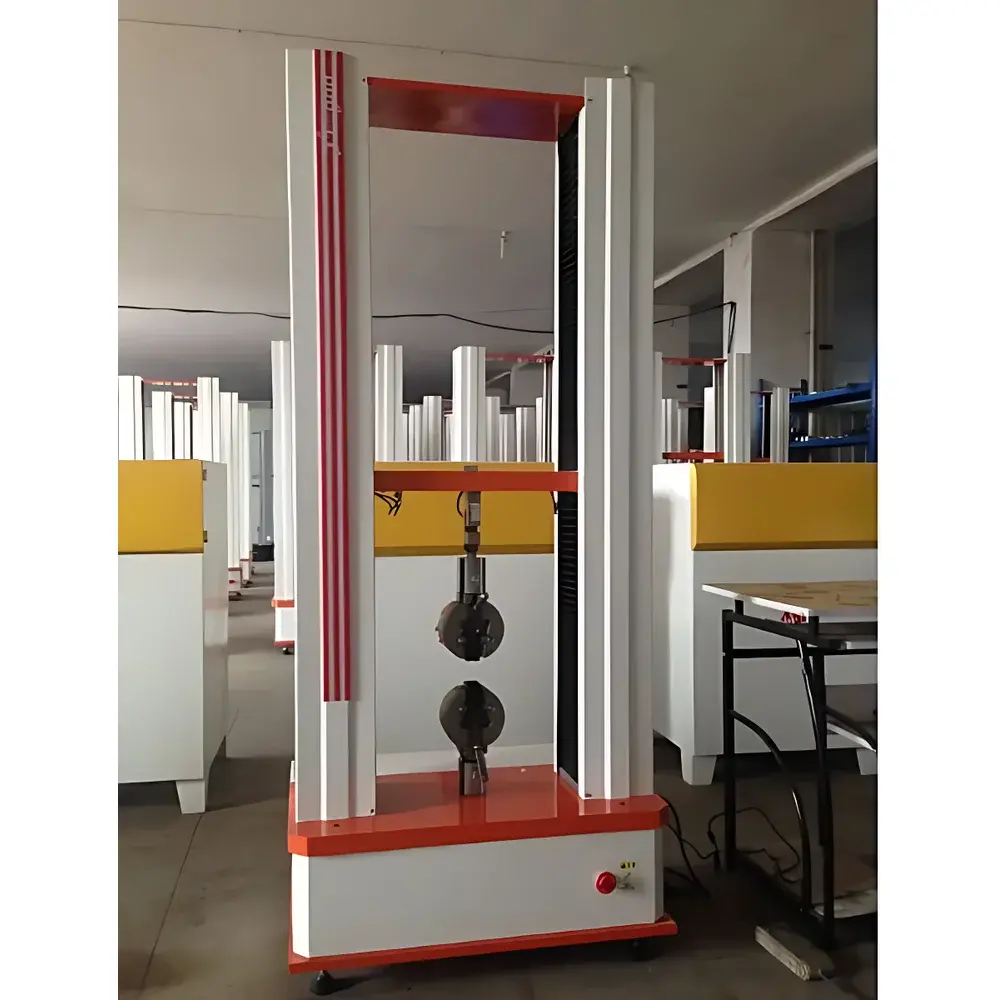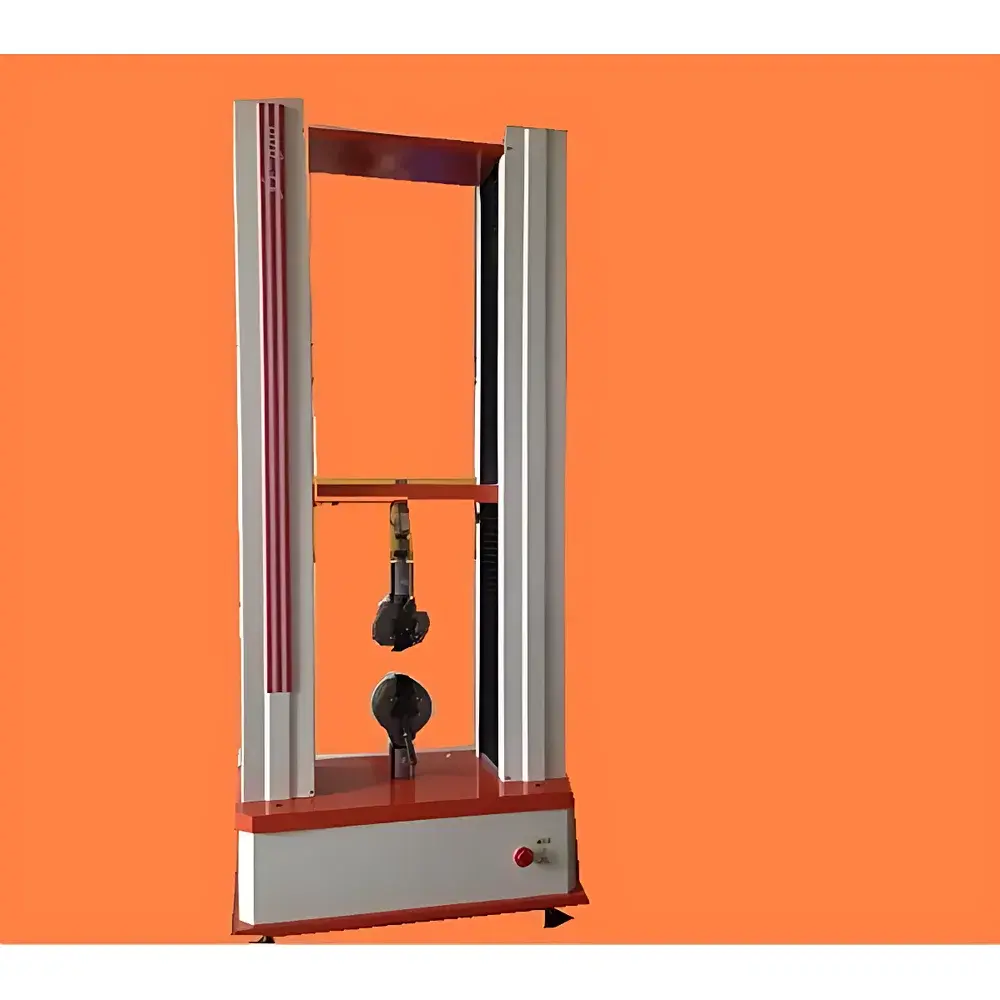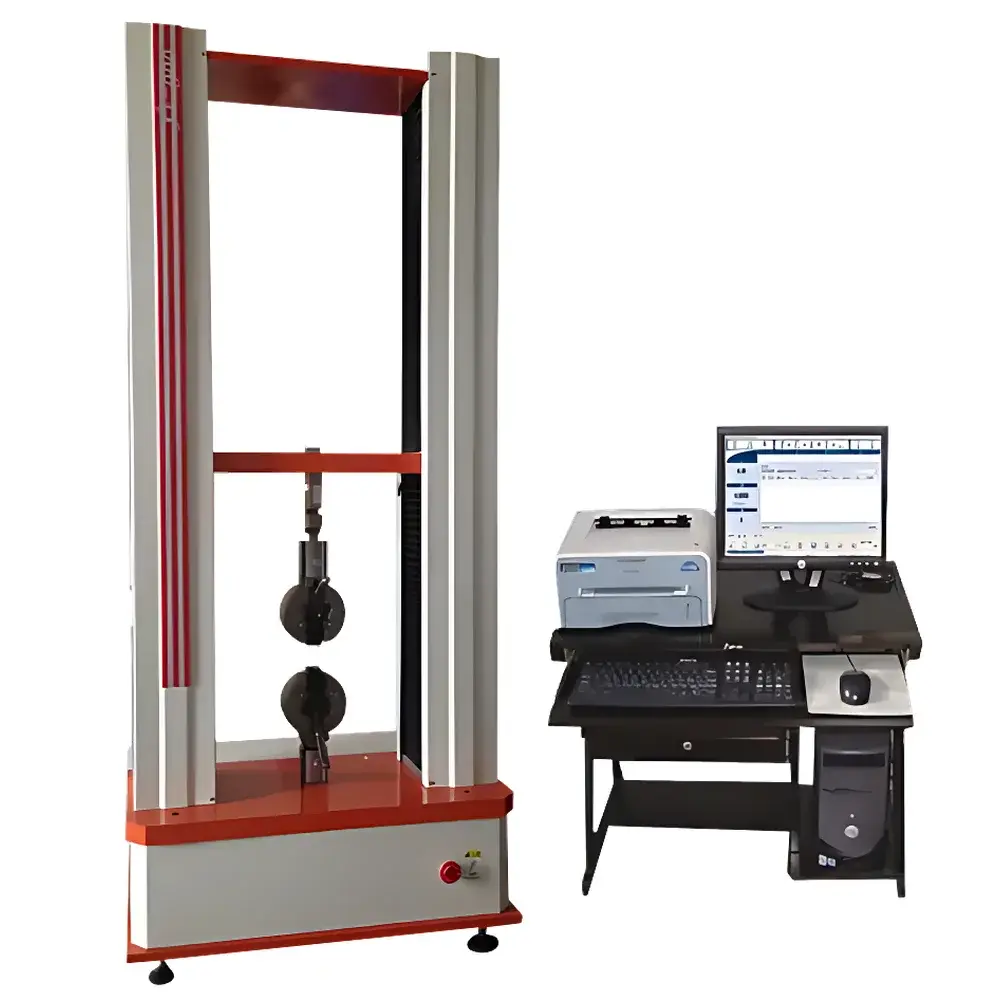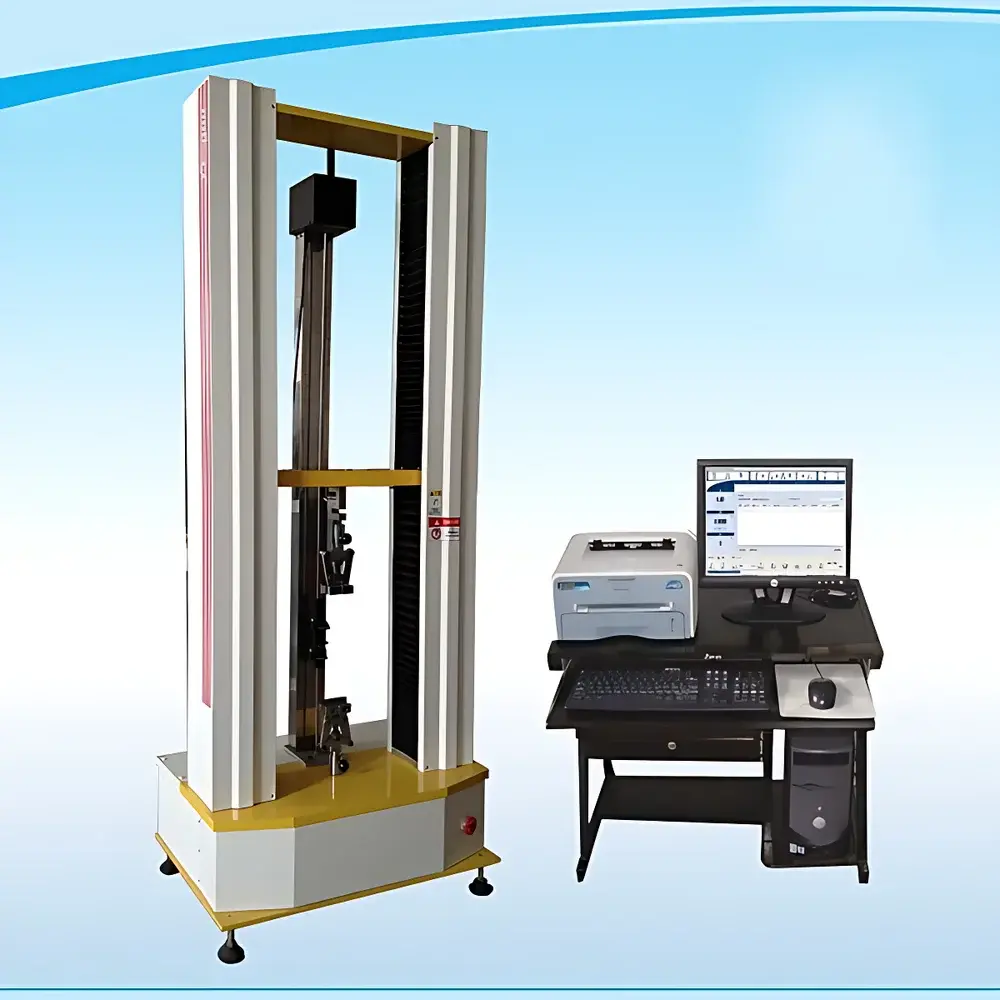
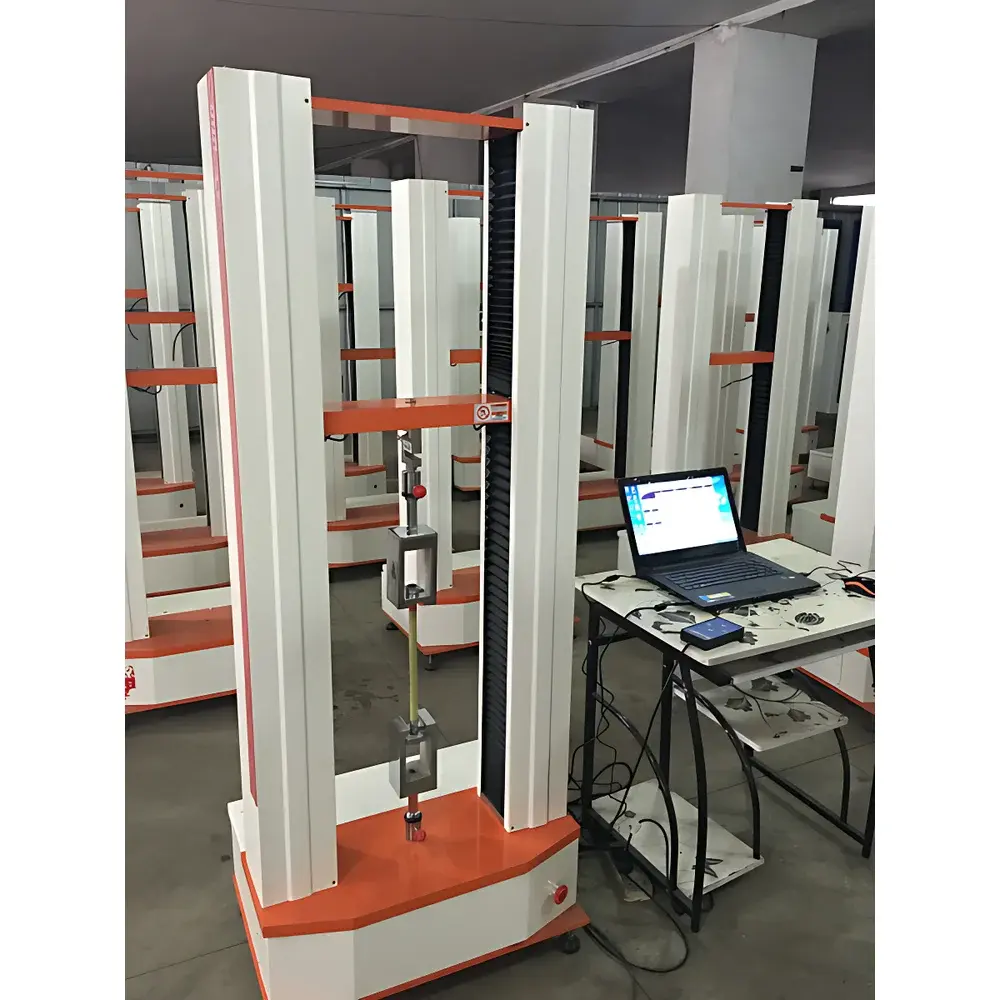
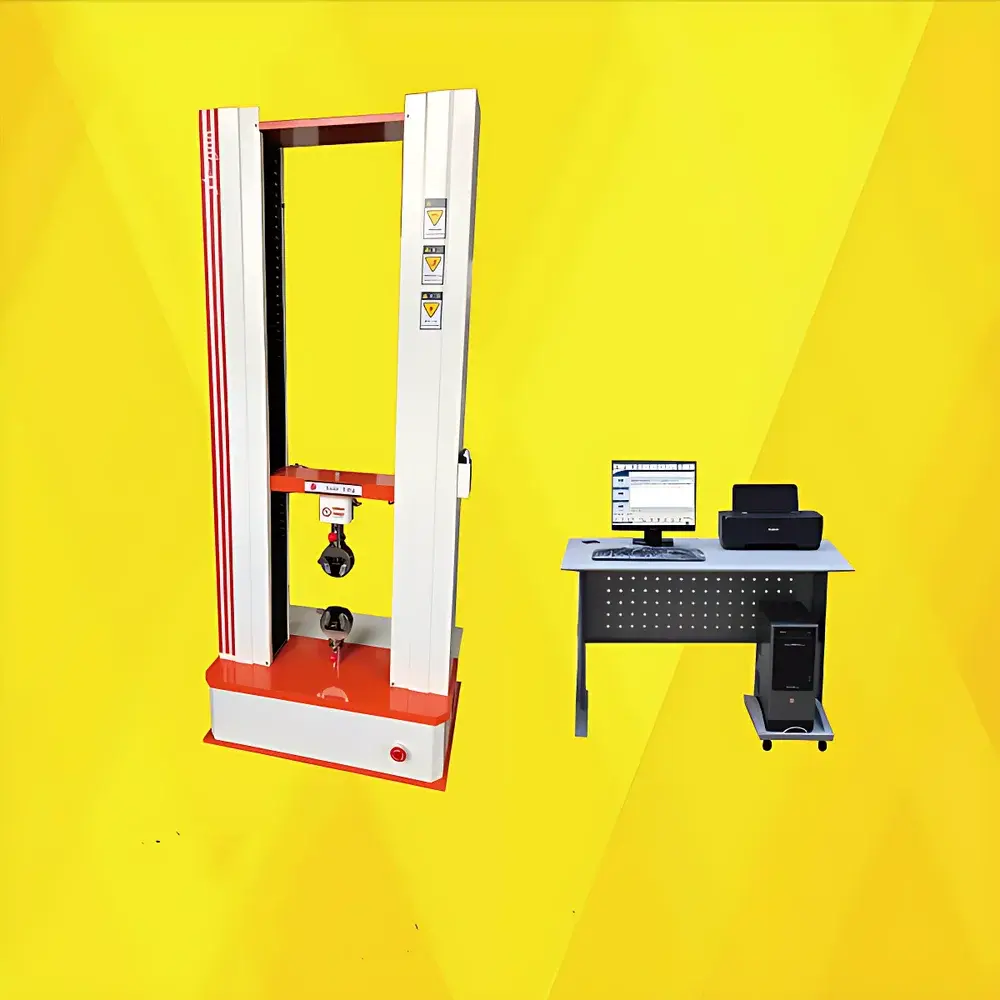
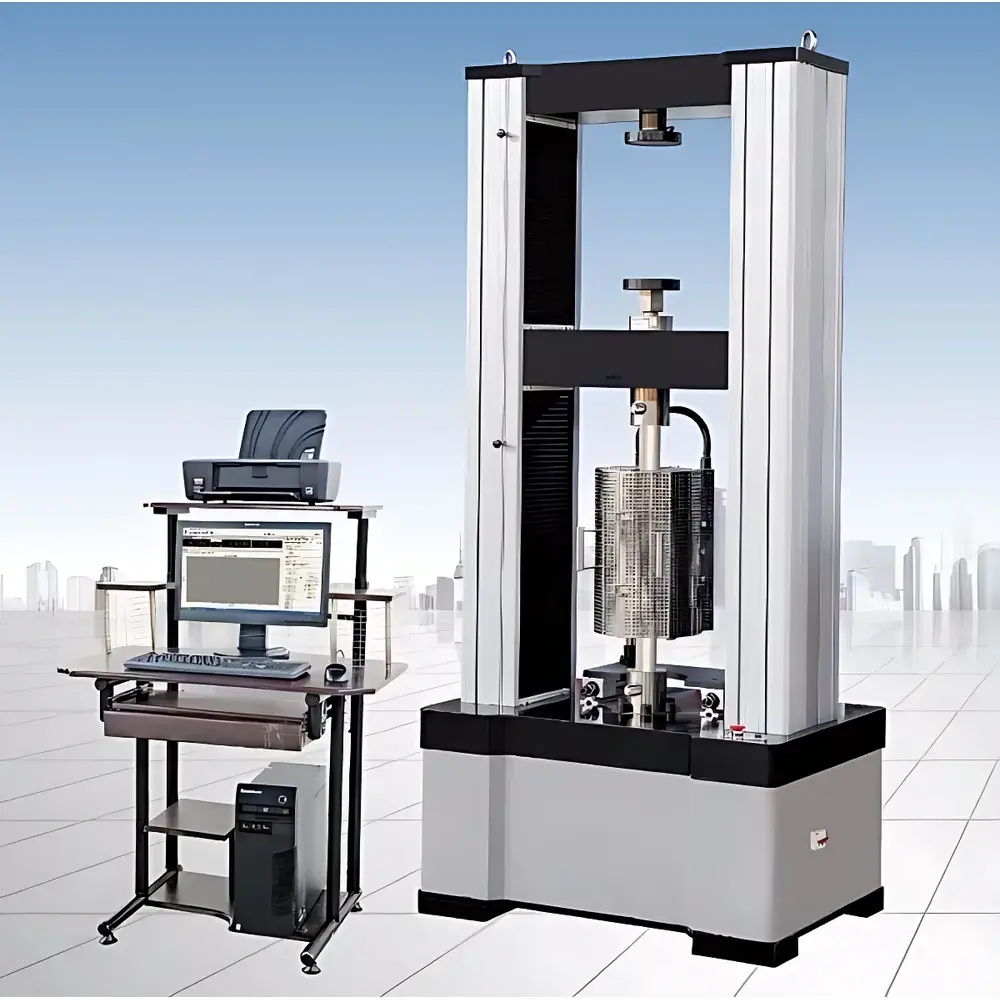
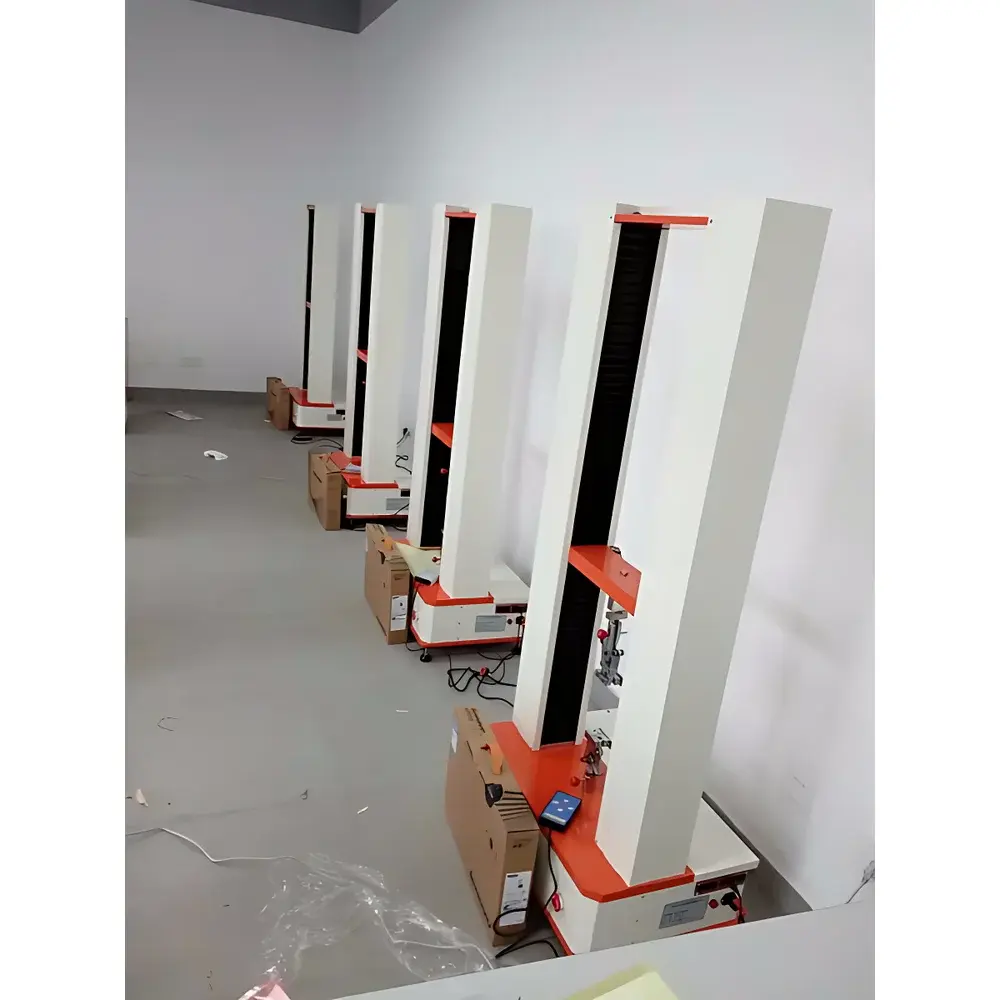
Beiguang Jingyi BWN-5KN Digital Wide-Frame Universal Testing Machine

| Brand | Beiguang Jingyi |
|---|---|
| Origin | Beijing, China |
| Manufacturer Type | Direct Manufacturer |
| Instrument Type | Electronic Universal Testing Machine |
| Model | BWN-5KN |
| Max Test Load | 5000 N |
| Effective Force Range | 2–99% FS |
| Force Resolution | 1/300,000 full scale |
| Force Accuracy | ±1% of reading |
| Displacement Measurement Range | 0–999 mm |
| Displacement Resolution | 0.001 mm |
| Displacement Accuracy | ±1% of reading |
| Crosshead Speed Range | 0.05–500 mm/min (infinitely variable) |
| Power Supply | ~220 V ±10%, 50 Hz, 0.5 kW |
| Weight | 120 kg |
| Operating Environment | 10–35 °C, 30–85% RH |
Ask about pricing, availability and specifications.
Overview
The Beiguang Jingyi BWN-5KN Digital Wide-Frame Universal Testing Machine is an electromechanical static testing system engineered for precision tensile, compression, flexural, and peel testing of metallic, polymeric, composite, and elastomeric materials. It operates on a servo-controlled electromechanical actuation principle, utilizing a high-torque AC motor, planetary gear reducer, and precision ball-screw transmission to deliver stable, repeatable load application across its full 5 kN capacity. The wide-frame structural design enhances lateral stability during off-center loading and accommodates larger specimens or custom fixtures—critical for quality control labs performing ASTM D638, ISO 527, GB/T 1040, and similar standards. Force measurement is performed via a calibrated S-type load cell with digital signal conditioning; displacement is tracked using an optical encoder coupled to the crosshead assembly. All analog signals are digitized at ≥20 kHz sampling rate to ensure accurate capture of transient mechanical events such as yield onset or fracture initiation.
Key Features
- Wide-span rigid frame architecture with reinforced base and vertical columns, minimizing deflection under load and supporting consistent alignment per ISO 7500-1 Class 1 requirements
- Digital force readout with real-time display of load, displacement, strain (when used with extensometer), and test time—fully programmable via front-panel keypad or PC interface
- Infinitely variable crosshead speed control (0.05–500 mm/min), enabling compliance with low-strain-rate creep tests and high-speed rupture evaluations
- Auto-zeroing capability with floating zero-point adjustment, compensating for thermal drift or mechanical relaxation prior to test initiation
- Comprehensive hardware safety interlocks: dual mechanical limit switches, overload cut-off, emergency stop circuit, and software-enforced upper/lower travel bounds
- Peak-hold function with automatic storage of maximum load, elongation at break, modulus, and yield point—exportable in CSV format
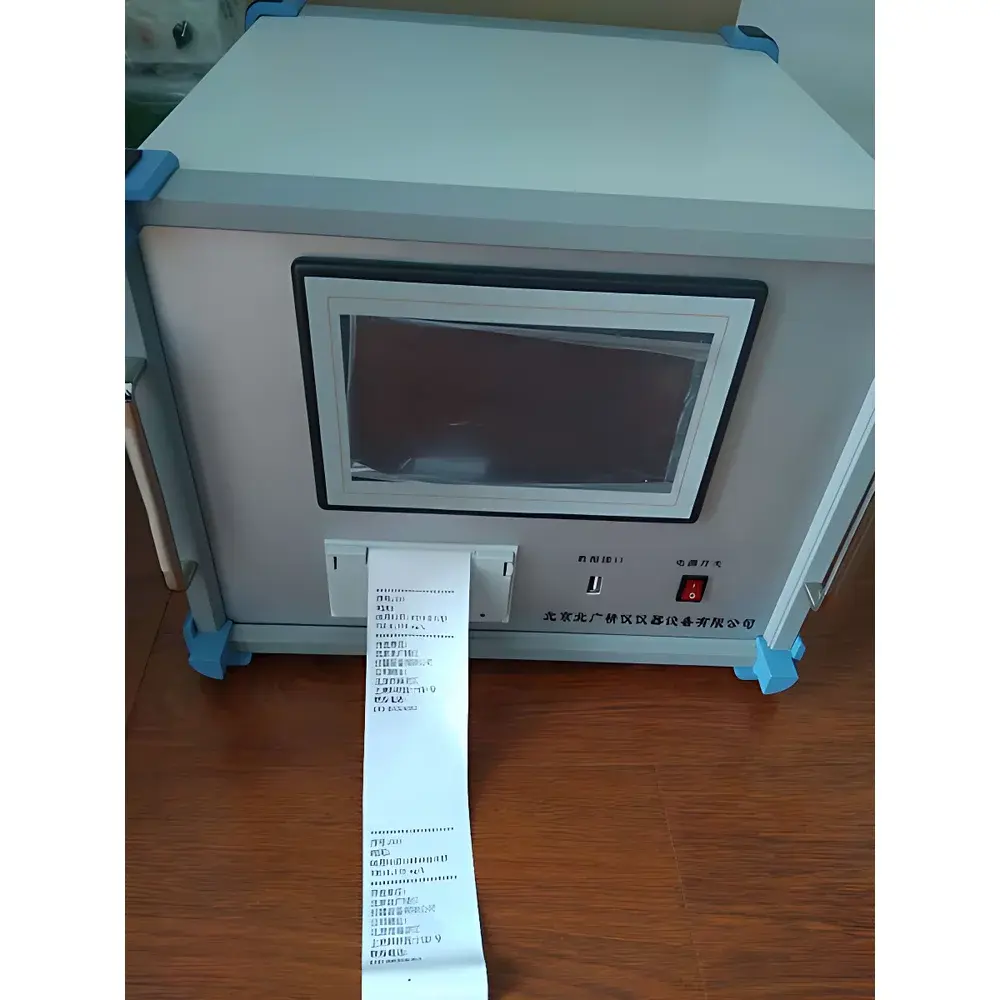
- Integrated thermal-printer support for immediate hard-copy reporting of test parameters and results (thermal paper compatible)
Sample Compatibility & Compliance
The BWN-5KN supports standard and non-standard specimens up to 300 mm wide and 800 mm tall, accommodating ASTM E8/E8M dog-bone tensile bars, ISO 178 flexural beams, GB/T 7753 adhesive peel strips, and custom jigs for medical tubing or textile yarns. Its force and displacement metrology traceability aligns with national calibration protocols (JJG 475–2018), and system-level verification satisfies ISO 17025 internal audit requirements when operated under documented SOPs. While not pre-certified for FDA 21 CFR Part 11, the machine’s data integrity framework—including timestamped audit logs, operator ID input, and uneditable raw data files—supports GLP/GMP validation when integrated into validated laboratory information management systems (LIMS).
Software & Data Management
The embedded firmware enables standalone operation without external PC dependency. For advanced analysis, optional Windows-based software provides curve fitting (linear, polynomial, hyperbolic), modulus calculation (secant, tangent, chord), statistical batch reporting (mean, SD, CV%), and comparative overlay of up to eight stress–strain curves. All test data are stored in non-volatile memory with date/time stamping and operator identification. Export formats include .csv, .xls, and .pdf—compatible with third-party statistical tools (e.g., Minitab, JMP). Firmware updates are delivered via USB flash drive, with version history and checksum verification to maintain configuration control.
Applications
This system serves routine mechanical characterization in R&D laboratories, incoming material inspection, production line QC, and academic teaching environments. Typical use cases include: tensile strength and elongation testing of thermoplastic injection-molded parts; compressive yield behavior of foams and ceramics; peel adhesion assessment of pressure-sensitive tapes per ASTM D903; flexural modulus determination of fiber-reinforced composites; and cyclic loading evaluation of elastomeric seals. Its robust construction and intuitive interface reduce operator training time while maintaining repeatability across shifts and operators.
FAQ
What causes the display to show “Sensor Not Connected” or “Overload”?
Verify secure connection of the load cell cable at both the sensor and controller terminals; check for physical damage to wiring or connector pins. If signal continuity is confirmed, perform zero-balance calibration using the built-in procedure—drift in sensor offset may require re-zeroing after extended idle periods.
Why does the crosshead fail to move upon pressing the “Up” key?
Confirm that the main power supply is active and the emergency stop button is released. Inspect whether the upper mechanical limit switch has been triggered; if so, manually retract the crosshead using the jog-down function before resuming automated control.
How often should force calibration be performed?
Per ISO 7500-1, initial calibration must be conducted by an accredited metrology lab prior to first use. Subsequent verification is recommended every six months—or after any impact event, major maintenance, or observed deviation exceeding ±1% of full-scale reading during routine checks.
Is the printer compatible with standard thermal paper rolls?
Yes—the integrated thermal printer accepts 57 mm wide, 30–50 m length rolls with black rubber feed rollers. Ensure paper is inserted with the heat-sensitive side facing upward; misalignment or non-thermal media will result in blank output.
Can the system be integrated into a networked LIMS environment?
While the base model lacks Ethernet or RS-485 ports, optional USB-to-serial adapters enable bidirectional communication with host PCs running custom scripts or middleware. Full API documentation and Modbus RTU protocol support are available under OEM licensing agreements.