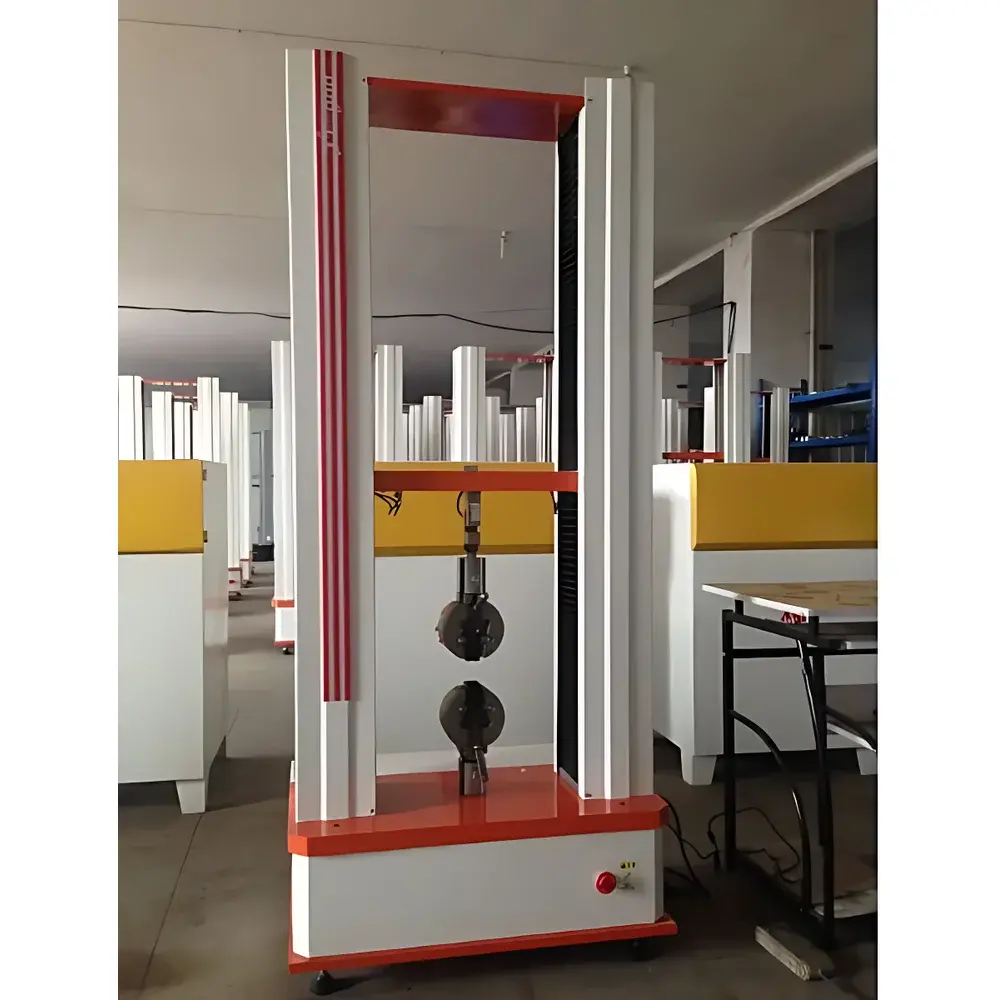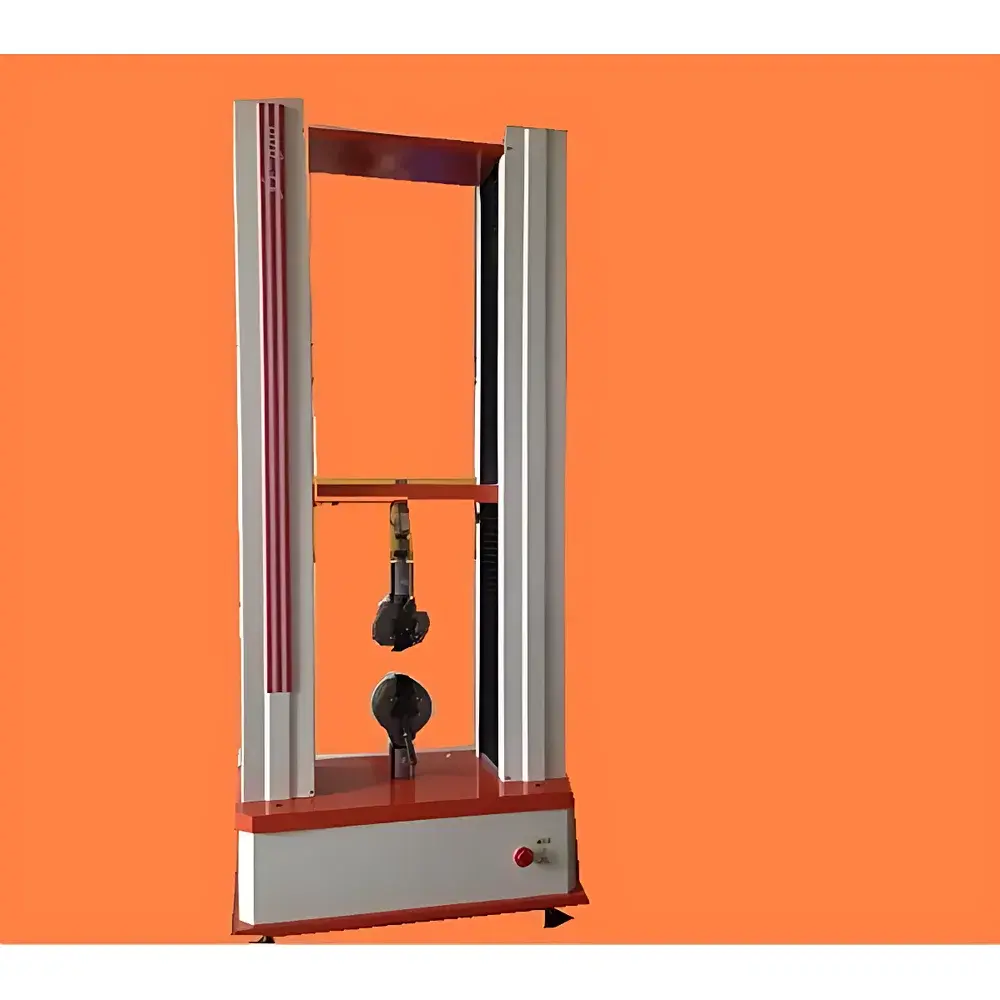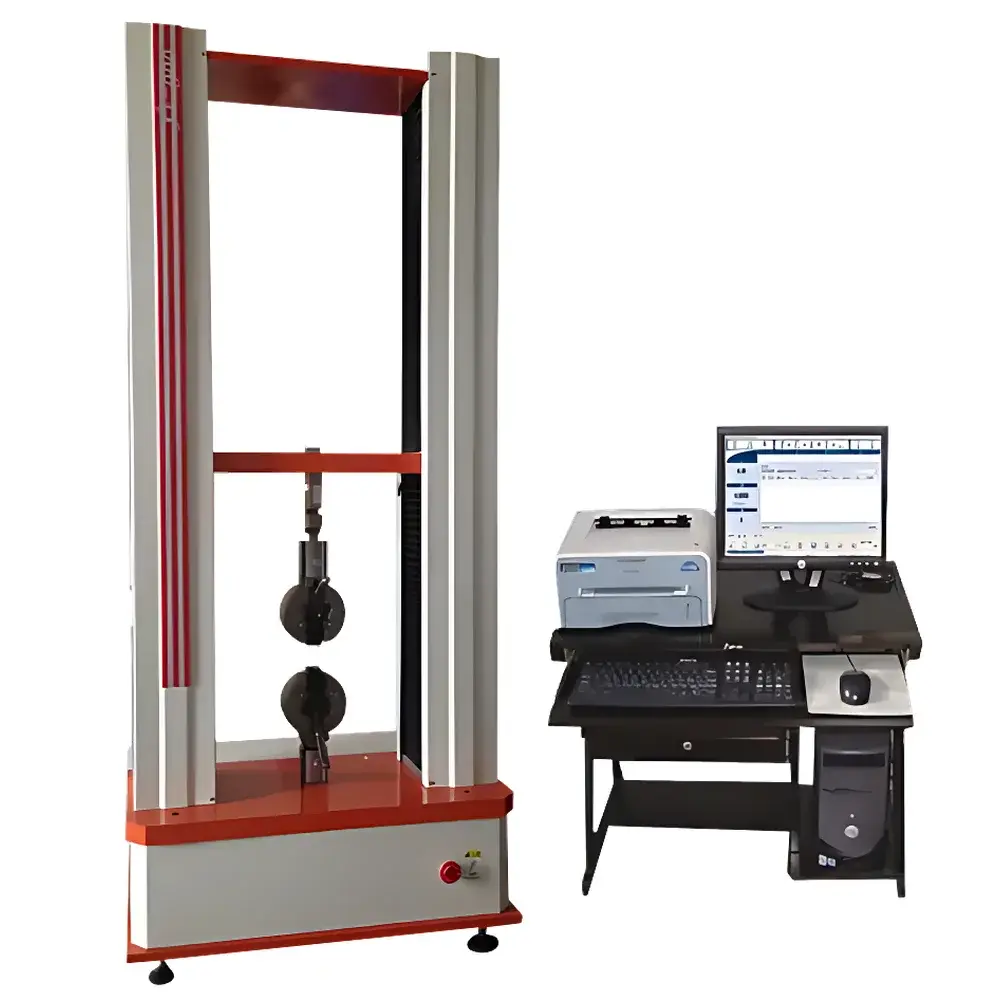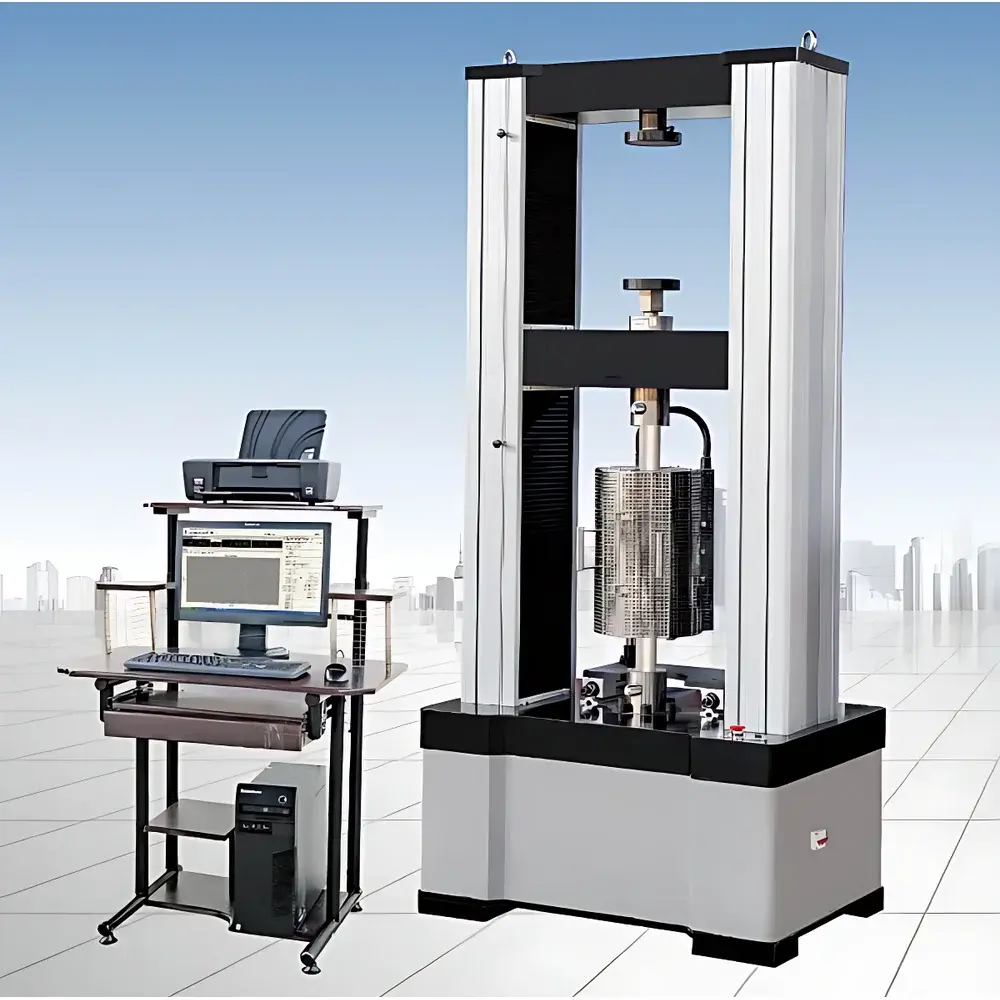
Beiguang Jingyi BWN-5 kN Universal Electronic Tensile Testing Machine

| Brand | Beiguang Jingyi |
|---|---|
| Origin | Beijing, China |
| Manufacturer Type | Direct Manufacturer |
| Product Origin | Domestic (China) |
| Model | BWN-5 kN |
| Price | USD 4,950 (FOB Beijing) |
Ask about pricing, availability and specifications.
Overview
The Beiguang Jingyi BWN-5 kN Universal Electronic Tensile Testing Machine is a precision-engineered static mechanical testing system designed for high-fidelity uniaxial force–displacement characterization of metallic and non-metallic materials. It operates on the fundamental principle of controlled displacement actuation via a servo-motor-driven crosshead, coupled with real-time load measurement using a calibrated S-type load cell. The system conforms to ISO 7500-1 Class 1 accuracy requirements for force measurement and meets the metrological traceability standards defined in ASTM E4 and ISO 376. Its architecture supports quasi-static loading regimes (0.01–500 mm/min), enabling standardized evaluation of tensile strength, compressive yield, flexural modulus, peel adhesion, tear resistance, and elongation at break—critical parameters for R&D validation, quality control, and regulatory compliance across polymer, automotive, aerospace, medical device, and packaging industries.
Key Features
- High-accuracy 5 kN load cell (±0.5% full-scale error, traceable to NIM/China NMI), featuring temperature-compensated strain gauge technology and 24-bit A/D conversion at 200 Hz sampling rate
- Seven-range automatic force scaling (×1 to ×100) with dual-linearity calibration—full-scale and precision multi-point—ensuring consistent resolution across dynamic test ranges
- DSP+FPGA-based closed-loop controller with zero-latency data acquisition (3.8 kHz internal sync rate, 200 Hz RS232 output), eliminating signal aliasing and time-domain jitter during transient events
- Linear encoder with 2500 P/R resolution, enhanced via quadrature encoding to deliver 0.001 mm displacement resolution and ±0.5% positional accuracy
- Integrated safety architecture: dual mechanical limit switches, overload emergency stop, leakage current protection, auto-return-to-origin, and programmable break-point halt
- Modular hardware interface suite: RS232 (long-distance industrial serial), USB (portable PC connectivity), and CAN bus (multi-unit synchronized testing networks)
- Compliant with RoHS directive; all ICs rated for industrial temperature range (−40 °C to +85 °C); gold-plated connectors for long-term signal integrity
Sample Compatibility & Compliance
The BWN-5 kN accommodates specimens ranging from thin films (<0.05 mm) to structural metal coupons (up to 350 mm test width, 950 mm vertical travel). Standard fixtures include pneumatic wedge grips, peel test jigs (90°/180°), three-point bending assemblies, and compression platens. Optional accessories extend capability to fiber pull-out, puncture, shear, and creep testing. The system fully supports over 120 international test standards—including ASTM D412, D638, D790, D1876, D3574; ISO 37, 527, 178, 1133; GB/T 1040, 16491, 2792, 3923.1; EN ISO 1421, 1798; JIS K6854—and maintains audit-ready documentation per GLP, GMP, and FDA 21 CFR Part 11 requirements through secure user authentication, electronic signatures, and immutable test log archiving.
Software & Data Management
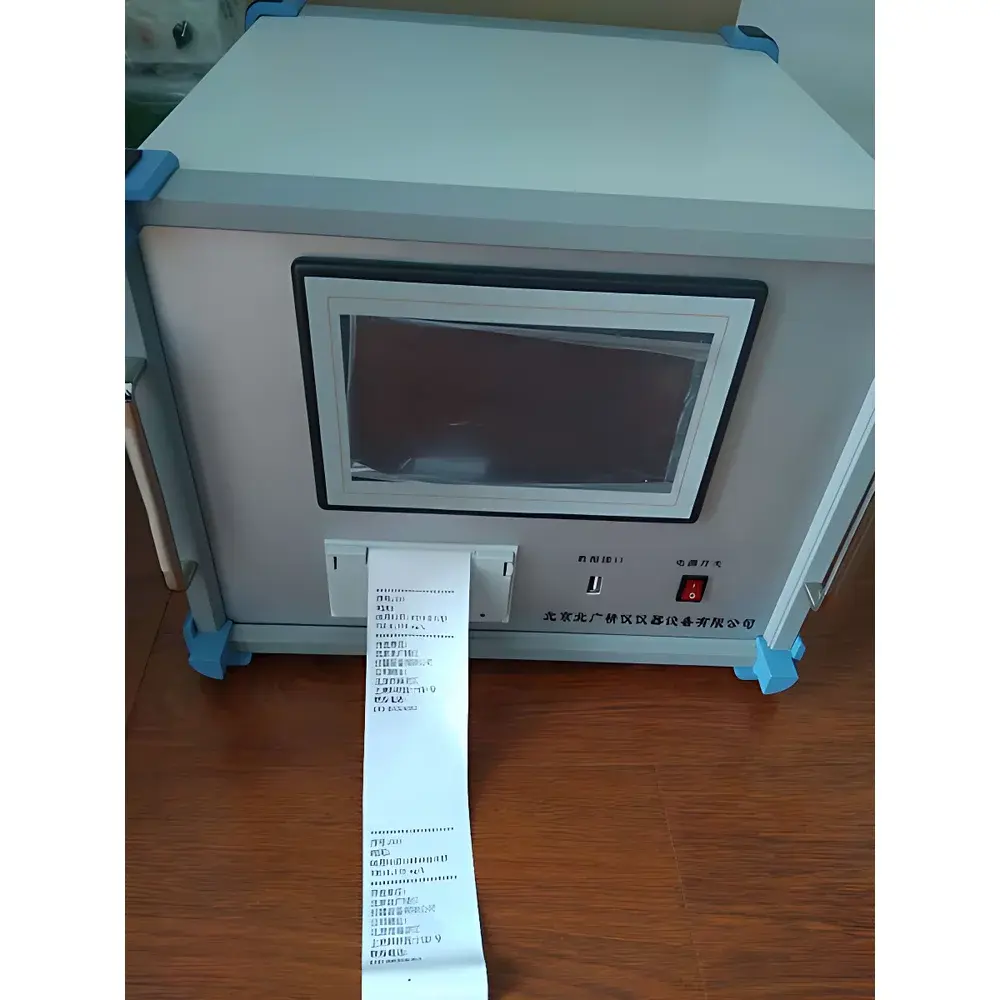
UTM107 v4.2 software provides a modular, standards-driven test environment compatible with Windows XP through Windows 11. Its core modules include: (1) Standard Library Manager for rapid selection and configuration of GB, ASTM, ISO, DIN, JIS, and BS protocols; (2) Parametric Test Definition Engine supporting constant-rate, constant-load, constant-strain-rate, multi-step ramp-hold sequences, and custom PID tuning; (3) Real-time Auto-Scale plotting with six simultaneous curve types (load–displacement, stress–strain, load–time, etc.) and overlay comparison mode; (4) SQL-backed database engine enabling structured query, metadata tagging, and traceable raw-data export; (5) Dual-reporting framework: built-in template editor + native Excel integration for customizable reporting; (6) Multi-language UI (English, Simplified Chinese, Traditional Chinese) with dynamic unit conversion (N/kN/kgf/lbf, mm/cm/inch, MPa/psi). All test data are saved with timestamped digital signatures, revision history, and encrypted backup to any local or network drive.
Applications
This system delivers repeatable mechanical property quantification for diverse material classes: thermoplastics (PP, PE, PET), elastomers (NR, SBR, silicone), composites (CFRP, GFRP), thin-film laminates, biomedical polymers (PLA, PCL), wire & cable insulation, textile yarns, paperboard, adhesive tapes, safety webbing, and metallic alloys (stainless steel, aluminum, spring steel). Typical use cases include: QC release testing per ISO 9001; failure analysis of brittle fracture or ductile necking; validation of extrusion or molding process parameters; adhesion strength verification for laminated packaging; fatigue pre-screening under static hold conditions; and generation of input data for finite element modeling (FEM) simulations.
FAQ
What is the force measurement uncertainty of the BWN-5 kN system?
The 5 kN load cell complies with ISO 7500-1 Class 1, with maximum permissible error ≤ ±0.5% of indicated value across all seven auto-ranging segments.
Can the system perform ASTM D882-compliant tensile testing on plastic films?
Yes—equipped with standard pneumatic film grips and adjustable gauge length, it meets all dimensional, speed, and data resolution requirements specified in ASTM D882-22.
Is the software compliant with FDA 21 CFR Part 11 for regulated environments?
Yes—UTM107 implements role-based access control, electronic audit trails, tamper-evident logs, and digital signature workflows validated per Part 11 Annex 11 guidelines.
Does the machine support extensometer integration for true strain measurement?
Yes—the system provides dedicated analog inputs for clip-on or non-contact extensometers, with hardware-level low-pass filtering and QEI-based pulse interpolation for sub-micron displacement fidelity.
What maintenance is required to maintain calibration validity?
Annual third-party verification against certified reference standards is recommended; routine user verification using traceable check weights and displacement gauges is supported via built-in calibration routines.