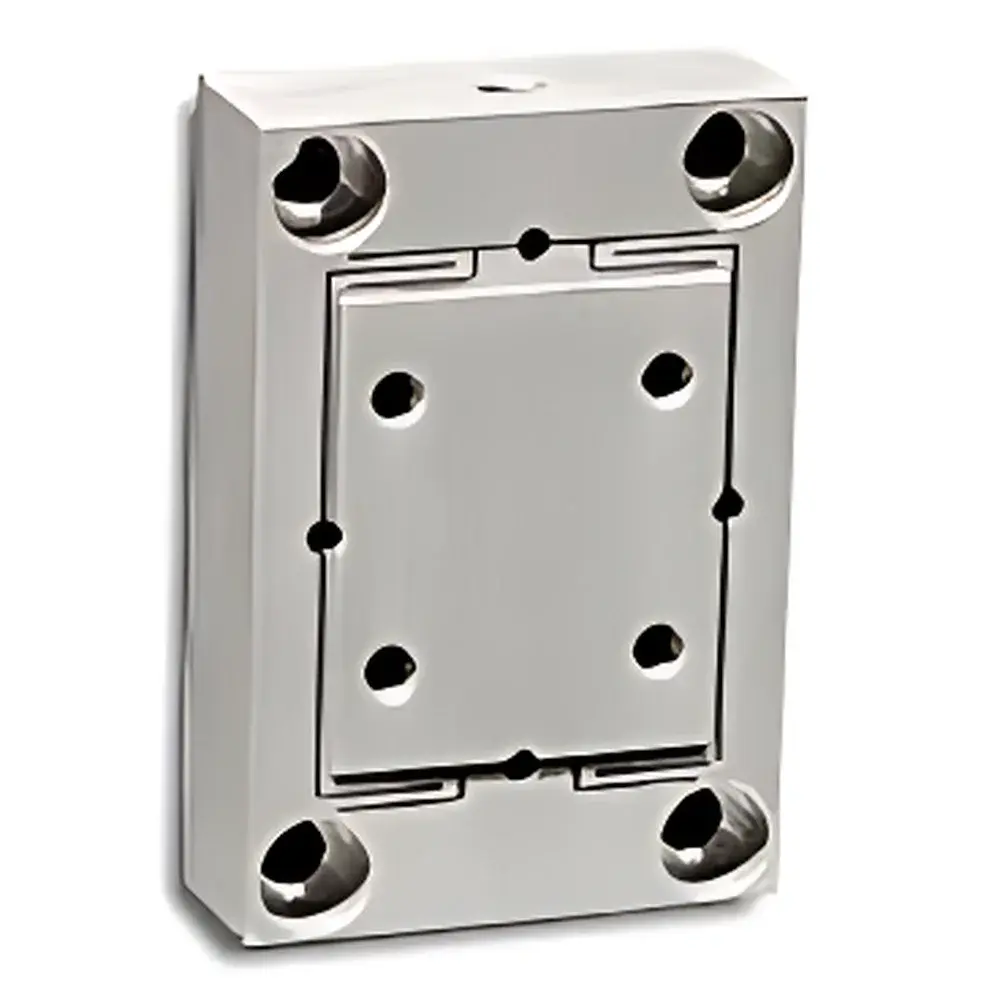
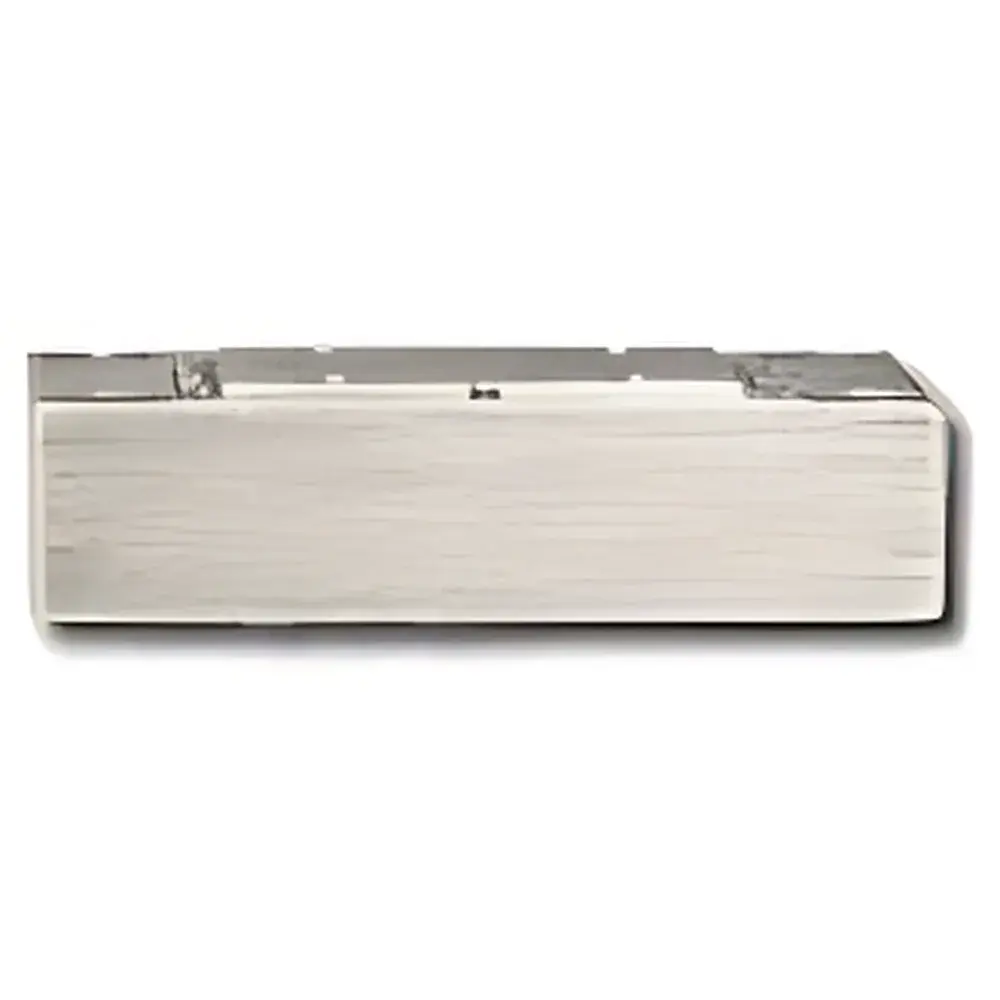
MCL Nano-Mini Piezoelectric Nanopositioning Translation Stage

| Brand | MCL Think Nano |
|---|---|
| Origin | USA |
| Manufacturer Type | Authorized Distributor |
| Product Category | Imported |
| Model | Nano-Mini |
| Drive Type | Motorized (Piezo-Driven) |
| Stage Type | Flexure-Guided Closed-Loop Translation Stage |
| Body Material | Titanium or Invar |
| Motion Range | 10 μm |
| Resolution | 0.02 nm |
| Resonant Frequency (no load) | 1.5 kHz ±20% |
| Resonant Frequency (50 g load) | 650 Hz ±20% |
| Stiffness | 1.0 N/μm ±20% |
| Angular Deviation (Roll/Pitch) | ≤1 μrad |
| Angular Deviation (Yaw) | ≤2 μrad |
| Max Horizontal Load | 0.5 kg |
| Max Vertical Load | 0.15 kg |
| Position Sensing Technology | PicoQ® Integrated Capacitive Sensor |
| Controller Compatibility | Nano-Drive® |
Ask about pricing, availability and specifications.
Overview
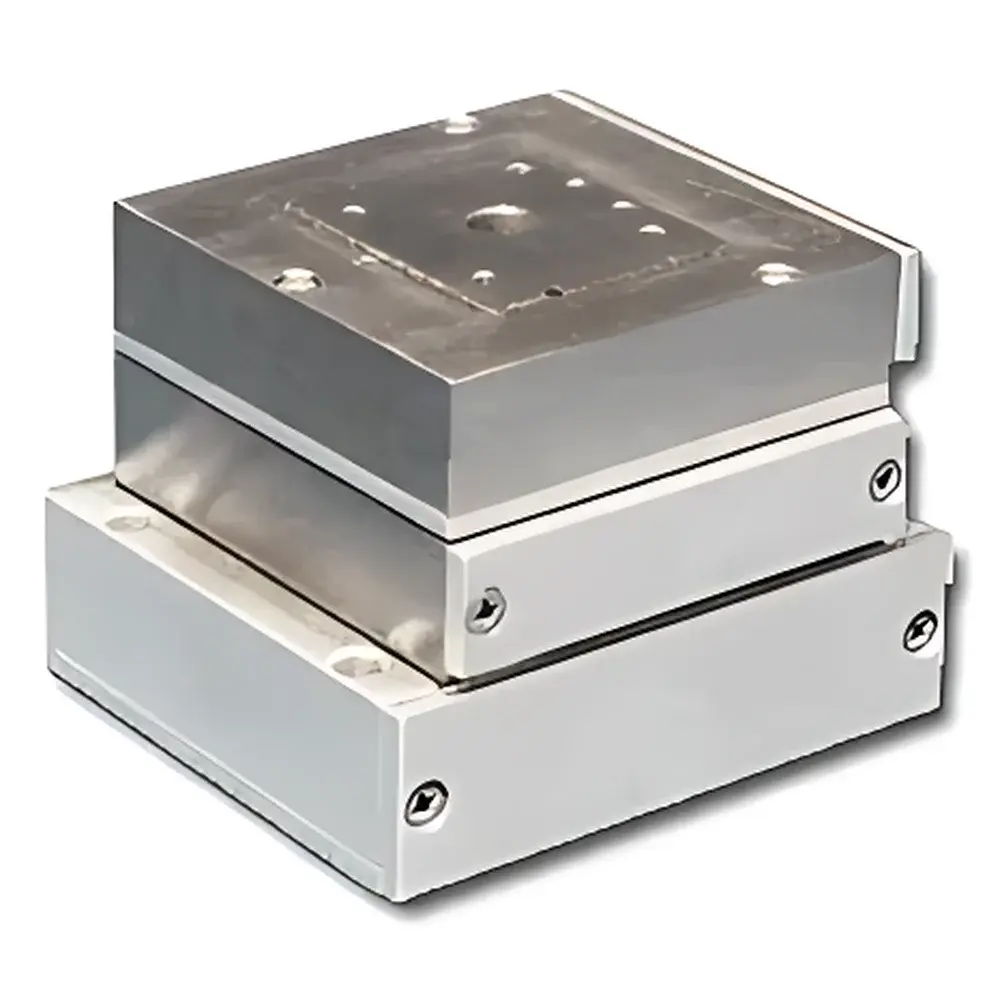
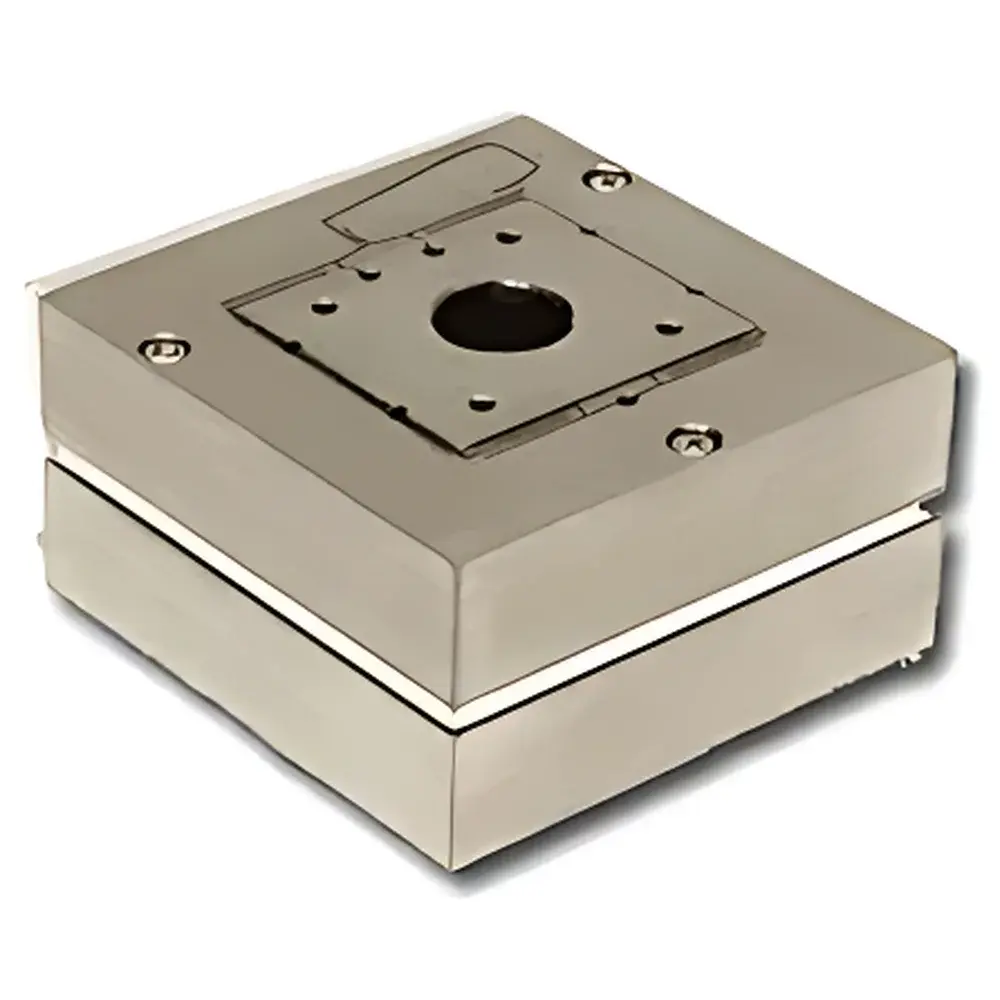
The MCL Nano-Mini Piezoelectric Nanopositioning Translation Stage is a compact, flexure-guided, closed-loop nanopositioning platform engineered for ultra-high-resolution linear displacement in space-constrained optical and metrological systems. Operating on the principle of multilayer piezoelectric actuation coupled with monolithic flexure guidance, the Nano-Mini delivers 10 µm of unidirectional travel with sub-atomic resolution and picometer-level repeatability. Its design eliminates mechanical backlash, hysteresis, and wear—critical advantages over screw-driven or stepper-motor-based translation stages—making it suitable for applications demanding deterministic motion control at the nanoscale. The stage’s monolithic titanium or invar body ensures thermal stability and mechanical rigidity, while its 25.4 mm × 38.1 mm footprint enables integration into multi-axis stacks (e.g., XY or XYZ configurations) without compromising optical access or system modularity.
Key Features
- Ultra-compact form factor (1″ × 1.5″) optimized for dense optical layouts and vacuum-compatible instrument integration
- Monolithic flexure guidance providing frictionless, wear-free motion with zero particle generation—essential for cleanroom and UHV environments
- Closed-loop operation enabled by integrated PicoQ® capacitive position sensors, delivering absolute, drift-free position feedback with 0.02 nm resolution and picometer reproducibility
- High stiffness (1.0 N/µm) and resonant frequency (1.5 kHz unloaded), supporting dynamic scanning protocols up to kilohertz bandwidths
- Low angular parasitics: roll/pitch ≤1 µrad and yaw ≤2 µrad across full range—minimizing beam walk-off in interferometric and alignment-sensitive setups
- Material options include aerospace-grade titanium (lightweight, high strength-to-density ratio) or low-expansion invar (for temperature-critical metrology)
- Fully compatible with MCL’s Nano-Drive® controller family, supporting analog voltage input, digital command protocols (USB/Ethernet), and real-time waveform generation
Sample Compatibility & Compliance
The Nano-Mini is designed for integration into ISO-standard optical tables, OEM instrumentation, and research-grade microscopy platforms. Its non-magnetic, non-outgassing construction meets requirements for electron microscopy sample stages and laser cavity alignment systems. While not certified to a specific regulatory standard as a standalone device, the stage complies with electromagnetic compatibility (EMC) Class B limits per FCC Part 15 and CE directives when operated with the Nano-Drive® controller. Its closed-loop architecture supports GLP/GMP-aligned workflows through traceable position logging, audit-trail-capable software interfaces, and compatibility with FDA 21 CFR Part 11–compliant data acquisition environments when deployed with validated controller firmware and host software.
Software & Data Management
Control and data acquisition are managed via MCL’s Nano-Drive® software suite, which provides cross-platform support (Windows, Linux, macOS) and native APIs for Python, MATLAB, LabVIEW, and C/C++. The software enables real-time position monitoring, arbitrary waveform playback (sine, triangle, custom LUT), synchronized multi-axis triggering, and timestamped position logging at up to 10 kHz sampling rates. All position data includes embedded metadata (timestamp, sensor ID, gain settings, temperature compensation flags), facilitating post-acquisition traceability. Export formats include CSV, HDF5, and TDMS, ensuring interoperability with statistical process control (SPC) and metrology analysis tools such as GUM Workbench and Metrolog X4.
Applications
- Active alignment of single-mode optical fibers and photonic integrated circuits (PICs)
- Nanopositioning in scanning probe microscopy (SPM) coarse approach and Z-feedback loops
- Phase control in heterodyne and white-light interferometers
- Beam steering and cavity length tuning in ultra-stable lasers (e.g., Ti:sapphire, fiber lasers)
- Sub-pixel calibration and focus correction in super-resolution fluorescence microscopy (STED, PALM)
- Calibration reference stages for coordinate measuring machines (CMMs) and laser trackers per ISO 10360 and ISO 230-2
FAQ
What is the maximum recommended payload for vertical orientation?
The Nano-Mini is rated for a maximum vertical load of 0.15 kg. Exceeding this limit may compromise long-term sensor linearity and piezo lifetime; custom load-bearing variants are available upon engineering consultation.
Is vacuum compatibility supported?
Yes—the titanium and invar versions are vacuum-rated to 10⁻⁷ Torr when used with compatible Nano-Drive® controllers and cabling. Bake-out to 80 °C is permissible with proper thermal management.
Can multiple Nano-Mini stages be synchronized?
Yes—Nano-Drive® controllers support hardware-triggered synchronization across up to 16 axes with sub-microsecond jitter, enabling coordinated motion for multi-degree-of-freedom nanopositioning.
Does the PicoQ® sensor require recalibration?
No—the capacitive sensor is factory-calibrated and exhibits negligible drift (<0.1 nm/year) under stable environmental conditions; no user recalibration is required.
What is the warranty and service policy?
MCL Think Nano provides a 24-month limited warranty covering materials and workmanship. Extended calibration and preventive maintenance contracts are available globally through authorized service partners.