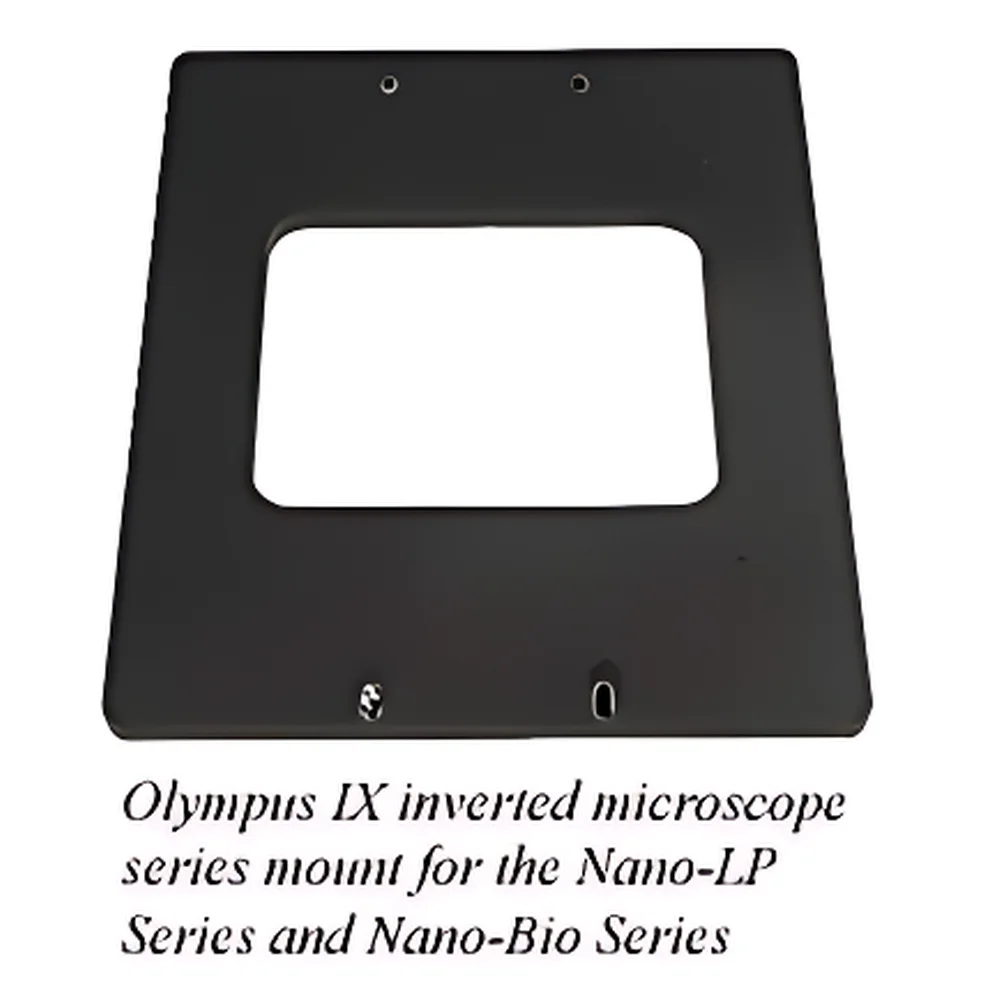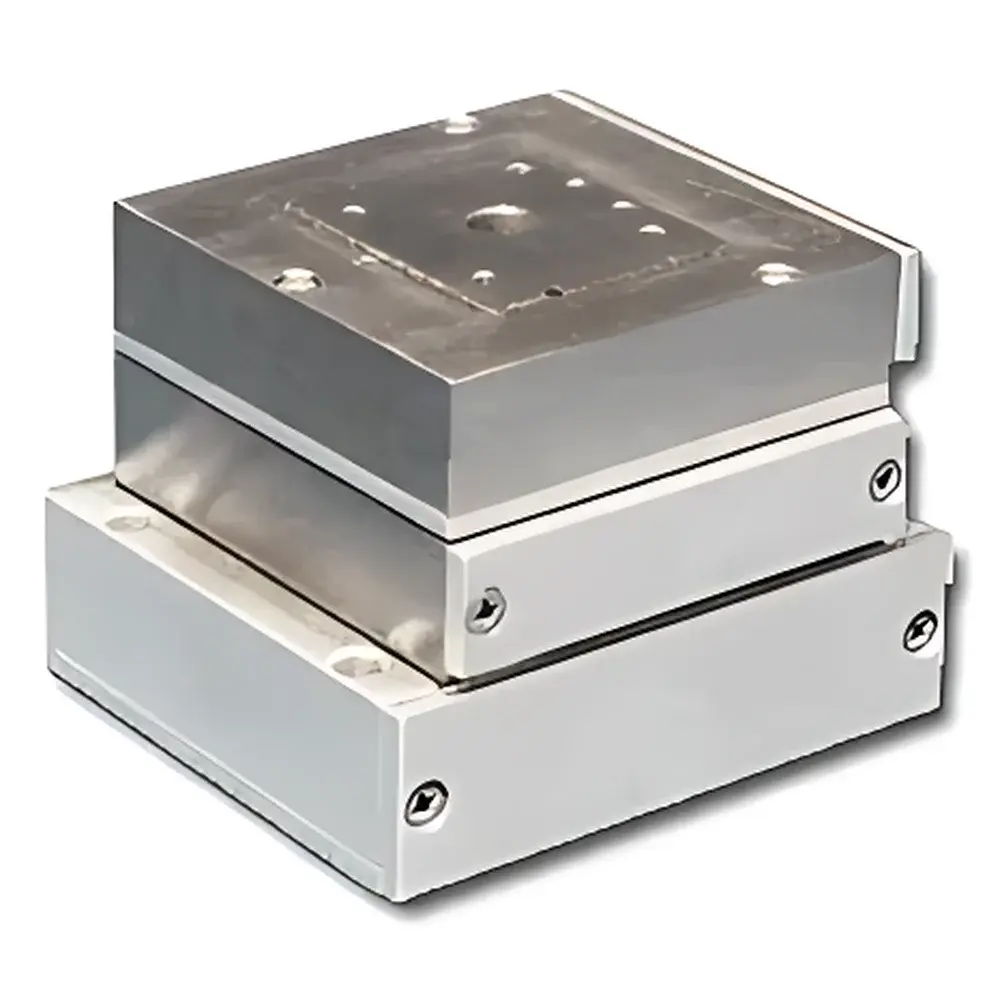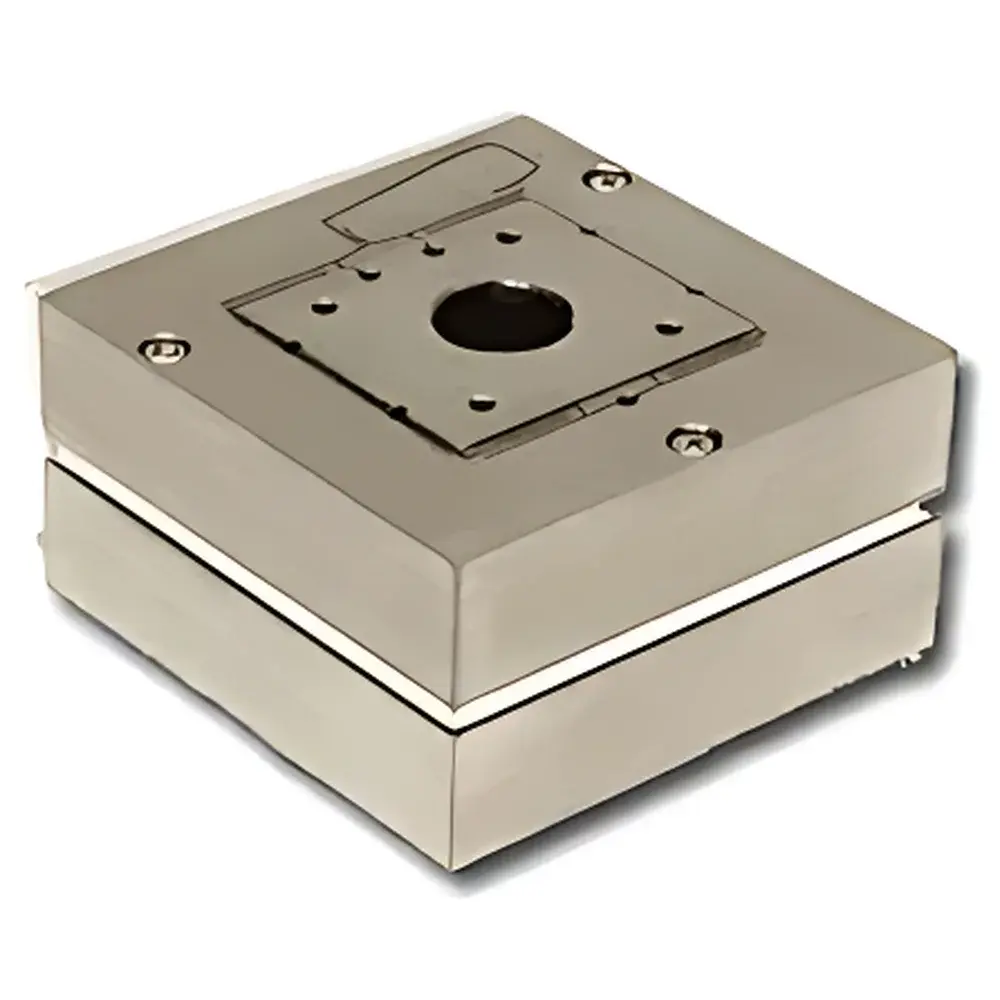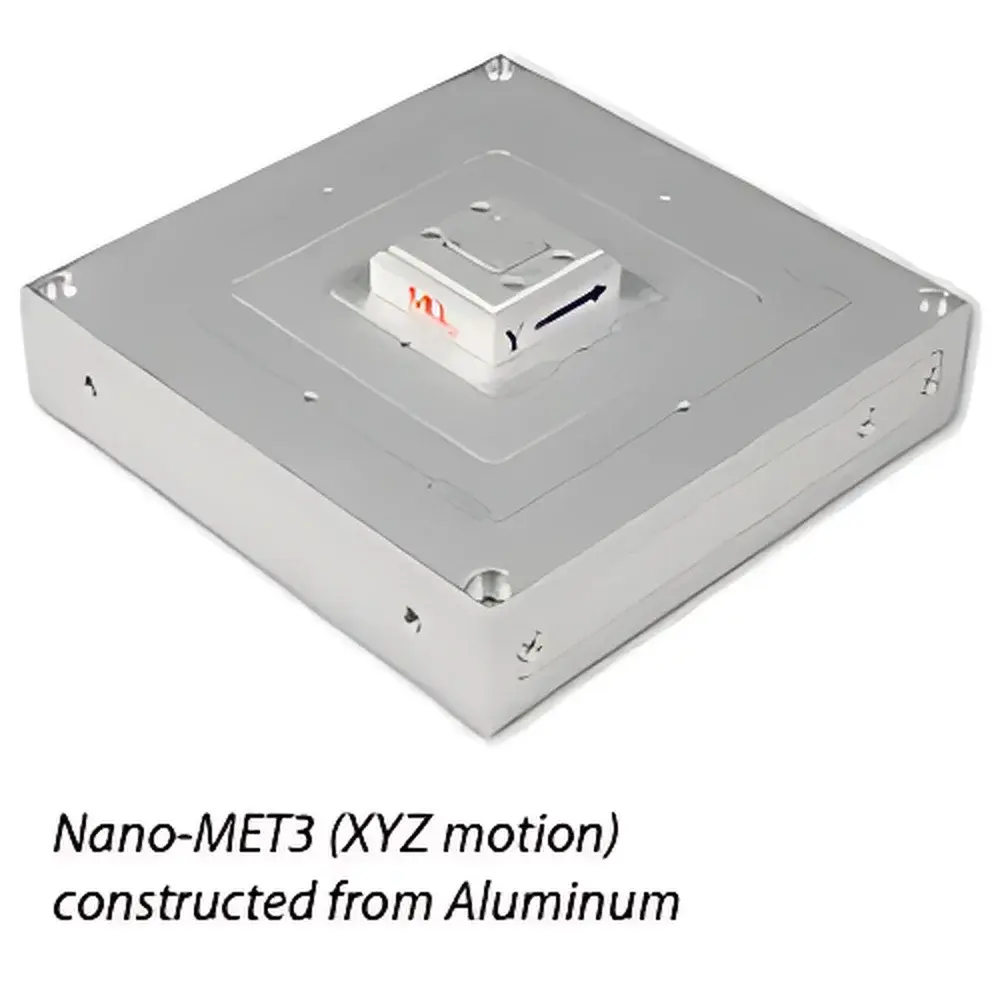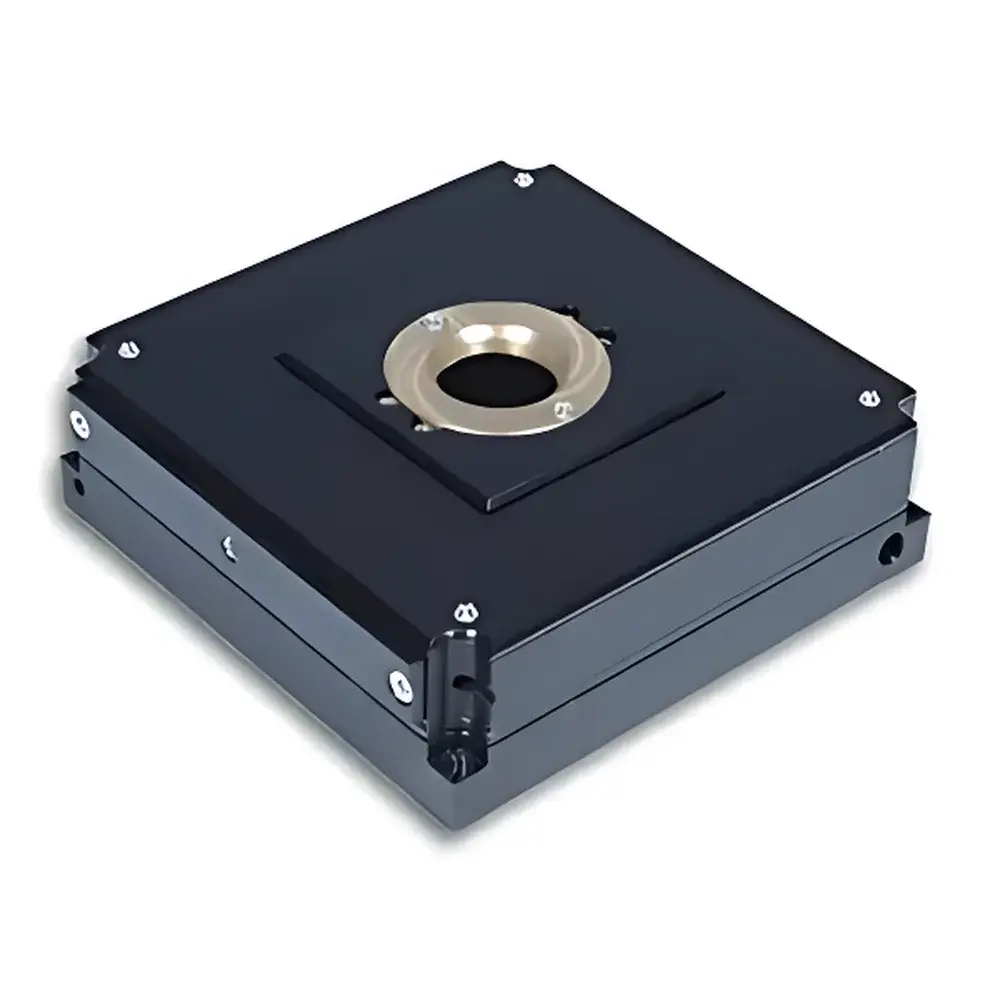
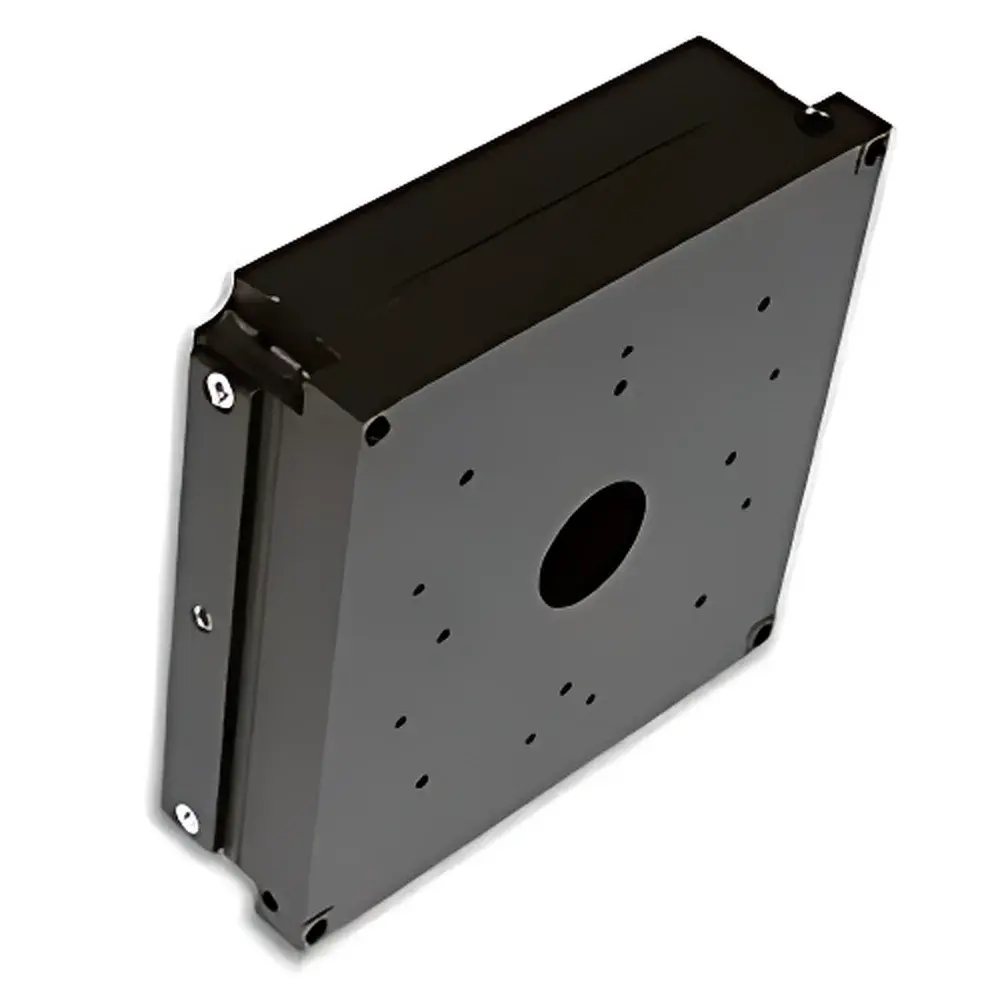
MCL Think Nano Nano-F3D XYZ Objective Lens Positioner

| Brand | MCL Think Nano |
|---|---|
| Origin | USA |
| Manufacturer Type | Authorized Distributor |
| Product Type | Motorized Precision Translation Stage |
| Model | Nano-F3D |
| Motion Range (X/Y/Z) | 100 µm |
| Resolution | 0.2 nm |
| Resonant Frequency (X/Y/Z) | 300/200/400 Hz ±20% |
| Stiffness | 1.0 N/µm |
| Max Recommended Load | 0.5 kg |
| Body Material | Aluminum and Brass |
| Compatible Threads | RMS, M25, M26 |
| Control | Closed-loop with proprietary on-axis position sensors |
| Controller | Nano-Drive® |
Ask about pricing, availability and specifications.
Overview
The MCL Think Nano Nano-F3D XYZ Objective Lens Positioner is a high-precision, three-axis motorized translation stage engineered for sub-nanometer stability and repeatability in optical microscopy applications. Unlike conventional piezoelectric or stepper-driven stages, the Nano-F3D employs a proprietary flexure-guided mechanism combined with integrated capacitive position sensing on each axis—enabling true closed-loop control without hysteresis or drift. Its core function is to precisely reposition microscope objective lenses in X, Y, and Z simultaneously, supporting advanced modalities such as 4Pi microscopy, confocal volume scanning, and adaptive optical sectioning. Designed for integration into custom-built or OEM microscope platforms, the Nano-F3D maintains mechanical integrity under dynamic loading while delivering 100 µm of travel per axis and a guaranteed resolution of 0.2 nm—validated per ISO 230-2:2014 methodology for positioning accuracy assessment.
Key Features
- True three-axis (XYZ) synchronized motion with independent closed-loop feedback on each axis via on-board capacitive sensors
- 100 µm travel range per axis with <0.2 nm minimum incremental motion and ≤1 nm bidirectional repeatability
- High resonant frequencies (X: 300 Hz, Y: 200 Hz, Z: 400 Hz ±20%) enabling stable operation at scan rates up to 50 Hz with minimal phase lag
- Stiffness of 1.0 N/µm ensures minimal deflection under inertial loads during rapid step-and-settle maneuvers
- Modular mechanical interface supporting RMS (0.800″-36), M25×0.75, and M26×0.75 objective lens threads; adapters are specified at time of order and available separately
- Aluminum and brass hybrid construction provides thermal stability (CTE ≈ 23 ppm/K) and electromagnetic compatibility in shielded lab environments
- Fully compatible with MCL’s Nano-Drive® controller, offering USB 2.0 and analog I/O interfaces for synchronization with DAQ systems, lasers, or TTL-triggered detectors
Sample Compatibility & Compliance
The Nano-F3D is designed for use with standard commercial objective lenses across visible and near-infrared spectral ranges (350–1100 nm). Its low-mass moving platform (≤120 g) and optimized center-of-gravity alignment minimize torque-induced tilt errors during Z-axis actuation—a critical requirement for quantitative optical path length control in interferometric and coherence-gated imaging. The device complies with IEC 61326-1:2013 for EMC immunity in laboratory instrumentation and meets RoHS 2011/65/EU material restrictions. While not certified for medical device use, its design adheres to principles referenced in ISO 13485:2016 for precision positioning subsystems used in analytical instrument manufacturing. Traceable calibration reports—including linearity error (<±0.05% F.S.), orthogonality deviation (<5 arcsec), and thermal drift (<0.8 nm/°C over 20–25°C)—are provided with each unit.
Software & Data Management
The Nano-F3D operates natively with MCL’s Nano-Drive® software suite (v4.2+), which supports scripting via Python API (PyNanoDrive), MATLAB Instrument Control Toolbox, and LabVIEW VIs. All motion commands are timestamped with microsecond precision and logged in HDF5 format, ensuring full auditability for GLP-compliant workflows. The controller implements non-volatile memory for user-defined motion profiles and retains position state after power cycling—critical for long-duration timelapse experiments. Firmware-level support for FDA 21 CFR Part 11 is available through optional secure login, electronic signature, and immutable audit trail modules. Raw sensor data (capacitance-to-digital converter outputs) can be streamed at up to 10 kHz for real-time feedback loop analysis or external PID tuning.
Applications
- 4Pi super-resolution microscopy requiring nanometer-synchronized dual-objective axial translation
- Confocal and light-sheet volume scanning where Z-stage linearity directly impacts axial point spread function fidelity
- Automated optical inspection of MEMS devices, photonic crystals, and semiconductor wafers requiring sub-pixel registration accuracy
- Adaptive optics wavefront correction using deformable mirror–objective coupling configurations
- Single-molecule fluorescence localization microscopy (e.g., PALM/STORM) requiring precise z-calibration via objective translation
- OEM integration into automated patch-clamp rigs or laser microdissection platforms demanding low EMI and deterministic motion timing
FAQ
What lens thread standards does the Nano-F3D support?
The Nano-F3D accommodates RMS (0.800″-36), M25×0.75, and M26×0.75 objective lens mounts. Threaded adapters are selected at time of order and may be purchased separately for multi-lens experimental setups.
Can the Nano-F3D be operated in vacuum or cleanroom environments?
Standard units are rated for ambient laboratory conditions (20–25°C, 40–60% RH). Vacuum-compatible variants (10⁻⁶ Torr) with modified lubricants and outgassing-tested materials are available under custom configuration—contact engineering support for qualification documentation.
Is third-party software integration supported beyond Nano-Drive®?
Yes. The Nano-Drive® controller exposes a documented ASCII command protocol over USB CDC ACM, enabling integration with EPICS, Micro-Manager, or custom C++/C# applications without proprietary drivers.
What is the maximum payload capacity under dynamic scanning conditions?
The 0.5 kg rating assumes static loading. For scanning at >10 Hz, payloads exceeding 300 g require stiffness and resonance verification; engineering consultation is recommended prior to system integration.
Does the Nano-F3D include traceable calibration documentation?
Each unit ships with a NIST-traceable certificate of conformance, including measured linearity, repeatability, and thermal coefficient data collected per ISO 230-2 Annex D protocols.